The best superhero show on TV begins every episode with a bracing statement from Supergirl: “I am a refugee.” In this current moment of darkness, she’s the symbol of hope we need.

SPENCER ACKERMAN
12.31.17 9:00 PM ET
InSuperman: The Unauthorized Biography, Glen Weldon identifies the necessary and sufficient conditions for a Superman story. Superman must put the needs of others over those of himself, and he must never give up. Everything else can be there, Weldon writes, “the costume, the powers, the spit curl and so on [but] if one or both of those two bedrock elements are missing, our mind rebels; we instinctively reject it. It’s just not Superman.”
On the comics page, Gary Frank and Geoff Johns – the latter of whom is now the chief creative officer of DC Entertainment – make a complementary argument. In Action Comics #867, Superman takes a reminiscence-filled walk with his adoptive human father, Jonathan Kent, on their family farm. “Your greatest power isn’t being able to fly or see through walls,” Pa Kent observers. “It’s knowing what the right thing to do is.”
His heart full, a smiling Clark Kent asks: “Where do you think I learned it from?”
Smiling as well, Pa insightfully deflects. “A lot of people,” he replies.
Whatever the DC Extended Universe director Zack Snyder has given us across two movies – I’ll be honest and admit I skipped Justice League – his Superman is not this. To Weldon’s point, Man of Steel presents a Superman who treats the decimation of Metropolis as an afterthought. He kills General Zod out of a resignation over not knowing how else to stop the mad Kryptonian. Superman extinguishes Kryptonian civilization without so much as considering it a tragic necessity to save his adoptive planet. “Krypton had its chance,” the alienated Superman declares.
He gets it from his cinematic parents. To Johns and Frank’s point, the on-screen Kents encourage Clark to wash his hands of humanity. “Be anything they need you to be, or be none of it. You don’t owe this world a thing,” Martha Kent sneers in Batman v. Superman. Kevin Costner’s Pa spends Man of Steel telling Clark to hide his gifts at all costs. “What was I supposed to do? Just let them die?” a wounded, teen Clark asks his disappointed father after he saves his school bus from drowning. “Maybe,” shrugs Superman’s role model.
But those of us looking for a recognizable and inspiring Super-figure, particularly in this current moment of darkness, have hope. It’s not found on the big screen. It’s not found in a man with an S on his chest. It’s on television, where the Greg Berlanti-shepherded Supergirlgives us an exquisite adaptation in Kara Zor-El, Superman’s cousin, played to perfection by Melissa Benoist. The third season, now on a winter hiatus, is making a case for itself as one of the all-time best seasons of superhero TV. It’s doing so by pointing Supergirl at everything small-minded and evil in present-day America. Supergirl is the Superman we need.
We need to get something out of the way before proceeding. Notice that Weldon, Frank and Johns’ compelling arguments about who Superman is and what a Superman story is do not depend on Superman being a man.
All the essential bits of Superman lore are given to Kara: the devotion to her city; the love for her extended adoptive family that enriches and explains her character; the sacrifices she must make as part of her heroic burden. If you can’t get past this Superman being a woman, close this tab, since, frankly, you misunderstand what makes Superman Superman, and nothing in this essay can convince you.
There is an impulse in contemporary Superman stories to keep politics out of his adventures. Yet Superman’s original creators, Jerry Siegel and Joe Shuster, crafted a hero whose instincts incline toward a struggle for social justice – what was known back then as truth, justice and, however aspirationally, the American Way. “Superman! Champion of the oppressed, the physical marvel who had sworn to devote his existence to helping those in need!” thunders the narrator of Action Comics #1 in 1938, Superman’s first appearance. In the next issue, Superman’s adversary is a weapons manufacturer exploiting a South American conflict. Supes ruins his market by urging the opposing generals, “Gentlemen, it’s obvious you’ve only been fighting to promote the sale of munitions! Why not shake hands and make up?”
Supergirl treats that version of Superman as a mission statement. Every episode of the current season opens with Supergirl narrating the premise for her adventures. It includes a bracing statement of identification, rooted in an essential truth about the character, with those Donald Trump and his allies vilify: “My name is Kara Zor-El. I’m from Krypton. I’m a refugee on this planet.”
It is in this manner that superheroes teach empathy. Most viewers will never know Syrians who have escaped the unfathomable twin horrors of Bashar Assad and the Islamic State. But to turn your back on them, as the regnant politics of America and Europe would have it, is to turn your back on Supergirl and Superman.
When Superman or Supergirl’s supporting characters say the hero inspires people to greatness, this is what they mean. It’s not to fly or use heat vision – attributes that, after all, we cannot possibly share – nor to resolve conflict through violence. It’s to inspire us to help those in need and see the oppressed as ourselves. The S is for solidarity. Benoist lives this creed off-screen as well. She showed up at January’s mass Women’s March protest against Trump holding a sign reading: Hey Donald, don’t try to grab my pussy – it’s made of steel.
In 2006, Johns ended his Infinite Crisis epic by delivering a subtle treatise on the meaning behind Action Comics. Superman instructs a wayward, murderous Superboy: “You'll never be Superman. Because you have no idea what it means to be Superman. It's not about where you were born. Or what powers you have. Or what you wear on your chest. It's about what you do... it's about action.”
Supergirl acts accordingly. When the series begins, the mid-20s Supergirl has lived on earth for at least a decade, all in hiding. That ends when a plane carrying her adoptive sister falls from the sky, prompting her to use her powers in the open for the first time. It turns out that she’s not the only alien on earth. Some aliens menace unsuspecting humans. Some humans menace the other alien refugees. Whomever is at the mercy of tyranny – the tyranny of the majority, the tyranny of a super-empowered minority, the tyranny of a government or a corporate overlord (longtime DC baddies Morgan Edge and Maxwell Lord), the tyranny of bullies – has Supergirl as a protector, regardless of where they come from from.
Supergirl’s mission costs her a lot. In the second season finale, she had to give up the man she loves, the quasi-Kryptonian Mon-El, to save earth from his villainous mom. The loneliness Supergirl feels is the backdrop to the show’s excellent third season.
Season 3 explains why Kara hasn’t been Supergirl her whole time on earth. A flashback episode takes us to her adolescence, shortly after she arrived here. It turns out the rapport she shares as an adult with foster sister Alex, something central to the heart of the show, didn’t come naturally.
While Clark lands in Kansas as a baby, Kara lands as a teen. Young Kara resents having to stifle her abilities for the benefit of people who treat her as an outcast – she super-speeds to the bathroom in the mornings for the pleasure of slamming the door on her sister; she laments, “I just want to be with Clark and be super” – while young Alex lashes out at the newcomer whom she cruelly blames for the loss of her father. It takes the murder of the only kid in school who’s nice to Kara to ultimately bond the sisters. Along the way, Kara realizes that using her powers puts Alex in danger. The Kryptonian girl who wanted to fly with her famous cousin ends up sacrificing a part of herself for ten years to protect her accidental sister.
Perhaps without meaning to, the episode makes Supergirl more heroic than even Superman. Superman starts life thinking of himself as Kansan kid Clark Kent. Thanks to the love of Ma and Pa Kent, and because he has no reason to think otherwise, he identifies with humanity as a cornerstone of his identity, only later realizing he is the Kryptonian Kal-El. But humanity is no default for his cousin. Because she grew to adolescence on Krypton, she thinks of herself as Kara Zor-El, longs for the life she can no longer live, and has to choose to identify with humanity. The same impulse leads her at first to suppress her superhumanity and then embrace it as Supergirl: the protection of someone she loves. For an extra touch of poetry, Alex eventually comes out as well, though as a lesbian (as an agent of the Department of Extraterrestrial Operations, Alex is already a superhero).
Alex is the nucleus of Kara’s support system. Supergirl is surrounded by both familiar and deep-cut DC Universe characters, from Jimmy (now James) Olsen and J’onn J’onzz the Martian Manhunter to media mogul Cat Grant. Before Supergirl’s heart has healed, Mon-El unexpectedly returns from what turns out was the future, and brings along with him his wife, Imra Ardeen. As excruciating as it is for her, Supergirl doesn’t stand in the way of her old love’s marriage. Alongside a new character, the tech-support Winn Schott, and good friend/potential enemy Lena Luthor, it’s this earthbound family that grounds Supergirl from being an aloof alien demigod – in Johns’ phrase, a hero with the superpower of always knowing the right thing to do, thanks to the love of those around her.
“A Supergirl show steeped in decades of classic Man-of-Steel lore feels like a statement of defiance to the overprivileged men of comics.”
You don’t have to read Superman comics to appreciate Supergirl, but the show rewards a familiarity with the source material. There’s the Phantom Zone prison Fort Rozz. Alex’s girlfriend is the policewoman Maggie Sawyer, one of the first out queer characters in the DC Universe. Reign is the big bad of season 3. The corny 1960s-era kid sidekick of the Justice League, Snapper Carr, is reimagined as a crotchety editor who spikes Kara’s stories. A poignant episode this season reunited Martian Manhunter with his long-lost father, played by Carl Lumbly, who voiced Martian Manhunter on the gold-standardJustice League animated series from the early 2000s. In an fandom environment where women’s expertise is routinely called into question with the derogatory phrase “fake geek girls” – let that flavor of idiocy marinate – aSupergirl show steeped in decades of classic Man-of-Steel lore feels like a statement of defiance to the overprivileged men of comics.
There’s a metatextual aspect of Supergirl’s heroism this season as well, arising from a #MeToo reckoning.
In November, the co-creator and executive producer of Supergirl and other DC TV shows on the CW network, Andrew Kreisberg, was suspended and then fired for sexual harassment. It was a now-familiar stomach churning moment: a driving creative force on a show about a woman hero’s fight for justice was, behind the scenes, responsible for what a writer for sibling-show The Flash told Deadline was a “toxic” environment for women.
Benoist could have kept silent about Kreisberg, much as she could have declined to attend the Women’s March. But she’s Supergirl. “[W]hen people commit crimes or harass others, they should always be held accountable – no matter what industry they work in or how much power they wield,” Benoist wrote on her Instagram account. “So this week, I’ll head back to work on Supergirl even more committed to being part of changing the norm by listening when people speak up, and refusing to accept an environment that is anything less than a safe, respectful and collaborative space.”
Amidst persistent churn with the DC Extended Universe movies, particularly after the perceived box office flop of Justice League, many in the fandom hope the movies will shift course and present a recognizable Superman. It would be nice if they do. But with Supergirl standing up for truth, justice and the American Way each week, must there be a Superman?
On a day like today, Chinese painter Qi Baishi was born
January 01, 1864. Qi Baishi (1 January 1864 - 16 September 1957) was a Chinese painter, noted for the whimsical, often playful style of his watercolor works. Born to a peasant family from Xiangtan, Hunan, Qi became a carpenter at 14, and learned to paint by himself. After he turned 40, he traveled, visiting various scenic spots in China. After 1917 he settled in Beijing. In this image: Qi Baishi, Crabs, circa 1930. Album leaf, ink on paper. University of Michigan Museum of Art. Gift of Sotokichi Katsuizumi, 1949/1.199.
Survey from 1994 to the present of the work of Rodney Graham on view at the Irish Museum of Modern Art
The Metropolitan Museum of Art in New York is currently hosting an exhibition of works titled “Quicksilver Brilliance: Adolf de Meyer Photographs.” — by Blouin Artinfo
Self-Portrait in India Adolf de Meyer (American (born France), Paris 1868–1946 Los Angeles, California) 1900 Platinum print 14.8 x 19.8 cm. (5 13/16 x 7 13/16 in.) Photographs
The Metropolitan Museum of Art in New York is currently hosting an exhibition of works titled “Quicksilver Brilliance: Adolf de MeyerPhotographs.”
The show features photographs by Baron Adolf de Meyer (1868–1946) who was known for creating images that transformed everyday subjects and places into elements out of a fantasy. This is the first exhibition at the museum dedicated to the artist. The selection of works on display are drawn entirely from The Met’s holdings and highlights Adolf de Meyer’s artistic career. The installation includes photographs of well-known figures of his time such as American socialite Rita de Acosta Lydig, Count Étienne de Beaumont who was an art patron and designer, and aristocrat and society hostess Lady Ottoline Morrell among others. Also on display are the artist’s early works from Japan, innovative fashion photographs, and experiments with color processing techniques.
Adolf de Meyer (1868–1946) was a French photographer. He earned a membership at the Linked Ring a society made up of Pictorialist photographers in Britain in the year 1899. Upon traveling to the United States in 1912, he was hired as a full-time staff photographer by Vogue in 1914 where he produced cover layouts and photographed celebrities till 1921. He returned to Paris with a position at Harper’s Bazaar but the turmoil and unrest in Europe forced him to return to the States in 1939. He spent the rest of his life in Hollywood almost unknown and passed away in 1946.
“Quicksilver Brilliance: Adolf de Meyer Photographs” runs from December 4, 2017, through March 18, 2018, at Metropolitan Museum of Art, 1000 5th Ave, New York, NY 10028, USA.
In this day and age, there’s no shortage of specialized museums. From the weird to the whimsical, and including everything from funerary paraphernalia and ancient relics to scientific objects and erotica (with a fair bit of fakery thrown in), you can find a collection dedicated to just about any curiosity imaginable. We’ve rounded up nine of the world’s most offbeat institutions that offer a unique, if often wholly unexpected, visitor experience.
The history and culture of European hunting is revealed through Renaissance-era artifacts and objects, Flemish master paintings byPeter Paul RubensandJan Brueghel, and contemporary works and installations by the likes ofJeff Koons,Jan Fabre, andMark Dion. There’s no want for whimsy, either, given the entire room dedicated to unicorns and their undeniable existence as proven by 17th-century scholars.
Museum of World Funeral Culture
Novosibirsk, Siberia, Russia
There is perhaps no better place to contemplate one’s mortality than the furthest reaches of Russia, where a deathly cold breeze blows across Siberia nearly year-round. In the region’s unofficial capital of Novosibirsk, you’ll also find one of the only museums in the world devoted to the exploration of global funerary practices, the Museum of World Funeral Culture.
Its collection boasts thousands of paintings, drawings, photographs, engravings, and objects exploring themes of death and, of course, dead people. Exhibitions include a stylish showcase of hundreds of mourning dresses dating from as far back as the 14th century and the architecture of 19th-century cemeteries, crosses, and tombstones. But the museum is just one part of owner Sergei Yakushin’s greater Disneyland of death, which also comprises a factory that produces “mourning industry” wares, displays of urns, caskets, model hearses, a memorial park and research library, and a crematorium he continues to own and operate. The morbidly delightful compound also plays host to Necropolis — Tanexpo, an annual fair of ceremonial rites and services.
The Museum of Jurassic Technology
Los Angeles, California
Rooftop Garden and Colonnade at the Museum of Jurassic Technology. Courtesy of MJT.
If you’re confused by the name of this museum, you are not alone; few know exactly what Jurassic technology is, if it in fact refers to anything at all. The elusively named institution began as a traveling museum in 1984, founded by artist and designer David Hildebrand Wilson and his wife, Diana, before taking root in an unassuming building in Culver City, L.A., in 1988. It functions less as a place to showcase their idiosyncratic collection of historical, ethnographic, and art objects, and more as an experimental space to explore the human practice of collecting.
It’s unclear how often its exhibitions change, if ever, but long-standing visitor favorites include “Garden of Eden on Wheels: Selected Collections from Los Angeles Area Mobile Home and Trailer Parks”—a display of mobile home dioramas, snapshots, and objects that explore the history of movable homes—and a series of stylish portraits of dogs that participated in the Soviet Space Program between 1959 and 1961.
If you can’t make it to L.A. to experience its uniqueness in person, you can read about it in the writerLawrence Weschler’s book devoted to the peculiar and fascinating collection,Mr. Wilson’s Cabinet of Wonder: Pronged Ants, Horned Humans, Mice on Toast, and Other Marvels of Jurassic Technology(1995).
Tasmania is known to many as the home of Taz from the Looney Tunes cartoons, but this island state off the southern tip of Australia is home to another character who marches to the beat of his own loony tune—David Walsh, professional gambler, eccentric multimillionaire, and founder of the equally unconventional Museum of Old and New Art.
In his three-floor subterranean museum, which opened in 2011, you can find objects ranging from Ancient Egyptian mummies to contemporary French artistChristian Boltanski’s 2010 video pieceThe Life of C.B.,a 24-hour live feed of his suburban Paris studio streamed for a monthly subscription fee that is paid by Walsh. There’s no real rhyme or reason to this collection except for the whims and fancies of its founder. Interests that evidently include defecation ifStephen J Shanabrook’s suicide-bomber entrails cast in chocolate andWim Delvoye’sCloaca Professional(2010), also referred to as the “shit machine,” are any indication.
Miho Museum
Shiga Prefecture, Japan
Courtesy of MIHO.
Surreptitiously nestled in a densely forested nature preserve just southeast of Kyoto (and currently closed through March 9, 2018), the Miho Museum is a work of edificial genius byI.M. Pei, the same architect who designed theLouvre’s iconic glass pyramid. Most of the Miho building sits below ground, but the rest of its streamlined glass, steel, and limestone looks like it’s been wrought directly from the mountaintop on which it sits.
This unexpected architectural gem houses a collection of Western and Asian antiquities and artworks such as Roman wall paintings from Pompeii, as well as one of the largest 2nd-century Gandhara standing buddha statues known to exist. Most of the collection was acquired within just six years by Mihoko Koyama, the heiress to the Japanese textile company, Toyobo, and founder of her own religion known as Shinji Shūmeikai, the central tenet of which is spiritual healing through art.
“We don’t necessarily intend to show objects art-historically or even stylistically,” says Miho curator Inagaki Hajime, who explained that the aim of the collection is to posit the works in the collection as part of a psychohistory of humankind. “In this way, we have a difficult obligation or responsibility to extract each object’s spirituality.” Another central pillar of Koyama’s faith? The restoration of nature’s balance through the construction of beautiful buildings in far-flung locations.
Museo della Frutta
Turin, Italy
The golden age of fake-fruit modeling ended with the passing, in 1889, of Francesco Garnier Valletti, whose collection of hundreds of artificial apples, pears, peaches, plums, and grapes make up the collection of Turin’s Museum of Fruit. In his time, Garnier Valletti was considered a virtuoso in the field of pomological modeling—the practice of which had a rich history in Italy, beginning in Tuscany in the 18th century.
He was known for his innovative use of wax and ash to create fruits that were appropriately weighted as if ripe with juice and slightly tender to the touch. He also employed a crushed-wool technique to emulate the fuzz on stone fruits like peaches and apricots. The museum, however, is more than just an evergreen orchard—the painstakingly modeled and taxonomically identified collection of fake fruit offers a comprehensive history of agricultural development in Italy and the effects of human interference into biodiversity.
Spritmuseum
Stockholm, Sweden
Photo by Jonas Lindström. Courtesy of Spiritmuseum.
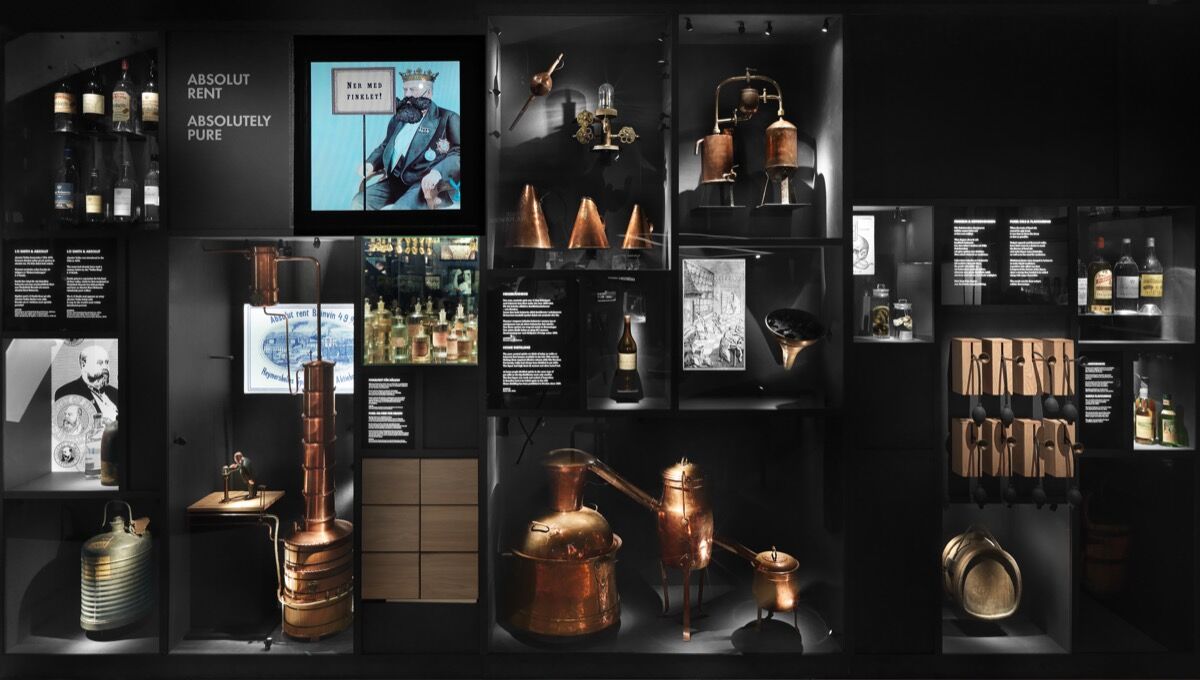
Sweden has a complicated relationship to drinking due to its monopolistic state-run Systembolaget chain of liquor stores—the country’s only legal retail purveyors of spirits with over 3.5 percent alcohol content—which perhaps makes it an unlikely place to find a museum devoted to booze. But at Stockholm’s Spritmuseum, drinking reaches a level of near-fetishization.
Here you can learn about the history, consumption and distribution norms, food pairings, and traditional songs associated with many a fine tipple. Step into the “hangover room” to experience the other side of a debaucherous night, where harsh lights, loud music, and off-kilter seating make nauseating additions to a first-person film that follows a guy on a bender. The museum also plays host to the Absolut Art Collection, comprised of the 850 artworks that the Swedish vodka brand commissioned of its iconic bottle over the years, including those by artistsGeorge RodrigueandDavid Shrigley.
(Exactly where this million-dollar marketing idea came from is the subject of dispute, according to Mia Sundberg, curator of the Absolut Art Collection, but most believe it started withAndy Warhol, who presented the company with a painted bottle in the spring of 1986 that ultimately ran as an ad inInterviewmagazine.)
World Erotic Art Museum
Miami Beach, Florida
Naomi Wilzig was posthumously quoted in her 2015Miami Heraldobituary ashaving toldthe paper in 2002, “I’m a crusader to get John Q. Public to accept that erotic art is out there. We accept violence, but we go crazy over the idea of a nude body.” The collector, who reportedly grew up in a conservative Jewish family and whose banker husband never much cared for her taste in art, successfully launched this crusade with her World Erotic Art Museum in 2005.
It’s comprised of roughly 4,000 artworks that evoke the pleasure and pain of love by creatives ranging from little-known folk artists to big names likeRembrandt,Picasso,Salvador DalÃ,Robert Mapplethorpe, andBunny Yeager. The museum’s programming foregrounds sex-positive inclusivity, and its current exhibition, “Kinsey Institute: Untold Stories,” gives voice to perspectives on sex that have largely been excluded from mainstream dialogue.
Additionally, a new gallery focuses on the collection and practice of Magnus Hirschfeld, a German sex researcher whose art and library faced Nazi scrutiny (and destruction) in 1933.
Musei di Palazzo Poggi, Obstetrical Museum
Bologna, Italy
Wax wombs at the Museo di Palazzo Poggi Anatomy & Obstetrics. Photo by Geoffrey Rockwell, via Flickr.
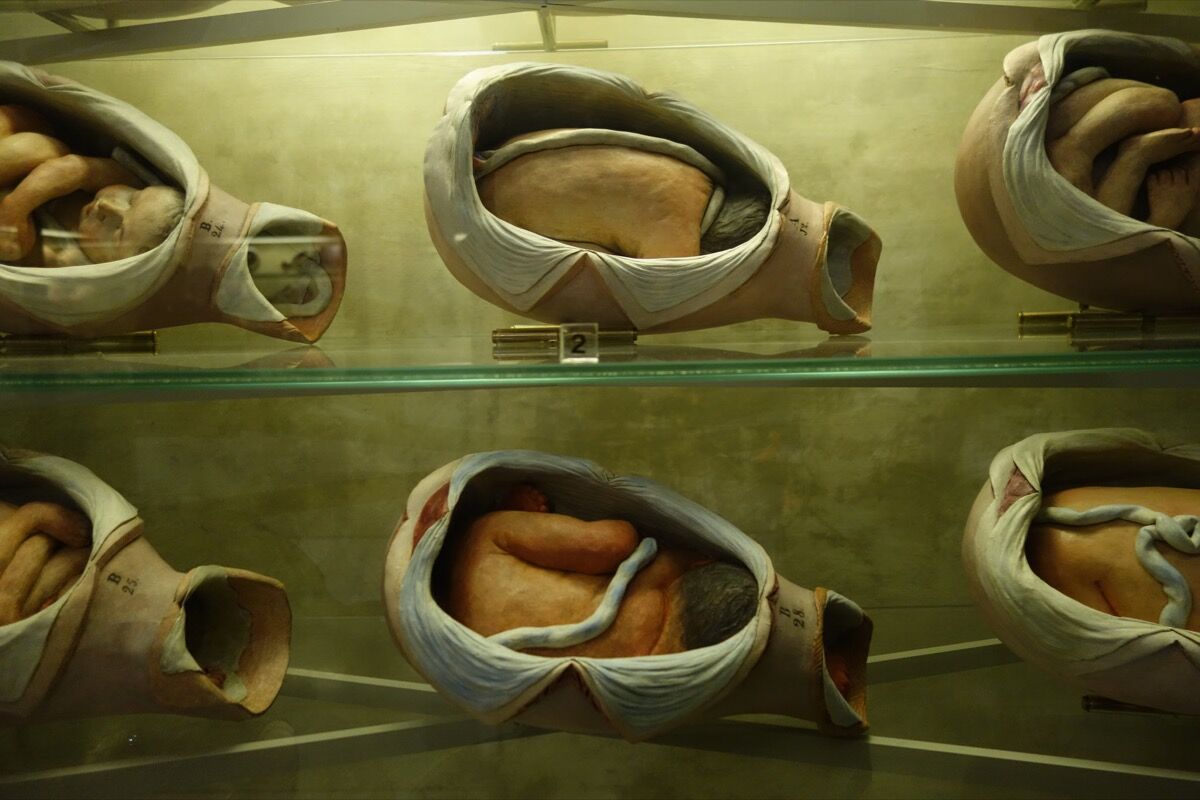
One of several curious collections found in the opulent 16th-century Poggi Palace (now part of the University of Bologna), the museum’s selection of anatomical models and surgical instruments has some of the finest waxworks and rarest medical tools in the world. It was amassed at the personal expense of an 18th-century Bolognese doctor, Giovanni Antonio Galli, with the intention of educating midwives in childbirth since, as women, they were excluded from medical schools and relied largely on anecdotal information about birthing—as well as a fair bit of trial and error. Students could practice delivering fetuses from a life-sized uterus, a highlight of the collection.
The museum is also home to a wax self-portrait by 18th-century anatomical sculptor and professor Anna Morandi Manzolini andVenerina(c. 1782), a reclining Venus figure by sculptor Clemente Susini, complete with removable organs.