https://www.instagram.com/p/Dey2CM6iLxB/?dlrf=dHFsanNiY2V4dHdj&img_index=1


 |
|---|
 |  |  |  |  |  |  |  |  |  |
|---|
| THE TALKS | 23 October 2026 |
|---|
| Documenting an Era, Rediscovering the Self |
|---|
|
|---|
| Evelyn Halim |
|---|
| / |
|---|
| Jakarta, Indonesia |
|---|
| / |
|---|
In Chile's Atacama Desert, a human skeleton lies exposed on the ground. Beside it, two robotic arms set objects down, take them away or gesture towards the open landscape, while a moving heliostat and the camera's point of view are orchestrated by artificial intelligence. The footage is edited in real time, with data from sensors in the exhibition space continually feeding into the process, so the film has neither a beginning nor a final cut. This is Pierre Huyghe's Camata (2024), first presented in his 2024 solo exhibition "Liminal" at Punta della Dogana in Venice, and the most recent acquisition of the Jakarta-based collector Evelyn Halim. Yet what truly set her on the path of collecting was seven horses. LARRY'S LIST recently spoke with Evelyn Halim about how she found her way into contemporary art under her mentor's guidance, how she has built her collection with context as her method, her latest acquisition by Pierre Huyghe, and the experience of co-commissioning an underwater installation with two fellow Indonesian collectors. |
|---|
| / |
|---|
| Read Full Interview |
|---|
| Follow us on |  |  |  |  | Tell a friend |  | Unsubscribe |
|---|
|
|---|
In Chile’s Atacama Desert, a human skeleton lies exposed on the ground. Beside it, two robotic arms set objects down, take them away or gesture towards the open landscape, while a moving heliostat and the camera’s point of view are orchestrated by artificial intelligence. The footage is edited in real time, with data from sensors in the exhibition space continually feeding into the process, so the film has neither a beginning nor a final cut. This is Pierre Huyghe’s Camata (2024), first presented in his 2024 solo exhibition “Liminal” at Punta della Dogana in Venice, and the most recent acquisition of the Jakarta-based collector Evelyn Halim. Yet what truly set her on the path of collecting was seven horses.
Halim’s interest in art took root in London, where she spent much of her free time in the city’s museums while studying economics and accounting. Back in Jakarta, she began visiting galleries and buying works that caught her eye, guided largely by aesthetic instinct. The turning point came at a gallery opening, where she met the veteran collector Wiyu Wahono, who would become her mentor. She regards 2019 as the start of her collection, and the journey began with a work Wahono recommended: a large-scale installation by Jompet Kuswidananto. Born in 1976, Jompet lives and works in Yogyakarta, and his practice spans installation, video, sound, performance and theatre. The installation Wahono recommended explores Javanese culture and its history, responding to the split between tradition and modernity, as well as to religious diversity and syncretism in Java. Halim was taken with it at once, yet she had not anticipated its scale: the installation comprises seven horses, and installing it took three days.
Going to such lengths to display a single work made her realise that she needed to understand its meaning and its place within contemporary art. During the pandemic lockdown, she read systematically through the theory books Wahono had lent her, discovered a great many artists along the way and began writing to galleries one by one. She has said it “felt like I was back at school”: after finishing each book, she would try to acquire a work that reflected its themes. Her interest in Ryoji Ikeda, for one, began with a book on sound art.
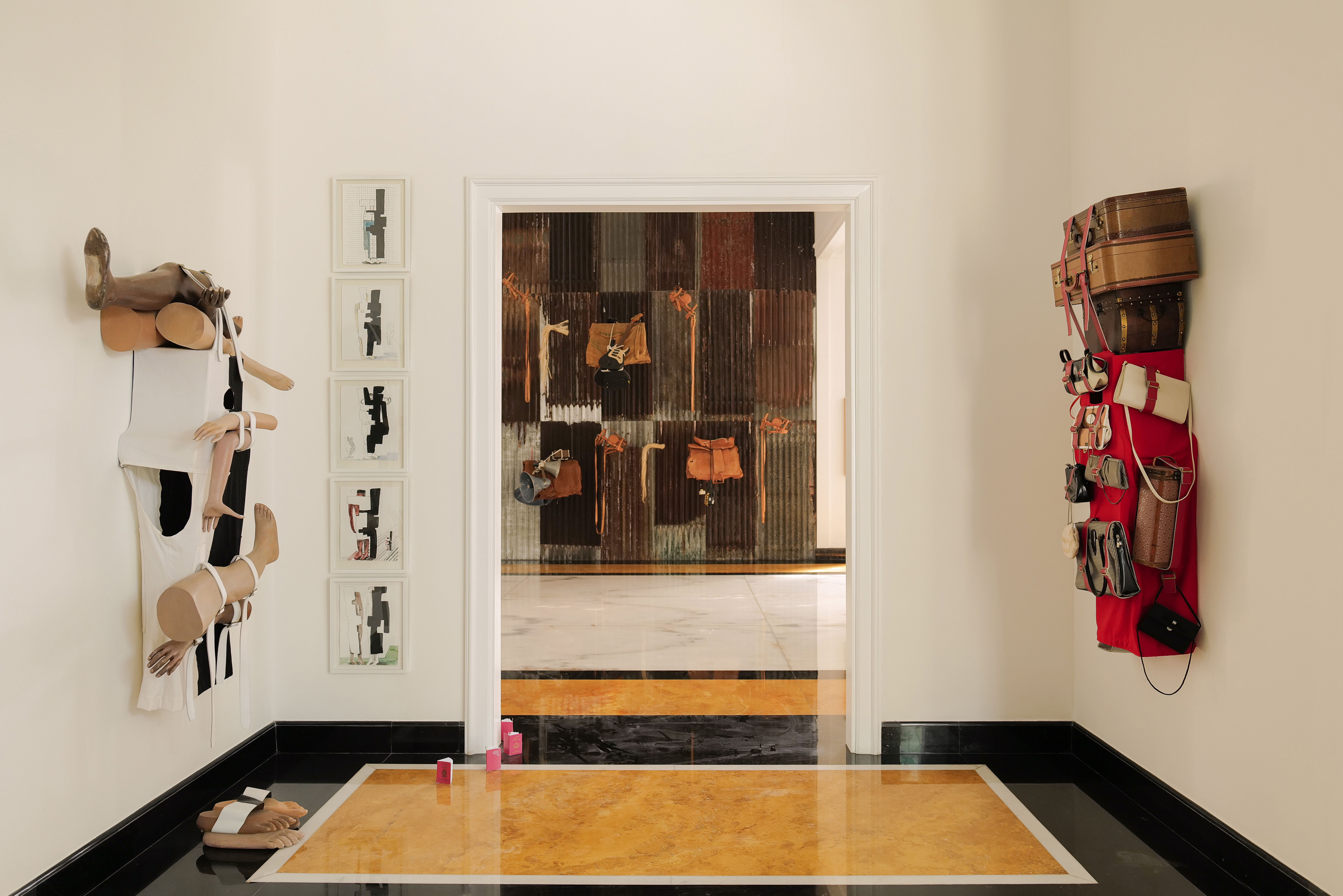
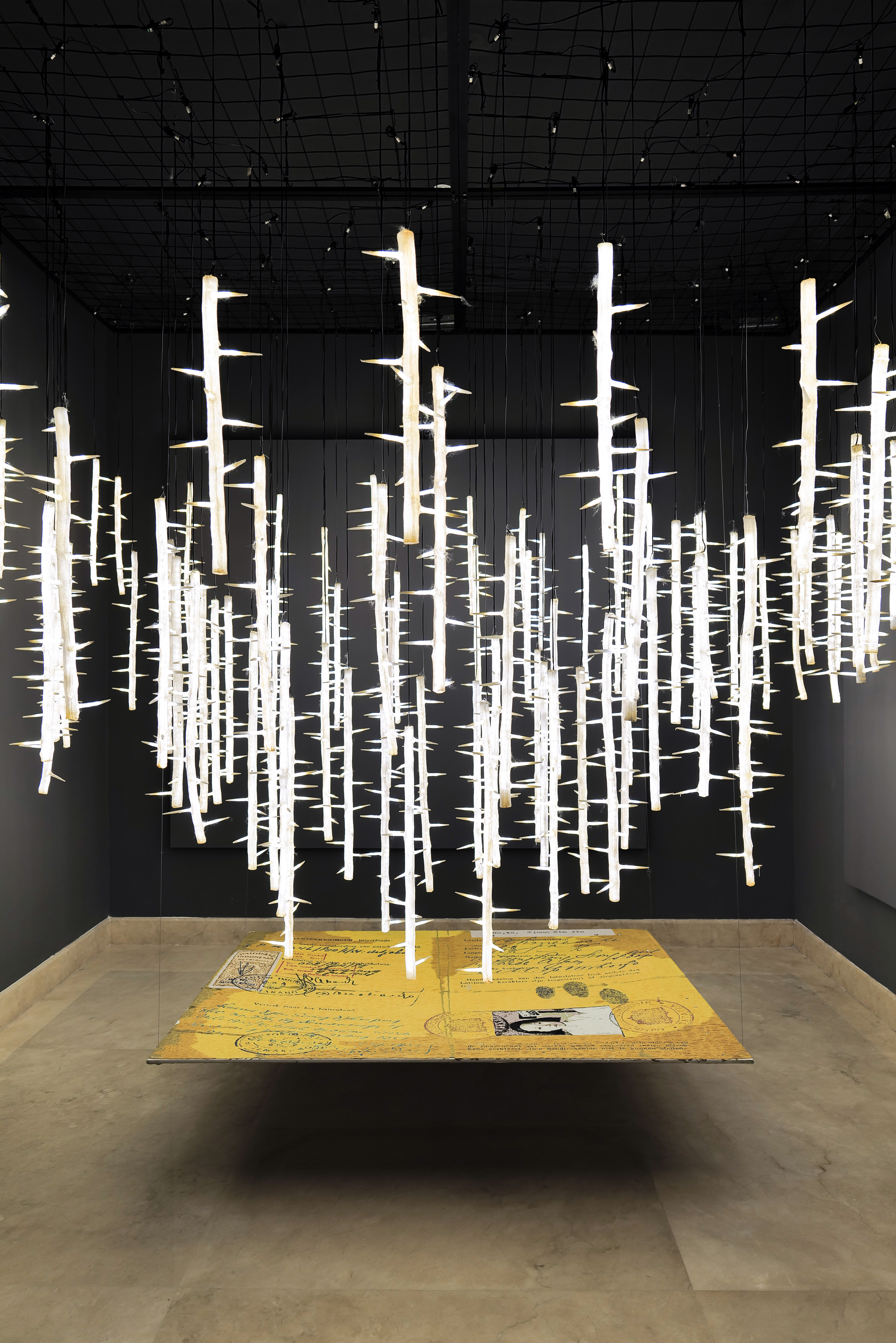
Today, Halim’s collection brings together several generations of significant Indonesian artists: F.X. Harsono, a founding member of the New Art Movement (Gerakan Seni Rupa Baru) in the 1970s; Nindityo Adipurnomo, who co-founded the Yogyakarta art space Cemeti with Mella Jaarsma in 1988; Heri Dono, who represented Indonesia at the Venice Biennale in 2015; and Jompet Kuswidananto. International artists include Anri Sala, Anicka Yi and Pierre Huyghe. There is also a painting by Raden Saleh, the nineteenth-century painter often regarded as the starting point of modern Indonesian art, and several works in her home are wedding gifts from artists. For Halim, the value of a work lies first in its context, though she draws a distinction: with contemporary art, context is paramount; with modern art, aesthetics carry greater weight. The two poles of her collection, Raden Saleh at one end and AI-edited moving images at the other, reflect exactly that.
This emphasis on context follows from Wahono’s own philosophy. He holds that a good collection should be a visual reflection of the zeitgeist, and that a collector must anticipate how future generations will describe the present. His collection, organised around digitalisation, globalisation, the environment and urbanisation, spans bio art, sound art, light art and computer-generated imagery, and was exhibited at Ars Electronica in Linz in 2019. Halim’s current focus on AI art extends this lineage. The coherence she seeks lies not in stylistic uniformity but in a consistency of inquiry. The Indonesian artists’ engagement with colonial history, identity, tradition and belief, and the international artists’ practices working through sound, biological materials and machine intelligence, together point to a world in constant flux.
“As a developing country, Indonesia doesn’t have enough public museums,” Halim has said, and this has given her a sense of responsibility to help preserve the work of Indonesian artists. Private initiative has long played a central role in collecting and exhibiting art in Indonesia: the collector Oei Hong Djien, who trained as a physician, built the OHD Museum in Magelang, Central Java, with the earliest building completed in 1997, and Museum MACAN, founded by Haryanto Adikoesoemo, opened in Jakarta in November 2017 as the country’s first museum of modern and contemporary art. Halim’s generation continues along this path in more flexible forms. She keeps most of her collection, including large-scale installations, in a private art space that she opens to artists, friends, visiting collectors and curators. Where professional institutions remain sparse, the mentorship passed from collectors like Wahono to Halim becomes part of the collecting ecosystem in its own right. In 2025, Frieze named her one of the most dynamic young collectors in Indonesia.
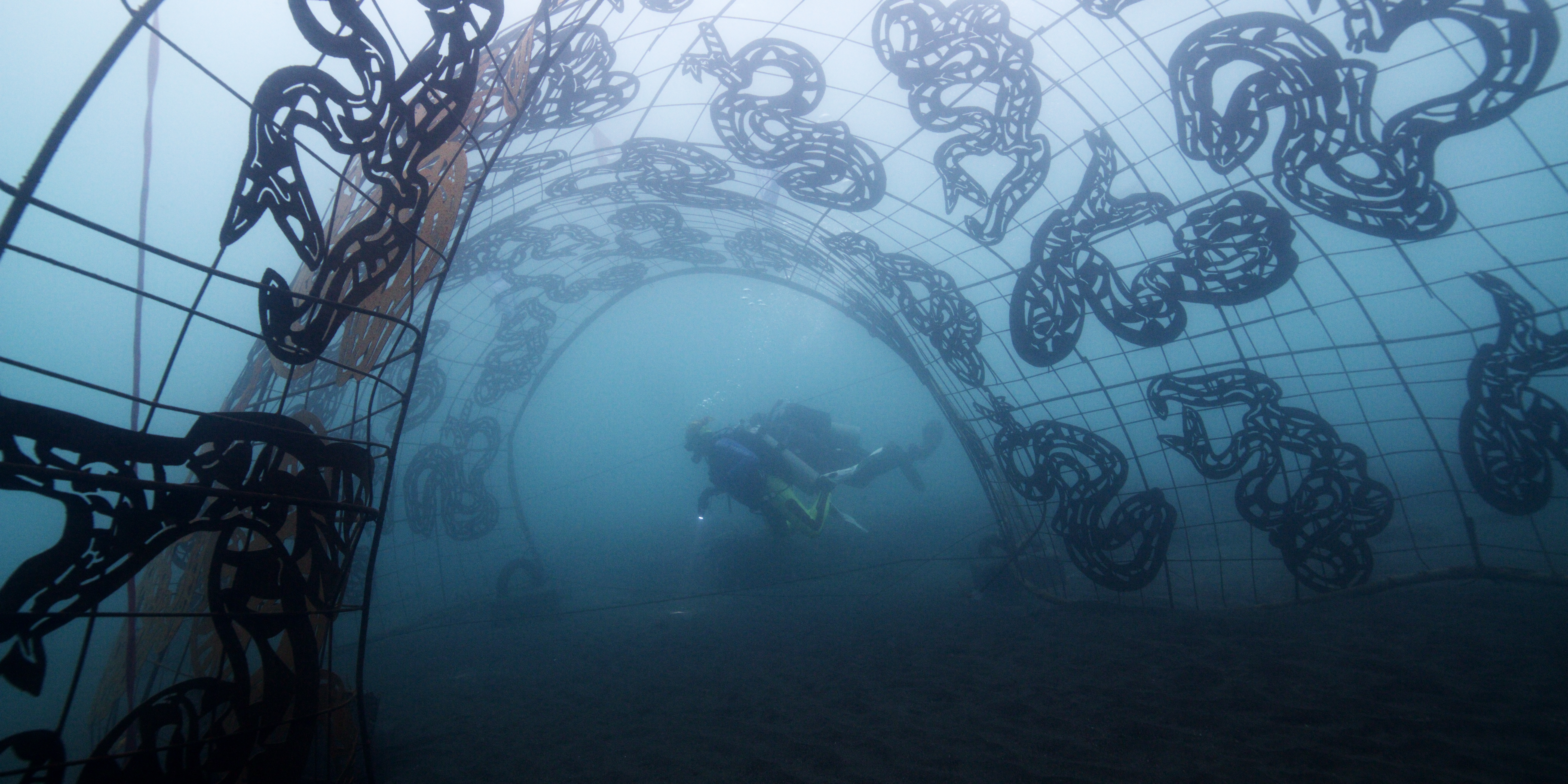
Her sense of responsibility also extends beyond the white cube. In 2022, Halim, Abigail Hakim and Wiyu Wahono jointly commissioned the artist Teguh Ostenrik to create the underwater installation “Domus Anguillae” (House of the Eels). Submerged that May off the village of Sembiran in Buleleng Regency, northern Bali, the work consists of a series of metal tunnels some 60 metres long and uses Biorock technology to stimulate coral growth. It is the eleventh work in Ostenrik’s ARTificial Reef series, realised by his Terumbu Rupa Foundation. The reefs there had nearly disappeared because of blast fishing; today, the structure is covered in coral, with fish moving in and out of it. Like Camata, it has no final, finished state. Halim sees herself as a “documentarian”, recording both her own collecting journey and the history of art itself, and coming to know herself better along the way. From an installation that took three days to put in place to a film continuously edited by machines, her collection documents how the context of contemporary art shifts with technology and with the times.
LARRY’S LIST recently spoke with Evelyn Halim about how she found her way into contemporary art under her mentor’s guidance, how she has built her collection with context as her method, her latest acquisition by Pierre Huyghe, and the experience of co-commissioning an underwater installation with two fellow Indonesian collectors.
Collecting
When did you begin collecting art, and what first prompted you to embark on this journey?
I started collecting art in 2019. During the pandemic lockdown, I finally had the time to dive into contemporary art theory books that my mentor, Wiyu Wahono, generously lent me. Through those books, I discovered so many artists and started reaching out to galleries by email.
How do you understand your role as a collector, more as an explorer, a documentarian, or a bridge for cultural dialogue?
I see myself as a documentarian of both my own journey and the history of art itself. Along the way, I’ve also gotten to know myself better.
What is the most memorable work in your collection, and what insights or inspiration has it given you?
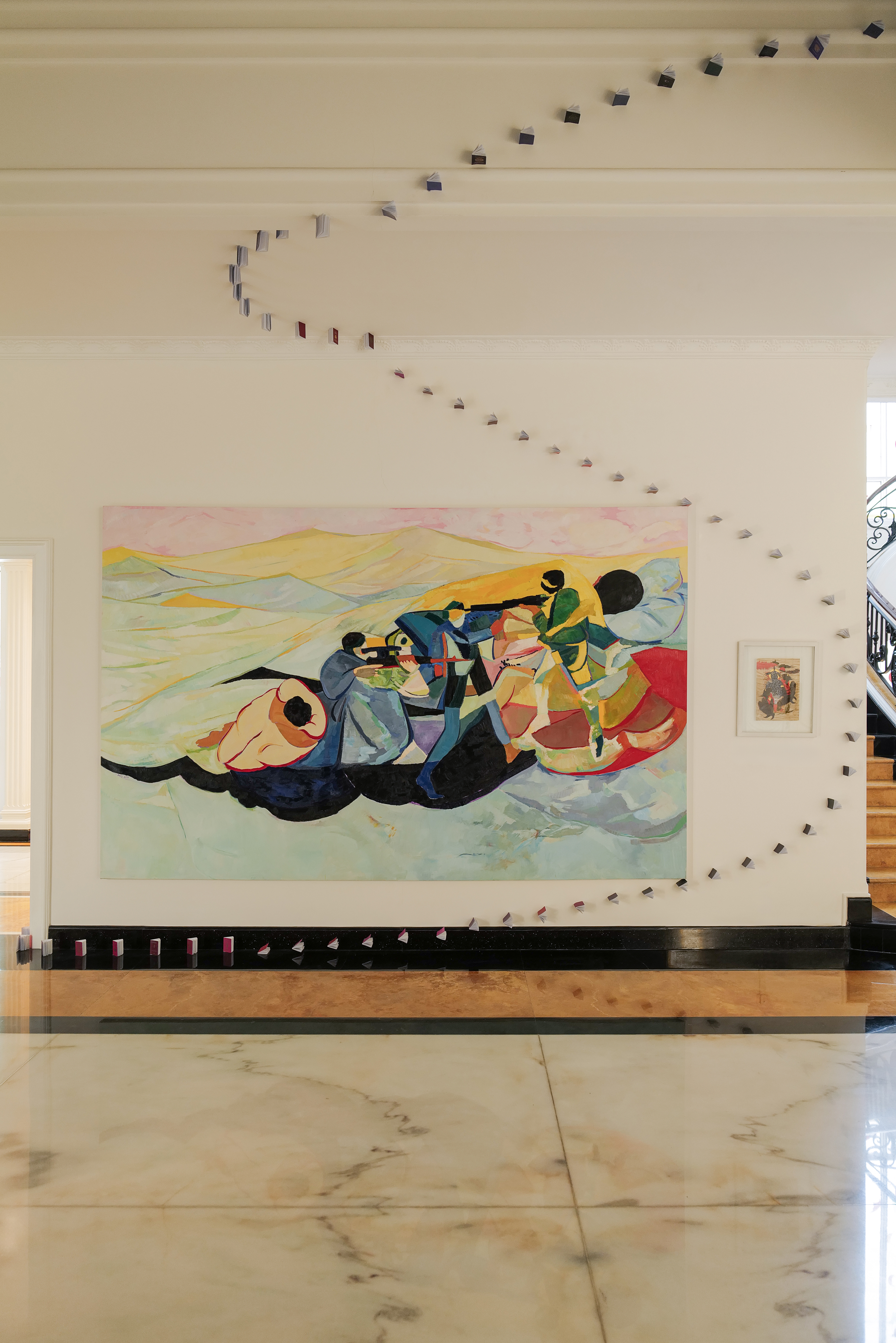
Honestly, every piece in my collection is memorable to me. But there’s one installation by Jompet that really kicked off my collecting journey. It always reminds me of where I started, and it keeps me humble, a reminder to keep learning about contemporary art, both what’s already out there and what’s still coming. The story began when my mentor told me about an incredible piece for sale, and I fell in love with it instantly. I had no idea it was such a massive work, seven horses, and it took three days just to install. Going through all that just to display it made me realize I needed to actually understand the meaning behind the work and its place in contemporary art. That’s what pushed me to start reading art theory books, so I could better understand the pieces I wanted to collect.
Context and Coherence
For you, does the value of an artwork lie more in the market, its historical context, or personal resonance?
For me, the value of an artwork lies more in its context. If we only look at art through a market lens, then what’s really the difference between art and a commodity?
Which themes or issues in contemporary art are you most drawn to, and why?
Right now I’m really drawn to AI art. Our lives are consumed by AI 24/7 these days, so I think it’s one of the defining topics of our era.

When selecting new works, do you consider how they relate to your existing collection? What does coherence mean to you as a collector?
Coherence in a collection is really important, otherwise, you lose a sense of who you are as a collector. To put it simply, it’s like getting dressed: you probably don’t want to walk out wearing ten different animal prints at once.
Do you pay attention to the context or narrative behind an artwork? How do these factors influence your collecting decisions?
When it comes to collecting contemporary art, context really matters. With modern art, though, I’d say the aesthetic tends to matter more than the context.
Responsibility And The Road Ahead
How do you view the social or cultural impact of art collecting? Do you believe collecting carries a certain responsibility?
I think our responsibility as collectors is, first, to the artist, to take good care of the work. And where possible, to make sure it’s shown to as many people as we can, because a work isn’t really doing its job as art if only the collector and the artist ever get to see it.
How has art collecting changed your life or introduced new experiences for you?
Art has opened my eyes to a whole different world, and it pushes me to stay open-minded. It challenges me intellectually while also showing me the sweetness of life.
How do you envision the future direction of your collection? Are you interested in exploring new media or artistic forms?
I want to keep an open mind and stay aware of the times we’re living in, so yes, I’ll definitely keep exploring.
What is the most recent work you have acquired?
The most recent piece I’ve acquired is by Pierre Huyghe, titled Camata. It’s a self-directed film, one where robotic elements, driven by machine learning, edit the footage in real time via AI.
Has there been an event or moment in your collecting journey that had a profound impact on you? Could you share it with us?
One moment I’ll never forget is commissioning a work by Teguh Ostenrik, together with two other Indonesian collectors, Abigail Hakim and Wiyu Wahono. The piece, Domus Anguillae, is an underwater installation in Buleleng, North Bali. It’s meant to help regrow the coral reefs there, which had almost disappeared because of potassium bomb fishing in the area.
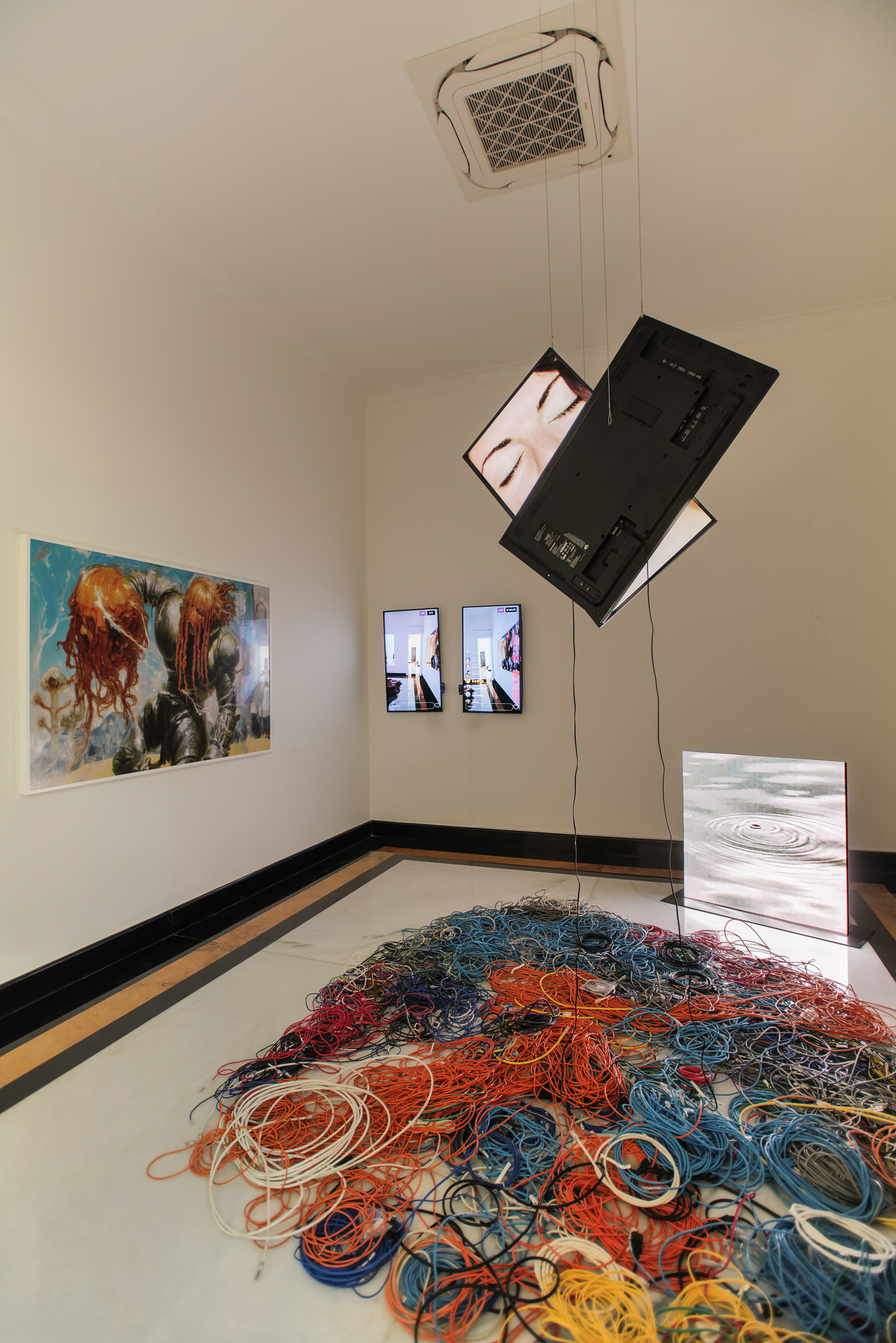
![Ryoji Ikeda, "data.flux [nº1]", 2020, OLED monitor displays, computers and speakers, W 0.8 × D 14.5 m. Courtesy of the collector.](https://www.larryslist.com/artmarket/wp-content/uploads/L1060165b.jpg)
Instagram: @halimevelyn


