Friday, September 2, 2016

Anbang, a Chinese insurer | A Chinese Mystery: Who Owns a Firm on a Global Shopping Spree?


Pingyang County’s verdant hills still hint at a long-lost China. Rice paddies and villages surround its bustling towns, and in the fields, farmers wade into the mud to plant seedlings as they have for thousands of years.
It is an odd place to find the people behind a Chinese corporate powerhouse that is turning heads on Wall Street with a global takeover binge. Yet the area is home to a tiny group of just such people — small-time merchants and villagers who happen to control multibillion-dollar stakes in the Anbang Insurance Group, which owns the Waldorf Astoria in New York and a portfolio of global names and properties.
American regulators are now asking who these shareholders are — and whether they are holding their stakes on behalf of others.
The questions add to the mystery surrounding a company that seemed to come out of nowhere, surprising deal makers with offers to pay more than $30 billion for assets around the world.
Anbang’s shopping spree is part of an outflow of money from China that has reshaped global markets but has often been shrouded in secrecy, sometimes by prominent Chinese looking to shift their wealth abroad without attracting attention at home. That poses a problem for international regulators trying to identify the buyers behind major acquisitions and to assess the riskiness of these deals.
The Anbang shareholders in the Pingyang County area hold their stakes through a byzantine collection of holding companies. But according to dozens of interviews and a review of thousands of pages of Anbang filings by The New York Times, many of them have something in common: They are family members and acquaintances of Wu Xiaohui, Anbang’s chairman, a native of the county who married into the family of Deng Xiaoping, China’s paramount leader in the 1980s and ’90s.
In many ways, Anbang and Mr. Wu appear to be archetypal products of China’s mix of freewheeling capitalism and Communist Party dominance, a formula that has fueled nearly four decades of untrammeled growth.
Anbang got its start as an auto insurance company in 2004 in the eastern Chinese city of Ningbo. For years it was only a minor player. But it took off as it became more aggressive with its finances, buying stakes in Chinese banks and bringing in money by selling high-risk, high-yield investment funds to ordinary Chinese.
Mr. Wu, 49, a former car salesman and low-level antismuggling official, led Anbang through this transformation and is now known as one of China’s most successful businessmen. He wears tailored suits and polished loafers, hobnobs with the likes of Stephen A. Schwarzman of Blackstone, and sometimes holds court at Harvard.
But he does not appear in Anbang’s filings as an owner.
It is common in China for the wealthy to have their shares in companies held in others’ names. Known in Chinese as baishoutao, or white gloves, these people are often trusted relatives or acquaintances. Many defend the practice as a way to protect their privacy in a nation where riches can be a political liability. But others say white gloves can be used to hide ill-gotten gains and thwart corruption investigators.
Photo
On the fourth floor of this shabby building in Beijing is an office that is home to two companies with a total stake of more than $15 billion in assets of one of China’s biggest financial conglomerates: the Anbang Insurance Group. Credit Gilles Sabrie for The New York Times
Anbang did not respond when asked if Mr. Wu was a shareholder and declined to answer questions about its owners.
The company, a spokesman said, “has multiple shareholders who have made all required disclosures under Chinese law. They are a mix of individual and institutional shareholders who made a commercial decision to invest in the company. Anbang has now grown to be a global company thanks to the support of these long-term shareholders.”
For investors and regulators, white gloves can make it difficult to evaluate the financial health of a Chinese buyer. Ownership may be concentrated in the hands of a few people, posing hidden risks, and companies with government connections could be vulnerable to political shifts or become magnets for corruption.
“It is very important for businesses to know who they are ultimately doing business with, and for investors, what they are investing in,” said Keith Williamson, a managing director in Hong Kong at Alvarez & Marsal, a firm that carries out corporate fraud investigations.
It is not clear whether the shareholders in the Pingyang County region are holding large stakes on behalf of anyone else. But on May 27, Anbang withdrew its application with New York State to buy an Iowa insurer, Fidelity & Guaranty Life, for $1.6 billion. Regulators had asked about ties between several shareholders with the same family names, said one person briefed on the matter who spoke on the condition of anonymity.
A $6.5 billion deal for a portfolio of hotels that includes the Essex House in New York and several Four Seasons locations is awaiting results from a security review by the American government. In March, Anbang withdrew a $14 billion bid for Starwood, the operator of Sheraton and Westin hotels, in a move that surprised Wall Street.
The company could come under greater scrutiny as it prepares to sell shares in its life insurance business on the Hong Kong stock exchange next year. Already, at least one major New York-based investment bank has raised concerns about Anbang’s ownership after studying its shareholding structure to evaluate whether to help with its overseas deals, according to two people involved in the matter who asked not to be identified because the process was private. The bank did not participate in Anbang’s deals.
Separately, the Chinese magazine Caixin reported in May that Chinese regulators were examining Anbang’s riskier financial products. It is unclear where that inquiry stands or whether Anbang’s ownership structure is being investigated.
Continue reading the main story
President Xi Jinping has waged a campaign against graft since taking office, and the use of white gloves has recently come under scrutiny. “White gloves are accompanied by power’s black hands,” the Communist Party’s disciplinary watchdog wrote in a report last year.
Questions about Anbang’s owners come as Chinese companies make deals around the world — sometimes representing efforts by China’s powerful to move money out of the country, as the economy slows and the party tightens its grip on everyday life.
Photo
Wu Xiaohui, chairman of Anbang, at a global insurance conference in 2015. Credit Ben Asen/International Insurance Society
China has encouraged some capital outflow to improve the performance of its investments and expand its influence. But the subject of the elite moving money overseas is politically sensitive, raising questions about the source of their wealth and their confidence in the Chinese economy.
Luo Yu, the son of a former chief of staff of China’s military, said China’s most politically powerful families had been transferring money out of the country for some time.
“They don’t believe they will hold on to power long enough — sooner or later they would collapse,” said Mr. Luo, a former colonel in the Chinese Army whose younger brother was a business partner with one of Anbang’s founders. “So they transfer their money.”
At its founding in 2004, Anbang had an impressive list of politically connected directors. Records show early Anbang directors included Levin Zhu, son of a former prime minister, and Chen Xiaolu, the son of an army marshal who helped bring Communist rule to China.
Then there was Mr. Wu, who was born Wu Guanghui but was known as Wu Xiaohui from a young age. Relatives said he grew up in a Catholic family; a crucifix sat on his aunt’s dining room table, and she wears a necklace with a portrait of the Virgin Mary.
Mr. Wu married Zhuo Ran, a granddaughter of Deng, the Chinese leader who brought China out of the chaos of the Mao era. Together, Mr. Wu, Ms. Zhuo, Mr. Chen and their relatives owned or ran the companies that controlled Anbang, according to company filings.
Anbang leapt onto the global stage with last year’s purchase of the Waldorf Astoria and its aborted bid for the Starwood chain. By this year, Anbang’s assets had swelled to $295 billion.
It is not clear what prompted Anbang’s sudden interest in overseas assets. But the shift came after a reshuffling of its ownership structure that also led to the injection of more than $7.5 billion into the company.
Company documents filed with Chinese agencies show that the number of firms holding Anbang’s shares jumped to 39, from eight, over six months in 2014. Most of those firms received large injections of funds. At the same time, Anbang’s capital more than quintupled.
Ms. Zhuo disappeared from the ownership records by the end of that year. Many of Mr. Wu’s relatives did as well. Mr. Wu and Mr. Chen had disappeared earlier from the records.
Photo
The Anbang Insurance Group owns the Waldorf Astoria in New York, above, and a portfolio of global names and properties. Credit Chang W. Lee/The New York Times
Mr. Zhu, who does not appear to have owned shares, disappeared in paper filings from Anbang’s roster of directors by 2009, though he was listed as a director on online government filings as late as 2014.
Mr. Wu, Mr. Chen and Mr. Zhu did not respond to requests for comment, and Ms. Zhuo could not be reached. In March, Mr. Zhu told Chinese reporters that he was not an Anbang director.
Anbang’s current shareholding firms are not well-known names in China, and some appear to have been set up just to hold Anbang shares. One lists its address as the empty 27th floor of a dusty Beijing office building. Two more list an address at a mail drop above a Beijing post office.
Using corporate filings, The Times compiled a list of nearly 100 people who own shares in the firms and traced about a dozen to Pingyang County or nearby. Reporters visited the area, in China’s eastern Zhejiang Province, and interviewed dozens of residents, including several whose names appeared on the list. They also interviewed an uncle, an aunt and a nephew of Mr. Wu.
The latter two, as well as others in the area, said one name matched that of his sister, Wu Xiaoxia. The family members said several other names matched those of Mr. Wu’s extended kin, including two cousins and others on his mother’s side of the family. Through their various stakes in Anbang shareholding companies, these people control a stake representing more than $17 billion in assets.
Other names matched local acquaintances of Mr. Wu, including Huang Maosheng, a local businessman who confirmed in a brief phone interview that he had a business relationship with Mr. Wu but declined to elaborate.
One village leader and neighbors identified the names of four of Mr. Huang’s relatives — including some whom they described as common workers — from among those on the list. Their Anbang holdings represent about $12 billion in assets.
Another resident, Mei Xiaojing, said two names on the list matched those of her relatives. Asked if she knew Mr. Wu, she said, “Well, yes,” then ended the phone conversation and did not respond to subsequent calls. Through multiple holding companies, those three people have a stake representing about $19 billion in Anbang assets.
As Anbang rose, so did Mr. Wu’s profile. In 2013 Mr. Wu secured a yearlong position as a visiting fellow at the Asia Center of Harvard, joining a growing list of politically connected Chinese billionaires with ties to Harvard.
Ezra F. Vogel, a professor emeritus at Harvard who wrote a biography of Deng, said he met Mr. Wu on several occasions.
“He had this staff of sharp people who were working for him,” Mr. Vogel said. “It seems that they were doing the detail work, and he was the friendly man supplying the connections.”
Continue reading the main story

Site Index The New York Times

Site Index Navigation

Thursday, September 1, 2016

Frontiers of Prosperity: Cuba in Pictures

Frontiers of Prosperity: Cuba in Pictures

A look at what the last Communist country in the Americas can offer international companies. For further insights, read "Reconnecting Cuba."

A sign on Calle 23, a busy street in Havana’s El Vedado district.

Cuba is not the average frontier market. The U.S. Congress has so far resisted President Barack Obama’s call to lift the embargo that has been in place since the early 1960s, and Cuba’s government is openly ambivalent about how much to embrace foreign companies. Like China when it first allowed foreign direct investment in the 1980s and 1990s, Cuba requires that outside companies do business through joint ventures with local companies. And like China, the government’s influence colors every aspect of business, with Cuban political leaders continuing to express suspicion about U.S. motives.

The main street in Remedios, Cuba.

There are some important differences between Cuba and China, starting with the reasons for businesses to go there. Cuba has a population of only 11 million, so to companies, it lacks an incentive to crack an enormous untapped market. And it’s an impoverished country with infrastructure not much better than what one would find in the poorest states in sub-Saharan Africa. More than 50 years of Communist rule and U.S. sanctions have brought down the island’s once-thriving economy.

Classic American cars in Havana, with an oil refinery in the distance.

What can this frontier market offer companies that venture in? Cuba has limped along with a state-controlled economy that produces nickel and cobalt and sends high-end cigars and rum to developed countries other than the United States. Although there are estimates of oil reserves under its waters, exploration of offshore drilling potential hasn’t had positive results so far.

To go online, the vast majority of Cubans must queue up to buy access cards sold by ETECSA, Cuba’s state-run telecommunications company.

Cubans are hungry for information from the world outside, but have had little access to the Internet, which is slow or nonexistent in their country. That fact alone is an invitation to foreign companies — and not the only one. Since U.S. president Barack Obama announced the easing of U.S. sanctions against Cuba in December 2014, nearly every day has brought news of U.S. cruise ships, entrepreneurs, baseball teams, agriculture producers, and celebrities landing in Havana. Although the government has begun to invest in making the Internet available, only about 5 percent of the Cuban population has regular Internet access at home, one of the lowest rates of Internet penetration in the world.

A Wi-Fi center operated by ETECSA.

Another option for Cubans who want to go online is to find one of a few dozen Wi-Fi hot spots strewn about the capital. The cost of one hour of Internet in Cuba — $2 — is a significant expense to most Cubans. Those who can afford that hour endure some of the slowest connection speeds in the world. In one 2015 survey conducted by Nearshore Americas, 45 percent of the respondents reported connectivity speeds of 1 MB per second; Internet speeds in the Dominican Republic tend to be 10 to 20 times greater.

A store that sells music and movies in Havana, where nearly one-fifth of the population lives.

But this paradigm is beginning to change. According to a government white paper leaked by Nearshore Americas, by 2017, the ruling regime plans to make 3G data available to mobile phone users living in urban areas, and to expand broadband access to universities nationwide. By 2020, the government plans to extend private Internet access to 90 percent of the population. Netflix, looking to the future, is already making its video streaming service available, although right now, burned CDs of music and movies and small portable hard drives are the main means of passing information.

A Soviet-style building in Havana.

It is now 57 years since Fidel Castro overthrew the dictatorship of Fulgencio Batista and aligned his government with the Soviet Union. During the Cold War years, the United States government engaged in systematic attempts to overthrow him. Rhetorically at least, this emphasis has eased. In April 2015, Obama met with Raul Castro at a Summit of Americas conference in Panama and assured the Cuban president that the United States was “not in the business of regime change.”

Campus of the CUJAE, or José Antonio Echeverría Higher Polytechnic Institute, in Havana, where engineering students graduate with advanced degrees.

Cuba is a country that badly needs a competitive edge in the global economy, and a huge opportunity lies with its highly educated population. In their five and a half decades in power, Cuba’s Communist leaders have consistently promoted universal literacy, and in recent years they have invested large sums of money in education in the STEM (science, technology, engineering, and mathematics) subjects. Each year Cuba produces thousands of new graduates in scientific and technological fields; many of them possess the skill set to contribute to the telecommunications industry, though there are few opportunities for jobs after college.

Paseo de Marti, Old Havana, Cuba.

Creating industries around the local talent will take a great deal of reform. Many people have left Cuba because they can’t earn a living there. For business leaders who have decided to enter Cuba soon, there are a number of significant challenges, such as the relative absence of a consistent regulatory framework. Still, the economy looks as though it has nowhere to go but up. And the deciding factor may well be human capital — the people of the country.


The Importance of Continuing Education for Digital Leaders


FEATURED ARTICLE

The Importance of Continuing Education for Digital Leaders

To keep up with changing technology, you have to be a perpetual student — no matter how experienced you are.
by Chris Curran


Welcome to strategy+business. Here’s what’s new.
strategy+business: Corporate Strategies and News Articles on Global Business, Management, Competition and Marketing

The Importance of Continuing Education for Digital Leaders

Chris Curran
Chris Curran is a principal with PwC US, based in the Dallas/Fort Worth area. He is the chief technologist for the firm’s advisory practice and he leads the firm’s ongoing Digital IQ research.

Whether you’re a newly minted MBA or an experienced leader, you’re always honing your skills and navigating change. And technology is one discipline in which you really can’t afford to stagnate. With digital transformation so central to strategy for most companies, all executives — especially CEOs — must embrace a learning mind-set. Gone are the days you can delegate the job of keeping up with technology to the IT staff.
Chief information officers (CIOs), of course, should regularly brief the management team and the board on new developments, demoing exciting new technology, bringing in external speakers and vendors, and using other tactics that promote tech learning and engagement. But keeping up on technology trends is also the responsibility of every executive. And while that can be daunting given the vast tech landscape and seemingly limitless avenues for learning, it’s also incredibly exciting.
So, if your job title doesn’t include the words information, technology, or digital, how do you stay current? And how do you ensure your organization isn’t falling behind? Consulting digitally literate kids, grandkids, or Millennial staff for help, as many chief executives tell us they do, won’t cut it. Here are three easy ways to begin boosting your digital acumen:
1. Get hands-on with new technology. Firsthand experience is a great way to better understand how your organization can apply technology to improve processes, better engage with customers, or create new lines of business. Personal exploration with emerging technologies not only adds to your knowledge base, it also puts you in the shoes of customers and employees. This forces you to think about the human experience, which is often ignored as companies think primarily about the strategic or technological implications of their digital projects.
So go ahead: Play Pokémon Go with your kids. Download an AI assistant app. Take a VR walk-through of your kitchen remodeling project at the home improvement store. Or tinker with Internet of Things devices for your home like smart locks or automation hubs. What you learn in the process may surprise you.
2. Become a maker or a mentor. Take the hands-on approach one step further by mimicking makers, those intrepid do-it-yourselfers who play, experiment, and build tech-based projects. Attend a local Maker Faire, design a stapler, jar handle, or other household gadget on a 3D printer at your local library, join a makerspace in your community, and get inspired.
With digital transformation so central to strategy, all executives — especially CEOs — must embrace a learning mind-set.
Even if you’re not inclined to roll up your sleeves in the workshop, you can still get involved — and get smarter in the process. I recently had the opportunity to serve as a mentor for my son’s high school robotics team. Now, in my role as PwC’s chief technologist, I am immersed in technology innovation on a daily basis and need only pop into our Emerging Technology Lab or visit one of our Experience Center digital hubs to see the art of the possible. Yet even I learned a lot from the experience of guiding a group of smart and enthusiastic teens as they envisioned, prototyped, tested, and competed with their robots. In particular, I came away with insight into effective innovation practices that all enterprises would do well to emulate.
3. Get schooled online. Massive open online courses, or MOOCs, have grown in popularity. Learning platforms like Coursera, edX, and Udacity allow people to sample courses from leading universities. Indeed, the art of continuous learning itself may be the most sought-after skill for tomorrow’s workforce as well as the key to solving tomorrow’s problems. Explore the catalog of courses on any of these platforms to find the fields of study you’d like an introduction to, including design thinking, machine learning, and cybersecurity. In fact, at PwC we’re so bullish about the concept, we’ve recently rolled out a data analytics specialization on Coursera that’s available to everyone, not just our own people.
Can’t commit to a MOOC? Become a regular downloader of tech-focused podcasts, such as those produced by 99% Invisible, A16Z, and Freakonomics Radio. And don’t discount the many TED talks, blogs, and newsletters that highlight tech developments, deals, and industry happenings. The trick is to take a disciplined approach, devoting as little as 15 minutes a day to as much as several hours a week.

What about your company’s Digital IQ?

Now that you’ve charted your own personal digital learning path, take a look at what your organization is doing. Has it been successful in raising its collective Digital IQ?
At PwC, we’ve been studying how companies turn technology investments into competitive advantage for nearly a decade — well before digital was a regular part of the corporate lexicon. In February 2017, we’ll publish our 10th anniversary Digital IQ study, which will focus on digital’s evolving definition, its leadership challenges, and the growing role of emerging technology. In addition to our analysis of data from more than 2,000 companies around the world, we’ll also identify those practices most highly correlated with better performance.
What’s driving your company’s digital strategy? How are your leaders meeting its challenges? Which technologies are you betting on? How much have things changed over the last decade? Please click here to share your insights and reserve a free copy of the report as well as a one-year digital subscription to strategy+business magazine.

Extraordinary Swimming Pools

From Turrell to Hockney, 8 Artists Who Designed Extraordinary Swimming Pools

Few things evoke summer more than the swimming pool, its inviting blue water offering a respite from sweltering heat. Pools have also served as an unexpected medium for artists, from David Hockney to Katherine Bernhardt. From filling pools with diet soda to painting them with signature patterns, these eight artists have designed extraordinary—if not always functional—swimming pools around the world.


James Turrell, Baker Pool, 2002-2008

Photo by Giffen Clark Ott, via Flickr.
Throughout his 50-year career, Turrell has become famous for manipulating the perception of light and space in mesmerizing installations. So it’s only fitting that, during a party to celebrate the completion of Baker Pool in 2008, a discombobulated guest unwittingly walked down the stairs and straight into the water; Turrell himself pulled her out. The LED-lined pool, commissioned for the basement of a barn on a Greenwich, Connecticut estate, was the first such work the artist completed in the United States. A previous Turrell-designed swimming pool, built for a French cultural center, featured a central shaft that swimmers had to dive under to catch a glimpse of one of the artist’s signature skyscapes.


David Hockney, Roosevelt Hotel, 1988

Left: Photo by @bellaanddonna, via Instagram. Right: Photo by @hugofromkamakura, via Instagram.
Known for his bright, airy paintings of Los Angeles swimming pools, Hockney occasionally used the real thing as his canvas. The most accessible example is located in Hollywood’s Roosevelt Hotel, where the artist spent one morning in 1988 covering the pool bottom with a pattern of swooping half-moon marks. Local officials attempted to paint over the underwater mural later that year, citing a state safety law that prohibited the decoration of swimming pools. Informed by a dealer that the work would likely be valued at $1 million, they quickly changed their minds and wrote a bill to exempt Hockney’s pool. The work remains intact to this day.


Mike Bouchet, Flat Desert Diet Cola Pool, 2010

Bouchet, Flat Desert Diet Cola pool, 2010, production still. Photo courtesy of the artist and Marlborough Chelsea.
In the case of Bouchet’s Flat Desert Diet Cola Pool, it’s what’s inside that counts. In 2010, the artist filled an entire California swimming pool with Cola Lite, his homemade, sweetener-free soda, then invited a group of art-world denizens over to cavort in the syrupy liquid. Bouchet later repeated the experiment on the roof of Chelsea’s Hotel Americano, hiring two female bodybuilders to splash around while gallery-goers looked on. Both installations are part of a series employing Bouchet’s carbonated beverage as a medium; other works include watery brown canvases painted with soda (the artist terms it “colachrome”).


Jorge Macchi, Piscina, 2009

Left: Photo by Daniela Paoliello. Right: Photo by Pedro Motta. Images courtesy of Inhotim.
In the mid-1990s, Argentinian artist Macchi began a series of watercolors that merged several incongruous objects into a single image. In one, a sheep stands on legs made from burnt matchsticks; in another, the alphabetic tabs of an address book have been transformed into a bench for a seated figure. The latter served as the inspiration for Piscina, realized with the help of Brazilian contemporary art museum Inhotim. One half of the work is crafted from smooth white cement cut with strips of black granite, forming a monumental sheet of lined paper. The pool’s focal point, however, is the staircase of index tabs that descend into the clear blue water.

Samara Scott, Developer, 2016

Samara Scott, Developer, 2016. Photo by Eoin Carey, courtesy of Pump House Gallery. 
Much of this young British artist’s work is liquid-based, although one would be ill-advised to take a dip in one of Scott’s pools. For last year’s edition of Frieze, she gouged large holes in the floor and filled them with an arresting hodgepodge of ingredients: water, cooking oil, fabric softener, wax, even food. This month, she has unveiled her largest project to date—a commission in London’s Battersea Park, on view through September 25. Scott has transformed the park’s two Pleasure Garden Fountains, adding multicolored dyes and swaths of fabric that undulate beneath the surface and engage with the area’s industrial past.


Katherine Bernhardt, Nautilus Hotel, 2015

Photo by Silvia Ros for Artsy.
Bernhardt’s pool design during last year’s Art Basel in Miami Beach gave visitors to the Nautilus, a SIXTY Hotel, a chance to swim with sharks—plus the socks, bananas, and Sharpies that also peppered her pool-bottom mural. The project, commissioned by Artsy for Nautilus, also featured Bernhardt-crafted towels printed with toucans and French fries. Both works serve as prime examples of the New York-based artist’s signature iconography: a mix of tropical imagery and city-dweller staples, all rendered in bold, bright color.


Berthold Lubetkin, Penguin Pool, 1934

Photos by Gillfoto, via Wikimedia Commons.
This one is literally for the birds. Lubetkin, a Georgia-born, Paris-trained, Russian architect, designed this pool for the penguins at the London Zoo in the 1930s. It was a prime example of pre-war Modern architecture, earning Lubetkin international praise and establishing his firm’s reputation as pioneers of the movement. The pool’s distinctive looping, interlocking walkways were meant to highlight the penguins’ waddling gait. Years later, it was discovered that the sloping paths were in fact giving the birds arthritis in their feet. The animals have since been shifted to another habitat, although Lubetkin’s pool remains—it is now classified as a water feature.


Ed Ruscha, Studio City  

Book Cover, Push!, designed by Lloyd Ziff. Image courtesy of the Cooper Hewitt.
Photographed for the first (and only) issue of PUSH! magazine in 1991, this Ruscha-designed swimming pool features one of the L.A. artist’s signature text-based works. White tiles are arranged to create an underwater registration form, confronting swimmers with blanks for their name, address, and phone number. Ruscha, who made the work for his brother’s Studio City home, said he considered distorting the words so that they would straighten out when viewed through the water. In the end, however, he decided against it—“that would have been an expensive experiment,” he recalled.

—Abigail Cain

These Photographers Quit Their Day Jobs to Travel the World

These Photographers Quit Their Day Jobs to Travel the World

Theron Humphrey was shooting handbags and sweaters for a clothing company in Idaho when he realized he needed a change. Overworked and uninspired, he decided to quit and, after some soul-searching, stumbled on a wild idea: to drive across America and meet and photograph a new person each day for an entire year. So in August 2011, he set off in his pickup truck with Maddie, his now Instagram-famous coonhound, and made his way through all 50 states—even Hawaii—to capture and collect the unique personal histories of 365 strangers.
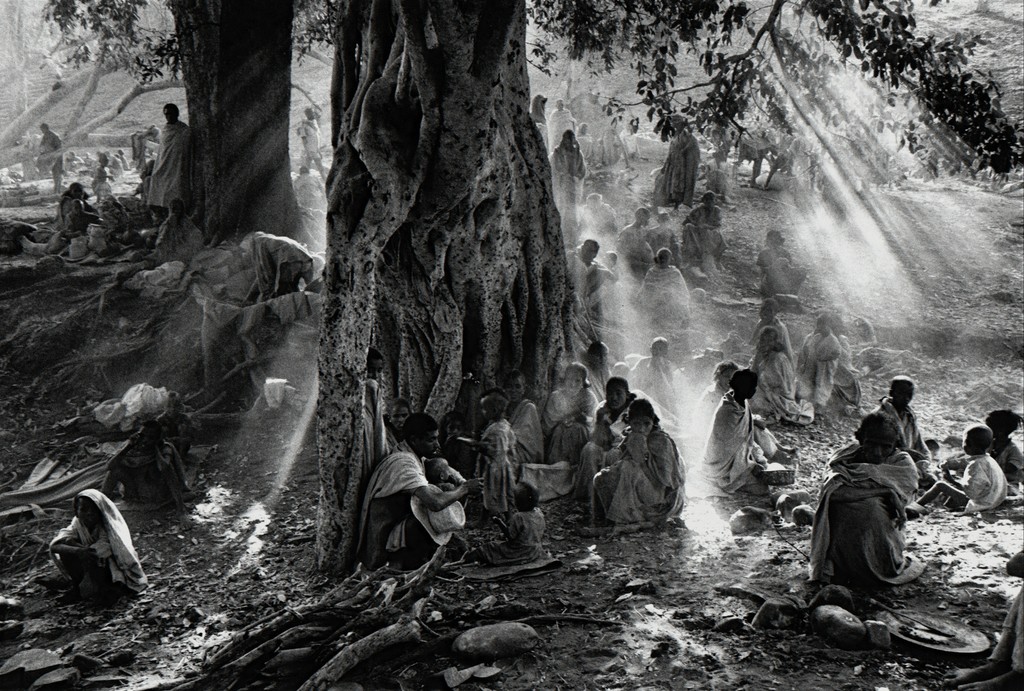
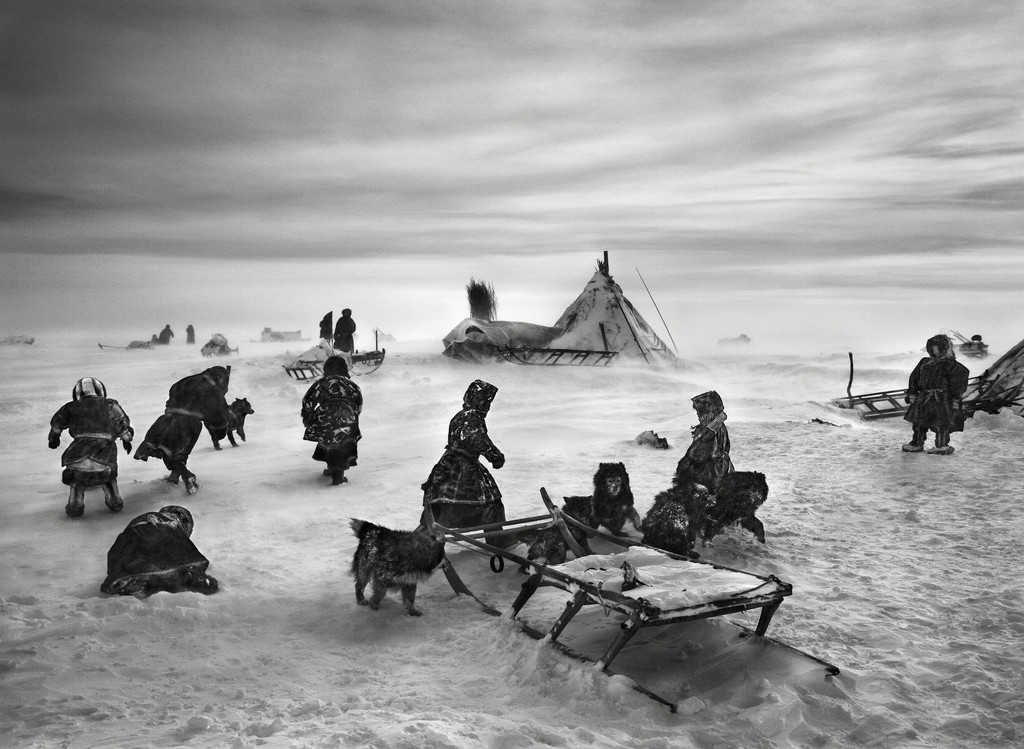
Today, Humphrey has a loyal Instagram following of 1.2 million, a published book on his trusty companion, Maddie on Things, and a self-made career that he can take pride in. While it’s no doubt a risky move to leave a stable income, several others have made a similar leap of faith: They quit their jobs, packed their bags, and set off on adventures around the world, pursuing new walks of life that culminated in beautiful works of art. Below, we highlight eight photographers—from living legends, like Sebastião Salgado, to free-spirited nomad Foster Huntington—who’ve quit their day jobs for the thrill of an unknown future.


Sebastião Salgado

In 1973, while sitting in a rowboat with his wife Lélia and working as an economist in London, Salgado made the life-changing decision to quit his job and pursue a newfound passion: photography. In the years prior, Salgado had made frequent trips to countries in central and east Africa to help initiate agricultural development projects for the World Bank—and each time he brought along a Pentax Spotmatic II with a 50-mm lens, a gift from his wife that had sparked an unanticipated obsession. Now a world-renowned social documentary photographer, Salgado never entirely parted ways with his background in economics. “When you go to a country, you must know a little bit of the economy of this country, of the social movements, of the conflicts, of the history of this country—you must be part of it,” he has said. This desire to understand, and thereby to honor, his subjects is reflected in Salgado’s award-winning black-and-white documentary series—including “Workers, “Migrations,” and most recently, “Genesis”—which shed light on issues of poverty, oppression, and climate change threatening displaced communities around the world.


Carolyn Drake

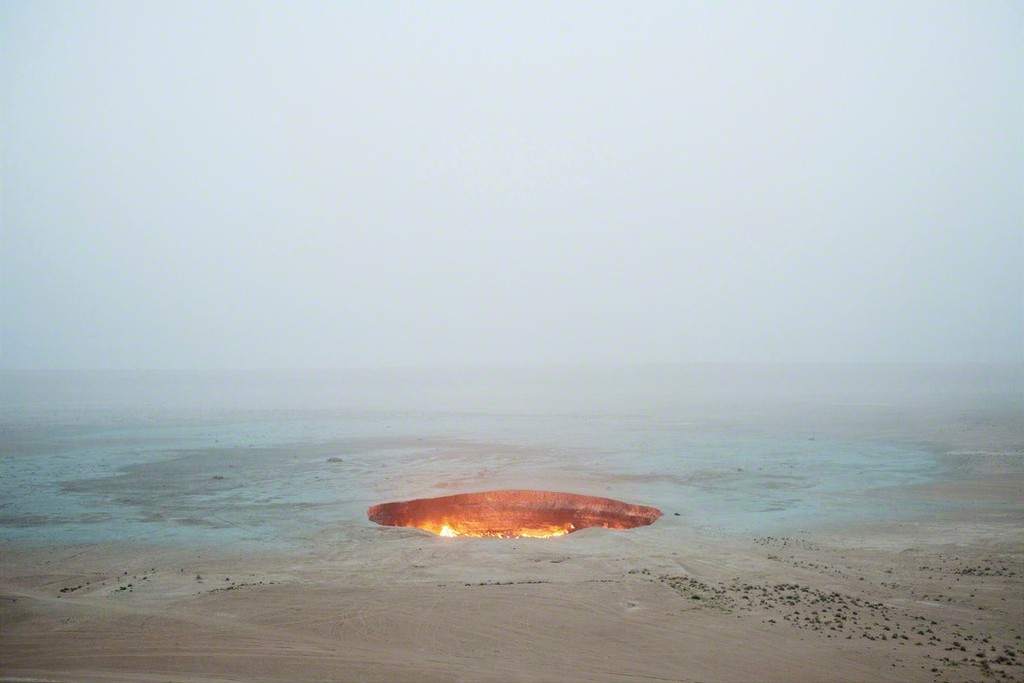
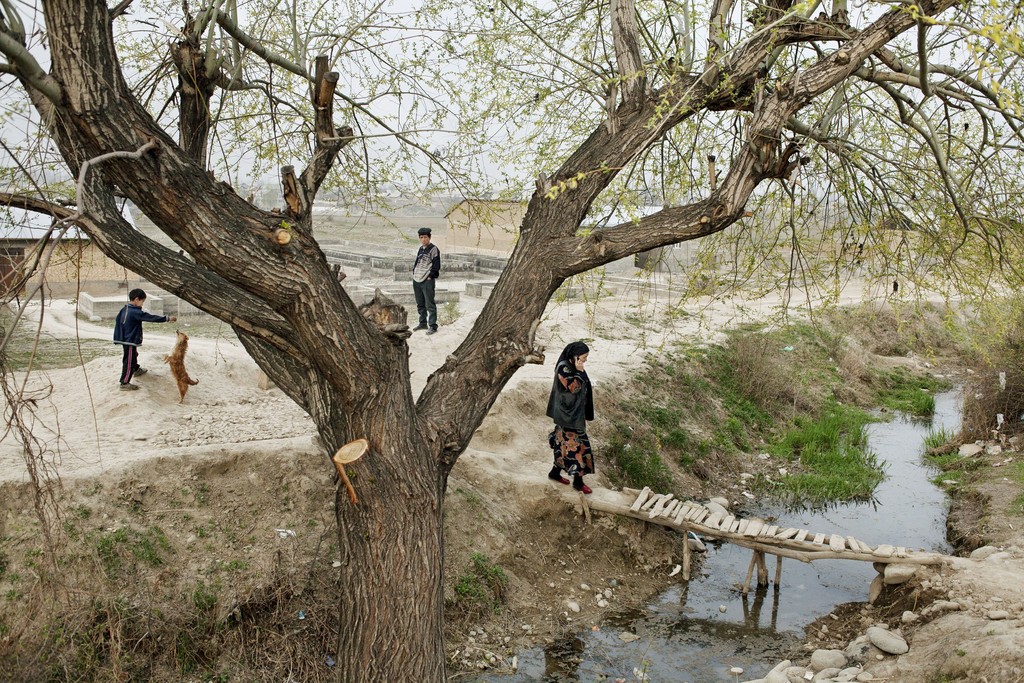
Though Drake had never conceived of being a photographer growing up, she realized in adulthood that “success is what you want it to be.” About a decade ago, Drake left her New York office job at a multimedia company to travel on a Fulbright scholarship to Ukraine, where she began to create photo stories fueled by her interest in Russian, Islamic, and Chinese cultures. “I was about 30 and I realized I didn’t want to work in an office for the rest of my life, in New York’s bubble,” she explained. “I wanted to learn about the world and cross into other communities.” Wielding her camera, she made some 20 trips to countries in Central Asia over the next 6 years, which culminated in two celebrated projects: Two Rivers (2007-11), an in-depth look at the struggling economies, shifting borders, and environmental calamity in the region between the Amu Darya and Syr Darya rivers; and Wild Pigeon (2007-13), a collection of photographs, drawings, and embroideries produced collaboratively with Uyghurs, a Turkic ethnic group in western China, whose cultural freedom is threatened by rapid modernization.


Foster Huntington

Photographs by Foster Huntington. Courtesy of the artist.
As a concept designer at Ralph Lauren in New York, Huntington “got turned off of working in fashion and designing things for rich dudes in Connecticut” and realized that he “shouldn’t be inside an office building working 70 hours a week in my early twenties for some big-ass corporation.” So he did what many stifled employees want to do, but never actually end up doing—he left. In the summer of 2011, Huntington quit his job, moved into a camper, and drove some 100,000 miles around the West, surfing and camping along the way and documenting his journey. Since 2014, Huntington has been living in a tree house in southern Washington, along the Columbia River Gorge, which he designed and built with a group of friends. (Its construction is documented in his book and short film, both titled The Cinder Cone.) Now with an Instagram following of over 1 million, Huntington hopes to inspire others to take up his nomadic lifestyle—to see the world without relying on creature comforts along the way.


Marc Riboud

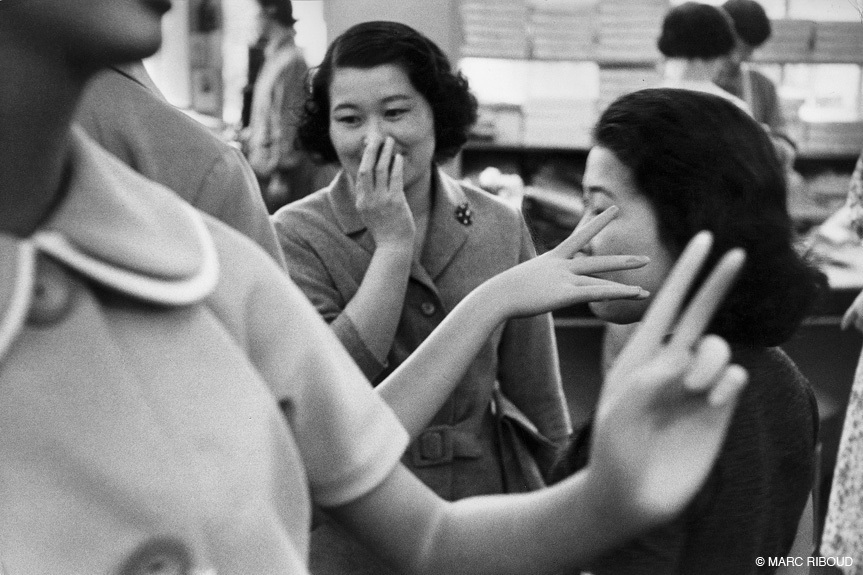
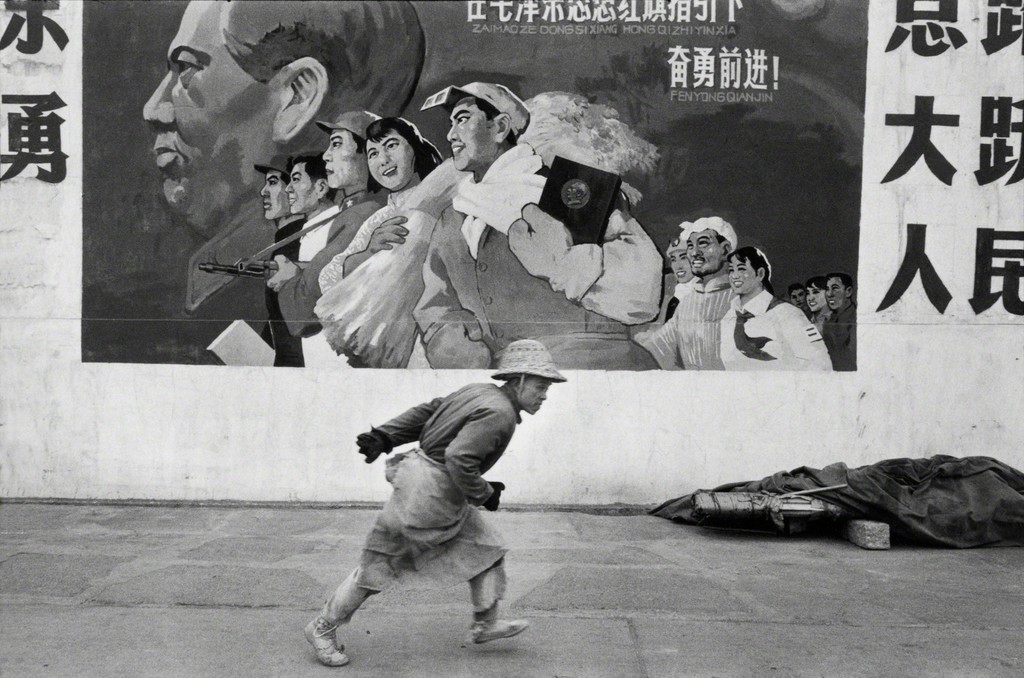
As a teenager—a self-described “rebel” who later fought in the French Résistance—Riboud took his first photographs at the Exposition Universelle of Paris in 1937 using the Vest Pocket Kodak camera his father had gifted him for his 14th birthday. But it wasn’t until the early 1950s, while on vacation and photographing a festival in his hometown of Lyon, that he decided to quit his job as an engineer at a factory, where he admitted he had “spent a lot of time dreaming of other things and taking pictures on weekends.” Starting off as a freelance photojournalist, he befriended Henri Cartier-Bresson and, in 1953, was accepted into Magnum—the same year his famous Eiffel Tower Painter photograph was published in LIFE. A fiercely independent spirit, and intimidated by the likes of Cartier-Bresson, Robert Capa, and David “Chim” Seymour, he promptly left France for two years—setting off a career marked by international travel, most famously to the Near and Far East. In these now-iconic photographs of civilians on the streets of Mao-era China and the Vietnam War, Riboud captured quiet, intimate moments amidst important historical events.


Jackie Nickerson

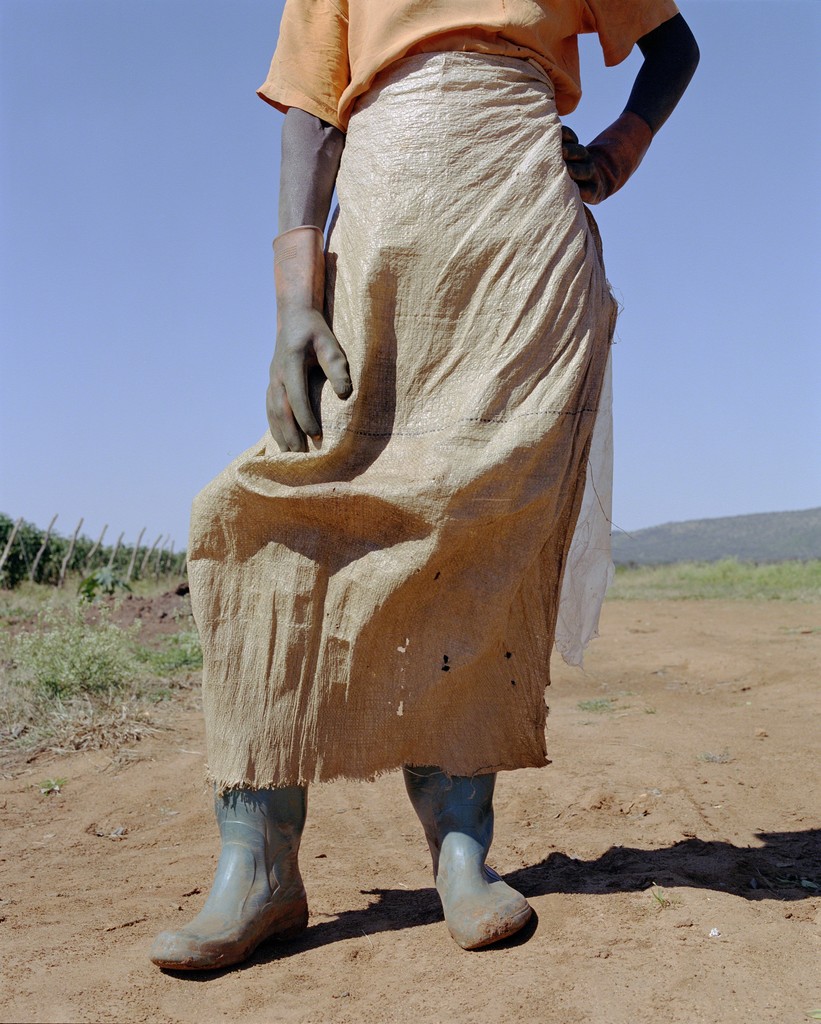
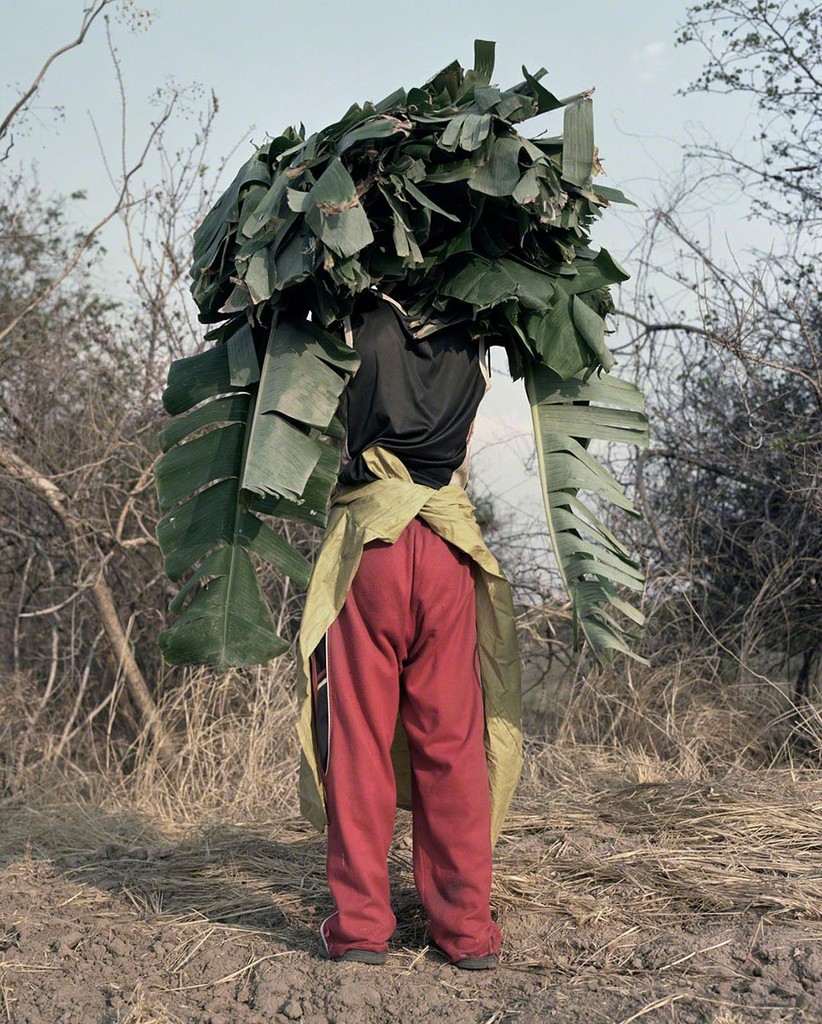
Boston-born photographer Nickerson worked as a commercial fashion photographer for the first 15 years of her career, shooting for Vanity Fair and Vogue, among other high-profile clients. Exhausted and disenchanted, she has recalled thinking, “You’re wasting your life. If you want to do photography, you’ve got to rethink this whole thing.” So when she accompanied her friend on a visit to a farm in Zimbabwe in 1997, she became enamored by the rural landscape and started to use photography as a means of acquainting herself with local residents. A trip that was supposed to be a few weeks long stretched into four years—and a new career. “I bought a small flatbed truck and started to travel all around the country and then went to South Africa, Malawi, and Mozambique. I took pictures of everything,” she told TIME. Since then, she hasn’t stopped traversing the globe, venturing back to Sub-Saharan Africa for portraits of faceless farm laborers in her 2013 series, Terrain. Even in recent forays back into fashion, the influence of these efforts is clear, with the statuesque figures swathed in layers in a 2014 AnOther spread echoing the fashion and rural environs of Terrain. In the same year, Nickerson photographed four of the five Ebola Fighters covers for TIME—becoming the first woman to shoot the Person of the Year in the 87-year history of the magazine.


Michael Levin

“It’s too late” is a mentality that sometimes impedes middle-agers from changing careers—but Canadian photographer Michael Levin was never one to turn down a challenge. Though he had a keen eye since childhood—“always looking at an interesting rock rather than a landmark” on family trips—he found himself working as a restaurateur. Five years later, Levin sold his business and picked up a camera at the age of 35. He began by shooting stunningly spare black-and-white landscapes inspired by Mark Rothko and Michael Kenna, first around his home city, Vancouver, and then around the world—in France and England, and later Iceland, South Korea, and Japan. He attributes his marketing chops to his former career. “My job is to promote my work as much as possible. That’s the reason that the work is successful,” he once said. To aspiring photographers, he insists that going full-time is “absolutely possible” if you recognize that talent alone won’t cut it: “There are so many great photographs being taken but you have to pursue ways to elevate your work and gain broader exposure for it.”


Joel Meyerowitz

Left: Greece (1967); Right: Bulgaria (1967). Copyright Joel Meyerowitz. Courtesy of Howard Greenberg Gallery.
In 1962, the now-legendary street photographer Meyerowitz was working as an art director at an ad agency earning the equivalent of $29,000 per week. After supervising a publicity shoot with photographer Robert Frank, the 24-year-old Meyerowitz walked around New York as if, he recalled in 2012, he “was reading the text of the street in a way that I never had before.” From there, Meyerowitz picked up his camera and began hitchhiking around the American South and Mexico with his first wife, his initial foray into the many trips he would take by road in the 1960s and ’70s. Later, the photographer felt an impulse to “get away from my familiar tactics and my familiar understanding of the American system, the American way of life, to see what the rest of the world looked like and what it would teach me about myself,” as he has explained. In 1966, with his cherished Leica in hand, Meyerowitz embarked yet again, this time on a year-long road trip across Europe. He began in London and made his way across the continent—from France and Spain to Greece and Italy, with several stops along the way—shooting “life along the roadside whizzing by at 60 miles per hour.” These iconic black-and-white photos led to his first show at MoMA in 1968, curated by photography legend John Szarkowski.


Theron Humphrey

Photographs from Theron Humphrey’s Instagram. Courtesy of the artist. 
In 2011, North Carolina-born photographer Humphrey, having raised $16,000 on Kickstarter to pursue his wild idea, set off on his journey, uploading images one by one to his website. En route, his project evolved: He added an audio component, recording people’s voices, and started an Instagram account. This was a drastic change from his life just a few years earlier. On shooting product for a women’s retail company, and not for himself, he once said, “you start to lose your creative soul. There is a balance, and you need to feed yourself, but if you’re only using your camera to shoot someone else’s vision, it destroys you creatively.” Humphrey’s decision paid off—he was named a Traveler of the Year by National Geographic in 2012. His advice to aspiring photographers is to “make work that isn’t easy, that makes you feel uncomfortable, and make a lot of it….The slow process of investing your time into a single idea is the greatest path.”

—Demie Kim


bbff

The Best Photos of the Day

Best Photos of the Day
Alphorn players give a concert on August 28, 2016 in Nesselwang, southern Germany, during a mass performance of 300 alphorn blowers. Karl-Josef Hildenbrand / dpa / AFP
 
 
The Best Photos of the Day

Best Photos of the Day
(L-R) German Foreign Minister Frank-Walter Steinmeier, Polish Foreign Minister Witold Waszczykowski and French Foreign Minister Jean-Marc Ayrault pose in front of the Goethe-Schiller monument in Weimar, eastern Germany, where they met to celebrate the 25th anniversary of the Weimar Triangle on August 28, 2016. The Weimar Triangle is a loose grouping that brings together Germany, France and Poland and was established in the German city of Weimar in 1991. Jens-Ulrich Koch / AFP
 
 
The Best Photos of the Day

Best Photos of the Day
In this photo taken on August 29, 2016, the newly-completed MahaNakhon skyscraper is seen lit during a light show to celebrate its completion as the tallest building in Thailand. MUNIR UZ ZAMAN / AFP