Monday, August 9, 2021

Portuguese-to-English Phrasebook Became a Cult Comedy Sensation


How a Portuguese-to-English Phrasebook Became a Cult Comedy Sensation

Meet 1883’s most absurd language guide.


Mark Twain, a fan of English As She Is Spoke. (Photo: Library of Congress/LC-DIG-ds-05448)

IN THE MIDDLE OF THE 19th century, a relatively unknown author named Pedro Carolino rapidly gained intercontinental popularity over a small Portuguese-to-English phrasebook. English as She Is Spoke (or O novo guia da conversação em portuguez e inglez) was originally intended to help Portuguese speakers dabble in the English tongue, but was penned by a man who spoke little to no English himself. And, instead of helping Portuguese speakers learn a second language, it became a cult classic for fans of inept and unintentional humor.

It quickly gained notoriety among English speakers, including author Mark Twain, who wrote the introduction for the first English edition, published in 1883. Twain endorsed the book, saying “Nobody can add to the absurdity of this book, nobody can imitate it successfully, nobody can hope to produce its fellow; it is perfect.”

The cover for O Novo Guia de Conversação, em Portuguez e Inglez, em Duas Partes. (Photo: Public Domain)

It is presumed that Carolino wrote the book through the aid of a Portuguese-to-French dictionary and a French-to-English dictionary, using the former for an initial translation of a word or phrase from Portuguese, and the latter to convert it from French into English. The result, of course, is a mishmash of cloudy gibberish.

For instance, the second chapter is titled “Familiar Phrases,” and features sentences intended to help the weary Portuguese traveler in everyday conversation. These phrases include classics like “He has spit in my coat”; “take that boy and whip him to much”; and the oft-used “these apricots and these peaches make me and to come water in mouth.”

The book opens with a preface written in an idiosyncratic style of English. It details the book’s intended audience, stating that it “may be worth the acceptation of the studious persons, and especially of the Youth, of which we dedicate him particularly.” Perhaps predictably, English as She Is Spoke did not become popular among Portuguese-speaking students. In fact, it was never published in Portugal, although it did find an audience 133 years later in Brazil, when it was released as a comedy title. 

A photochrom of the Tower of London, 1890. The book, published in 1855, was intended to help Portuguese speakers to improve their English language skills. (Photo: Library of Congress/LC-DIG-ppmsc-08566)

Literary journals, small newspapers, and other niche groups helped spread the word about Carolino’s work before it was given its first proper release as a humor book, first in Britain in 1883, and then in the United States later that year. Endorsements by esteemed writers like Twain and James Millington helped the unusual phrasebook grow a fanbase, and it subsequently received many requests for republishing. The book is even rumored to be the inspiration for the popular “Dirty Hungarian Phrasebook” skit from Monty Python’s Flying Circus.

The book itself is a guessing game of intention and phrases contorted in the unorthodox translation process. If English as She Is Spoke is to be believed, trade occupations might include Coffeeman, Porkshop-Keeper, and Chinaman. The list of aquatic life noted under the heading “Fishes and Shell-Fishes” features well-known sea creatures like the Wolf, the Hedge-hog, and a Sorte of Fish. The section entitled “Games” is even more open to interpretation: the listed games include Mall, Pile, and Keel. (The book is often falsely attributed to Jose Da Fonseca, a popular linguist of the time period, but many believe that Carolino listed him as a co-author to give the work more credibility.)

The title page for English As She is Spoke. (Photo: Public Domain)

There is also a section featuring potential dialogues for everyday situations, such as visiting the dentist, purchasing a book, or visiting a sick family member. Of course, the conversations are mostly incomprehensible, but the chapter closes on an ironic high note, in this discussion about learning a language:

“Do speak French alwais?”
“Some times: though I flay it yet.”
“You jest, you does express you self very well.”

Perhaps the most notorious section of the book is an aptly named chapter entitled “Idiotisms and Proverbs,” which again features phrases that careen between barely understandable and completely nonsensical. Examples of Carolino’s twice-translated proverbs include: “nothing some money, nothing of Swiss”; “friendship of a child is water into a basket”; “take out the live coals with the hand of the cat”; and simply “to fatten the foot.”
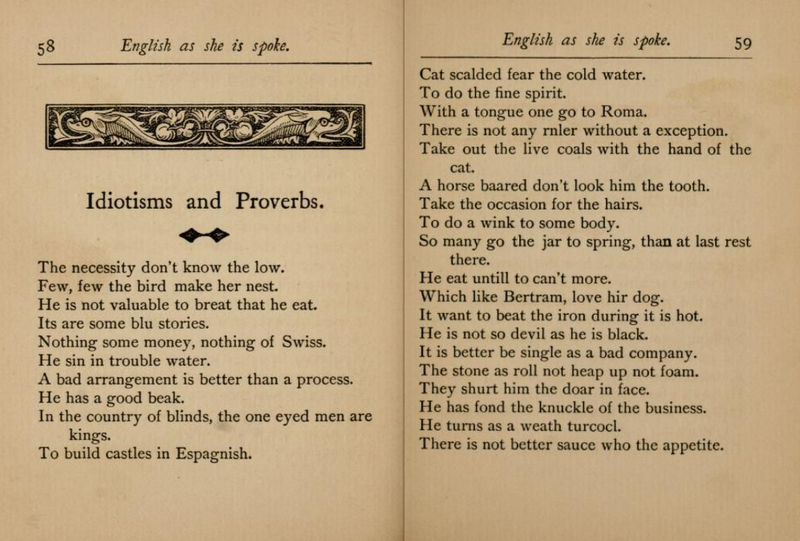
The translations of idioms and proverbs. (Photo: Public Domain)

A review of the baffling phrasebook in an 1860 volume of Harvard Magazine opens with a disclaimer stating that the magazine is not intending to insult readers’ intelligence by publishing such excerpts, asserting that they “speak for themselves.” The work in question “purports to be a ‘New Guide to Conversation in the Portuguese and English Tongues,’” the reviewer dryly comments, but “No one, I think, will feel disposed to question its title to novelty.”

English as She Is Spoke is a charming book created by a gentleman who only wanted to help teach the English language to his peers, but instead created a literary disaster that became a linguistic phenomenon. The book has been republished a number of times, the most recent edition printed in 2004 by Collins Library. (A scan of an 1884 pressing can be viewed for free at the Public Domain Review.) Sadly, this was Pedro Carolino’s only published work, although it is an accidental piece of transcendent art with a legacy that has lasted centuries.

One could ponder why Carolino took on the task of creating a phrasebook in a language he did not speak, but sometimes it is better not to look a gift horse in the mouth; or as Carolino says, “a horse baared don’t look him the tooth.”  

Why Do Forgeries Deceive Experts?


    Why Do Forgeries Sometimes Deceive Even the Most Venerable Experts? Because We All Want to Believe

    As the author of the catalogues raisonnés for Grandma Moses and Egon Schiele, Jane Kallir has encountered a lot of fakes in her career.

    Image still from Made You Look: A True Story About Fake Art (2020).

    As the author of the Egon Schiele and Grandma Moses catalogues raisonnés, I see an average of one fake a week. Most are so inept that they would not fool even a moderately experienced dealer or auction-house employee. 

    But while successful, large-scale art forgery scandals are relatively rare, they tend to garner disproportionate attention. Plans are underway to turn the recent documentary about the Knoedler Gallery scandal Made You Look: A True Story About Fake Art into a feature film (the director wants Meryl Streep to star as disgraced art dealer Ann Freedman). Wolfgang Beltracchi, the German forger reputed to have faked some 300 paintings by 100 artists over a 40-year period, starred in his own documentary, The Art of Forgery, directed by his attorney’s son, Arne Birkenstock. While Freedman, director of the once venerable (and now defunct) Knoedler Gallery, was excoriated for selling over 40 fake Abstract Expressionist canvases, Beltracchi was lionized in the German press as a sort of Robin Hood figure. Either way, the stories become morality tales about art-world greed and corruption. But the reality behind such cons is far more complex.

    Why were so many experts fooled? The answer lies as much with the conned as with the con artist. 

    I was 25 years old when I encountered my first Schiele forger. It was exciting: I got to work with the FBI and wear a wire. After a botched sting operation, the FBI raided the alleged forger’s home and came away with a trove of evidence, including the typewriter that had been used to falsify a letter of authentication. Nonetheless, the suspect was never charged.

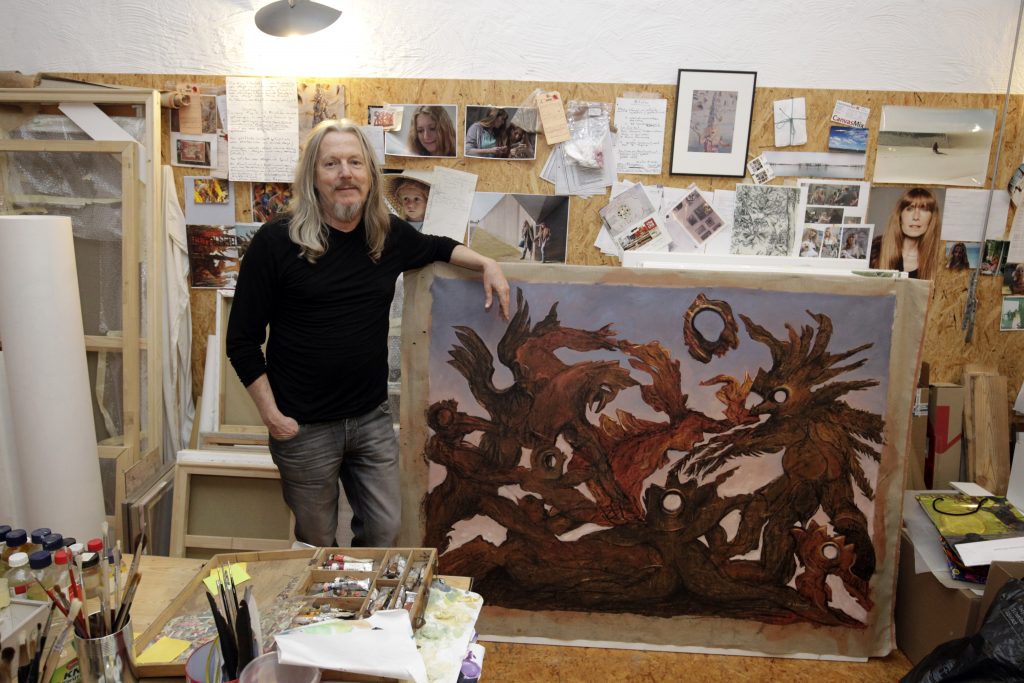
    The painter Wolfgang Beltracchi stands in front of his painting. Photo by Peter Kneffel/picture alliance via Getty Images.

    Generally speaking, it is not illegal to sell a forgery unless one knows it is a forgery, something that is exceedingly difficult to establish in a court of law. Freedman was not criminally indicted, and though she faced 11 civil suits for fraud, each was settled without a conclusive verdict. Only she knows what she knew. The German police had plenty of evidence that the Beltracchi paintings were forgeries, but they could not easily prove that he painted them. In the end, he struck a plea deal, confessing to having forged a mere 14 works in exchange for a reduced sentence. 

    Whereas there are presumably still hundreds of undetected Beltracchi forgeries out in the world, the reach of the Knoedler debacle was more circumscribed. In addition to Freedman, it seems only one other dealer, Julian Weissman, bought the fakes, which were painted by a Chinese artist, Pei-Shen Qian, and peddled by an obscure Long Island dealer, Glafira Rosales. Once Rosales confessed, the entire scheme fell apart. As with the Beltracchi con, confession was key. Without it, the lawsuits against Knoedler would have degenerated into contests of opinion, because Freedman, like Beltracchi, initially had a number of experts on her side.  

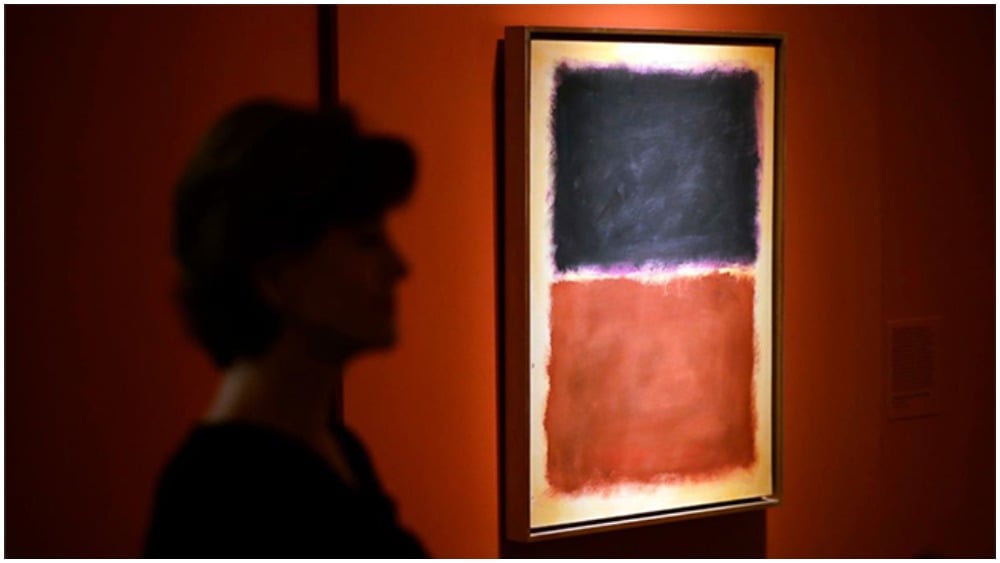
    Image still from <i>Made You Look: A True Story About Fake Art</i> (2020).

    Image still from Made You Look: A True Story About Fake Art (2020).

    David Anfam, Dore Ashton, Stephen Polcari and E. A. Carmean, Jr., were among the scholars who commented favorably on various Qian fakes. A supposed Barnett Newman and a Mark Rothko were exhibited at the Beyeler Foundation, and the “Rothko” had been accepted by the National Gallery of Art for inclusion in a forthcoming catalogue raisonné. Similarly, Beltracchi’s forgeries were exhibited at the Metropolitan Museum of Art and sold by Lempertz, Sotheby’s, and Christie’s. His fakes fooled numerous scholars, among them the esteemed Max Ernst expert Werner Spies. 

    How did this happen?

    Both the Beltracchi and the Rosales scams rested on elaborate invented backstories. Beltracchi said the works came from the collection of his wife’s grandfather, Werner Jägers.  The forger not only created the paintings, but he also staged a pseudo-historical photograph of the collection in situ and crafted fake labels for the noted prewar dealer Alfred Flechtheim. It was those labels—strikingly different from the genuine article—that eventually tripped Beltracchi up. Qian’s forgeries were likewise given a fictitious provenance, but Rosales, unlike Beltracchi, failed to provide any documentation. While this made it impossible to confirm the provenance, it also made outright refutation more difficult.  When her original story failed to check out, Rosales simply added another name to the chain of ownership. Each change in the provenance sent Freedman’s researchers chasing down a new rabbit hole. 

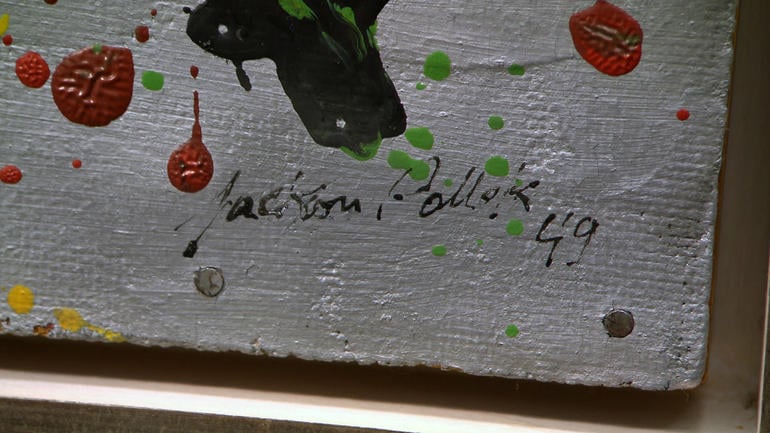
    The signature from a Knoedler painting that was purported to be by Jackson Pollock, but is misspelled "Pollok." Courtesy of James Martin.

    The signature from a Knoedler painting that was purported to be by Jackson Pollock, but is misspelled “Pollok.” Courtesy of James Martin.

    Maria Konnikova, whose book The Confidence Game includes a chapter on the Knoedler case, has observed that, “If you are the victim of a con that you truly believe in, as evidence comes in against you, you are much more likely to double down.” Of course, greed is a factor, but ego is at least as important. Dealers and collectors alike relish the prospect of making a great “find,” and when challenged, some want to believe they are smarter than the experts. In my experience, people love their fakes. Indeed, fakes can be more beautiful than authentic works, because forgeries lack the elements of uncertainty, searching, and discovery that distinguish the true creative process. Daniel Filipacchi, owner of a Beltracchi “Ernst,” told Vanity Fair it “was one of the best Max Ernsts that I have seen.” 

    Several months ago, I was contacted by the owner of a mid-sized regional auction house. He told me he had just driven several thousand miles cross-country in a snowstorm (at the height of the pandemic) to retrieve a collection of studies by “degenerate” artists, some with the collector’s stamp of Hitler’s henchman Hermann Göring. I knew even before seeing the collection that the works had to be fakes. Sketches this small (all were housed in eight-and-a-half-by-11-inch binder sleeves) are usually not so obviously ascribable to famous artists. The Göring stamps, a misguided attempt to establish provenance, would, if genuine, have raised troubling questions about Nazi loot. (Forgers don’t always think these things through.) When I met the auctioneer, he regaled me with tales of the spectacular discoveries he’d made over the course of a lengthy career. He was partly in thrall to the romance of the present story (the drive through the snow, the mini-masterpieces), but his in-house researchers had already prepared him to accept the truth. The drawings were clumsy copies of well-known works by Schiele, Klimt, Kokoschka, Dix, Beckmann, and others. 

    Konnikova believes that everyone is potentially vulnerable to victimization by a skillful con artist. In the face of our universal gullibility, we seek foolproof, scientific ways to determine artistic authenticity. However, as James Martin, the conservation scientist who helped unmask the Beltracchi and Qian fakes, notes, forensic analysis alone is not always sufficient. It is only effective if the forger made a scientifically detectable error, for example by using materials inappropriate to the work’s purported date of execution. 

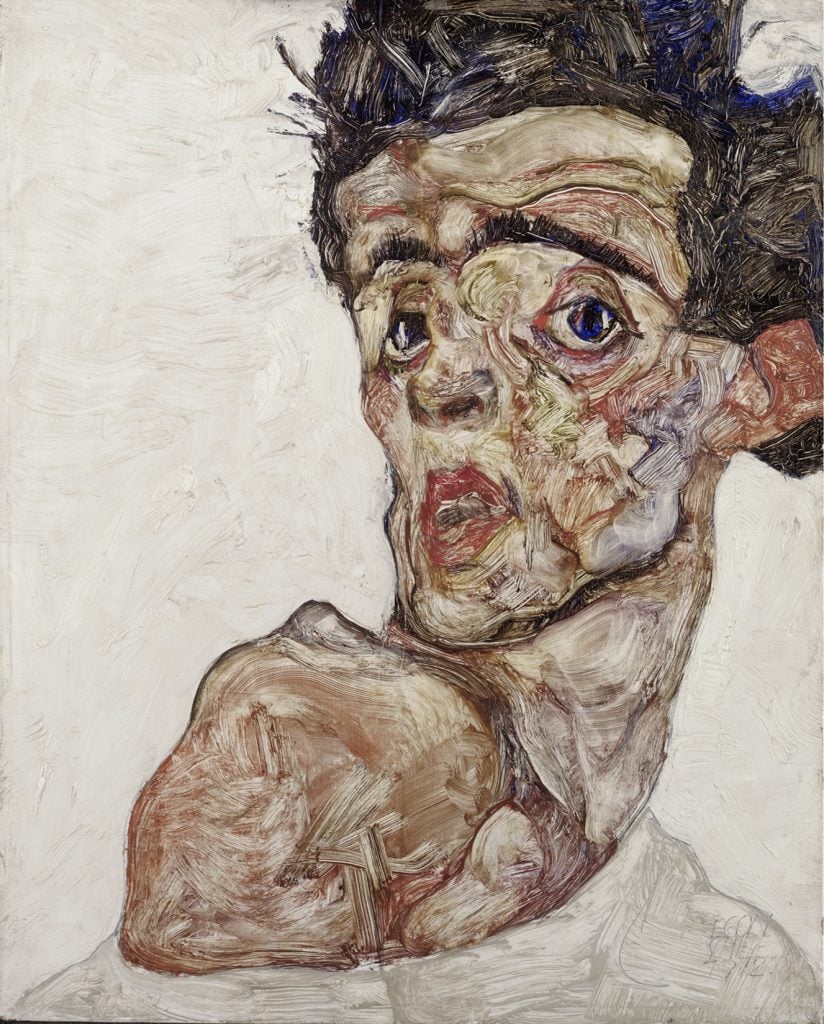
    Egon Schiele, Self-Portrait with Bare Shoulder (1912). Courtesy of the Leopold Museum, Vienna.

    Egon Schiele, Self-Portrait with Bare Shoulder (1912). Courtesy of the Leopold Museum, Vienna.

    A lot of the Schiele fakes I see are accompanied by extensive reports attesting to the fact that the pigments used existed during the artist’s lifetime—which in no way establishes authorship. And forensic analysis tends to be less helpful with works on paper than with oils, because oils have more complex substrates that can be subjected to testing. The practicality of scientific testing is further limited by the fact that it is time-consuming and expensive. That said, Qian’s Rothko forgeries could have been detected with the naked eye, because they were painted over a white primer—something Rothko never used during the period in question. The problem is that almost no one was paying attention, because they were already hooked by the story. 

     Wolfgang Beltracchi with a forged painting supposedly by Max Ernst. (Photo by Brill/ullstein bild via Getty Images)

    Wolfgang Beltracchi with a forged painting supposedly by Max Ernst. Photo by Brill/ullstein bild via Getty Images.

    All experts make mistakes. Andrea Firmenich included five or six Beltracchi forgeries in her Heinrich Campendonk catalogue raisonné. Jack Flam, president of the foundation that oversees the Robert Motherwell catalogue raisonné, initially accepted one of Qian’s Motherwell forgeries. Nonetheless, when confronted by additional fakes, both Firmenich and Flam grew suspicious. They began making inquiries and commissioned forensic tests that turned up historically inappropriate materials. Firmenich’s and Flam’s ability to acknowledge their mistakes ultimately led to the downfall of Beltracchi and Rosales.

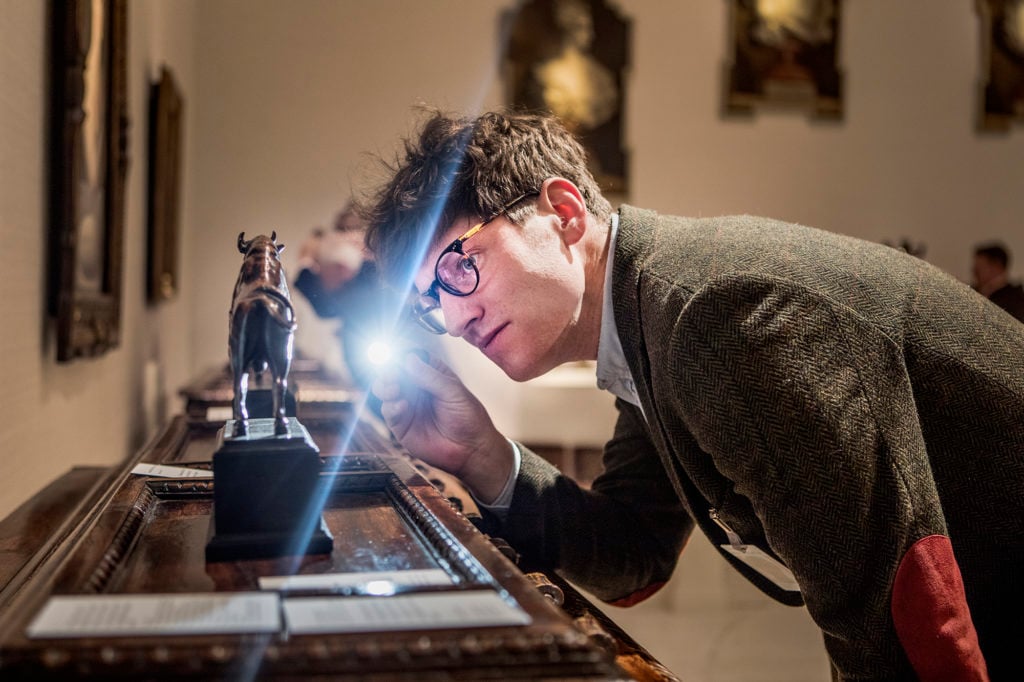
    A member of the vetting committee at work at TEFAF Maastricht 2019. Photo by Loraine Bodewes courtesy of TEFAF Maastricht.

    A member of the vetting committee at work at TEFAF Maastricht 2019. Photo by Loraine Bodewes courtesy of TEFAF Maastricht.

    If one defines a “forgery” as a work created with the intent to deceive, most faux Grandma Moses paintings are not really forgeries, but rather copies of famous works made by admiring fans. I was thus caught off guard when a seemingly genuine, undocumented Grandma Moses composition turned up for sale at a New York auction house in 2015. The provenance was unusual: the painting belonged to a Hungarian woman who had supposedly acquired it in Canada, and the identifying label that customarily appears on authentic Moses paintings had been cut out of the backing. These red flags, however, led me to suspect theft, not forgery. After an Art Loss Register search came up clean, I gave the auction house my OK. Then, a couple of years later, the Hungarian consignor submitted another Moses painting, and around the same time a second auction house brought in one that had been purchased in Hungary by an American collector. The forger had made more obvious errors in these two paintings, and with some digging, we found prototypes for all three fakes online. To muddy the trail, the forger had transposed the seasons (i.e., changed summer to winter and vice versa) when copying the original Moses landscapes. I immediately informed the auction houses and the FBI, though I imagine the Hungarian culprit was beyond the reach of American law enforcement.

    Authentication is not an exact science, much as we may wish it were. James Martin likens it to a three-legged stool, resting equally on provenance, forensic testing, and connoisseurship. I would add that one must also be willing to question one’s assumptions and be ever on the alert for new scams. 

    Jane Kallir is president of the Kallir Research Institute.


    Follow Artnet News on Facebook:


    Want to stay ahead of the art world? Subscribe to our newsletter to get the breaking news, eye-opening interviews, and incisive critical takes that drive the conversation forward.
    artnet news

    It looks like you're using an ad blocker, which may make our news articles disappear from your browser.

    artnet News relies on advertising revenue, so please disable your ad blocker or whitelist our site.

    To do so, simply click the Ad Block icon, usually located on the upper-right corner of your browser. Follow the prompts from there.

    SHARE

    Movies Related to Art


    Source: Pinterest of Vectorstock.com

    CINEMA

    10 Best Movies Related to Art for Time Spent in Quarantine

    This is clearly a difficult time for humanity. Coronavirus has been declared a pandemic and people are advised to stay at home and eliminate physical interaction as much as possible. So, what do we do to pass the time in our homes? We can watch the best movies related to art, of course! Here are ten suggestions for classic art movies for time spent in quarantine. Without further introduction, let’s jump straight to our list!

    10 Best Movies Related to Art

    Midnight in Paris

    Midnight in Paris is a lovely movie about a screenwriter who aspires to be a novelist. He goes on a trip with his fiancée’s family to Paris and while he is strolling around the Parisian streets, he finds himself mysteriously traveling back in time, to Paris in the roaring 1920s. There, he meets all his literary idols, like F. Scott Fitzerald, Ernst Hemingway, and others. He also meets many artists, like Picasso, Salvador Dali (in one of the funniest scenes in the movie) and other people of the intellectual and artistic world. The question is, will he ever return to his own time or will he stay trapped there forever with a girl that fascinated him?

    Read about the artists portrayed in Midnight in Paris in the 1920s and in the late 19th century!

    Frida

    Frida is a biography of the famous artist, Frida Kahlo. The movie begins by showing her tendency to provoke reaction through her rejection of the social standards of her time. She did this by wearing male tuxedos for example. The movie shows how she was seriously injured at a young age and how this event changed the course of her life. Thus, she started painting and pursued a career as an artist. That is how Frida met her husband and fellow artist, Diego Riviera, became a fashion icon through her choice to wear traditional Mexican clothes and became deeply politically active. She was one of the most passionate women in art history and in history in general. The movie portrays these aspects of her life wonderfully.

    Loving Vincent

    This is the first oil painted animated movie. It is about a young man who visits Van Gogh’s last hometown to deliver a letter. Suddenly, he finds himself investigating what happened during the last three days of the great artist’s life. The animation is based exclusively on Van Gogh’s paintings and it was said to be incredibly difficult to film. During the course of the movie, we see many characters from Van Gogh’s paintings such as Monsieur Roulin, Félix Rey and of course Adeline Ravoux, the daughter of the owner of Ravoux Inn, the famous Inn where Van Gogh drew his last breath.

    The Last Family

    The Last Family is about the life of Zdzislaw Beksinski, the famous Polish painter of dystopian surrealism. The movie depicts his life with his family, his wife Zofia and their son Tomasz and everything that happened up until his murder in 2005.

    Goya’s Ghosts

    In 1792, Spain is impacted by the turmoil of the French revolution. The situation is already tense when the Spanish Inquisition appears to be disturbed by some of Goya‘s work and accuse him of creating manifestations of evil. Although Goya has powerful friends to defend him, he finds himself embroiled in a scandal; his muse, Inez, is labeled as a heretic.

    El Greco

    This is a Greek production and its subject is the great artist Domenicos Theotokopoulos, also known to the world as El Greco. The movie follows the story of his life from his early beginnings and goes on to show how an uncompromising artist and freedom fighter developed.

    Big Eyes

    Big Eyes is a movie by Tim Burton about the life of American artist Margaret Keane. Margaret had huge success in the 1950s with her paintings, which depicted women, children, and animals with excessively big eyes. However, she was a divorced woman with a child and the social perceptions of this at the time were very negative. In part because of this, she married Walter Keane, who later, in the 1960s claimed credit for her works.

    Girl with a Pearl Earring

    This is another interesting movie. It tries to unravel the mystery behind (probably) the most famous painting by Johannes Vermeer. The film tells the story of a young woman who became a maid in Vermeer’s house and ended up inspiring him in his legendary portrait.

    Pollock

    Obviously this is a movie about the great American expressionist Jackson Pollock. It recounts his life, his co-dependant relationship with his wife and his battle with alcohol addiction. There is a beautiful quote in the movie that represents Pollock’s spirit;

    -How do you know when you’re finished with a painting?

    -How do you know when you’re finished making love?

    Woman in Gold

    Well, this is another biographical movie. It is based on a true story, that of Maria Altmann. She was an elderly Jewish refugee who lived in Los Angeles. Along with her lawyer, she tried to reclaim Gustav Klimt‘s painting of her aunt, Portrait of Adele Block – Bauer I, from the Austrian government. The Nazis had stolen the painting from her family prior to World War II and Maria took her legal battle to the Supreme Court of the United States, in order to get back what was hers.

    So, staying in doesn’t seem that boring after all, right? In any case, stay calm, stay safe, watch movies related to art, scroll in our DailyArt App and don’t forget to read our lovely articles!

    Here’s a full list of our “Lockdown” home entertainment articles. Stay safe and #Stayhome!

    7 Entertaining Art History Podcasts to Listen to

    10 Best Movies Related to Art for Time Spent in Quarantine

    The Best Art Videos for the Age of Quarantine

    The Best of the Best Museums to Visit Virtually on Lockdown (Constantly Updated)

    Lockdown Artsy Entertainment Toolkit

    Virtual Art Repositories – Explore Endless Artworks from Quarantine

    Theatre Plays, Opera and Music Online to Keep you Entertained During Lockdown

    15 Artsy Books To Read During Self-Quarantine

    What to Do with Your Time when in Quarantine? Tips from Art!

    Art-Guide to Quarantine by DailyArt Magazine

    Errika has a master’s degree in Modern and Contemporary History and dreams of becoming a curator. She writes articles about modern and contemporary art, fashion, and cinema. In her free time, she sculpts and paints miniatures and reads books.