Thursday, July 1, 2021

driving range dangerous


Image

■ INSTRUCTION

The driving range can be a helpful tool for golfers, but be wary of going overboard, says coach Justin Parsons.


Why one top coach says the driving range is a ‘dangerous’ place for golfers

golf balls on the range

When it doubt, try to figure it out on the course — not the range.

GETTY IMAGES

Golf is a confusing, complicated game. And when things go wrong, it’s only natural to do what most of us do in confusing, complicated situations: Try to figure them out.

For many golfers, that means heading to the driving range. Working through a big bucket of golf balls as a way of troubleshooting the cause of what went wrong, and how to fix it. Except, at least according to one coach, that might be exactly the opposite of what you should be doing.

Justin Parsons is one of the best coaches around. After years studying under Butch Harmon, he now works out of Sea Island and coaches Harris English and Louis Oosthuzen, among others. He’s also the most recent guest on Claude Harmon’s GOLF.com podcast “Off Course” (which you can subscribe to on iTunes right here).

Why Paul Casey ‘banned’ himself from a driving range after his first round
BY: LUKE KERR-DINEEN

And Parsons says golfers should be wary — very wary — of spending hours on the driving range.

“I think think the driving range is one of the most dangerous places for golfers to live.” he says. “I’ve probably spent far too many hours of my own time trying to perfect things.”

Why you should fear the driving range

Parsons says the reason why is because of a lack of consequences. When you hit a bad shot on a driving range, it doesn’t matter. On a golf course, it obviously does. When golfers put themselves in an environment where the bad shots don’t matter, their games won’t necessarily improve.

“It’s one of the least accountable places there is as a golfer,” he says. “At least on the putting green, you can ‘I holed this many putts from six feet’, or you can do chipping games; it’s very, very hard to quantify your behavior on the driving range. We fall down this trap of trying to be absolutely perfect on the driving range, forgetting that the driving range has absolutely nothing to do with the golf course.”

The range can, of course, serve a purpose. It’s good for ironing out your technique, and for warming up. The problem comes when you treat it as a solution to all your golf problems. It’s not; when you have an issue in your game, you’re often better off figuring it out on the golf course.

Listen to the full episode below.

Current Time 0:00
Duration 0:46
Loaded: 21.11%
 

Off Course with Claude Harmon: Why the driving range is a dangerous place for golfers

Playing can be more important than practicing on the range according to Tour Coach and Sea Island instructor Justin Parsons.

Luke Kerr-Dineen

GOLF.COM CONTRIBUTOR

Luke Kerr-Dineen is the Game Improvement Editor at GOLF Magazine and GOLF.com. In his role he oversees all the brand’s service journalism spanning instruction, equipment, health and fitness, across all of GOLF’s multimedia platforms.

An alumni of the International Junior Golf Academy and the University of South Carolina–Beaufort golf team, where he helped them to No. 1 in the national NAIA rankings, Luke moved to New York in 2012 to pursue his Masters degree in Journalism from Columbia University and in 2017 was named News Media Alliance’s “Rising Star.” His work has also appeared in USA Today, Golf Digest, Newsweek and The Daily Beast.

Tuesday, June 29, 2021

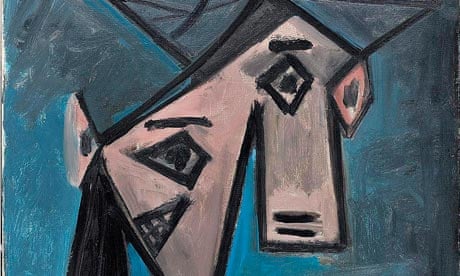
A Picasso and a Mondrian stolen in Athens in 2012 have been recovered.


The Headlines
ANOTHER WIN FOR THE GREEK POLICE. Hot on the heels of arresting two on allegations of illegally attempting to sell an ancient Roman sculpture, they have recovered a Picasso portrait and a Mondrian landscape that were stolen almost a decade ago, the Guardian reports. The pieces were plucked from the National Art Gallery in Athens in 2012 in a daring seven-minute heist. The pieces were found in a crypt in the town of East Attica, according to the Washington Post. Back in February, authorities revealed that an investigation had led them to believe that at least the Picasso, titled Head of a Woman, was still in the country. BBC News says that there is a report of an arrest of one man in connection with the case.


Greek police recover two stolen paintings by Picasso and Mondrian

Works by 20th-century masters found nearly a decade after audacious theft at Athens gallery

The recovered Picasso painting, which the artist gifted to the Greek people.
The recovered Picasso painting, which the artist gifted to the Greek people. Photograph: Eurokinissi/Rex/Shutterstock
 in Athens

A Picasso gifted to the Greek people by the artist in honour of their resistance to Nazi rule has been found in a gorge after a builder admitted to stealing the masterpiece and two other artworks in an audacious theft from the National Gallery in Athens nearly a decade ago.

For nine years, Head of a Woman had lain hidden in the home of the self-described art lover alongside Stammer Windmill, a work by the Dutch painter Piet Mondrian, also stolen during the overnight raid on 9 January 2012.

Fearing authorities were about to trace him, the thief transferred the priceless pieces to a warehouse before concealing both in protective wrapping and hiding them in a gorge south-east of the capital in the spring.

Their recovery was greeted with elation in Athens. The National Gallery, Greece’s biggest public collection, only recently reopened after being closed for years for renovation.

The culture minister, Lina Mendoni, described the presentation of the retrieved works as “a special day, [a day of] great joy and emotion”. Pablo Picasso, she said, had personally donated the Cubist painting to the nation in 1949 five years after Hitler’s troops withdrew from the country, inscribing the words “for the Greek people, a tribute. Picasso” on the back of the canvas.

A Greek police officer presents the stolen Mondrian painting at a press conference in Athens
A Greek police officer presents the stolen Mondrian painting at a press conference in Athens on Monday. Photograph: Pantelis Saitas/EPA

“This painting is of particular importance and sentimental value … as it was personally dedicated by the great painter to the Greek people for their fight against fascist and Nazi forces,” she told a news conference. “It would have been impossible to sell.”

Praising Greek police for solving the crime, the country’s citizens’ protection minister, Michalis Chrisohoidis, said it “took a Greek to deprive” the nation of the masterpiece and “Greeks to bring it back”.

The incident had been called the theft of the century, shocking the nation and leaving police astonished by its audacity. The burglary took no more than seven minutes. In that time the paintings were stripped of their frames before being spirited out of the gallery through a smashed balcony door after the alarm system was manipulated to send the sole guard, then on duty, in another direction.

A sketch by the 16th-century Italian artist Guglielmo Caccia, better known as Moncalvo, was also snatched but the arrested builder allegedly told police that after it was damaged in the robbery he decided to discard it in a toilet.

A fourth work, another Mondrian, was similarly targeted but dropped as he fled the scene.

The 2012 break-in occurred at the height of the country’s economic crisis. The gallery’s poor security system and lack of guards were attributed to the punitive austerity measures Athens was forced to implement in return for international loans to keep bankruptcy at bay.

An inquiry subsequently found that the National Gallery’s alarm system had not been upgraded for more than a decade. Several areas of the museum, which hosts more than 20,000 art pieces, were out of range of security cameras.

The theft appeared so well organised that for years authorities had worked on the assumption an experienced gang was behind the crime. The revelation on Tuesday that it had instead been the work of “an art lover” who, according to Skai TV, simply wanted “to possess the pieces”, took many by surprise.

The builder, described by Greek media as a 49-year-old divorcee, allegedly denied having an accomplice, reportedly telling police he had planned the burglary for six months and had even travelled to and from the gallery on the night of the raid by public transport.

During that period he had visited the gallery on an almost daily basis, he claimed, so he could scout it out and watch the movement of the guards “down to when they took cigarette breaks”, according to extracts of his testimony published by news outlets.

“I have a passion for art,” he is reported to have told investigators when brought in for questioning, rejecting suggestions he had wanted to sell the artworks.

Skai TV reported the builder had also told police he regularly travelled to Britain for the sole purpose of going to exhibitions and “seeing art”.

Sakis Kehayioglou, a veteran lawyer acting for the accused, said he had shown “real remorse” for his actions.

“It is an indisputable fact that in the discovery and recovery [of the works] my client played a decisive role,” he said, adding he had cooperated fully with the authorities and ultimately helped them unearth the paintings.

You've read 8 articles in the last year