Friday, April 8, 2016

artsypodcast


Artsy


A Letter from the Editor—An Inclusive Art World, One Podcast at A Time

At the start of 2016, we outlined our mission to focus on intention—bypassing cynicism and snark for substantive content that provokes dialogue and expands the audience for art. This past quarter at Artsy, we addressed under-discussed topics, regions, and subjects—African-American artists, museum funding and higher education in art in the United States, Korean minimalism, female artists employing moving image as medium, and the conundrum that is conceptual art (if it confuses you, you’re not alone), to name a few. And we responded to our readers’ cues: We began to send our art-world stories, news, and features to our most engaged audience as daily emails (sign up here). You responded with overwhelming open rates.
We also explored new mediums and methods for storytelling, launching a podcast series, the first created by any major art publication. For our second podcast, “Art History vs. the Art Market,” Deputy Editor Alexander Forbes, Senior Editor Tess Thackara, and Editorial Associate Isaac Kaplan took a journey from one end of the art world to the other—from the current state of the art market, as explored through Alex’s fantastic breakdown of the TEFAF Art Market Report, to the institutional focus on “Big Art History,” cross-temporal exhibitions that are cropping up across the globe, a discussion spurred by the recent opening of The Metropolitan Museum of Art’s Breuer Building and inaugural show, “Unfinished.” In our next podcast episode, coming out today, our editors explore San Francisco’s dramatic economic and cultural shifts and impact on the city’s future, as well as Art Basel Cities, a new and potentially game-changing initiative, announced at Art Basel in Hong Kong two weeks ago.
Our podcast program exemplifies our editorial mission: reaching our core art-world audience—gallerists, collectors, curators, art professionals—with stories that take our readers to the front lines of the global art-world circuit and explore the intricacies of the art market, while also engaging a broad audience with pieces that examine a range of topics through the lens of art, whether giving a platform for cultural innovators to make their predictions on the future of art, or bringing you the stories of two artists who are giving transgender issues a global spotlight.
Art writing can be limiting in scope. Our aim is to break down those limitations.

—Marina Cashdan, Editorial Director


If Passed, Could a New Law Stop ISIS Profiting from Looted Syrian Antiquities?

https://www.artsy.net/article/artsy-editorial-can-this-new-law-stop-isis-profiting-from-looted-antiquities?utm_medium=email&utm_campaign=Editorial-Daily-04-08-16-6463103&utm_source=sailthru&utm_term=ArtsyTopStories

If Passed, Could a New Law Stop ISIS Profiting from Looted Syrian Antiquities?

Could a bill, currently before the Senate, stop ISIS profiting from the sale of looted antiquities in Syria? It’s not so simple.
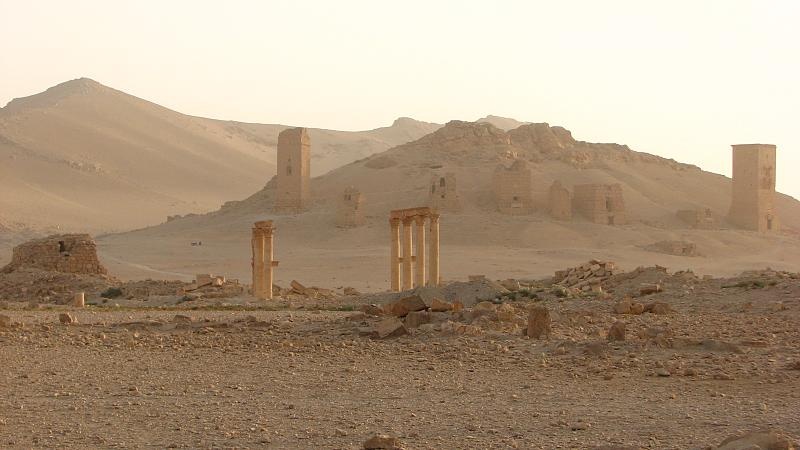
Photo of Palmyra by reibei, via Flickr. Until recently, the ancient city was occupied by ISIS, which reportedly looted pieces of cultural property.
Known as the “Protect and Preserve International Cultural Property Act” (or H.R. 1493 for you policy wonks), the bill has moved quietly through Congress since it was introduced early in 2015. Following passage in the House in June of last year, it awaits the attention of the Senate, where the bill left committee in January with unanimous support.
If passed, the bill would provide a framework for crafting a more efficient federal response to cultural property threatened by global conflict and disasters, allow the U.S. to provide safe harbor to Syrian cultural objects in danger, and establish an import ban on Syrian cultural artifacts illegally excavated after the start of the country’s civil war.
In sum, it could amount to an important change in how the United States government treats cultural preservation of Syrian antiquities—moving from a reactive posture to a proactive one. And that pivot is not without controversy.

Does ISIS profit from antiquities?


While everyone in the heritage community is adamantly against looting, the bill has sparked debate. A key question is if the import ban, which prevents Syrian antiquities illegally removed from the country after March of 2011 from entering and thus being sold in the U.S., makes sense given the available evidence about antiquity looting in Syria.
Much fanfare has been made about ISIS profiting from the sale of looted antiquities, including those from Palmyra, with figures ranging into the ludicrously high (and thoroughly debunked) hundreds of millions of dollars. For better or worse, H.R. 1493 has become a part of this contentious debate. Senator Chuck Grassley, a major proponent of the legislation, praised the bill as “a small but important step in hampering the ability of ISIS terrorists to profit from the sale of looted antiquities.”
Some in the cultural community, like Kate Fitz Gibbon, a New Mexico attorney who sits on the board of  the Committee for Cultural Policy, finds claims like Grassley’s perplexing. “There’s no evidence of Syrian artifacts coming into the United States,” she told me, adding that looting is encouraged by a “media frenzy talking about a multi-billion-dollar market in looted antiquities.” Before passing such legislation under the guise of fighting ISIS, she argues, “it’s incumbent upon us to be working with the facts, and not with completely random speculation.”
Brian Daniels, director of research and programs for the Penn Cultural Heritage Center, sees the bill not as a response, but as a prevention. “The idea of this particular legislation is to combat the issue before there is a significant problem in the United States,” he told me. Federal laws currently on the books, passed to give legal force to the 1970 UNESCO treaty, already allow for import bans—but only after demonstrating the presence of a significant market in the United States. As such, it’s not preventive. “The idea is to disincentivize an entity like ISIS from doing the looting,” says Daniels of H.R. 1493.

Are import restrictions important?


The unilateral restrictions by the United States might not have a major impact if passed in isolation, but, as Daniels points out, the bill before the Senate is the American contribution to a global strategy. In February of 2015, the United Nations Security Council passed Resolution 2199, which called for a concerted effort to stop the illicit trade of antiquities coming out of war-torn Syria. “The idea is actually trying to deprive an international market and have all countries, all market actors say no, they’re not going to accept this looted material,” Daniels tells me.
As to arguments which say the bill will unduly restrict trade and prevent antiquities from being displayed in museums? “That misses the point entirely,” says Daniels, noting the fact that the bill only impacts material removed after March of 2011—roughly the time the Syrian war began.
Broadly, import restrictions aren’t uncommon, a state of affairs Fitz Gibbon sees as an undue threat to the ability of culture and antiquity to be viewed by global audiences. Normally under U.S. law, foreign governments can request such restrictions, which are then reviewed by a committee. Part of the rationale behind H.R. 1493 is that Congress needs to establish an import ban because Syria lacks the functioning authority which could make such a request.
Currently, the State Department lists import restrictions for 16 countries, one being the result of emergency legislation passed to prevent looting in the wake of the Iraq War. Similar legislation for Afghanistan died in Congress, after which, according to Daniels, a trafficking network for Afghan antiquities emerged. But Fitz Gibbon says that during her time on the committee that reviews foreign government requests for restrictions, she found the link between antiquity and criminal groups overstated.

The bill beyond the ban


A significant provision in H.R. 1493 involves streamlining how the government safeguards international cultural property at risk by establishing what it calls an “interagency coordinating committee.” Daniels is quick to note that this isn’t a law enforcement committee—such a group, the Cultural Antiquities Task Force (CATF), was set up in the aftermath of the Iraq War under a State Department umbrella. Rather, the new committee would “deal with things well beyond looting,” says Daniels, amid a federal government in which “a whole host of actors—all doing things about cultural heritage destruction in conflicts and in disasters—don’t talk or interact with each other.” Cultural heritage preservation is a cluttered field, falling into the remit of a numerous departments, from State to Homeland Security.
Moreover, says Daniels, there’s “virtually nothing” in terms of information about what these agencies are actually doing to safeguard endangered culture—a blackout the bill would rectify. H.R. 1493 mandates that Congress receive annual reports from the executive branch on the efforts being made to preserve heritage.
While mandated in the House version of the bill, establishing an interagency committee is merely encouraged in the Senate version, not legally mandated. If passed by the Senate, the difference is significant enough to require a re-vote in the House before heading to President Obama’s desk. Although she considers it unlikely, if the amended Senate version somehow fails to pass, Fitz Gibbon thinks what she calls an “ugly” version—one with a mandatory interagency committee granted expanded powers not found in the current version—will be reintroduced next session.
These important but hardly eye-catching aspects of the bill are overshadowed by the fixation on ISIS and the import ban. “If you look at the text of the House bill itself, the legislation was meant to be broadly comprehensive and to lay out a plan for how the federal government actually deals with these moments of cultural crisis,” says Daniels. “This legislation was designed to try and tackle what is a worldwide problem but also a problem internal to this U.S. government about how it coordinates its own response.”

—Isaac Kaplan



"Minister of what?", o ministério dos funny gestures...

"Minister of what?", pergunta a Reuters sobre João SoaresEva Gaspar | egaspar@negocios.pt | 07 Abril 2016, 18:21
"Minister of what?", pergunta a Reuters sobre João Soares

Reuters e Efe foram duas agências de notícias internacionais que reportaram a ameaça do ministro da Cultura de dar umas "bofetadas" em seus críticos e as reacções que se seguiram.
"Minister of what? Portugal culture minister wants to slap critics" é o título do texto da notícia da agência Reuters que reporta as ameaças de João Soares a dois cronistas do jornal Público, referindo que o ministro da Cultura de Portugal está agora a ser convidado à demissão "for doing something, well, uncultured" – ou seja, por se ter comportado de forma inculta.

Escreve a agência britânica que, "depois de ser chamado de 'incompetente' e acusado de promover  um estilo de trabalho 'de compadrio, prepotência e grosseria', o ministro da Cultura João Soares achou chegada a hora de dar um par de bofetadas em dois colunistas de um influente jornal".

A Reuters dá ainda conta da opinião pessoal do social-democrata Sérgio Azevedo que considerou incompatíveis essas declarações com a permanência no governo e que o "post" de Soares no Facebook "recebeu mais de 800 comentários na sua maioria críticos e muitos exigiram sua renúncia". Por fim, a agência refere que o Ministério da Cultura lhe respondeu que não iria comentar o caso e que se revelou impossível contactar o ministro, que esclarece ser filho do ex-primeiro-ministro e presidente Mário Soares.

"João Soares criticado por ameaçar esbofetear colunistas" é, por seu turno, o título da agência noticiosa espanhola Efe. "O ministro da Cultura de Portugal, João Soares, ameaçou através das redes sociais esbofetear dois colunistas que trabalham na imprensa portuguesa, umas palavras que lhe valeram duras críticas e que geraram uma intensa polémica", noticia a agência do país vizinho. A Efe reporta ainda a reacção de Augusto M. Seabra, que considerou "inclassificável" a postura do ministro, mas não dá conta de reacções dos partidos políticos.

O PSD e o CDS criticam as declarações do ministro, mas não ao ponto de pedir a sua demissão. O PS e os partidos que têm apoiado o governo de António Costa no Parlamento - BE, PCP, Verdes e PAN - ainda não reagiram.


all the GIFs


Animated GIF

Source www.youtube.com     


Carta aos leitores da Artecapital,
A Artecapital não se esquece do essencial: lembrar a autonomia e a independência intelectual do Augusto M. Seabra é não nos esquecermos do essencial, da necessidade de nos construirmos em liberdade de pensamento, que nos permita encontrar a verdadeira medida da nossa vida exaltando o prazer dos sentidos, capaz de captar as emoções e a sensibilidade da humanidade.
Objectivamente, o comentário inqualificável do Ministro demissionário da Cultura, sobre o artigo de opinião do Augusto M. Seabra (no Público), não constitui novidade; mostra-nos como o poder político se baseia essencialmente na submissão da sociedade, e se tornou na medida absoluta de como devemos ordenar e ditar as nossas vidas: como a cultura se encontra refém do poder da decisão política e do poder do dinheiro, e como isso é destrutivo…
O desrespeito do Ministro demissionário da Cultura pelos intelectuais, e a submissão da cultura aos poderosos – paradoxalmente é interessante lembrar que só a cultura nos oferece tudo – revela, essencialmente, a dimensão da crise de liberdade social e requer uma atitude de solidariedade para com o Augusto M. Seabra.
Desde as suas origens, a cultura sempre apareceu ligada ao conceito de liberdade, de transcendência, entre outros, no sentido revolucionário… do progresso e do desenvolvimento. A cultura historicamente tem sido o elemento regenerador de toda a vida, razão para que se deva ter uma relação necessária e vital com a cultura!
Pessoalmente, estou infinitamente indignado com o estado da cultura em Portugal; para mudarmos o dia a dia, precisamos de expectativas culturais, de solidariedade, mas as expectativas culturais e a solidariedade foram destruídas pela precariedade em que vivemos. Não tem futuro a visão de um país dissociado da cultura, para libertação dos que ignoram – como aconteceu no passado recente, com o anterior governo – a cultura, e/ou não compreendem a cultura, como actualmente parece acontecer.
“De qualquer modo, agora é tarde: a tempestade está aí e não temos abrigo”, Franco Berardi.
Entre outubro de 2007 e junho de 2012, o Augusto M. Seabra escreveu mensalmente na Artecapital sobre o estado da arte. Era e continuará a ser o nosso “The Special One”.

victor pinto da Fonseca


buzzz

Desactivar para mensagens em: inglês
Naomi Campbell
Naomi Campbell
New York, NY — Fashion, art, film, and music icons flocked to The Diamond Horseshoe, New York on the evening of April 7, where Benedikt Taschen and Marc Jacobs hosted the first official launch for TASCHEN’s limited Collector’s Edition, NAOMI CAMPBELL.

Guests including Anna Wintour, Leonardo DiCaprio, André Leon Talley, Uma Thurman, Tony Shafrazi, André Balazs, Bella Hadid, Ellen Von Unwerth, Dave Chapelle, Zac Posen, Paris Hilton, Nicky Hilton, Charlie Rose, Gayle King, Don Lemon, Al Sharpton, and Tamron Hall enjoyed a night of disco-dancing, surprise Broadway performances, and heartfelt toasts to Naomi, who has curated both top shots and personal memories in her two-volume TASCHEN collection.

Benedikt Taschen paid tribute to Naomi as a friend and creative partner over the seven and a half years of meticulous curatorial work that has gone into the book’s production. Marc Jacobs celebrated the supermodel’s unremitting influence on fashion and culture, bearing witness to a supermodel and icon who has dazzled and inspired far beyond the runway.

Rattled by Attacks, Many Belgians Still Want Nation Split in Two

Professed “soccer hooligans” and left-wing activists clashed at a peaceful rally in Brussels last month, near a shrine to victims of the March 22 terrorist attacks. Credit Daniel Berehulak for The New York Times

ANTWERP, Belgium — Normally, Dieter Moyaert and his soccer-loving friends liked nothing more than hanging out at the Cafe Royal, a soccer bar dominated by hard-core fans of Royal Antwerp, watching a match, downing beers and, in a few cases, slipping into the bathroom for a stronger substance.
On this particular weekend, though, things were different. Visible in the distance, the stadium lights had been turned on, and a crucial match against Lierse was about to start. But few people in this Dutch-speaking city in the Flemish north of the country seemed really excited.
It was right after the twin terrorist attacks in Brussels, and politicians in the capital had just canceled a protest march against fear, out of fear of more attacks. That, it seemed, was more than Mr. Moyaert and the other self-styled “soccer hooligans” in a group known as the Antwerp Casuals could stand.
In an interview this week, Mr. Moyaert said he called the leaders of the main rival hooligan groups and together they decided that on the day of the canceled march they would head to Brussels, the capital, where the French language dominates.
Dressed in black, shouting insults against the Islamic State, they arrived waving the flag. Not the black lion of Flanders, Mr. Moyaert emphasized, but the black, yellow and red national flag of Belgium.
Photo

Onlookers watched Belgian police officers advance on protesters in Brussels on Saturday. Credit Daniel Berehulak for The New York Times

“It was unprecedented,” Mr. Moyaert said. “Our message was, ‘If hooligans can unite under the national flag, the whole country can.’ We thought we would be welcomed as heroes.”
But they were wrong.
Left-wing activists saw them approaching and started shouting warnings that the hooligans were fascists. Fights broke out. The riot police showed up. The international news media had a field day reporting on the neo-Nazi soccer hooligans. And once again, Belgium, among Europe’s most divided and troubled countries, looked like a mess.
“It’s hard to unite the country,” Mr. Moyaert said. “But I still believe we can keep things together.” Asked about the others in his group, he paused. “What do my friends think? Forget it, they just want independence.”


The Brussels attacks have shaken up people in Flanders, just as elsewhere in the country. But weeks later many here are asking deeper questions: whether the faltering, French-dominated federal government in Brussels can cope with the difficult challenges of immigration and terrorism; or, ultimately, whether the Flemish people are not better off going their own way as an independent nation with Antwerp as its capital.
One obvious monument to Flemish independence, the Iron Tower, rises 275 feet over the flat landscape of western Flanders, in the town of Diksmuide, and bears at its top a row of massive letters, an abbreviation for “All for Flanders — Flanders for Christ.”
It was built after World War I, at the start of the Flemish national movement, when soldiers returning from the muddy trenches and blood spattered battlefields refused to accept the prewar status quo of French dominance. In 1946, the tower was dynamited by unknown people, though many suspected French-speaking groups. A new, even taller one was immediately constructed in its place, though the pressure for Flemish separatism slowly subsided.


BRITAIN
NETHERLANDS
London
Antwerp
Diksmuide
FLANDERS
GERMANY
Aalst
Brussels
Affligem
BELGIUM
English Channel
WALLONIA
FRANCE
LUXEMBOURG
50 Miles


But the prospect of division is never far from the national consciousness, particularly given that the nation’s largest political party, the New Flemish Alliance, is dedicated to gradual, peaceful secession.
Belgium was not even a country until 1830, when a rebellion of the Southern Netherlands backed by France led to independence. French became the dominant language, and the resulting state structure was also favorable to those from Wallonia, the nation’s French-speaking southern region. Dutch speakers, now a majority of 60 percent, were considered peasants by the French speakers, who found their potato stew culture nearly barbaric.
In addition to being divided between Dutch and French speakers, with a bit of German thrown in, Belgium still lacks cohesive national symbols. There is the “Atomium,” a chrome structure made for the 1958 World’s Fair. There is ‘‘Manneken Pis,’’ a statue of a boy urinating. And, of course, chocolate, abbey-brewed beers and the national soccer team, the Rode Duivels, or red devils. That is about it, most Belgians, Flemish or Wallonian, agree.
The new challenges to Belgian unity were visible inside the Iron Tower one day recently. At its base was a small memorial for Bart Migom, a 21-year-old student from Diksmuide who died in the suicide bombings at Brussels Airport. He had been on his way to see his American girlfriend in Georgia.
“During the next elections we will see yet another move to the right,” said Koen Coupillie, the leader of the local chapter of the New Flemish Alliance. “People are angry and feel powerless after these attacks, so we can expect that some will vote for extreme right parties.”
Flanders had already taken a shift to the right over the last decade, with Mr. Coupillie’s party sweeping up most of the votes and becoming, in 2014, the single largest political party in Belgium. On the other side there has been no political change. The Parti Socialiste has for decades attracted the main French-language vote.


“Their solution for everything is completely different,” Mr. Coupillie, 32, said of the Parti Socialiste. “They just want to keep old structures in place, while we want to reform and improve.”
Standing on top of the tower, which affords a panoramic view of preserved trenches from the First World War, Mr. Coupillie pointed at the new location for a center for asylum seekers, where 200 refugees would soon be housed. “We had a town gathering,” he said. “People were calm, but it will take a long time for them to accept outsiders, I expect.”
Immigration has been a hot-button issue in Belgium, as elsewhere in Europe. Between 2000 and 2010, Belgium accepted more immigrants than Canada, which has more than three times the population. Over 25 percent of Belgium’s 11 million people have an immigrant background, and many of them, from former French colonies like Morocco, speak French.
At a farmer’s market in Aalst, a Flemish city close to Brussels, many said the integration of Muslims in Belgium had failed, and laid the blame with the French-dominated elite in the capital.
“We live separated,” said Jos Wauters, a civil servant from the nearby city of Affligem, known for its blond beer brewed in a nearby abbey. “We don’t meet, we don’t talk. It’s not working out.”
He blamed the left-wing French parties, which had long blocked national laws on compulsory language courses. “Meanwhile, they just continued inviting people to come. Of course we have huge problems now.” His wife nodded, though when she spoke her accent revealed her Wallonian background.
“We can all live together, Flemish and Wallonian,” Mr. Wauters said, smiling and pointing to his wife, “but only in Flanders.”