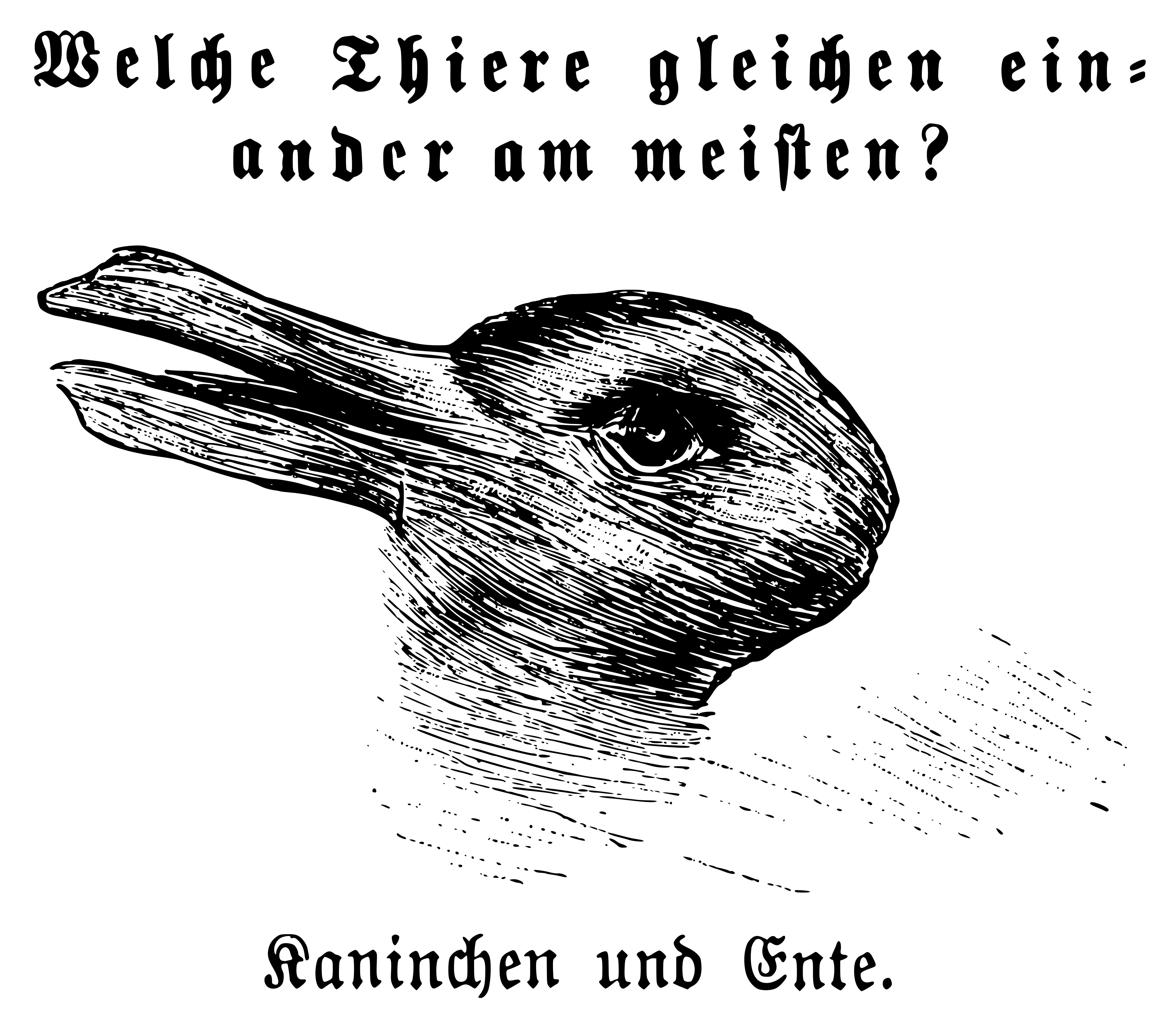
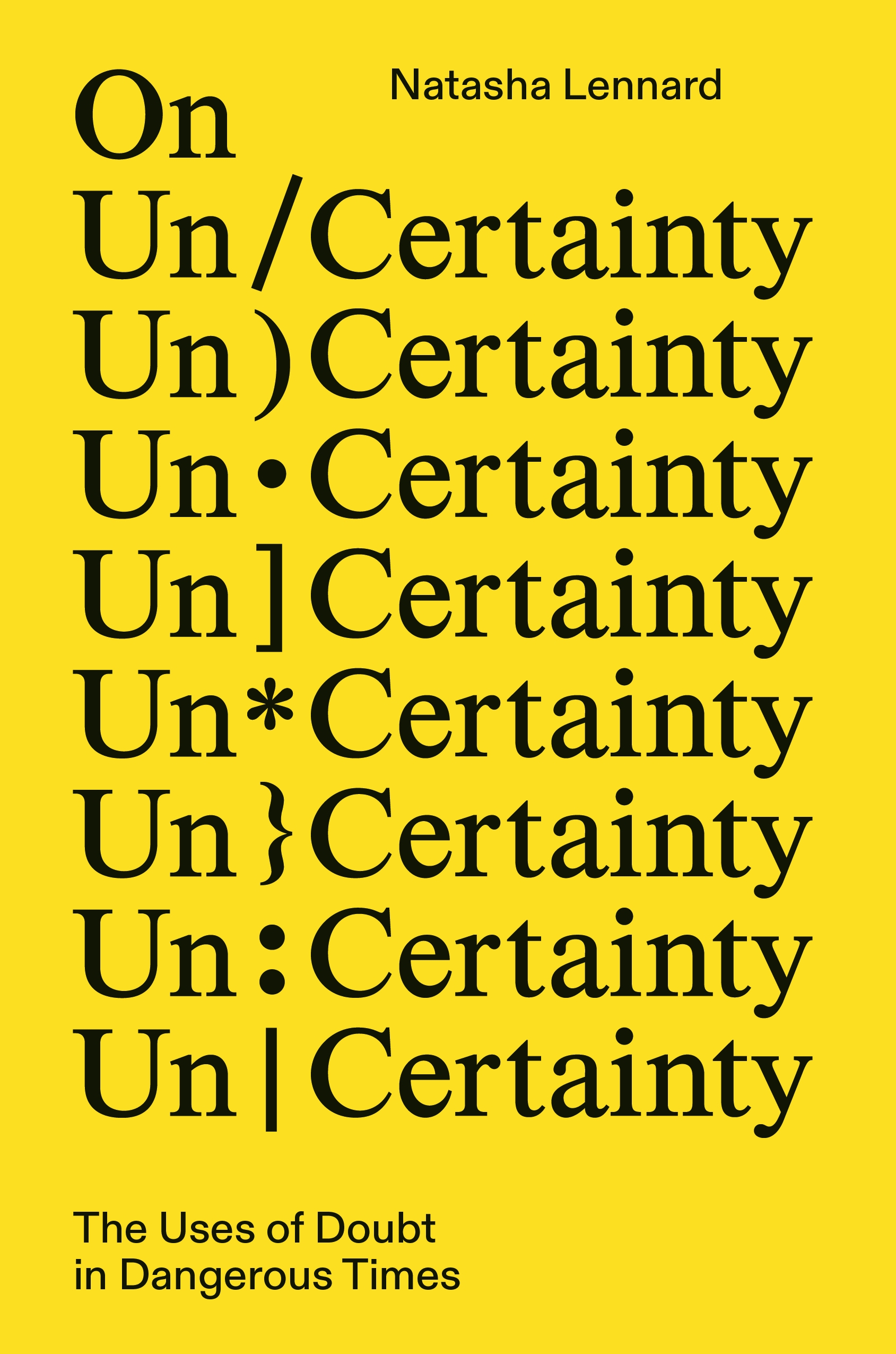
Philosopher Ludwig Wittgenstein used the hybrid figure of the “duck-rabbit” to illustrate the limits of perception. Depending on the viewer’s personal conceptual framework, they might first see either a rabbit’s ears or a duck’s beak in the image, but never both at once. This metaphor is central to On Un/Certainty: The Uses of Doubt in Dangerous Times, a new book by Natasha Lennard, a writer and columnist for the activist news site The Intercept, that asks how we can be certain of anything—not least, the humanity of others.
Lennard asks us to imagine a person who is certain that this image only depicts a duck. Maybe they have no experience with rabbits, or have found ways to discount the concept of bunnyhood. But if they’re certain, only a severe shift in their worldview can make them acknowledge the duck-rabbit’s duality. If they’ve seen 99 such images, Lennard writes, “showing them yet another duck-rabbit image is unlikely to do the trick”.
Beyond knowing anything, how can we convince other people to know it, too? Basically, Lennard argues, you can’t; not without introducing shattering changes to their world, or revolution. Following Wittgenstein, she points out that knowledge isn’t the same as certainty; knowledge can be tested, while certainty resists evidence. She gives the example of a favourite right-wing gotcha question: Can you define “woman”? The perfect answer, she says, would be: “No.” The conservative interrogator would think the trap has sprung.
Yet “to those who obsess over mythically fixed and absolute definitions”, Lennard writes, “I’ve emphasised Wittgenstein’s reminder that ‘the meaning of a word is its use in the language’.” For some, this is the dreaded postmodern relativism. For Lennard, however, an understanding of language where “correctness” is malleable, morphing through shared context, offers a model for how political certainties can be overcome.
“Beyond knowing anything, how can we convince other people to know it, too?”
For practical examples, the first three chapters trudge grimly through these “uncertain times”, drawing into question the certainties behind ideas of perpetual polycrises (that they exist), national borders (that we need nations), and gender (that it’s clearly binary). Yet many things are certain, she writes: external objects, or the solidity of walls, or the negative effects of fascism and capitalism on human flourishing.
And if someone disagrees with any of these points, they will change their minds not through argument but through demonstration. “Act, that is, with the certainties on which we want our practices to hinge,” she urges the reader. “Only then can we begin to dream of more joyful uncertainties.” In this sense, Lennard’s book is more explanatory than instructive, rephrasing the ongoing contest between irreconcilable and stubborn worldviews. Yet the notion of joyful uncertainties, rosy on its face, is also disconcerting: a blend of possibilities and aimlessness. Fine for dead philosophers but, for those living them, have our uncertain times prompted an epistemic breakdown?
Lennard’s book touches on a question that has become increasingly fraught in contemporary art: the efficacy of representing and witnessing. Did watching Arthur Jafa’s The White Album (2018), a montage of white people saying cringy things about race on the internet, actually help viewers to decentre their whiteness? In fairness, Jafa is explicitly not offering catharsis, but that hasn’t stopped the art industry from packaging his work that way.
Why won’t any amount of witnessing, representing or educating change some people’s minds? Because, Lennard writes, the problem is certainty, not knowledge, and one more example of suffering won’t help. She offers the dire fact that lynchings in the United States not only depended on witnesses but were actively shared via postcards of huge crowds at the hangings, which you could legally send through the mail until 1908.
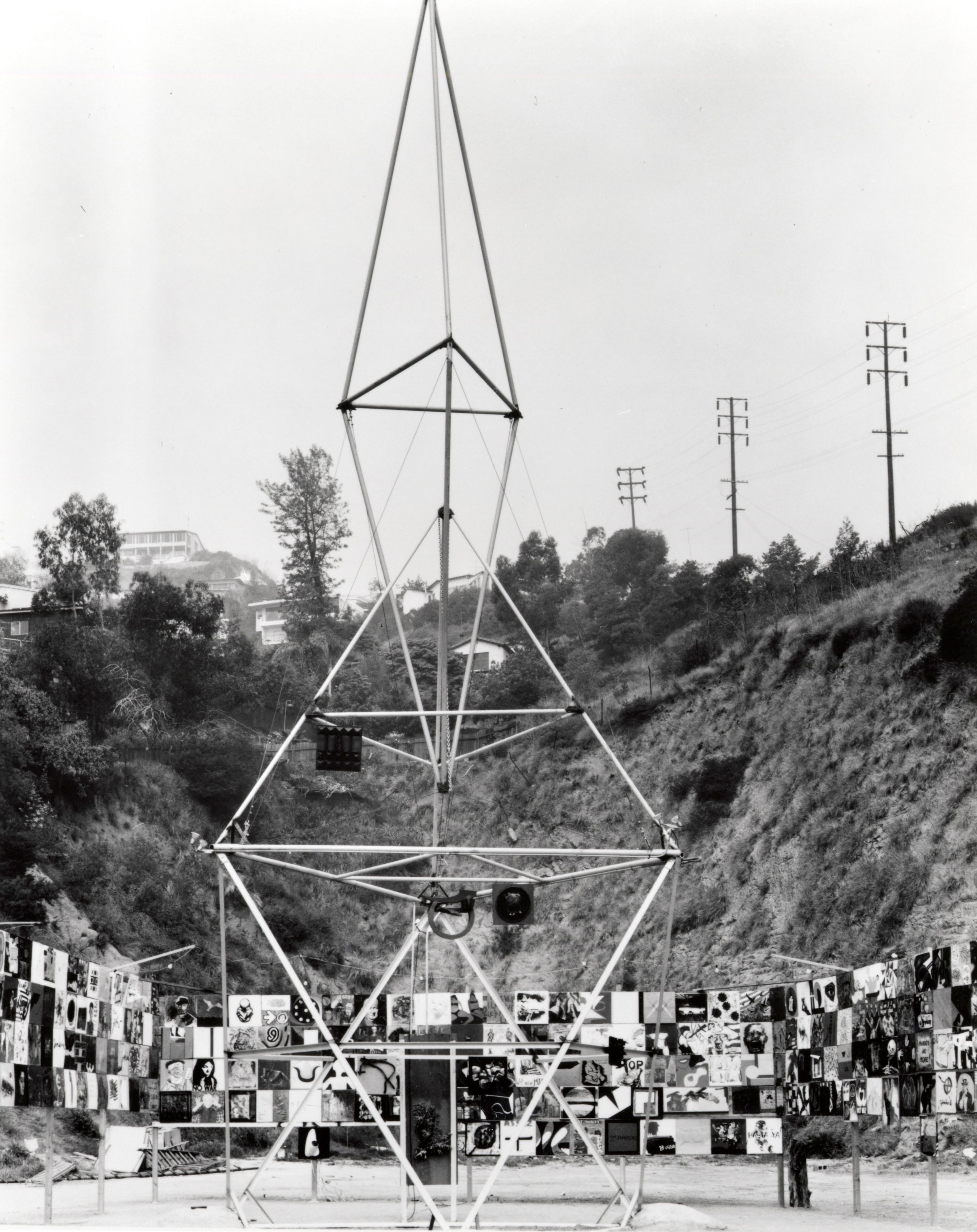
Art’s political blurriness is partly a hangover symptom of the 1960s, when US artists organised against the Vietnam War and for better support from art institutions, and used their art in both capacities. (See, for example, Mark di Suvero and Irving Petlin’s Peace Tower, a 50-foot-high scaffold surrounded by hundreds of paintings donated by other artists in protest of the US involvement in the war, first realised in 1966 and restaged by Rirkrit Tiravanija at the 2006 Whitney Biennial.) But over the years, the personal activism of artists has morphed into the idea that demonstrating the essential humanity of others is what makes art intrinsically political.
There’s a philosophical basis here, too: Hannah Arendt’s arguments against fascism hinge on the notion of humans “appearing” to one another. Arguably, this is the simplistic politics realised by exhibitions such as curator Adriano Pedrosa’s 2024 Venice Biennale, Foreigners Everywhere, which sought to platform artists from diverse, historically marginalised backgrounds almost as an end in itself.
“The very cliché of the artist is that they transcend boundaries”
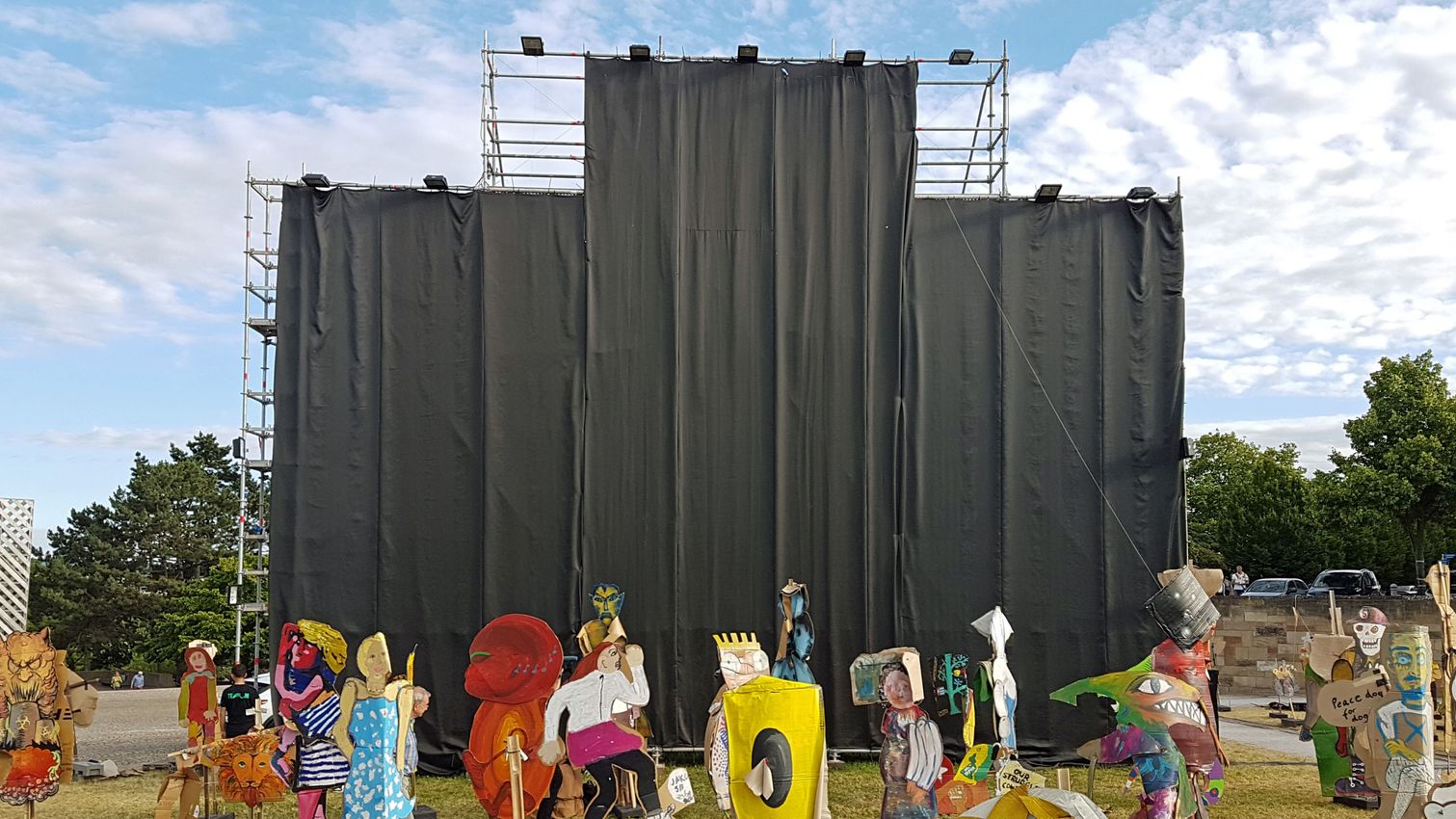
Art goes on as Lennard says politics does: in an unsatisfying state of solidarity. That is, until art bumps into real politics, like when documenta 15 tripped over the limits of German antisemitism law in 2022. After a depiction of a soldier with a pig’s head and a Star of David was featured in a mural by Indonesian art group Taring Pedi, documenta’s director was forced to resign and the work was swiftly removed. Curators ruangrupa apologised following the outcry, stating, “We take this opportunity to educate ourselves further about the atrocious history and present of antisemitism and are shocked that this figure made it into the work in question.” Yet some commentators questioned what the incident revealed about the political implications of the German state’s involvement in the arts. In 2024, the German Bundestag passed a resolution making public grants for culture and science projects dependent on adherence to the International Holocaust Remembrance Alliance (IHRA) working definition of antisemitism, only to reverse this “due to concerns that the anti-discrimination clause is not legally secure”, and after calls from artists for a wider cultural boycott. A new code of conduct, including the IHRA’s definition of antisemitism, has since been been introduced for the upcoming edition of documenta, scheduled to take place next year.
Conservatism tends toward this kind of certainty, when it’s convenient: in seeking a definition of “woman” but also of “art”. Here, Lennard’s joyful uncertainty describes art’s deeper political value. Art is structurally uncertain, from the embrace of revision (not to say growth) in an artist’s practice to the constant redefinition of what counts as art over the course of art history, from salon painting to conceptual practice to the possibility of art-as-activism. The very cliché of the artist is that they transcend boundaries, within the four sides of their metaphorical canvas. Defending the borders of art, form or content, feels less a project for artists than for the institutions built to preserve and sell artworks.
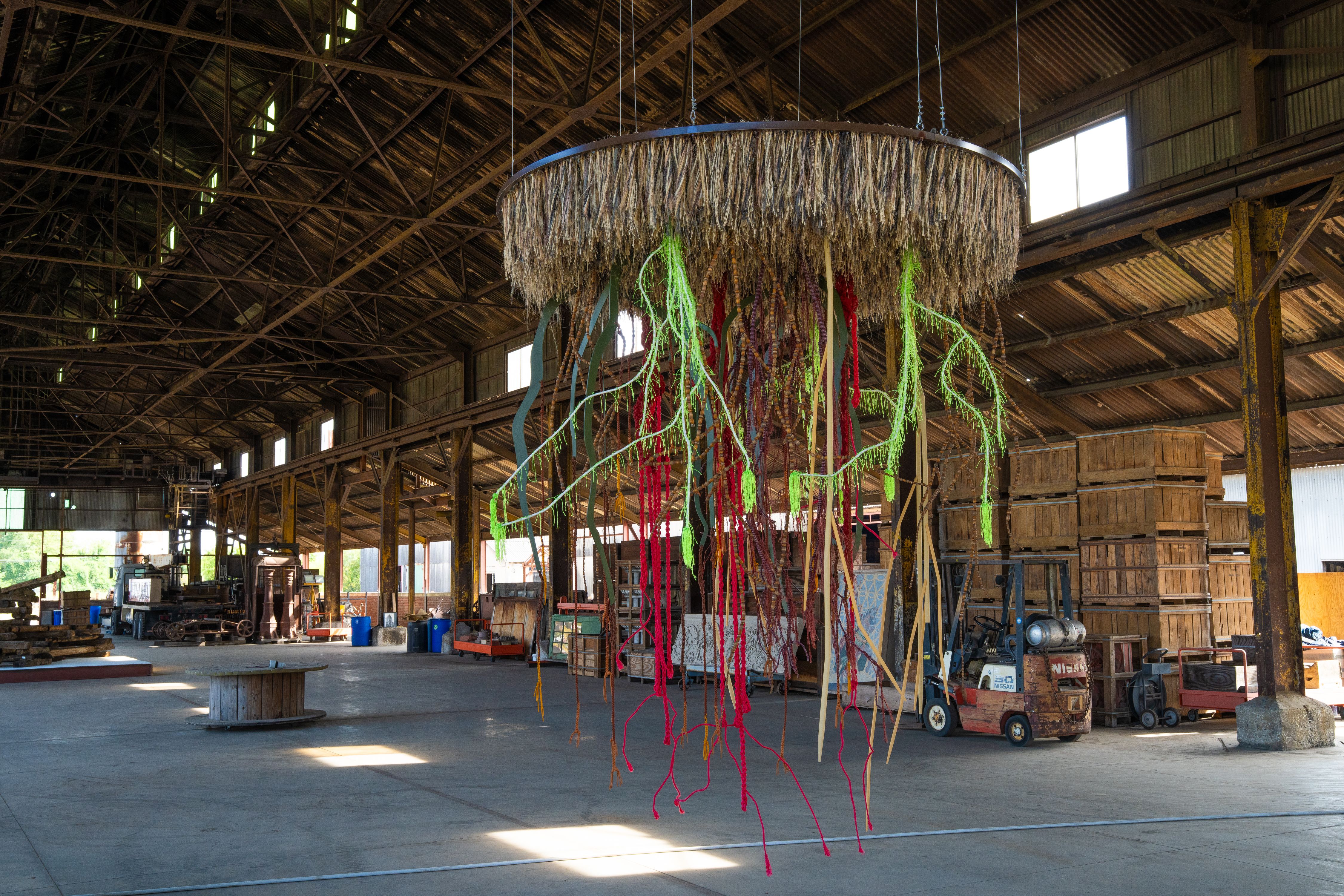
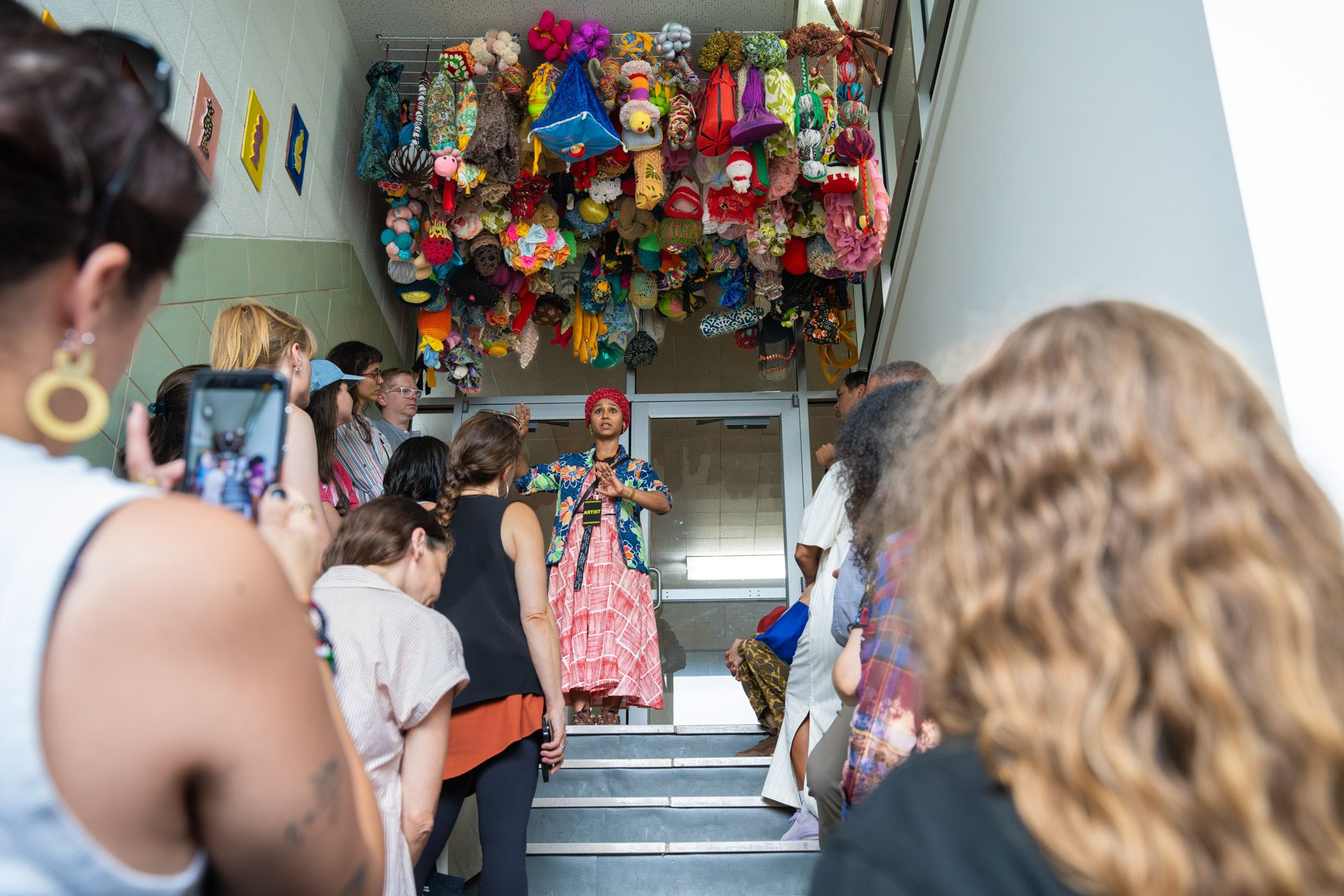
In this sense, Lennard’s On Un/Certainty offers a realistic, if inconclusive, template for thinking about art and politics now. Politics sometimes requires certainty, but art doesn’t, which leaves art free to embrace duality. Beyond Foreigners Everywhere lies the concept of the current Counterpublic biennial in St Louis, Coyote Time, named for the cartoonish state of suspension experienced, temporarily, just past the edge of a cliff.
Will one more artwork change people’s minds about colonialism, racially motivated violence, or the absurdity of the US government? This is really the wrong question, based on misleading, judgmental criteria. Instead, we might ask how well an artwork sustains uncertainty, and how we as viewers can, through our experience of art, learn to live in a space of doubt. These art games can prepare us for the more consequential language games of politics. Imagine an object that is both art and activism, a duck-rabbit world where art both is and isn’t a force for good.—[O]
Natasha Lennard, On Un/Certainty: The Uses of Doubt in Dangerous Times (October 2026), Verso Books
Main image: Taring Padi mural covered at documenta fifteen. Licence: Creative Commons by-sa-4.0. Photo: Michael Paetzold.


OPINIONIn Uncertain Times, What Is Art For?A new book by Natasha Lennard uses the obscuring qualities of doubt to offer an alternative framework for thinking about art and politics. |

No comments:
Post a Comment