|


Collecting as an Exercise in Sustained Attention
For Seoul-based collector Seunghue Lee, collecting began not with a predetermined strategy, but with the simple experience of looking. A university trip through Europe and visits to the Vatican Museums and the Louvre first showed him how art can carry history, memory, and emotions across generations and time. Since beginning his collection in 2019, that early fascination has developed into a thoughtful collection of over 200 works, bringing together established figures and younger artists of Post-War and Contemporary Art.
In conversation with LARRY’S LIST, Lee reflects on his collecting journey as an exercise in sustained attention: a way of looking more closely, learning continuously, and allowing artworks to acquire new meanings over time. He also shares the works that have changed his understanding of art, and discusses the importance of meeting artists and living with works as time passes.
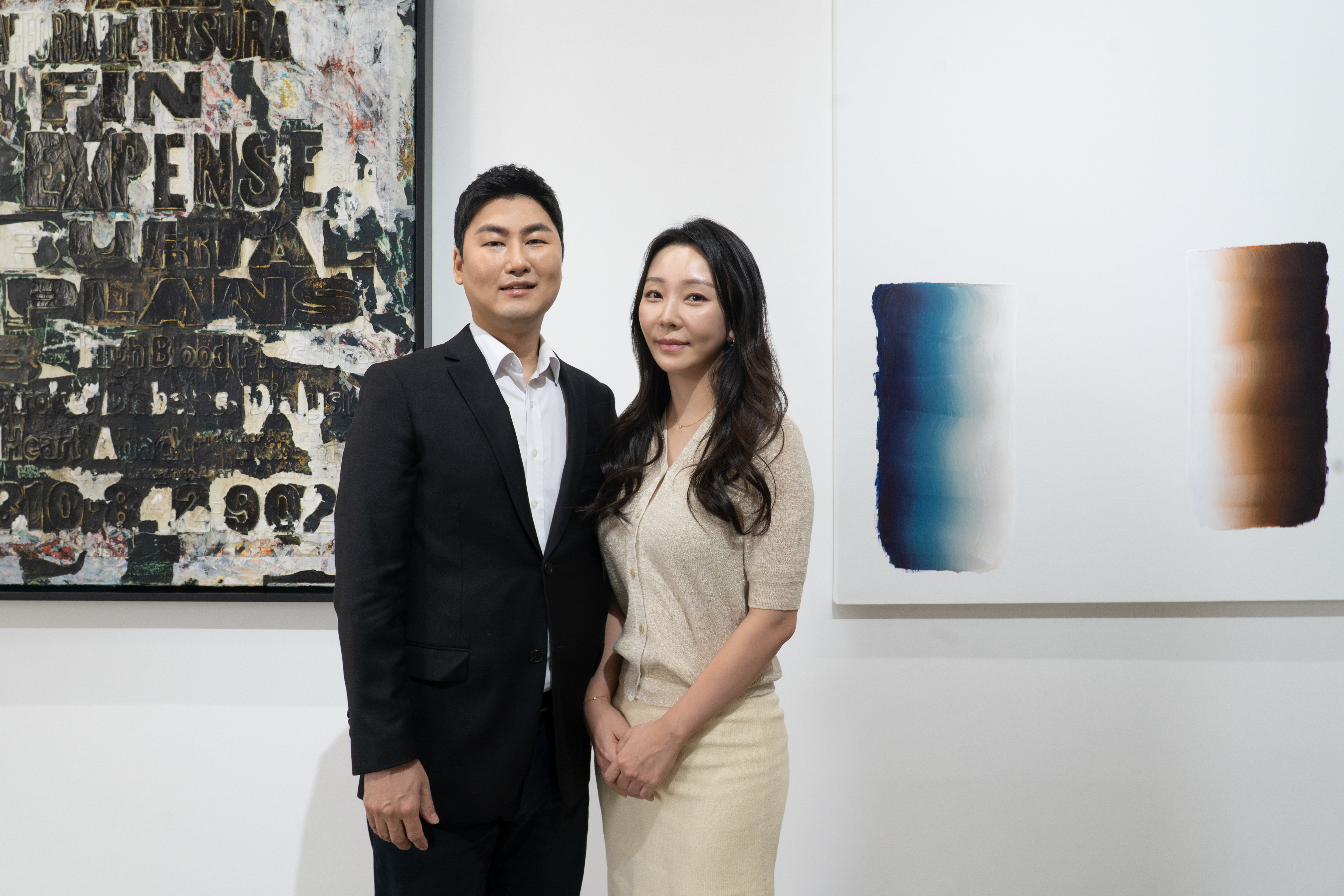
Courtesy of Seunghue Lee Collection and TCC Limited.
Collecting
What made you want to start collecting art?
My interest in art began quite naturally. It did not come from one formal path or a single decisive plan, but rather through a series of experiences that gradually deepened over time. When I was at university, I travelled through Europe and visited many museums. The Vatican Museums and the Louvre, in particular, left a strong impression on me. At that time, I was not yet thinking about art through the lens of collecting. I was simply struck by the experience of standing before works that had survived across time, cultures, religious histories, and historical contexts. What I felt then was that art is not simply a beautiful image. It is something that can continue to speak to people across time. The beliefs, politics, emotions, techniques, desires and fears of a certain period can remain within a work. That realization made me want to learn more about art.
After returning to Korea, I began visiting galleries and museums more regularly. Through conversations with people close to the art world, I gradually learned not only about individual works, but also about how galleries, museums, curators, and collectors think and operate. Through that process, I began to understand that art is not something to be judged only by taste. It has to be understood through history, context, continuity, and relationships. In that sense, my path moved naturally from looking to learning, and then to collecting.
What is the main motivation behind your collecting?
For me, collecting may begin with the moment a work enters the collection, but it does not end there. More deeply, collecting is a way of continuing to learn. It is a process of building relationships with artists, galleries, museums, and other collectors, and of thinking about how a private collection can contribute to a broader cultural conversation.
At first, it was important simply to be moved by a good work. That has not changed. A work has to move me, and it has to stay with me. But over time, I began to think beyond the initial attraction to a work itself. I started asking where a work stands within the artist’s practice, what kind of conversation it creates with other works in the collection, and whether it might one day meet a wider audience through exhibitions, research, loans, or institutional collaborations. In that sense, I would say my motivation for collecting is a combination of curiosity, learning, relationships, and responsibility. Art changes the way I see the world, and helping works continue to live in new contexts is one of the greatest motivations for me.
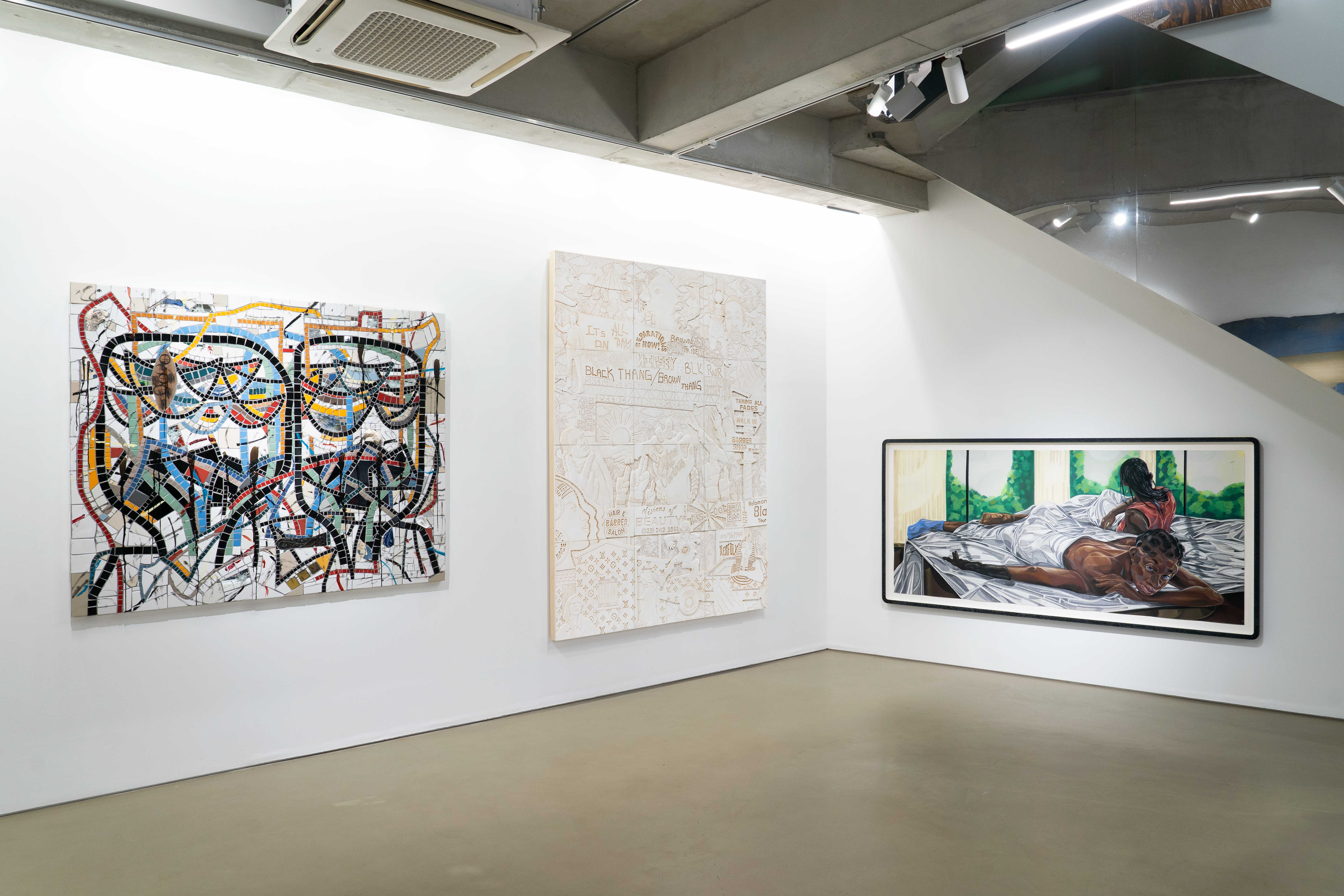
Courtesy of Seunghue Lee Collection and TCC Limited. Photo: Jungho Park.
When did you fall in love with a piece of art for the first time? What was it?
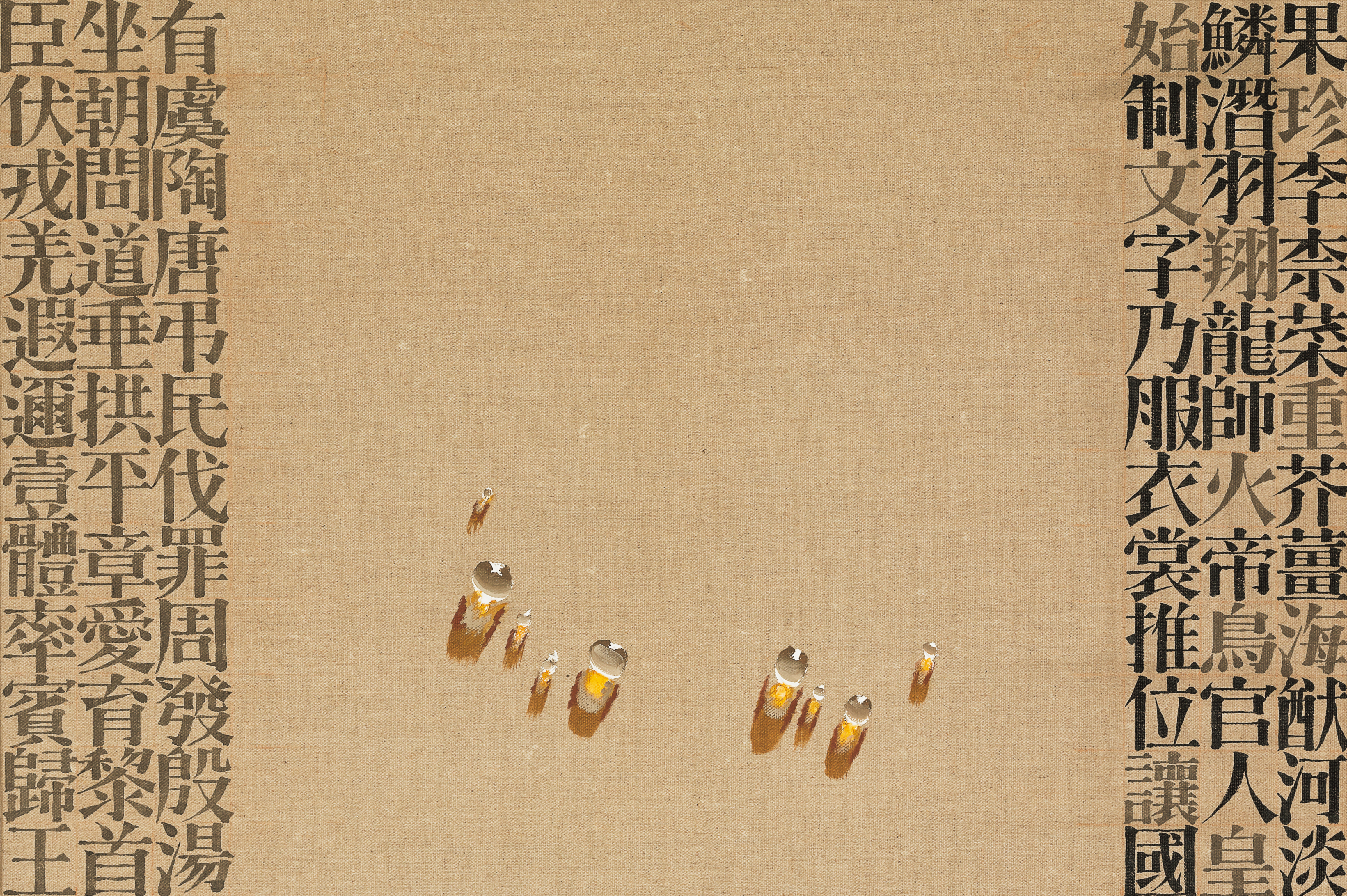
It is difficult to choose only one work, but one of the earliest works that became truly important to me was Kim Tschang-Yeul’s Recurrence (1993). The work belongs to his iconic water drop series, but what moved me was not only the image of the water drops themselves. It was the way the drops, the field of Chinese characters, and the texture of the hemp cloth seemed to hold different layers of time within one surface.
What struck me when I first encountered the work was this tension between presence and disappearance. The water drops appear almost real, as if they are resting on the surface, yet they are entirely constructed through painting. Behind them, the repeated characters create another rhythm — something closer to memory, discipline, and return.
The work does not feel simple to me. It feels restrained, but deeply complex. It asks you to look slowly. Through this work, I began to understand that painting does not need to be loud to have power. The force of the work comes from precision, repetition, silence, and the fragile space between image and reality. The water drops seem to exist for a moment between appearing and vanishing, while the text behind them suggests time, learning, and cultural memory. That work became important because it changed my understanding of what a painting could do. It showed me that a work can be quiet and still carry enormous depth. It can be intimate, but also historical. It can look almost empty at first, yet continue to open slowly over time. In that sense, Recurrence became an important turning point in the way I look at art, and in the way I think about building a collection.
What is your focus regarding the artists in your collection? Are you more interested in emerging or renowned artists?
I am interested in both emerging and established artists, but I think they play different roles within a collection. Historically important artists give the collection depth and structure. For example, major figures in Korean postwar art, Dansaekhwa, postwar abstraction, and conceptual practice form an important foundation of the collection. Younger and mid-career artists, on the other hand, connect the collection to the present and the future, and they also allow me to see historical works in new ways.
I do not want the collection to be composed only of established historical artists, but I also do not want it to simply follow the newest generation. What matters to me is not the label attached to an artist, but the strength of the work, its place within the artist’s practice, and whether it can open a meaningful conversation within the collection.
A young artist can make a historical artist visible in a different way, and a historical artist can offer a framework for understanding what is happening now. I am interested in that kind of conversation across time.
Is there any particular type of art that has consistently attracted you, or anything that unites all the works you have acquired?
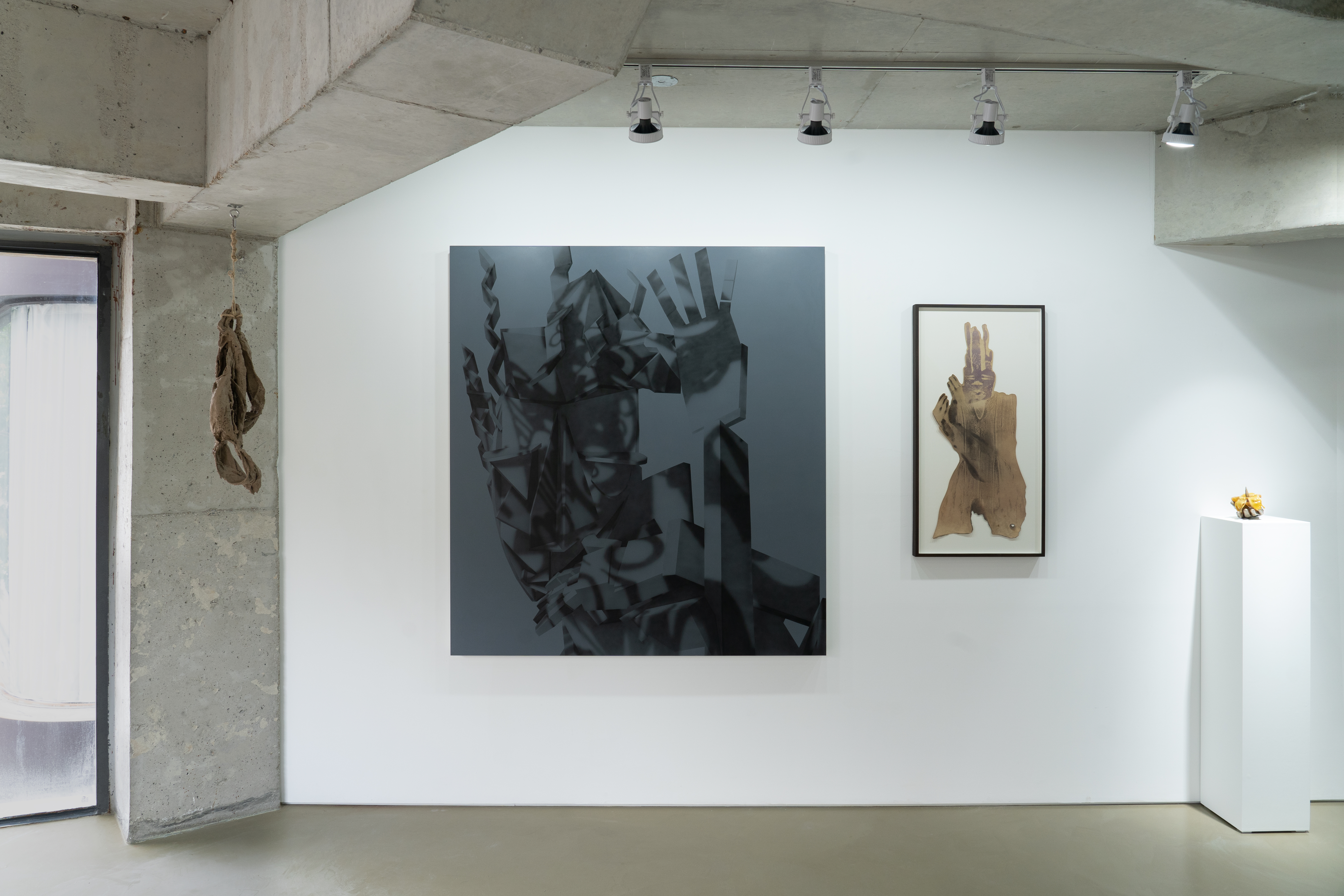
I would not describe my collection through a single style, medium, or geography. It is more connected by certain recurring ideas: surface, memory, material, body, and time. The collection includes painting, sculpture, textile, works on paper, and installation, but many of the works ask similar questions. How can a surface hold time? How does a body leave a trace? How does material carry history? How can an image become a site of memory or identity? For example, Lee Ufan’s work makes me think about time and relation through restrained gestures and empty space. David Hammons’s body print shows how the body can touch a surface directly and become an image. Mark Bradford brings fragments of urban text, erased information, and social memory into the surface of painting. Artists such as Otobong Nkanga, Olga de Amaral, Sonia Gomes, and Lee Bul show how material can carry labor, memory, history, and the trace of the hand. What connects these works is not one visual style, but a shared sense that something is held beneath or beyond the surface. I am drawn to works that do not reveal everything at first glance but continue to unfold over time.
What were the first and the latest artworks you purchased?
The first work I acquired was Kim Tschang-Yeul’s “Recurrence” (1993), which remains an important starting point for my collection. I do not see his water drops simply as images of water. In this work, the painted drops, the field of Chinese characters, and the texture of the hemp cloth come together to create a surface where memory, language, and time seem to overlap. What continues to interest me is the way Kim’s work moves between different worlds. It is deeply connected to Korean history and experience, but it is also shaped by displacement, by his time in New York and Paris, and by a broader conversation between Eastern philosophy, Western painting, and the question of how memory can appear on a surface. Through this work, I began to understand that painting can be quiet without being simple. It can hold personal history, cultural memory, and philosophical reflection without declaring them directly.
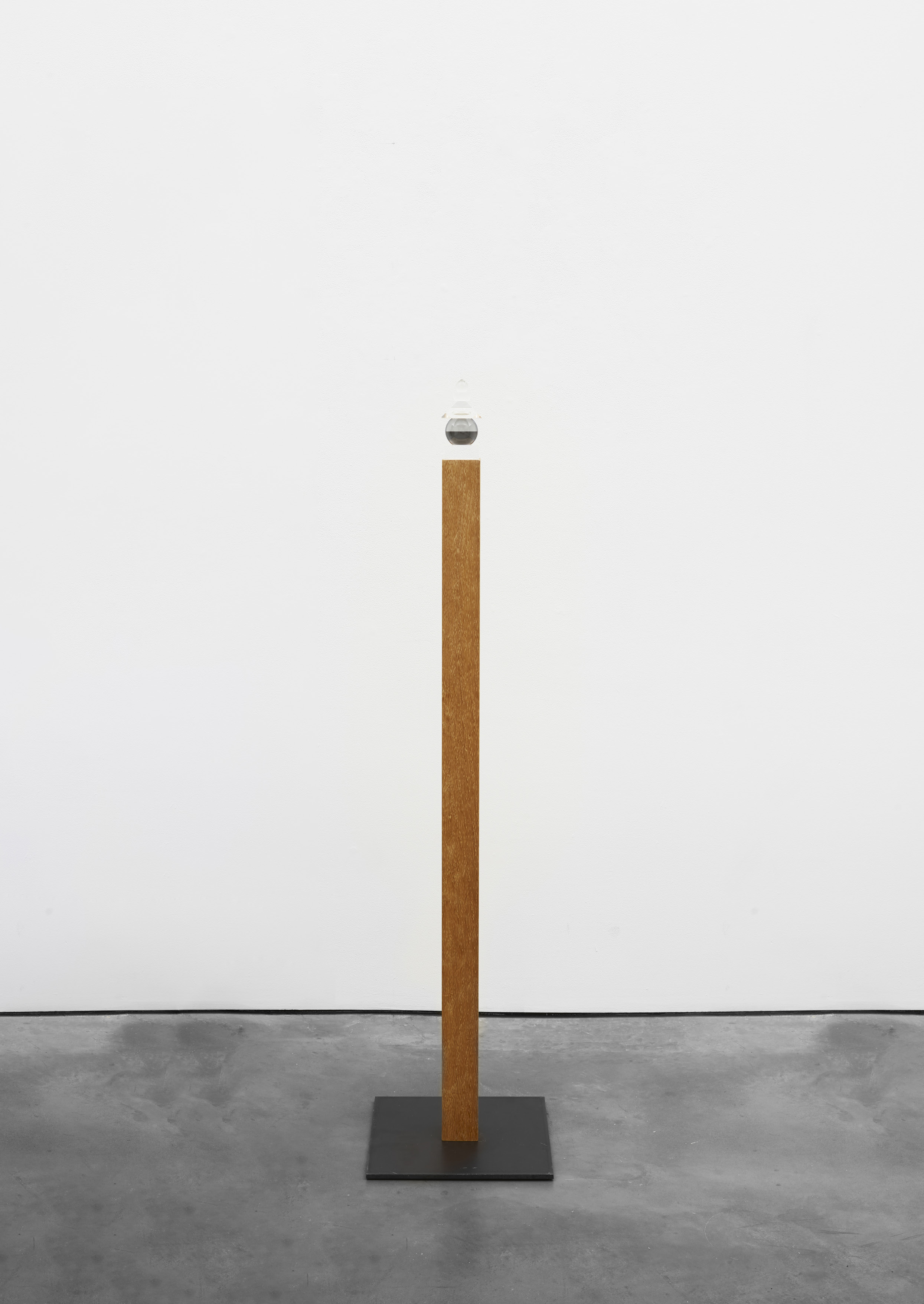
The most recent work I acquired is a sculpture by Hiroshi Sugimoto. I already had one of his Seascape photographs in the collection, and through that work I had spent time thinking about how the sea and the horizon can become a structure for time, silence, and eternity. As my interest in Sugimoto’s practice deepened, it felt very natural to move from the photographs toward his sculpture. Last May, I visited Sugimoto’s studio in New York, and that experience deepened my understanding of his work. Seeing his process, his attitude toward materials, and his philosophy of time and existence up close made me understand more clearly that his photography, sculpture, architecture, and philosophical practice are all connected. Acquiring the sculpture felt like a natural extension of that experience.
I am also planning to visit the artist’s foundation in Odawara next year. Through that visit, I hope to understand more deeply how his photography, architecture, sculpture, and broader thinking come together as one integrated world.
How many artworks do you own? Where do you display your collection?
The collection currently consists of around 200 works and has grown steadily over time. Some works are installed at home, while larger-scale works are kept in storage. In the future, I also hope to gradually install works in our company spaces, so that art can become part of the everyday working environment as well. At home, because my children are still young, the way we live with space and artworks will continue to change as they grow. This collection exhibition is not the entire collection, but a focused selection from it. “What the Surface Remembers” brings together 46 works by 39 artists to present some of the key directions and themes of the collection. But I do not want to define the collection by numbers alone. What matters more is the relationship between the works, and the direction in which the collection is developing.
The works exist at home, in storage, and, in some cases, through exhibitions or institutional loans. Living with art at home is very important to me. A work feels very different when you encounter it every day in a domestic space than when you see it in a museum, gallery, or an art fair. Light, time, family routines, and conversation all allow the work to take on different meanings. I hope the works will continue to be exhibited, studied, loaned, and encountered by different audiences. I think it is important that the collection does not remain only in a private space but continues to live within a broader cultural context.
What considerations guide you to make a purchase?
I try to take time before making a decision. I do not look only at one image or first impression. I look at the artist’s broader practice, exhibition history, museum collections, critical writing, where the work sits within the artist’s career, and whether the specific work has the strength to remain meaningful over time. But I do not decide through analysis alone. A work has to move me first. Some works stay in my mind for days or weeks after I see them. When that happens, I ask myself: Is this a strong example within the artist’s practice? Does it have a reason to enter the collection? Does it create a new conversation with works I already own? Can I imagine living with it and continuing to learn from it? Acquiring a work is not simply about seizing an opportunity. It is the beginning of a long-term relationship. So I look at the quality of the work, its context, its role within the collection, and whether it can continue to hold my attention over time.
Courtesy of Seunghue Lee Collection and TCC Limited. Photo: Jungho Park.
Is there any kind of artwork that can make you write a cheque without any consideration?
No matter how strong an artwork is, I try not to make a decision without thinking carefully. Acquiring a work is not simply a purchase; it means bringing a new relationship into the collection. So I always try to ask why this work, why now, and what role it can play within the collection. Of course, there are works that move me very strongly. Sometimes a work is unforgettable from the first moment and keeps returning to my mind. If I also feel that it is important within the artist’s practice and that it can create a new axis within the collection, the decision can happen quickly. But that is not the same as impulse. It is more like the result of previous study, experience, relationships, and judgment suddenly aligning in front of one work. Good collecting may sometimes look spontaneous, but I believe there is usually a long accumulation of time and efforts behind it.
What is your most treasured artwork?
It is difficult to choose only one. For me, the most treasured works are not necessarily the most famous or the most immediately recognizable. They are the works I keep returning to over time — works that continue to open new questions each time I look at them.
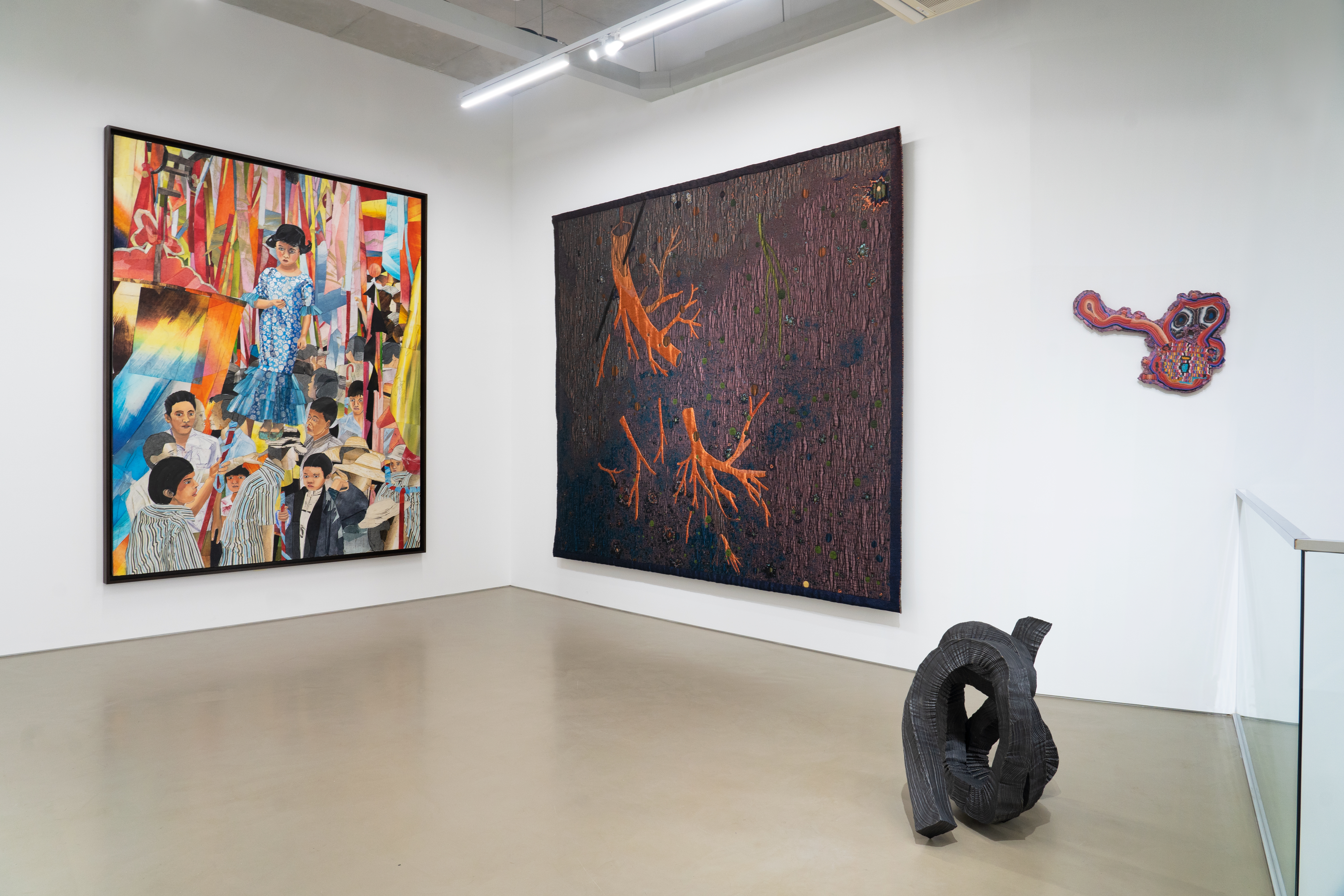
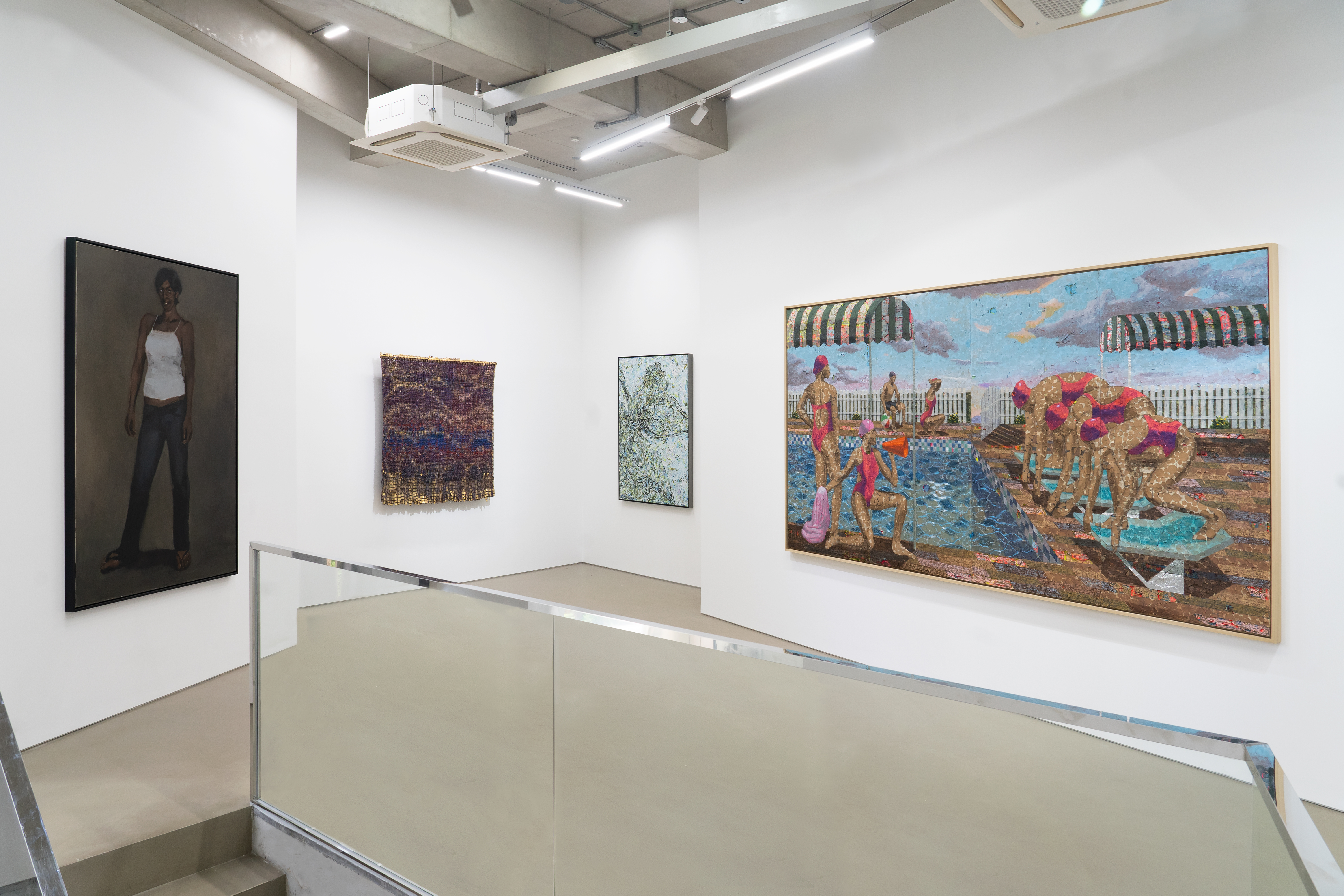
One of those works is María Berrío’s “The Ground of Being” (2025). It is a large-scale collage painting made with Japanese paper and watercolor. At first, the color, texture, and composition are what draw you in, but the longer you look, the more you begin to sense layers of community, movement, protection, uncertainty, and survival within the image. What I find powerful in Berrío’s work is that image and material are inseparable. The cut and layered papers do not simply form a picture; they create a world. In that sense, the work feels close to the way memory itself is constructed — through fragments, surfaces, and emotions that slowly come together. It shows how painting can hold personal memory, collective narrative, beauty, and unease at the same time.
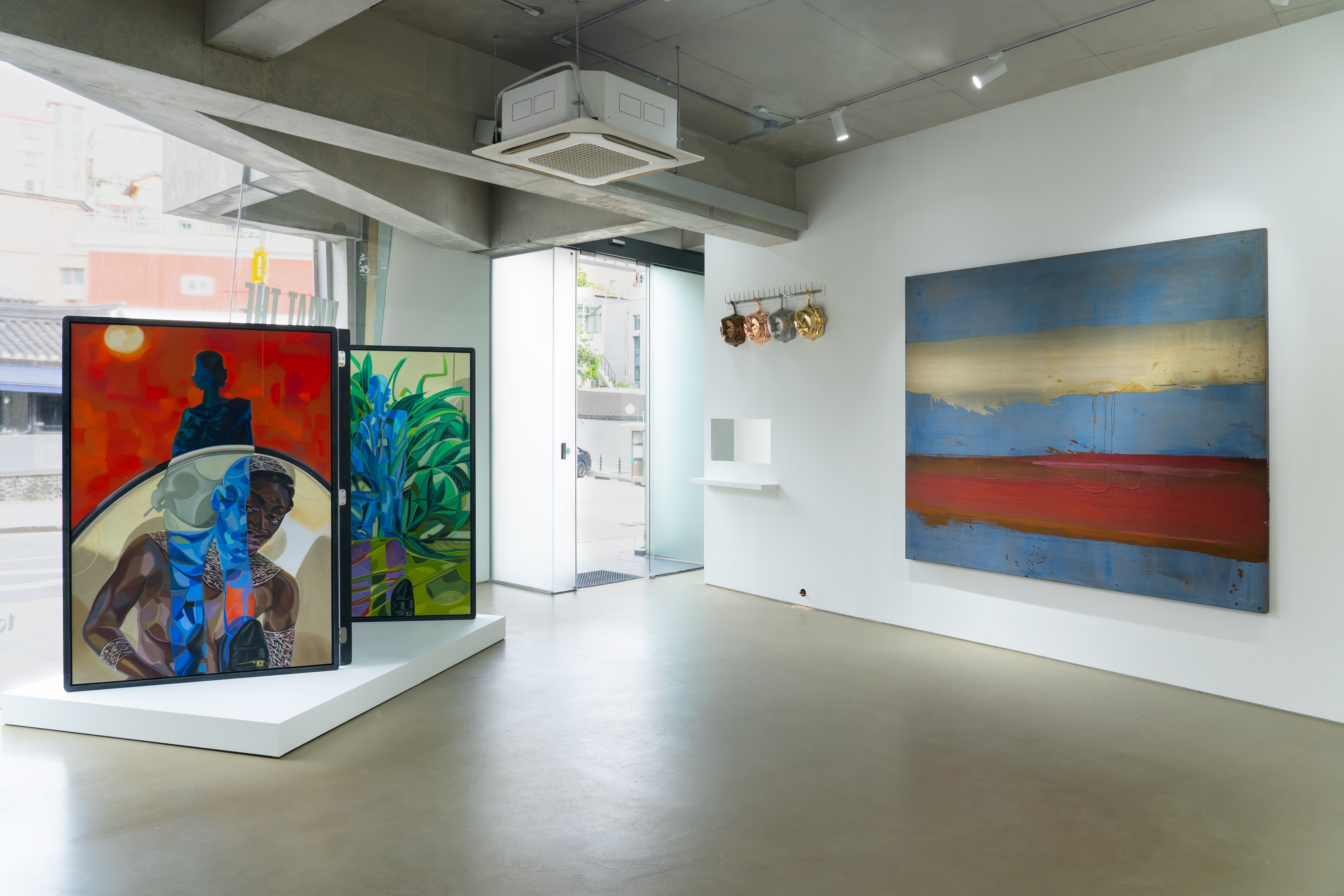
Toyin Ojih Odutola’s “Time, Energy, Resources” (2024–2025) is another work that means a great deal to me. It is the third work by Ojih Odutola in the collection. The first was a canvas work in which the figure’s shadow felt even more present than the figure itself. The second was a work on paper in which the relationship between the figure, the interior, and the exterior became very important. This third work is a large triptych that unfolds almost like a screen or a folding partition. For me, acquiring several works by the same artist is not about repetition. It is about following how an artist’s world changes and expands over time. Toyin’s figures never remain simple portraits. They seem to carry their own worlds, and within those worlds are questions of power, class, time, narrative, body, landscape, and architecture. This work feels like a painting, but also like a stage or an unfolding space. The viewer’s eye moves across the three panels, through different relations and environments. As the title suggests, the work makes me think about the conditions that shape a life: time, energy, resources, and the social structures that surround a person.
Michaël Borremans’s “French Painting” (2026), is also very important to me. The work evokes the tradition of historical painting, but it subtly destabilizes that familiarity. The figure sits holding a guitar, yet he does not belong comfortably within the conventions of portraiture or figure painting. The pink puffer jacket, blue stockings, instrument, and seated pose all feel familiar, but together they create a strange psychological unease. What draws me to Borremans’s work is precisely that tension. It is beautiful and technically refined, but also unsettling. It appears classical, yet it holds a completely contemporary anxiety. This work reminds me that painting can still be a very powerful psychological space.
These three works are very different. Berrío creates a world of memory and community through material, collage, and narrative. Ojih Odutola expands figure, space, power, and time into a complex painterly structure. Borremans reveals human contradictions through historical painting and psychological tension. But for me, they all ask a similar question: what can painting still do today? They are precious to me not simply because they are important works by important artists. They are works I want to return to again and again. Each time I look at them, they open different emotions and questions, and they continue to create new relationships within the collection. For me, the most treasured works are not the ones that become quieter over time, but the ones that gain more voices with time.
How important is it for you to meet the artists who created the artwork?
Meeting artists is very important to me. Of course, a work must ultimately stand on its own. But meeting the artist can open a different level of understanding.
When I see exhibitions with artists, visit studios, or have conversations with them elsewhere, I begin to understand more clearly the questions behind the work, the rhythm of their practice, and the way a particular piece belongs to a much larger world.
I try to approach artworks not only as finished objects, but as part of a living practice. A work carries the artist’s time, experience, doubts, repetitions, decisions, and way of seeing. Sometimes even a brief conversation can change the way I look at a work. It allows me to move beyond the surface of the image and understand the thinking, emotion, and discipline that shaped it.
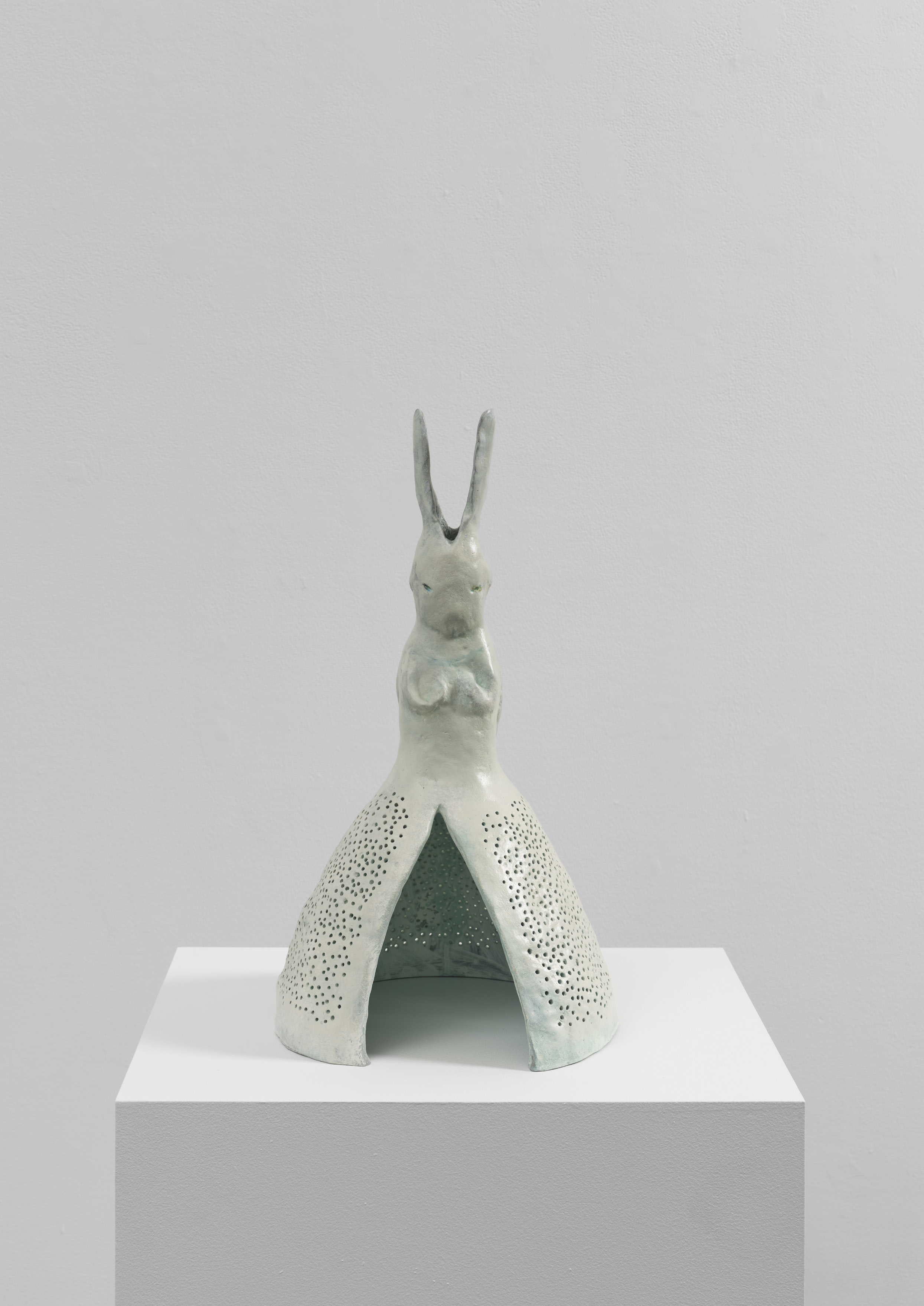
My encounters with the artist Leiko Ikemura have been especially meaningful in this sense. I have not yet visited her studio in Berlin, but I have met her several times in different cities, including Hong Kong, Los Angeles, and New York. Meeting her in different exhibition contexts, speaking with her about the works, and gradually understanding how she thinks about her world have all deepened my connection to her practice. At first, I was drawn to the poetic atmosphere and quiet presence of Ikemura’s work. But over time, and through these encounters, I came to understand that this quietness is not simply lyrical. Her works often exist between states: human and animal, myth and reality, vulnerability and protection, loss and recovery.
Her Usagi figures, for example, may appear fragile, but they also feel like protective spaces or spiritual vessels. There is a quiet force in them. Over time, Leiko Ikemura has become an increasingly important artist within my collection. I now have four works by her. That was not something I planned from the beginning. It happened gradually, through seeing her exhibitions, meeting her in different contexts, speaking with her, and slowly entering more deeply into her world. I am excited to follow her new works, but I am also increasingly interested in studying her earlier works. For me, that is when a relationship with an artist becomes truly meaningful — when it moves beyond a single encounter and becomes a longer process of looking, learning, and returning.
This is why meeting artists matters to me. Collecting is not only about selecting individual works. It is also about building a sustained relationship with an artist’s language and with the world that language creates. The more time I spend with artists and their works, the more I understand that collecting is, at its best, a process of deepening attention.
Courtesy of Seunghue Lee Collection and TCC Limited. Photo: Jungho Park.
The Art World
What was your happiest moment being involved in art?
It is difficult to choose only one happiest moment. Seeing a powerful work for the first time is always a special experience, and encountering an important work by an artist I have followed for a long time can be deeply memorable. But over time, I have realized that the greatest happiness comes when a work moves beyond my own encounter with it and begins to open itself through conversations with others.
For example, I feel great joy when I look at works at home with my family, or when I have a meaningful conversation about a work with museum professionals, curators, artists, or other collectors. The same work can reveal completely different meanings depending on who is looking at it, what they bring to it, and how they respond.
Preparing this first collection exhibition has also been very meaningful. Works that had previously existed in the context of home, storage, and private conversations are now being shown together for the first time within one structure. Seeing the works reflect one another and create new relationships has been one of the happiest experiences for me as a collector.
Who inspires you the most in the art world?
First and foremost, I am most inspired by artists. When I see an artist spend years developing a language of their own, moving through different phases of thought, material, and form, I feel great respect. A work ultimately comes from the artist’s time, discipline, sensibility, and way of seeing the world. In that sense, I learn the most from artists’ sustained inquiry and commitment. At the same time, I do not think the art world is shaped by artists alone. Fellow collectors around the world, curators, gallerists, museum directors, writers, advisors, and many others are all deeply interconnected and play important roles. For a work to be made, shown, studied, collected, and later read again in a public context, many relationships and conversations are necessary. I am inspired by that complex ecosystem as well.
As a collector, I have also come to understand how important it is to have the right partners. For me, TCC is not simply a partner that helps identify works. They are an important partner who thinks with me about the direction of the collection, studies and travels with me, and helps the collection develop with greater depth. When we look at a work together, the question is not simply whether it is strong on its own. We think about where it sits within the artist’s practice, what kind of conversation it can create within the collection, and what meaning it may carry over time. Working with TCC has helped my collection become more thoughtful and more structured. They point out contexts I may miss, introduce me to artists and works I should look at more carefully, and at times help me slow down and consider things from a wider perspective. I believe caring for a collection is not simply about acquiring and storing works. It is a process of building a direction, a language, and a long-term sense of responsibility around the collection.
This first collection exhibition would also not have been possible without TCC.
Together, we worked through the selection of works, the exhibition concept, the spatial narrative, the texts, conversations with institutions, and the way the collection could be presented publicly for the first time. To me, a good partner is not someone who defines a collector’s taste on their behalf. A good partner walks alongside the collector, helping them expand their vision, sharpen their understanding, and allow the collection to grow with greater clarity and responsibility. In that sense, I continue to be inspired not only by artists, but also by the people who help create the conditions for art to be understood, shared, and carried forward.
Why has art become important in your life? Is it a passion or an obsession or both?
Art has become one of the most important areas of continued learning in my life. I have always enjoyed learning new fields, and art is fascinating because the more you study it, the more endless it becomes. A single work can contain personal emotion, history, politics, philosophy, social memory, and sometimes even spiritual layers. I think I can call it a passion. But rather than obsession, I would describe it more as commitment — a sustained form of dedication. It begins with loving the work, but over time it leads to studying artists, building various relationships and thinking about how a collection can contribute to a wider cultural conversation. Art has changed the way I see and think. Some works become connected to specific moments in my life, while others change the way I understand history and the present. In that sense, art is no longer simply a hobby. It has entered deeply into the rhythm of my life and the way I think.
Other Topics
What is your advice to young and fresh collectors?
The first advice I would give is to look as much as possible. Visit museums, galleries, art fairs, artists’ studios, and other collectors’ spaces. A work cannot be understood only through an image. Its presence, materiality, scale, and context in real space can make it feel completely different. I would also say: do not define your taste too quickly. At the beginning, everyone wants to say, “This is the kind of style I like.” But real taste is not a fixed answer. It changes as you look more, study more, and sometimes encounter works that feel unfamiliar or uncomfortable. It is also important to look at the work itself rather than only the name. A famous artist does not make works of equal depth throughout their entire career, and a less familiar artist can also make a very important work. In the end, the strength of a collection does not come from a list of names. It comes from the quality of individual works and the relationships they create with one another.
Finally, I think it is important to meet good partners. Collecting is a long journey, and it is not something one does entirely alone. The support of family, strong relationships with galleries, trusted advisors, and conversations with curators and artists are all important. A good advisor is not simply someone who sources and transacts works. A good advisor is a partner who helps you understand, manage, and care for the collection over the long term.
Can you name (three) emerging artists who should be on our radar?
There are, of course, many artists I am paying attention to at the moment. The answer also depends on how one defines an “emerging artist.” Some artists have already entered important institutional conversations but are still actively expanding their language, while others may be less visible internationally but are developing a very distinct and serious practice. I try not to think of “emerging” only in terms of age or career stage. What interests me is whether an artist is building a language that can continue to deepen over time.
One artist I am very interested in is Mire Lee, born in 1988 and based between Amsterdam and Seoul. Given the scale of her recent institutional projects, it is difficult to describe her as “emerging” in the conventional sense, but her practice still feels restless, open, and evolving. Her work brings together machines, bodies, viscous materiality, vulnerability, violence, life, and decay. What interests me is that her sculptures and installations do not simply occupy space; they seem to behave within it. They have a bodily, almost unstable presence, as if the work itself is still becoming. I find that material and psychological intensity very compelling.
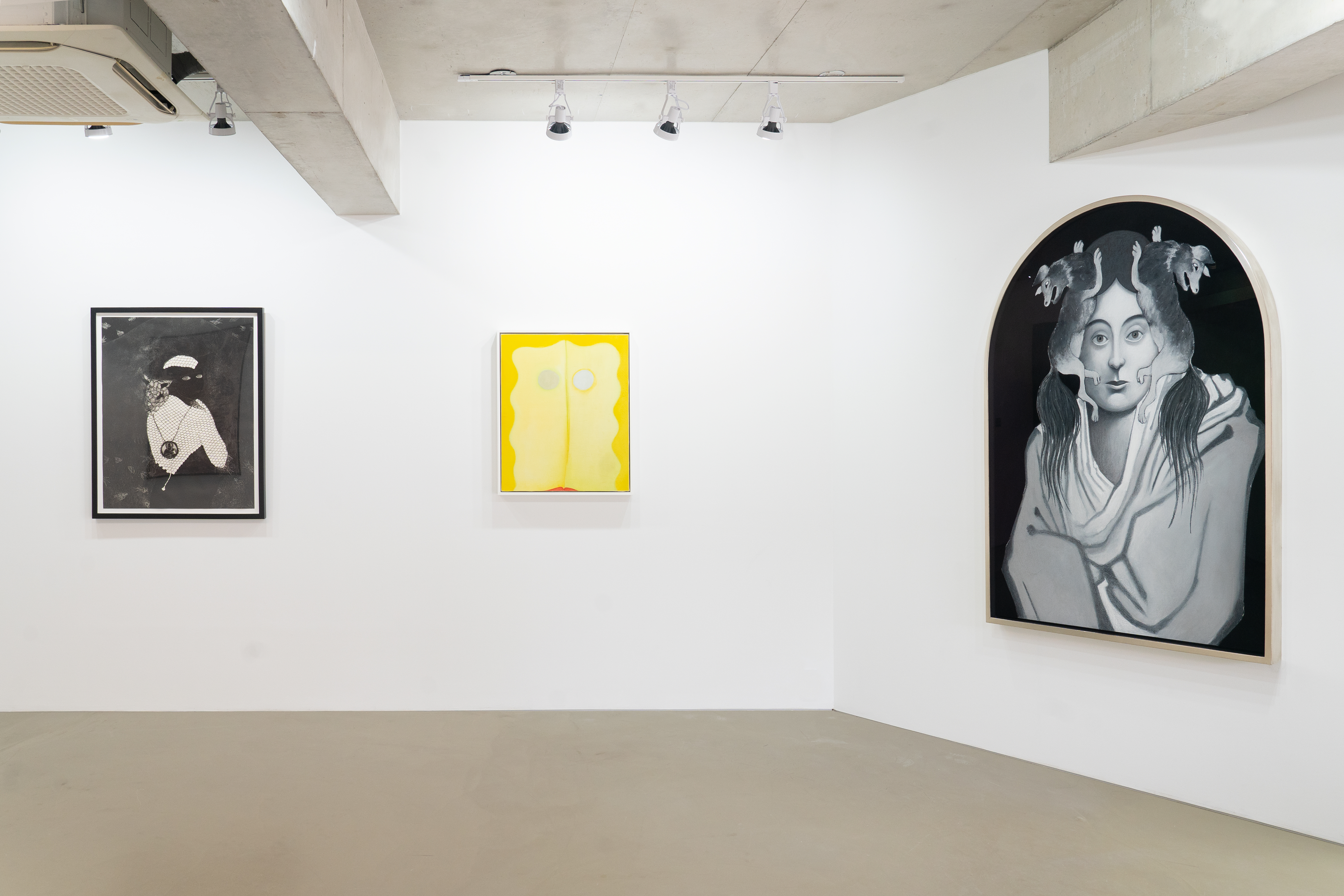
The second artist I would mention is Jonggil Kang, born in 1991 and based in Seoul. His practice explores the relationship between painting, sound, rhythm, and bodily perception in a very distinctive way. I am particularly interested in how he translates structures of Korean traditional music, including systems such as jeongganbo, into a painterly language. His works feel less like paintings to be seen only with the eyes, and more like paintings that ask to be read through rhythm, sound, and the body. I think his practice opens an interesting space between Korean cultural memory and contemporary abstraction, and I would be very interested to see how his work develops in a broader international context.
The third is Zeinab Saleh, born in 1996 in Kenya and based in London. Her work is quiet and delicate, but it carries a strong psychological density. Moving between painting and drawing, she brings together figures, plants, patterns, domestic atmospheres, and fragments of memory in a way that feels intimate without becoming overly narrative. What I appreciate in her work is the way silence and restraint can create emotional depth. Her surfaces feel soft, but they are never passive. They hold memory, tension, and interiority in a very subtle way. I think her practice will continue to unfold in interesting directions.
The reason I mention these three artists is not simply because they are receiving attention now. Each of them is building a very different language, and each practice has the potential to become more complex with time. For me, an artist worth following is not defined by one moment of visibility, but by the ability to keep generating new questions.
Limited. Photo: Jungho Park.
What are you especially excited about in regard to art in the next 12 months?
What I am most excited about is how Seoul continues to evolve as a deeper site of conversation within the international art world. Frieze Seoul is now just around the corner, and I am interested in how this momentum will continue to shape the city’s art scene. I hope Seoul will be seen not only as an art fair destination, but as a city with strong artists, institutions, galleries, collectors, and a distinct historical and cultural context.
As Frieze Seoul reaches its fifth edition, I think it is becoming more than a temporary event. The early attention was perhaps focused on Seoul as a new art fair city, but now I feel the local ecosystem — artists, institutions, collectors, criticism, and regional context — is beginning to connect in a more meaningful way. Going forward, I hope this momentum can expand into year-round programs, institutional collaborations, artist exchanges, and long-term collector engagement.
Within that process, I believe collectors can play a more active and thoughtful role. Collectors can help connect artists and institutions, support works so that they can be seen within broader curatorial and institutional frameworks, and participate in sustaining international conversations in Seoul. As this platform grows, collectors should not remain on the sidelines. They can become part of the ecosystem by creating relationships, supporting cultural dialogue, and helping build a longer-term foundation.
Personally, I am also very excited about my first collection exhibition. This is the first time the collection is being presented within one structure. I want to see how the works speak to each other, and how museum professionals, curators, artists, and collectors from Korea and abroad read the collection. I also think the exhibition will become an important moment for me to ask where the collection should go next — which artists and works I should study more deeply, what new directions may become important, and how the collection can continue to open outward.
In the coming months, I also plan to visit more biennials, institutions, and artists’ studios. I think it is important to see not only finished exhibitions, but also the places where artists develop their ideas, and the different rhythms created by museums and biennials in different regions. These experiences will make the collection more multidimensional and will continue to shape the way I understand artists and their practices. Institutional relationships also remain very important to me. Through my relationships with the Centre Pompidou, MMCA, and LACMA, I want to think more concretely about how the collection can expand beyond the private sphere into research, exhibitions, education, cultural exchange, and support for artists. I have also decided to support an upcoming exhibition at LACMA next year, and I am very much looking forward to that project.
You’ve said you look for works that can be “lived with, studied, loaned, shared, and returned to again and again.” Can you walk us through a specific work whose meaning has changed for you the longer you’ve spent with it?
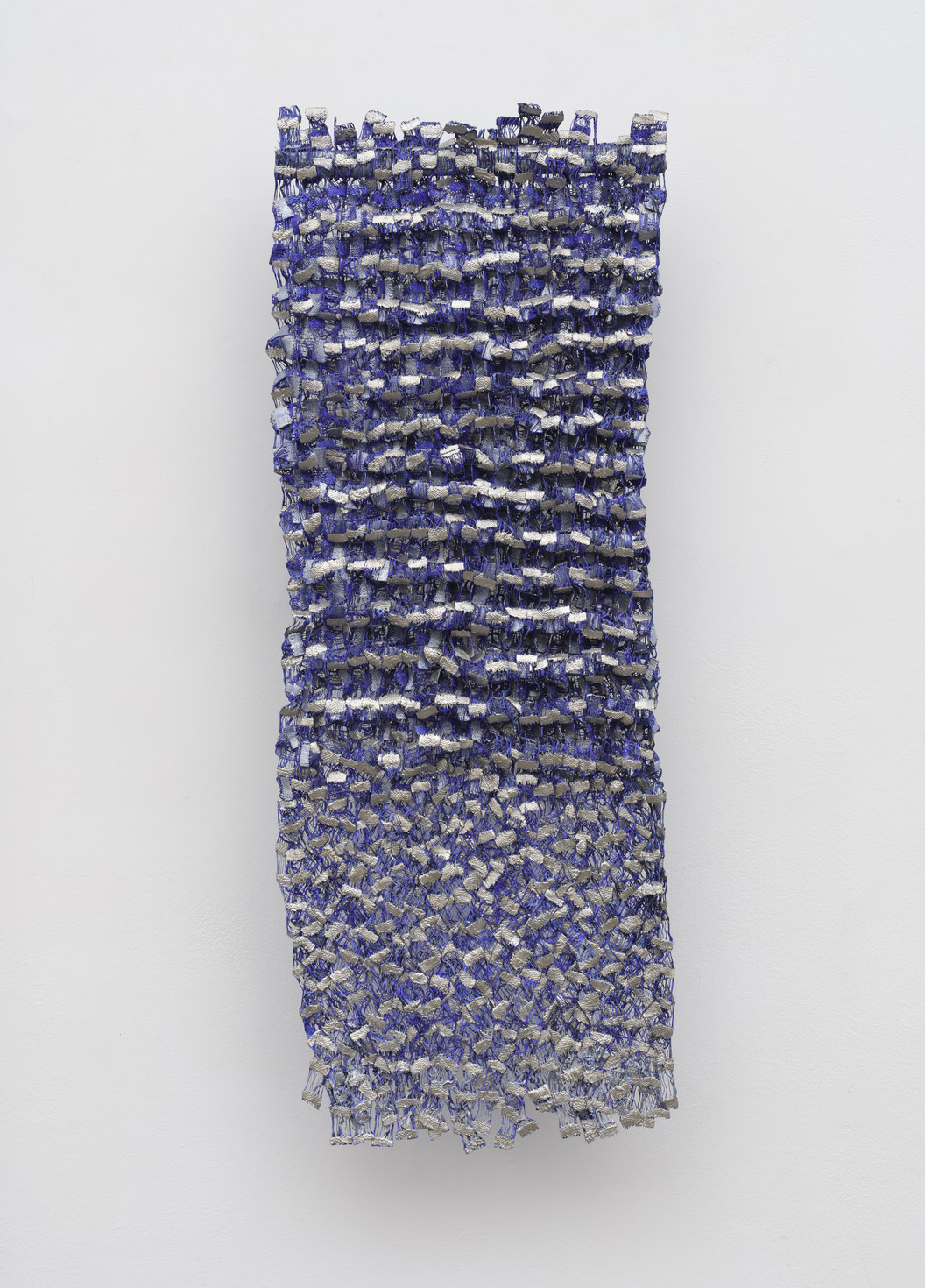
Yes. One work that has continued to change for me is Olga de Amaral’s Aqua Plata (2012). It was the first textile work to enter my collection, so it holds a very particular place for me. The work was also included in Olga de Amaral’s 2024–2025 exhibition at the Fondation Cartier in Paris, but what makes it meaningful to me goes beyond its exhibition history. It has changed the way I understand material, surface, and time. At first, I was drawn to the blue and silver tones, and to the way the woven surface seemed to ripple like water. But the longer I have spent with the work, the more I have come to see it as something that is never fully still. It changes depending on where you stand, how the light touches it, and how its woven structure meets the surrounding space. At times, it feels almost metallic and solid; at other times, it seems to float like water or air.
That shifting quality is what continues to fascinate me. This work looks like a painting, but it also occupies space like sculpture. It is textile, but it behaves almost like light. Through this work, I began to understand textile not simply as a medium, but as a language capable of holding memory, labor, gravity, and atmosphere. In that sense, Aqua Plata also became a quiet turning point in the development of my collection. After encountering this work, my interest in material-based practices expanded more deeply — first to another work by Olga de Amaral, and then to artists such as Sonia Gomes and Otobong Nkanga, including a major tapestry work by Nkanga. Looking back, I see Aqua Plata not only as an important work, but as a work that opened a new direction in the collection.
For me, this is what makes a work worth returning to again and again. Its meaning is not fixed at the moment of acquisition or exhibition. It continues to shift as it moves through different contexts, as I live with it, study it, and see how it speaks to other works in the collection. A strong work does not reveal everything at once. It changes with time, and in doing so, it also changes the way I understand the collection around it.
What is your motivation behind opening your first collection show?
This exhibition is a very important step for me because it is the first time the collection is being presented in this way. Until now, the collection has mostly existed in my home, in storage, and through conversations with artists, galleries, museums, and advisors. But at a certain point, I began to feel that the works were not only meaningful individually. When placed together, they could create a larger conversation.
Another important reason came from my experiences with collectors abroad. Whenever I travelled, many collectors generously opened their homes and shared their collections with me. Through the Centre Pompidou patrons group and visits to different cities, I had the opportunity to experience many strong collections up close. Those experiences helped me think more deeply about my own collection, and they made me feel that, when those collectors came to Korea, I would also like to share my collection with them.
This year felt meaningful for several reasons. It marks the 140th anniversary of diplomatic relations between Korea and France, and it is also the year of the opening of Centre Pompidou Hanwha Seoul. In addition, the Centre Pompidou patrons group will be visiting Korea for the first time during Frieze Seoul. I felt that this would be a good moment to give back some of the generosity and learning I had received abroad, and to share ideas with others. At first, I imagined something more private. But as we prepared the exhibition, museum professionals, artists, and collectors from Korea and abroad became involved, and it naturally grew into a wider space for conversation. For me, this exhibition is not a final statement. It is a meaningful beginning — the first moment in which the collection enters a broader dialogue.
Why did you choose Seoul for opening your first collection presentation?
Seoul is where I live, work, and where the collection has gradually taken shape. In that sense, opening the first presentation here felt natural. The collection may be international in its artists and references, but its conversations, relationships, and daily life have been formed largely from Seoul. I also think Seoul is at a very interesting moment within the international art world. Through Frieze Seoul, many artists, collectors, museum professionals, and galleries come to the city, but I hope Seoul is understood as more than an art fair destination. It is a city with a growing network of serious collections, institutions, artists, galleries, and cultural conversations. The choice of Samcheong-dong as the location was also meaningful. Samcheong-dong is one of Seoul’s most important cultural neighborhoods, where museums, galleries, and historical memory sit very close to one another. Its proximity to MMCA Seoul was also important to me. As a patron of MMCA, I wanted the exhibition to connect naturally with Seoul’s institutional and cultural landscape. Ultimately, presenting the collection in Seoul is not only about location. It is about showing the place from which the collection has been shaped, and the city from which I hope it can continue to enter wider international conversations.
You support major institutions like the Centre Pompidou, MMCA, and LACMA, while also collecting artists like Ryan Gander from the ground up after meeting him in Seoul. How do you think about the balance between institutional patronage and more personal, artist-centered support?
I do not think these two forms of engagement are separate. Institutional patronage allows me to understand art within a much larger ecosystem. Through my relationships with institutions such as the Centre Pompidou, MMCA, and LACMA, I have come to appreciate more deeply the important role museums play — not only in presenting art, but in researching, preserving, contextualising, and carrying artists’ work forward over time.
The more I spend time with museums, the more I realize how much I can learn from their long-term vision. Their curatorial thinking, their commitment to artists, and the histories they help build have all shaped the way I look at art. In many ways, institutional relationships have made me a more careful and more responsible collector. They have taught me to look beyond the immediate encounter with a work, and to think about how an artist’s practice develops, how works are remembered, and how they can continue to speak in the future.
At the same time, personal relationships with artists are also important to me. Meeting Ryan Gander in Seoul left a strong impression. That encounter did not immediately lead to an acquisition, but it made me follow his practice more closely. I began looking at his exhibitions, studying the range of his works, and understanding how his ideas move between language, humor, perception, absence, and everyday objects.
Later, after seeing how his mouse works had been presented in important international institutional contexts, I felt that this body of work could have a meaningful place in my collection. Acquiring the mouse work felt less like a single isolated decision, and more like the result of a longer process of looking, learning, and following the artist’s practice. I do not think it will be the only work by Gander in the collection. It feels like an important beginning, and I would like to continue studying his future development.
For me, institutional patronage and a sustained, personal engagement with artists are not separate. They strengthen each other. Museums help build the conditions in which art can be studied, preserved, and shared over time. Personal engagement with artists brings another kind of depth — a closer understanding of their language, their questions, and the way their work continues to evolve.
You’ve mentioned considering long-term ways for the collection to become a platform for research, education, and exhibitions – what would that actually look like in practice? A foundation, a permanent space, ongoing partnerships with museums, or something else?
It is still difficult to define the future of the collection in one fixed form. I am thinking quite seriously about its long-term future, but I do not want to decide on a name or structure too quickly before it is fully ready. What matters to me first is to think carefully about what role this collection can play, and how it can open meaningfully to artists, institutions, researchers, and audiences. In practice, I am considering several possibilities. A foundation or a separate space could be one possibility, but long-term partnerships with museums, loans, exhibition support, research and publications, educational programs, and artist-centered projects are also important forms. I do not think there is only one fixed answer. The structure should be flexible enough to respond to the character of the collection and to changes in the time.
One thing I believe clearly is that a collection should not end with the collector. These works existed before me, and I hope they will continue to have lives beyond me. My role is to care for them, understand them, and place them in meaningful contexts whenever possible. In the long term, I hope the collection can become a living platform that supports dialogue between Korea and the international art world, and brings together artists, institutions, researchers, and audiences. It is not yet at the stage of an official announcement, but I am continuing to think about this direction in a more concrete way. Once it takes a clearer form, I will make sure Larry’s List is the first to know.


No comments:
Post a Comment