he looks more asian than black and certainly not norwegian... hahahaha
Michael Thorbjornsen
Thorbjørn Thorbjørnsen the father's name proves that he has issues
could only get laid in Zimbabwe with naomi osaka's mother
mas os p+roblemas continuam
vejam os nomes dos outros filhos deste casal problemático (bela palavra woke)
His siblings are Victoria Lotus, Michelle Caprise and Teresa Corniche.
dasssss
and then we have this video comparing him with Tiger Woods who had black and asian heritage but mention all the differences and never mention race or ethnicity... while that is what they are expecting us all to see... no need to compare faces, noses, eyes...
Only in America can a young man sit on a curb in shoes that cost more than a week of groceries, sip a coffee that costs more than a gallon of gas, post from a device that would have been science fiction in 1995, and then explain to you that the system failed him.
Now, let's be fair for a second. Young Americans do have real problems. Housing is brutal. Tuition is a racket. Starting wages have not kept up. Pretending otherwise convinces nobody.
But look at who they blame.
They were handed the most abundant economy in human history. Then they were taught, by tenured professors, on borrowed money, that the engine which produced that abundance is the villain. Four years of that instruction, at a price that would have bought a house in 1985, and they graduate convinced that the cure for their debt is more of the institution that sold them the debt.
That is the embarrassment. Not the sneakers. The teaching.
Anyone who actually studied history would know exactly what socialism does to a country. It is not a mystery. The receipts are stacked from Caracas to Havana to the rubble of a wall in Berlin. Every single generation that tried it learned the same lesson, which is that you cannot vote yourself prosperity, and the men who promise to share the wealth always end up sharing the shortage.
Madison saw this coming. In Federalist No. 62 he warned that a government which constantly churns its own rules ends up rewarding the sagacious and the moneyed few at the expense of the industrious mass of the people. He was writing about the Senate. He could have been writing about the student loan industry.
Here is the good news, and it is real. This generation is not lost. They were lied to. Those are two very different problems, and only one of them has no fix.
Where Collectors Sleep: The Best Art Hotels of Asia
Where Collectors Sleep: The Best Art Hotels of Asia
/
/
LARRY’S LIST has always been a platform for private collections — the people who build them, the walls they hang on, and the stories behind why a particular work found its way into a particular home. This holiday season, we’re opening a new chapter: a three-part series looking at hotels that put a serious art collection at the center of the guest experience. Some of these properties are run by the very collectors we cover — private passions turned semi-public, one hotel room at a time. Others are institutional commissions with a curatorial mind behind every corridor. Either way, the line between “private collection” and “hotel” has quietly started merging and mingling more than the industry lets on.
We open the series in Asia, where hotel-scale art collecting has taken some of its most ambitious and least predictable forms: auction houses building hotels on top of their own galleries, entrepreneurs relocating entire Ming dynasty villages tree by tree, and individual collectors turning a personal passion into an entire hospitality group. Here are nine addresses that reward the art-minded traveler.
Where Collectors Sleep: The Best Art Hotels of Asia
LARRY’S LIST — Episode 1 of 3
LARRY’S LIST has always been a platform for private collections — the people who build them, the walls they hang on, and the stories behind why a particular work found its way into a particular home. This holiday season, we’re opening a new chapter: a three-part series looking at hotels that put a serious art collection at the center of the guest experience. Some of these properties are run by the very collectors we cover — private passions turned semi-public, one hotel room at a time. Others are institutional commissions with a curatorial mind behind every corridor. Either way, the line between “private collection” and “hotel” has quietly started merging and mingling more than the industry lets on.
We open the series in Asia, where hotel-scale art collecting has taken some of its most ambitious and least predictable forms: auction houses building hotels on top of their own galleries, entrepreneurs relocating entire Ming dynasty villages tree by tree, and individual collectors turning a personal passion into an entire hospitality group. Here are nine addresses that reward the art-minded traveler.
1. Benesse House, Naoshima
(c) Benesse
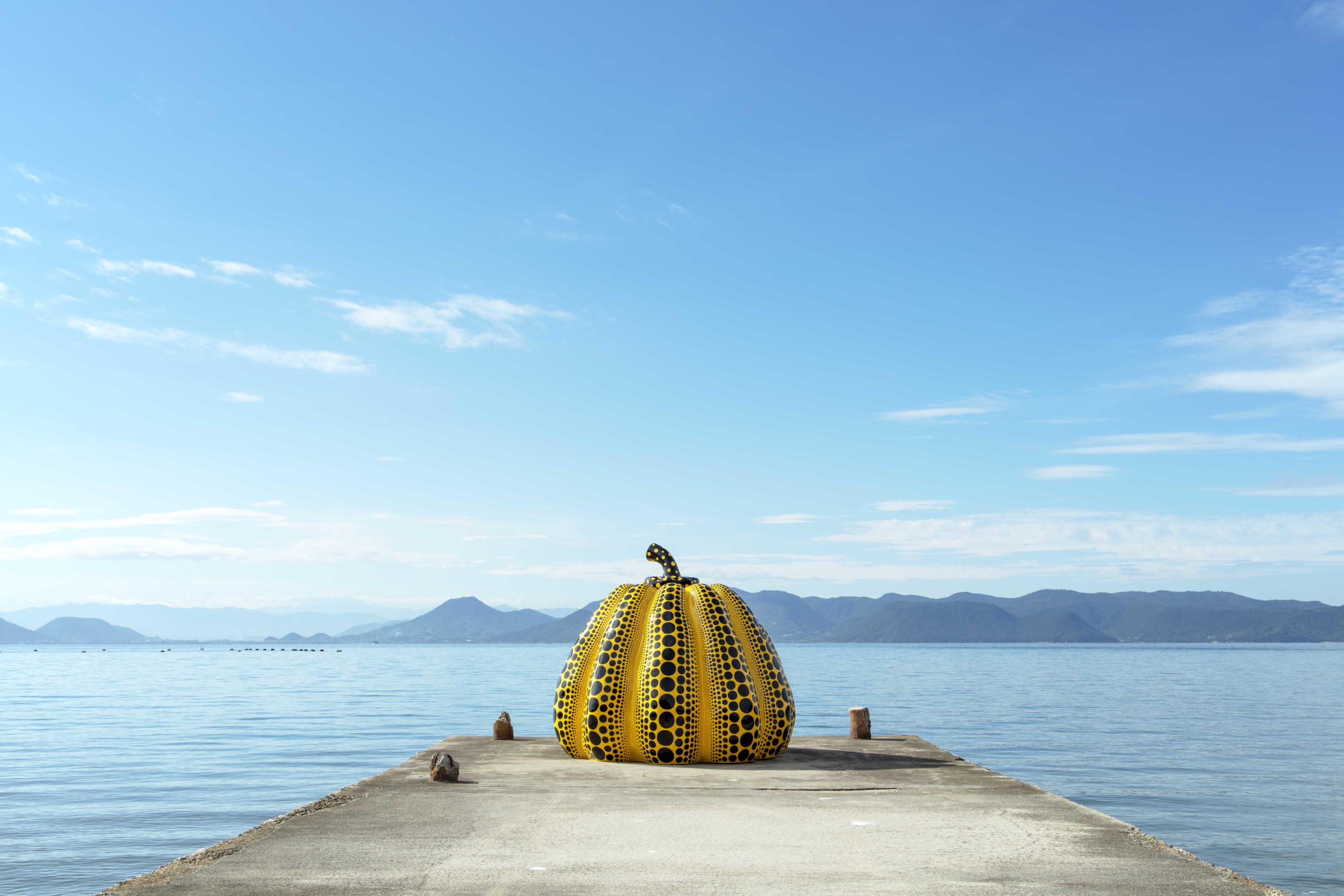
The reference point for the entire category. Tadao Ando designed museum and hotel as a single structure on Japan’s celebrated “art island,” and Benesse House holds works by Yayoi Kusama, Hiroshi Sugimoto, and Richard Long, with installations appearing along the beach after dark. Decades before “museum hotel” became a marketing term, Naoshima was already doing it with total conviction. It remains the trip serious collectors plan their Japan itinerary around.
2. Amanyangyun, Shanghai
(c) Aman and Lu Xinjian
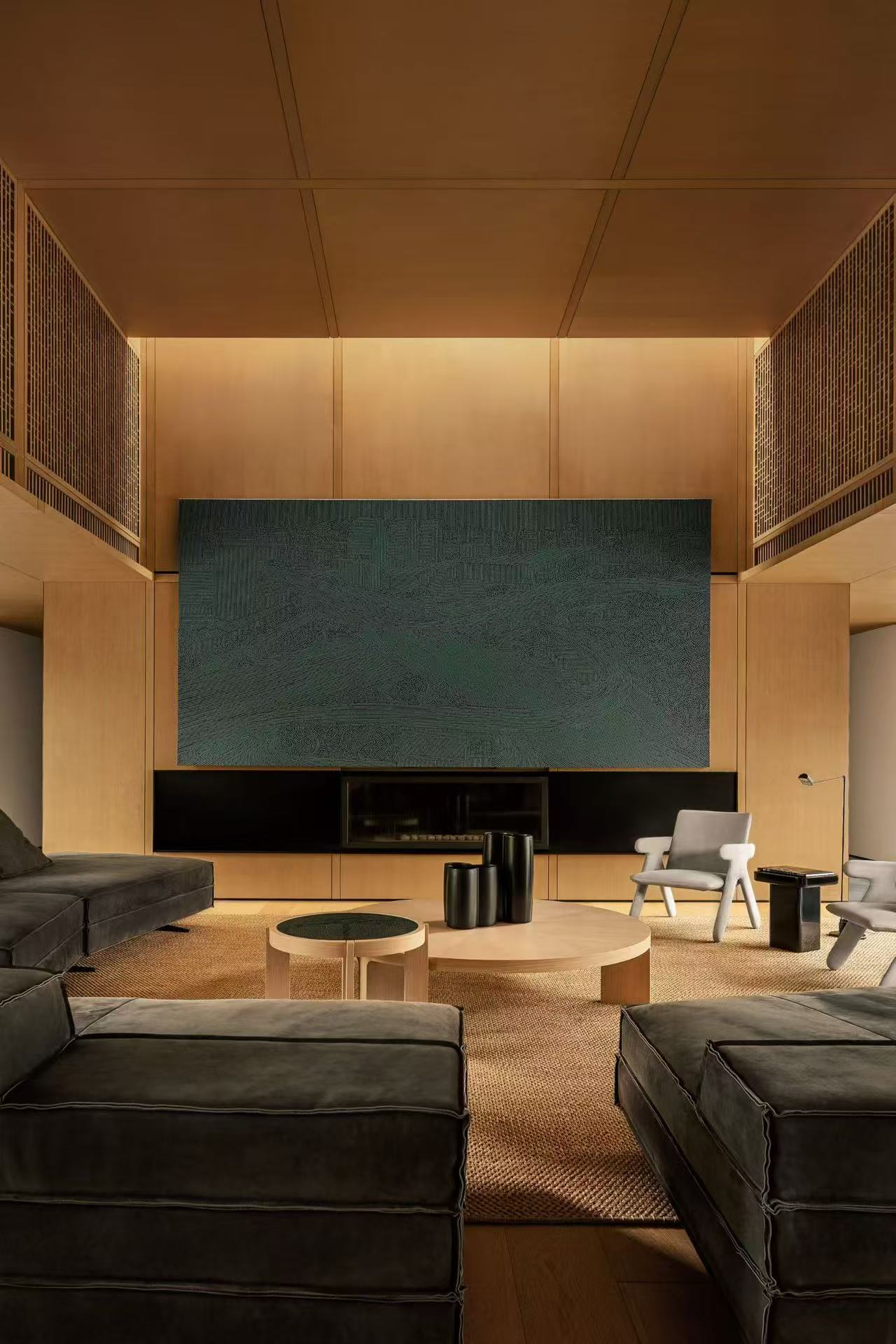
This is the Aman in Shanghai — Aman has no separate city-center property there, so Amanyangyun is it. An act of heritage preservation so ambitious it borders on the art object itself: entrepreneur Ma Dadong relocated fifty Ming and Qing dynasty village buildings, along with ten thousand ancient camphor trees weighing up to eighty tons each, from Jiangxi province and reassembled them stone by stone on Shanghai’s outskirts. The resort also runs a rotating exhibition programme out of its own gallery space, currently showing work by Chinese painter Lu Xinjian through early August 2026 — proof this is a living cultural venue, not just a preserved one.
3. The PuXuan Hotel & Spa, Beijing
(c) Studio Ole Scheeren
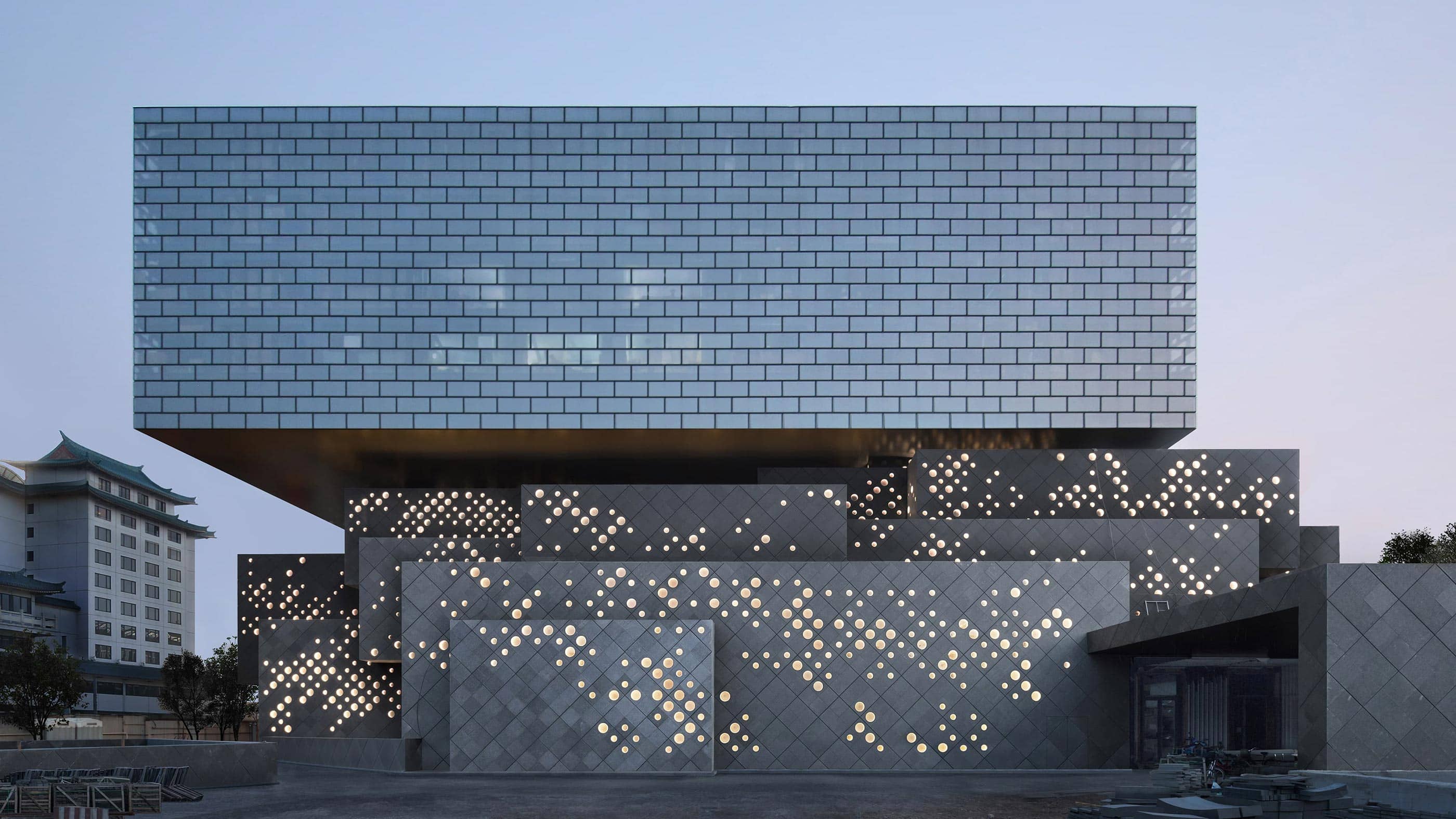
Beijing’s best-kept secret for the art crowd — and it’s been a secret for a surprisingly long time. The PuXuan sits atop the Ole Scheeren-designed Guardian Art Center, home to China Guardian Auctions, and much of the hotel’s art is curated directly by the center itself. Even though the property has been open for a number of years now, it remains little known outside China, considered instead one of the capital’s most prestigious addresses strictly among serious local collectors.
4. Le Méridien Taipei, Taipei
(c) Le Meridien Taipei
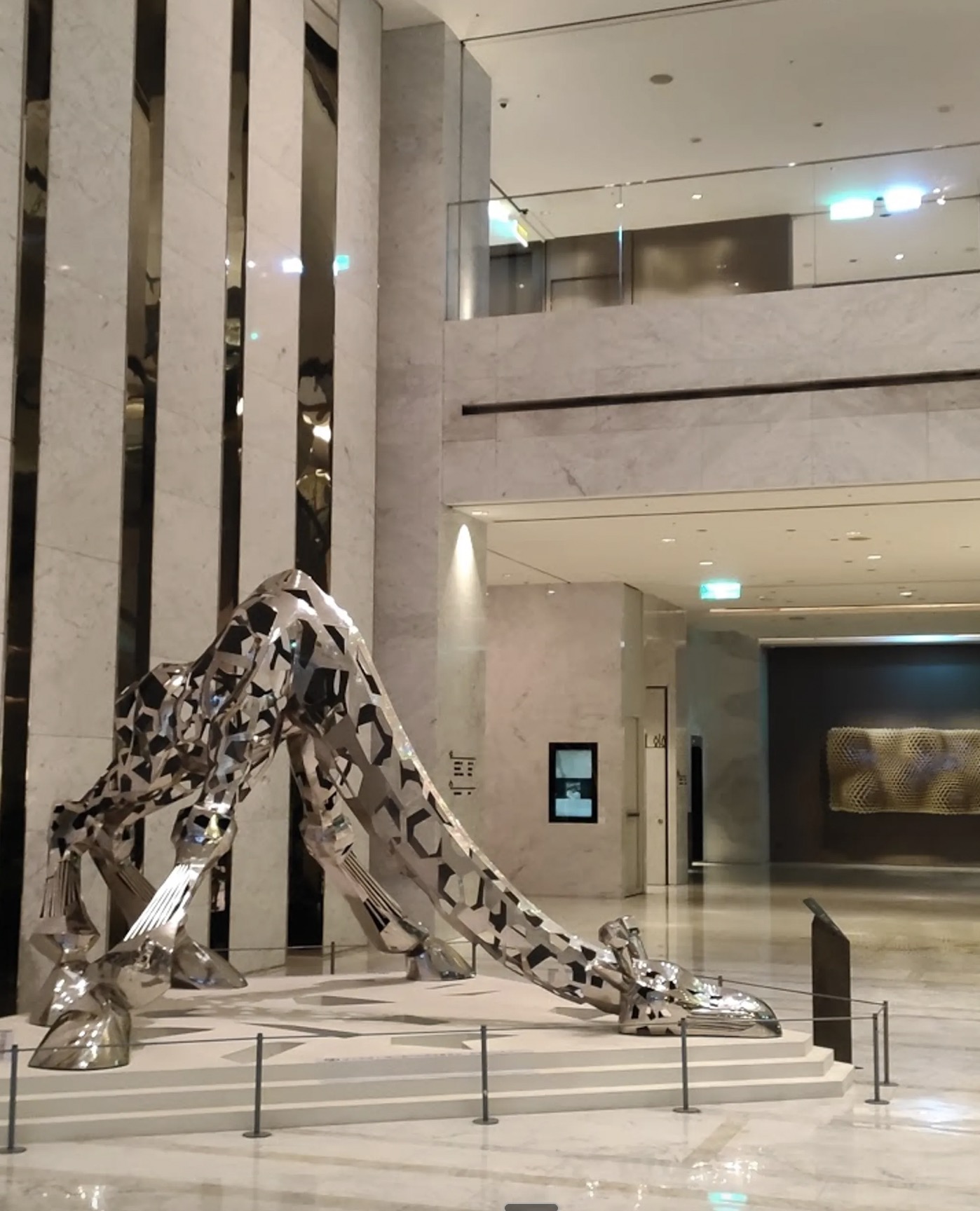
Taipei’s art hotel entry, and a different kind of story: nearly 700 original artworks and installations fill the property, first introduced as the hotel’s signature “Light and Shadow” arrival concept when it opened in 2010. That specific curatorial framing was a one-time opening statement rather than an ongoing rotating theme, but the collection itself has stayed and grown — pieces range from a stainless-steel giraffe sculpture by Li Hui to X-ray photography by Nick Veasey and drawings by Ye Yongqing, playful and humor-driven throughout.
5. Hotel Éclat Beijing, Beijing
(c) Hotel Éclat Beijing
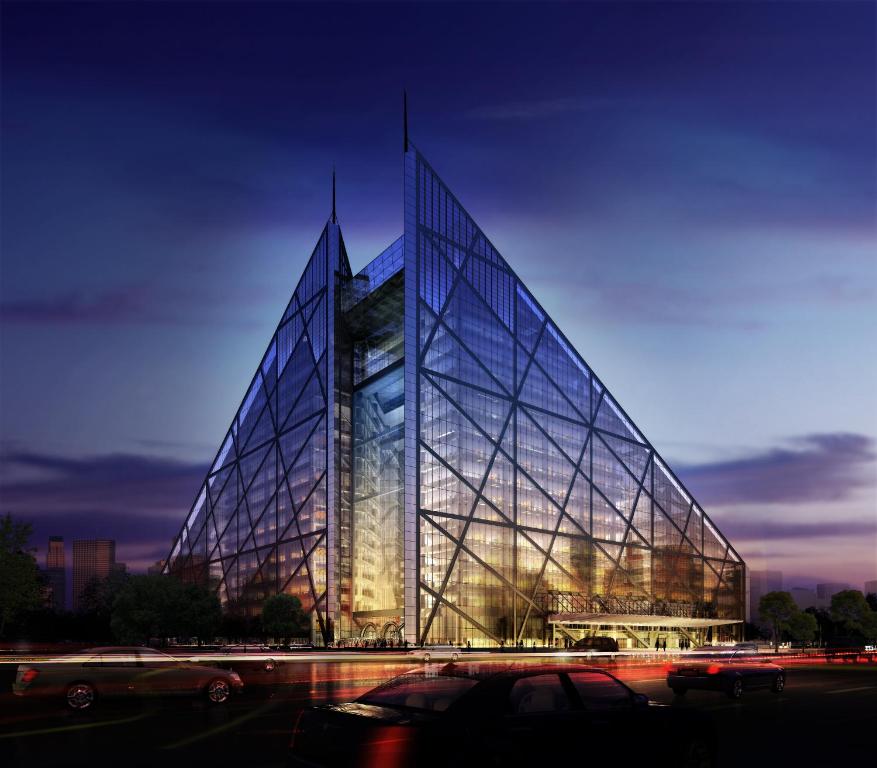
Home to the largest privately owned contemporary art collection in China, assembled inside a striking glass-pyramid mixed-use complex by the late Hong Kong collector George Wong, who died in 2017. More than 500 works fill the building, including original Salvador Dalí sculptures and pieces by Andy Warhol — an astonishingly dense private collection stacked into every corner, and very much still his legacy rather than an ongoing acquisition project.
6. Rosewood Hong Kong, Hong Kong
(c) Rosewood Hong Kong
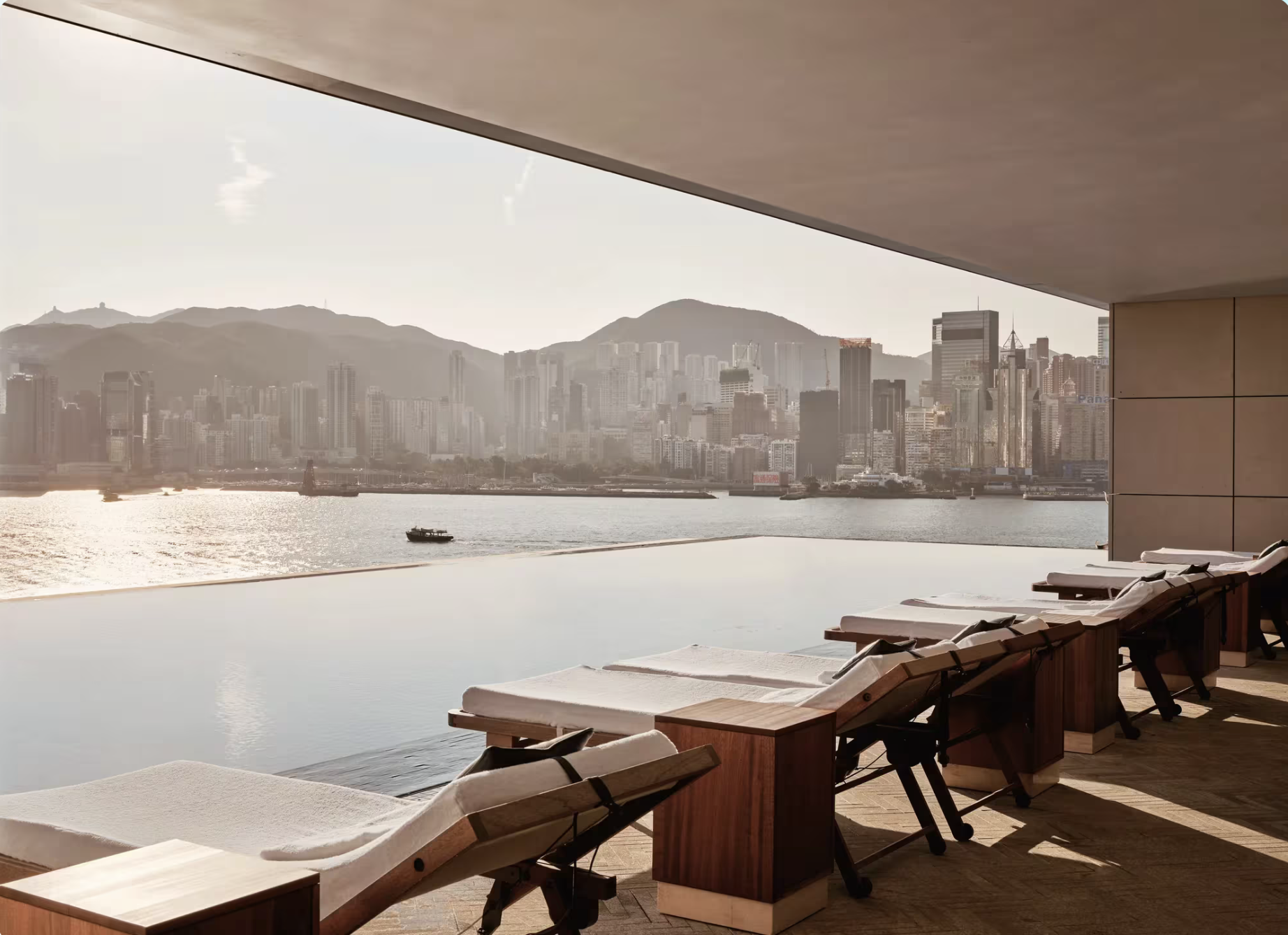
Set inside the Victoria Dockside arts and design district, Rosewood Hong Kong pairs its own curated collection with a resident art ambassador who leads private tours through the property. It was ranked the world’s number one hotel in the 2025 World’s 50 Best Hotels list — recognition that extends well beyond its art programme, but the collection is a genuine part of why it earned the title. Above the hotel sits Carlyle & Co., Rosewood’s private members’ club, which holds an equally impressive contemporary art collection of its own, including works by Ugo Rondinone and David Hockney, alongside a library, a music room, and regular art talks. LARRY’S LIST hosted The Collectors Dinner there during Hong Kong Art Week 2025.
7. Art Paradiso, Paradise City, Incheon/Seoul
(c) Art Paradiso
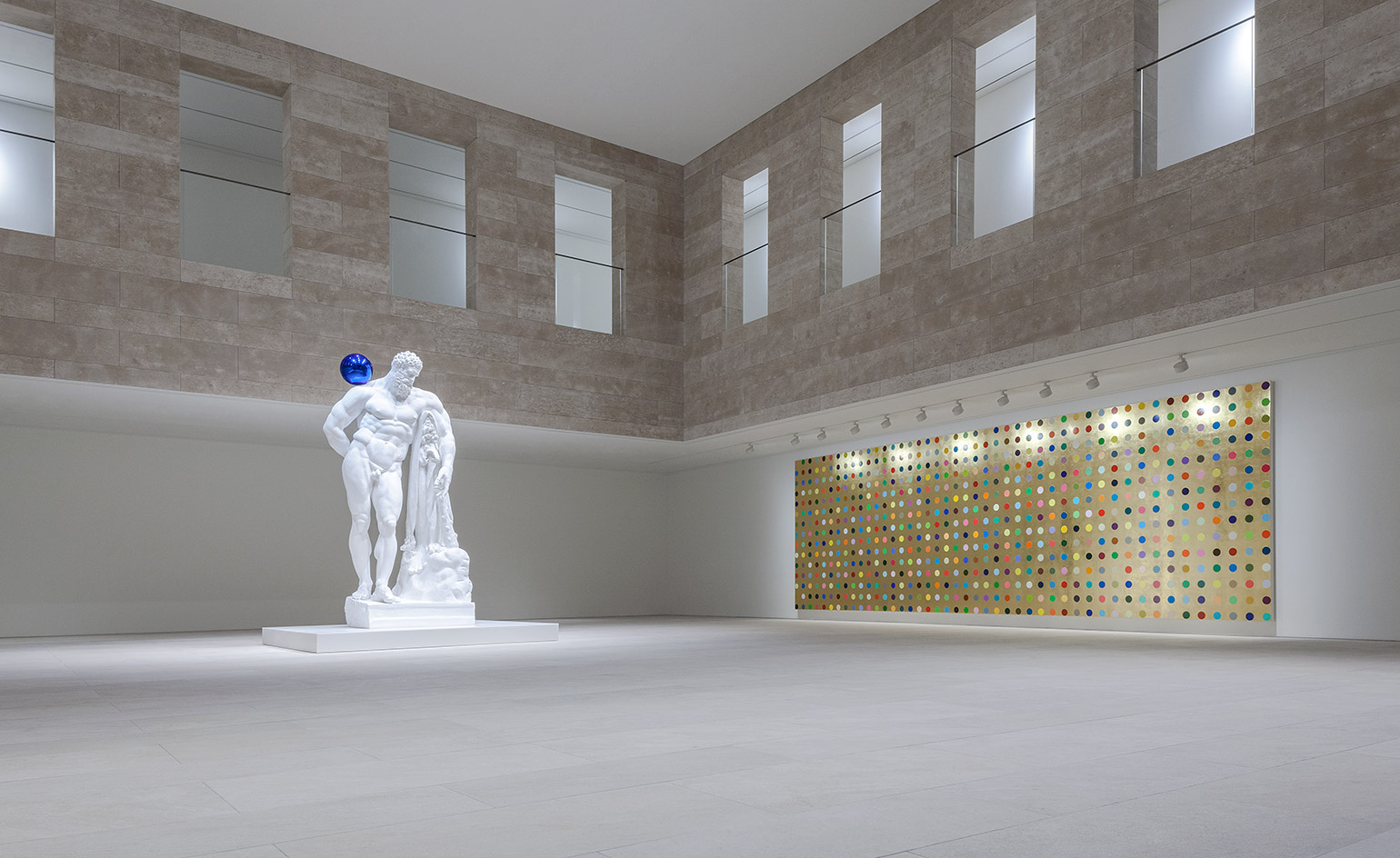
The flagship boutique hotel inside one of the most serious art-and-entertainment complexes anywhere in the world. Paradise City’s grounds hold a curated collection of roughly three thousand pieces, including Yayoi Kusama’s Great Gigantic Pumpkin, Nam June Paik’s sculpture “Hitchcocked,” and major installations by KAWS and Damien Hirst — Hirst’s gilded Pegasus sculpture “The Legend” and his monumental dot-painting “Aurous Cyanide” both anchor the permanent collection, and its gallery-dark interiors make clear this is Korea’s most concentrated art-hotel experience.
8. Mondrian Singapore Duxton, Singapore
(c) The Artling
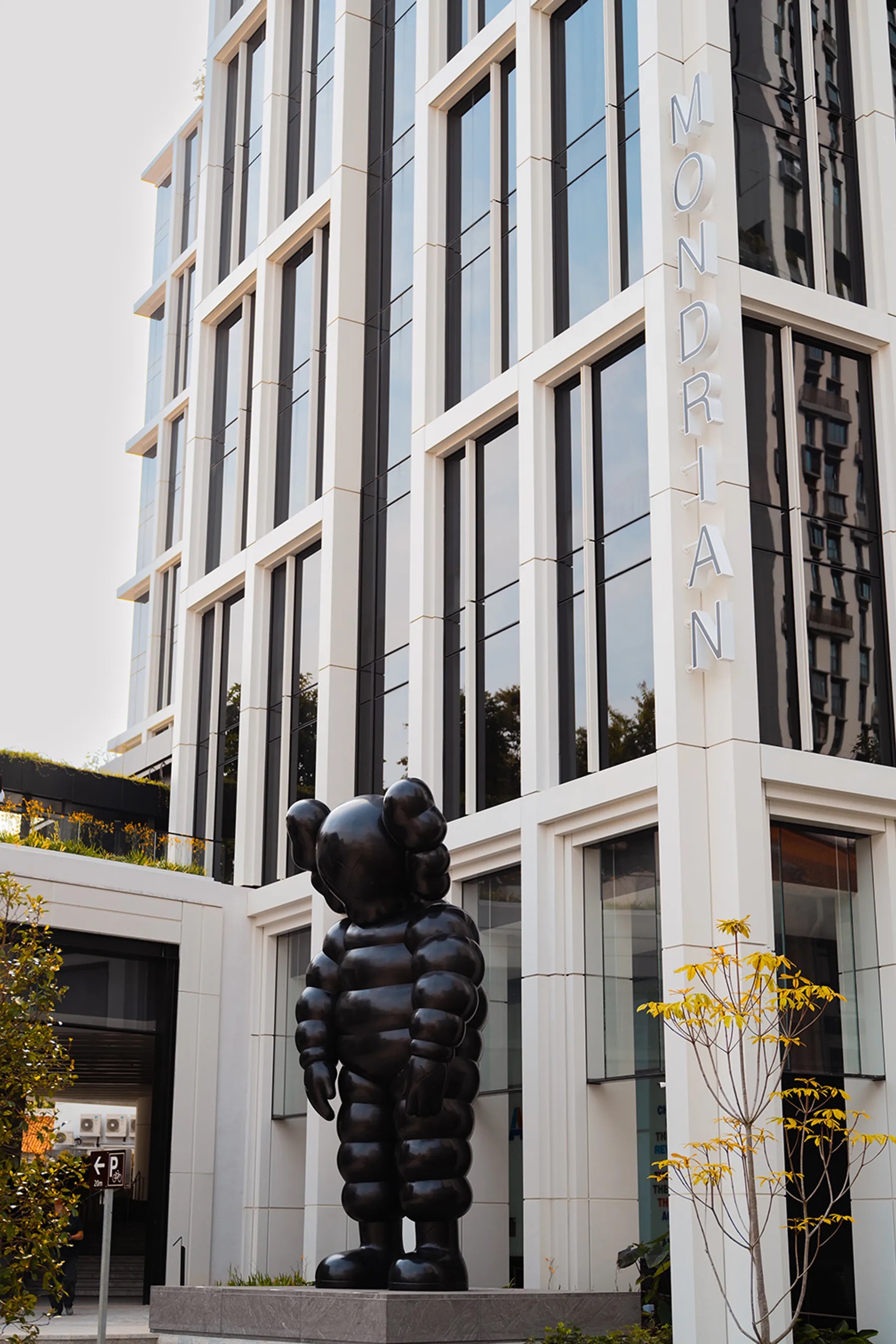
Singapore’s newest serious contender. A six-metre bronze KAWS sculpture, “What Party,” greets arrivals at the Craig Road entrance, while the rest of the hotel holds a permanent multidisciplinary collection curated over two years with Asia’s leading art advisory, The Artling — painting, photography, digital art, and sculpture from both emerging Southeast Asian names and established international artists like British painter Ian Davenport. Complimentary curator-led public art tours make the collecting intent explicit rather than incidental.