

Saturday, February 8, 2025

fantasmeando alguém


Why do we use Stalin's definition of fascist today?

with our intro...


...||...


Why do we use Stalin's definition of fascist today?

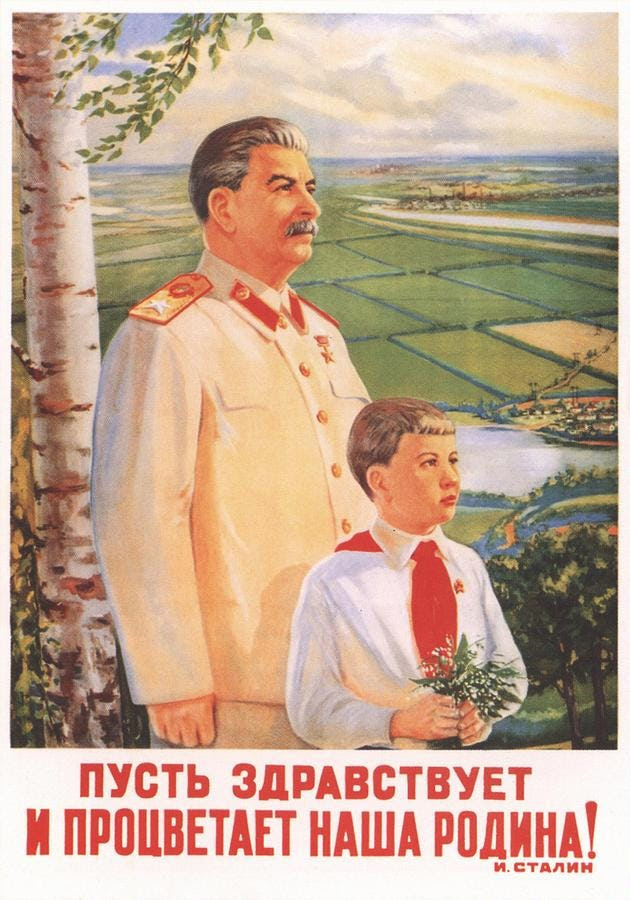
Stalin made unbelievable inroads into America's psyche. They have not gone anywhere.

∙
Preview
 
READ IN APP
 

The first time Stalin misused the term fascist was the German elections in which he ordered all German reds to raise money for, campaign for and vote for, wait for it, Hitler! Stalin called the German Social Democratic Party the liberal fascist threat and on June 23, 1933, Hitler outlawed the German Social Democratic Party (SPD) as a thank you to Stalin, which for over four decades, until 1932, had been the largest German party and, since the founding of the Weimar Republic in 1918, the principal advocate and defender of the democratic system and a peaceful foreign policy.

Stalin next misused the term fascist when he declared that Leon Trotsky was one. Party members were told to repeat it, fellow travelers spread it to the press. Trotsky had written that the Communist Parties around the world were nothing but spy recruitment centers for the KGB, and he predicted Hitler and Stalin would work together. That made him a fascist.

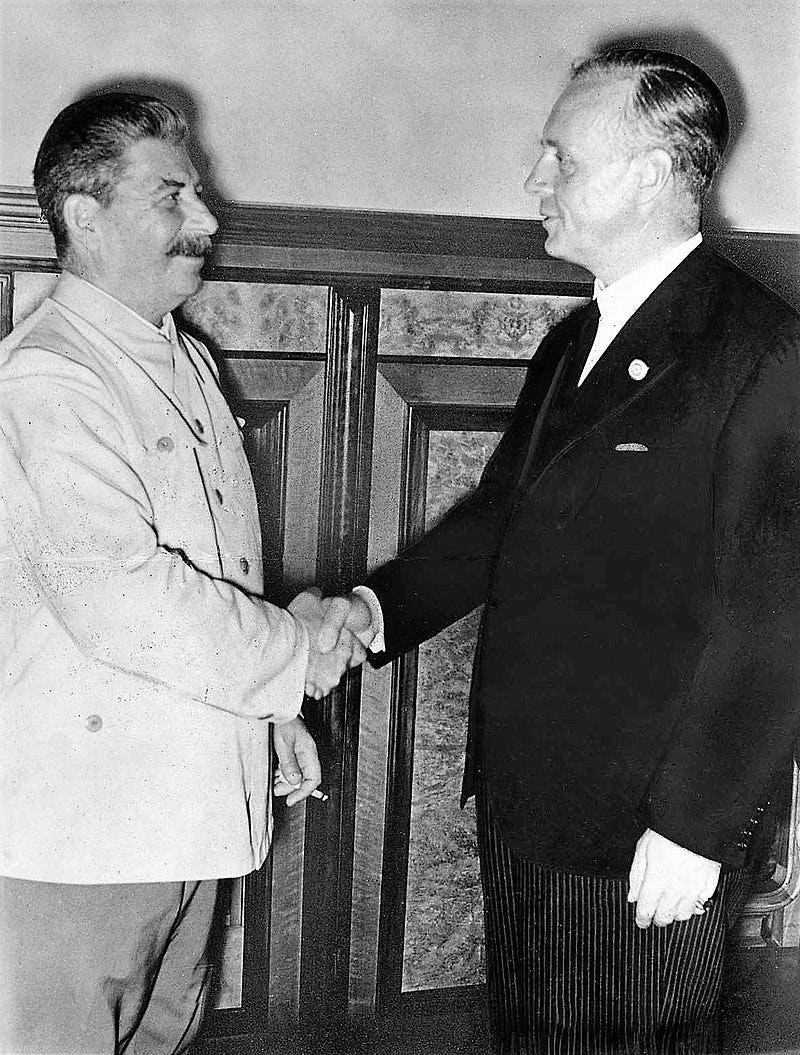
The third time Stalin misused the term was when he was working with Hitler after the signing of the The Molotov–Ribbentrop Pact, officially the Treaty of Non-Aggression between Germany and the Union of Soviet Socialist Republics, and also known as the Hitler–Stalin Pact and the Nazi–Soviet Pact, was a non-aggression pact between Nazi Germany and the Soviet Union, with a secret protocol establishing Soviet and German spheres of influence across Eastern Europe. The pact was signed in Moscow on 24 August 1939 (backdated 23 August 1939) by Soviet Foreign Minister Vyacheslav Molotov and German Foreign Minister Joachim von Ribbentrop. (Wikipedia)

Stalin and Ribbentrop shaking hands after the signing of the pact in the Kremlin. Russia had already been trading the same raw materials that Russia would forge into weapons and ultimately attack Germany with them.

Hitler was acclaimed by Stalin for creating a brand new form of socialism. FDR and Churchill were now the real fascists. Once Hitler went into Poland without Stalin’s approval Stalin had a problem. After years of saying Hitler was a socialist, how could he then hide all that? Easy! Party members were ordered to stop saying Hitler was a socialist. There was no argument or debate, members could discuss it but under the rules of democratic centralism (never in public), and in the end, dissenters had to accept and spread the party doctrine.

As the late 1940’s happened and hearings were held, historians and the media jumped into action slavishly following Joe’s dictates yet again. The spies had been “premature anti-fascists”, and the history of the peace pact was erased. It never happened. For decades the pact was covered up.

This has led to people not actually knowing what fascism is. Consider: reds predicted that Eisenhower, whom they called a fascist, would not leave office and ordered American communists to move in the middle of the night, quit their jobs, change their names and hide. People in communist study groups showed up only to discover the people in charge were long gone.

Eisenhower left office.

The Weathermen or Weather Underground went to Cuba during the Vietnam War and were trained by Cubans who were trained by Soviet Intel. Russians couldn’t believe Nixon would step down so they thought we were on the verge of - fascism, of course. The Weather Underground returned home, the men cut their hair and the women stopped using sex as a recruiting tactic. They moved to the suburbs. For years they didn’t mention being anti-war and waited for the Soviet Union to call them so they could do whatever it was they were trained to do.

Nixon stepped down.

What exactly was the platform of the National Socialist Party?

Let me share a chunk of it:

11. That all unearned income, and all income that does not arise from work, be abolished.

12. Since every war imposes on the people fearful sacrifices in blood and treasure, all personal profit arising from the war must be regarded as treason to the people. We therefore demand the total confiscation of all war profits.

13. We demand the nationalization of all trusts.

14. We demand profit-sharing in large industries.

15. We demand a generous increase in old-age pensions.

25. In order to carry out this program we demand: the creation of a strong central authority in the State, the unconditional authority by the political central parliament of the whole State and all its organizations.

The formation of professional committees and of committees representing the several estates of the realm, to ensure that the laws promulgated by the central authority shall be carried out by the federal states.

The leaders of the party undertake to promote the execution of the foregoing points at all costs, if necessary at the sacrifice of their own lives.

Trust me, most of the people using the term today would agree with every part of this platform. Hitler was also a vegetarian; he was also against using animals in scienctific experiments. He banned smoking in public. He created a car, the Volkswagen, that Germans received for free. Did I mention a 2 week vacation paid for by the state?

Today people have no idea what populism is. They’ve never heard of Huey Long from Louisiana; they just use the term fascist just like Stalin and the Soviet leaders did- a fascist is anyone they don’t like.

Behind the paywall: The Vietnam War | Part 2 The TV War

The US's fear of communism caused American troops to go into Vietnam under President Kennedy in 1961. A war fought nightly on TV, it engendered a huge anti-war movement. By 1973, Nixon had resigned and the US was forced to withdraw in 1975. In this episode: After early domination through Operation Thunder, three years of B52 raids, napalm and Agent Orange drops, in 1968 the Vietcong Tet Offensive turned the tide, the TV war began in full, anti-war demos, the Martin Luther King and Robert Kennedy assassinations and My Lai massacre. The war was now being shown on the nightly news for the first time. Over half a million US troops are deployed.

Continue reading this post for free in the Substack app

 
Like
Comment
Restack
 

© 2025 Michael Flores
PO Box 167963, Chicago, IL 60616
Unsubscribe

Get the appStart writing


Why do we use Stalin's definition of fascist today?

Caixa de entrada

Michael Flores from Hidden Cold War History mashupmaster@substack.com 
Anular subscrição

02:21 (há 16 horas)
para mim


Friday, February 7, 2025

undulating roof over opera

 https://www.designboom.com/architecture/bjarke-ingels-group-big-undulating-roof-opera-ballet-theater-kosovo-prishtina-02-05-2025/


bjarke ingels group drapes undulating roof over opera and ballet theater of kosovo

bjarke ingels group drapes undulating roof over opera and ballet theater of kosovo

BIG designs the first opera house in the Republic of Kosovo

 
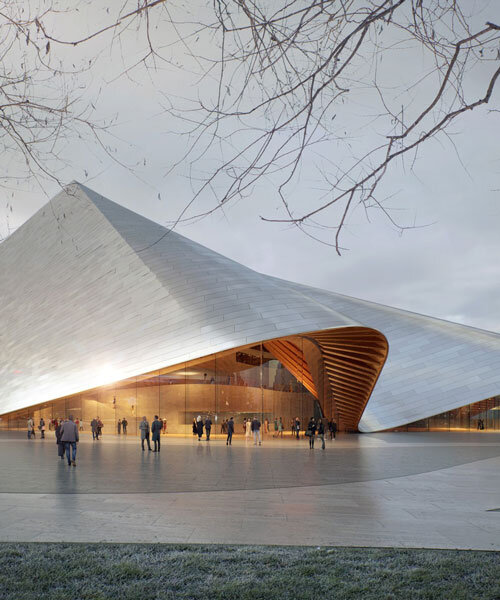
Bjarke Ingels Group (BIG) presents the design for the Opera & Ballet Theater of Kosovo in the country’s capital, Prishtina. Designed in collaboration with Alb-Architect, the theater will house four performance halls and a new public plaza, creating a vibrant gathering space in the heart of the city. Symbolizing the country’s rich and diverse cultural heritage, it will be the first opera house in the Republic of Kosovo, reflecting a new identity for Prishtina rooted in creativity and a commitment to the country’s artistic growth. The theater will be situated next to the Palace of Youth & Sports, the Fadil Vokrri Stadium, and the Public Services Ministry, contributing to a dynamic new cultural corridor. Commissioned by Kosovo’s Ministry of Culture, Youth, and Sports (MKRS), the Opera & Ballet Theater of Kosovo will include a 1,200-capacity Concert Hall, 1,000-capacity Theater Hall, 300-seat Recital Hall, Theater Room, and Education and Conference Center under one roof.


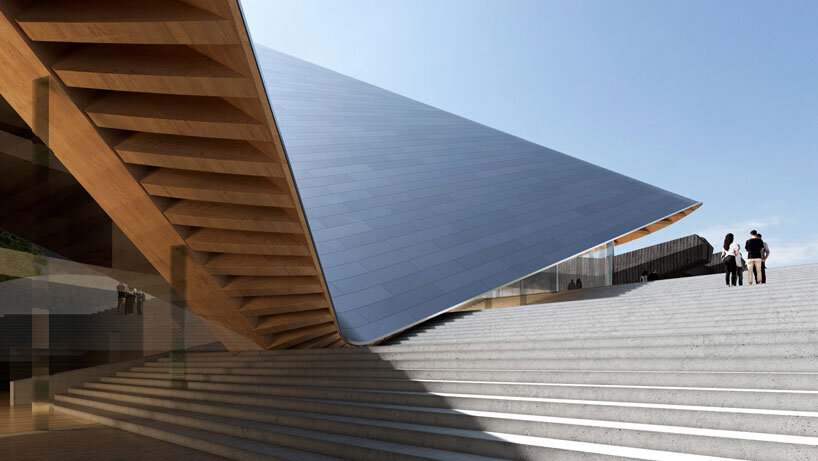
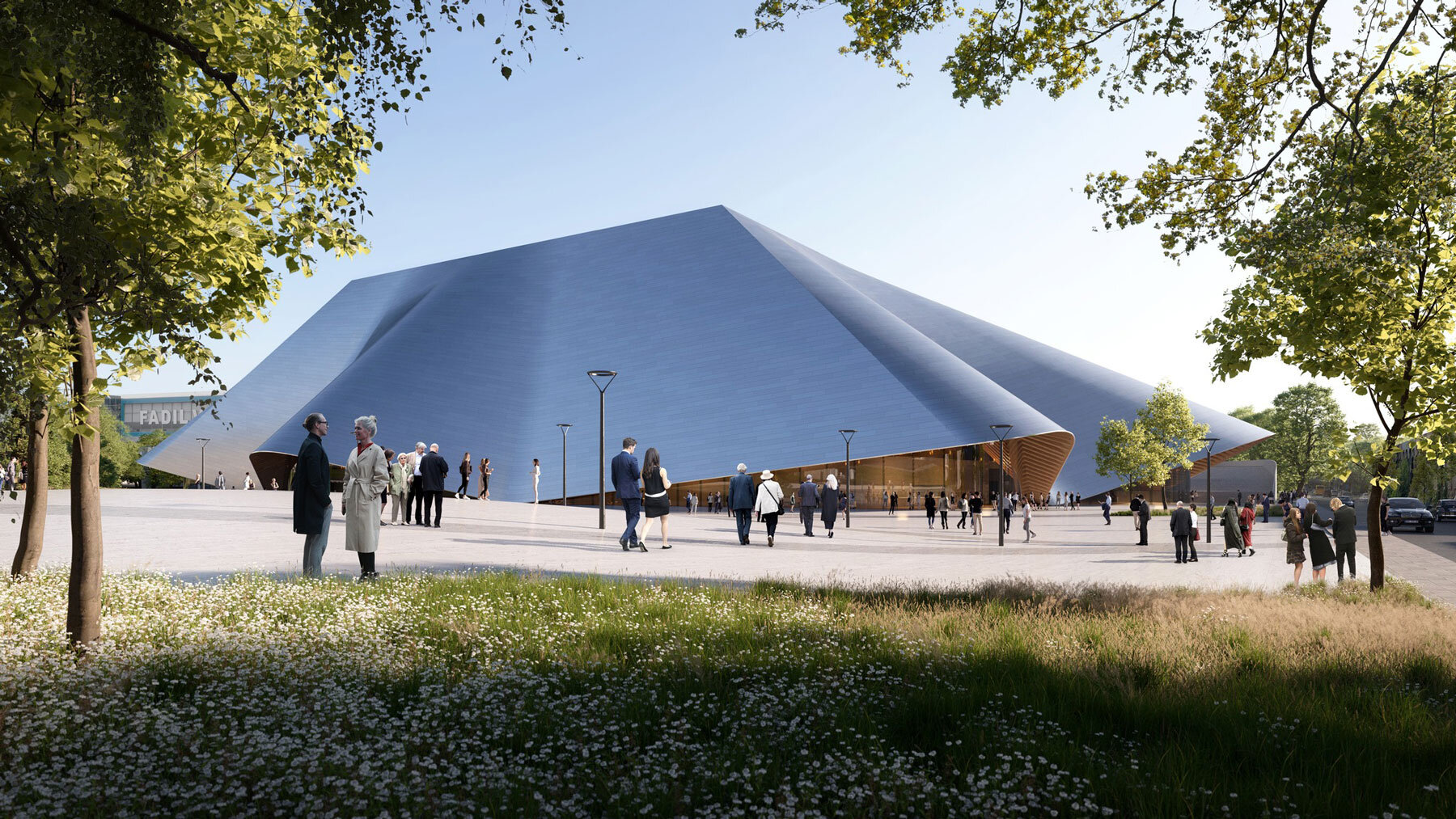
The theater’s design is defined by a simple and pragmatic arrangement of functional elements, where world-class performance spaces are wrapped in a sculptural, soft exterior of photovoltaic tiles and exposed timber rafters. Its flowing form draws inspiration from the free-flowing shapes of a performer’s costume and the Xhubleta, a bell-shaped folk skirt traditionally worn by women in Kosovo. The undulating shape naturally guides visitors toward entrances and key gathering areas, ensuring an inviting and intuitive arrival experience.
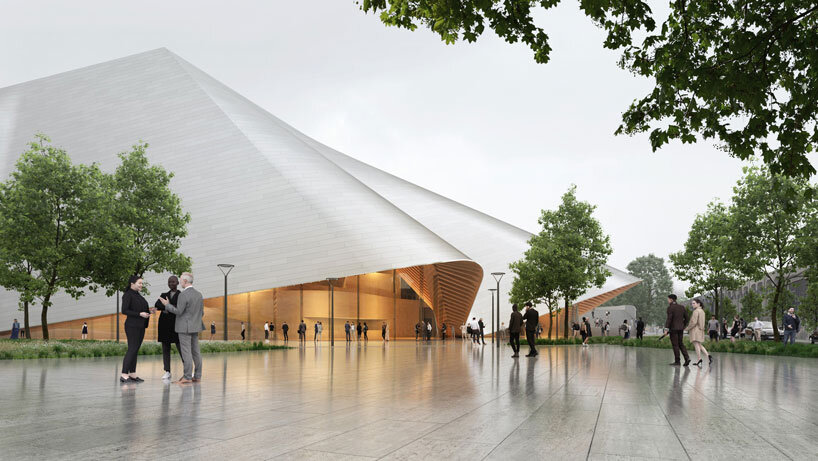
bjarke ingels group drapes undulating roof over opera and ballet theater of kosovoimages by IMIGO, bucharest.studio, bloomimages, courtesy of Bjarke Ingels Group (BIG)


sculptural fluid form wraps theater’s performance spaces 


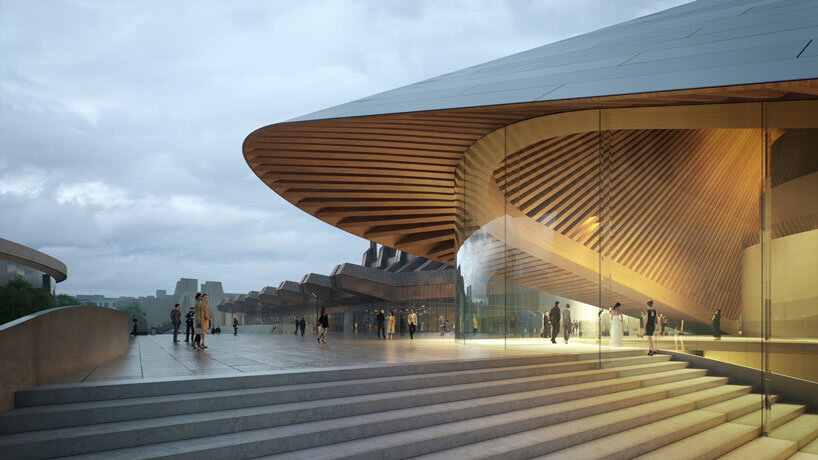
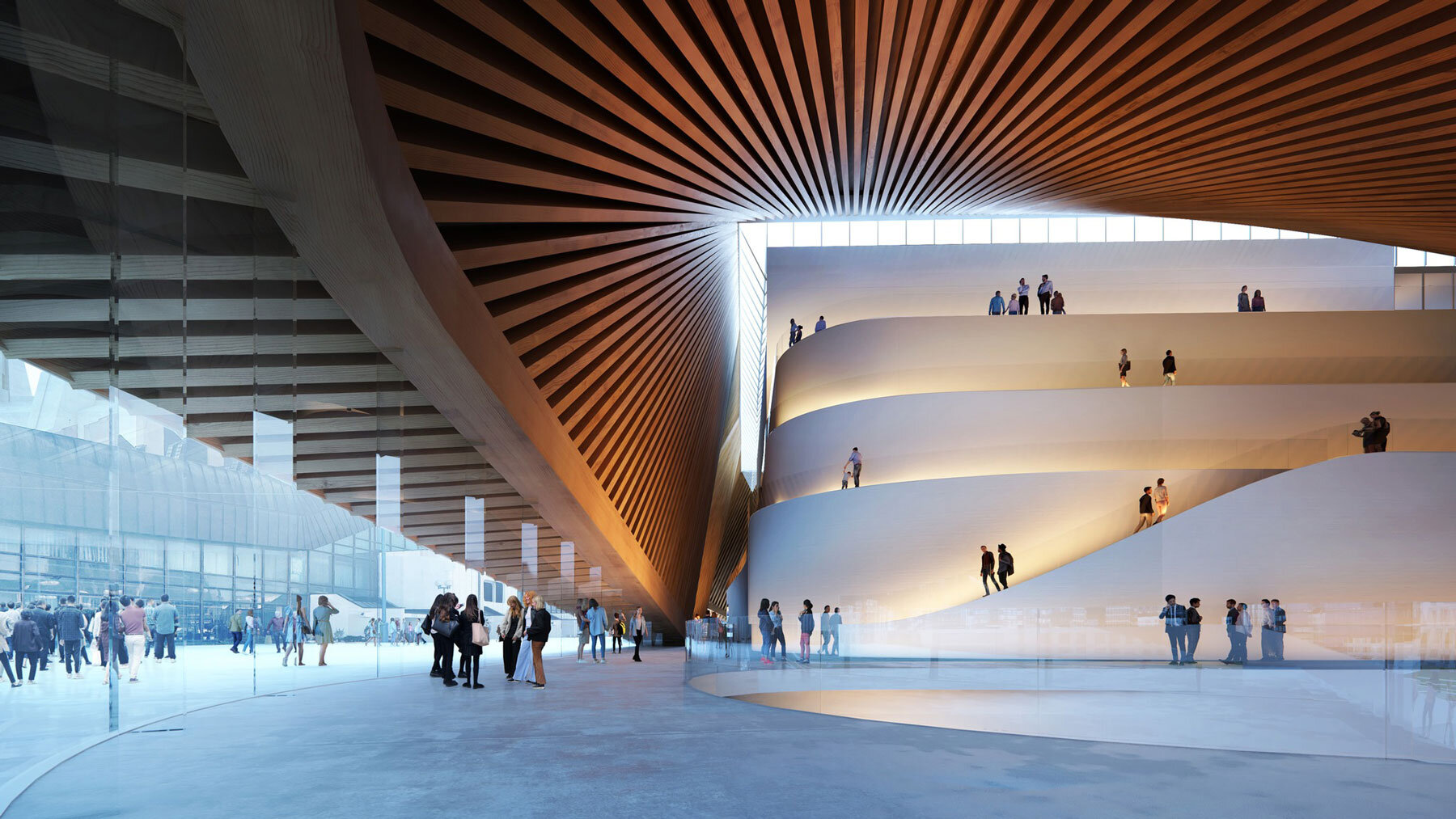
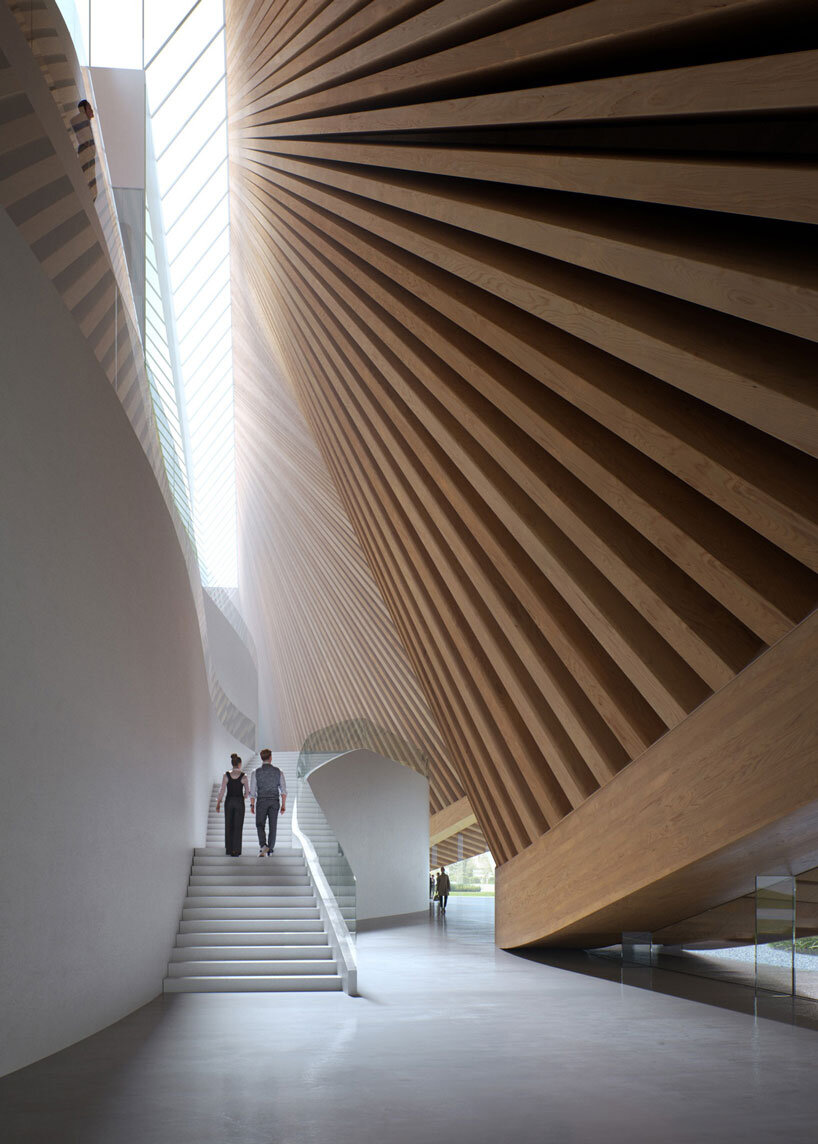
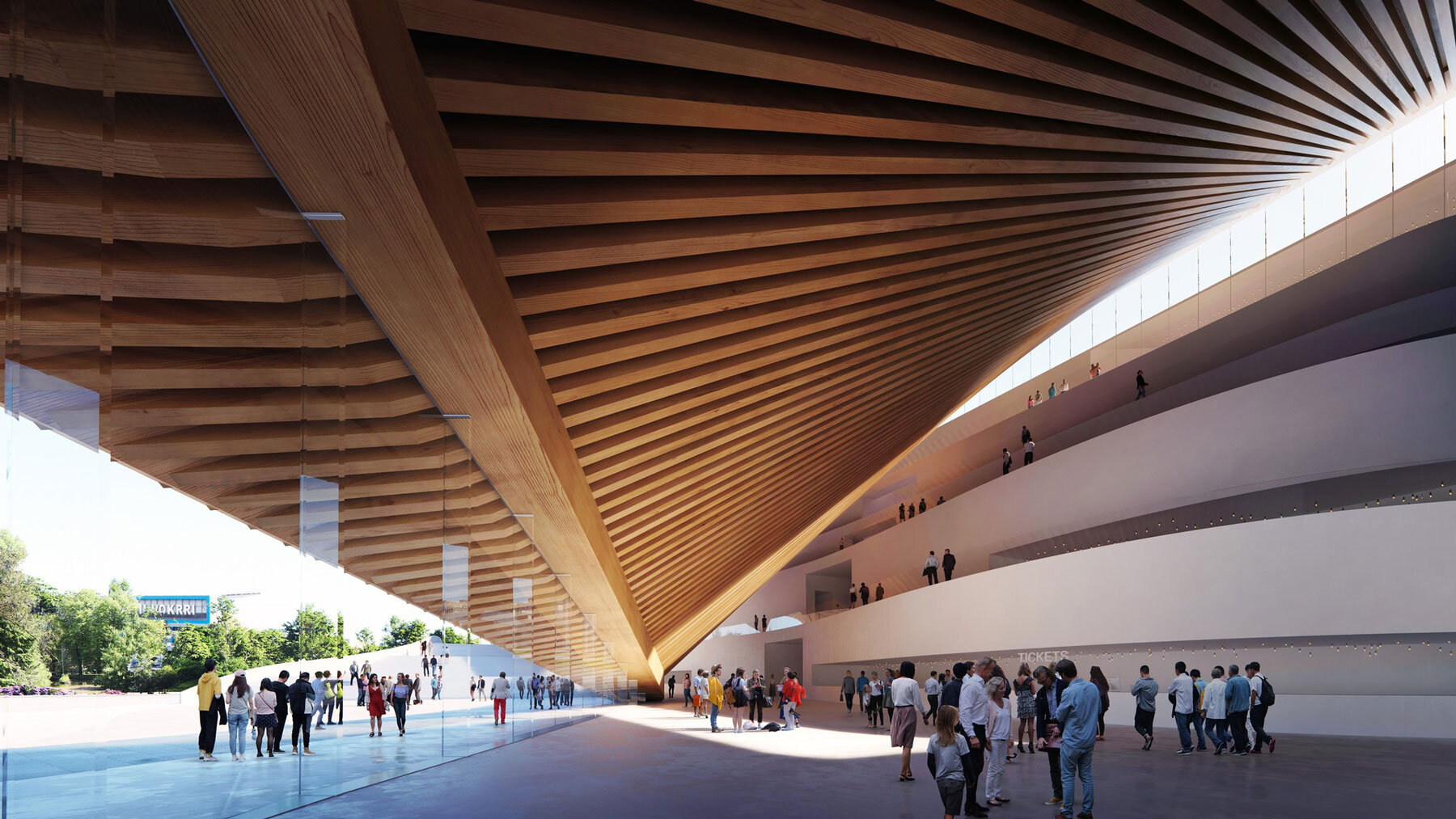
At the street level, a grand civic staircase provides direct access from Garibaldi Street, while the existing podium of the Palace of Youth & Sports extends to merge with the theater, enhancing pedestrian connectivity and transforming the podium into a lively public space. The building’s footprint is sculpted through a dynamic ‘push and pull’ approach, creating distinct areas for each performance hall while maintaining a cohesive and fluid design. The theater’s undulating form also naturally indicates the locations of entrances and key spaces, which welcome guests into a ‘public room’ that is approachable and welcoming from all sides. Inside, the venue fosters a subtle interplay between light, materiality, and spatial fluidity. A central skylight floods the expansive lobby with natural light, creating a warm and welcoming contrast to the building’s sleek, dynamic exterior. The Concert Hall (1,200 seats), Theater Hall (1,000 seats), Recital Hall (300 seats), and Theater Room are all integrated into a centralized back-of-house spine, optimizing functionality and accessibility. Above, rehearsal and administrative spaces are stacked efficiently, reinforcing a compact yet highly legible program layout.


‘We are deeply honored to be entrusted with the design of the new home for the performing arts in a country that has gifted the world with an outsized cultural impact in the performing arts. Our design for the Opera & Ballet Theater of Kosovo is designed like an efficient factory for the fabrication of artistic performances. The rational nucleus is wrapped in a continuous canopy, creating an engaging public space open in all directions. The undulating roof creates a flowing and inviting gesture evocative of the Xhubleta, the traditional national dress of Kosovo,’ shares Bjarke Ingels, Founder & Creative Director of BIG.
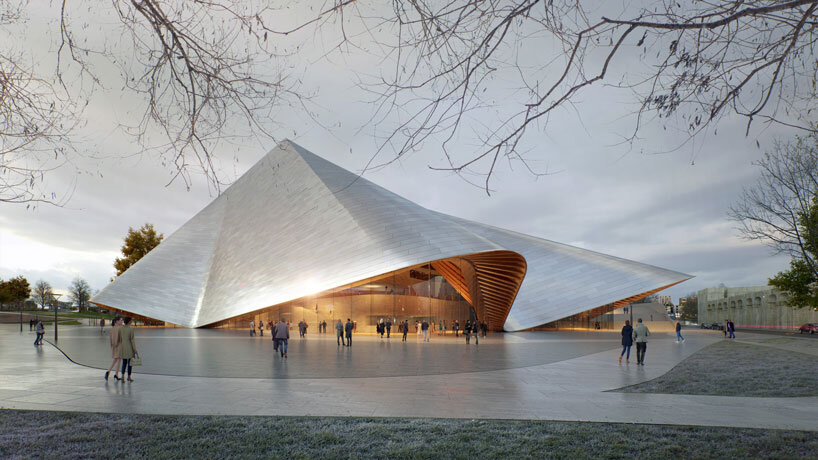
bjarke ingels group drapes undulating roof over opera and ballet theater of kosovoBIG unveils the Opera & Ballet Theater of Kosovo, set to become a cultural landmark in Prishtina


natural stone paths surround the Opera and Ballet Theater


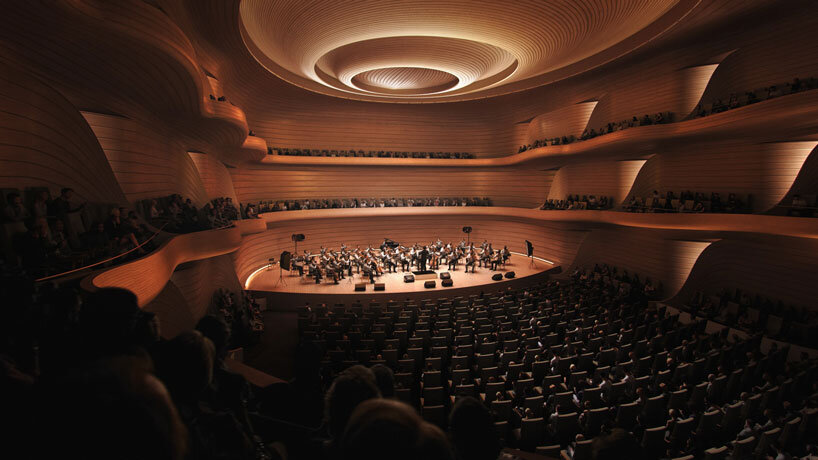
A consistent design language weaves through the performance halls, where curved timber elements sculpt the spaces into both aesthetic and highly functional acoustic environments. The Concert Hall features an intimate, interlocking seating arrangement that ensures optimal sightlines, while the three-tiered Theater Hall offers a grand yet intimate setting, supported by a full-height fly tower and concealed technical bridges. The Theater Room and Recital Hall offer flexible configurations to accommodate diverse performances. Across all performance spaces, a palette of matte timber surfaces, deep velvet upholstery, and acoustic curtains enhances the sensory experience, with strategically spaced timber layers enhancing acoustic performance. Surrounding the theater, an elegant hardscape of natural stone is punctuated by landscaped ‘islands’ and winding paths, introducing a layer of organic softness to the urban environment. The inclusion of beech trees and diverse vegetation fosters biodiversity, seasonal variation, and natural shade along Tirana Street. To prioritize pedestrian accessibility, all vehicle servicing is placed underground, freeing the site to serve as a dynamic public park and plaza.


‘The design for the Opera & Ballet Theater of Kosovo allows for the flexibility to accommodate the precise needs of the organizations who will occupy the spaces within, whilst providing a modern facility that can elicit joy and delight for future generations of visitors and performers alike. The theater’s design symbolizes a new era of the arts and culture of Kosovo – with the potential to touch the heart of everyone who experiences it,’ concludes Andy Young, partner of BIG in London.
bjarke ingels group drapes undulating roof over opera and ballet theater of kosovothe building’s soft, undulating exterior is wrapped in photovoltaic tiles and timber rafters
bjarke-ingels-group-undulating-roof-opera-ballet-theater-kosovo-designboom-1800-2

inspired by the traditional Xhubleta skirt, the building’s flowing form celebrates Kosovo’s heritage

bjarke ingels group drapes undulating roof over opera and ballet theater of kosovowith entrances on all sides, the design fosters an accessible and inclusive public gathering space
bjarke-ingels-group-undulating-roof-opera-ballet-theater-kosovo-designboom-1800-9

a central skylight fills the main lobby with natural light, creating an open and inviting space

bjarke ingels group drapes undulating roof over opera and ballet theater of kosovoa grand civic staircase merges the theater with the street, enhancing pedestrian connectivity
bjarke-ingels-group-undulating-roof-opera-ballet-theater-kosovo-designboom-1800-3

the building’s undulating roof creates an inviting gesture, drawing people into its public spaces

bjarke ingels group drapes undulating roof over opera and ballet theater of kosovothe interiors feature curved timber elements that enhance both acoustics and aesthetics
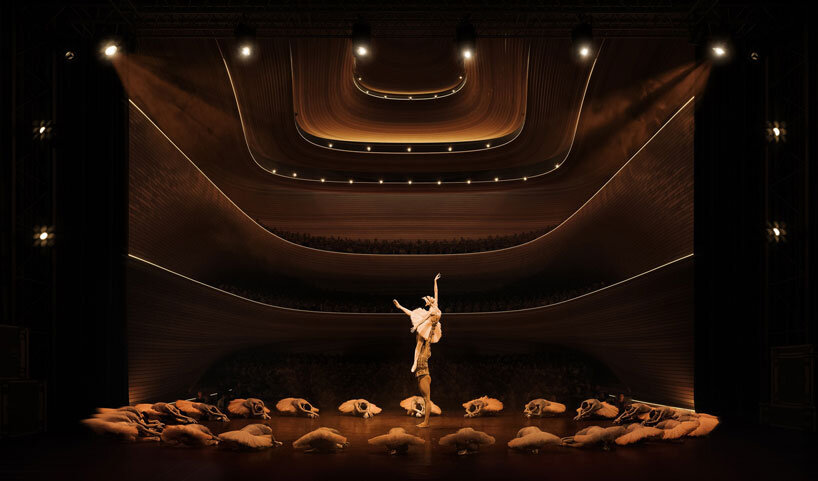
bjarke ingels group drapes undulating roof over opera and ballet theater of kosovotimber finishes, velvet upholstery, and acoustic curtains enhance both sound and visual warmth


project info:
 
name: Opera and Ballet Theater of Kosovo
location: Prishtina, Kosovo
area: 42,395 sqm
 
client: Ministry Of Culture, Youth Government Of Kosovo

partner in charge: Bjarke Ingels, Andreas Klok Pedersen, Andy Young

project manager, lead designer: Mike Yin

design team: Ania Agnieszka Podlaszewska, Enija Skeltona, Jasmine Yang, Masa Tatalovic

collaborators: ALB-Architect, Charcoalblue, bloomimages