Monday, August 19, 2024

it takes humour


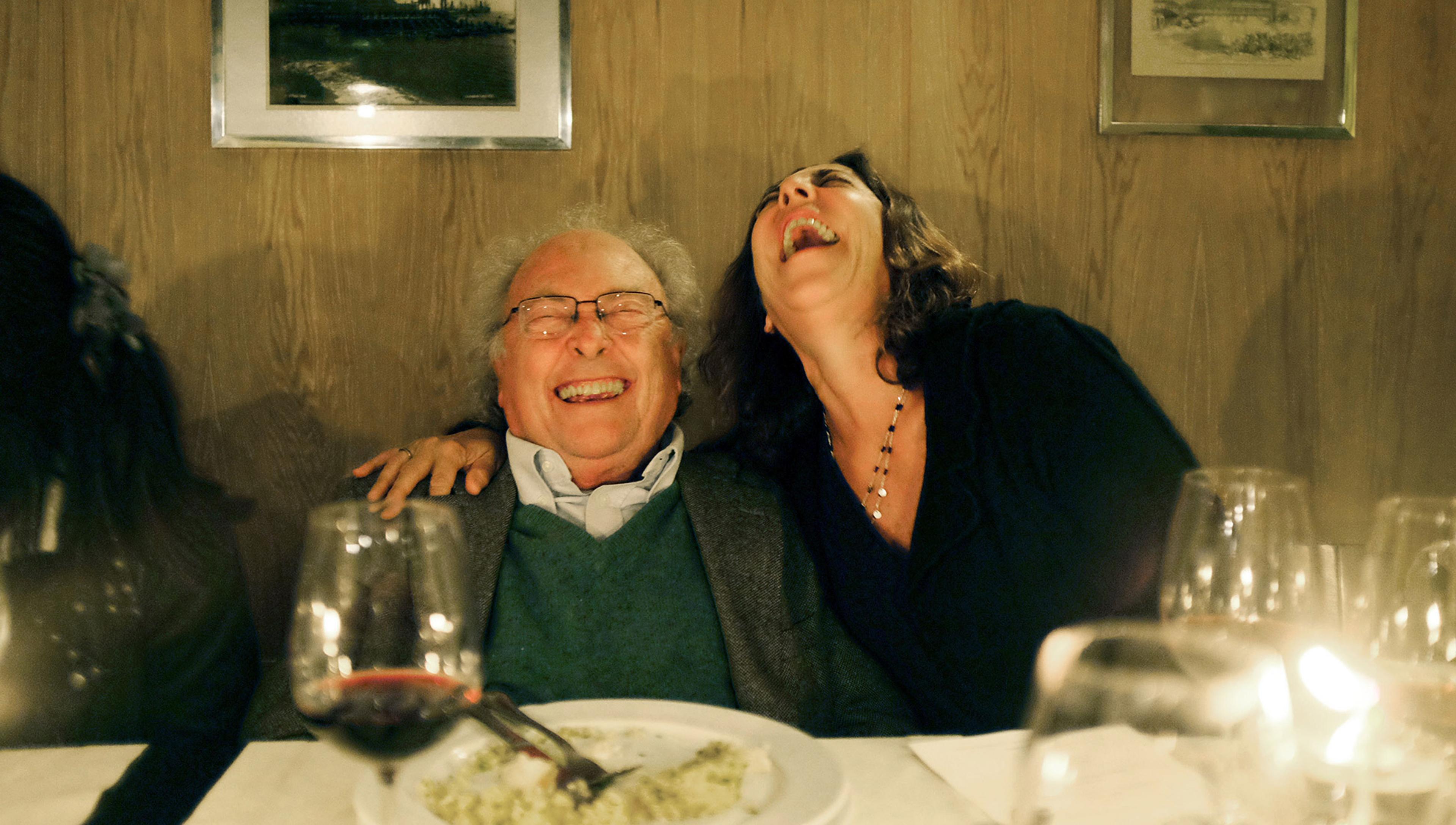
A man and a woman laughing together in a restaurant

Why it takes humour to sustain a long-term relationship

Photo by Ferdinando Scianna/Getty

Maintaining a long and happy relationship requires a specific skillset. Learning to laugh at yourself and together is key

From an evolutionary perspective, we’re poorly equipped to navigate the kind of extremely long-term intimate partnerships that many people today aspire to.

Nowadays, the average age of first marriage in many countries around the world is in the 20s. Assuming these newlyweds live into their 70s or 80s (thanks to advances in modern medicine), and bullishly aspire to a life-long commitment, this would put their projected marriage length close to the 60-year range – far longer than the relationships experienced by the majority of humans for most of history.

The comedian Wanda Sykes put it less academically:

Till death do you part. That’s biblical times. Moses wrote that. That’s the Old Testament. They had no problem saying till death do you part back then because they didn’t live that long. They had good plagues. Soon as that guy got on your nerves, here come some locusts to eat his ass up for you.

These days, for loving couples to coexist under the same roof for such extended periods of time, they must – among other pressures – undergo a challenging domestication process: whether the toilet seat should be left up or down; mail left sitting, or immediately opened; tinfoil placed in the recycle bin or in regular trash; dirty dishes left in the sink overnight, or cleaned off and stacked in the dishwasher before bedtime; the use of subtitles during TV shows, or not. The list is endless. And for many relationships, this is enough to upend them.

Relational boredom is another challenge – this is when a person’s marital or cohabiting situation goes through longer-than-expected phases of being unexciting and monotonous, while also seeming extraordinarily inconvenient and stressful to end. Battling the fear of missing out, taking flight, obsessively thinking about reinventing oneself, and going on a perennial odyssey to find one’s true soulmate are classic ways vulnerable people respond to ordinary relational boredom. No matter that realistically minded, conscientious, caring individuals do not abdicate intimate ties so impetuously. Having it in our psychological toolkit to somehow find a way to accept and adapt to the humdrum aspects of domestic life with significant others is imperative.

When my brother-in-law can’t find kitchenware where he left it, he will say things like: ‘If you were a spatula, where would you be?’

What is the most important tool in that box? Humour, irony and an appreciation for the absurd are often overlooked by marriage scholars as mindsets conducive to success at love. Yet I believe they provide the best way for intimate partners to adapt to all the mundane annoyances baked into marriage and long-term romantic partnerships.

Join 84,000+ weekly newsletter subscribers

Intriguing articles, practical know-how and immersive films, straight to your inbox every Friday. Our content is 100 per cent free and you can unsubscribe anytime.

See our newsletter privacy policy here.

For starters, the smooth use of humour is an excellent way to deflect an irksome remark, not take a loved one’s harsh tone personally, and avoid an argument. Along these lines, a client recently told me a story about an interaction with her husband, who tends to question her spending habits. She bought some large baskets for the backyard. In a critical tone, he quizzed her on what uses she could possibly have for them. Countering with a joking tone, she ludicrously proposed she could sit in them, and pretended to do so. They both cracked up laughing and that was the end of it.

Minor nuisances can also be deftly handled with light-heartedness. When my brother-in-law cannot find kitchenware where he last left it, he is fond of saying to my sister-in-law things like: ‘If you were a spatula, where would you be?’ The wife of one of my best friends is in the habit of addressing his spaciness with comments such as: ‘Did you mean to leave the burner on?’ An overtalking friend usually punctuates his long-winded expressions with droll comments such as: ‘to make a long story longer…’ And he jokingly prefaces delivery of his new ideas with a phrase that seems brash, but isn’t because of his jolly tone – ‘back to me’ – which oddly makes it much easier to listen to him for longer.

Then there’s ‘praise as critique’ – a common form of sarcasm that, when used in good-natured ways, can be a clever and subtle way of kindly putting a partner on notice that life would be easier for everyone if they just dropped an annoying habit. Pertaining to this, I distinctly recall a comment made by a neighbour in reference to his boyfriend: ‘Julian always has food on his face. Other than that, he’s perfect!’

According to scholars, these various forms of humour fall into two categories: affiliative and self-enhancing, and both can contribute to relationship longevity. The former involves amusing others to keep things positive and lively in ways that sustain and enrich a relational bond. The latter reflects an ability to poke fun at yourself in a good-natured way, or to see the humour in unfavourable life events. According to a Belgian study, which compared dozens of married and divorced men and women, a sure-fire way to be satisfied in your relationship and lessen the risk of divorce is to liberally indulge one’s propensity to use affiliative and self-enhancing humour.

Older couples – married at least 35 years – rely more heavily on humour to convey tenderness and lessen friction

Lots of shared laughter is a bellwether for how alike partners are and how close they feel to each other. Summing up some research findings on this topic, Sara Algoe at the University of North Carolina at Chapel Hill concluded: ‘People who spent more time laughing with their partner felt that they were more similar to their partner. They had this overlapping sense of self with the other person.’ Algoe’s research, with Laura Kurtz, was limited to people in their 20s and 30s who had been romantically involved for an average of just over four years, but I imagine the same rule would apply to older couples in longer relationships. Other studies of younger couples testify to the significance of humour and laughter for relationship success. A CBS News poll from 2010 found that a sense of humour was five times more important than sex when it comes to building a successful marriage. A 2018 study out of Romania looking at young people romantically involved for one to five years revealed that a sense of humour outranked physical attractiveness, ambition, earning potential and an exciting personality when evaluating mates.

Over the long arc of a relationship, humorous exchanges and shared laughter take on added importance. It has been shown that, compared with middle-aged couples married at least 15 years, older couples – married at least 35 years – rely more heavily on humour to convey tenderness and lessen friction. This prompted an article in Science Daily in 2018 encouraging partners to stay the course:

Honeymoon long over? Hang in there. A new University of California, Berkeley, study shows those prickly disagreements that can mark the early and middle years of marriage mellow with age as conflicts give way to humour and acceptance.

As couples age, snickering often replaces bickering in the joint venture to make one’s dwindling years less friction-filled and more joyful.

That’s certainly true in my marriage. Just the other day, over breakfast, my wife, Janet, gingerly mentioned that she’d had a lousy night’s sleep because of my snoring. Wide awake and irritated, she had audiotaped my snoring on her smartphone as incontrovertible proof. Listening to it together at the breakfast table, I quipped: ‘Wow, that’s quite melodic. How can we know with any certainty that’s me?’ We shared a laugh and Janet segued into kindly requesting that I go back to rinsing with a saline solution before bedtime to curb my snoring. A decade ago, a conversation like this would have gone sideways fast, with me defensively referencing her snoring.

The comedian Sinbad is less sanguine in his skit on snoring. Bantering with a woman in the audience who complained of her husband’s snoring – which she insisted was non-existent before their marriage – Sinbad launches into a riotous tirade: ‘You sucked the life out of him. He has no air … He’s just trying to survive the night. He ain’t snoring, he’s dying. A little bit each night. A little bit. Y’all call it sleep apnea, we call it marriage.’

To survive marriage or any decades-long partnership, it’s imperative that each member of a couple adapt to what can be realistically obtained from the other. Only then can a loving bond flourish over time. As Andre, a character in Tayari Jones’s novel An American Marriage (2018) muses: ‘You also have to work with the love you are given, with all of the complications clanging behind it like tin cans tied to a bridal sedan.’ When a relationship plentifully meets our essential needs and is mostly good, what makes it chug along, rather than keep sputtering out, is a mindset of mirthful acceptance in the face of a mate’s negative traits. You need an openness to humorously shrugging off the myriad inescapable sources of potential irritation that are part of sharing a life with a fellow flawed human being. You need to find a way to snicker, not bicker.

This Idea is adapted from the book Flourishing Love: A Secular Guide to Lasting Intimate Relationships (2023) by Enrico Gnaulati.


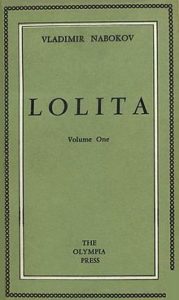
Nabokov, Lolita


A Century of Reading: The 10 Books That Defined the 1950s

We Have Reached the Halfway Mark of This Series


Vladimir Nabokov, Lolita (1955)


Nabokov’s most famous novel was originally published in Paris (in English) in 1955 by a publisher whose other titles included Until She Screams, Tender Thighs, and There’s a Whip in My Valise, and generally ignored until Graham Greene called it one of the best books of the year. Then it was roundly disparaged and dismissed as trash, and banned by the French government—no wonder that smuggled-in copies were already being sold for $20 a pop when it was finally published in the US by G. P. Putnam’s Sons, kicking off what Nabokov called in his journal “Hurricane Lolita.” As Steve King writes:

Within four days of publication in the U.S. the book was into a third printing; by September 13th it had become the first book since Gone with the Wind to sell 100,000 copies in its first three weeks; by the end of September, it was #1 on the bestseller lists. By the time Nabokov appeared on the cover of Newsweek in 1962, it seemed that the only one who hadn’t read the book was Groucho Marx, who quipped, “I plan to put off reading Lolita for six years, until she’s eighteen.”

Since then, of course, the novel—along with its eponymous character—has become iconic, though more contemporary readers understand the way the image of Humbert’s nymphet has been twisted as the years have worn on. “With the possible exception of Gatsby, no twentieth-century American literary character penetrated the public consciousness quite like Lolita,” Ira Wells noted in The New Republic.

Her very name entered the language as a common noun: “a precociously seductive girl,” according to the Merriam-Webster dictionary. (Gatsby, by contrast, had to settle for a mere adjective: “Gatsbyesque.”) . . . [But] we have forgotten Lolita. At least, we’ve forgotten about the young girl, “standing four feet ten in one sock,” whose childhood deprivation and brutalization and torture subliminally animate the myth that launched a thousand music videos. The publication, reception, and cultural re-fashioning of Lolita over the past 60 years is the story of how a twelve-year-old rape victim named Dolores became a dominant archetype for seductive female sexuality in contemporary America: It is the story of how a girl became a noun.

But the fact that we’re still talking about, going over the contents and the form and the way its been misunderstood and the way we failed Nabokov and the way Nabokov failed us is only proof of the novel’s significance. It is certainly a book about rape, though it does not invite us to accept rape. It is certainly a book about erotic obsession, though we are meant to pity the obsessed. It is certainly an enduring literary masterpiece.


Sunday, August 18, 2024

Los Angeles’ building 4 earthquake


Column One

Column One is The Times’ home for narrative and longform journalism. Here’s a great piece from this week:

Animation of various buildings shaking
(Jim Cooke / Los Angeles Times)

For nearly a decade, Los Angeles has touted its sweeping earthquake safety ordinance — the nation’s toughest, which requires thousands of buildings to be evaluated and strengthened if necessary. But city officials never made it easy for Angelenos to look up retrofit information about their building.


Los Angeles’ building earthquake retrofit data have been outdated for years, Times investigation uncovers

Old buildings line a busy street in downtown Los Angeles.
Broadway in downtown Los Angeles has a high concentration of non-ductile concrete buildings.
 
(Luis Sinco / Los Angeles Times)

For nearly a decade, Los Angeles has touted its sweeping earthquake safety ordinance — the nation’s toughest, which requires thousands of buildings to be evaluated and strengthened if necessary.

But city officials never made it easy for Angelenos to look up retrofit information about their building.

In 2023, The Times asked for the city’s lists of non-ductile concrete and soft-story buildings, as well as their retrofit statuses. After publishing a map that allowed Los Angeles residents to review the earthquake risk of their building, The Times was contacted by several property owners who said the data the city provided indicated their buildings were not retrofitted, when in fact they were.

The misinformation caused concern among property owners that lost out on leases with prospective tenants who thought seismic retrofits had not been completed on their buildings. Several residents expressed fear for their family’s safety living in an unretrofitted building.

Once The Times became aware of the errors, editors added a note to readers on the article and reporters began sifting through permit records and making inquiries to the city. The full scope of the problems did not become clear until 18 months later.

On a July 25 video call, officials walked Times reporters through the errors and acknowledged that, for years, the Department of Building and Safety had been incorrectly reporting which buildings have been retrofitted and which have not.

“The retrofitting database system relies heavily on manual input and manual adjustments of the reports, which while sufficient for individual enforcement purposes, has not been able to produce program-wide reports to the standards that we desire,” Gail Gaddi, public information director of the Los Angeles Department of Building and Safety, said in a statement. “We take this very seriously and will take the necessary steps to automate the reporting system to ensure all the reports are accurate.”

As a result of The Times’ inquiries, Los Angeles Mayor Karen Bass asked the department to establish a task force to review records, automate its manual data work and hire an independent auditor.

“Angelenos deserve to know the status of retrofits for buildings they live in, own, or are considering living in,” Clara Karger, a spokesperson for Bass, said in an email.

Text that says "Unshaken"

June 12, 2021

The Times’ questions also prompted the city in February to stop issuing monthly seismic progress reports.

Since the ordinance went into effect nine years ago, the city had been publishing reports detailing the number of buildings in compliance, those that have started work and those that have submitted plans. The mayor’s office has touted the program by referring to these reports, which also are used by trade groups such as the Structural Engineers Assn. of Southern California, to hold city officials accountable for their work on retrofits.

The Times’ questions about the city’s records began even before publishing the map. But what initially appeared to be one-off flaws in the data — including listing Los Angeles City Hall as having not been retrofitted when, in fact, its seismic upgrade was completed in 2001— were actually signs of inaccurate data handling.

Times reporters spent months reviewing more than 1,000 city permits, talking to multiple building owners and tenants to understand the discrepancies and inquiring about incorrect data from the city.

On Jan. 16, in response to inquiries about specific buildings — including several large Broadway Theater District commercial buildings incorrectly labeled as not retrofitted — officials said in an email: “[The department] is confident that our retrofit data is correct. We will look closely into the addresses that LA Times has provided.”

By then, The Times had identified at least 56 buildings, both soft-story and non-ductile concrete, that were incorrectly categorized. One example: A retrofit was performed in 2021 for a large commercial building on Broadway, but city records showed it was incomplete.

After further questions the following month, building officials acknowledged in an email a mismatch in the data. For the list of non-ductile concrete and soft-story buildings, “the data within the exported spreadsheet did not entirely align with our internal databases.”

The primary cause of the errors, officials later admitted, was the fact that the city failed to accurately combine two databases — one of building permits and another of addresses. The city’s database mistakenly linked irrelevant permit information to the list of buildings requiring a seismic update. This resulted in the incorrect labeling of many buildings.

“We realized from the IT side that there would have been this potential for multiple permits that were issued that would reflect the work for one building,” Minh Ong, a civil engineer with the Department of Building and Safety said. “We know the associations are incorrect on them and have to walk through the data one building at a time.”

The Times’ map originally included 73 retrofitted non-ductile concrete buildings in Los Angeles. In the months since the errors were uncovered, the Department of Building and Safety gave different totals: In January, it said 73 concrete buildings were retrofitted; in April, 91; and in mid-July, 127. In the final list sent on July 25, the agency said the number was 101.

However, a Times analysis of the city’s newest data shows that at least four buildings were categorized as not retrofitted when they had already been strengthened, according to city permits.

To date, officials have updated the retrofit information for at least 10 non-ductile concrete buildings based on evidence provided by The Times. Two architecture and engineering firms confirmed to a reporter that the building department had called to verify records based on what The Times’ reading of permits showed.

The status of the city’s soft-story buildings, which are mostly apartments, remains unclear.

After the July video call, city officials said they would share corrected soft-story records the next day. Two days later, the department instead said it would overhaul its database and hire an auditor. The Times has removed the city’s data from its map.

The mayor’s office acknowledged the process of correcting the building department’s records could take months. There are 12,347 soft-story buildings and 1,194 concrete buildings in Los Angeles, according to the city’s data.

Meanwhile, residents still want to know how they can check the retrofit status of their homes and workplaces.

Emily Guiltinan was looking to move and came across The Times’ map when researching earthquake safety.

“I was like, wow, that’s disturbing. How safe are the buildings we live in?” she said. “Basically, the answer was not very.”

Guiltinan tried to use the city’s permit portal to look up buildings and was unable to find complete records for prospective buildings in her neighborhood. When she called the department’s hotline she said a representative told her “not to worry about earthquakes” because they happen “once in a blue moon and aren’t that big of a deal.”

While Guiltinan was speaking with The Times in a phone interview, a magnitude 4.9 earthquake centered in the Mojave Desert was felt in Los Angeles.