|
|


Your brain will perform better if you shift into this mode of working
Productivity expert Donna McGeorge outlines four strategies that will help your brain do more by working less.
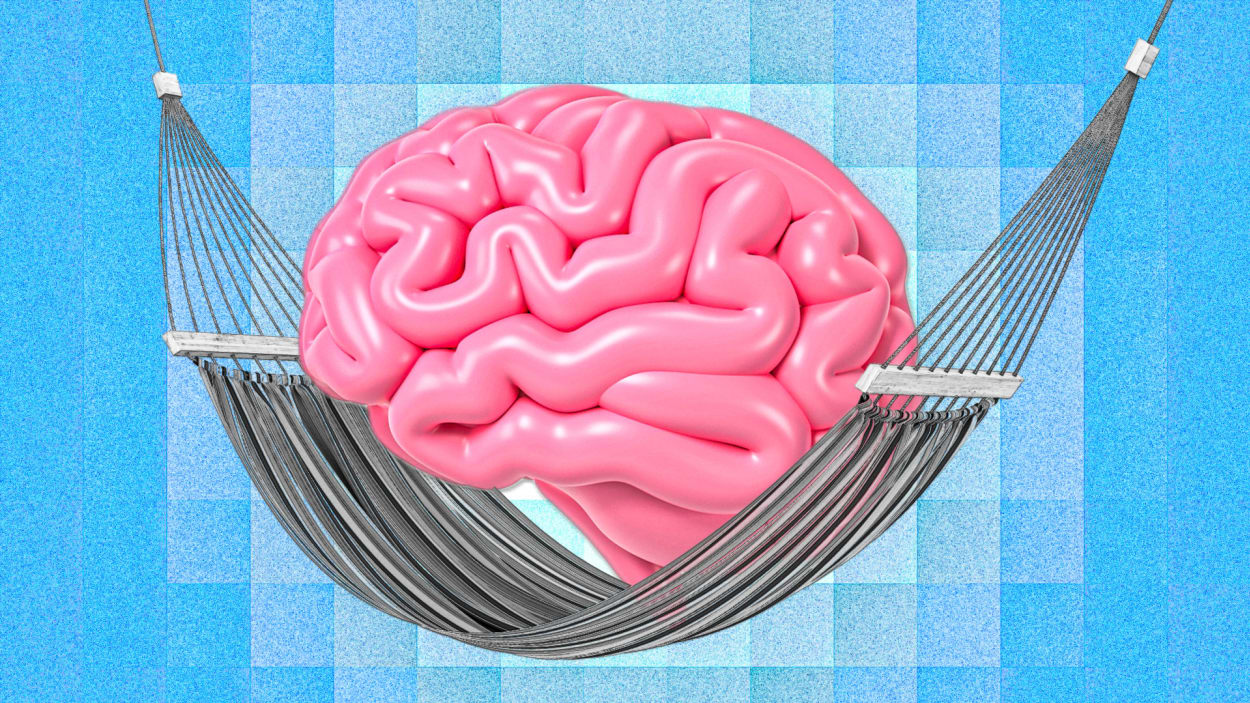
Have you noticed how busy is the new black? Many workplaces recognize and reward being fast-moving or adaptive. Yet really, they’re white-collar sweatshops, pushing people beyond their limits. The result? Stressed and burned-out employees.
In a culture that values hard work and productivity, we’re “winning” when we are going hard. Being busy increases our level of (self-) importance and can become addictive. We feel guilty or ashamed when we aren’t doing lots of stuff at work or on our weekends.
Articles, books, and podcasts report successful people are willing to go longer and harder than others. They get up at 4 a.m. or 5 a.m. to get ahead when in fact, research shows us the more sleep we get, the happier we are.
Going hard and being on all the time is actually detrimental to what you want to achieve. Pain, stress, and fatigue produce neurotransmitters that disconnect you from your executive function (smarts).
Your brain will operate better and be more productive if you flip the switch and build in more downtime. We need to be in an engaged, happy, and relaxed state to perform at our peak. So here are some of my favourite techniques to help you do just that.
BUILD IN A 15% BUFFER
Capacity utilization (mostly used in manufacturing) measures the difference between production and production capability. It is unlikely that a company will function at 100% capacity, so 85% is considered optimal. This provides a 15% buffer against setbacks like equipment malfunction or resource shortages.
The same can be said about you and your brain. You need to work at 85%, not flat out at 100% to optimize your resources and mental systems.
Just look at Olympian Carl Lewis. The nine-time gold medallist sprinter was known as a master finisher. In a 100-meter sprint, he was often last at the 40-meter mark, but breezed past other competitors by the finish line. While other runners were clearly having to push harder at the end—clenching their fists, scrunching their face—Lewis looked exactly the same when he won the race as he had at the start. He ran at 85% from start to finish, not 100% full throttle.
TIP: Build in a 15% buffer to your day or week. Cut out 1.2 hours from an 8-hour day; that’s one day from a 7-day week. Simply start by blocking out public holidays in advance (especially if you work for yourself). Spend that time reading, relaxing, or resting. It might feel counterintuitive, but it will buy you brain power in the long run.
WATCH YOUR BODY, NOT YOUR CLOCK
Ever noticed that as the day wears on, your patience (and fuse) in meetings or conversations becomes shorter and more erratic? The smallest things start to annoy you because you’re drained and your mental energy is low. It’s not the best state to be making important decisions or trying to have productive conversations.
Studies of brain waves show us that innovation, inspiration, and intuition are only available to us when our brain is in certain states of consciousness. So, the more brain space you protect, the better.
For most of us, our most productive time will be first thing in the morning, hence, big decisions and tasks that require attention and focus (what we call our “real work”) are best done in the morning, and repetitive tasks (like email) are best done in the afternoon when your cognitive load is low.
TIP: Maximize your mornings by starting yours the night before. Before finishing up for the day, plan two or three tasks you want to do first. Avoid switching on your email in the morning until they are done. Protect your most valuable time.
MEET IN 25-MINUTE SEGMENTS
We need meetings. We need them at work because when they work, clear actions get set, decisions are made, and the whole business moves forward.
The problem is that we automatically default to holding 60-minute meetings. That’s at least 35 minutes of wasted time waiting for latecomers, fixing tech issues, wondering about the agenda (or lack thereof).
Having only 25 minutes creates clarity around doing what’s important. If we only have 25 minutes, we had better be focused on what we need to get done. This automatically forces us to think about the top two or three things to discuss in a meeting and drives action.
TIP: Change your default calendar app to 25 minutes, instead of 60. Always provide people with the purpose of a meeting. When you accept invitations, tell others you only have 25 minutes and ask them why you are expected to be there. If there’s no reason, or you’re unclear on the purpose, then save yourself some time and politely decline.
SIMPLIFY YOUR SYSTEMS
When we’re presented with a problem, our instinct is to add things (complicate) rather than remove things (simplify).
We set up extra meetings to figure out why work schedules are too cramped, but in doing so add more red tape, more decision points. When your day or week is full, you get up earlier or stay up later to finish. Yet what if you simply reduced the number of things you committed to doing?
Think about the boundaries you could set up to create a “not-to-do list. It might include things like social media during working hours, living in your email, meetings before 10 a.m. and after 3 p.m., or staying up late.
TIP: Look at your current to-do list and remove things that are low value, energy draining or are a distraction from your true goals or KPIs. All of these things will help you get the important things done and you’ll be surprised at how much time they consumed in the past.
So, if you want to be fast, successful, or adaptive, stop pushing yourself to the limits and win your day with more downtime instead.

Donna McGeorge is a speaker, author, and mentor who helps people work smarter. She is the author of The 25-Minute Meeting: Half the Time, Double the Impact, The First Two Hours: Make Better Use of Your Most Valuable Time, and The 1-Day Refund: Take Back Time, Spend It Wisely.


' xlink:href='%23b'/%3e%3cuse fill='black' filter='url(%23c)' xlink:href='%23b'/%3e%3cpath fill='white' d='M12.162 7.338c.176.123.338.245.338.674 0 .43-.229.604-.474.725a.73.73 0 01.089.546c-.077.344-.392.611-.672.69.121.194.159.385.015.62-.185.295-.346.407-1.058.407H7.5c-.988 0-1.5-.546-1.5-1V7.665c0-1.23 1.467-2.275 1.467-3.13L7.361 3.47c-.005-.065.008-.224.058-.27.08-.079.301-.2.635-.2.218 0 .363.041.534.123.581.277.732.978.732 1.542 0 .271-.414 1.083-.47 1.364 0 0 .867-.192 1.879-.199 1.061-.006 1.749.19 1.749.842 0 .261-.219.523-.316.666zM3.6 7h.8a.6.6 0 01.6.6v3.8a.6.6 0 01-.6.6h-.8a.6.6 0 01-.6-.6V7.6a.6.6 0 01.6-.6z'/%3e%3c/g%3e%3c/svg%3e)
' xlink:href='%23b'/%3e%3cuse fill='black' filter='url(%23c)' xlink:href='%23b'/%3e%3cpath fill='url(%23d)' d='M3 8.008C3 10.023 4.006 14 8 14c3.993 0 5-3.977 5-5.992C13 7.849 11.39 7 8 7c-3.39 0-5 .849-5 1.008'/%3e%3cpath fill='url(%23e)' d='M4.541 12.5c.804.995 1.907 1.5 3.469 1.5 1.563 0 2.655-.505 3.459-1.5-.551-.588-1.599-1.5-3.459-1.5s-2.917.912-3.469 1.5'/%3e%3cpath fill='%232A3755' d='M6.213 4.144c.263.188.502.455.41.788-.071.254-.194.369-.422.371-.78.011-1.708.255-2.506.612-.065.029-.197.088-.332.085-.124-.003-.251-.058-.327-.237-.067-.157-.073-.388.276-.598.545-.33 1.257-.48 1.909-.604a7.077 7.077 0 00-1.315-.768c-.427-.194-.38-.457-.323-.6.127-.317.609-.196 1.078.026a9 9 0 011.552.925zm3.577 0a8.953 8.953 0 011.55-.925c.47-.222.95-.343 1.078-.026.057.143.104.406-.323.6a7.029 7.029 0 00-1.313.768c.65.123 1.363.274 1.907.604.349.21.342.44.276.598-.077.18-.203.234-.327.237-.135.003-.267-.056-.332-.085-.797-.357-1.725-.6-2.504-.612-.228-.002-.351-.117-.422-.37-.091-.333.147-.6.41-.788z'/%3e%3c/g%3e%3c/svg%3e)
' xlink:href='%23b'/%3e%3cuse fill='black' filter='url(%23c)' xlink:href='%23b'/%3e%3cpath fill='white' d='M10.473 4C8.275 4 8 5.824 8 5.824S7.726 4 5.528 4c-2.114 0-2.73 2.222-2.472 3.41C3.736 10.55 8 12.75 8 12.75s4.265-2.2 4.945-5.34c.257-1.188-.36-3.41-2.472-3.41'/%3e%3c/g%3e%3c/svg%3e)