Sunday, March 13, 2022

Code of Conduct for Collectors


Art Market

This New Code of Conduct for Collectors Aims to Encourage More Ethical Art Buying

A few years ago, collector Piergiorgio Pepe had a simple yet revelatory epiphany about an issue that has long plagued the art world. “The unavailability of a language around the market makes the roles and responsibilities of a collector opaque,” Pepe told Artsy. In an industry that generates upwards of $50 billion annually, a laissez-faire attitude towards the art market inevitably allows for acts of misconduct and abuse. The private execution of many transactions behind closed doors and through pliable agreements can enable money laundering, art flipping, conflicts of interest, and speculative buying.
The founder of Quantum Ethics, a Paris-based ethics and compliance organization, Pepe saw how many of the fair execution measures he reviews with his healthcare and legal clients could also be applied to art collecting. “Many reinforced and practiced regulations in sectors such as finance and energy are overlooked in the art field,” he explained. In 2020, Pepe teamed up with seven other collectors from around the world—Pedro Barbosa, Iordanis Kerenidis, Andre Zivanari, Sandra Terdjman, Haro Cumbusyan, and Jessica and Evrim Oralkan—to start the Ethics of Collecting. Operating as a collective think tank, the group generates ways to promote transparency in a field in whose ethics had, until then, remained unwritten.
Pablo Helguera, from the series “Artoons,” 2022. Courtesy of the Ethics of Collecting.

Pablo Helguera, from the series “Artoons,” 2022. Courtesy of the Ethics of Collecting.

Yesterday, the collective took its first official action, releasing the “Code of Conduct for Contemporary Art Collectors” at ARCO Madrid. The set of guidelines aims to provide collectors of any level with ethical processes for acquiring, commissioning, exhibiting, donating, and championing art. Members of the collective worked alongside an advisory team of 15 curators, artists, and gallerists to pen the manual. And while the code may seem like a no-brainer for serious collectors, Pepe emphasized that agreeing to it is entirely voluntary. “We are not an authority with the power to enforce any law,” said Pepe.
The goal of the code is to provide a template for conscious collecting through policies that have been proven successful in other sectors. The standards listed throughout the document’s 11 pages stem from clauses outlined in other industries, as well as collectors’ own experiences of art buying.
Pablo Helguera, from the series “Artoons,” 2022. Courtesy of the Ethics of Collecting.

Pablo Helguera, from the series “Artoons,” 2022. Courtesy of the Ethics of Collecting.

From how to interact with artists, to supporting institutions, to serving as a member of a governing body, each bullet point is broken down into multiple subcategories. These subcategories cover the potential risks that may come as a result of wrongdoing, as well as best practices for moral conduct. The section gathered under “Building, Maintaining, and Showing the Collection,” for example, outlines how to avoid manipulating the market, conclude purchase contracts, and enforce resale rights for artists, as well as a breakdown of NFTs and the blockchain.
The code also cautions collectors against buying art solely as an investment citing its ethical implications, and encourages collectors to make sure the artist’s career sustainability is a priority. In a section about commissioning and supporting new artworks, the code explains five pillars of patronage. These include avoiding influence on artistic content, compensating the artist with fair market prices, and honoring the artistry and respecting the creative process.
Pablo Helguera, from the series “Artoons,” 2022. Courtesy of the Ethics of Collecting.

Pablo Helguera, from the series “Artoons,” 2022. Courtesy of the Ethics of Collecting.

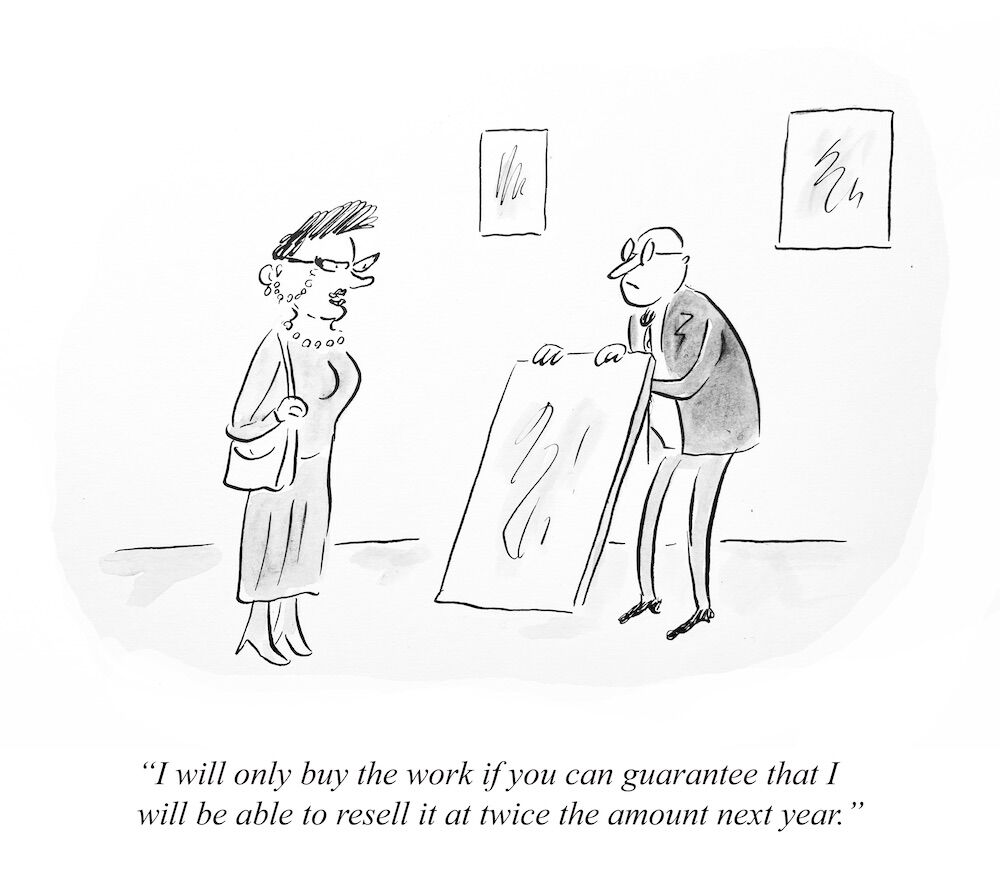
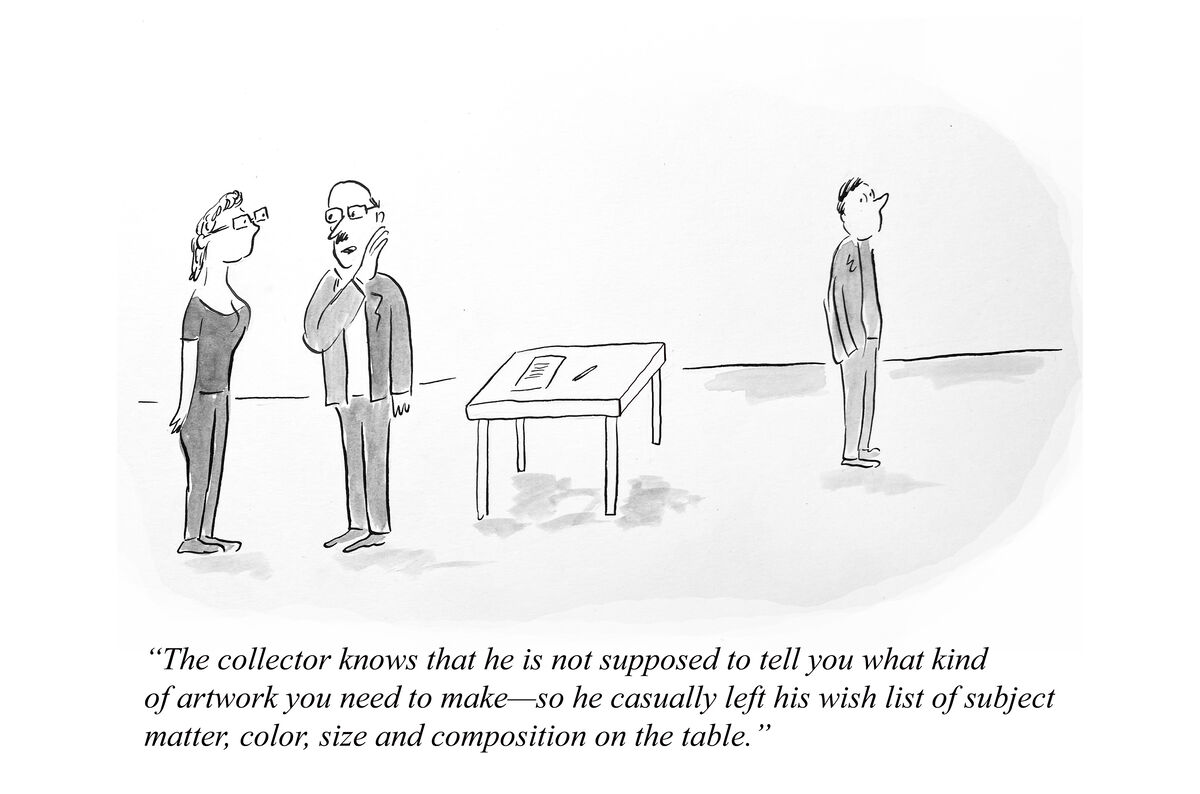
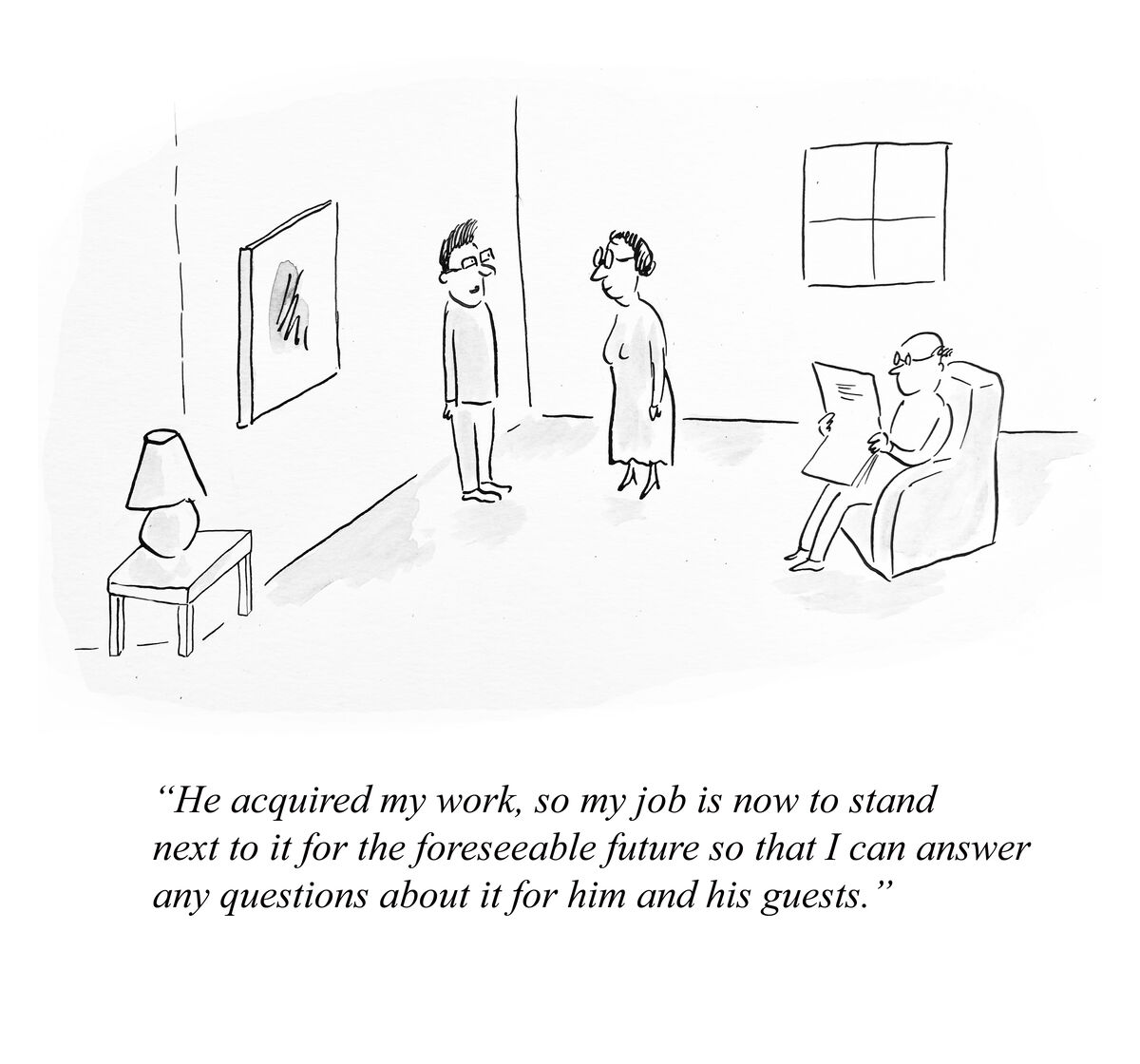
Ethics of Collecting has made the code available to the public via their website. In order to make their points as clear and accessible as possible, they commissioned a series of comics by the artist Pablo Helguera that humorously illustrate typical industry scenarios. In addition, the site also includes a self-assessment test that quizzes collectors on how familiar they are with best practices.
The collective’s plans for the near future include a workshop at the influential Delfina Foundation in London and ongoing engagement with art fairs to put the codes into practice. “In 2022, we’d like to be proactive,” said Pepe. “The image of an enthusiastic buyer with a passion for possessing things for private enjoyment excludes our duties to artists, institutions and the public. Owning an artwork comes with responsibilities.” 


Saturday, March 12, 2022

Ukrainian Writers Are Contributing


How Ukrainian Writers Are Contributing to the War Effort

Kate Tsurkan Reports from Chernivtsi

A little over a week has passed since Russia left a lasting stain on the notion of Pax Europaea by launching a full-scale invasion into Ukraine. Chernivtsi, the once-quiet town in the west of Ukraine where I live, has been spared from violence for now. According to local government officials, the city of poetry and Paul Celan has become a safe haven for over 12,000 refugees from across Ukraine. Yet, we are collectively rushing to basements or cowering in corridors at the ever-increasing number of air raid sirens.

Before the start of this war, I devoted my life to literature: translating, writing about, and publishing Ukrainian authors. Ukraine is not the country of my birth, but it has been my home for four years. I’ve done all that I can to inspire this love for Ukraine in others, but during the past week I haven’t touched a single book. Instead, I’m checking up on a lot of these authors to make sure they’re in (relative) safety and peace of mind. How will words help rebuild great Ukrainian cities like Kharkiv, which the Russian army is currently leveling to the ground?

Words might be failing us during this difficult time, but many Ukrainian writers have found ways other than writing to do their part: they have stepped up and made important contributions to the war effort by volunteering or taking up arms.

Oleh Sentsov became known to the world after he was arrested on trumped-up terrorism charges for protesting the Russian annexation of his native Crimea. He spent five years in a Russian penal colony and pushed himself to the brink of death during a hunger strike that lasted 145 days. Since his return to Ukraine in a prisoner exchange in 2019, he has been artistically thriving. His satirical alien invasion novel The Second One’s Also Worth Buying is a thinly veiled allegory of the Russo-Ukrainian war, published in 2020; his film Rhino about criminal gangs in 90s-era Ukraine premiered to positive reviews shortly before this latest escalation began.

Now every update on his Facebook features him in army fatigues; he has joined the Territorial Defense Forces. “We are resisting and Putin’s army is losing,” he says in one video. “We will win this war because we have no other choice. I’m very grateful for the support of the whole world. Now everyone has realized who Putin is and that he is a threat not only to Ukraine but the whole world. The whole world is supporting us now because our collective future depends on winning.”

Likewise, Stanislav Aseyev was impacted by this war on a personal level long before the events of February 24. The journalist stayed behind in his native Donetsk, an industrial region in eastern Ukraine, after it was occupied by Russian forces. Aseyev wanted to report the truth about what was happening there, but in the summer of 2017, he was arrested by agents of the so-called Donetsk People’s Republic on fabricated espionage charges and sent to Izolyatsia, a former factory and art center that was transformed by the occupiers into a prison.

“I just don’t have time to be afraid or cry and I see that thousands of Ukrainians feel that way, too.”

Those imprisoned in Izolyatsia are subjected to both psychological and physical torture; women are brutally raped by the prison guards. Most of the prisoners are Ukrainian civilians who found themselves in the wrong place at the wrong time, while others are former agents of the DNR swallowed whole by its death cult. Aseyev would spend nearly two and a half years living through this daily hell until he was released in a second prisoner exchange in 2019. Since then, he has traveled the world to spread the message about Russia’s ongoing war crimes in Donbas and wrote about it in his book The Torture Camp on Paradise Street. He was in Kyiv last week when Russia invaded: the explosions awoke him from his sleep. After making sure his mother was safe in the west of Ukraine, he returned to Kyiv to join the Territorial Defense Forces. When we last spoke on Friday, he told me that the situation in Kyiv was more or less under control, but the fight is not yet over.

Artem Chapeye is yet another Ukrainian author who took up arms after Russia invaded. Before the war, he was known for both his popular fiction and creative nonfiction. He is a four-time finalist for the BBC Ukraine Book of the Year Award, one of the most prestigious prizes in the Ukrainian literary world. He had recently begun exploring his passion for photography and his visual storytelling earned the praises of some news media outlets in Ukraine. He is a self-proclaimed pacifist, not someone you’d ever imagine going off to fight in a war. Yet after Russia launched their invasion, Chapeye evacuated his family from Kyiv to safety and immediately enlisted. “I’m still anti-war,” he told me on Friday, “but I have no other choice. There’s so much human suffering. I know we’ll win, but at what cost?”

Those who cannot take up arms do whatever else they can; every single person has a job to do in this war. If there are no air raid sirens or gunfire outside of your house, then it’s understood that your job is to help people. All of us located in western Ukrainian cities run from one pharmacy to the next and gather as many medical supplies as possible for soldiers on the frontlines. We field calls from friends, acquaintances, and total strangers seeking safe shelter. Nobody knows how long it will last, only that there is already an immeasurable amount of people in need after the first week.

In Chernivtsi, many of the volunteer efforts are being led by young people, including the poet and artist Khrystia Vengryniuk, whose work is deeply influenced by her Catholic faith. She has led numerous volunteer projects to help the Ukrainian Army and refugees since the war began in 2014 and this time around is no different—except that she is pregnant. “This week has completely changed the lives of every Ukrainian, including mine,” she told me. “When we heard that the war had started, my Bulgarian husband had a look of confusion in his eyes because he never had to live through this, while I’ve been preparing myself for what needs to be done since 2014. I told myself that I had to get up and go volunteer, since for obvious reasons I could not join the defense forces. So I continue the work I know I can do. I just don’t have time to be afraid or cry and I see that thousands of Ukrainians feel that way, too.”

Sadly, the Russo-Ukrainian war has been a large part of the modern Ukrainian literary canon since 2014. Some authors even enlisted back then and wrote about their experiences afterward. Yet in those times the war was mostly confined to the Donbas region and did not have the psychological grip on every individual as it does now. It is hard to imagine anyone writing a poem or a novel about this current moment, but someday they will.

Ukrainian writers will weave tales of bravery and heartbreak for school children to recite in school, as they do with the works of Taras Shevchenko or Ivan Franko. Until then, Ukrainian authors are taking part in the fight to secure Ukraine’s future. It’s not possible to mention every single author who is doing something for the current war effort, and to simply list their names would feel like a disservice to their contributions. But they, like every Ukrainian, are making their country proud. I just hope that the world will continue to be interested in and admire Ukrainian culture even when the fighting stops.


Kate Tsurkan
Kate Tsurkan
Kate Tsurkan is the co-founder and editor-in-chief of Apofenie Magazine and a TAULT translator and board member. Her written work has previously appeared in the Los Angeles Review of Books, Asymptote, The Calvert Journal, and Arrowsmith Press Journal.


Friday, March 11, 2022

Ukrainian Poetry


“Every hut in our beloved country is on the edge.” Contemporary Ukrainian Poetry by Boris Khersonsky

Translated by Amelia Glaser and Yuliya Ilchuk

The 19th-century Ukrainian Romantic poet, Taras Shevchenko (1814-1861), wrote most of his powerful verse from exile. Born a serf, Shevchenko was (anomalously) sent by his master to study art. Fellow artists from Ukraine and Russia helped to raise money to buy his freedom. He later became a member of the Ukrainian “Brotherhood of Cyril and Methodius,” a group devoted to promoting Ukrainian self-determination within the Russian Empire, and the liberation of the serfs. He was arrested for his political activity in 1847, and sentenced to a series of exiles. He died in 1861, the year the serfs were liberated, having not seen Ukraine in 15 years. In 1845 he wrote his well-known “Testament,” asking to be buried in his beloved Ukraine. It begins:

Як умру, то поховайте
Мене на могилі
Серед степу широкого
На Вкраїні милій,
Щоб лани широкополі,
І Дніпро, і кручі
Було видно, було чути,
Як реве ревучий…

When I die, let me rest
Buried in a grave
On the wide steppe
In my dear Ukraine,
Where the broad-rimmed fields
And the Dnipro, and cliffs
Are visible, so I can hear
How the roaring roars.

Shevchenko’s “Testament” remains an anthem for Ukrainian national sentiment. It’s a poem of longing, written by a man who is separated from his native rivers, cliffs, and steppe. It shows off the alliterative power of the Ukrainian language. Dozens of musical scores have been written to accompany this poem. Soviet poets who couldn’t publish their own work at the height of Stalinism, from the Russian poet Boris Pasternak to the Yiddish poet Dovid Hofshteyn, translated Shevchenko instead.

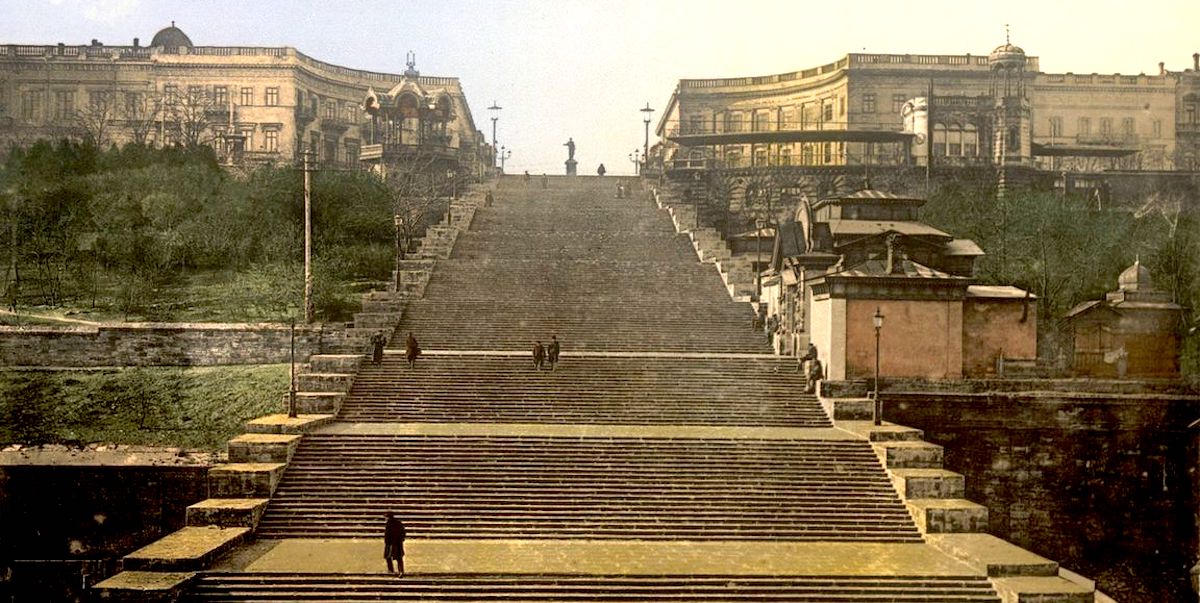
Little wonder, then, that after the Russian-language Odessa poet, Boris Khersonsky, began to write poems in Ukrainian in solidarity with the 2013-14 Maidan “Revolution of Dignity,” he wrote a version of “Testament.”

Як умру, то не ховайте
мене на могилi.
Хай несуть мене до неба
полум’янi хвилi.
Хай розвiє сiрий попiл
повiтряна сила,
бо йому, щоб полетiти,
не потрiбнi крила.
Бо нема землi на свiтi,
щоб назвав своею.

When I die, don’t let me rest
Buried in a grave
Let the waves of fire carry
Me up to the sky.
Let the windy powers dispel
The gray ash, let it scatter
For, no wings are necessary
For this ash to fly.
For no land in all the world
Can be called my own.

Khersonsky is a psychiatrist and professor in Odessa. He has written about the shtetls of his Jewish ancestors, his estrangement from his heritage, the stagnant presence of Soviet memorials in Ukraine, and Orthodox Christianity, to which he converted. If Shevchenko’s poem is about spiritual rootedness, Khersonsky’s is about rootlessness. “It’s my destiny to fly overhead,” he writes further, “with the Jewish ashes from the Holocaust.”

The fact that a Romantic Ukrainian poet can be a vehicle for talking about alienation in 21st-century Odessa is important. Khersonsky, who was a dissident in the late Soviet period, is an outspoken critic of the Russian military and cultural presence in Ukraine. His early poems of the Donbass war, read as Russian forces move toward Odessa, appear tragically prescient.

In one, he presents Ukraine as a woman, eternally pregnant with Russia’s thieves “thieves and bandits”—a reference to the Ukrainian heroine in Shevchenko’s “Kateryna,” who is left alone with a Muscovite’s child. But Khersonsky has also criticized ideas about a monolithic Ukrainian identity, and his “Testament” suggests that the Jewish story of loss is part of Ukrainian identity: “Sing to me, Ukraine,” he writes further in the poem, “a simple lullaby.”

“We’ve been at war, but we’ve also started to know freedom.”

A poet who embraces his eclectic mixture of identities, Khersonsky frequently presents biblical texts, from either the Hebrew bible or the New Testament, sometimes setting the two at odds with one another. “Abraham is walking” appeared just before Easter, in 2020. During the early months of the Covid-19 pandemic, when the virus hit Odessa especially hard, Khersonsky posted “Korona-virshy” (Corona-verses) to his Facebook page.

When I met him in Odessa in 2019, he spoke of the paradox of the ongoing war: “We’ve been at war, but we’ve also started to know freedom.” Now that the country is actively defending itself against the invasion of its cities, the concept of freedom—and of a freely chosen civic-based patriotism—is more central than ever to Ukrainians.

The poems here were all written in the aftermath of the Maidan protests, during the war against separatists in the Donbass.

–Amelia Glaser, Cambridge, MA

*

Kids, here’s a geography lesson.
Here’s a map. Let’s memorize it.
There’s no Siberia or Kolyma in Ukraine.
And here’s the Vladimirsky highway, off to the side,
Way off to the side, I’m certain, though not completely. This is a geography lesson.
This land won’t go to waste.
There’s not enough space, no place to build huge camps,
it’s not that we’re cramped and angry
but, compared to Russia, we don’t have the expanse.
And we have no taiga, and the snow isn’t so white,
and the shackles have rung out less on our roads, but the sabers more often and the church bells were louder, and we’ve never cared much about the universe but about our own housekeeping.
But this is all psychology, and now it’s time for our geography lesson. A local lesson, from the front door to the gate.
Every hut in our beloved country is on the edge.
And to be honest, I’m on the edge, too.
I feel sorry for the ones at the center, but really I’m especially sorry for the ones in the camp towers, watching the frosty distance.
I’m sorry for the land beneath the searchlights, I’m sorry for the collective-farm cows rumbling from hunger.
There’s no poetry in all this. I accept this rebuke.
This is only a geography lesson. Kids, learn this lesson.

Translated, from the Russian, by Amelia Glaser and Yuliya Ilchuk.

*

The devils have come and they say “we are angels.”
The henchmen have come and they say “we are brothers.”
They say “we have come from the light,”
but in truth they have come from the dark.
Did you really believe him, my country?
That he’s yours forever and ever,
that you’ll carry thieves and bandits in your womb,
to doze off in the dirt, and awaken to fire?
Why so silent, won’t you answer?

Translated, from the Ukrainian, by Amelia Glaser and Yuliya Ilchuk.

*

Abraham is walking—old, bearded, severe.
Behind him, Isaac, bent under a bundle of wood,
young, timid, trembling from the strain.
It’s an unbearable weight, a burden like this.
Here comes Abraham. Knife in hand.
Here’s the knife. Here’s the firewood. Where is the lamb for the burnt offering?
Carry this, Isaac, you’re the victim, you’re the two-legged lamb,
But the Lord isn’t all that bloodthirsty, His thoughts are pure,
relax, God’s only testing
the bearded ancient’s patience, your earthly father:
Will Abraham trust the Lord to the end?
How this senile face has changed!
His features have sharpened, his eyes grown dull.
Lie down on these logs, Isaac, pawn in a weird world.
Don’t be afraid—here’s an angel—he’ll intercept that hand and knife
and here’s the ram, horns caught.
The ram will be stabbed and burned before God.
It all ended well. But you’re still tense
youthful Isaac, a sacrifice for all the living.
You bent low under the firewood’s weight, Isaac, bent low, but carried it.
Like you, Christ too will carry his cross,
exhausted, thrice falling in the via dolorosa.
But Christ’s angel-savior didn’t fly from heaven.
He died, then he rose again, in that order.
Arose, and then ascended, according to that famous book.

Translated, from the Russian, by Amelia Glaser and Yuliya Ilchuk

*

What can I say today for my native Ukraine?
What can I say today for myself?
Soul, you are like instant decaf,
that leaves no coffee grounds, dissolved in an abyss.
And the abyss says, I won’t forgive you
not for your jokes, your grief, your indignation.
Because I look at you, but I can’t see you,
and your life is like an electric current.

Translated, from the Ukrainian, by Amelia Glaser and Yuliya Ilchuk.


*

the virus is totalitarian—breaking through the shell
he penetrates and subjugates each cell
turns a room into solitary confinement
puts us back under the whiskered forefather’s heel
he closes borders he separates couples
he sweeps groceries from the shelves with a filthy broom
he turns beds into hospital cots
he compels us to smuggle contraband goods
he turns neighbors cruel, if it weren’t for fear of getting it
they’d gnaw through one another’s throats
the virus drives everyone, distorting faces
we start to walk in circles like in a prison yard
the virus is the leader he’s a jailor he’s the screw
you’ll die, your face deformed by rage, if you disobey him
he takes all for himself and gives directives in exchange
for everyone to sit alone and fear contamination

Translated, from the Russian, by Amelia Glaser and Yuliya Ilchuk

____________________________


Boris Khersonsky was born in Chernivtsi in 1950. He lives in Odessa, and is the former chair of the psychology department at the Odeaa State University. He has published over a dozen books of poetry in Russian and Ukrainian.

Amelia Glaseris Associate Professor of Russian and Comparative Literature at U.C. San Diego. She is the author of Jews and Ukrainians in Russia’s Literary Borderlands(2012) and Songs in Dark Times: Yiddish Poetry of Struggle from Scottsboro to Palestine (2020). She is currently a fellow at the Radcliffe Institute for Advanced Study.

Yuliya Ilchuk is Assistant Professor of Slavic Languages and Literatures at Stanford University. She is the author of Nikolai Gogol: Performing Hybrid Identity(2021).