After weeks of mounting tension, and growing fears that a war in Europe was imminent, Russia’s president Vladimir Putin announced a “special military operation” against the Ukraine. The rest of the world was in no doubt: Russia’s invasion of its western neighbour had begun.
How did it come to this? Olivia Durand sets out how Putin has been softening up the world for this moment for years. In 2014 he wrote: “Kiev is the mother of Russian cities.” A few days later Russia completed the annexation of Crimea. Eight years later he has returned to this theme – backed by the might of Russia’s armed forces. Days before the invasion he delivered an hour-long speech in which he made clear his desire to create a third imperial regime. The invasion of Ukraine is part of this masterplan.
In addition to troops on the ground, Moscow has been launching cyber attacks to undermine Ukraine’s defence capabilities. Mamoun Alazab explains.
A war in eastern Europe may feel distant to many in the world. But the ripple effects are already starting to be felt. As Wandile Sihlobo warns, African leaders in particular should pay attention because Russia and Ukraine are deeply embedded in the world’s agricultural and food markets. The conflict has already fed through into a spike in commodity prices. African countries are going to be hit hard. In 2020 African countries imported agricultural products worth US$4 billion from Russia – most of it wheat. The major importing countries were Egypt, followed by Sudan, Nigeria, Tanzania, Algeria, Kenya and South Africa.
From the US, William Hauk issues a similar warning: the war may feel very distant, but, there will be an economic cost that Americans will be forced to pay.
Postdoctoral associate in history, University of Oxford
Disclosure statement
Olivia Durand receives funding from Freie Universität Berlin. She is a research associate of the Institute for Historical Justice and Reconciliation. This article was written with the assistance of Katria Tomko, a Research Associate at the Institute for Historical Justice & Reconciliation.
Republish our articles for free, online or in print, under Creative Commons licence.
Vladimir Putin has long insisted Ukraine is part of the country he rules. This was painted more starkly than ever as he announced that Russian troops were undertaking a “special military operation” in its western neighbour. But to the rest of the world, what Russia is undertaking is simply an invasion.
Putin has been softening up the world for its latest foreign policy adventure for some years now. “Kiev is the mother of Russian cities,” he wrote in March 2014. “Ancient Rus is our common source and we cannot live without each other.” A few days later Russia completed the annexation of Crimea. Eight years later, during which time more than 14,000 people have died in a Russian-instigated war of insurgency in the Donbas region of eastern Ukraine, he has returned to this theme – backed by the might of Russia’s armed forces.
The Russian president made this intention crystal clear in an hour-long and fairly wide-ranging speech on February 21. “Ukraine is not just a neighbouring country for us,” he told the Russian people in a national broadcast. “It is an inalienable part of our own history, culture and spiritual space.” He repeatedly denied Ukraine’s right to independent existence – and, at times, that the country exists at all as an independent entity. Instead he appeared to accept the unity of the two countries as historical fact.
In doing so, he revealed the structures of an imperial ideology with a chronology and ambition that goes far beyond post-Soviet nostalgia to the mediaeval era. But to what extent is that ideology shared by Russians?
Our mission is to share knowledge and inform decisions.
One of the striking elements of Putin’s latest speech about Ukraine, which accompanied the recognition of Donetsk and Luhansk as independent states, was his insistence that Ukraine exists as a by-product of Russian history, insisting that “Since time immemorial, the people living in the south-west of what has historically been Russian land have called themselves Russians and Orthodox Christians.”
But he later undercut his insistence of these shared origins, stating that “Modern Ukraine was entirely created by Russia or, to be more precise, by Bolshevik, Communist Russia.” To him, the making of modern Ukraine only started “after the 1917 revolution”, and Ukrainians have “Lenin and his associates” to thank for their state. This was a reference to Lenin’s creation of a federation of Soviet states, the USSR, out of the ethnic diversity of the former Russian empire.
In reality, Ukrainian aspirations for statehood predated revolution by at least two centuries. From the Ukrainian Hetmanate’s 1710 Bendery Constitution to the 1917 establishment of the West and Ukrainian People’s Republics and appeals at the Paris Peace Conference for status, Ukrainians have continuously asserted themselves as a distinct people.
The formation of the USSR was, in part, conditioned by the previous creation of these two independent Ukrainian Republics in the aftermath of the revolution and the disintegration of the Austro-Hungarian Empire. These republics stemmed directly from the 19th century Ukrainian romantic national movement that reassessed the impact of the Cossack past, fuelling the development of an identity centring on a distinct language, culture, and history.
When the Bolsheviks, Lenin at their head, took control over the Ukrainian territories, the idea of Ukraine as an independent nation could not be ignored, and led to the independent status – on paper – of the Ukrainian Soviet Republic in 1922.
What Putin’s address reveals is the desire to plot Russian and Ukrainian history through the lens of imperialism. He is attempting to establish a direct line from shared ancient origins to a first and second Russian empire: one under the Romanov Tsars (1721-1917) and the second as part of the USSR.
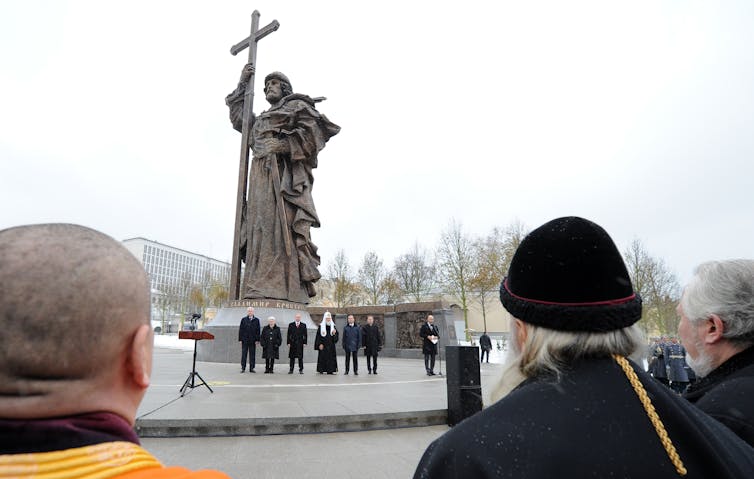
Shared history? Russian president Vladimir Putin and other dignitaries at the inauguration of a statue to Volodymyr/Vladimir the Great in Moscow, November 2016, claiming sole ownership of a central figure of the Kyivan Rus’.EPA/Dmitry Astakhov/Governmental press service/pool
Across those two imperial epochs, Ukraine is reduced to a tributary state and mentions of national aspirations are smothered. This is precisely the message that the Kremlin continues to disseminate in the 21st century.
A lack of popular appetite
But what does the Russian public believe? Three decades ago, when the USSR collapsed, only rare and often ultra-nationalist politicians resorted to imperial history in imagining Russia’s post-soviet future. As early as the 1990s, ultra-nationalist politician Vladimir Zhirinovsky advocated ceasing coal supplies to Ukraine as a tactic to bring back Russia’s lost territories, but he remained a fringe figure in Russian politics.
Still, in 2011 and 2012 Global Attitudes surveys conducted by Pew Research Centre, support for imperial ideology was not insignificant. When asked whether “it’s natural for Russia to have an empire”, only 31% of Russian respondents disagreed. Whether nostalgia for empire translates to appetite for war to “regain territory” remains unclear.
It is impossible to paint all Russian perceptions of Ukrainians with the same brush. Russian feelings toward their neighbour have historically ranged from genuine feelings of brotherhood and warmth to virulent expressions of xenophobia manifesting in episodes of ethnic cleansing, such as the 1932 orchestrated famine known as the Holodomor.
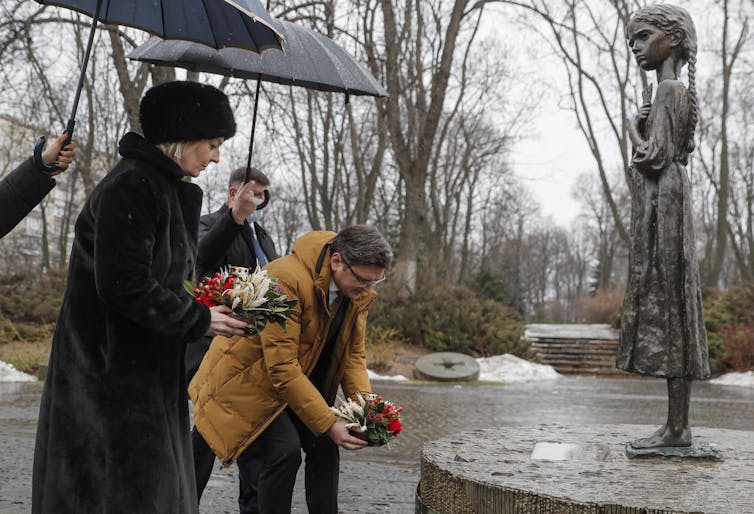
Painful past: a memorial to the Holodomor, or famine, that stalked Ukraine in the 1930s.EPA-EFE/Sergey Dolzhenko
But when it comes to the question of how Russia should position itself with regards to claiming eastern Ukrainian provinces as long-lost parts of the “Russian empire”, opinion is more clearly divided. Only 26% of Russians wanted the Donbas to become part of Russia, while 54% are in favour of varying forms of independence (within Ukraine or separate). War remains an unpopular choice, with only 18% of Russians unreservedly supporting armed conflict in defence of the two breakaway republics in a poll from April 2021.
Post-Soviet neo-imperialism
Ultimately, the use of “empire” as an ideology reveals Russia’s yearning for – or sense of entitlement to – a third imperial regime. The rhetorical and physical erasure of Ukrainian history and identity makes it much easier to assert claims of shared Russian heritage. This will be important to bear in mind as we watch the development of this renewed conflict over Ukraine.
Parallels with other formerly colonised peoples abound. But, as Kenya’s envoy to the UN put it, no matter what conditions presided over the drawing of modern borders, “we must complete our recovery from the embers of dead empires in a way that does not plunge us back into new forms of domination and oppression.”
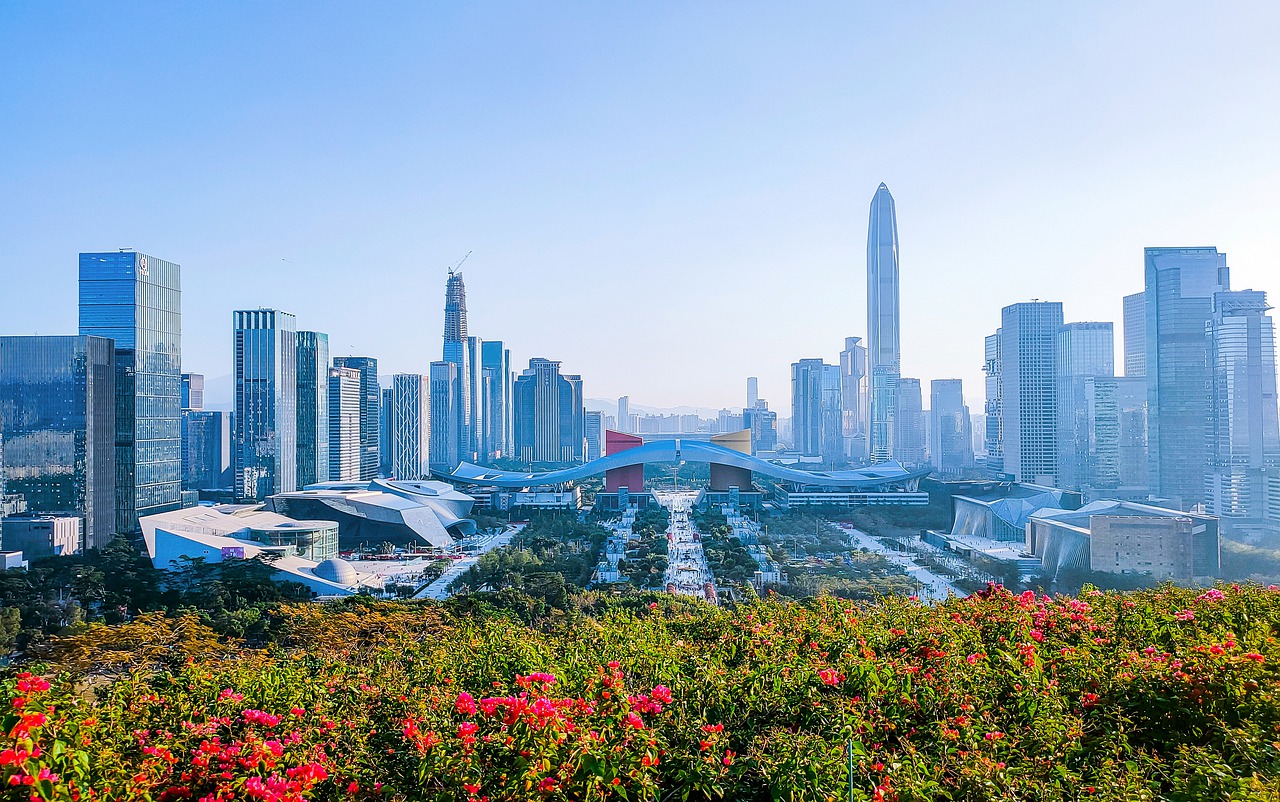
There’s a phrase originating in Shenzhen, China translates to: “Time is money, efficiency is life” — and over the last forty years the city has wasted no time in becoming one of the most productive manufacturing hubs in the world. But along with making 90% of the world’s electronics, it’s also a place that is known for producing lots of convincing, high-end knock-offs. Shenzhen even has a mall that’s famous for its faux versions of big designer brands.
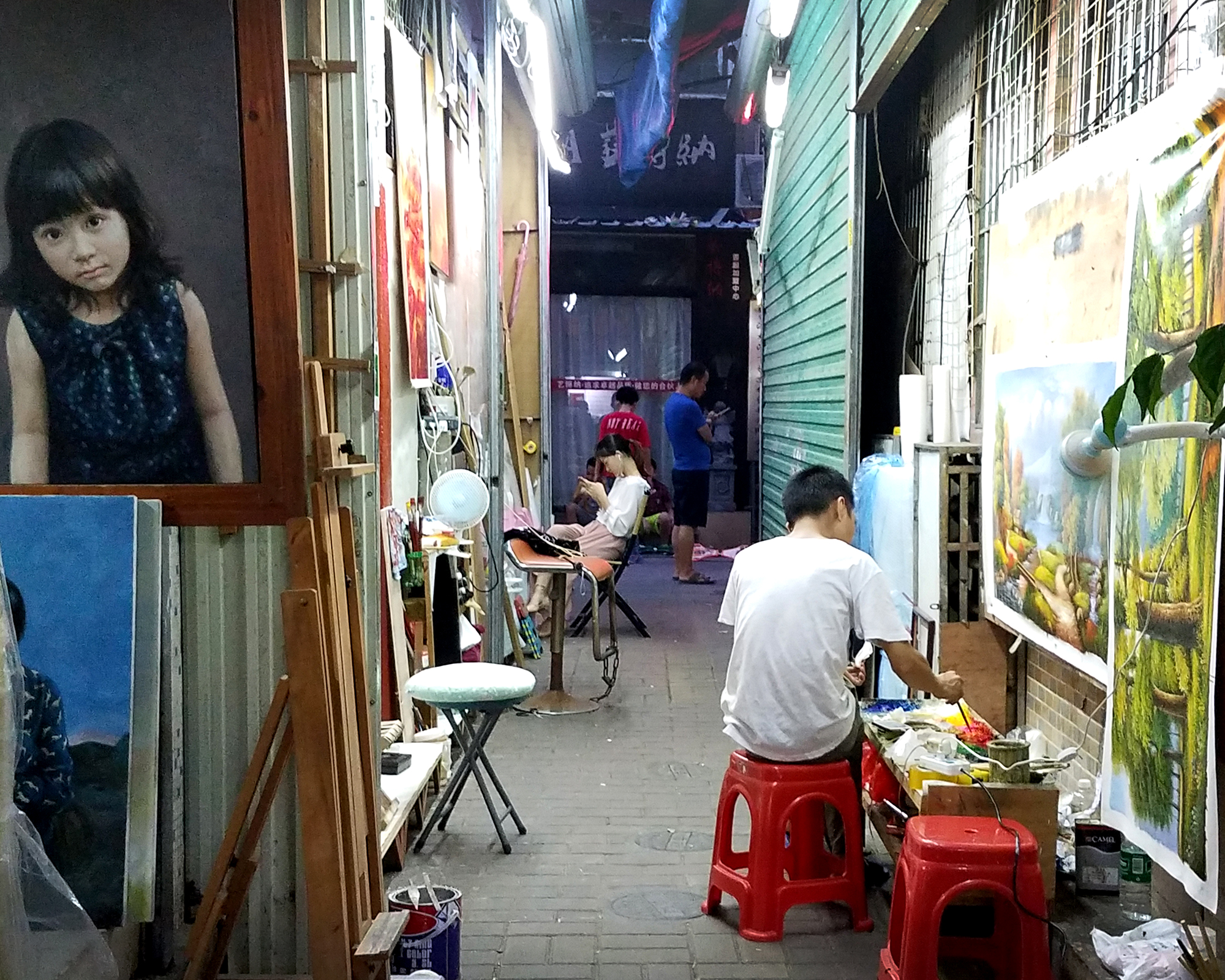
But there’s a small neighborhood within Shenzhen that leaves visitors rethinking the line between “fake” and “authentic.” It’s an area known for mass-producing copies of the most celebrated works of Western art, all painted quickly and by hand. The place is called Dafen Village.
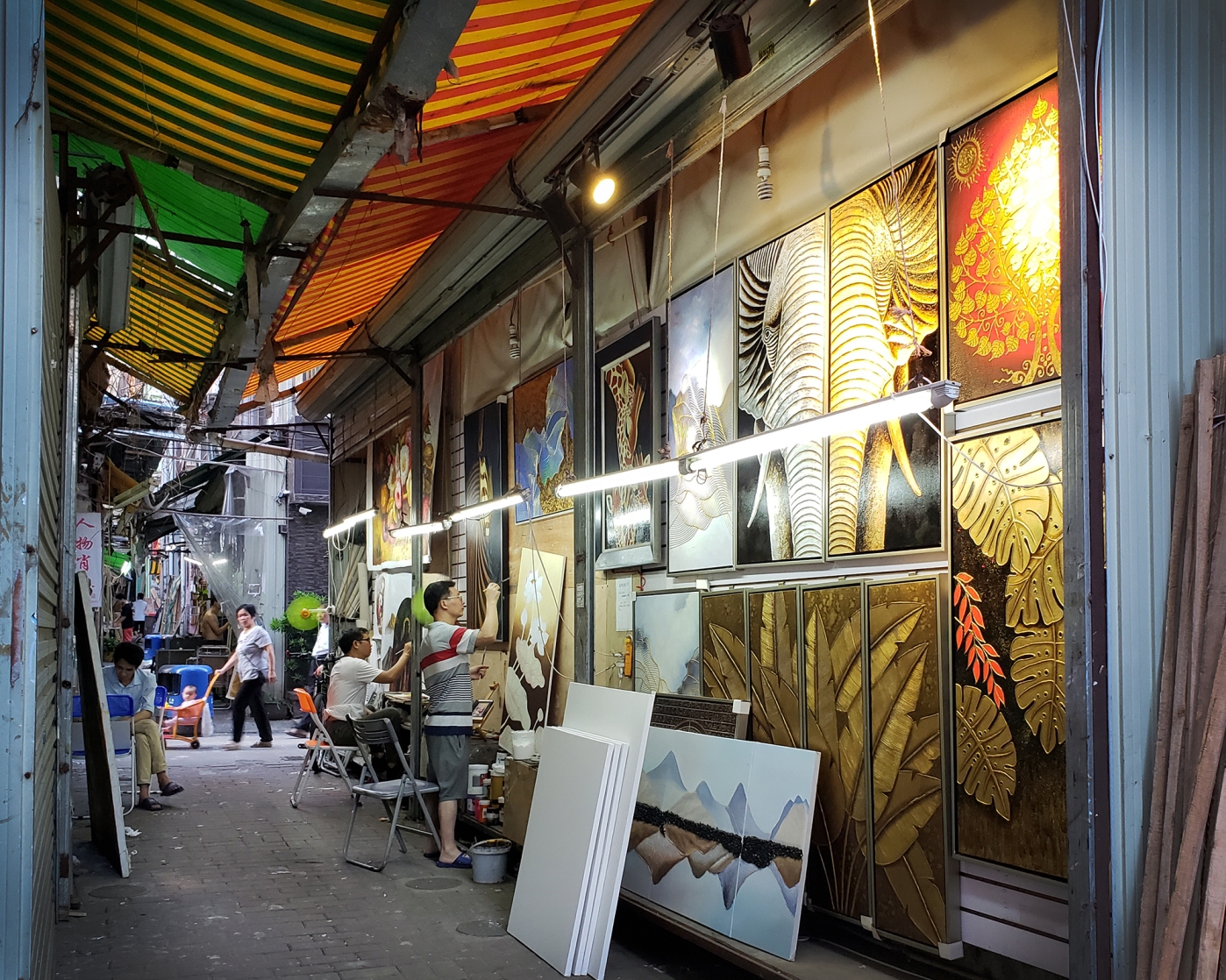
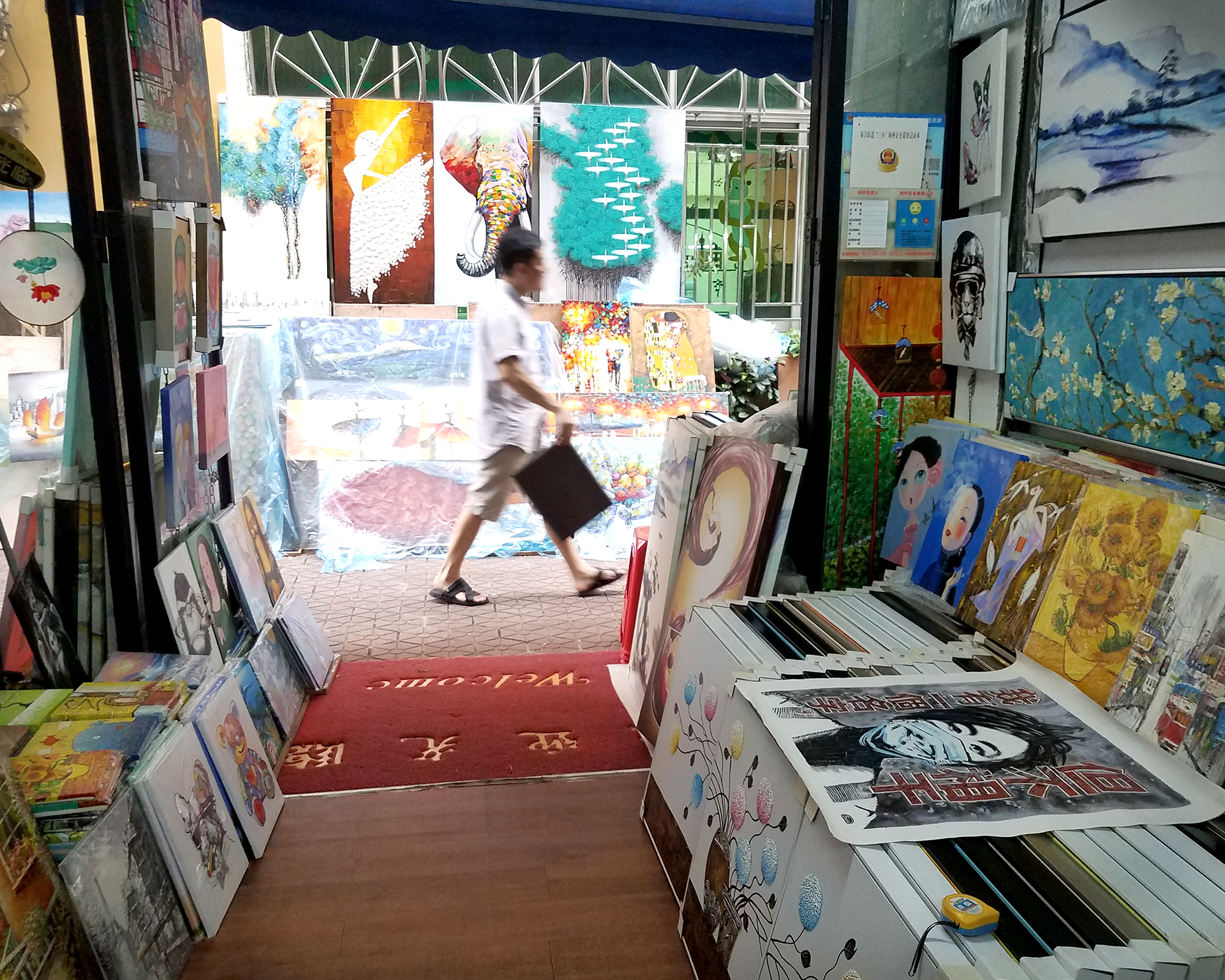
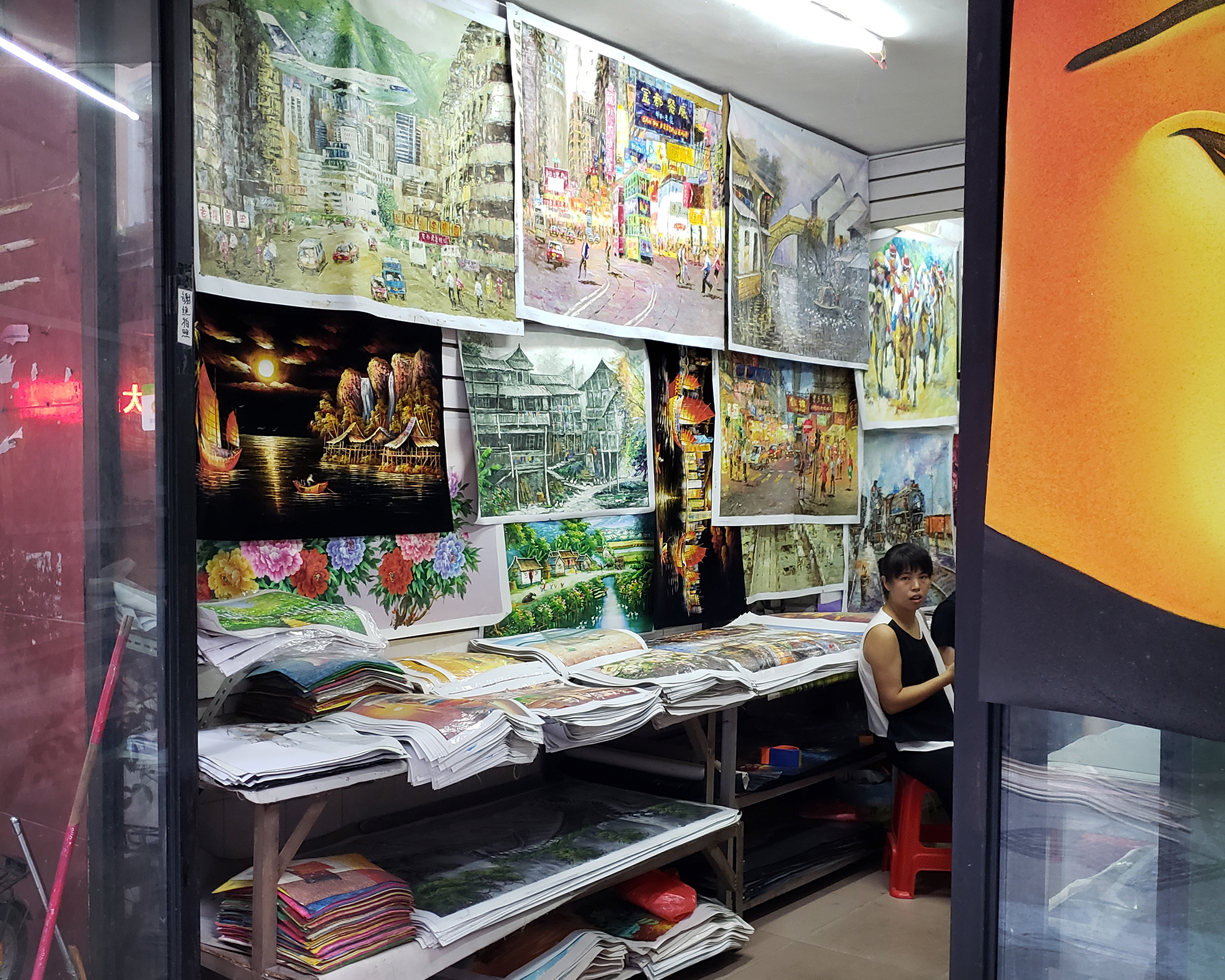
Dafen artist village image courtesy of Eddie Colla
People typically think of the craft of oil painting as a slow, meticulous and even romantic process, but the pace is dramatically different in Dafen. At its height, 60% of the world’s oil paintings were made in this .four square kilometer village by Chinese workers. This type of manufacturing is called trade painting, which is not necessarily capital-A “Art” — it doesn’t command the same kind of respect because it’s made quickly and cheaply in order to sell as generic decor.
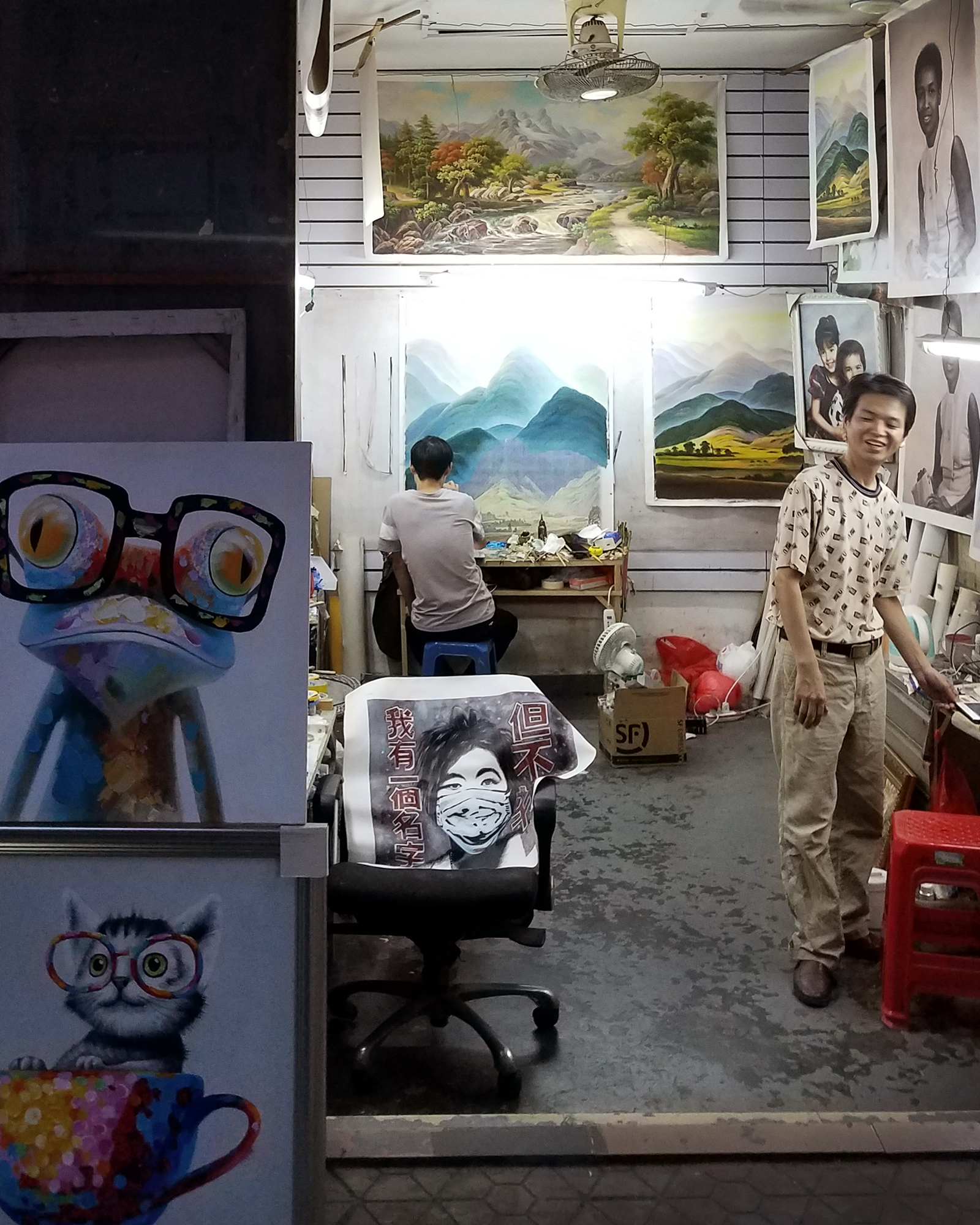
Dafen artist village courtesy of Eddie Colla
There is a very good chance that you’ve been in the presence of a painting made in Dafen. Perhaps you passed by one at the dentist’s office, or in a conference room of a Marriott in Orlando. You may have even hung one up in your home without even realizing it.
Dafen is a place that’s been vilified, romanticized, and analyzed since it came into the world’s collective consciousness specifically because of what it manufactures — oil paintings that in other parts of the world are framed differently. We all accept that various technological and decor objects, like a ceramic vase or pot, are “crafted” and not “art,” but perhaps there’s more nuance than simple binaries might suggest.
Change of Pace
Prior to the 1980s, the city of Shenzhen was mostly farmland and Dafen was just an ordinary rural village, not really known for anything in particular, let alone art. But Dafen’s fate was very quickly transformed by a monumental moment in modern Chinese history: the creation of the Shenzhen Special Economic Zone, which gave the area a unique legal status that came with an array of tax advantages.
As Shenzhen rapidly transformed throughout the 1980s, businesses started moving there for the cheap real estate, inexpensive migrant labor, and low cost of living. Many of these businesses came from neighboring Hong Kong, including one early enterprising businessmen (who was also a former painter) named Huang Jiang. According to the plaques in Dafen, in 1989, he traveled from Hong Kong and rented out a residential building in Dafen to manufacture and export oil paintings. He recruited a team of twenty painters and began churning out hand-painted copies of Picassos, Van Gogh’s and Da Vinci’s.
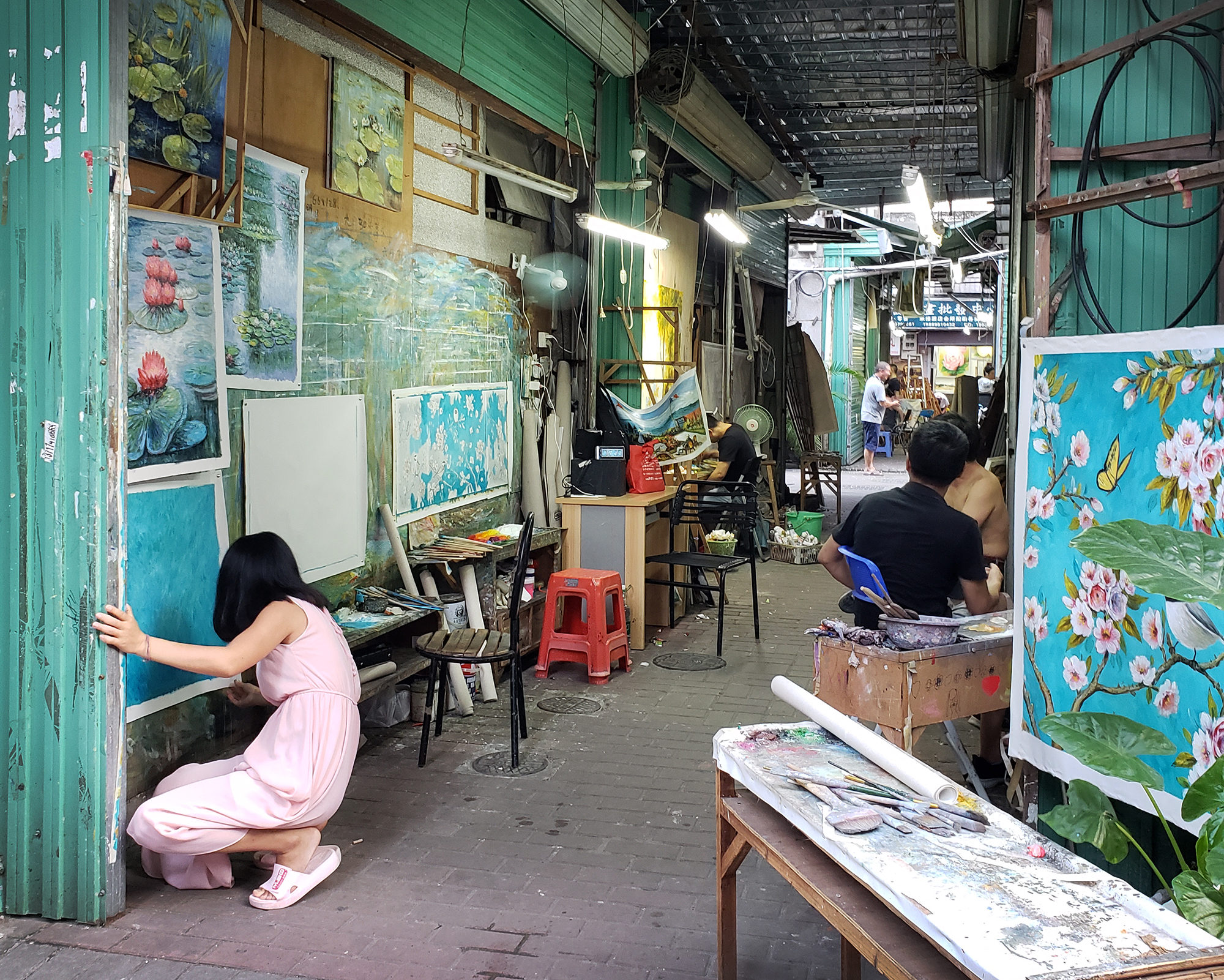
“I taught them to paint as if they were on an assembly line,” Jiang recalls. “Some painted a sky, some painted mountains, and others painted trees.” This made it easier for them to mass produce. In part, Jiang and others like him picked canonical works because for the most part they were old enough to fall outside of Chinese copyright protections. Plus, it made their products internationally appealing.
All around Hong Kong, hotels, financial centers, and airports were being built, and those brand new buildings needed to be decorated with lots of cheap, nondescript art. And those connections to Hong Kong were important because that was the gateway to businesses in the West. Dafen’s oil paintings were sold and exported to hotels, real estate developers, and retailers like K-Mart and Walmart, and painters were churning out wholesale orders just as quickly as the western businesses were gobbling them up.
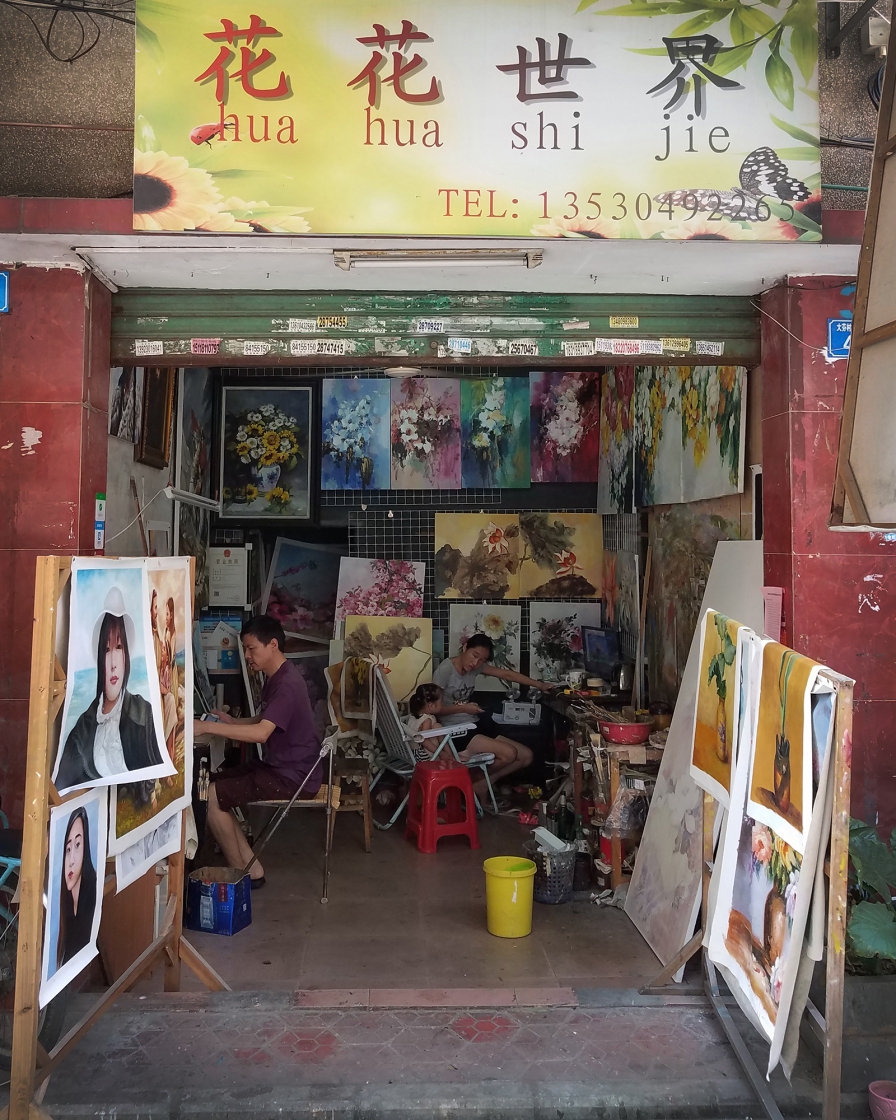
Dafen artist village image courtesy of Eddie Colla
Like other parts of China dedicated to specific products, like buttons or violins, Dafen had its niche: oil paintings. By the late 1990s, Dafen had exported millions of artworks and the streets were becoming packed with painters, people stretching canvases, art supplies, and more. And one could find all sorts of paintings in Dafen. The most well-known were the replicas of famous works of Western art: the Mona Lisa, the Birth of Venus, and so on. But there was also a smaller market for original creations by local artists. Alternatively, buyers could commission painters to copy any image they desired to replicate.
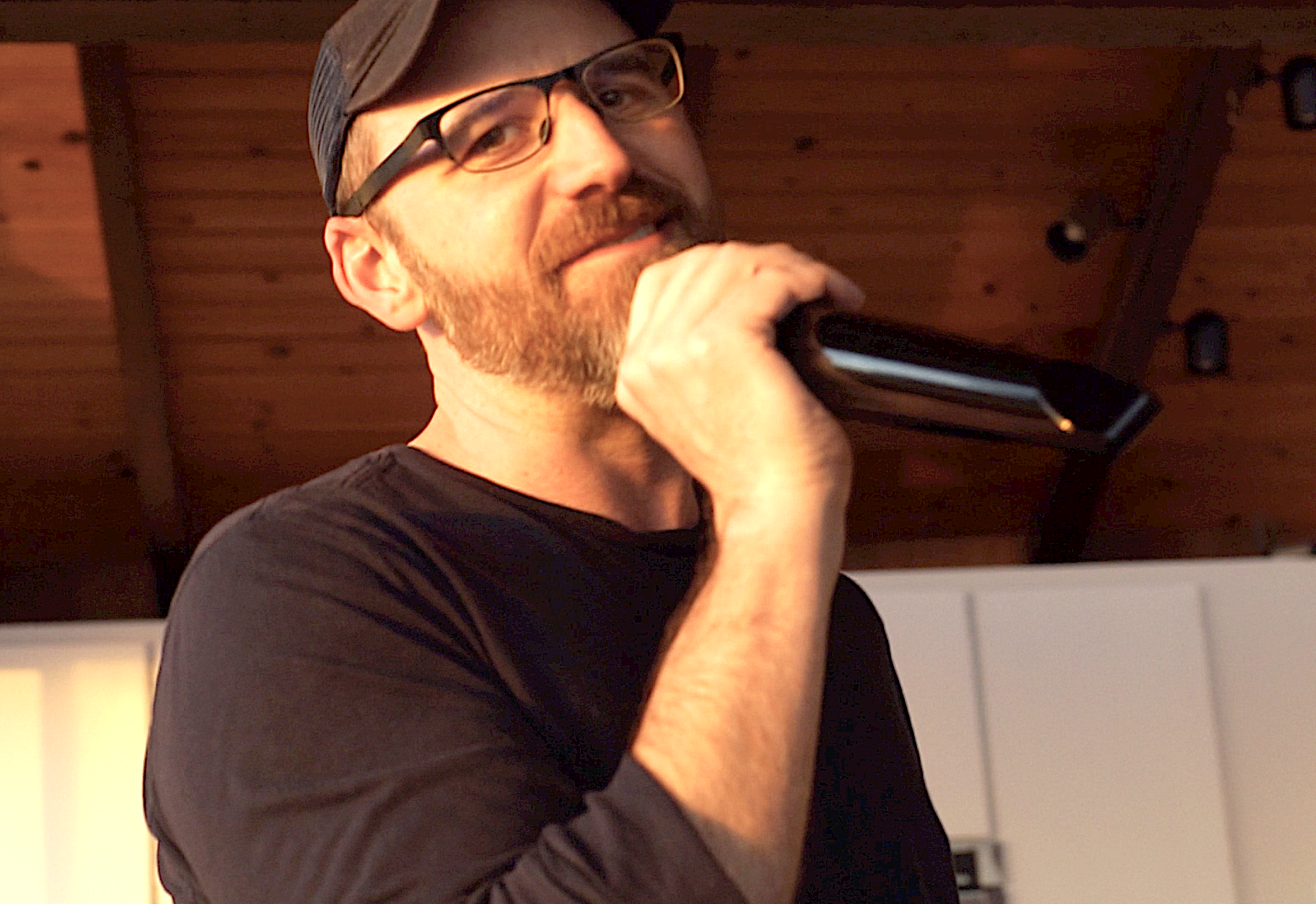
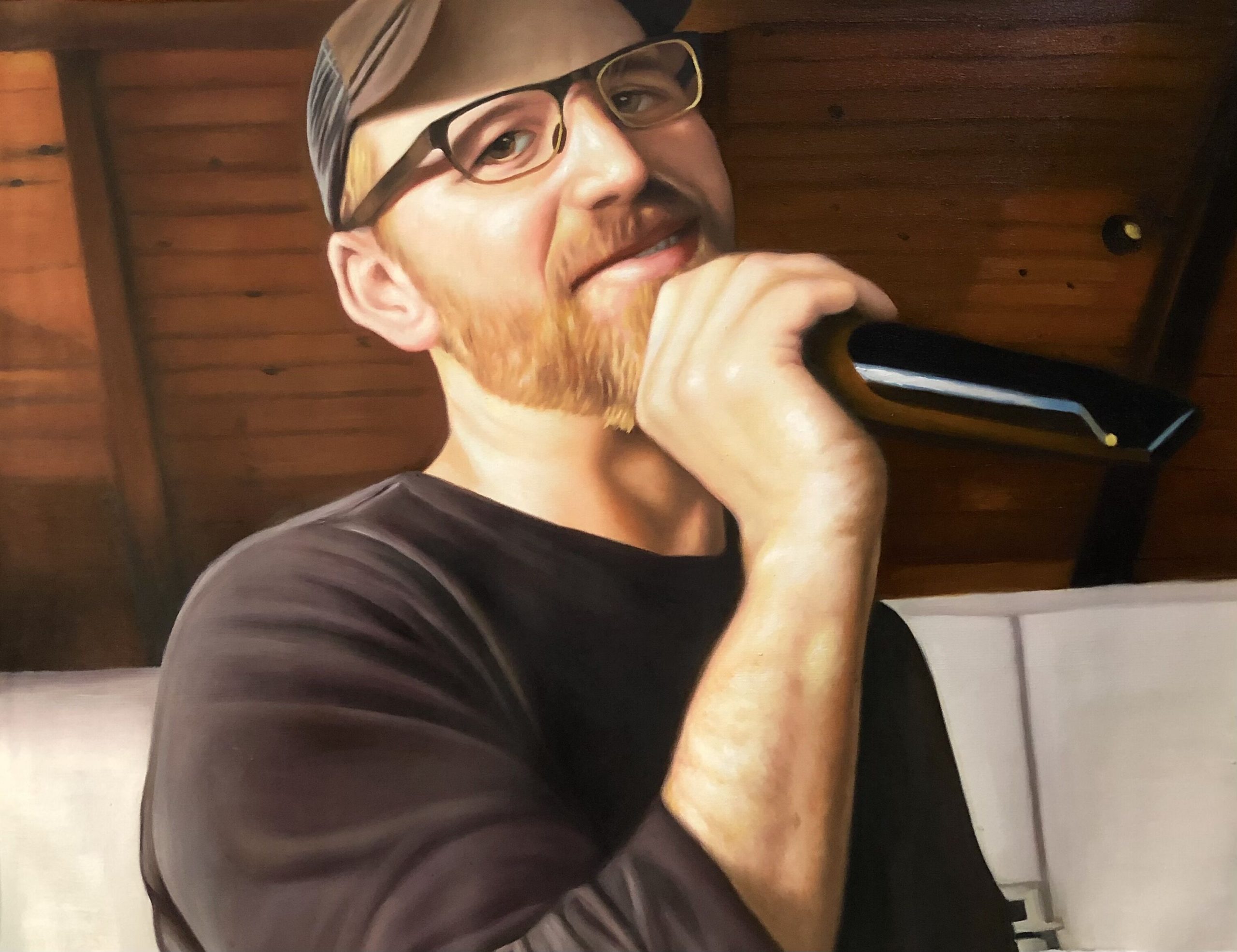
Photograph (above) used as reference image for subsequent oil painting (below)
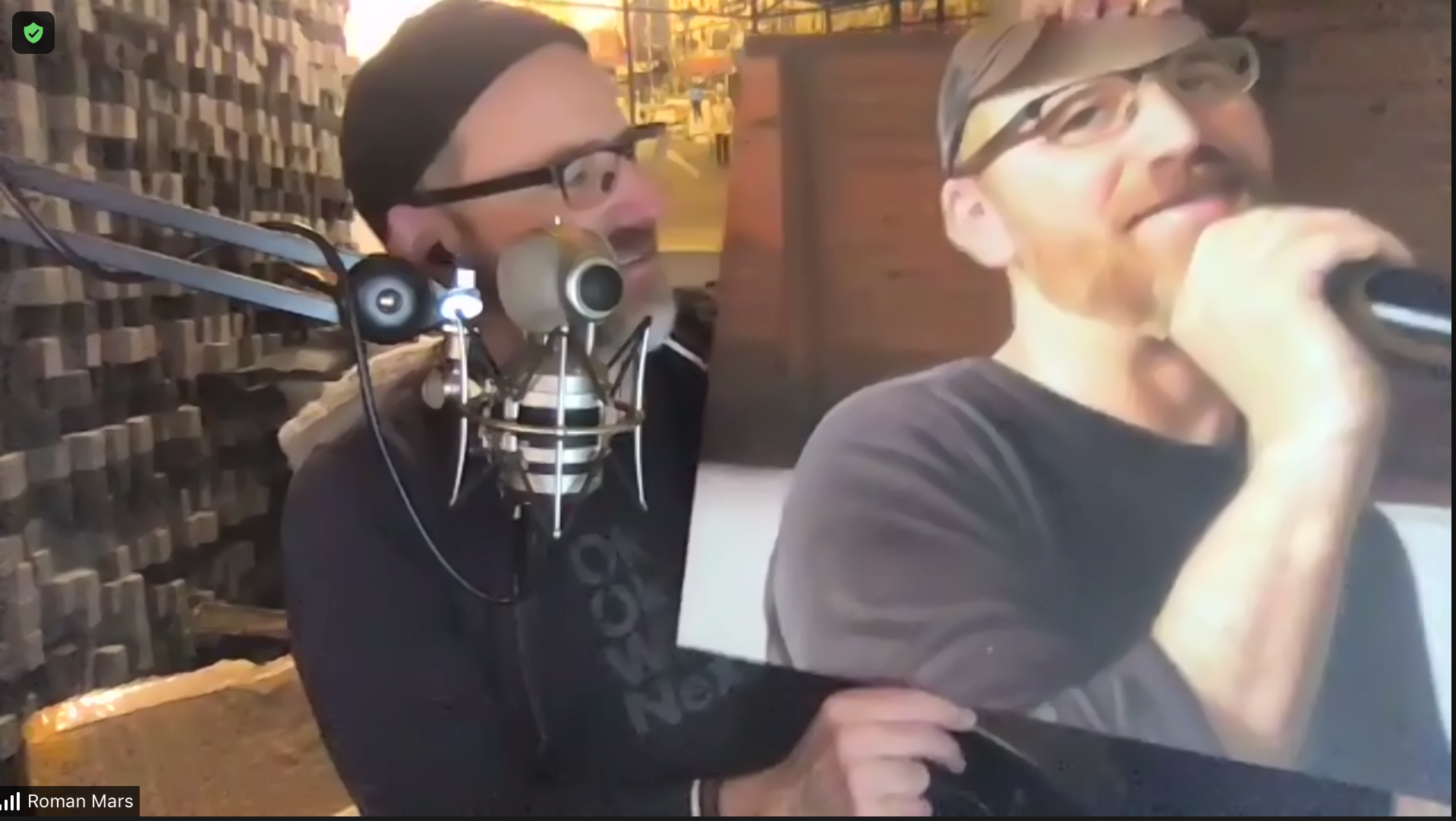
One could, for instance, take a photo of one’s boss singing karaoke, then commission an artist from Dafen to turn that into an oil painting.
Roman Mars singing karaoke, painting commissioned from Dafen by Vivian Le
From a technical perspective, the lowest-paid work is generally the easiest: Van Goghs don’t demand as much as Impressionist paintings, which in turn are easier than Neoclassical works. Repetition, a strong network of workers, and efficiency enable Dafen painters to fulfill large wholesale orders. Wong says that the average painter could produce 1-2 paintings a day, but experienced workers could churn out much more by developing shortcuts and custom tools to get desired visual effects.
In the early days, painters in Dafen mainly came from rural farming backgrounds who didn’t have a pathway to a career in the arts. Also, painting was a very different type of creative labor that pushed against stereotypes of what migrant workers could do. If you ask a thousand different painters from Dafen whether they are happy, you will probably get a thousand different answers. Everyone has their own motivations for going there, and what they ultimately want to do.
On the Radar
Dafen painters probably would have continued quietly creating millions of the world’s art replicas with little fanfare, but in the early 2000s it happened to catch the attention of the government of Shenzhen, which by that point had become an epicenter for science and technology. What it lacked, the government observed, was a distinctive culture and sense of social cohesion — in part, it was simply too new for all of that.
The population of Shenzhen had exploded from around 59,000 in 1980 to 7.7 million by the early 2000s, most of whom were migrant workers who came from all over the country with different local customs and even languages and when it came to culture and the arts leadership needed to start from scratch. This wasn’t just unique to Shenzhen — a lot of areas of mainland China had undergone incredibly rapid urbanization, and by the early 2000s the Chinese government was beginning to understand how fundamental cultural and creative industries like the arts, or music were to urban and economic development. Science and technology parks were great for job creation, but they believed that if you wanted to foster a strong society, you needed things like museums, opera houses, and arts districts.
Dafen artist village image courtesy of Eddie Colla
So in order to incubate creative development, the government decided to target interesting regions of the country, like Dafen, and promote them as “cultural hubs.” However, the government wanted to lean away from the image of fake masterpieces because to them, replicating art was not the same thing as creating art. They didn’t want Dafen to settle for being a “copy village,” when it could be a center for original art and creativity. So the goal was to transform Dafen from a copycat village into a legitimate artist district starting with its urban development.
Dafen artist village image courtesy of Eddie Colla
In an effort to overhaul Dafen, the local government paved the roads and updated housing. They also formed artists associations, hosted cultural fairs, and offered incentives to attract art school educated artists in order to bolster the area’s art cred. The local government even took pains to address concerns of copyright infringement in Dafen.
But as Dafen’s profile rose, it didn’t just gain the attention of the local government or artists, it was also starting to catch the attention of the rest of the world. Western media outlets were beginning to catch wind of this small village in China that pumped out hand-painted replicas of Western works of art. The West had been buying these paintings for years, but most people were just now beginning to understand where they came from and who was making them. In the beginning, the international coverage was the opposite of what leadership wanted.
A lot of news coverage focused on the image of an army of factory workers slaving away to pump out counterfeits paintings into the art market. Dafen was being swept up in larger debates about China’s place on the global stage. What was happening there was a complex intermingling of migrant labor, craft, local policy, and globalism, but it was reduced into yet another story about how the West was the source of authenticity and China was ripping it off. Ironically, Dafen painters were being criticized for fulfilling a market that was created by the very people who demanded these paintings.
Of course, art forgery can and does happen in China, but it also happens everywhere. Plus, no one believed that the $30 painting they ordered from Shenzhen was an original Gustav Klimt. These paintings weren’t intended to sit in a gallery or museum, they were meant to spruce up the wall of a conference room.
Dafen Oil Painting Village
By 2008, Dafen had undergone its urban makeover and had even formally changed its name to Dafen Oil Painting Village but it was never quite able to shake its image as the copy capital of the world. It might not have become the bastion for “original” art, but the streets were cleaner, there was a lot more creative energy in the air, and the industry was booming. At least it was until:
In 2008, the global financial crisis rocked Wall Street and reverberated throughout the rest of the world, even reaching the small painting village of Dafen. Before 2008, around 80% of paintings made in Dafen were exported to the West. But the financial crisis had a severe impact on real estate development all over the world. Fewer construction projects meant there were fewer blank walls that required cheap, unobjectionable decoration. Sales in Dafen plummeted by 50%.
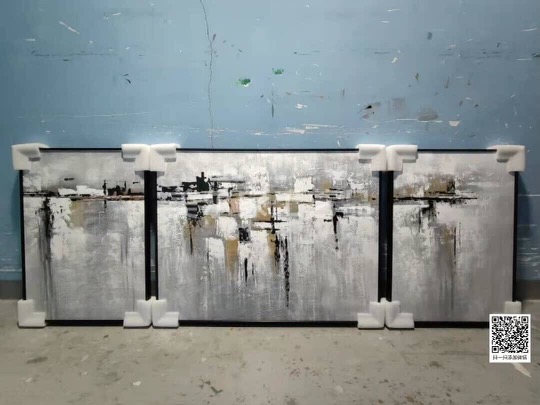
But even though business dropped a lot for Dafen, it didn’t disappear completely. With the Chinese real estate boom with a rising middle class within the country, Dafen had a new Chinese market to tap into, which meant there were different artistic styles to cater to — including an increasingly popular array of more modern art. Chris Shi who owns and operates Shenzhen Melga Art based in Dafen Village says that the replicas of classic Western art arn’t even popular anymore. “Just a few customers buy these kinds of paintings, […] most of the customers buy modern art,” says Shi.
In recent years things have been more challenging in Dafen. Business never fully recovered after the 2008 financial crisis, and a lot of painters and bosses have moved out of the area because gentrification made it a less affordable place to live. The internet has made it possible to work from anywhere, so people have been moving to place with lower costs of living. There isn’t as much reason to have a centralized painting industry anymore.
Arts or Crafts?
Considering all of the nuances surrounding Dafen, it would be tempting to label the work that goes on there as something completely different from fine art. The distinction between individual artistry and mass production has always been blurry. Artists all over the world like Jeff Koonz have quietly used laborers and fabricators in order to execute their grand ideas. Dafen painters actually let us in on that process and show us that relationship in an unambiguous way.
Dafen artist village image courtesy of Eddie Colla
Artist Eddie Colla notes that one “go back to Warhol in the factory,” where he was really more the “architect of the project” while the “labor is being done by multiple people or in multiple places.” A lot of notable artists have actually used Dafen painters sort of like ghostwriters. They come up with the concept, and then outsource that labor to Dafen in order to execute their ideas because it’s efficient.
Eddie thinks that there’s actually something creative and undervalued happening in the mass manufacturing of oil paintings at places like Dafen. He decided to blur the line between production and art even further by incorporating the Dafen copying process into his artwork. In 2018, he conducted an experiment, which started with him asking an painter to copy a graphic and make an oil painting.
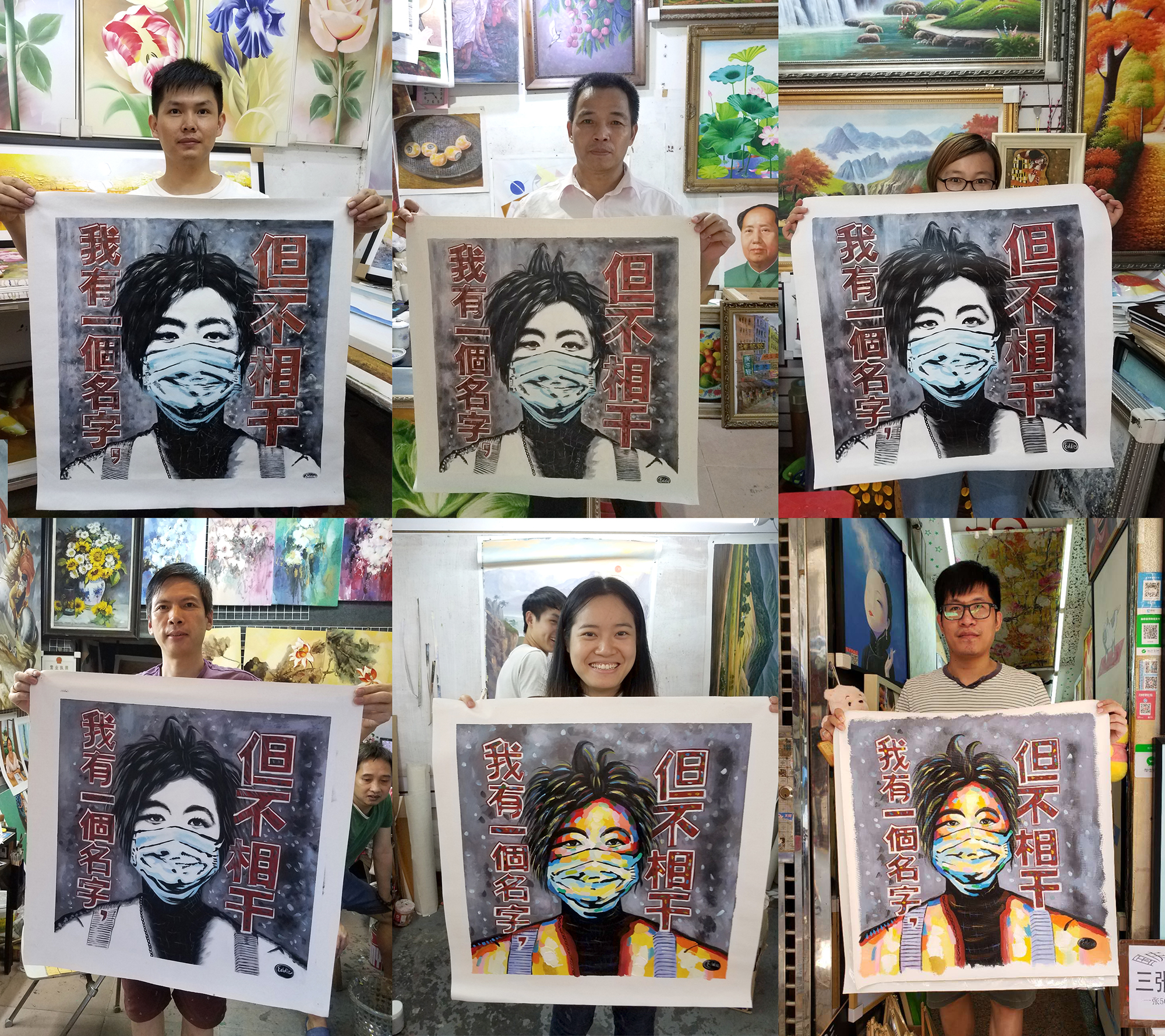
Dafen artist project by Eddie Colla
He then kept repeating the process, taking each painting and handing it to another painters to copy. He did this every week for seven weeks, each time bringing the newest copy of the copy of the image, until he was left with six different paintings that all built upon the last version. By the sixth painting the image had changed in a ton of obvious and arguably quite beautiful ways. While the first painting was muted and somber, the sixth and final painting is exploding with color. The subject of the painting even looks like a different person.
One thing that’s overlooked about oil paintings produced in Dafen is that they are not exact copies. Every painting is actually unique because it is done by hand, but we just tend to focus on the similarities and not the differences. Eddie sees this project as a reflection of greater Shenzhen — a place that’s been criticized by the West for copycat culture, when in fact, copying is an essential part of the artistic process. In his interpretation, the “real” art can’t exist without the “fake” art.
Dafen artist village image courtesy of Eddie Colla
“We always start copying,” says Eddie, and “that’s how learning works. If you learn to play an instrument, they teach you how to play existing songs. They don’t say, well, write the original composition. And so I think that’s exactly the way all things evolve.”
Leave a Comment
Share