Friday, April 28, 2017

Art World | How Big Is the Online Art Market?

How Big Is the Online Art Market? Depends Who You Ask

The latest report from Hiscox estimates that the online art market hit $3.75 billion in 2016.
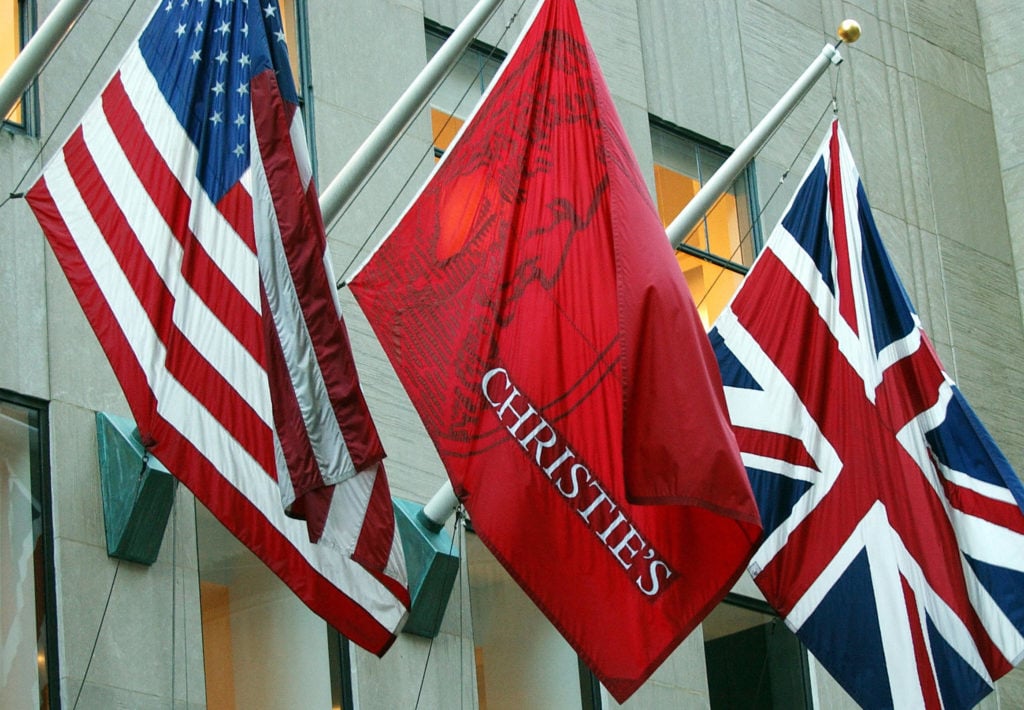
Online-only sales saw a particularly robust 84 percent increase at Christie’s last year, Hiscox notes. STAN HONDA/AFP/Getty Images.
Is the change-averse art market finally beginning to embrace the internet?
The ArtTactic/Hiscox Online Art Trade Report 2017, released this week, describes the online sphere as “a market yet to awaken”. For the fifth year, the analytics company ArtTactic teamed up with the insurance company Hiscox to survey the field. The report is based on responses from 758 art buyers, 132 galleries, and staff from various online art platforms.
Despite a relative slowdown in the global art market, the online art market grew by 15 percent, to $3.75 billion, last year, according to Robert Read, head of art and private clients for Hiscox. The online art market’s share of the total art market also grew last year, from 7.4 percent in 2015 to 8.4 percent. While that may seem small, it is roughly equivalent to e-commerce sales’ share of the total retail market, which reached 8.3 percent last year, according to the U.S. census.
As always, data on primary market sales should be taken with a grain of salt, considering the sample sizes remain small and methodologies vary considerably depending on who is asking the questions. Hiscox’s estimate of the size of the online art market ($3.75 billion) differs from figures in other recent surveys. The UBS/Art Basel report estimated that sales of art and antiques online totaled $4.9 billion in 2016, or nearly nine percent of the global art and antiques market.
Who is winning the online arms race, according to Hiscox? Perhaps not surprisingly, “established global brands in the art market such as Sotheby’s and Christie’s are starting to dominate” the online art platform ranking and “appear to be getting to grips with the challenge of transforming a bricks-and-mortar business into a multimedia business,” the report states.
Sotheby’s, Christie’s and Heritage Auctions generated combined online sales of $720 million. Online-only sales saw a particularly robust 84 percent increase at Christie’s, Hiscox notes.
Read notes that “dealers continue to struggle online; maybe they are making enough elsewhere.” Slowly but surely, however, galleries are becoming more open to expanding beyond bricks-and-mortar. In 2013, 15 percent of galleries surveyed said they would generate online sales by joining with an existing e-commerce platform. In 2016, 26 percent said they would partner with a third-party e-commerce platform in the near future.
Lastly, Hiscox says online art sales are dominated by objects priced below $5,000. “Despite individual examples and anecdotal evidence that works are increasingly being bought online at higher price points, the future battleground for the online art market is likely to remain in the lower price range.” According to the survey, 79 percent of online art buyers spend less than $5,000 per piece when buying art online, up from 67 percent in 2015.
Follow artnet News on Facebook.
  • Access the data behind the headlines with the artnet Price Database.
SHARE
Article topics

Wednesday, April 26, 2017

at John Waters’ Sleepaway Camp

Imagining All the Unspeakable Things That Might Occur at John Waters’ Sleepaway Camp

In which I imagine the immense fun that was missing from the summer camp of my youth

gettyimages 139845823 Imagining All the Unspeakable Things That Might Occur at John Waters Sleepaway Camp
John Waters, with panties. Jesse Grant/Getty Images
I went to sleepaway camp for six years, so trust me when I say that campers and counselors alike absolutely do all the sex things behind the arts and crafts shed that American Pie’s Michelle implied whenever she said “This one time, at band camp….” On especially lovely summer afternoons, I like to think back on my camp days with fondness and wonder, “Are my best days really behind me? Will I ever feel the same pure unbridled joy I did as that one time….” No, no, I won’t go into detail, but just know it was a formative experience. Oh, to be young again!
So imagine my excitement upon learning that filmmaker John Waters is planning a sleepaway camp experience just for adults this September at Club Getaway in Kent, Connecticut, aptly titled “Camp John Waters.” The notorious filmmaker behind Pink Flamingos, Cry-Baby and Hairspray is promising “a once in a lifetime Sleepaway-Camp experience for fans” where you can expect to “Relive your filthy childhood while participating alongside other trashy campers in these fun activities….” (See! Camp is a place for dirty, dirty fun.) A few of Waters’ proposed activities include:
— A John Waters costume contest (judged by Waters himself)
— A John Waters dance party
— Hairspray karaoke
— Bloody Mary bingo
— Scotch and cigars
So, that all sounds great, but considering that this specifically a John Waters-themed camp, I sort of expected the list to be a little…filthier, if you know what I’m getting at…
Let’s just indulge my camp fantasies for a moment while I rattle off some of the things I believe campers will probably be getting up to on the sly up in the woods of Connecticut this fall.
Open Egg Bar: Divine’s mother Edie in Pink Flamingos really loved eggs, so why not have an all-egg buffet in her honor. Clean protein for all!

Teardrop Tattoo Party: 
We’re not talking about those trendy temporary tattoos here, plus this is a camp for adults, so stick and poke only.
Chicken Canoe Race: Campers will recreate Cry-Baby‘s climactic car race lakeside with a canoe race to the metaphorical death. Loser gets exiled to the shitty side of the lake for the rest of the weekend.

Filthiest Person Alive Contest:
 It would be exceptionally hard to top the Marbles for this title considering all the horrible things they get up to in Waters’ cult classic film, but perhaps this could be an honorary title for the person who manages to do the best Connie and Raymond impression on stage. Or the person who goes the longest without showering—another thing that unfortunately happens at real camps every summer.

Chicken-themed Dance (cough: orgy):
 No real chickens will be harmed at this event, and this isn’t a beastiality thing, but if you’ve seen Pink Flamingos then you know that chickens really get some people in the mood. Campers will bop along to innocent songs like Do the Funky Chicken and Ain’t Nobody Here But Us Chickens, but dancing has been known to lead to other activities.
Poop, anything involving poop: For the sake of everyone attending Camp John Waters, I sincerely wish you a poop-free weekend.
A website for the weekend retreat says that the event is currently sold out, but A.V. Club reports that tickets cost around $499. Reliving your teenage sexual awakening/reenacting scenes from your favorite Waters flick doesn’t come cheap.

DÁ-SE FOLGA AO PATRÃO e...

sem palavras descobriu o vestido Lúcio Fontana


http://www.vantag.com/pt/content/glamor-iz


ganda foto de autor desconhecido


e a nossa menina SS no SI :)


dá-se folga ao padrinho e...

tirem a máquina fotográFICA AO fLIPADO (DOS Flipados)


ESTE GAJO É MESMO ANTIGO


dá-se folga ao pipal e...

dá-se folga ao pipal e depois é isto... o américo/AméricA foi ao sótão procurar segredos de família e


dá-se folga ao pessoal e...


dá-se folga ao pessoal e depois é isto... a Rozette (dos fLIPADOS) documenta a maneira dos tugas fazerem pontes, mas não são de betão... são de calendário!


survey of The Becher Class

A class apart: a new show explores the radical approach of the Bechers and their students

In 1959, photography was still struggling to be an art form. Bernd and Hilla Becher were a young couple living in Düsseldorf, making conceptual art together. Bernd had studied painting and typography, while Hilla had completed an apprenticeship as a photographer. They began to collaborate, systematically taking pictures on an 8 x 10 of things that most people would overlook in their city – gas tanks, coal bunkers, cooling towers, shot on overcast days, early in the morning — hardly glamorous subjects, at a time when the world was beginning to go pop.
Though the couple’s conceptual art photography was having an impact across Europe, when Bernd began teaching photography at the Kunstakademie Düsseldorf in 1976 their legacy would begin to have a life far beyond their own work. It would become one of the most significant and influential movements in art photography’s 180-year history by completely overturning the function, aesthetic, and position of photography as an artistic medium.
Some of the most esteemed German artists of the 20th century were taught by the Bechers — including Andreas Gursky, Thomas Ruff and Thomas Struth — and as the Städel Museum seeks to show in a new survey of works by the professors and nine of the alumni of the Becher class, there are others who are ripe for revisiting.
image: https://cdn.wallpaper.com/main/st_presse_becher_huette_moledlinghouse_embed.jpg?gJNLfX.fKJ1ejAagmW4kU6p1W3Sw6a2q

‘Moedling House’, by Axel Hütte, 1982–1984. © The artist
In more than 200 works, the exhibition reveals – in the same city it all began – the converging interests of the Bechers and their students, and their radical approach in their era: the Bechers in the 1960s and 70s, their students in the 80s and 90s. The group can roughly be recognised by a shared interest in an objective style, and by subjects shaped by their surroundings, the architecture and objects of industrial West Germany. Both Tata Ronkholz and Volker Dohne, for example, follow their teacher’s lead, turning their lens on the local landmarks and industry, shooting it in typologies that closely resemble the Bechers’ motifs. 
Other artists, such as Thomas Ruff, also clearly inspired by the Bechers’ method of shooting in series, complicates the idea of documentary photography as presumed truth, an idea that resonates even more with photographers today. Axel Hütte too, elevates the camera to present more than simply surfaces: his explorations of architecture prod at concealed social interactions, while consciously referencing landscape painting of the past, blurring the lines between the too – something Gursky is equally renowned for – that has pushed photography into new terrain until today.
With moments that are painterly, minimalist, prosaic and poetic, this exhibition captures more than the vision of a generation of artists – it’s the moment photography became art.
RELATED TOPICS: PHOTOGRAPHY

Read more at http://www.wallpaper.com/art/the-staedel-museum-stages-comprehensive-survey-on-the-becher-class#2UHhDS5WYcXXcxxI.99