Tuesday, July 19, 2016

8 French Art Terms You Should Know

8 French Art Terms You Should Know

Paris was the cultural capital of the Western world for much of the 18th, 19th, and early 20th centuries, the home to revolutionary art-historical movements such as Neoclassicism, Impressionism, and Cubism. Each of these developments in artistic practice required a new vocabulary to describe it, and much of that language remains in our lexicon today. Below, you’ll find the some of the most significant French art terms, from the widely used to the relatively obscure.


Avant-Garde

(advance guard or vanguard)
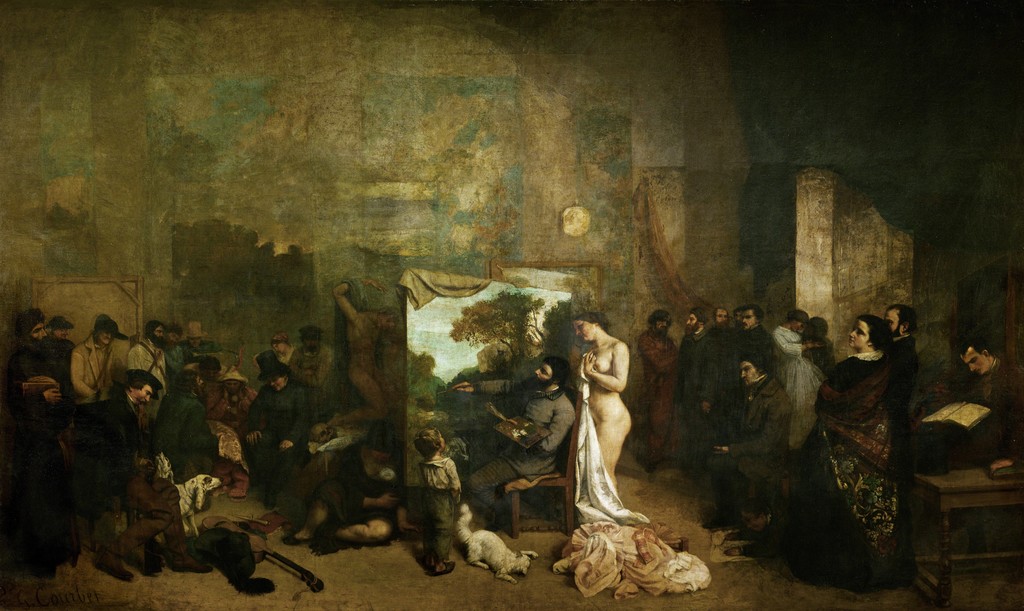
Originally a militaristic phrase, the avant-garde or “advance guard” describes the specialized soldiers whose job was to survey the land and seek out the enemy before the arrival of other troops. In the 19th century, the social reformer Henri de Saint-Simon expanded the term to include experimental artists at the frontlines of cultural evolution. “We artists will serve you as an avant-garde,” he wrote in his book Opinions Litteraires, Philosophiques et Industrielles (1825). “For amongst all the arms at our disposal, the power of the arts is the swiftest and most expeditious.”
Today, the avant-garde includes artists, musicians, and politicians who push boundaries and stir up controversy, often in support of utopian ideals. While the term is generally tied to modernist movements like Dada and Cubism, the avant-garde is said to have begun half a century earlier with the French Realist painter Gustave Courbet, whose stark depictions of rural poverty and human sexuality reflected his anti-bourgeois politics.


Oeuvre

(work)
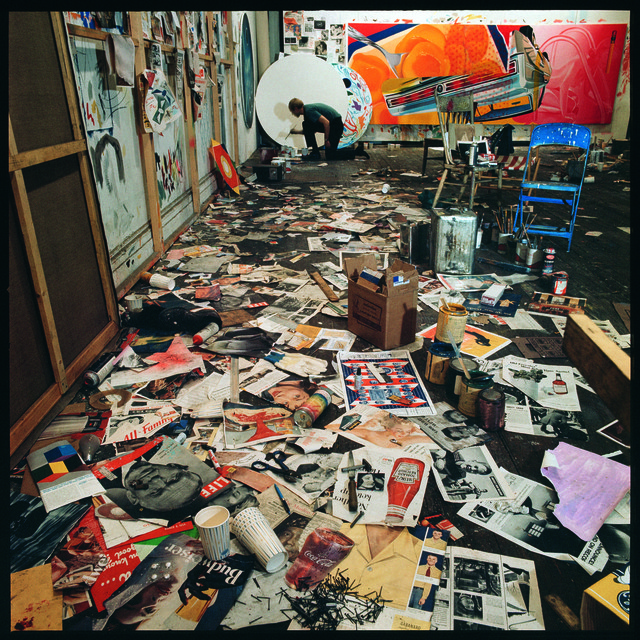
One of the most frequently used art-historical terms by academics in the field, oeuvre refers to an artist’s entire body of work. The term—which derives from opus, the Latin word for a piece of music or art—is often used to indicate the most pervasive tendencies in an artist’s output. Scholars might describe individual works as either representations of or departures from an artist’s oeuvre, for instance.
The term is also hidden in another French-to-English crossover: hors-d’oeuvre. The French term for an appetizer, hors-d’oeuvre literally translates to “outside the work” because these pre-meal snacks are not a part of the main serving—similar to how an artwork might exist outside of the artist’s main practice.


Trompe l’Oeil

(to deceive the eye)
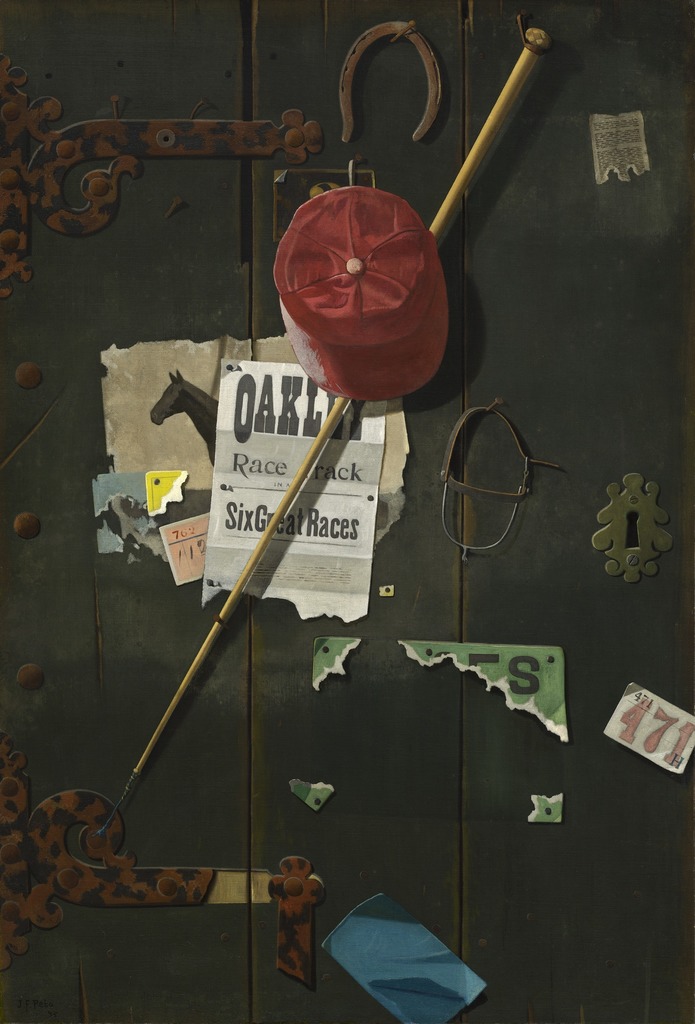
While the French phrase trompe l’oeil, or “to deceive the eye,” once referred more narrowly to the hyperrealistic still lifes of the 17th century, the term is now used to describe all paintings that fool viewers into believing that what is depicted is actually real.
Ever since the ancient Greeks plastered their walls with illusionistic depictions of windows and columns, artists have sought to trick the eye into perceiving a two-dimensional surface as a three-dimensional space. This characteristic reached the height of popularity during the Renaissance, when the discovery of linear perspective enabled artists to convey depth more convincingly than ever before. Today, artists like Lauren Seiden and Yrjo Edelmann continue this tradition by creating close-up, illusionistic depictions of creases, crinkles, and wrinkles.


En Plein Air

(in the open air)
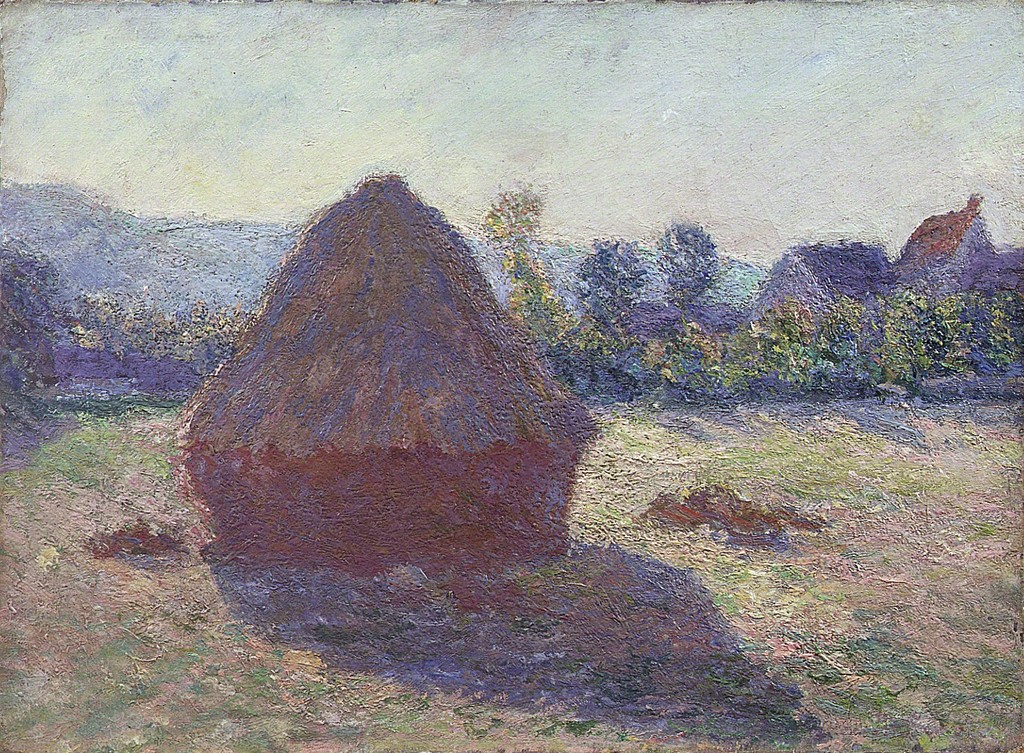
French for “in the open air,” en plein air refers to painting completed outdoors rather than in a studio. In the 19th century, the invention of portable paint tubes and field easels enabled artists to create their compositions outside, and spurred one of the most famous art-historical movements, Impressionism.
The Impressionists were early advocates for working en plein air, as it allowed them to study first-hand the effects of light and atmosphere on landscapes and city scenes. More recently, plein air painting associations have cropped up across the United States, spurring a national debate about what percentage of a painting must be completed outdoors to earn the title en plein air.


Catalogue Raisonné

(reasoned catalogue) 
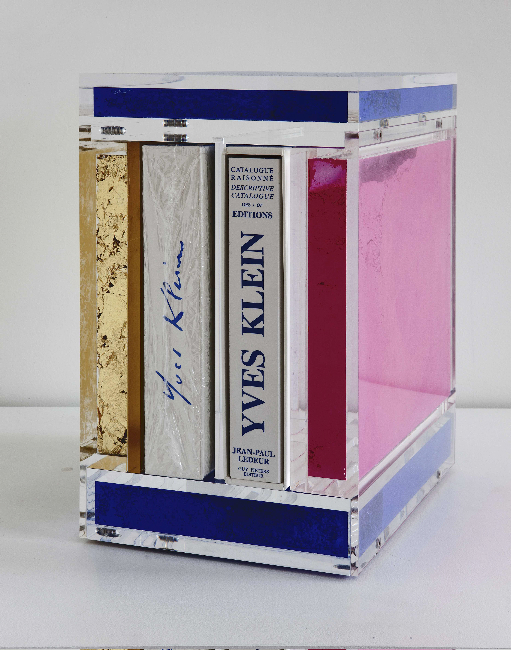
A catalogue raisonné is a descriptive catalog of every work made by an artist, though some focus on an artist’s use of a specific medium like painting or drawing. Viewed as the authoritative resource on that artist’s oeuvre, catalogue raisonnés are most often created by a museum or artist foundation and can take decades to complete. 
What to Do If You Think You’ve Found a Masterpiece in the Attic
Read full article
In the last 10 years, the rise of artist forgeries and “discoveries” of unknown artworks by well-known artists has led to an increased investment in catalogue raisonnés, which scholars and collectors rely upon in the authentication process, even though these volumes can often fall out of date.


Vernissage

(varnishing)
During the 19th century, artists would apply varnish to their works on the day before the public opening of an exhibition. As early as 1809, patrons and other members of the art-world elite began a tradition of viewing the show on varnishing day, known to the French as vernissage.
Today, artists seldom apply varnish the night before a show, but the term vernissage is still used to refer to an early preview of an art exhibition. Most often private or invitation-only events, the vernissage is an opportunity for collectors and members of the press to view the works before the doors open to the general public.


Mise-en-Scène

(placing on stage)
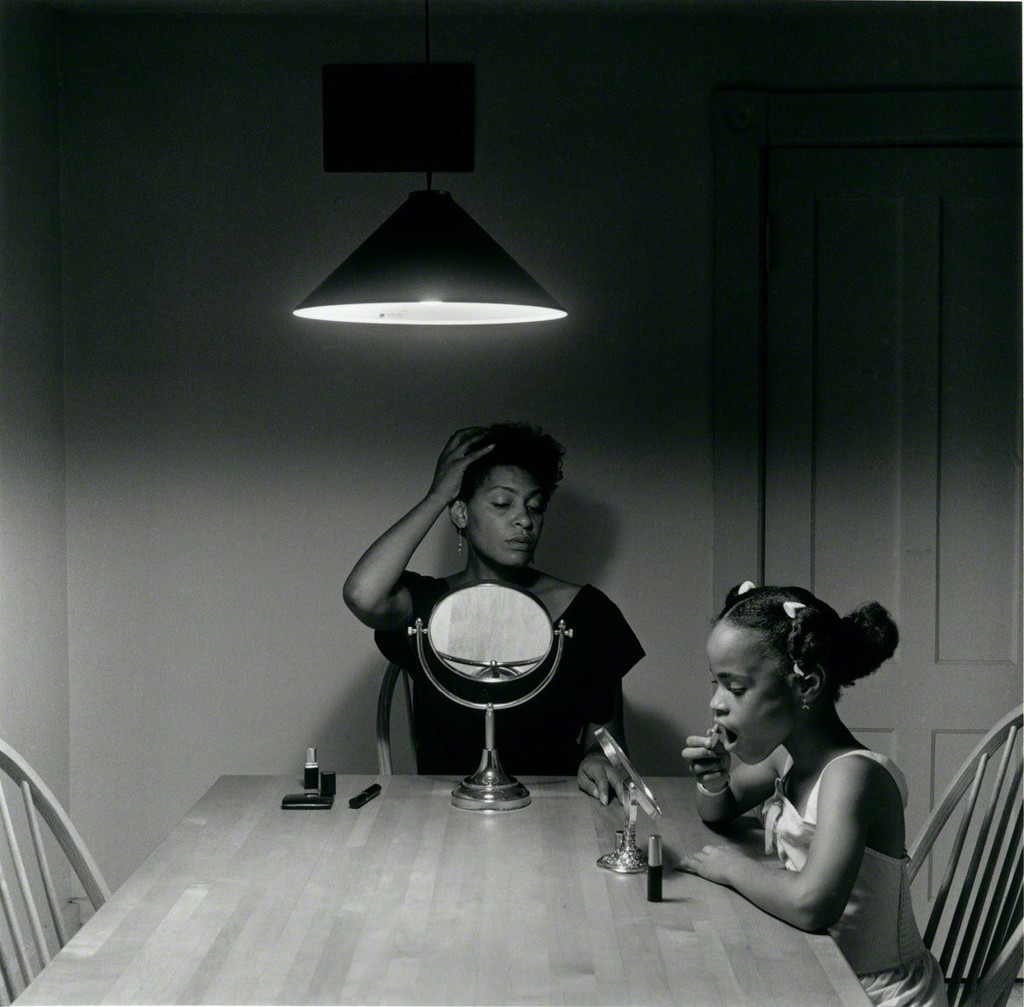
This French compound, which literally translates to “placing on stage,” or “putting on stage,” is one of the most misunderstood of all art terms. First used in theater around the year 1833, the phrase originally referred to all of the visual effects overseen by a theater director—including compositional design, lighting, and the placement of actors. In other words, the mise-en-scène encompassed all of the visual features on the stage that gave a performance its look and feel.
Nowadays, mise-en-scène is a term used by art critics and historians to describe the setting of a film, performance, or photograph, especially those with cinematic qualities. For example, in her “Kitchen Table” series of photographs, Carrie Mae Weems takes as her mise-en-scène a family kitchen table, staging scenes of everyday life that examine racial and gender stereotypes and calling attention to the constructed nature of photography.

—Sarah Gottesman

Share article


Garry Winogrand and the Art of the Opening

  |   Blog Home   |  

Garry Winogrand and the Art of the Opening

May 13, 2013 | by
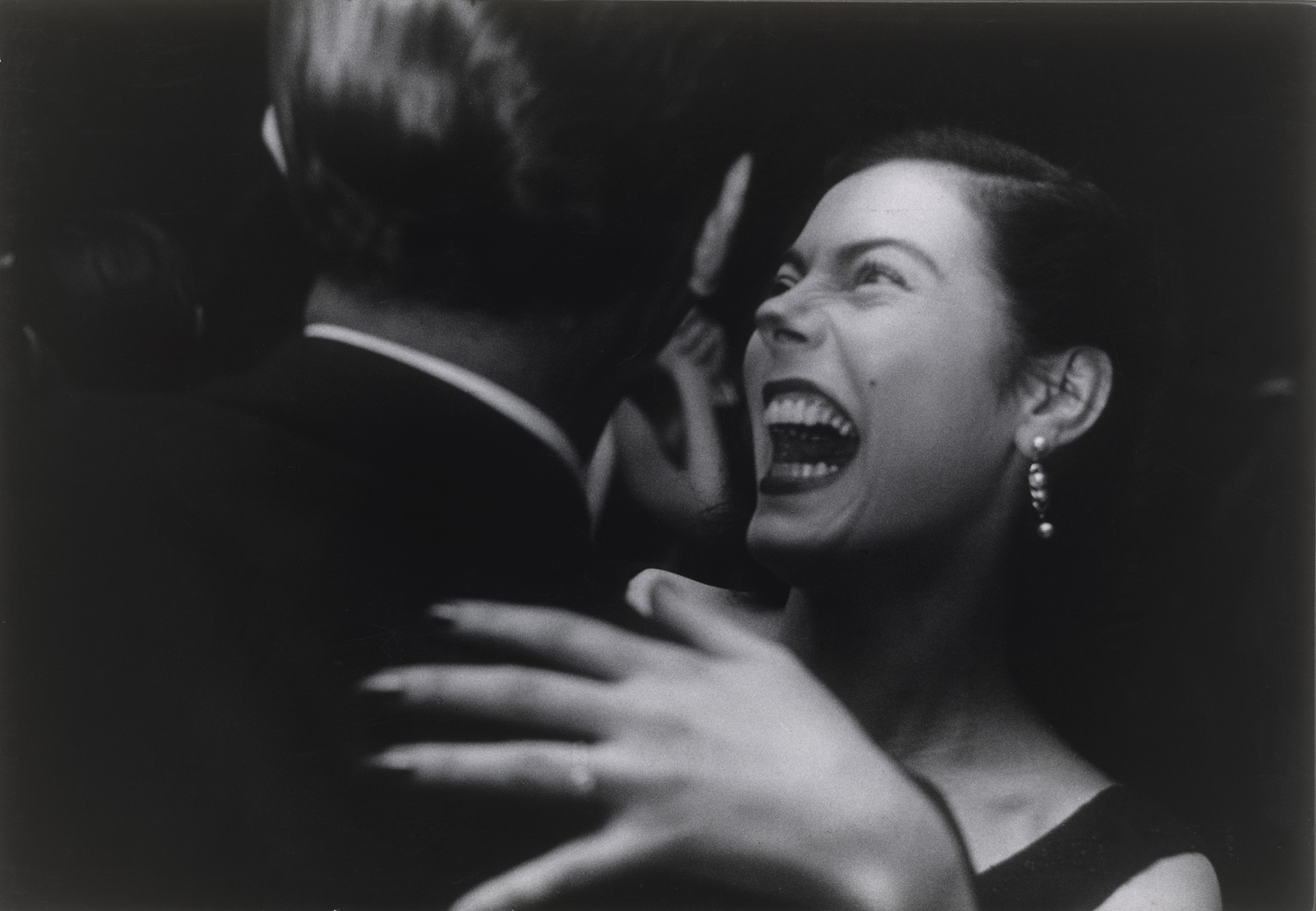
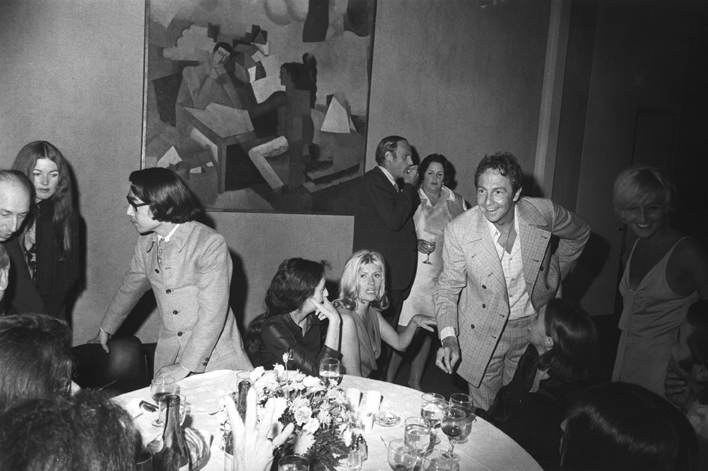
Garry Winogrand, El Morocco, New York, 1955, black-and-white photograph. The Metropolitan Museum of Art, New York, purchase, the Horace W. Goldsmith Foundation Gift, through Joyce and Robert Menschel; © The Estate of Garry Winogrand, courtesy Fraenkel Gallery, San Francisco
Garry Winogrand, El Morocco, New York, 1955, black-and-white photograph. The Metropolitan Museum of Art, New York, purchase, the Horace W. Goldsmith Foundation Gift, through Joyce and Robert Menschel; © The Estate of Garry Winogrand, courtesy Fraenkel Gallery, San Francisco.
Scroll down for a slide show of photographs by Winogrand, with audio interviews conducted during the March 6 opening of his posthumous retrospective at the San Francisco Museum of Modern Art.
Garry Winogrand (1928–84) was the first photographer to realize how much juicy comedy could be squeezed out of New York’s art and literary scenes. During the late sixties, early seventies, when he would arrive with his Leica at a Museum of Modern Art opening or a costume ball at the Metropolitan Museum of Art or at Norman Mailer’s fiftieth birthday party, he would sometimes announce to the crowd, “I’m here,” as if an event did not officially begin until he was there to record it.
He was more right than even he might have guessed. Were it not for his mordant photos of those ragged, sybaritic evenings, best represented in the 1977 book Public Relations, it would be hard to imagine them. Mad Men and other dramatic re-creations tidy up the social anarchy of those years; Winogrand’s camera didn’t. From the haphazard lines of men and women awkwardly at ease, uniformed in black tie or a too-tight harem top, heads wreathed with cigarette smoke and piles of teased hair, ghostly moues cut with rictus smiles and rows of perfect teeth, he fashioned dark instants of sublime lunacy. Everyone and everything seems false or imbecilic in his party pictures, his eye exposing secret acts of disintegration within rituals of supposed public glee.
Behind his mockery of the self-satisfied and the strivers, though, is a winking acknowledgement that anyone can appear stricken when blasted by a flash at 1/125 of a second. Photography turns one and all into fools, including—especially—artists like himself, eager to hunt life and trap as many of its fleeting variables as possible inside a 35 mm frame but doomed to return empty-handed far more often than not.
There wasn’t much foolishness on display at the opening for the Winogrand retrospective on March 6, at the San Francisco Museum of Modern Art. Without the boisterous guest of honor to enliven the goings-on, the event was instead a sedate reunion of his many pals and colleagues, most of them now sixty or older but still with vivid memories of him.
Lee Friedlander, Jay Maisel, Paul McDonough, Thomas Roma, Mitch Epstein, and Peter MacGill flew in from New York City; Tod Papageorge from Connecticut; Richard Benson from Rhode Island; Anthony Hernandez from Los Angeles; Geoff Winningham from Houston. San Francisco figures who had known Winogrand here or there (Henry Wessel Jr., Linda Conner, Leland Rice, Jeffrey Fraenkel) mingled with younger admirers who had never met him (Paul Graham, Sasha Rudensky, Doug Rickard, Catherine Wagner, Todd Hido, Michael Jang). Curators who had worked with him at MoMA (Susan Kismaric and Peter Galassi) attended along with the curators overseeing this posthumous traveling show (Sandra Phillips of SFMoMA and Sarah Greenough of the National Gallery).
The evening’s ringleader was photographer and critic Leo Rubinfien. Organizer of the retrospective and author of the main catalogue essay, he has divided the work into three chronological parts—“Down from the Bronx,” “A Student of America,” “Boom and Bust”—and, with Kismaric, unearthed many never-before-exhibited prints, some from the hundreds of thousands of frames Winogrand exposed but never printed toward the end of his life, when he was living in Los Angeles and shooting madly, at times about fifteen hundred rolls a year.
A central raison d’être for the exhibition is the chance for the public to assess this “late work” (circa 1975–83), much of it done in Southern California, which was slighted by curator John Szarkowski in his selections for the 1988 retrospective at MoMA. In a beautiful fifteen-minute talk in an auditorium the night of the opening, Rubinfien expressed his belief that Los Angeles should have been the “natural culmination” of Winogrand’s project to document the fraught history of his native land, the city then being, in Rubinfien’s words, “the headquarters in America of sprawling vulgarity, the showroom of freedom where it distresses us the most.” Visitors can judge for themselves if, as Szarkowski thought, the photographer lost his way after he left New York in the early seventies, or if, as Rubinfien thinks, he reset his horizons and deepened his pessimism about America when he moved to the West.
“I was so gauche I didn’t even know what gauche meant,” Winogrand once said, commenting on his Bronx upbringing as the bright, unruly son of a couple who worked in the garment industry.
Stories about Winogrand emphasize common themes: his energy and sarcastic wit; bottomless appetites for coffee and talk; stressful relationships with women; casual attitude toward debt; bawdy humor; love of companionship; sophisticated analysis of the problems confronting any serious photographer, at least as he saw them; and brutal honesty.
In a party after the opening, at a room in the St. Regis Hotel next to the museum, there were toasts to and from Rubinfien and much discussion about the missing guest of honor. Roma remembered looking at Winogrand’s photograph of a bear in the Central Park Zoo and thinking, “I’ve finally got it. I didn’t need to go to an exotic place to photograph. I can stay here.”
Epstein, a student of Winogrand’s who was among the first to move successfully into color, believes that Winogrand was “absolutely fascinated by this other medium that he wasn’t quite ready to contend with.” Rubinfien was another young protégé and described him as a “bull of a man,” old enough to have been his father.
Maisel, a successful commercial photographer, was the target of continual barbs from Winogrand, who told him repeatedly that his pictures “lacked the chaos of life.” “Garry could be a bully,” he said. “I finally asked him, ‘Do your pictures have the chaos of life?’ He said, ‘Yes.’ I said, ‘Okay, then why do my pictures have to?’” (It is a testament to Maisel’s decency that they stayed friends. In 1955 he introduced Winogrand to Friedlander, another lifelong comradeship.)
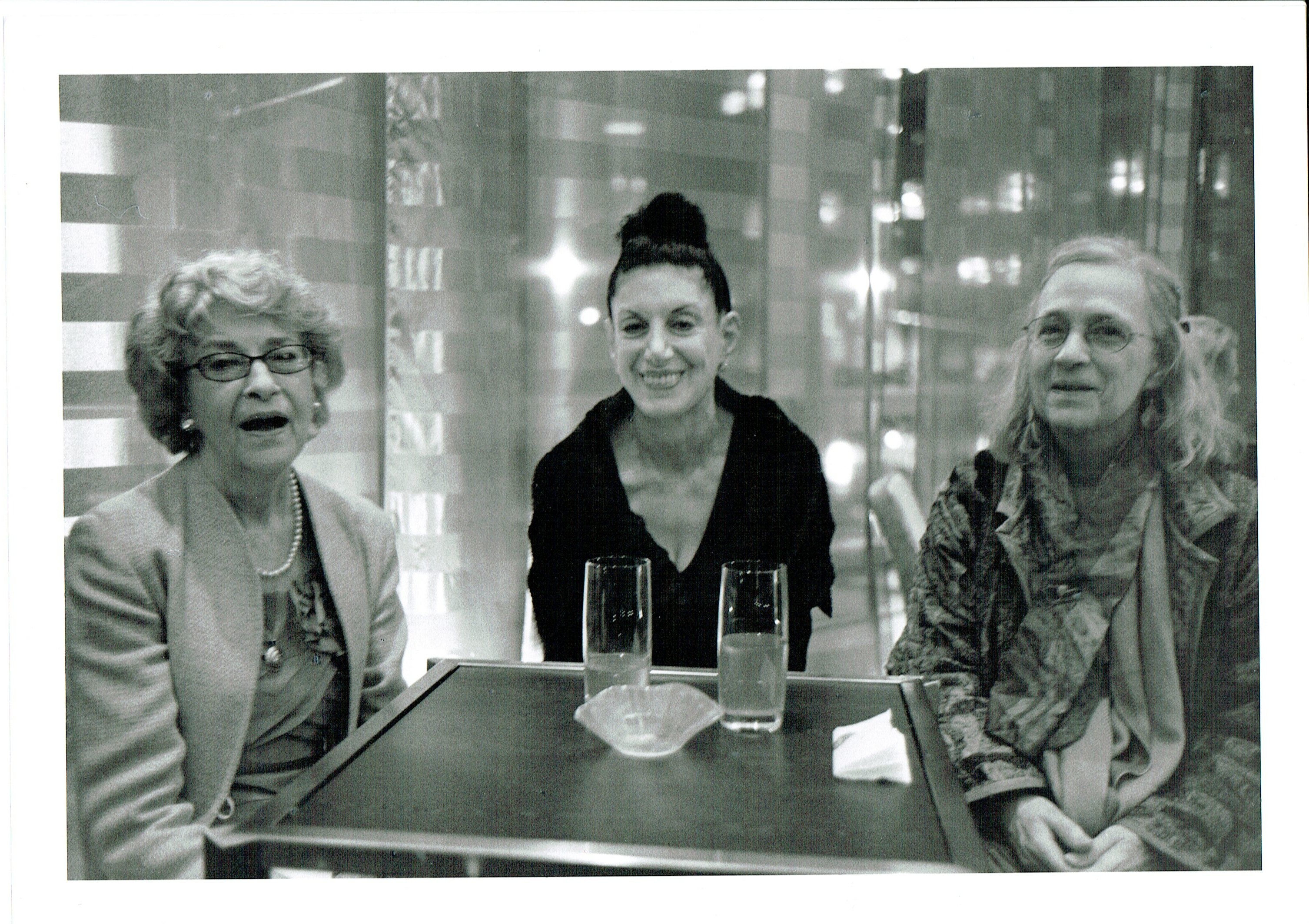
Perhaps if Winogrand had not been so laughably oversize, both in talent and flaws, his friends might have been less forgiving of his sometimes oppressive boorishness. Friedlander agreed with Maisel that “Garry was never fully domesticated,” which didn’t stop him from trying married life with three different women. All of them—Eileen Adele Hale, Judith Teller, Adrienne Lubeau Winogrand—were at the opening, along with his three attractive grown children—Ethan, Laurie, and Melissa.

Adrienne Lubeau Winogrand, Judith Teller, and Eileen Adele Hale at the opening. Photo: Paul McDonough
Adrienne Lubeau Winogrand, Judith Teller, and Eileen Adele Hale at the opening. Photo: Paul McDonough.

“I remember one day in the fifties, Garry announced that he had just taken a nude of his [first] wife,” said Maisel. “I asked him if she had objected. ‘Of course,’ he said. ‘But I told her she’d never look that good again and one day she’d thank me.’”
One of the exhibition’s vitrines contained a scorching letter from Winogrand’s second wife, Judith Teller, that indicates what a trial home life with him must have been like: “But my analyst bill is not even relevant at this point,” she wrote in 1969. “What is extremely relevant is the money you owe the government in back taxes. Your inability to pay the rent on time. Your constantly running out of money. Your credit rating. And most of all, your flippant, irresponsible, nonsensical attitude toward all these very real problems. (‘I’ll wait till the government catches up with me. Why should I pay them any money now?’) You seem incapable of exercising your mind in any cogent way.”
In that last judgment she was dead wrong. Winogrand’s adult life was concerned to an uncanny degree with challenging himself as a photographer in an art world where few valued the issues that obsessed him. Even though what he left behind stands with the journalism of Mailer and Didion and Wolfe and Kopkind as a telling record of what it was like to be alive in those years, Winogrand was savaged by critics in the late 1970s. Greenough’s catalogue essay offers a sad recital of the pounding he took.
Looking around the opening, it was hard not to compare the people in the photographs with the crowds in the galleries. Gray-haired or balding though his friends are now, the reason for parties doesn’t change. There were still men in black tie (the ideal outfit for a photograph in monochrome) and women in slinky dresses, and the defining public gesture of the evening and our day—hunched figures of all ages staring importantly into their smart phones—suggested that, were Winogrand alive, modern America would give him plenty of material to work with.
Richard B. Woodward is an arts critic in New York. He is writing a book on photography and violence for Yale University Press.

Monday, July 18, 2016

Why You Don’t Know Your Own Mind

Photo
Credit Inge Morath /The Inge Morath Foundation/Magnum Photos. Masks by Saul Steinberg /The Saul Steinberg Foundation/ARS, NY
It is often said that we can never truly know the minds of others, because we can’t “get inside their heads.” Our ability to know our own minds, though, is rarely called into question. It is assumed that your experience of your own consciousness clinches the assertion that you “know your own mind” in a way that no one else can. This is a mistake.
Ever since Plato, philosophers have, without much argument, shared common sense’s confidence about the nature of its own thoughts. They have argued that we can secure certainty about at least some very important conclusions, not through empirical inquiry, but by introspection: the existence, immateriality (and maybe immortality) of the soul, the awareness of our own free will, meaning and moral value. In a Stone column Gary Gutting explained how this tradition continues to manifest itself in contemporary philosophy as the search for “a ‘transcendental’ or ‘absolute’ consciousness that provides the fuller significance of our ordinary experiences.” Thomas Nagel has invoked the same source to trump science in this publication as well.
Introspection, “the mind’s eye,” assures us with the greatest confidence that it is the best, in some cases the only authority on how the mind works, because we all think it has direct, first person access to itself. We’re all very confident that we just know what’s going on in our own minds, from the inside, so to speak.
Yet research in cognitive and behavioral sciences increasingly undermines that confidence. It seems hardly a week goes by without another article in the media reporting counterintuitive laboratory findings by empirical psychologists studying cognition, emotion and sensation. What makes many of these results remarkable is their consistent violation of expectations, assumptions and prejudices forced on us by our own conscious awareness.
In fact, controlled experiments in cognitive science, neuroimaging and social psychology have repeatedly shown how wrong we can be about our real motivations, the justification of firmly held beliefs and the accuracy of our sensory equipment. This trend began even before the work of psychologists such as Benjamin Libet, who showed that the conscious feeling of willing an act actually occurs after the brain process that brings about the act — a result replicated and refined hundreds of times since his original discovery in the 1980s.
Around the same time, a physician working in Britain, Lawrence Weiskrantz, discovered “blindsight” — the ability, first of blind monkeys, and then of some blind people, to pick out objects by their color without the conscious sensation of color. The inescapable conclusion that behavior can be guided by visual information even when we cannot be aware of having it is just one striking example of how the mind is fooled and the ways it fools itself.
Meanwhile, philosophy has largely persisted in its centuries-long Cartesianism — following Descartes’ insistence in his “Meditations” (1641) that our knowledge of our own minds’ nature is more reliable than any other belief. Galen Strawson recently illustrated this centuries-old conviction in a recent essay in The Stone: “We know what conscious experience is because the having is the knowing: Having conscious experience is knowing what it is.” He writes “It is in fact the only thing in the universe whose ultimate intrinsic nature we can claim to know.”
Continue reading the main story
Despite these assurances from philosophy, empirical science has continued to build up an impressive body of evidence showing that introspection and consciousness are not reliable bases for self-knowledge. As sources of knowledge even about themselves, let alone anything else human, both are frequently and profoundly mistaken.
To see the mistake we need to recognize another mistake Descartes made: his denial that other animals have any mental lives at all. Careful field observation by primatologists beginning with Jane Goodall revealed that apes have well developed “theories of mind.” They engage in “mind reading” to make (sometimes good) guesses about the future behavior of others. Mind reading is psychologists’ shorthand for treating other animals as having something like desires and beliefs that work together to produce choices in behavior.

Sign Up for the Opinion Today Newsletter

Every weekday, get thought-provoking commentary from Op-Ed columnists, The Times editorial board and contributing writers from around the world.
After a certain point in the evolutionary past, organisms began needing to predict whether others posed threats in order to protect themselves, and later needed to coordinate to attain outcomes not achievable alone. This environment strongly selected for mind reading. Had variation in cognitive abilities not hit on this adaptation, puny creatures like us would never have survived in the face of savanna megafauna.
Mind reading, even in our own hands, is a very imperfect tool: We have to go on others’ behavior (including verbal behavior). We can’t really tell with much precision exactly what others believe or want, because we can’t get inside their heads. So our predictions are often pretty vague and frequently false. Like other Darwinian adaptations, mind reading is an imperfect, “quick and dirty” solution to a “design problem.” It was just good enough that, equipped with this theory of mind, we managed to gradually climb to the top of the food chain. We were able to do so in large part because once mind reading was in place human language, which requires it, became possible.
FMRI research, the study of autism, and experiments on infant “false-belief” detection have shown that mind reading is a relatively well-localized module in the human brain, innate in structure, subject to breakdown — often genetically caused, and identifiable in infant/toddler development.
Most important, there is compelling evidence that our own self-awareness is actually just this same mind reading ability, turned around and employed on our own mind, with all the fallibility, speculation, and lack of direct evidence that bedevils mind reading as a tool for guessing at the thought and behavior of others. When, as David Hume said, we look into ourselves, all we ever see are images, all we ever hear is silent speech-sounds. These sensations (along with emotions) are the only contents of consciousness, the only things introspection can use to figure out what we are thinking. The resources of introspection are exactly the same as the resources our minds work with to explain and predict the actions of others: sensory data provided by sight, hearing, smell, touch (and sometimes taste, too).
Of course we have a lot more sensory data — images and silent speech instead of visual experience and heard speech — to go on in trying to figure out our own desires and beliefs than what other people’s behavior reveals about what is going on in their minds. That’s part of what makes for the illusion that we know our own minds so much better. But the difference is only the amount of data, not its quality or source. We never have direct access to our thoughts. As Peter Carruthers first argued, self-consciousness is just mind reading turned inward.
How do we know this? Well, Hume would have answered that introspection tells us so. But that won’t wash for experimental scientists. They demand evidence. Some of it comes from the fMRI work that established the existence of a distinct mind-reading module, more from autistic children, whose deficits in explaining and predicting the behavior of others come together with limitations on self-awareness and self-reporting of their own motivations. Patients suffering from schizophrenia manifest deficiencies in both other-mind reading and self-mind reading. If these two capacities were distinct one would expect at least some autistic children and schizophrenics to manifest one of these capacities without the other.
That we read our own minds the same way we read other minds is evident in what cognitive science tells us about consciousness and working memory — the dual imagistic and silent-speech process that we employ to calculate, decide, choose among options “immediately before the mind.” The most widely accepted psychologist’s theory of consciousness identifies it as a mode of “global broadcast” solely from sensory modalities to “executive”— deciding, and “affective”— feeling systems that act on this sensory input. Self-consciousness has nothing else to work with but the same sensory data we use to figure out what other people are doing and are going to do.
The upshot of all these discoveries is deeply significant, not just for philosophy, but for us as human beings: There is no first-person point of view.
Our access to our own thoughts is just as indirect and fallible as our access to the thoughts of other people. We have no privileged access to our own minds. If our thoughts give the real meaning of our actions, our words, our lives, then we can’t ever be sure what we say or do, or for that matter, what we think or why we think it.
Philosophers’ claims that by reflecting on itself thought reliably reveals our nature, grounds knowledge, gives us free will, endows our behavior with moral value, are all challenged. And the threat doesn’t stem from some tendentious scientistic worldview. It emerges from the detailed understanding of the mind that cognitive science and neuroscience are providing.
Alex Rosenberg is co-director of the Center for Social and Philosophical Implications of Neuroscience in the Duke Initiative for Science and Society. His second novel, “Autumn in Oxford” will appear in August.

Sunday, July 17, 2016

Collecting 101 || How to Maximize Your Wall Space

Collecting 101

How to Maximize Your Wall Space: 4 Golden Rules for Hanging Art

By
How to Maximize Your Wall Space: 4 Golden Rules for Hanging Art
A few good rules of thumb
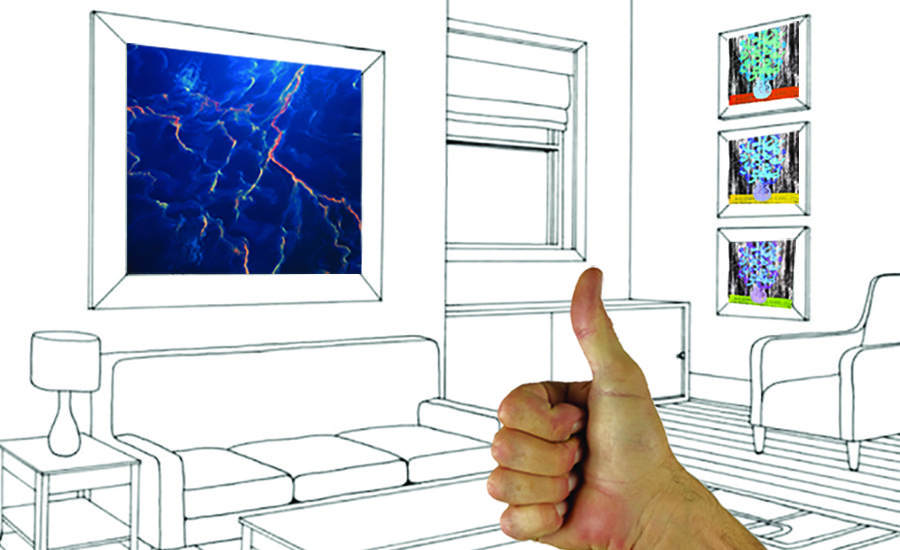
We hate math just as much as the next art geek—but when it comes to hanging art on the wall, spending a few minutes to take measurements and follow formulas can make all the difference. Luckily, interior designers have devised a set of golden rules to find the perfect size piece for any space. Here, we reveal some crucial tricks of the trade. 


1. Calculate the Perfect Width 
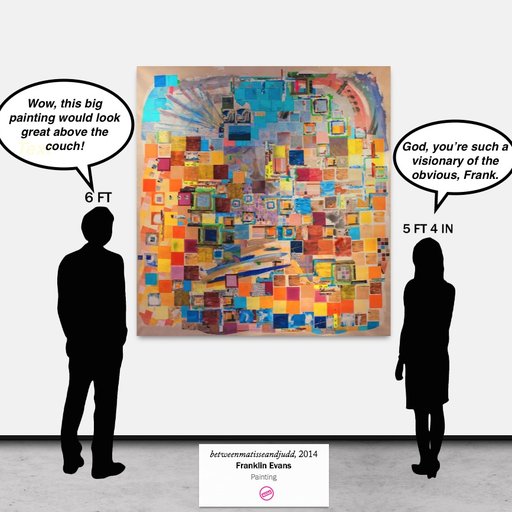
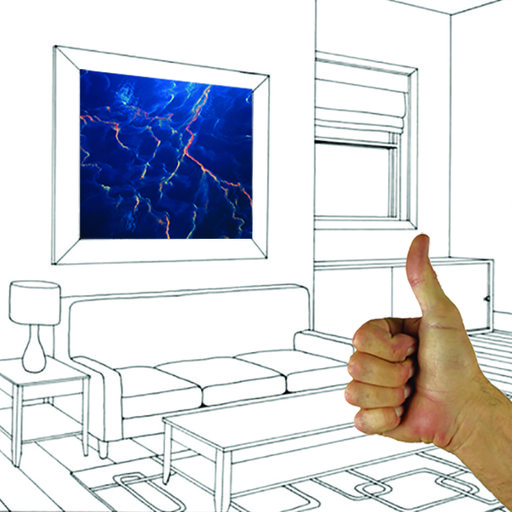
If you’re hanging a painting, drawing, print, or any other artwork on the wall over a piece of furniture, such as a bed or sofa, look for artworks that are between 65 percent and 85 percent of the furniture’s total width. Anything larger will make your furniture look comically small, and anything smaller will leave too much blank space. Here's a collection of 10 couch-ready artworks over 40 inches wide, which for most people will hit the sweet spot.

Rebekka Guðleifsdóttir's <em>From The Earth</em> is 40" wide, available on Artspace for $2,000


2. Consider Triptychs and Diptychs
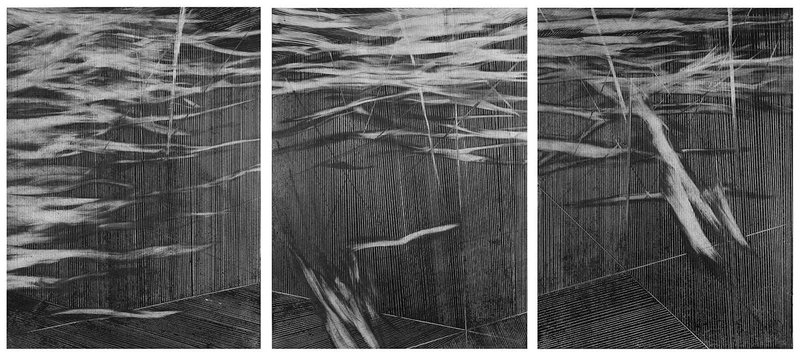
Having trouble finding a piece you like that’s wide enough for your setting? Why not consider a diptych or a triptych—i.e., works that come in sets of twos or threes, respectively—that adds up to the width you’ve calculated? (Remember to account for two to five inches of space in between the works.) Browse our collections of diptychs and triptychs here.


3. Use the Rule of Three-Eighths

Use this rule when working with an empty wall. The white space on either side of the artwork should be roughly three-eighths of the width of a painting. To calculate your ideal width, simply multiply the length of your wall by 0.57. Having trouble finding the size you need? Here are 22 artworks available in variable sizes that will fit like a glove.


4. Anchor the Room
Don't just hang the artworks at eye level—because, frankly, it's just your eye level. Instead, interior decorators and curators always tend to hang a work with a standard 58-inch distance from the floor to the artwork's center. If your ceilings are really high, bump that up to 60 inches. And if the artwork is over furniture, have the bottom of the piece end 8 to 10 inches above the headboard or back of the sofa—hanging the artwork too high will leave your room feeling unanchored. For those of you who are too fabulous for white walls all together, ignore everything we've just told you and instead opt for wallpaper designed by Damien Hirst, or wallpaper from the Maharam Serpentine Galleries Wallpaper collection. 

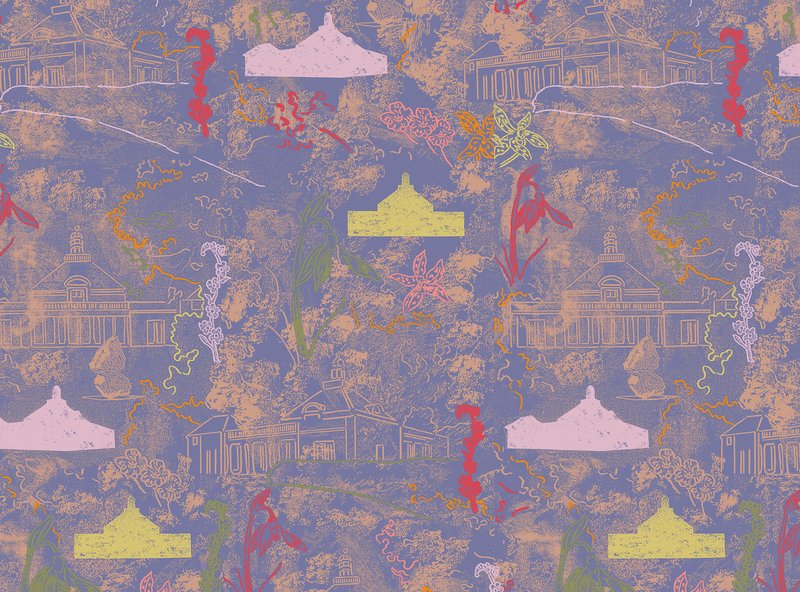
Marc Camille Chaimowicz's Pavilion wallpaper of the Maharam Serpentine Galleries Wallpaper collection


Thursday, July 14, 2016

Research: Want More Entrepreneurs? Make College Cheaper


Research: Want More Entrepreneurs? Make College Cheaper

July 07, 2016

Recommended

jul16-07-452399227
When college tuition rises, fewer people take the plunge into entrepreneurship, according to a new working paper by Harvard Business School economist Gareth Olds.
The paper isn’t studying Millennials and how student debt affects their career choices. Instead, it’s focused on their parents.
Olds found that in the U.S., a 10% increase in the average price of in-state college tuition corresponds with a 13.9% decrease in the number of parents with college-age children who become self-employed. The effect is strongest for parents with multiple children and holds up even after controlling for factors such as state economic conditions.
The theme of Olds’s research is twofold: Financial security makes it easier for people to start businesses, and government programs can help provide that security. His previous papers have documented how food stamps and children’s health insurance each promote entrepreneurship. Other researchers have found similar results for unemployment insurance and for government-provided health insurance for retirees.
Just like would-be entrepreneurs hesitate to leave their jobs for fear of not being able to afford health insurance, it makes sense that looming tuition bills might depress a parent’s appetite for career risk. Is starting a business really worth jeopardizing your child’s education?
Olds’s paper has important policy implications. Not only would cheaper tuition potentially mean that more students would have access to education — itself likely to increase entrepreneurship and innovation — but also it would free more parents to take risks by launching new companies. That’s arguably something the U.S. needs, since new business creation has been in decline over the past few decades. Olds suggests that “the rising cost of higher education may be partially responsible for the decline in new business starts in the U.S.”
He is not the first to make the connection. Last year the Urban Institute, a think tank, published a discussion paper exploring the link between student debt and entrepreneurship, though it noted that establishing a causal link between the two would be difficult. Olds’s paper, focused on tuition rather than debt, may be the best evidence to date that such a relationship exists.
Another paper, published last year by researchers at Penn State and the Federal Reserve Bank of Philadelphia, found a negative correlation between student debt and the number of new businesses in the U.S. But that negative relationship held only for companies with fewer than four employees. The researchers found no statistically significant link between student debt and the creation of larger firms, which the authors “interpret to mean that these firms had greater access to outside capital.” In other words, student debt was a deterrent for entrepreneurs who couldn’t find investors to back them.
That distinction matters. New small businesses may be an important source of economic mobility, but fast-growing, innovative new firms are what have the largest impact on the overall economy. And there’s less evidence of a shortage of growth startups.
Olds measured entrepreneurship by looking at parents who became self-employed (and by using their income from self-employment), not by measuring the headcount or revenues of their businesses. So his research can’t rule out the possibility that tuition levels matter most for smaller businesses, even for one-person operations in which a parent is essentially using self-employment as a bridge between full-time work and retirement. If that’s the case, it might lower the stakes in terms of the drag that high tuition places on the overall economy.
Further research should explore the relationship between tuition and growth startups. Nevertheless, previous work by Olds and others has documented the link between financial security and entrepreneurship not just for smaller firms but also for faster growth startups.
As a rule, people are willing to take entrepreneurial risk when they have some modicum of financial security. Parents a year or two away from owing tens of thousands of dollars in tuition bills aren’t likely to feel that they have much of it.

Walter Frick is a senior associate editor at Harvard Business Review.

This article is about EDUCATION
Related Topics: