Tuesday, January 12, 2016

David Bowie’s Too-Short Life in Photographs

David Bowie’s Too-Short Life in Photographs

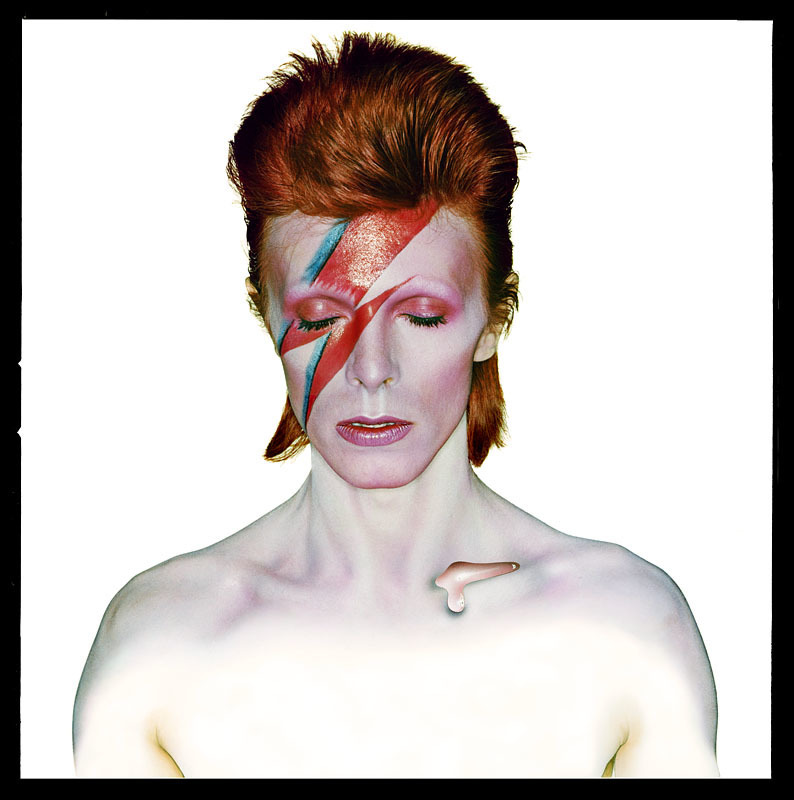
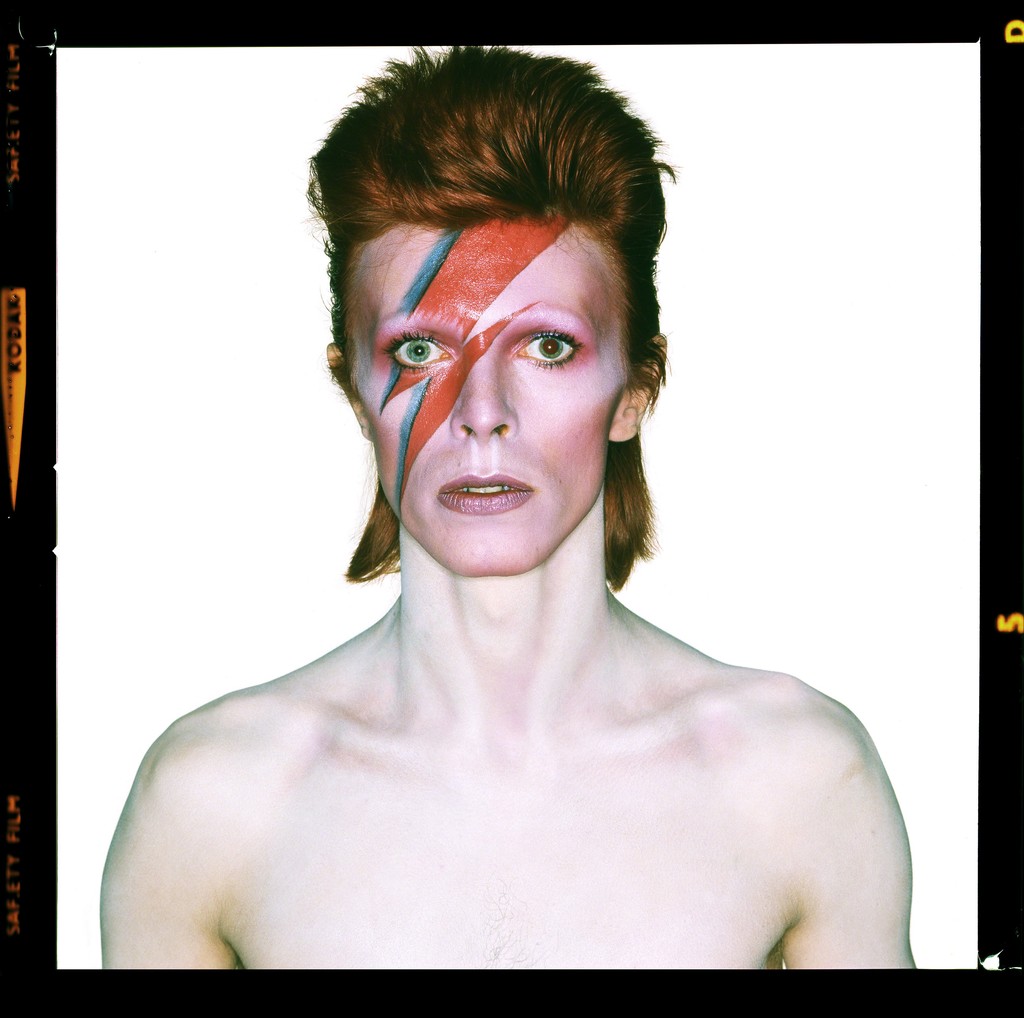
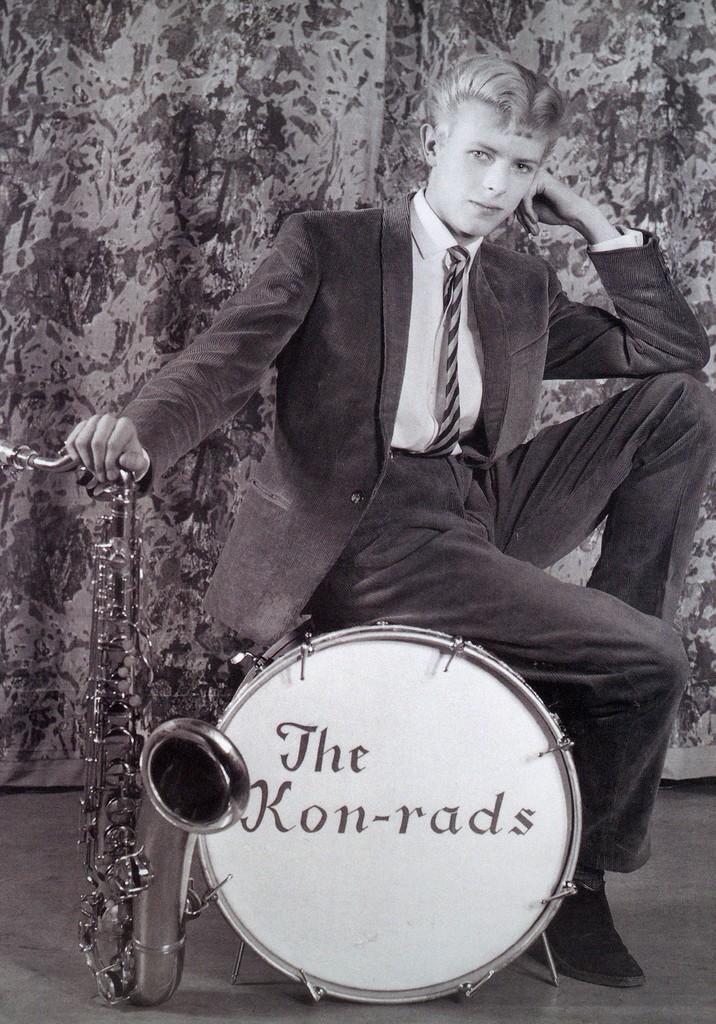
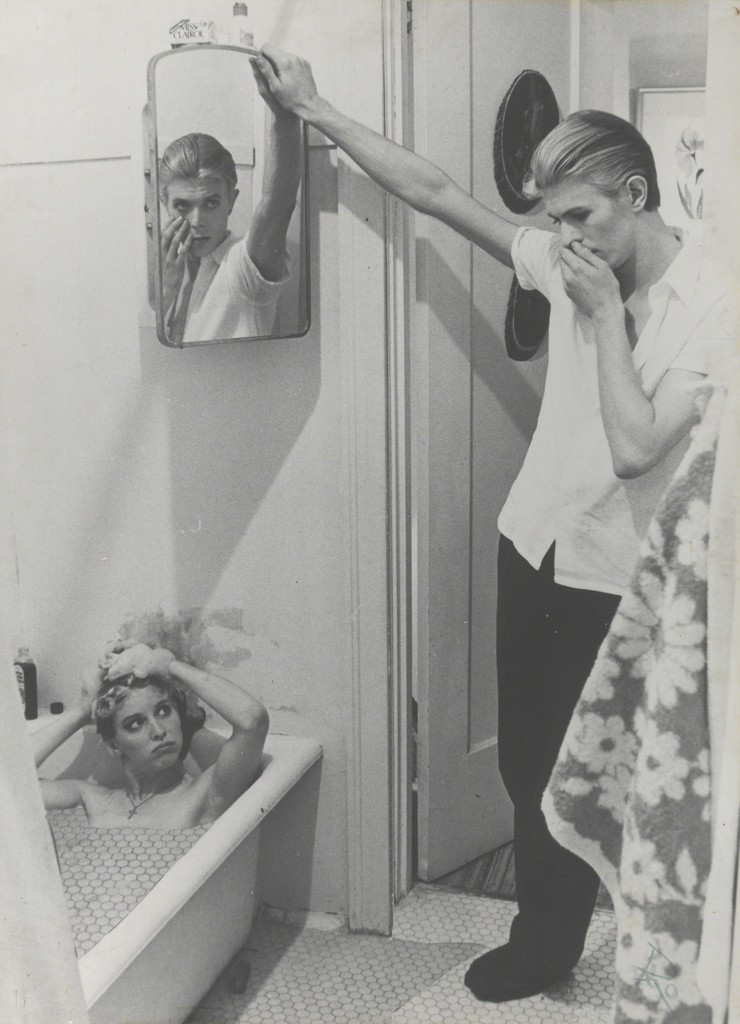
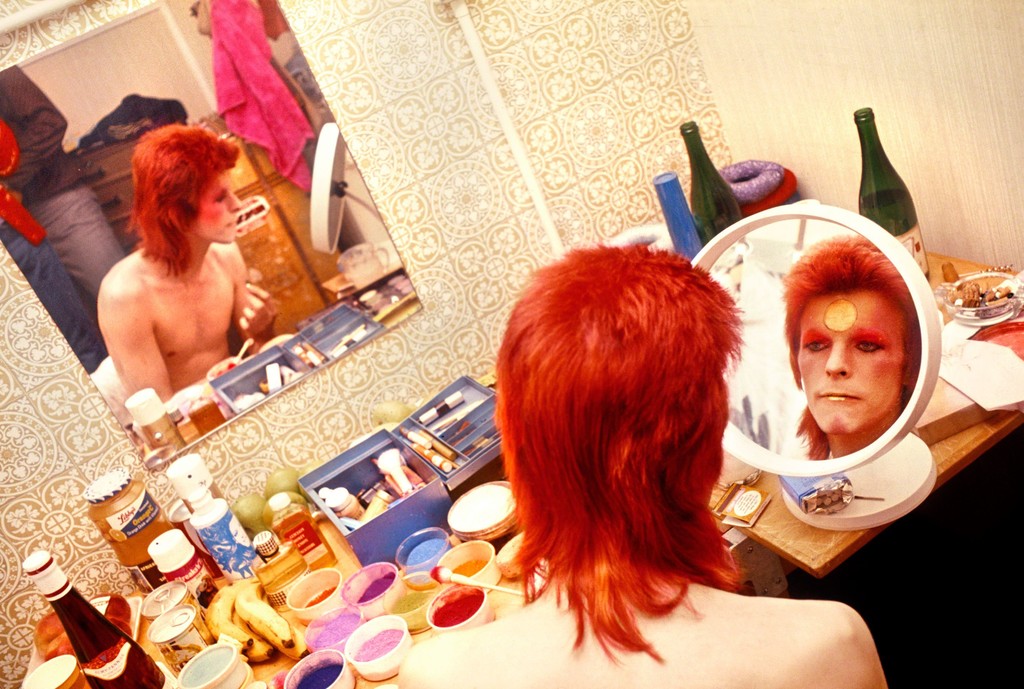
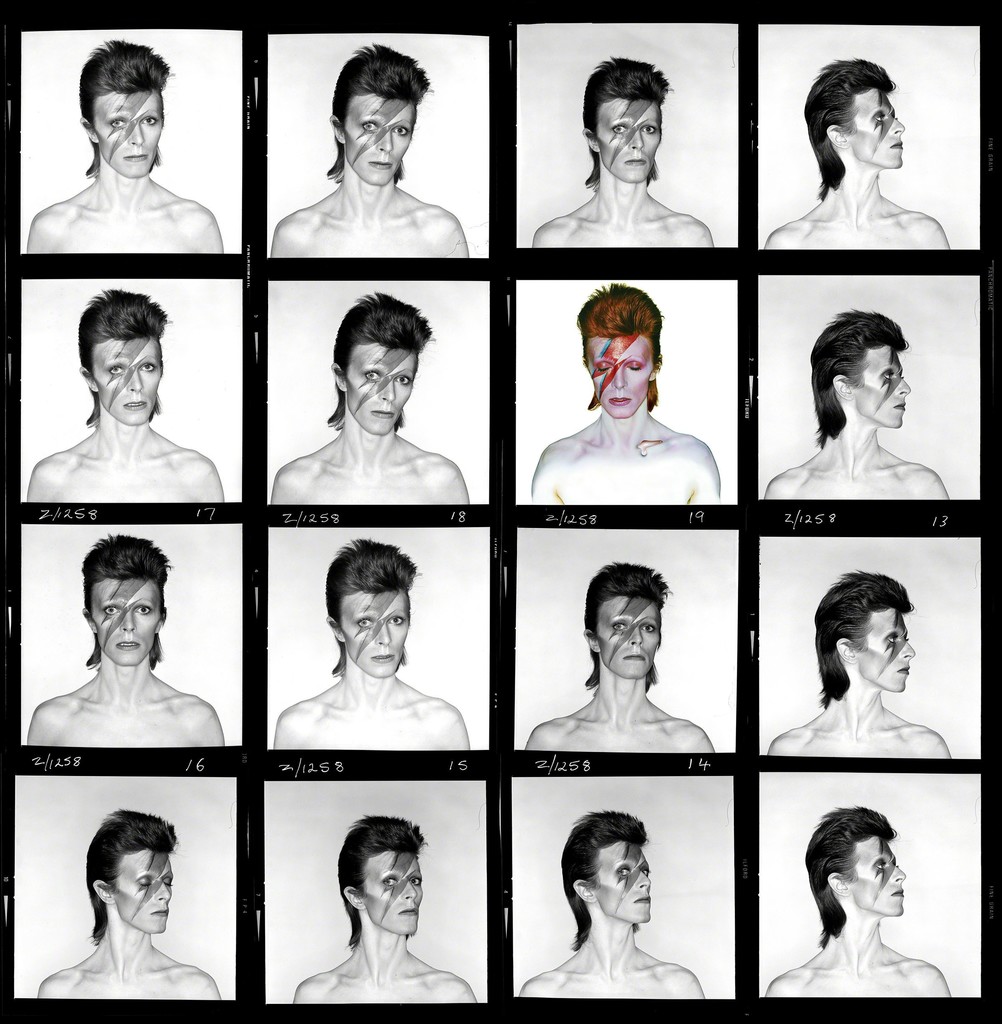
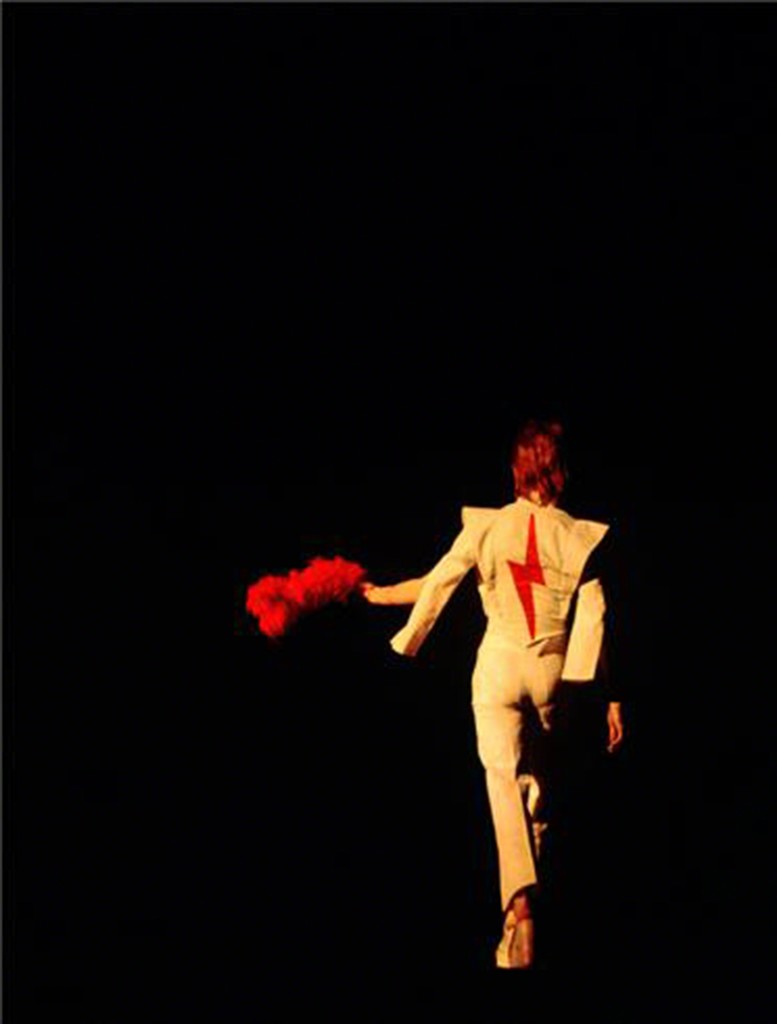
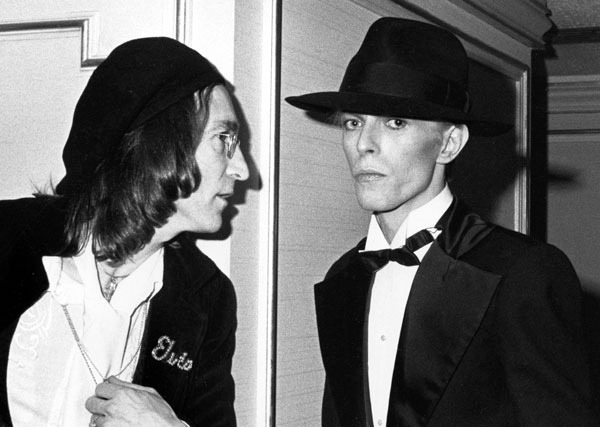
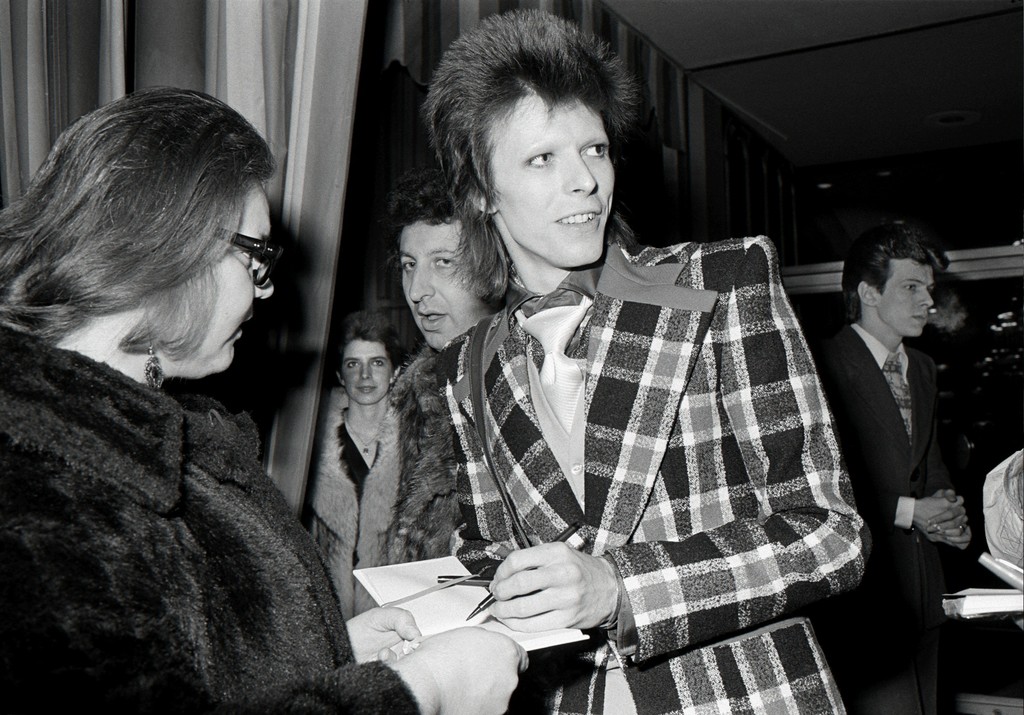
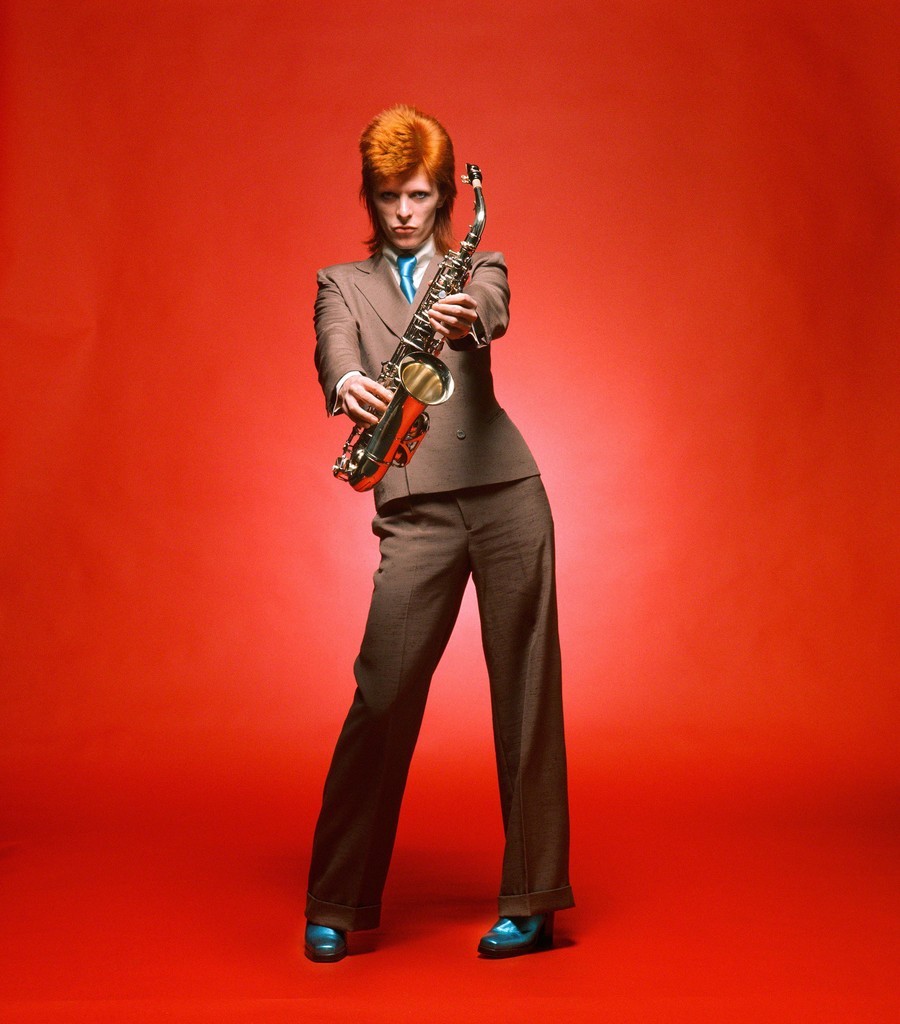
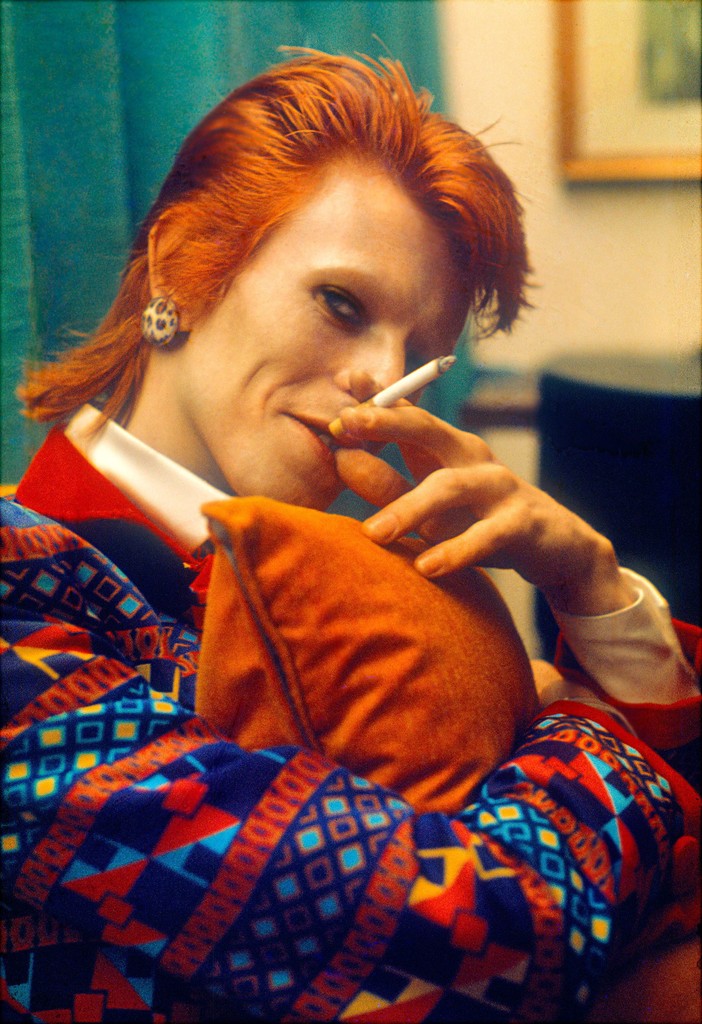
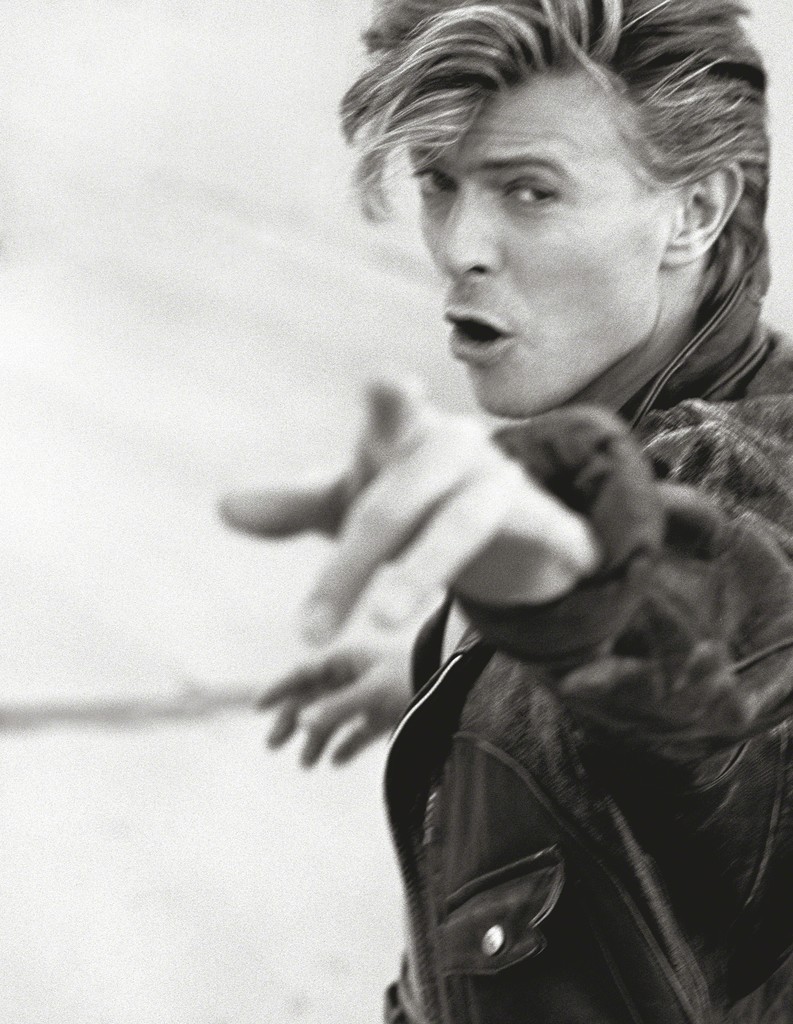
In 1974, a twentysomething David Bowie graced the stage of “The Dick Cavett Show.” By way of introduction, the wry host cued a cascade of portraits of the fiercely costumed, fast-ascending rockstar. To an untrained eye, the images could have represented an entire cast of different characters—a pink-haired punk, an interstellar alien, a sinewy pin-up among them. The telling constant was a pair of ice-blue eyes with their spellbinding pupils, one permanently dilated (the casualty of a youthful brawl). As Bowie readied to make his entrance, Cavett summed up the artist’s rare allure: “David Bowie is a superstar in a category that has never actually been defined, because as soon as a critic tries to say what he is, he changes—like a chameleon.”
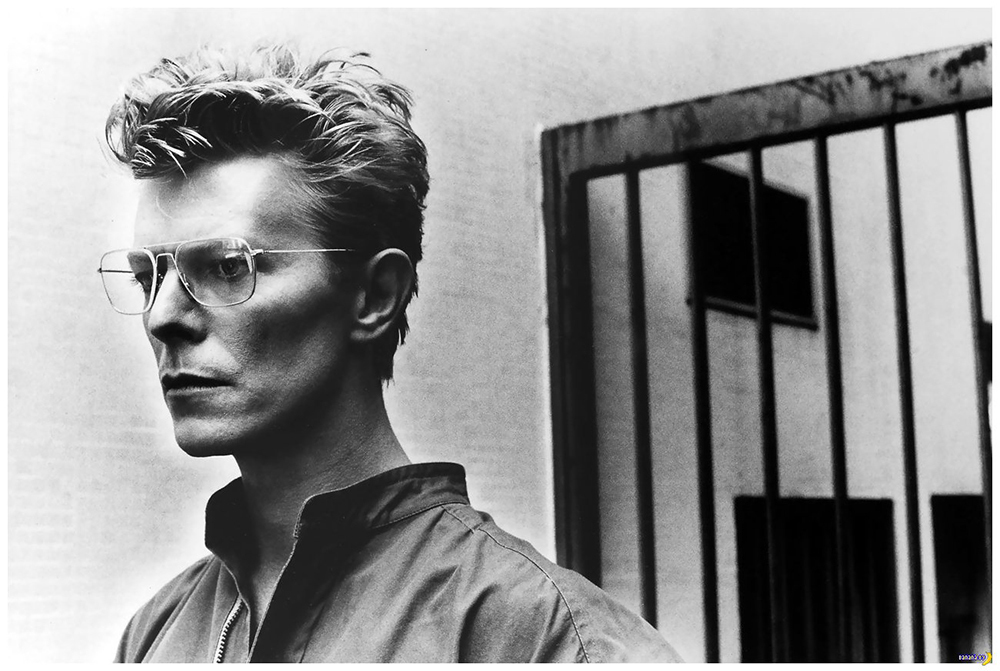
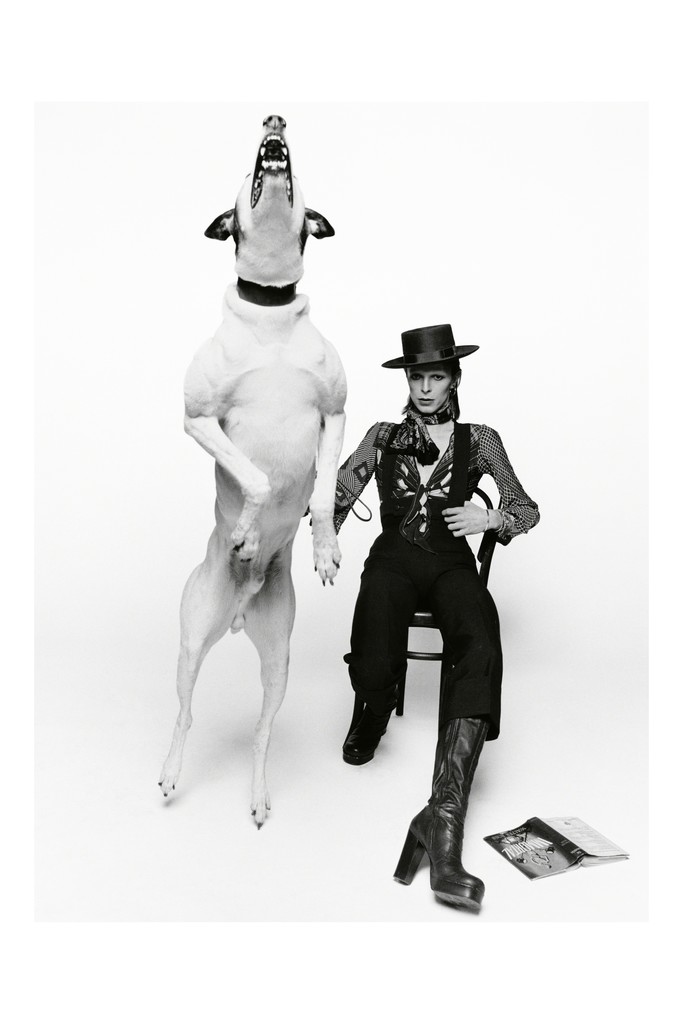
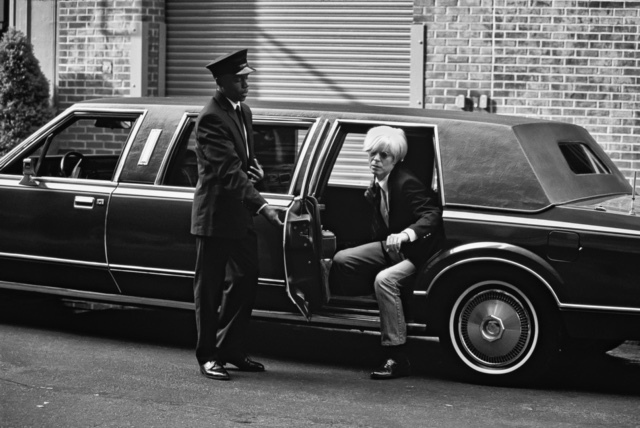
Indeed, to say Bowie wore many hats would be an understatement—he wore thousands. And his ever-changing persona was exceeded only by his inimitable creative output. His bounty of chart-topping albums hosted many of the last century’s greatest tracks, which innovatively fused soul, jazz, funk, disco, glam, and rock. His elaborate costumes, often audaciously gender-bending, reflected his omnivorous approach to music. He elegantly but ardently supported the careers of fellow musicians, from Ava Cherry to Iggy Pop to Lou Reed. And he painted and acted, too, fittingly playing the role of Andy Warhol in Julian Schnabel’s 1996 film, Basquiat. Today, as we mourn the loss of this courageous artist, patron, activist, and, as he might put it, alien (we say this lovingly, to underscore that his contributions to art, across mediums, were unimpeachably singular), we take a look at the many faces of David Bowie, through a lifetime of portraits.
—Artsy Editors


In 1974, a twentysomething David Bowie graced the stage of “The Dick Cavett Show.” By way of introduction, the wry host cued a cascade of portraits of the fiercely costumed, fast-ascending rockstar. To an untrained eye, the images could have represented an entire cast of different characters—a pink-haired punk, an interstellar alien, a sinewy pin-up among them. The telling constant was a pair of ice-blue eyes with their spellbinding pupils, one permanently dilated (the casualty of a youthful brawl). As Bowie readied to make his entrance, Cavett summed up the artist’s rare allure: “David Bowie is a superstar in a category that has never actually been defined, because as soon as a critic tries to say what he is, he changes—like a chameleon.”
Indeed, to say Bowie wore many hats would be an understatement—he wore thousands. And his ever-changing persona was exceeded only by his inimitable creative output. His bounty of chart-topping albums hosted many of the last century’s greatest tracks, which innovatively fused soul, jazz, funk, disco, glam, and rock. His elaborate costumes, often audaciously gender-bending, reflected his omnivorous approach to music. He elegantly but ardently supported the careers of fellow musicians, from Ava Cherry to Iggy Pop to Lou Reed. And he painted and acted, too, fittingly playing the role of Andy Warhol in Julian Schnabel’s 1996 film, Basquiat. Today, as we mourn the loss of this courageous artist, patron, activist, and, as he might put it, alien (we say this lovingly, to underscore that his contributions to art, across mediums, were unimpeachably singular), we take a look at the many faces of David Bowie, through a lifetime of portraits.


Why Sotheby’s Just Bought an Art Advisory for $85 Million

Why Sotheby’s Just Bought an Art Advisory for $85 Million

Sotheby’s announced on Monday that it has acquired art advisory firm Art Agency, Partners (AAP). Though bold in the roadmap for the oldest company currently traded on the New York Stock Exchange and unprecedented for the art market, the move is not entirely surprising. Here’s why.
Portrait of Amy Cappellazzo and Allan Schwartzman of Art Agency, Partners, courtesy of Art Agency, Partners.

The Deal


Sotheby’s will pay up to $85 million for the nearly two-year-old Art Agency, Partners. $50 million of that sum is an upfront cash payment, while the remaining $35 million is variable based on a series of undisclosed performance benchmarks for the next five years. The announcement comes on the heels of a series of buyouts of 80 employees (5% of its workforce) at an estimated cost of $40 million in Q4 of 2015 and a steep decline in the performance of Sotheby’s shares, which have dropped approximately 50% in value since last March.
Tad Smith, president and CEO of Sotheby’s, reportedly pursued the acquisition, which creates a new fine art division of Sotheby’s over which AAP founding partners Amy Cappellazzo and Allan Schwartzman will preside as co-chairmen. AAP’s third partner, Adam Chinn, who comes from a background in finance and law, has been named Worldwide Head of Transaction Support for Sotheby’s, replacing Mitchell Zuckerman, who retired as part of the buyouts. All three report directly to Smith and will work from Sotheby’s headquarters on the Upper East Side. AAP’s remaining staff of 12 (and its entire advisory services business) will also be folded into Sotheby’s but will, for the most part, continue working from their current Flatiron office for the time being.

The Players


While all three of Art Agency, Partners’s principals bring unique skillsets to Sotheby’s, Cappellazzo is likely the biggest coup for the auction house. She spent 13 years at Christie’s prior to founding AAP. Her ascent to becoming international chairman of post-war and contemporary art there fell in step with—and in no small part helped direct—the swift upswing of the art market since the turn of the century, particularly as buyers from Asia, South America, and Eastern Europe more frequently entered the ring.
With AAP, Cappellazzo, Schwartzman, and Chinn assembled one of the most enviable client lists in the art world. The effort was no doubt in large part thanks to Schwartzman’s keen curatorial eye; he was a founding staff member of New York’s New Museum and responsible for the legendary Brazilian art park of Bernardo Paz, Inhotim, where he serves as creative director. Paz remains among the firm’s clients. And Schwartzman’s client acquisition acumen will certainly be prized in his new role at Sotheby’s. (It’s worth noting that one existing client, Howard Rachofsky, told The Wall Street Journal that he is still evaluating the long-term implications for the firm under its new ownership. AAP had, after all, represented clients buying major lots from Christie’s as well as Sotheby’s.)
Chinn’s investment banking and law background may seem the most outlandish of the three to the layperson. However, the eight- and nine-figure transactions that currently mark the top end of the auction market require complex financial arrangements, which AAP has found a niche in providing—and Sotheby’s has a fervent interest in expanding as part of its offer.

The Upshot


Ultimately, Sotheby’s move to acquire Art Agency, Partners is groundbreaking in its firm indication of the business’s future: that of a client-first provider of art services rather than as an auction house in our traditional understanding of the term. This transition has been at the forefront of Smith’s agenda since taking the reigns from former CEO William Ruprecht following a hostile takeover by billionaire activist investor Dan Loeb.
Smith began to roll out that vision in earnest in December, when it was announced that he had poached 25-year Christie’s veteran Marc Porter to join Sotheby’s with the mission of boosting the house’s private sales division, the results of which have reportedly lagged significantly in recent months. (He will start work in 2017 after waiting out a non-compete.)
Cappellazzo and Schwartzman, meanwhile, are additionally set to create advisory-styled client services for the auction house. Those services, according to a statement from Smith, run the gamut “from art consulting and private purchases and sales to art-related estate planning, museum development, and art investment” and represent “important strategic growth areas for Sotheby’s.” From a revenue perspective, such an expansion opens up new avenues for recurring client revenue (from the retainers typically charged by advisories) as well as commissions from sales. And, ultimately, creating a vertically integrated art buying, selling, and financing experience for collectors could prove competitive where profitability is concerned against the favorable business terms and guarantees of Sotheby’s privately-held rivals (read: Christie’s).
Perhaps unsurprisingly, Cappellazzo is bullish about their prospects. “Ours is an industry poised for change,” she said in a statement, “and the conditions are perfect for a preeminent auction house to transform itself into a premier, client-centric art business.” (Cappellazzo later told Bloomberg that she had long advocated for a shift from “being an auction business [to]...being an art business” during her time at Christie’s.)
Given AAP’s focus on 20th- and 21st-century art, the deal puts further emphasis on the need for Sotheby’s to bolster its position in those sectors—the most profitable of the art market—after the loss of its former rainmaker, Tobias Meyer, who left the house in November 2013, as well as more recent departures this fall, including its CFO, Patrick McClymont, which may have contributed to shaken investor confidence.
On Monday, investors responded favorably to the announcement. Sotheby’s (BID) closed at $23.23, up 7.20%, marking the largest jump for the stock in a single trading session since February 3rd, 2012, when share price increased 7.83%.


—Alexander Forbes


When Philosophy Lost Its Way

When Philosophy Lost Its Way

The Stone
The Stone is a forum for contemporary philosophers and other thinkers on issues both timely and timeless.
Students at the University of California at Berkeley.Credit Jim Wilson/The New York Times

The history of Western philosophy can be presented in a number of ways. It can be told in terms of periods — ancient, medieval and modern. We can divide it into rival traditions (empiricism versus rationalism, analytic versus Continental), or into various core areas (metaphysics, epistemology, ethics). It can also, of course, be viewed through the critical lens of gender or racial exclusion, as a discipline almost entirely fashioned for and by white European men.
The philosopher’s hands were never clean and were never meant to be.
Yet despite the richness and variety of these accounts, all of them pass over a momentous turning point: the locating of philosophy within a modern institution (the research university) in the late 19th century. This institutionalization of philosophy made it into a discipline that could be seriously pursued only in an academic setting. This fact represents one of the enduring failures of contemporary philosophy.
Take this simple detail: Before its migration to the university, philosophy had never had a central home. Philosophers could be found anywhere — serving as diplomats, living off pensions, grinding lenses, as well as within a university. Afterward, if they were “serious” thinkers, the expectation was that philosophers would inhabit the research university. Against the inclinations of Socrates, philosophers became experts like other disciplinary specialists. This occurred even as they taught their students the virtues of Socratic wisdom, which highlights the role of the philosopher as the non-expert, the questioner, the gadfly.
Philosophy, then, as the French thinker Bruno Latour would have it, was “purified” — separated from society in the process of modernization. This purification occurred in response to at least two events. The first was the development of the natural sciences, as a field of study clearly distinct from philosophy, circa 1870, and the appearance of the social sciences in the decade thereafter. Before then, scientists were comfortable thinking of themselves as “natural philosophers” — philosophers who studied nature; and the predecessors of social scientists had thought of themselves as “moral philosophers.”
The second event was the placing of philosophy as one more discipline alongside these sciences within the modern research university. A result was that philosophy, previously the queen of the disciplines, was displaced, as the natural and social sciences divided the world between them.
This is not to claim that philosophy had reigned unchallenged before the 19th century. The role of philosophy had shifted across the centuries and in different countries. But philosophy in the sense of a concern about who we are and how we should live had formed the core of the university since the church schools of the 11th century. Before the development of a scientific research culture, conflicts among philosophy, medicine, theology and law consisted of internecine battles rather than clashes across yawning cultural divides. Indeed, these older fields were widely believed to hang together in a grand unity of knowledge — a unity directed toward the goal of the good life. But this unity shattered under the weight of increasing specialization by the turn of the 20th century.
Early 20th-century philosophers thus faced an existential quandary: With the natural and social sciences mapping out the entirety of both theoretical as well as institutional space, what role was there for philosophy? A number of possibilities were available: Philosophers could serve as 1) synthesizers of academic knowledge production; 2) formalists who provided the logical undergirding for research across the academy; 3) translators who brought the insights of the academy to the world at large; 4) disciplinary specialists who focused on distinctively philosophical problems in ethics, epistemology, aesthetics and the like; or 5) as some combination of some or all of these.
If philosophy was going to have a secure place in the academy, it needed its own discrete domain, its own arcane language, its own standards of success and its own specialized concerns.
There might have been room for all of these roles. But in terms of institutional realities, there seems to have been no real choice. Philosophers needed to embrace the structure of the modern research university, which consists of various specialties demarcated from one another. That was the only way to secure the survival of their newly demarcated, newly purified discipline. “Real” or “serious” philosophers had to be identified, trained and credentialed. Disciplinary philosophy became the reigning standard for what would count as proper philosophy.
This was the act of purification that gave birth to the concept of philosophy most of us know today. As a result, and to a degree rarely acknowledged, the institutional imperative of the university has come to drive the theoretical agenda. If philosophy was going to have a secure place in the academy, it needed its own discrete domain, its own arcane language, its own standards of success and its own specialized concerns.
Having adopted the same structural form as the sciences, it’s no wonder philosophy fell prey to physics envy and feelings of inadequacy. Philosophy adopted the scientific modus operandi of knowledge production, but failed to match the sciences in terms of making progress in describing the world. Much has been made of this inability of philosophy to match the cognitive success of the sciences. But what has passed unnoticed is philosophy’s all-too-successful aping of the institutional form of the sciences. We, too, produce research articles. We, too, are judged by the same coin of the realm: peer-reviewed products. We, too, develop sub-specializations far from the comprehension of the person on the street. In all of these ways we are so very “scientific.”
Our claim, then, can be put simply: Philosophy should never have been purified. Rather than being seen as a problem, “dirty hands” should have been understood as the native condition of philosophic thought — present everywhere, often interstitial, essentially interdisciplinary and transdisciplinary in nature. Philosophy is a mangle. The philosopher’s hands were never clean and were never meant to be.
There is another layer to this story. The act of purification accompanying the creation of the modern research university was not just about differentiating realms of knowledge. It was also about divorcing knowledge from virtue. Though it seems foreign to us now, before purification the philosopher (and natural philosopher) was assumed to be morally superior to other sorts of people. The 18th-century thinker Joseph Priestley wrote “a Philosopher ought to be something greater and better than another man.” Philosophy, understood as the love of wisdom, was seen as a vocation, like the priesthood. It required significant moral virtues (foremost among these were integrity and selflessness), and the pursuit of wisdom in turn further inculcated those virtues. The study of philosophy elevated those who pursued it. Knowing and being good were intimately linked. It was widely understood that the point of philosophy was to become good rather than simply to collect or produce knowledge.
NOW IN PRINT
The Stone Reader: Modern Philosophy in 133 Arguments
The Stone Reader
An anthology of essays from The Times’s philosophy series, published by Liveright.
As the historian Steven Shapin has noted, the rise of disciplines in the 19th century changed all this. The implicit democracy of the disciplines ushered in an age of “the moral equivalence of the scientist” to everyone else. The scientist’s privileged role was to provide the morally neutral knowledge needed to achieve our goals, whether good or evil. This put an end to any notion that there was something uplifting about knowledge. The purification made it no longer sensible to speak of nature, including human nature, in terms of purposes and functions. By the late 19th century, Kierkegaard and Nietzsche had proved the failure of philosophy to establish any shared standard for choosing one way of life over another. This is how Alasdair MacIntyre explained philosophy’s contemporary position of insignificance in society and marginality in the academy. There was a brief window when philosophy could have replaced religion as the glue of society; but the moment passed. People stopped listening as philosophers focused on debates among themselves.
Once knowledge and goodness were divorced, scientists could be regarded as experts, but there are no morals or lessons to be drawn from their work. Science derives its authority from impersonal structures and methods, not the superior character of the scientist. The individual scientist is no different from the average Joe; he or she has, as Shapin has written, “no special authority to pronounce on what ought to be done.” For many, science became a paycheck, and the scientist became a “de-moralized” tool enlisted in the service of power, bureaucracy and commerce.
Here, too, philosophy  has aped the sciences by fostering a culture that might be called “the genius contest.” Philosophic activity devolved into a contest to prove just how clever one can be in creating or destroying arguments. Today, a hyperactive productivist churn of scholarship keeps philosophers chained to their computers. Like the sciences, philosophy has largely become a technical enterprise, the only difference being that we manipulate words rather than genes or chemicals. Lost is the once common-sense notion that philosophers are seeking the good life — that we ought to be (in spite of our failings) model citizens and human beings. Having become specialists, we have lost sight of the whole. The point of philosophy now is to be smart, not good. It has been the heart of our undoing.

Robert Frodeman and Adam Briggle teach in the department of philosophy and religion and the University of North Texas. They are co-authors of the forthcoming “Socrates Tenured: The Institutions of 21st-Century Philosophy.”
Follow The New York Times Opinion section on Facebook and on Twitter, and sign up for the Opinion Today newsletter.

Monday, January 11, 2016

vintage photos...

the Art of Serendipity

Credit Brendan Monroe

DO some people have a special talent for serendipity? And if so, why?

In 2008, an inventor named Steve Hollinger lobbed a digital camera across his studio toward a pile of pillows. “I wasn’t trying to make an invention,” he said. “I was just playing.” As his camera flew, it recorded what most of us would call a bad photo. But when Mr. Hollinger peered at that blurry image, he saw new possibilities. Soon, he was building a throwable videocamera in the shape of a baseball, equipped with gyroscopes and sensors. The Squito (as he named it) could be rolled into a crawlspace or thrown across a river — providing a record of the world from all kinds of “nonhuman” perspectives. Today, Mr. Hollinger holds six patents related to throwable cameras.
A surprising number of the conveniences of modern life were invented when someone stumbled upon a discovery or capitalized on an accident: the microwave oven, safety glass, smoke detectors, artificial sweeteners, X-ray imaging. Many blockbuster drugs of the 20th century emerged because a lab worker picked up on the “wrong” information.
While researching breakthroughs like these, I began to wonder whether we can train ourselves to become more serendipitous. How do we cultivate the art of finding what we’re not seeking?
For decades, a University of Missouri information scientist named Sanda Erdelez has been asking that question. Growing up in Croatia, she developed a passion for losing herself in piles of books and yellowed manuscripts, hoping to be surprised. Dr. Erdelez told me that Croatian has no word to capture the thrill of the unexpected discovery, so she was delighted when — after moving to the United States on a Fulbright scholarship in the 1980s — she learned the English word “serendipity.”
Today we think of serendipity as something like dumb luck. But its original meaning was very different.

In 1754, a belle-lettrist named Horace Walpole retreated to a desk in his gaudy castle in Twickenham, in southwest London, and penned a letter. Walpole had been entranced by a Persian fairy tale about three princes from the Isle of Serendip who possess superpowers of observation. In his letter, Walpole suggested that this old tale contained a crucial idea about human genius: “As their highnesses travelled, they were always making discoveries, by accident and sagacity, of things which they were not in quest of.” And he proposed a new word — “serendipity” — to describe this princely talent for detective work. At its birth, serendipity meant a skill rather than a random stroke of good fortune.
Dr. Erdelez agrees with that definition. She sees serendipity as something people do. In the mid-1990s, she began a study of about 100 people to find out how they created their own serendipity, or failed to do so.
Her qualitative data — from surveys and interviews — showed that the subjects fell into three distinct groups. Some she called “non-encounterers”; they saw through a tight focus, a kind of chink hole, and they tended to stick to their to-do lists when searching for information rather than wandering off into the margins. Other people were “occasional encounterers,” who stumbled into moments of serendipity now and then. Most interesting were the “super-encounterers,” who reported that happy surprises popped up wherever they looked. The super-encounterers loved to spend an afternoon hunting through, say, a Victorian journal on cattle breeding, in part, because they counted on finding treasures in the oddest places. In fact, they were so addicted to prospecting that they would find information for friends and colleagues.
You become a super-encounterer, according to Dr. Erdelez, in part because you believe that you are one — it helps to assume that you possess special powers of perception, like an invisible set of antennas, that will lead you to clues.
A few months ago, I was having a drink in Cambridge, Mass., with a friend, a talented journalist who was piecing together a portrait of a secretive Wall Street wizard. “But I haven’t found the real story yet; I’m still gathering string,” my friend told me, invoking an old newsroom term to describe the first stage of reporting, when you’re looking for something that you can’t yet name. Later that night, as I walked home from the bar, I realized “gathering string” is just another way of talking about super-encountering. After all, “string” is the stuff that accumulates in a journalist’s pocket. It’s the note you jot down in your car after the interview, the knickknack you notice on someone’s shelf, or the anomaly that jumps out at you in Appendix B of an otherwise boring research study.
As I navigated the brick sidewalk, passing under the pinkish glow of a streetlight, I thought about how string was probably hiding all around me. A major story might lurk behind the Harvard zoology museum ahead or in the plane soaring above. String is everywhere for the taking, if you have the talent to take it.
In the 1960s, Gay Talese, then a young reporter, declared that “New York is a city of things unnoticed” and delegated himself to be the one who noticed. Thus, he transformed the Isle of Manhattan into the Isle of Serendip: He traced the perambulations of feral cats, cataloged shoeshine purveyors, tracked down statistics related to the bathrooms at Yankee Stadium and discovered a colony of ants at the top of the Empire State Building. He published his findings in a little book titled “New York: A Serendipiter’s Journey.”

The term “serendipiter” breathed new life into Walpole’s word, turning serendipity into a protagonist and a practitioner. After all, those ants at the top of the Empire State Building didn’t find themselves; Mr. Talese had to notice them, which was no easy matter. Similarly, Dr. Erdelez came up with the term super-encounterer to give us a way to talk about the people rather than just the discoveries. Without such words, we tend to become dazzled by the happy accident itself, to think of it as something that exists independent of an observer.
We can slip into a twisted logic in which we half-believe the penicillin picked Alexander Fleming to be its emissary, or that the moons of Jupiter wanted to be seen by Galileo. But discoveries are products of the human mind.
As people dredge the unknown, they are engaging in a highly creative act. What an inventor “finds” is always an expression of him- or herself. Martin Chalfie, who won a Nobel Prize for his work connected with green fluorescent protein — the stuff that makes jellyfish glow green — told me that he and several other Nobel Prize winners benefited from a chain of accidents and chance encounters on the way to their revelations. Some scientists even embrace a kind of “free jazz” method, he said, improvising as they go along: “I’ve heard of people getting good results after accidentally dropping their experimental preparations on the floor, picking them up, and working on them nonetheless,” he added.

So how many big ideas emerge from spills, crashes, failed experiments and blind stabs? One survey of patent holders (the PatVal study of European inventors, published in 2005) found that an incredible 50 percent of patents resulted from what could be described as a serendipitous process. Thousands of survey respondents reported that their idea evolved when they were working on an unrelated project — and often when they weren’t even trying to invent anything. This is why we need to know far more about the habits that transform a mistake into a breakthrough.

IN the late 1980s, Dr. John Eng, an endocrinologist, became curious about certain animal poisons that damaged the pancreas, so he ordered lizard venom through the mail and began to play around with it. As a result of this curious exercise, he discovered a new compound in the saliva of a Gila monster, and that in turn led to a treatment for diabetes. One of Dr. Eng’s associates (quoted in a 2005 newspaper article) remarked that he was capable of seeing “patterns that others don’t see.”
Is this pattern-finding ability similar to the artistic skill of a painter like Georgia O’Keeffe? Is it related to the string-gathering prowess of Gay Talese? We still know so little about creative observation that it’s impossible to answer such questions.
That’s why we need to develop a new, interdisciplinary field — call it serendipity studies — that can help us create a taxonomy of discoveries in the chemistry lab, the newsroom, the forest, the classroom, the particle accelerator and the hospital. By observing and documenting the many different “species” of super-encounterers, we might begin to understand their minds
A number of pioneering scholars have already begun this work, but they seem to be doing so in their own silos and without much cross-talk. In a 2005 paper (“Serendipitous Insights Involving Nonhuman Primates”), two experts from the Washington National Primate Research Center in Seattle cataloged the chance encounters that yielded new insights from creatures like the pigtail macaque. Meanwhile, the authors of a paper titled “On the Exploitation of Serendipity in Drug Discovery” puzzled over the reasons the 1950s and ’60s saw a bonanza of breakthroughs in psychiatric medication, and why that run of serendipity ended. And in yet another field of study, a few information scientists are trying to understand the effects of being bombarded on social media sites with countless tantalizing pieces of “string.”
What could these researchers discover if they came together for one big conversation?
Of course, even if we do organize the study of serendipity, it will always be a whimsical undertaking, given that the phenomenon is difficult to define, amazingly variable and hard to capture in data. The clues will no doubt emerge where we least expect them, perhaps in the fungi clinging to the walls of parking garages or the mating habits of bird-watchers. The journey will be maddening, but the potential insights could be profound: One day we might be able to stumble upon new and better ways of getting lost.

Review: In Julian Barnes’s ‘Keeping an Eye Open,’ Paintings Worth a Thousand Words

Credit Patricia Wall/The New York Times
Gustave Flaubert — the subject of Julian Barnes’s magical novel-biography-meditation, “Flaubert’s Parrot” — argued that great paintings required no words of explanation. But as Mr. Barnes writes in “Keeping an Eye Open,” an illuminating new collection of essays on art, “we remain incorrigibly verbal creatures who love to explain things” — “put us in front of a picture and we chatter, each in our different way.”
Mr. Barnes, not surprisingly, chatters like the gifted novelist he is, using his eye for the telling detail, his narrative intuition and his understanding of the creative process to help us see familiar artists like Degas, Braque and Magritte afresh, and to appreciate the work of lesser-known masters as well — the beautifully harmonic interiors of Édouard Vuillard; the stylized, psychologically intense portraits of men and women in Félix Vallotton’s Nabi-period canvases, and Howard Hodgkin’s “hot, often scorched” use of color.
Mr. Barnes writes with an easy understanding of the tension between life and art and the strange alchemy of imagination; he also conveys an appreciation of artists’ technique, as it has been learned from predecessors and developed through experimentation and serendipity. He effortlessly situates a masterwork in the context of its creator’s career, and that career within the larger arc of art history — all, with a light but authoritative hand.
   
“The Anabaptists: Pierre Bonnard” by Édouard Vuillard, from 1935; Musee d’Art Moderne de la Ville de Paris. Credit Roger-Viollet/Bridgeman Images
While he warns of the hazards of allowing biographical gossip to affect our interpretation of artworks, he’s also deft at unraveling the ways in which artists’ temperaments can inform vision and style. He contrasts the work of the arrogant, dominating Picasso to the calm, almost Zen-like paintings of Braque; and he suggests a connection between Lucian Freud’s careless, incorrigibly unfaithful life — running through scores of lovers and fathering at least 14 children — and what he describes as a “cold and ruthless” quality to his paintings of women.
The subjects here are chosen somewhat arbitrarily, the result, mostly, of journalistic assignments. But taken together, they tell the story of how artists (mainly, French) moved from Romanticism to Realism to Modernism. He traces the shifting values we place on the sort of transformations — subtle, grand, surreal, satirical — these painters worked on reality, while examining the mysterious dynamic between individual artists’ gifts and an emerging cultural zeitgeist.
Mr. Barnes succinctly evokes the contradictions embodied by Delacroix: a member of that generation of French Romantics who were inspired by Shakespeare and Byron, but who also esteemed Voltaire and Mozart — a “self-defended man who feared passion and valued above all tranquillity,” but whose art spoke of “extravagance, passion, violence, excess.”
He describes the self-promoting Courbet — “a great painter, but also a serious publicity act” — as “an in-your-face Realist,” whose family motto might well have been “Shout loud and walk straight.” And he asserts that much as Manet made Courbet seem part of the tradition, so would Cézanne make Manet feel like a part of the fast receding past.
  
Julian Barnes Credit Alan Edwards
The speed with which these changes occurred is breathtaking in retrospect: how quickly the Cubists and many who followed “took over, absorbed and cannibalized Cézanne.” “He is where modern art — even Modern Art — begins,” Mr. Barnes writes. Yet today, on the walls of the great museums, he fits smoothly into what has become part of the historical continuum.
These may not exactly be new or revelatory insights, but one appeal of “Keeping an Eye Open” is that Mr. Barnes does not write as a scholar, but as an avid and thoughtful amateur — adept at conveying a tactile sense of a painting and its emotional penumbra, and its philosophical subtext, too. Of Courbet’s “L’Atelier,” Mr. Barnes notes that its depiction of the painter working on a landscape (in a studio, not en plein-air) implies that Courbet is “doing more than merely reproducing the known, established world — he is creating it anew himself.”
In another chapter, he wryly observes that portraits created by Cézanne, who once exhorted a model to be still “like an apple,” were really still lifes, “governed by color and harmony,” not depictions of “human beings who do normal human things like talk, laugh and move.” As for Magritte, Mr. Barnes points out that he tweaked the Surrealist method of opposing completely unrelated objects by juxtaposing (or substituting) related ones (like an egg for a bird).
Mr. Barnes can be blunt, even snarky in articulating his tastes in art; he writes that Warhol “is an artist rather as Fergie is a Royal.” But, at heart, his essays are animated by his keen, appraising eye, and a wellspring of common sense. He dismisses critics who have discerned a misogyny in Degas’s work — based, it seems, on rumors of his own absent love life — when, as Mr. Barnes points out, his radiant studies of dancers and bathers make it clear that he “plainly loved women” in his art. He also turns out to be shrewd in reminding us how Picasso — whose life seemed vulgar and egotistic in comparison to, say, Cézanne’s — now appears high-minded in contrast to “the most ‘successful’ artists of the 21st century, flogging their endless versions of the same idea to know-nothing billionaires.”
Though this volume contains lots of illustrations, one wishes there were even more of the paintings Mr. Barnes discusses. He writes about them so vividly, comments so astutely on small details of light and space and color, that we find ourselves reading the book with an iPad or laptop on hand, Googling images of the works he has so eloquently and ardently described.