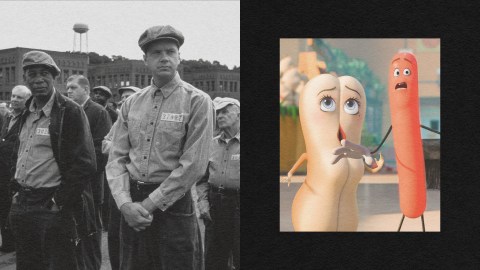
Everyday Philosophy: If beauty is subjective, is “Shawshank Redemption” no better than “Sausage Party”?
- Welcome to Everyday Philosophy, the column where I use insights from the history of philosophy to help you navigate the daily dilemmas of modern life.
- This week we look at a cultural dissonance: Can we think beauty is subjective yet still meaningfully debate the idea?
- To explore the issue, we’re going to look at some aesthetics 101 with Immanuel Kant and David Hume.

Almost everyone I meet tells me that beauty is subjective. Beauty is in the eye of the beholder. But does that mean there are no good and bad movies? Does that mean that Shawshank Redemption is no better than Sausage Party?
– Kiara, USA
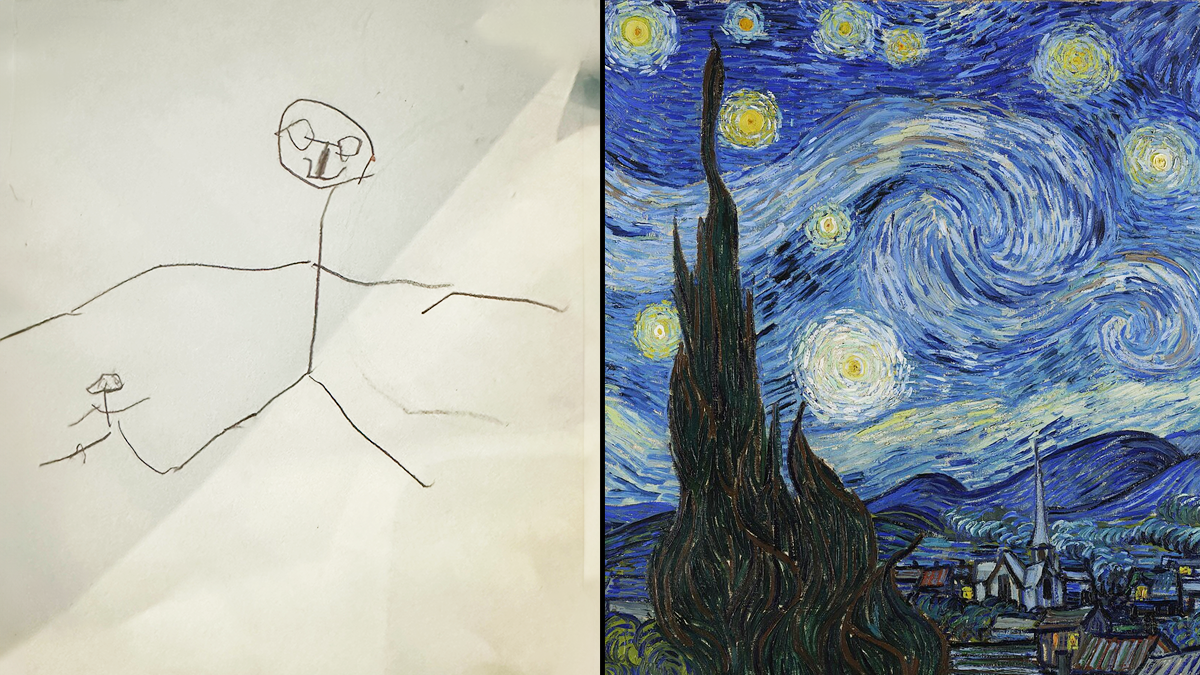
This is a great question because I think we can all relate to it. I’m sure most people have debated “better” or “worse” art forms at some point in their lives. Are The Beatles better than The Rolling Stones? What’s Meryl Streep’s best performance? Is Van Gogh’s Starry Night any better than my four-year-old’s drawing of me? I’m sure you’ve got your opinions. In almost any society with any form of culture, you are bound to find a cultural critic. The first time some paleolithic cave-dweller drew a tree with a stick, his cousin was probably there to grunt, “Looks nothing like it.”
Yet Kiara is right. It is often said that “Beauty is in the eye of the beholder.” I will find pleasant what you find repulsive; you will find lovely what I find disgusting. If you put three people in a room, you’ll get four opinions. It’s common to hear that beauty is not a thing in the object — a structural, essential property, like shape or texture — but rather a “relational property.” It’s something that exists between me, the observer, and the object, which I observe. It’s subjective.
So, how are we to square this? How are we to have discussions and debates about beauty while also arguing “it’s entirely subjective”? Or does one have to give? To explore this issue, we’re going to pull out some philosophy staples — two of the biggest names in Western aesthetics: David Hume and Immanuel Kant (and the latter was very much familiar with the former’s work).
Easels and mixing boards at the ready, we’re getting artistic.
Kant: The way to debate art
When we say, “This thing is beautiful,” or, “This is a great piece of art,” we do two seemingly contradictory things. We express a private, subjective feeling (“This gives me pleasure”), but also, we express a statement of universality — others should feel this way too. Aesthetics is different from just “taste.” With taste, we happily accept that everyone has their individual preferences. But, when we make aesthetic judgments, we are saying, “You should enjoy this, too.” You should agree that this thing is beautiful.
As Kant elsewhere claims, “Ought implies can” — if someone “ought” to do or feel a certain way, then they must be able to. Therefore, others must be capable of finding pleasure in the same work of art that I do. So, when dealing with beauty (rather than preferences), we resort to argument, demonstration, and appeal to get others to come around to our position. Critics and connoisseurs will point out things that “should” give us pleasure. They highlight what’s great about something so that you, too, can enjoy it.
Kant’s aesthetics were concerned mostly with the aesthetic experience. When we encounter some truly beautiful art, it is not a matter of using our rational, intellectual faculties. It’s an interplay of our understanding and our imagination. The aesthetic experience is unique.
So, if you want to debate art, you have to position someone in a certain way to elicit an experience of their own. You can talk about your own feelings when you first watched Shawshank. You can talk about some details that might have been missed. You can refer to the many allusions, metaphors, and poetic implications. Or, you might talk about certain formal elements. We could say, “Look at the color transitions here,” or, “This scene was shot using an Arriflex 35 BL4S.” While these rational elements alone won’t persuade anyone of beauty, they can be part of what Kant calls the “free play” of our imagination and understanding in aesthetic judgments.
So, for Kant, yes, beauty is in the eye of the beholder — but that doesn’t mean you can’t position people’s eyes to behold new beauty.
Hume: The test of time
David Hume took a very different approach to Kant. Hume argued, first, that some people are better or worse at identifying beautiful things, and that we can define great works by the “test of time” criteria.
Hume argued that to appreciate the beauty in anything is not to wallow in a pleasant feeling, but requires a mental ability or a talent to see, feel, or taste things that others cannot. It is to judge from a distance, seeing what cannot be seen by those who only feel or submerge. We’re all born with basic discernment, be it for ice cream flavors or a favorite Disney movie. To be a critic, though, is to recognize the beauty that others miss — to highlight the Tarantino movie references, the subtle plum notes of a Shiraz, the counterpoint harmony of Bach, or the clever wordplay of James Joyce. And this ability takes practice to cultivate. Like any expertise, it needs time and investment.
But what is it about a thing that awards it “beautiful”? What are the “standards of taste”? And why do plum notes make a wine good…?
Hume believed that standards of beauty were defined by those of good taste. These connoisseurs know what is good or beautiful, and they set the benchmarks. The longer something is seen as beautiful by these critics, the more reliably we can accept that standard. So, the Iliad has endured the “test of time” longer than The Handmaid’s Tale, and so it has a better claim to beauty.
So, coming back to Kiara’s question, if we believe Hume, we can still have debates about art, but it’s decidedly less fun than in the case of Kant. Hume’s argument leads us to be far more data-driven than opinionated. We have to collect the Metacritic and Rotten Tomatoes scores throughout time. We have to see how many critics of worth call a work of art good. But, of course, we have to be prepared to reevaluate that “greatness” of art if the critics of today or tomorrow start to reappraise those works. If every critic from now until 2742 called Shawshank Redemption rubbish and Sausage Party “classic art,” then it would be so.
Art matters
At the heart of Kiara’s question is an assumption that hasn’t always been so obvious in the philosophy of art. The idea that “beauty is in the eye of the beholder” remains a controversial position. As we have seen, while both Kant and Hume might see beauty as a “relational property” between the witness and the object, they do not want to entirely equate beauty with taste or preference.
Aesthetic experiences are hard to talk about because not only are they very hard to articulate, but they’re also deeply important. Most people reading this will agree that a moment of profound aesthetic enjoyment — a favorite song, book, movie, whatever — is far more qualitatively superior than what pizza toppings you like. Aesthetic experiences matter — and that’s why it’s hard to argue they’re entirely subjective. The idea that Shakespeare might be viewed as of equal merit as a 7-year-old’s holiday diary seems almost offensive.
And this passion, this importance, is why we keep having debates. It’s why we watch the Oscars and read reviews. It’s why we scoff at people’s opinions and see them as close to madness. Art is important to who we are as a species and who I am as a person.