Friday, September 23, 2022

COOLING CEILINGS AIR CONDITIONING OBSOLETE?

 https://www.frameweb.com/article/sustainability/will-cooling-ceilings-make-air-conditioning-obsolete?utm_source=Frame+Newsletters&utm_campaign=c37534e01a-EMAIL_CAMPAIGN_9_23_2022_14_17__COPY_01&utm_medium=email&utm_term=0_cd91c750f2-c37534e01a-33668575&mc_cid=c37534e01a&mc_eid=5f7c46731d


THE NEXT SPACE 23 SEPTEMBER 2022

We’ve officially reached autumn in the northern hemisphere, a cool relief to some after this summer’s string of heatwaves. With at least half a year before the temperatures begin to climb again, the forward-thinking among us will be considering how to mitigate scorching summers in the future. Before you automatically turn to air conditioning – which, according to the International Energy Agency’s ‘The Future of Cooling’ report, is estimated to become one of the key drivers of global electricity demand – know that it’s not the only option. In today’s top story, we hear from an expert on radiant cooling ceilings, a rarely applied solution with promising potential.


TRACEY INGRAM EDITOR AT LARGE

SUSTAINABILITY
Will cooling ceilings make air conditioning obsolete?


Alexander Buff, founder and CEO of Interpanel, is set to change our notion of temperature control and the practice of cooling interiors. He talked with us about the potential of his unique dew-point independent radiant ceiling, and how it challenges and supersedes air conditioning, allowing for more sustainable temperature control.

WILL COOLING CEILINGS MAKE AIR CONDITIONING OBSOLETE?

Alexander Buff, founder and CEO of Interpanel, is set to change our notion of temperature control and the practice of cooling interiors. He talked with us about the potential of his unique dew-point independent radiant ceiling, and how it challenges and supersedes air conditioning, allowing for more sustainable temperature control. 

Your radiant ceiling operates according to a different principle than air conditioning and as a cooling technology, it constitutes a category of its own. Why then do you have an issue with the term air conditioning?

ALEXANDER BUFF: Since the development of our radiant cooling ceiling and its market introduction, we have witnessed an increasing openness in the construction industry in regard to the adoption of novel solutions, as long as they provide added value to the clients and are convincing in economic and technical terms. At the same time, we have noticed how air conditioning is omnipresent, not least due to the dominance of the English term. Air conditioning is generally used to communicate the cooling of interior spaces, as if it was the only cooling principle that exists. This is unfortunate. Cooling ceilings, by contrast, are well known but still relatively rarely applied – even though they are superior to conventional air conditioning in several ways.

Alexander Buff.

In what ways is radiant cooling superior to air conditioning?

For one, water-based radiant cooling and heating is more efficient than convective air conditioning which circulates huge volumes of air. This requires a lot of energy from fans, because air is a poor vehicle for thermal energy. We don’t heat the bathroom with a hair dryer either – but use a static radiator that permanently emits heat into the room instead of moving air around the room. This static principle is also used for the Interpanel radiant ceiling. Due to the absence of air movement, it causes no draft and requires neither filters nor ventilation. It also works in complete silence. In fact, being a passive and silent system, clients sometimes ask us for some proof that our ceiling works once it has been installed. Compared to air conditioning, our cooling sail allows energy savings of up to 60 per cent while offering a healthier room climate. Due to its dew-point independence, it can be used in combination with natural window ventilation. 

You have realized applications in retail, healthcare, industry and office spaces, each of them with specific requirements as to temperature control and comfort. How can you cater to your clients’ different needs?

Cooling capacity and comfort requirements vary according to different users and situations. German work environment regulation specifies a standard temperature of 26 degrees at 32 degrees outside. Some clients simply want to fulfil this norm while other clients, such as those in industry, specify 24 degrees for their interiors all summer, no matter the outside temperature, still others haven’t even thought about the temperature they want. As manufacturer and system provider we help our clients to transmit their specific requests into a corresponding energy use and temperature profile by considering their minimum-maximum requirements, official regulations and demands on comfort. 

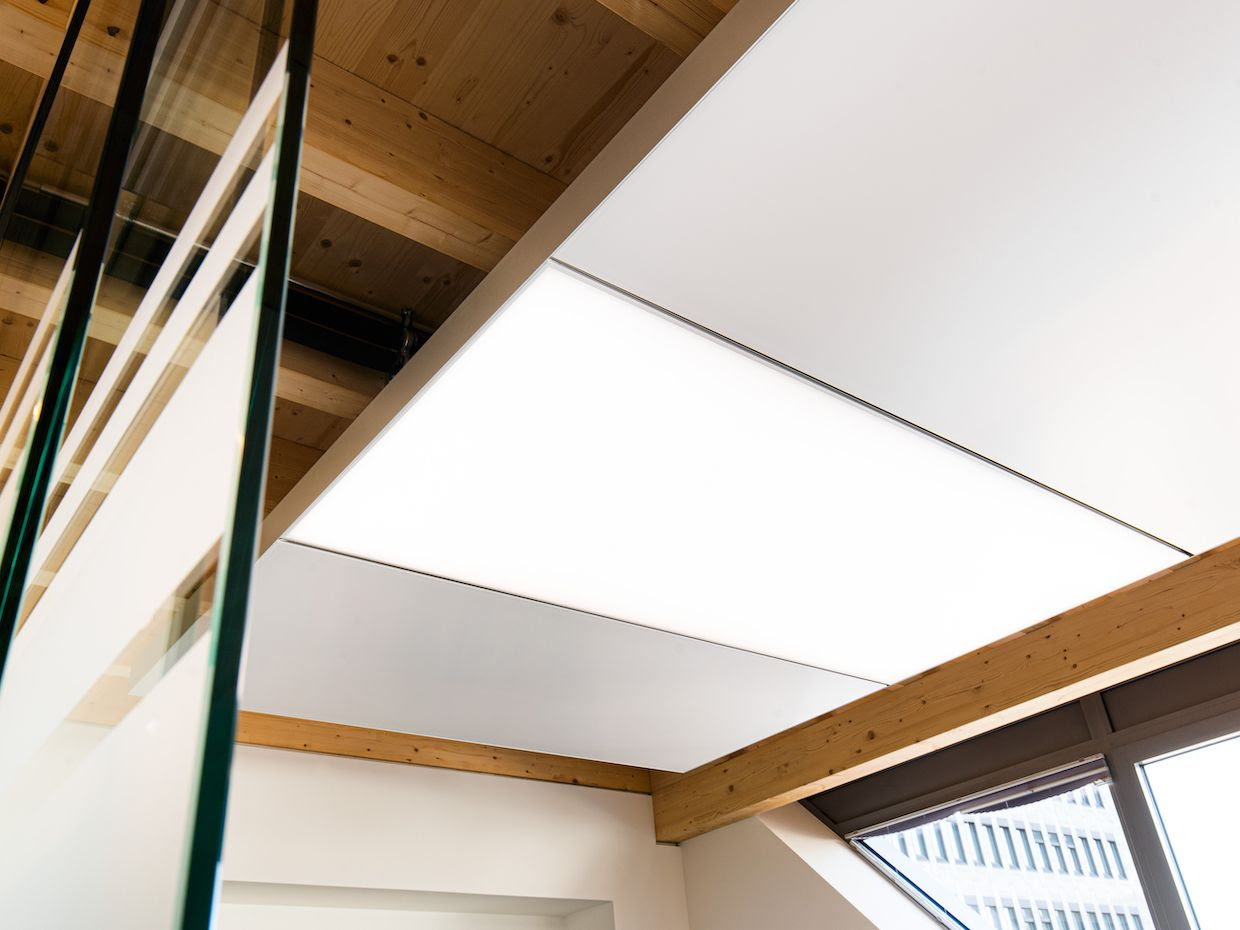
Interpanel's cooling sails offer energy savings of up to 60 per cent compared to air-conditioning systems.

This also means taking future events into account – different tenants and building uses or the changing climate. In order to provide reliable projections of the future, we perform coupled energy and thermal building simulations which map the building’s operation in the future. We can for instance simulate the climate of 2050 for any building.
 Still, comfort climate goes beyond mere temperature control. It also depends on air quality, acoustics and light and other factors such as personal preferences. For thermal comfort, requirements vary according to the activity level at work but also individual physical constitution and gender. Let’s not forget that even within the norm, you can never obtain 100 per cent satisfaction. We seek to maximize individual comfort by offering the possibility for zonal cooling and heating and the integration of circadian lighting and high absorbing acoustic properties.

Besides operational electricity savings, how else can your cooling panel assist the interior and construction industries in reducing carbon emissions?

Our system helps saving resources in more than one aspect. Besides the electricity savings you mention, its passive operating principle means that it requires no maintenance and is long-lasting. Due to its modular design each single component can be replaced. The ceiling sail is separate from the structural parts of the building and can be reused in different constellations or even buildings when the owner’s or tenant’s requirements change. These are significant aspects from a user’s point of view. 

The cooling ceilings also help facilitate energetic building redevelopment.

At yet another scale, we aim at establishing Interpanel as a prefabricated standard that provides cooling, heating, workspace lighting and sound absorption in one solution. With our easy-to-install system, any building can be upgraded within short time. As such it may contribute to more efficient processes in construction, allowing energetic building redevelopment at a serial scale. In coming years, there will be a strong trend towards building redevelopment, one we already witness today. If we want to reach carbon neutrality by 2050, we have to redevelop existing buildings rather than constructing new ones. Think of New York, where one million office and commercial buildings await energetic upgrading. Individual solutions and processes on the building site require a lot of skilled work. This sheer volume can only ever be covered in time with scalable and standardized solutions like ours.

RELATED ARTICLES

MORE SUSTAINABILITY
Will cooling ceilings make air conditioning obsolete?

Will cooling ceilings make air conditioning obsolete?

We need to cool our interiors without further heating up the planet. Here's how

We need to cool our interiors without further heating up the planet. Here's how

Don't miss your chance to stay current on last week's top spatial-design news

Don't miss your chance to stay current on last week's top spatial-design news


Thursday, September 22, 2022

Colombian Collector Art-Filled Hotel

Art World

See How a Colombian Collector Turned Pablo Escobar’s Former Mexican Hideout Into an Art-Filled Hotel

Lio Malca's vast collection is spread across his homes, a hotel, and a foundation in Spain.

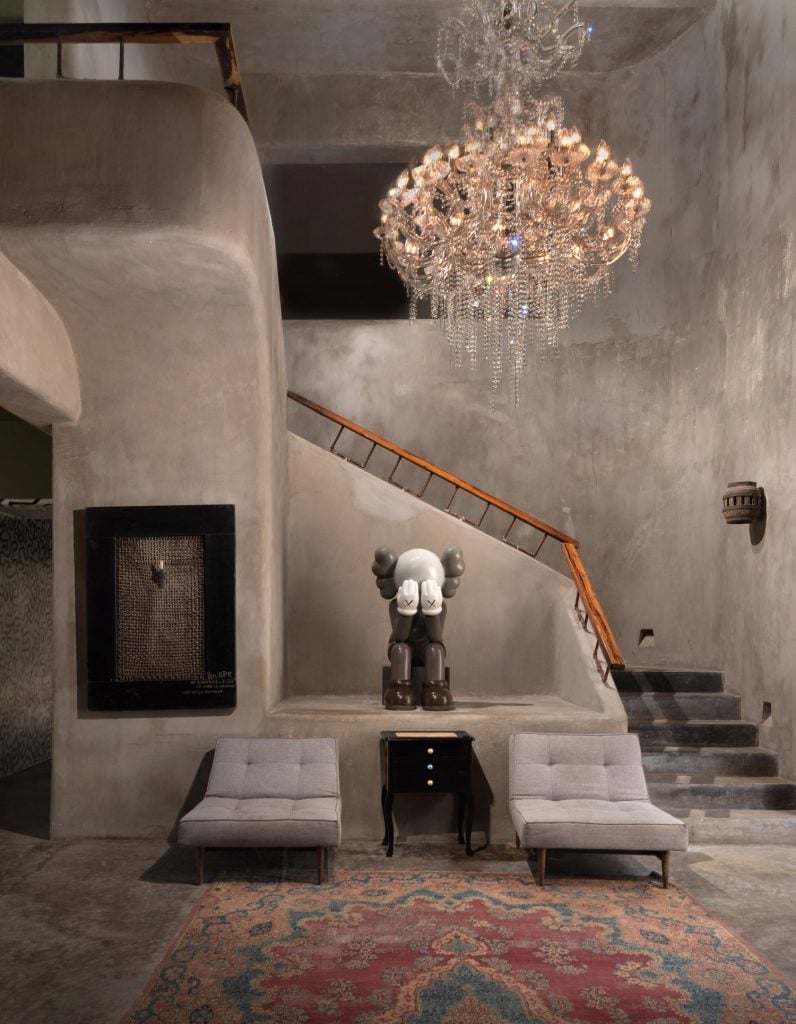
Installation view of KAWS Companion, Passing Through (2011). Image courtesy Lio Malca and Casa Malca.
Installation view of KAWS Companion, Passing Through (2011). Image courtesy Lio Malca and Casa Malca.

Roughly a decade ago, the Colombian-born, New York-based art collector Lio Malca visited the Mexican resort town Tulum. What was planned as a quick one-day stint turned into a week, and soon he was searching for oceanfront real estate.

He did not know then that the following year a prime, once-in-a-lifetime piece of property would come on the market: Cartel kingpin Pablo Escobar’s former hideout.

“The property was truly magical with the most amazing oceanfront I had seen,” Malca told Artnet News.

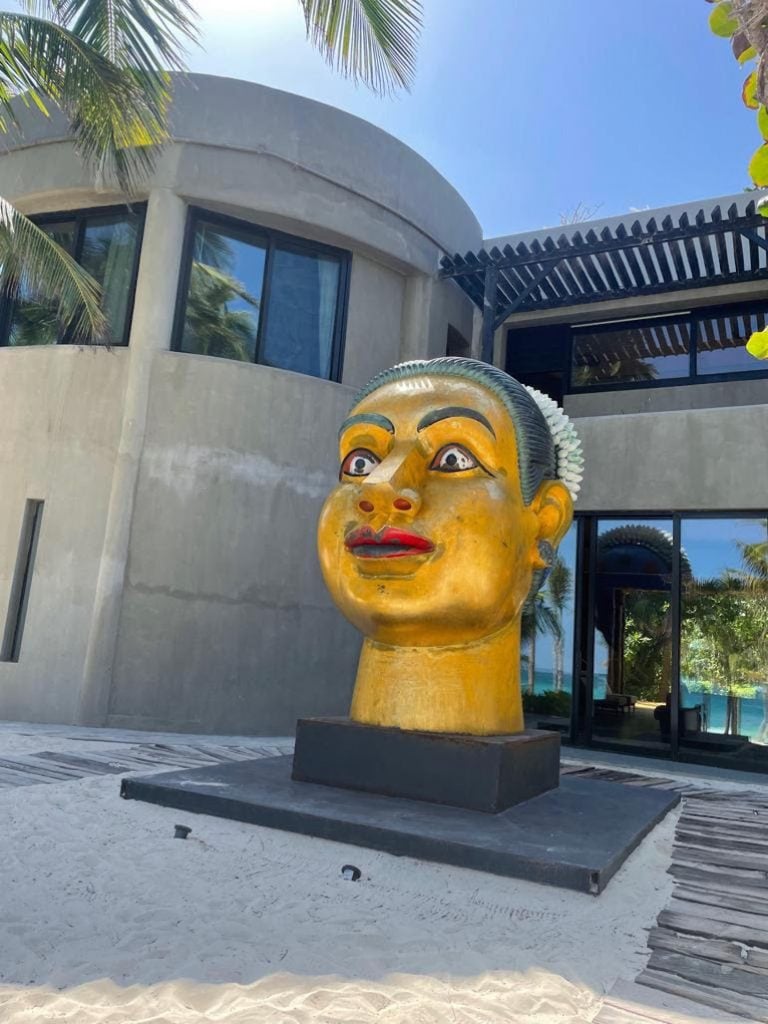
Installation view of a Ravinder Reddy's <i>Head for Diego</i> (2009-2010).<br>Image courtesy Lio Malca and Casa Malca.

Installation view of a Ravinder Reddy’s Head for Diego (2009-2010).
Image courtesy Lio Malca and Casa Malca.

The government seized it in the early 2000s and it remained abandoned for years, until Malca came in.

After he bought it, Malca set about turning the former cartel hideout into Casa Malca, a vibrant 71-room hotel with a spa, several restaurants, and a lot of contemporary art, all from his own collection. Works displayed throughout the property include those by Marina Abramovic, Jean-Michel Basquiat (Malca’s favorite), Marco Brambilla, George Condo, Vik Muñiz, Kenny Scharf, and many others.

“I have installed works here in the same way I do in all of my homes. It is a personal approach that comes from walking through the spaces and feeling the grounds,” Malca said.

Installation view of Subodh Gupta A Giant Leap of Faith, (2006). Image courtesy Lio Malca and Casa Malca.

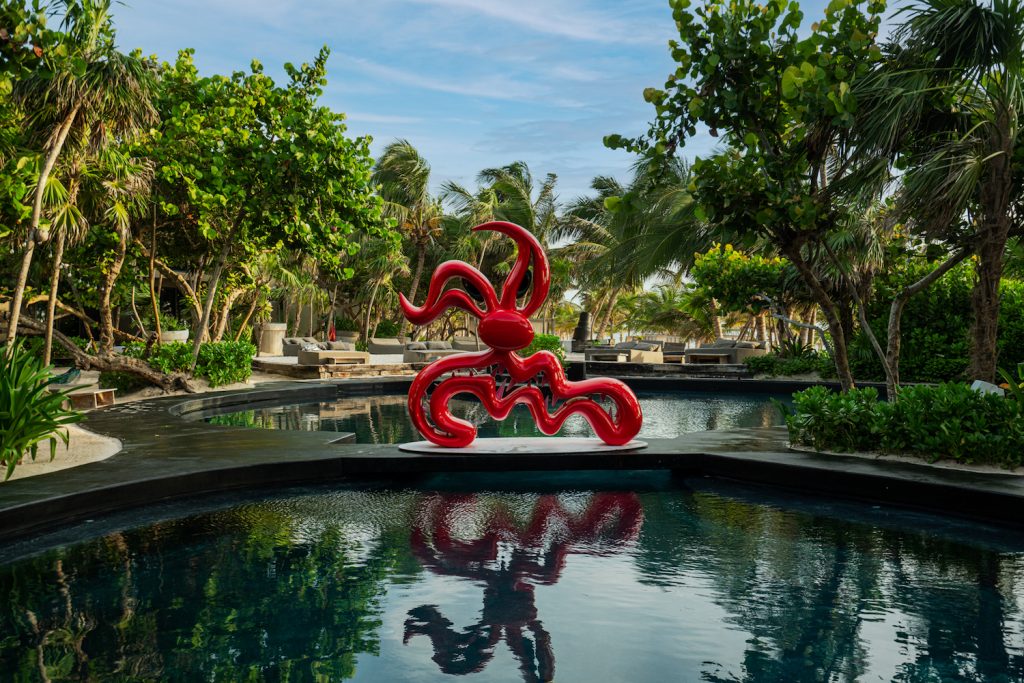
Installation view of Kenny Scharf, Scary Guy (Red) (2013-2018). Image courtesy Lio Malca and Casa Malca.

Malca spent much of the pandemic in Tulum and, a year ago, launched the Art Lodge in a former fishing lodge. He described it as a “fun, fine art residency” that’s open-ended and invitation based. For instance, Scharf did a one-month residency there, who Malca called “the godfather of the Art Lodge,” and has since returned a few times. Other artists have opted to stay for a week or so. 

The final product is typically a work or series of works that can be shown at the nearby Casa Malca, according to the collector’s nephew, Isaac Malca, who has been working closely with his uncle across the growing range of initiatives.

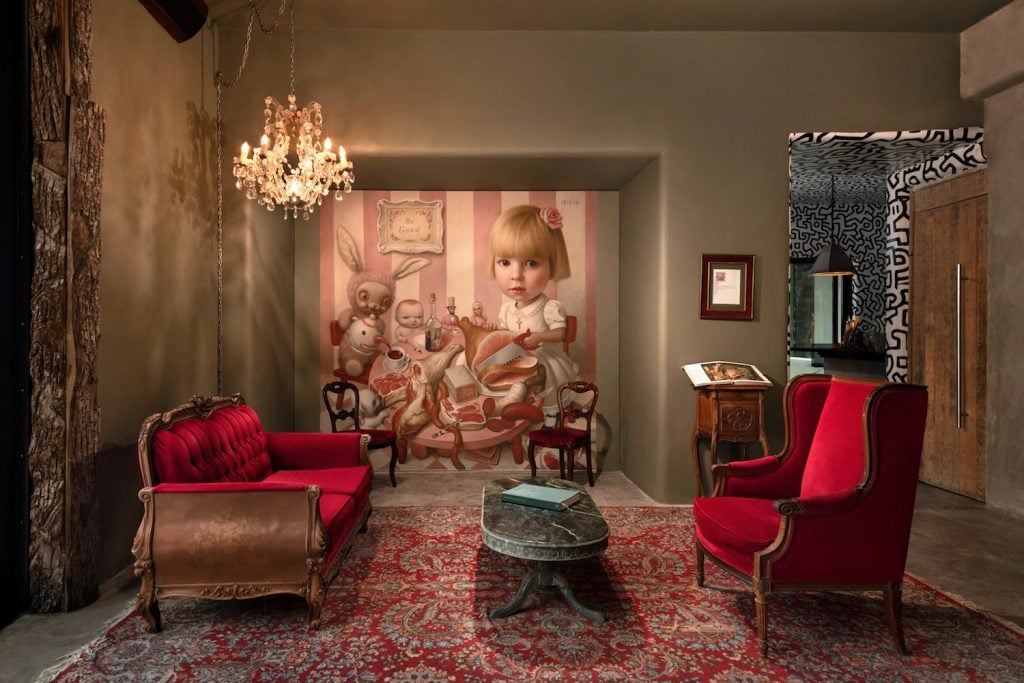
Installation view with Mark Ryden, Rosie’s Tea Party, (2005). Image courtesy Lio Malca and Casa Malca.

Installation view with Mark Ryden, Rosie’s Tea Party (2005). Image courtesy Lio Malca and Casa Malca.

The Art Lodge is nestled deep in the heart of the Sian Ka’an Biosphere, a UNESCO world heritage site since 1987, and is aimed at giving artists the “opportunity to disconnect from the hustle and bustle of the city and get inspired by the mystical Mayan wilderness,” Malca said.

The project is in a way an outgrowth of Malca’s 2015 project, a nonprofit foundation in Ibiza, Spain, called Fundación La Nave Salinas. Based in a former salt warehouse, it showcases contemporary art in its more than 5,000 square feet of exhibition space. Artists who’ve presented works there in the past few years include Scharf, Marco Brambilla, Bill Viola, KAWS, and Eva Beresin.

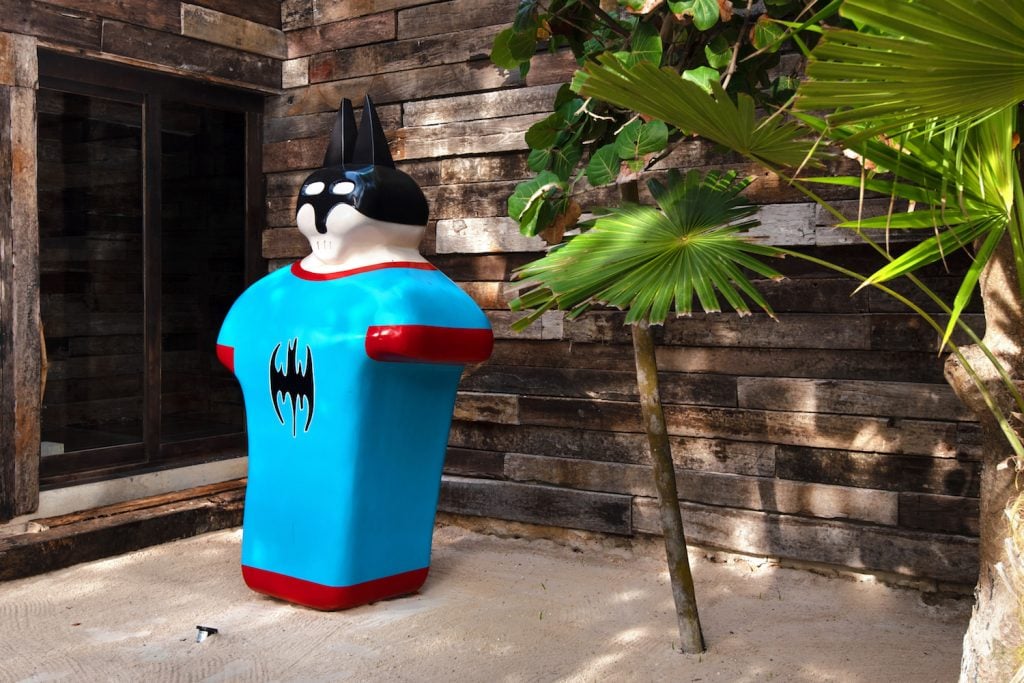
Installation view of Fabien Verschaere, Batman (2007). Image courtesy Casa Malca and Lio Malca.

Malca also operates the eponymous Lio Malca gallery in Chelsea, which doesn’t represent artists.

“We show what we like, so we buy a body of work from the artists,” Malca said. This project-based model, he said, “keeps both parties on their toes because both we and the artists have to deliver their best. It’s like when you’re starting a relationship. You’re not married, you’re dating.”

Asked if he plans to continue to expand his art and real-estate empire, Malca said, “I am always looking to discover new artist new talent, new work and the collection is constantly expanding, so now I am also on the hunt for more wall space. To share with the world”
See more images from Malca’s art properties below.
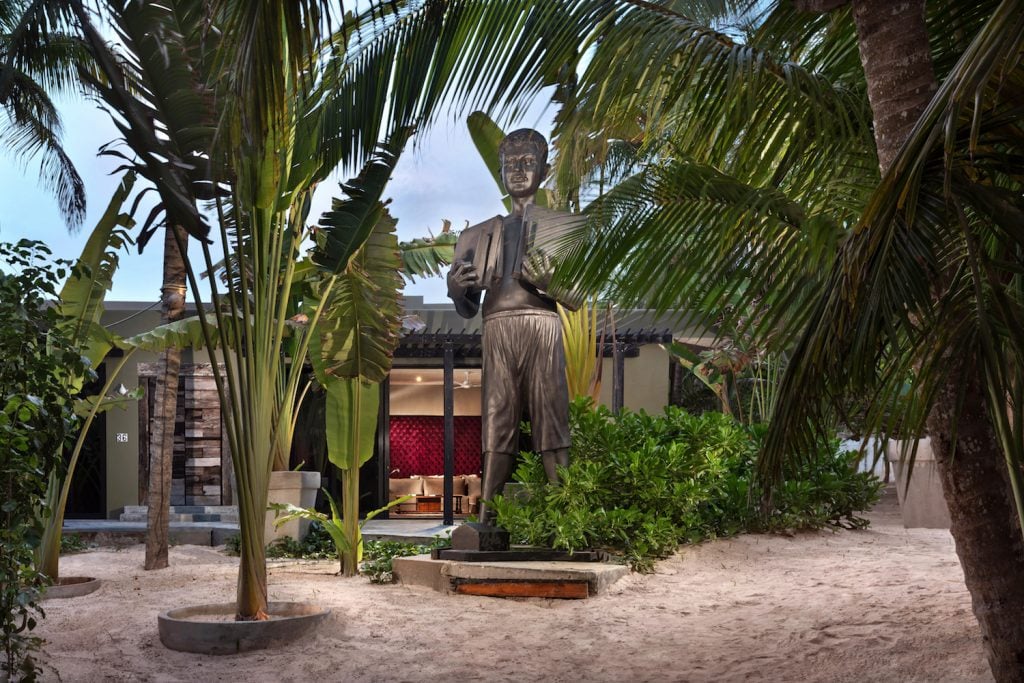
Installation view of Jitish Kallat Eruda, (2006). Image courtesy Lio Malca and Casa Malca

Installation view of Jitish Kallat Eruda (2006). Image courtesy Lio Malca and Casa Malca

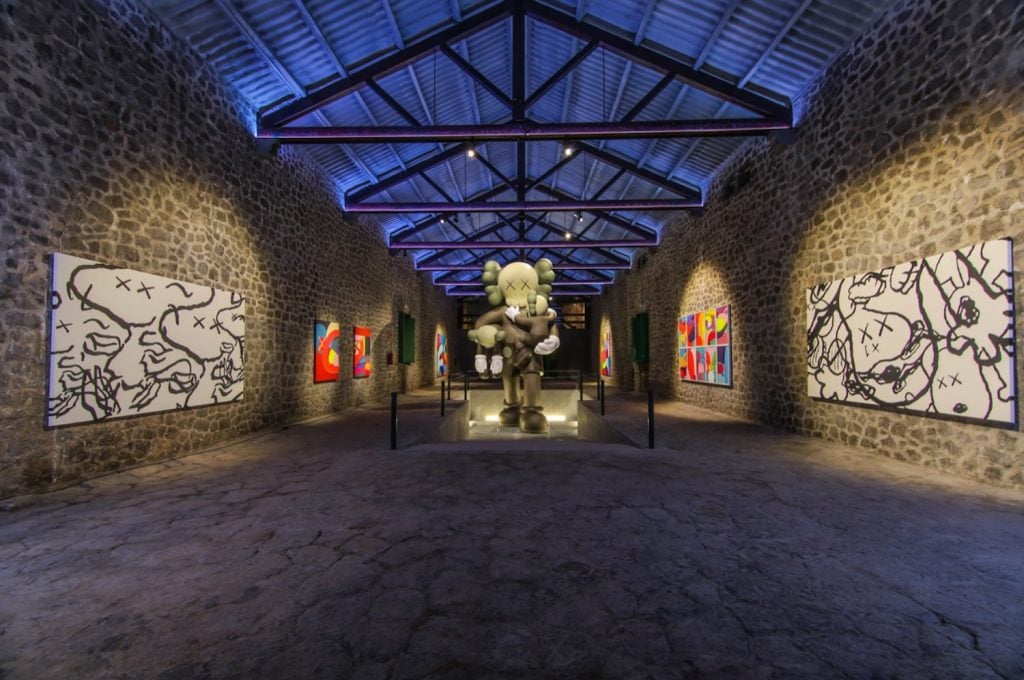
Installation view of KAWS at Fundación La Nave Salinas in Ibiza. Image courtesy Lio Malca.

Installation view of KAWS at Fundación La Nave Salinas in Ibiza. Image courtesy Lio Malca.

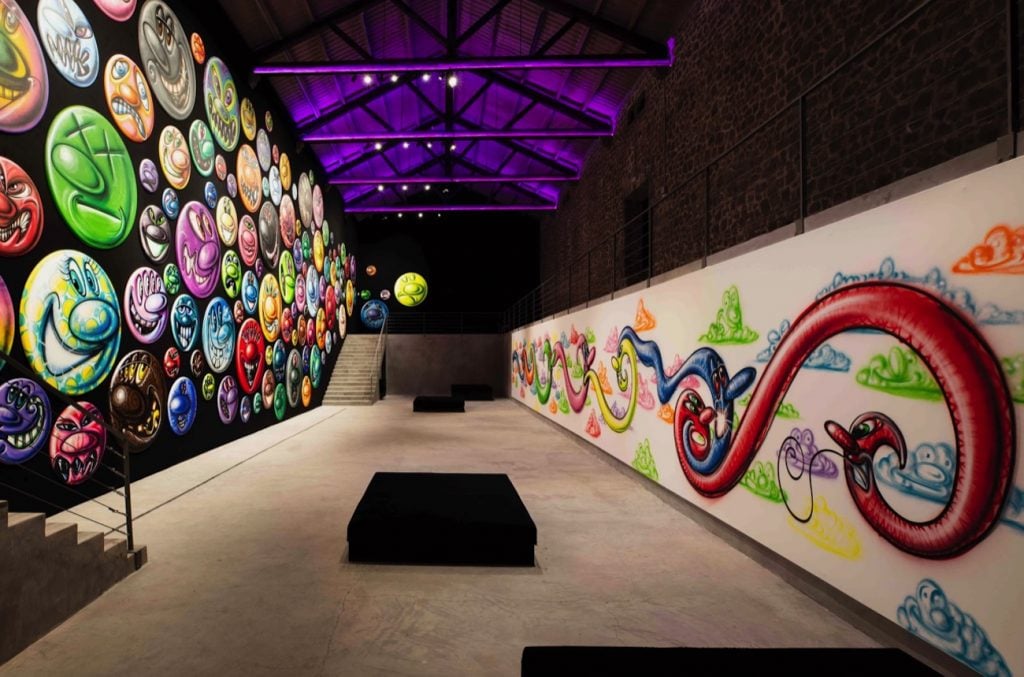
Installation view of work by Kenny Scharf at Fundación La Nave Salinas in Ibiza. Image courtesy Lio Malca.

Installation view of work by Kenny Scharf at Fundación La Nave Salinas in Ibiza. Image courtesy Lio Malca.


Follow Artnet News on Facebook: