Friday, August 26, 2022

Caracas Skyline


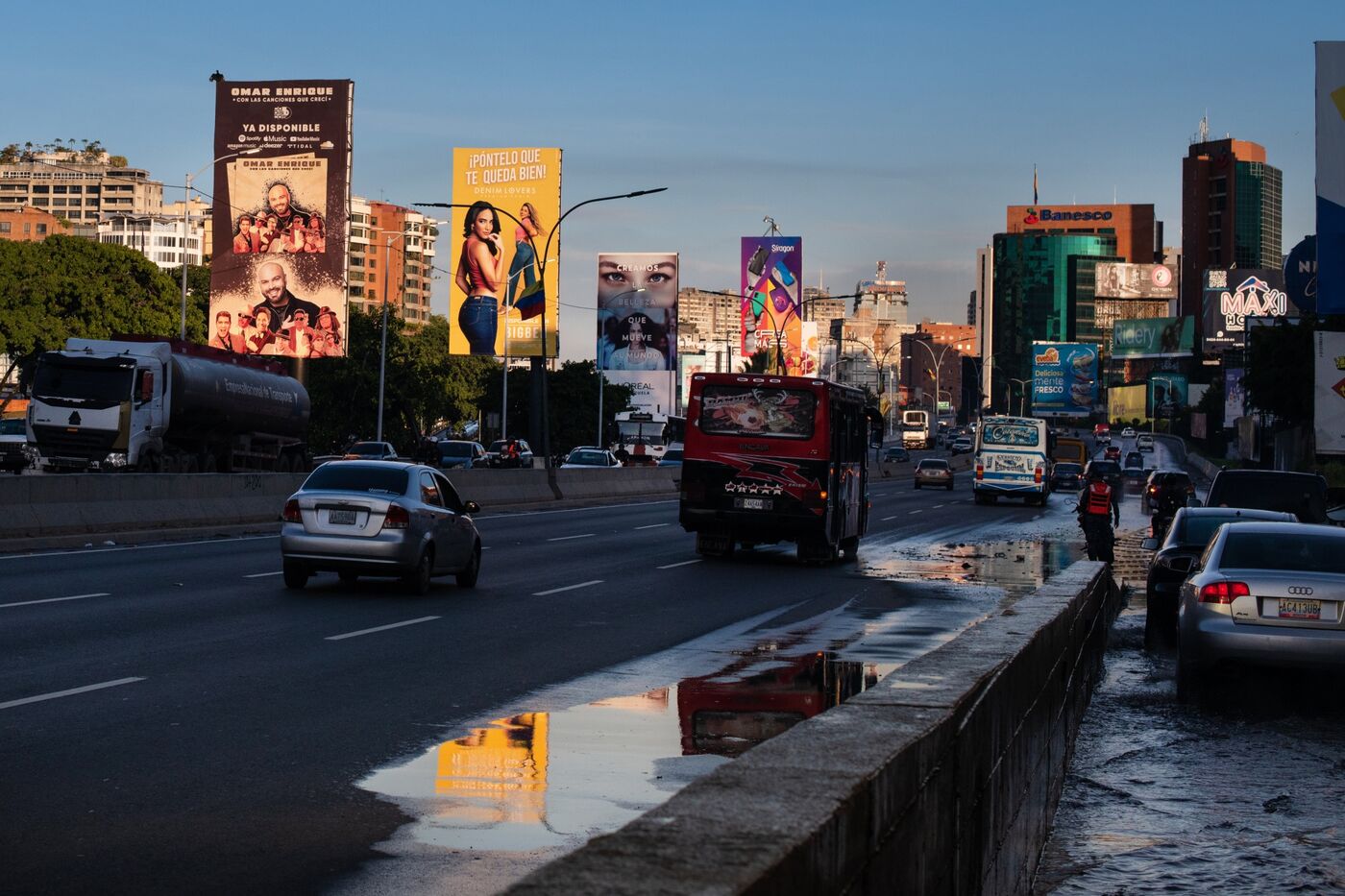
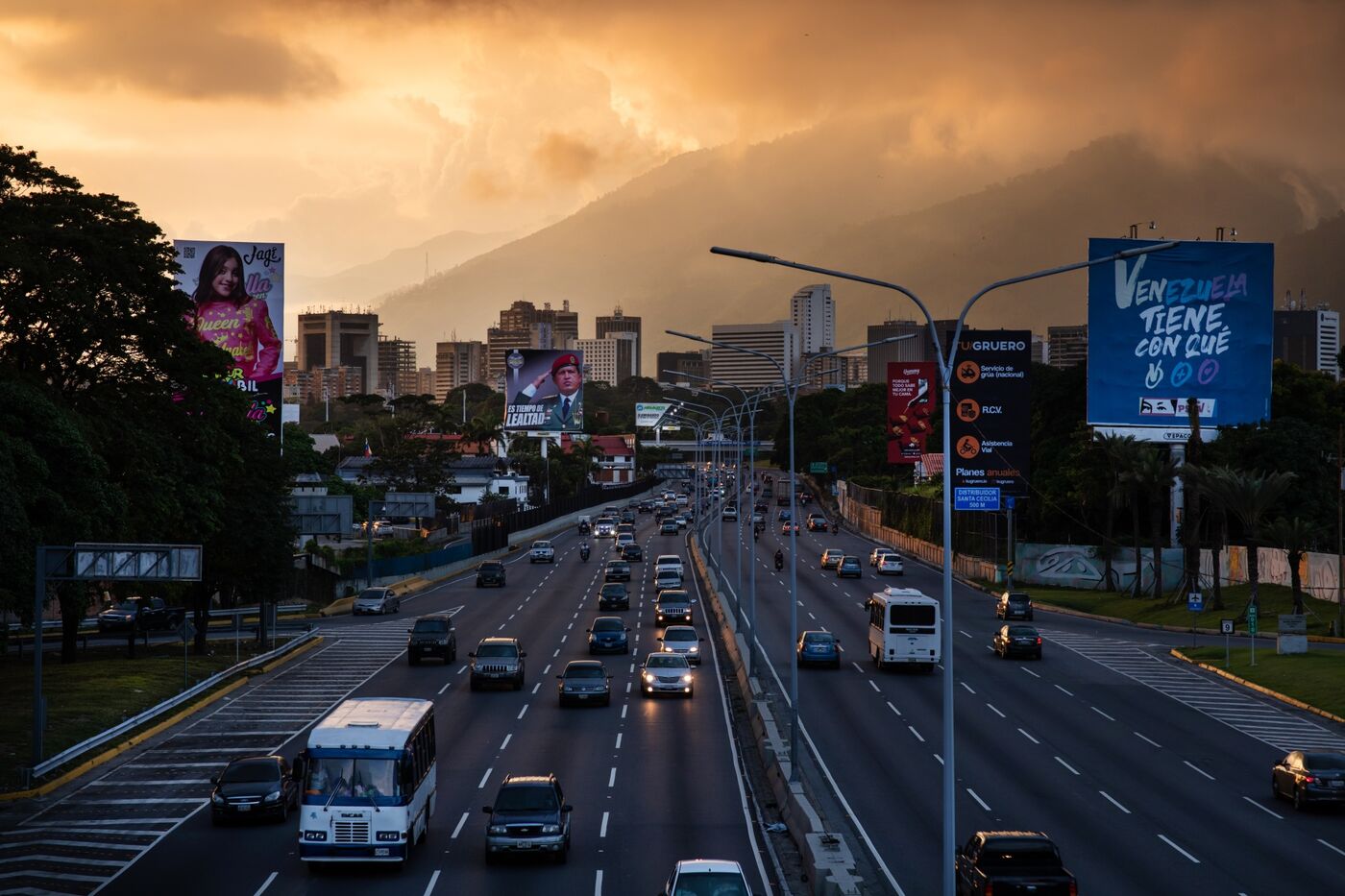
Government-issued billboards compete with commercial advertisements along the main artery in Caracas, Venezuela. 
Government-issued billboards compete with commercial advertisements along the main artery in Caracas, Venezuela. Photographer: Gaby Oraa/Bloomberg
CityLab
Government

Hugo Chavez and Socialism Get Erased From the Caracas Skyline

Ads for jeans and makeup replace Socialist symbols

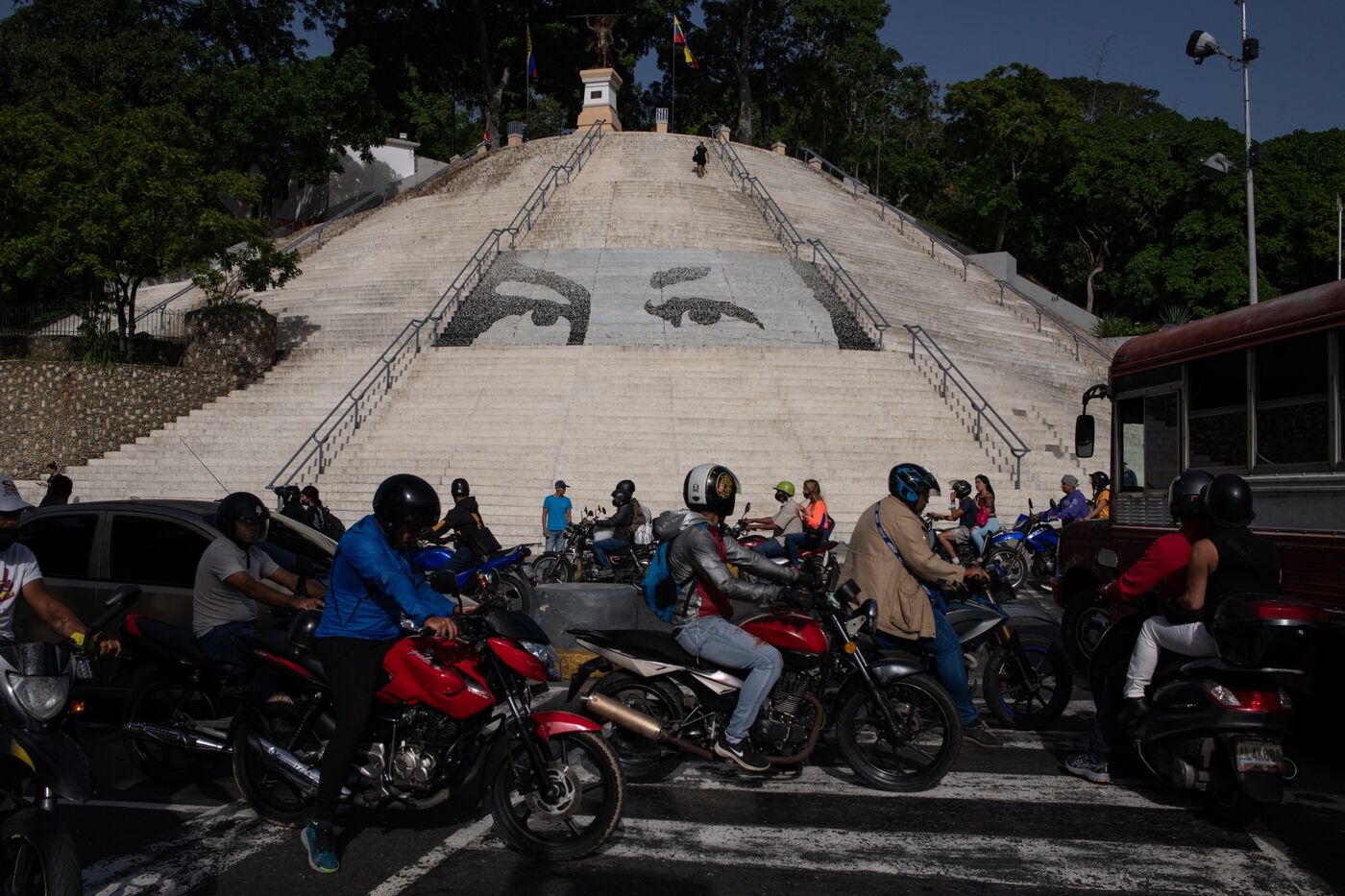
An image of Hugo Chavez’s eyes used to peer down on Venezuela from seemingly everywhere: the rooftops of government offices, housing developments, even the scanners at airport customs.

Today, Venezuelans are more likely to find an advertisement for makeup or jeans than a tribute to the country’s revolutionary icon. 

President Nicolas Maduro's shift from socialism to a more capitalist approach, a key tenet of his bid to halt a years-long economic collapse, is showing up in many forms, from the widespread use of US dollars to the imported, gourmet foods filling store shelves. But few are as noticeable as the makeover taking place in public spaces once littered with Chavista propaganda.

Read more: Socialist Venezuela Has $200,000 Ferraris and a Bustling Casino

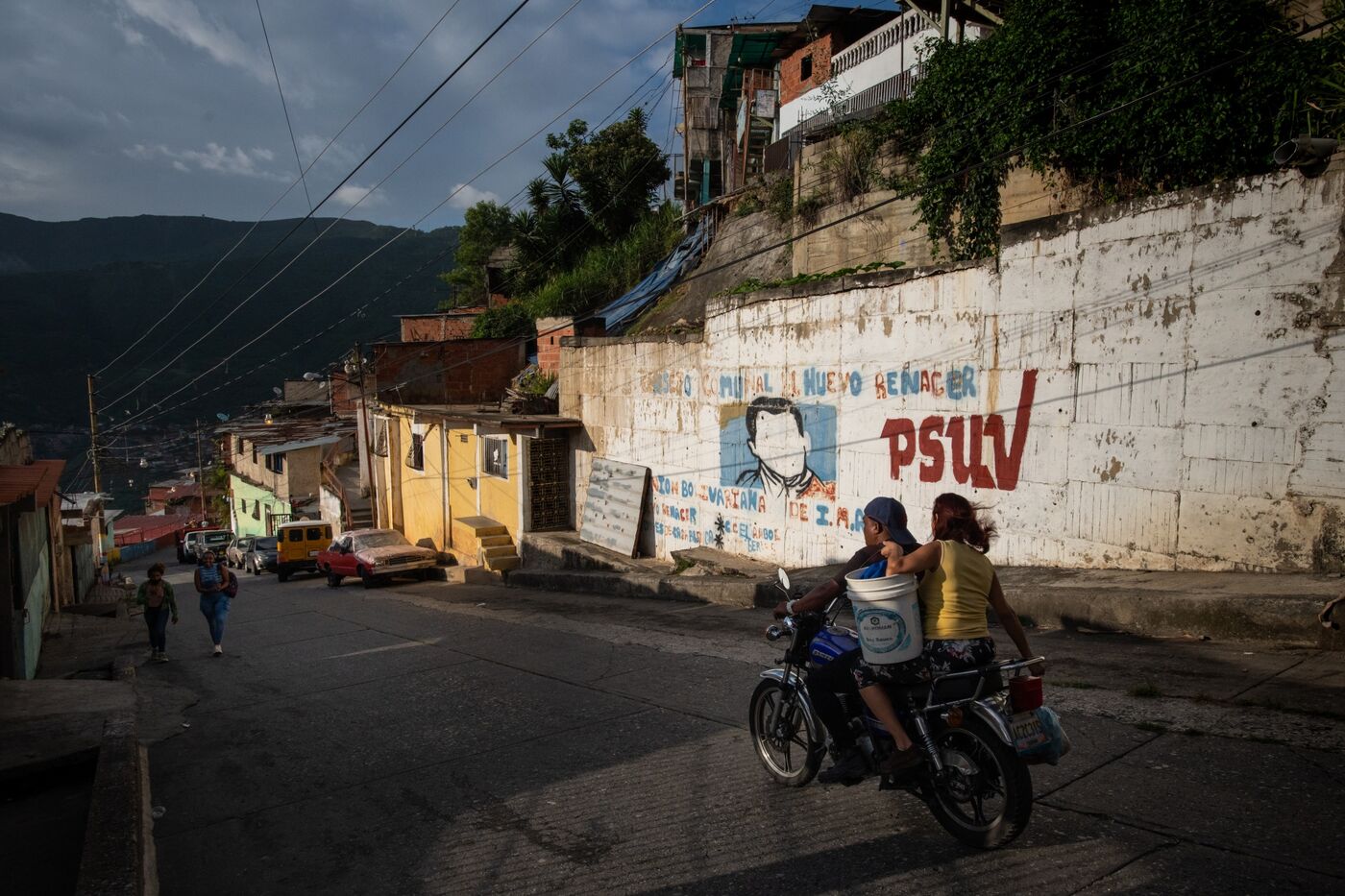
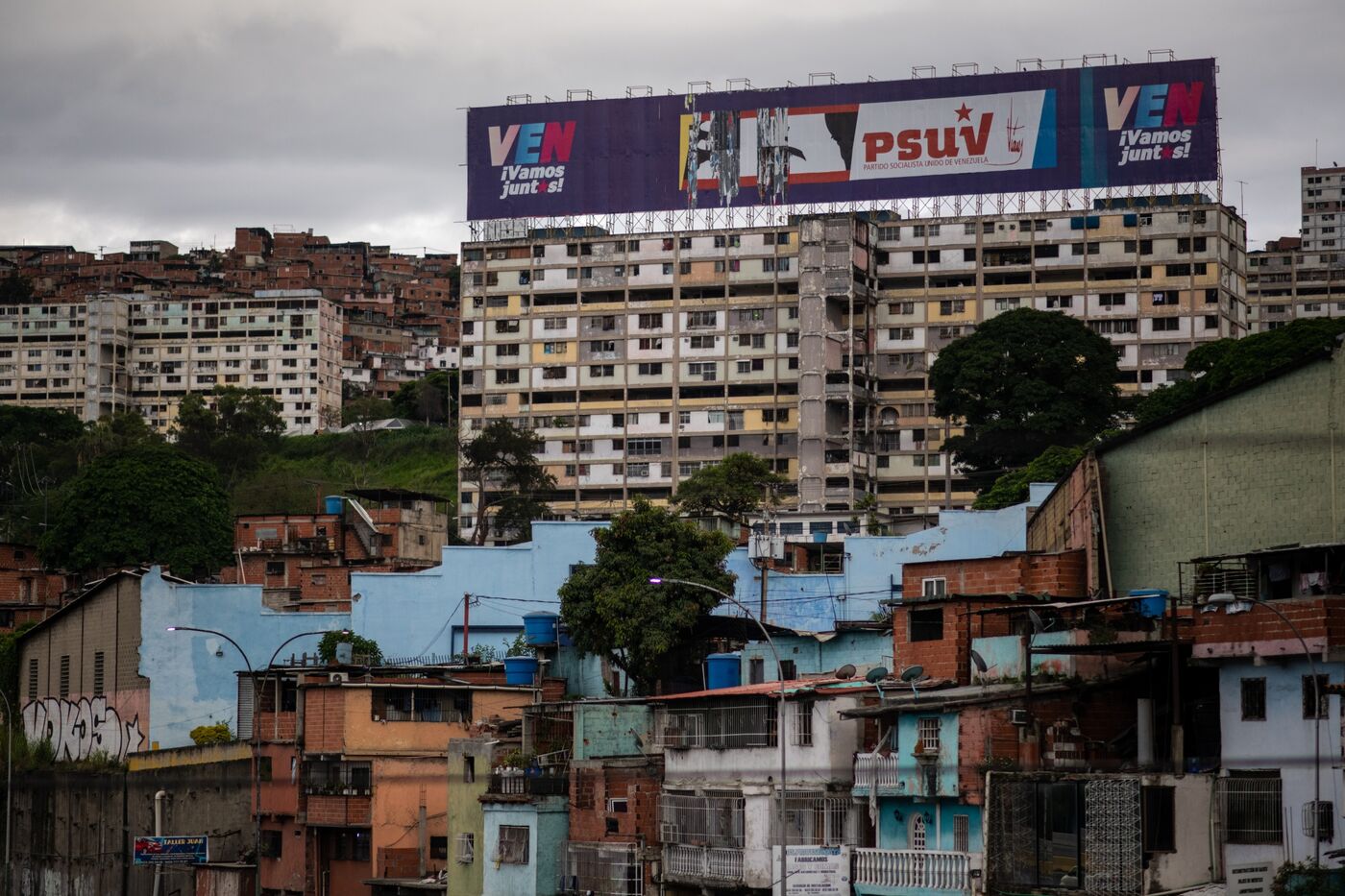
Gone -- or, at least, disappearing rapidly -- are many of the formerly ubiquitous odes to “revolution,” such as the Orwellian depictions of Chavez’s eyes, slogans slapped on billboards with some version of the message “socialism or death,” or huge murals of Fidel Castro and Simon Bolivar. Most of those that remain are badly faded. Instead, city highways are crowded with billboards advertising cosmetics, food and new clothing brands. 
relates to Hugo Chavez and Socialism Get Erased From the Caracas Skyline
A building with a deteriorated poster depicting the eyes of the late Venezuelan President Hugo Chavez in El 23 de Enero district of Caracas.
Photographer: Gaby Oraa/Bloomberg
relates to Hugo Chavez and Socialism Get Erased From the Caracas Skyline
Publicity for music concerts, home appliances and taxi apps line the main highway in Caracas.
Photographer: Gaby Oraa/Bloomberg
relates to Hugo Chavez and Socialism Get Erased From the Caracas Skyline
Murals painted by the Socialist party in working-class neighborhoods like Catia are fading. 
Photographer: Gaby Oraa/Bloomberg

“Political ideology has been replaced by a drive for consumption,” said Jose Carvajal, director of Ciudad Laboratorio, an urban studies think tank in Caracas. Socialist iconic billboards promoting the idea that Venezuela “belonged to everyone,’’ he said, have given way to a Dubai- or Miami-style landscape, with rows of palm trees along its main highway. In many ways, it marks something of a return to the pre-Chavez era, when multinationals hawked products of all stripes on billboards across Caracas. “Now Venezuela, like never before, belongs to a few who can succeed.”

The Information Ministry did not respond to questions about the elimination of propaganda. At least some of the changes appear to be part of a government initiative, though. Maduro, who took over after Chavez died, launched a beautification plan for 60 cities in 2020, during which posters from old electoral campaigns were taken down. 

In downtown Caracas, hardcore Chavistas used to gather to watch state TV and government-aligned motorcycle gangs known as colectivos assembled. A restoration process is underway there, with historic theaters and colonial houses getting a face lift. A section of Plaza Bolivar marked by a red tent -- where debate over Socialist policies raged so fiercely that the area earned the name esquina caliente, or hot corner -- is mostly empty.

“The hot corner? It cooled down!,’’ said Ramiro Hernandez, 72, who buys gold jewelry on the street.  He sits beside the empty area, surrounded by old buildings now housing cafes and restaurants.

That’s not to say propaganda is gone completely. Many traditional Chavismo symbols show up on state media and government social media accounts. Maduro is even depicted as a Socialist superhero in a 1970’s Hanna-Barbera style cartoon broadcast on state television. His character, Super Bigote, which translates to Super Moustache, battles hyperinflation and fends off coup d’etats.
relates to Hugo Chavez and Socialism Get Erased From the Caracas Skyline
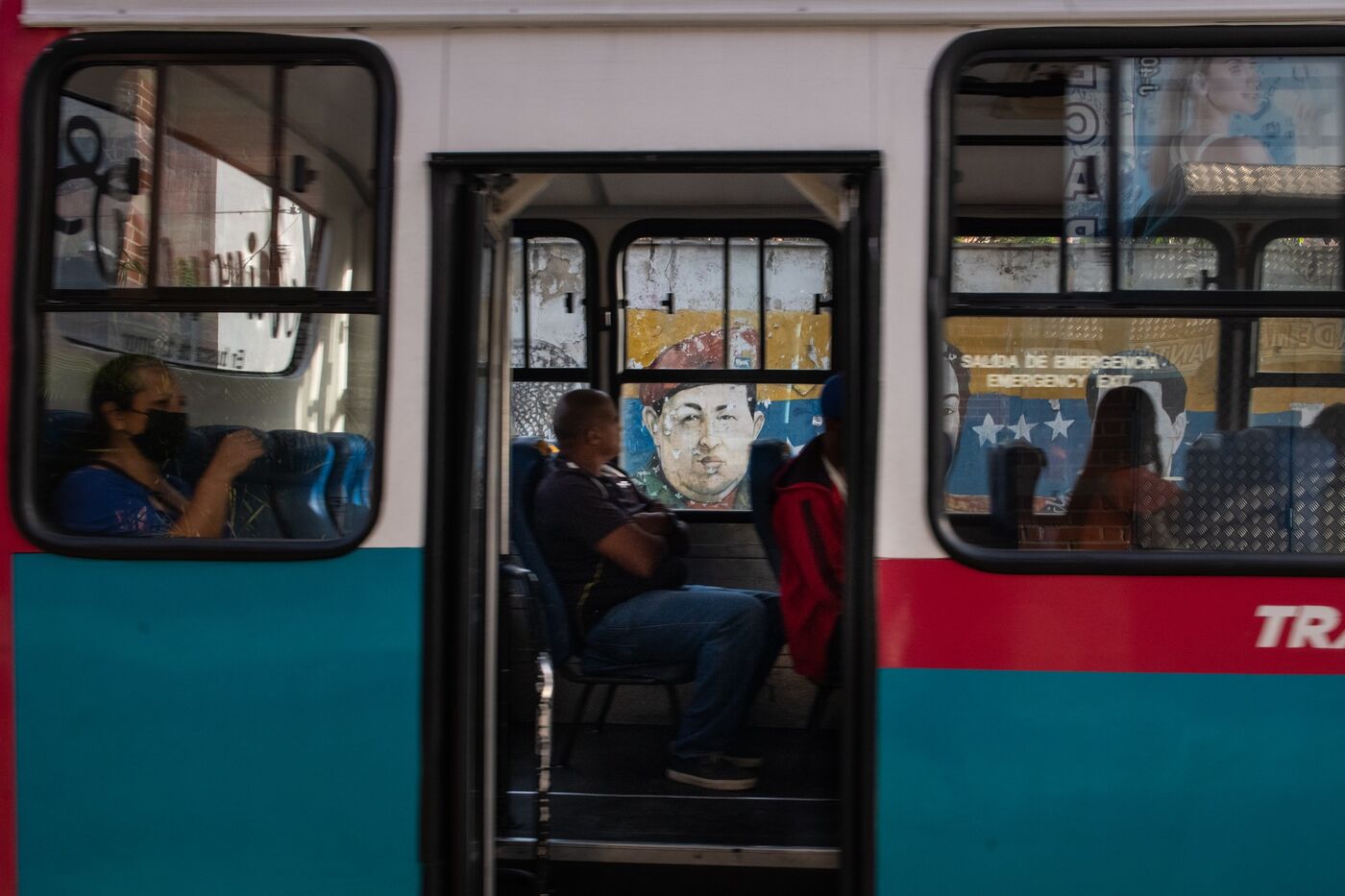
A peeling Chavez mural in the Petare neighborhood of Caracas.
Photographer: Gaby Oraa/Bloomberg
relates to Hugo Chavez and Socialism Get Erased From the Caracas Skyline
Motorcyclists drive past el Calvario stairs as the image of Chavez’s eyes peers over.
Photographer: Gaby Oraa/Bloomberg
relates to Hugo Chavez and Socialism Get Erased From the Caracas Skyline
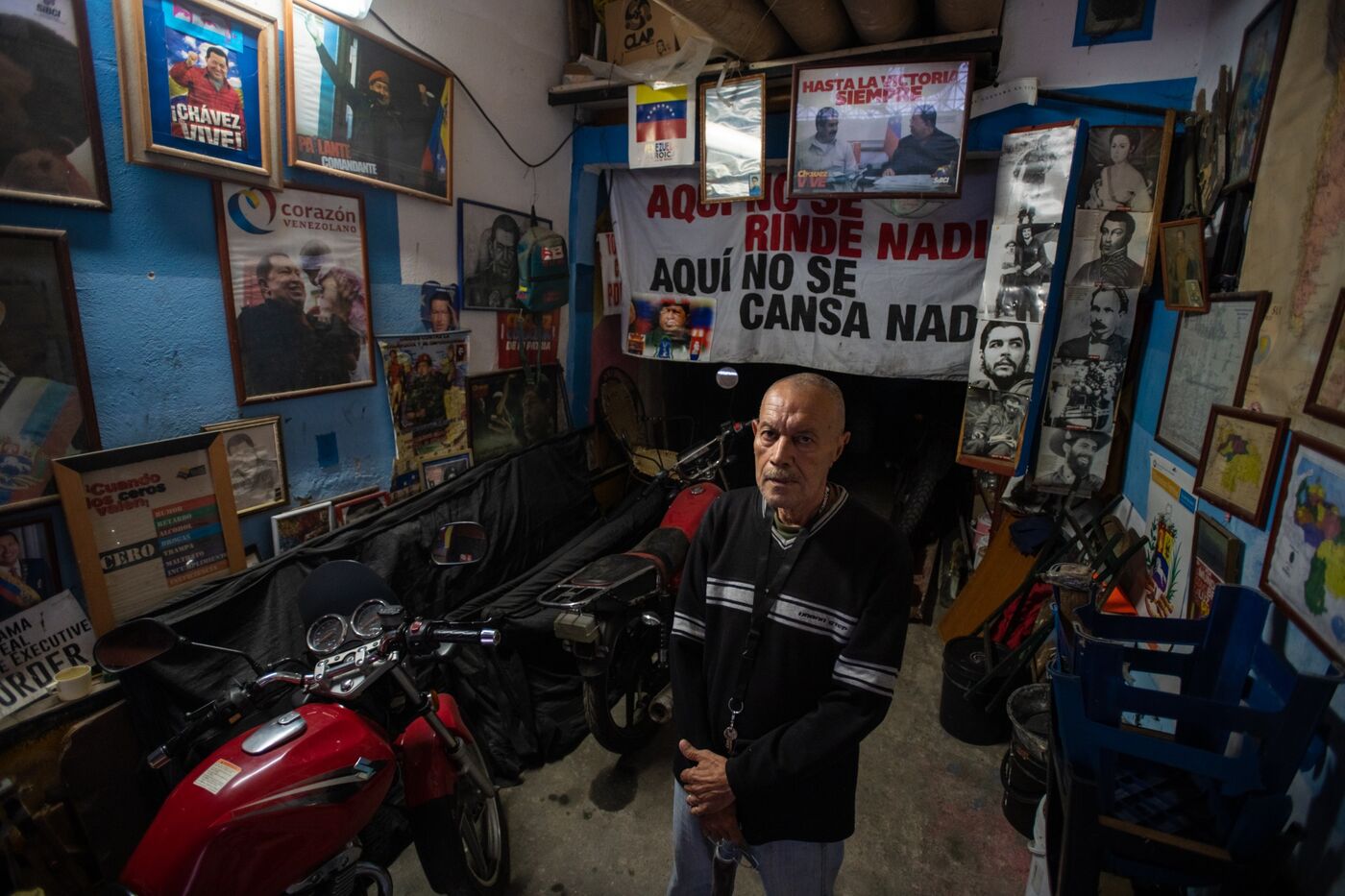
Luis Meza, a retiree, surrounded by his collection of Chavista memorabilia.
Photographer: Gaby Oraa/Bloomberg

For some die-hard Chavistas, such as Luis Meza, it feels like an undoing of Chavez’s legacy. 

A 68-year-old retiree from the state publishing office, Meza used to organize grassroots political meetings near his home in Catia, a working-class neighborhood in western Caracas. He has attempted to restore Chavez’s memory in his garage, which is filled with all sorts of memorabilia collected over the past quarter century: dolls, posters, newspaper clippings.  But few are interested in the meetings or the keepsakes these days, he said.

“It’s like the government wants to eliminate Chavez from the memory of the people.”


    EXPERIENTIAL ART in YOUR OFFICE


    THE NEXT SPACE FOR EXPERIENTIAL ART IS YOUR OFFICE. HERE’S WHY

    Interactive artworks in workspaces can help employees feel more connected to the company – and each other.

    Experiential art exhibitions have become hugely popular, thanks to their Instagrammable content and use of technology to amaze in new ways. Klimt, Kahlo and Van Gogh have all been given the ‘immersive experience’ treatment recently, with the latter attraction receiving five million visitors since 2017 and racking up shows in 34 cities worldwide. The art-entertainment sector was valued at over £45.7 billion in 2020, up 19 per cent from the previous year. What could the trend mean for the corporate art world, and why should businesses invest at this time?

    Everyone is an artist

    Experiential artworks are inherently engaging, whether they respond to movement, sound, touch, weather, time, or a combination of these factors. Part of the appeal of big-budget art-entertainment experiences is that they make art accessible to a wider audience. Sean Di Ianni, cofounder of immersive art company Meow Wolf, told Time Out: ‘There is a role for the traditional art setting but it has built itself on exclusivity. Even in museums, there is a certain way people are expected to engage with that kind of work and it can be a bit dictating and intimidating. We discovered that by blurring the lines of art and entertainment, you are not intimidated walking into it.’ 

    PHOTOS: BRETT BEYER

    Cover image and above: Abstract images derived from daily video streams of Chicago landmarks localize the art experience by ESI Design at office 515 N State Street.

    In the office or lobby, that accessibility can create a valuable shared moment among the public, and a company’s clients, collaborators and staff. Historian Viviane Moermann, author of The Corporate Art Index - Twenty-one Ways to Work With Art, reflects on why businesses want to bring this type of art into the office, acknowledging the long history of organizations using art to unite their people and express values. ‘The first emperor of Rome promoted artists to emotionalize the idea of empire with glorifying images and words, and the Medici banking family supported the arts to reflect on the changing economic and political system,’ she says. ‘In 2022, corporations reach out for art because it makes the workplace more “human” and promotes the idea of participation, creativity, and individualism – it nourishes the idea that everyone is an artist.’ 

    A sense of time and place 

    ESI Design is the experience design arm of global architecture firm NBBJ. Its 158-sq-m mural for the lobby of Beacon Capital Partners’ property in Washington DC is a digital montage of the city’s native cherry trees. It responds to the presence of visitors, time of day and live weather data. Visitors pausing in front of it might see icicles grow or butterflies emerge. And a quick walk by might cause petals to fall or a branch to shake. Emily Webster, principal creative and studio leader, wrote in a post for NBBJ: ‘[It’s] an ongoing opportunity to discover new layers of details in the art, with many employees coming to enjoy figuring out how the installation responds and evolves.’

    A teamLab-designed installation at CapitaSpring's Singapore headquarters responds to touch, daylight and season.

    Using real-time data and references is an instantaneous way to give offices a local feel, which is important for companies operating globally. They can also give employees a grounded feeling and sense of time and place. Acrylicize’s vase-of-lilies mural for Brookfield Properties at Citypoint, London, also blooms and withers according to the weather, and teamLab has a towering floral installation at CapitaSpring in Singapore that responds to touch as well as daylight and season. Nature is a recurring theme in these artworks, giving staff a sense of connection to the outdoors. For ESI Design’s site-specific lobby installation at Chicago’s 515 N State Street, relating to urban surroundings was essential. The artwork continuously composes abstract images made from daily video streams taken at landmark locations around the city. The creative opportunities of digital artworks seem limitless, but Webster warns: ‘Technology must be used as a craft rather than a flashy commodity; the objective, regardless of scale, should be to express a building’s story, helping to anchor it to the community and surrounding neighbourhood.’

    Global, local and dynamic

    Reactive installations also present a picture of a company as dynamic and evolving. Moermann notices tech companies and car manufacturers in particular experimenting with interactive, immersive and data-driven works. ‘Art initiatives will stay a mix of both traditional and new media art, as most corporate collections represent the past, present and future,’ she predicts. ‘Augmented content, online exhibitions, VR experiences, interactive media walls and NFTs are all popular. Projects at the intersection of creativity and artificial intelligence will be the game changer in developing new immersive experiences.’ Businesses wanting to make a statement in this way need to make significant investment in advanced technology: custom software, powerful projection equipment or large-scale LED screens. It’s clear that more companies are becoming interested in new media art to inspire and re-engage their staff as well as signal progressive attitudes. 

    A vase-of-lilies mural at Brookfield Properties in London by Acrylicize is also responsive to weather.

    Making room for this type of art requires consideration from the outset. ‘Architects and designers should place artworks into their proposals from the start and defend their relevance in the concept,’ says Moermann. ‘Works of art, no matter what, should become a matter of course in every project, not just the cherry on top.’ Webster also thinks that this new wave of experiential artworks should be considered in context. ‘Digital media installations should be seen not as one-off showstoppers. They are most effective as part of a larger program that is fully integrated into the space,’ she writes. ‘A light touch can deliver just as powerful an impact as an epic-scale piece; digital media is just one component of a holistic experience design approach that works together alongside signage, wayfinding, furniture, and other interior design elements.’