Monday, May 30, 2022

Hyperreal Photography


Hyperreal Photography

Hyperreal Photography

The concept of “hyperreality” was proposed by French theorist Jean Baudrillard during the 1980s to describe a society in which citizens are unable to distinguish between reality and simulation. In today’s world, according to Baudrillard, reality has been substituted with “false pictures” – to the point where it is impossible to tell the difference between what is real and artificial. Worldwide, the average person spends a total of 6 hours and 58 minutes using the internet each day. We are confronted with AI, photo manipulation and algorithmically-generated news feeds every time we open our smartphones. Here are five photographers engaging with this idea – presenting intriguing visions of landscapes and cities through lens-based trickery, editing and mesmerising colour palettes.

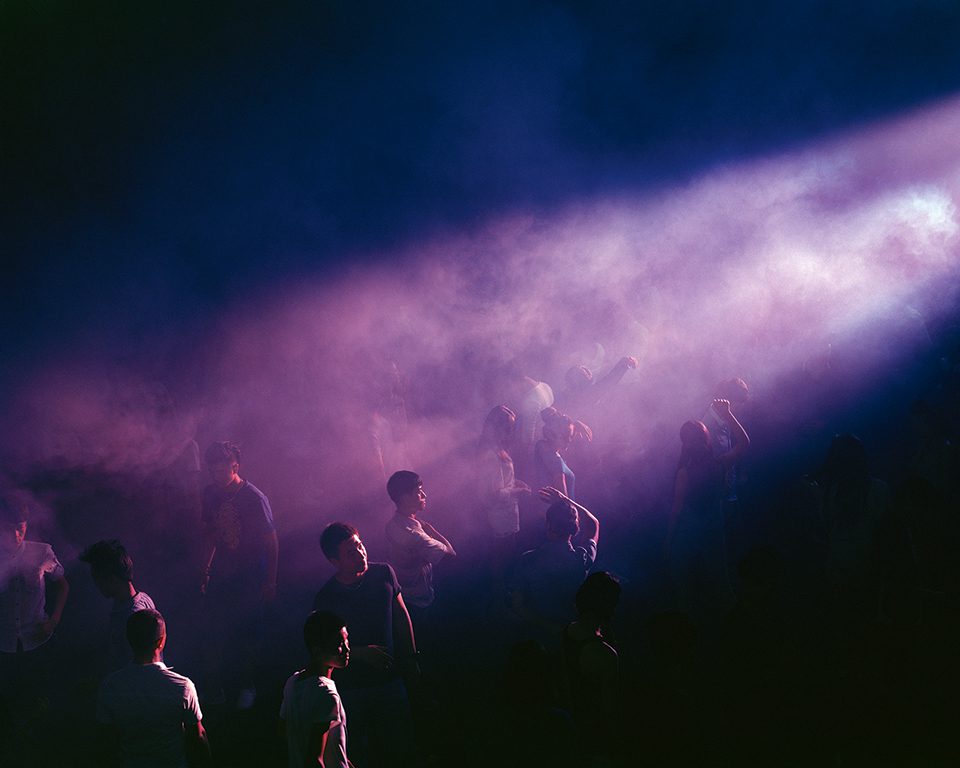
Chen Wei

In an interview given to Ocula in 2017, Chen commented on what motivates him to make photographs. The answer? “Because of tragedy… I hope to highlight the gap between people’s imagination of urbanity and the reality. The space lying inbetween is one of the tragic elements.” Empty landscapes are often used – where doors lead to nowhere. They are dark and haunting, swimming deep into the fathoms of your brain.

Karen Constine

The human eye can only detect light (and, in turn, colour) from wavelengths in the range of 400 to 700 nanometres (nm). Infrared light sits outside of this spectrum, with much longer wavelengths that remain invisible. Karen Constine reveals this world, subverting the Los Angeles landscape using an infrared camera (665nm). Deserted suburban streets are transformed into hallucinogenic planes.

Benoit Paillé

Benoit PaillĂ©’s photography is capable of elevating the most perceivably uninteresting object into something enticing, desirable and ultra-magnified. From fences and hedges to street lamps, he transforms objects through a phantasmic colour scheme. Bright, stark flashes of orange and green render surreal interpretations of the landscape, turning commonplace scenes into hyperreal visions.

David Benjamin Sherry

David Benjamin Sherry’s (b. 1981) American Monuments series, shot in hyperreal monochrome, engages with the sites threatened by Trump’s administration. The images were taken as a form of photographic activism, with saturated red and orange colour palettes alerting viewers to a sense of danger – whilst preserving the natural beauty of the landscapes through the camera lens.

Zacharie Gaudrillot-Roy

Façades is an intriguing conceptual series that explores ideas of superficiality in today’s world. To so do, Zacharie Gaudrillot-Roy (b. 1986) re-imagines streets as two-dimensional worlds. Devoid of intimate details, these strange flattened houses pull the eye into a seemingly empty space between reality and fiction – a land somewhere between dusk and darkness.


Hyperreal Photography

Caixa de entrada

Aesthetica Magazine office@aestheticamagazine.com atravĂ©s de smtp5.ymlpsvr.com 

29/05/2022, 10:41 (há 1 dia)
para mim
   
Traduzir mensagem
Desativar para mensagens em: inglĂŞs


The concept of “hyperreality” was proposed by French theorist Jean Baudrillard in the 1980s to describe a society in which citizens are unable to distinguish between reality and simulation.
 
Today, we are confronted with AI, photo manipulation and algorithmically-generated news feeds every time we open our smartphones. Here are five photographers engaging with this idea.


Chen Wei
 
In 2017, Chen Wei commented on what motivates him to make photographs. The answer? “Because of tragedy… I hope to highlight the gap between people’s imagination of urbanity and the reality.” Empty landscapes are often used – where doors lead to nowhere.


Karen Constine
 
The human eye can only detect light (and, in turn, colour) from wavelengths in the range of 400 to 700 nanometres (nm). Infrared light sits outside of this spectrum. Karen Constine reveals this hidden world, subverting the LA landscape using an infrared camera.


Benoit Paillé
 
Benoit PaillĂ© elevates the most perceivably uninteresting objects into something enticing, desirable and ultra-magnified. From fences and hedges to street lamps, he transforms objects through a phantasmic colour scheme: bright, stark flashes of blue, orange and green.


David Benjamin Sherry
 
David Benjamin Sherry’s American Monuments, shot in hyperreal monochrome, engages with the sites threatened by Trump’s administration. The images were taken as a form of photographic activism, with saturated palettes alerting a sense of danger.


Zacharie Gaudrillot-Roy
 
Façades is an intriguing conceptual series that explores ideas of superficiality in today’s world. To so do, Zacharie Gaudrillot-Roy re-imagines streets as two-dimensional worlds. Strange flattened houses pull the eye into a space between reality and fiction.

 
Read the full feature »


Hyperreal Photography

Hyperreal Photography

The concept of “hyperreality” was proposed by French theorist Jean Baudrillard during the 1980s to describe a society in which citizens are unable to distinguish between reality and simulation. In today’s world, according to Baudrillard, reality has been substituted with “false pictures” – to the point where it is impossible to tell the difference between what is real and artificial. Worldwide, the average person spends a total of 6 hours and 58 minutes using the internet each day. We are confronted with AI, photo manipulation and algorithmically-generated news feeds every time we open our smartphones. Here are five photographers engaging with this idea – presenting intriguing visions of landscapes and cities through lens-based trickery, editing and mesmerising colour palettes.

Chen Wei

In an interview given to Ocula in 2017, Chen commented on what motivates him to make photographs. The answer? “Because of tragedy… I hope to highlight the gap between people’s imagination of urbanity and the reality. The space lying inbetween is one of the tragic elements.” Empty landscapes are often used – where doors lead to nowhere. They are dark and haunting, swimming deep into the fathoms of your brain.

Karen Constine

The human eye can only detect light (and, in turn, colour) from wavelengths in the range of 400 to 700 nanometres (nm). Infrared light sits outside of this spectrum, with much longer wavelengths that remain invisible. Karen Constine reveals this world, subverting the Los Angeles landscape using an infrared camera (665nm). Deserted suburban streets are transformed into hallucinogenic planes.

Benoit Paillé

Benoit PaillĂ©’s photography is capable of elevating the most perceivably uninteresting object into something enticing, desirable and ultra-magnified. From fences and hedges to street lamps, he transforms objects through a phantasmic colour scheme. Bright, stark flashes of orange and green render surreal interpretations of the landscape, turning commonplace scenes into hyperreal visions.

David Benjamin Sherry

David Benjamin Sherry’s (b. 1981) American Monuments series, shot in hyperreal monochrome, engages with the sites threatened by Trump’s administration. The images were taken as a form of photographic activism, with saturated red and orange colour palettes alerting viewers to a sense of danger – whilst preserving the natural beauty of the landscapes through the camera lens.

Zacharie Gaudrillot-Roy

Façades is an intriguing conceptual series that explores ideas of superficiality in today’s world. To so do, Zacharie Gaudrillot-Roy (b. 1986) re-imagines streets as two-dimensional worlds. Devoid of intimate details, these strange flattened houses pull the eye into a seemingly empty space between reality and fiction – a land somewhere between dusk and darkness.




Saturday, May 28, 2022

understand this connection


LEADERSHIP NOW
You’ll be a better leader if you can understand this connection

The authors of Rare Breed note if you’re losing people because they want to serve a mission and not just leave at 5:01, it might be time to look down, not up, for inspiration.  

READ MORE


You’ll be a better leader if you can understand this connection

The authors of Rare Breed note if you’re losing people because they want to serve a mission and not just leave at 5:01, it might be time to look down, not up, for inspiration.  

You’ll be a better leader if you can understand this connection
[Photo: Chang Duong/Unsplash]

Think about some of today’s best-loved brands. Trader Joe’s, for example. The Hawaiian-themed grocer constantly shows up in the top ranks of those annual “best companies to work for” lists, and it’s easy to see why: TJ’s employees seem to love working there, and that translates into a terrific customer experience. 

If you like your grocery shopping on the bulk side, consider Costco, another regular on the best places to work lists. It’s renowned for paying its employees well, offering them one of the best benefits packages in retail, and having a first-rate culture. As with Trader Joe’s, this happiness flows downstream and becomes incredible customer loyalty. 

Wherever we look, we find people who understand what building a brand is all about. Take Chobani. Growing up, Hamdi Ulukaya—the Kurdish owner, founder, chairman, and CEO—witnessed the anguish of refugees. Once Chobani became successful, he devoted himself to aiding refugees. In 2016, he founded the Tent Partnership for Refugees, which assists refugees from all over the world, including Ukraine. 

From Fearless Fund, the first VC fund by women of color for women of color, which has Arian Simone as its cofounder and general partner, to BatMe Cosmetics, run by Jayla Roxx, the first transgender woman of color to lead a beauty brand, which sells all products for around $9 so LGBTQ customers struggling to make a living as performers can afford them, the world is full of brands getting it right. 

Wait a second, you object. I understand branding. I’m getting it right. No, you’re not. Not if you’re still brand building the old way, from the top down, or handing your business strategy off to the marketing department. For years, the traditional approach to building a brand has looked something like this:

  1. Identify your audience (our audience is . . . everyone!) 
  2. Conduct market research regarding their preferences, values, unmet needs, etc. (probably just a hunch, it’s gotta be a millennial).
  3. Stake out a position (throw in a cheesy tagline for good measure).
  4. Develop your brand story (two people found an alpaca farm, cut out the middle man, and brought you a better poncho).
  5. Develop your visuals. (Fingers crossed this looks good for as cheaply as possible.)
  6. Throw lots of money at marketing. (Nothing like wasting a lot of money to market a bad brand!)

We’ve been in the brand and business strategy business for 17 years and have watched companies run through that algorithm more times than we can count. It works . . . until it doesn’t. Well, it doesn’t anymore–not based on what’s happening in offices from coast to coast: Employees are stampeding for the exits.

While the search for better pay and benefits is a big factor, a report from the MIT-Sloan Management Review finds that the most important cause driving the Great Resignation is toxic culture . . . by a factor of three to one over anything else. Other surveys found that people are giving their notice because they feel disrespected or burned out at work. 

Bottom line: The people who serve the customers, answer the phones, and keep the trains running feel unseen by and disconnected from the organizations for which they work. While companies in all sectors are trying everything in a desperate attempt to retain their best workers, we’re here to ask you a bold, blasphemous, very Rare Breed question:

What are you fighting for? What are you fighting against?

Hold the pitchforks and torches. We’ll explain. Your brand is supposed to represent what you stand for, the values that drive your company, right? Well, maybe that’s what’s in the press kit, but that’s not the reality. The reality is that, for most companies, your brand is determined by what your competitors are doing, what your customers say they want, and what your creative agency thinks will score it an award. It’s a prestige vehicle the people in the C-suite use in vision and mission statements. You know what that means to the assistants and new hires and cubicle dwellers?

Zip. 

Activating your brand’s culture from the inside-out is a driver of success, though many companies forget a crucial piece: The Idea Worth Rallying Around™. The bold, audacious idea that fuses culture and brand together as one. The real transformational work begins when you operationalize strategic thinking in the culture, so it’s not treated as a lipstick exercise or a Brand Style Guide.

At the center of brand and culture is your flag, the idea your entire organization rallies around. At Motto, we create for our clients what we call a bold, audacious Idea Worth Rallying Around™, which is the signature idea for which your organization becomes famous. This signature idea has the ability to power the entire business, ignite the brand, and stir the people it’s made for. Around it, leaders can forge the culture and rally the talent they need to help take this idea where it deserves to go. If your leadership doesn’t embody your brand, you either have the wrong brand or the wrong leadership. 

What if we set market data and egos aside, and built brands based on the ideas, values, and passions of the people who make our organizations go, the ones quitting in record numbers? What if, instead of building half-baked internal brands to appease employees, we paid attention to what our teams cared about and found meaningful, and then used that information as the foundation for our image to the market?

We claim that our businesses reflect what we value and what we stand for. But if we told you how many companies don’t actually do this, you’d be stunned. If the mission is to revitalize the customer experience, retain your best people, and build a billion-dollar culture, then a brand should be something everyone cares about, not just the marketing and design departments. Something that represents the authentic values everyone in the organization can get behind. Something the people at the lowest levels of the organization feel speaks for them—that they can take ownership of and defend. This means building a brand that isn’t just pretty, but also has substance.

In the wake of the pandemic, we’re finding that consumers and employees have lost their tolerance for vapid brand identities, empty promises, and hypocrisy. Brands that are genuine and heartfelt are winning hearts and minds organically, virally, and without huge ad buys. Customer data and creative departments still play a role, because precise, smart storytelling and positioning will always be part of effective branding, but it’s time for the process to begin at the grass roots. 

What does that look like? No great brand begins with a committee, but that’s especially true here. Start with the individual concerns, dreams, passions, and character of your team, captured one at a time, preferably in private interviews, not impersonal online surveys. Some questions you might ask:

  • “What values would you like to see reflected in this company’s actions?”
  • “What do you think we should stand for and stand against?”
  • “What kind of impact do you think the company should have on the world?”
  • “If you could change the entire company in one way that would make you proud to work here, what would that be?”. 

Yes, we’re breaking brand-building. But that’s what makes this a Rare Breed approach—it’s audacious and revolutionary. We’re talking about identifying the soul of your organization and forging meaning in the belly of your business, so culture and brand work together as one. 

No great brand can be in business solely to make a profit for shareholders. Those brands end up reductive and soul-dead. Winning companies are out to change the world, promote equality, save the planet, create magic. Maybe you have a terrific brand, and your employees are engaged and happy. If so, bravo. But if you see potential in your brand that remains stubbornly untapped, or if you’re losing people because they want to serve a mission and not just leave at 5:01, it might be time to look down, not up, for inspiration.  


Sunny Bonnell and Ashleigh Hansberger are founders of Motto and authors of Rare Breed: A Guide to Success for the Defiant, Dangerous, and Different.