| ||

Visitor Figures 2021: the 100 most popular art museums in the world—but is Covid still taking its toll?
While attendance figures still have some way to go to reach pre-pandemic levels, fewer days of lockdown-related closures coupled with vaccine rollout programmes spelled good news for institutions around the world
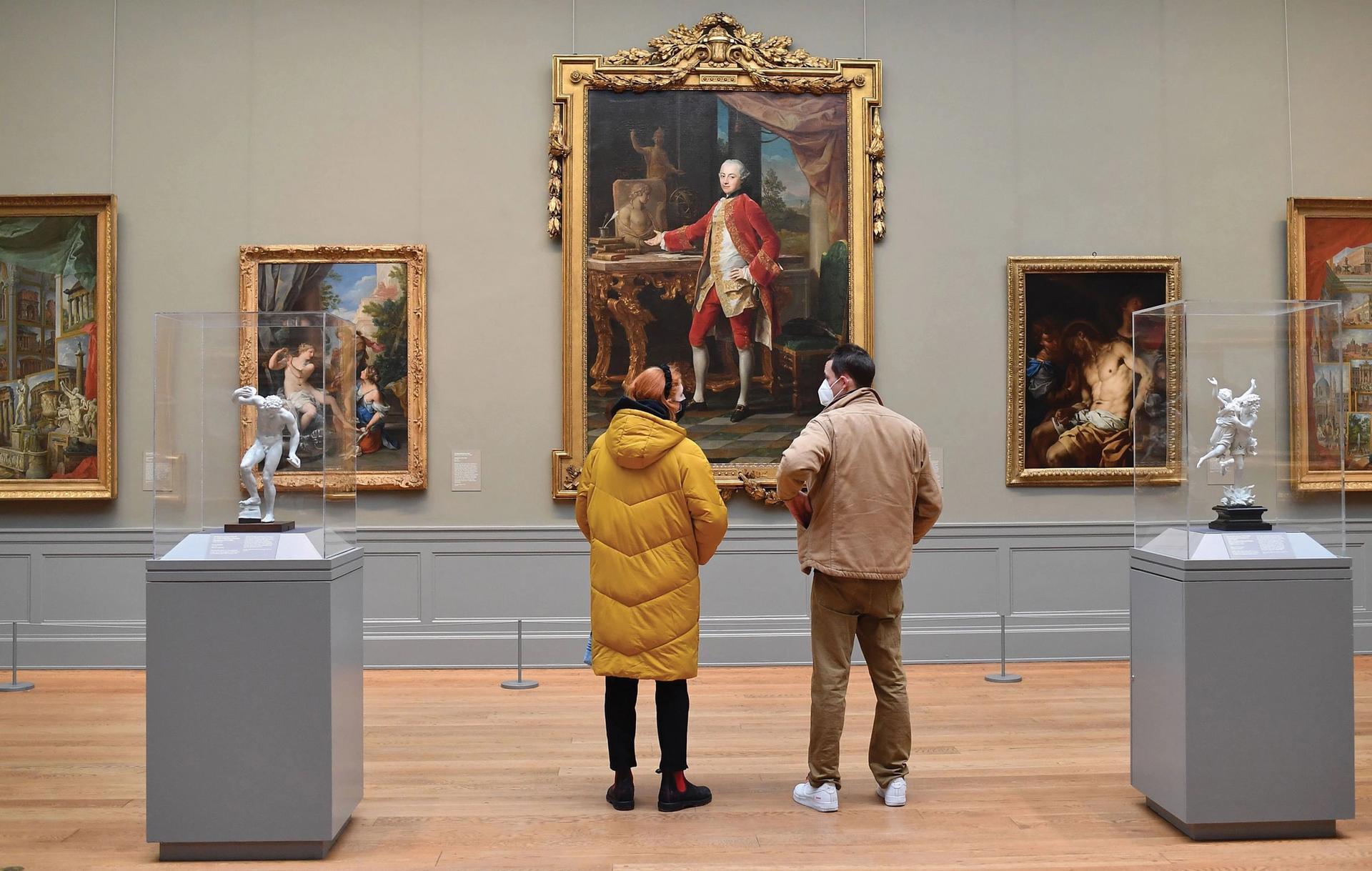
The Metropolitan Museum of Art in New York was yet again the most popular US museum, with almost 1.96 million visitorsPhoto: Angela Weiss, AFP, Getty
The recovery begins. Or so we hope. While 2021 was not a walk in the park—as the pandemic spawned new variants while nations rolled out vaccination programmes to combat them—the museum sector began to welcome back growing numbers of visitors.
Overall, the number of people visiting museums grew, with the top 100 institutions in the world having a combined total of 71 million visitors compared with 54 million in 2020. This does not indicate a decline in the severity of the pandemic—there were more deaths globally in 2021 than in 2020—but it does reflect the fact that museums were open for more days as lockdown restrictions were lifted. Although there was a 31% rise in visitors year-on-year, overall numbers were still 69% lower than in 2019, when the top 100 museums had 230 million visitors.
The top 100 institutions in the world had a combined total of 71 million visitors compared with 54 million in 2020
The Musée du Louvre in Paris is the perennial topper of this list, with an impressive 2.8 million visitors, a 5% increase on 2020 but still well below its pre-pandemic levels. In 2019 it was visited by 9.6 million people.
In second place is the State Russian Museum in St Petersburg with almost 2.3 million visitors, up by 88% on its 2020 figure and only 6% lower than its pre-pandemic level. The museum, which houses a vast collection of Russian art, was only closed for ten days due to Covid-19 restrictions compared to the 116 days the Louvre shut its doors. In pre-Covid times, the second spot on this list would often be occupied by the National Museum of China in Beijing but several of the state-run museums in China could not provide us with figures this year, choosing to release them later in the year.
Four Russian museums make the top ten list thanks in large part to being closed for fewer days than the other museums in our top 20. One of the most successful museums in our survey was Moscow's Multimedia Art Museum, which made a near total recovery with 2,242,000 visitors last year compared to 2,236,000 in 2019.
It is to be expected that the Western world’s ostracisation of Russia, following Vladimir Putin’s invasion of Ukraine in February, will have some impact on visitor numbers this year and maybe for some years to come. However, international tourism to Russia in 2021 remained well below pre-pandemic levels, so the fall may not be as drastic as it could be, but we will have to wait until next year’s survey to assess the situation.
Closures hit Europe hard
Of the more than 370 museums that were able to provide us with data, 300 recorded the number of days they had had to close due to Covid-19 restrictions. The total number of lost days from these institutions worldwide came in at more than 31,000—the equivalent of 86 years’ worth of museum visits! Of the 300 museums that had to close at least one day due to restrictions in 2021, the average number of days closed was 106 compared with an average of 145 in 2020.
From an analysis of our comparable data (200 museum sample), we found that 72% of museums had more visitors in 2021 than in 2020, while 28% had fewer. Although the spread of museums faring worse in 2021 than 2020 was broad—with examples ranging from Austria and Australia to the US and the United Arab Emirates—the bulk were in Europe, in countries like Germany, the Netherlands and the UK. The Netherlands in particular was hit hard, with its museums being closed for, on average, 150 days in 2021, while in the UK it was 139 days and in Germany, 138.

After lengthy delays, the Humboldt Forum in Berlin finally opened last July and saw visitor numbers top 515,000 for 2021, thanks in part to its inaugural ivory showPhoto: Stefanie Loos
New kids on the block
In theory, a global pandemic would not seem to be the ideal time to open a new museum. But several organisations around the world went for it and were able to attract sizeable audiences. Berlin’s long-awaited Humboldt Forum stormed into our top 150 list after finally opening on 20 July, following delays due to construction issues and then the pandemic. Although the museum was only open for half of 2021, it racked up a very impressive 515,000 visitors, who flocked to its cultural events and inaugural exhibition about ivory. In Paris, another long-awaited museum, the Bourse de Commerce-Pinault Collection, flung open its doors and welcomed almost 509,000 visitors into its distinctive rotunda.
The Jean Nouvel-designed Museum of Art Pudong in Shanghai, which is being advised by Tate on some of its early shows and operations, opened in July and had 450,000 visitors. Meanwhile, in Hong Kong, the M+ museum finally opened in November after many years of delays and was visited by a remarkable 371,000 people.
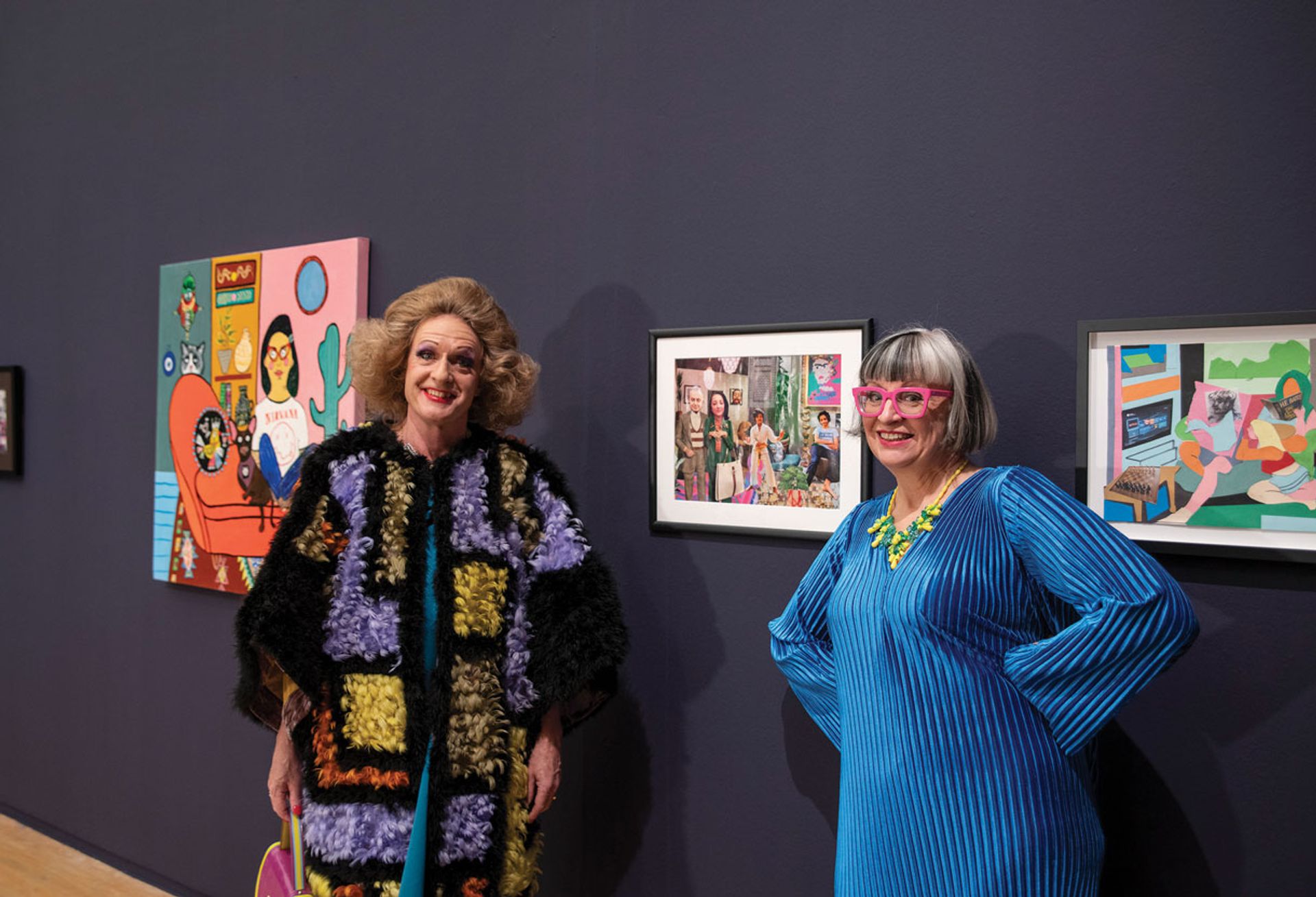
Grayson and Philippa Perry’s free Art Club exhibition at Manchester Art Gallery had more than 202,000 visitors and helped the UK museum to rebuild its attendancePhoto: Andrew Brooks
UK museums hold up
In the UK, the British Museum (BM) was the most visited art museum in the country, with 1.3 million visitors, a 4% increase on 2020 thanks to it being open more days, but this was still well below the 6.2 million visitors it enjoyed in 2019. Its most popular exhibition was on the Roman Emperor Nero but a surprise hit was a small display of recently discovered drawings by the Japanese artist Hokusai, famed for his Great Wave print.
More than half of museums around the UK had higher visitor figures in 2021 than in 2020. These ranged from Glasgow’s Hunterian Museum (up by 82%) and Gateshead’s Baltic Centre for Contemporary Art (57%) in the north, to Tate St Ives (43%) and Modern Art Oxford (5%) in the south. However, several institutions actually recorded lower visitor figures in 2021 than in 2020, most notably the National Gallery. Of the major London museums, it suffered the biggest fall in attendance, despite being closed for the same number of days (136) as other stalwarts like the BM and the two Tates. With 709,000 visitors last year, the National Gallery saw a drop of 41% compared with 2020 and 88% compared with 2019. A spokesperson for the gallery attributed the fall to a lack of major exhibitions throughout much of 2021, and the absence of international visitors (although all big London museums had to contend with the latter).
One of the most popular UK exhibitions last year in total numbers, rather than visitors per day, was Grayson’s Art Club at Manchester Art Gallery. The free exhibition brought together works from the British potter Grayson Perry’s Channel 4 television programme, which documented and encouraged artists—amateurs and professionals—across the UK to make works during the national lockdown. More than 202,000 people visited to see works by artists such as Antony Gormley and Chantal Joffe as well as celebrities including Noel Fielding and Joe Lycett.
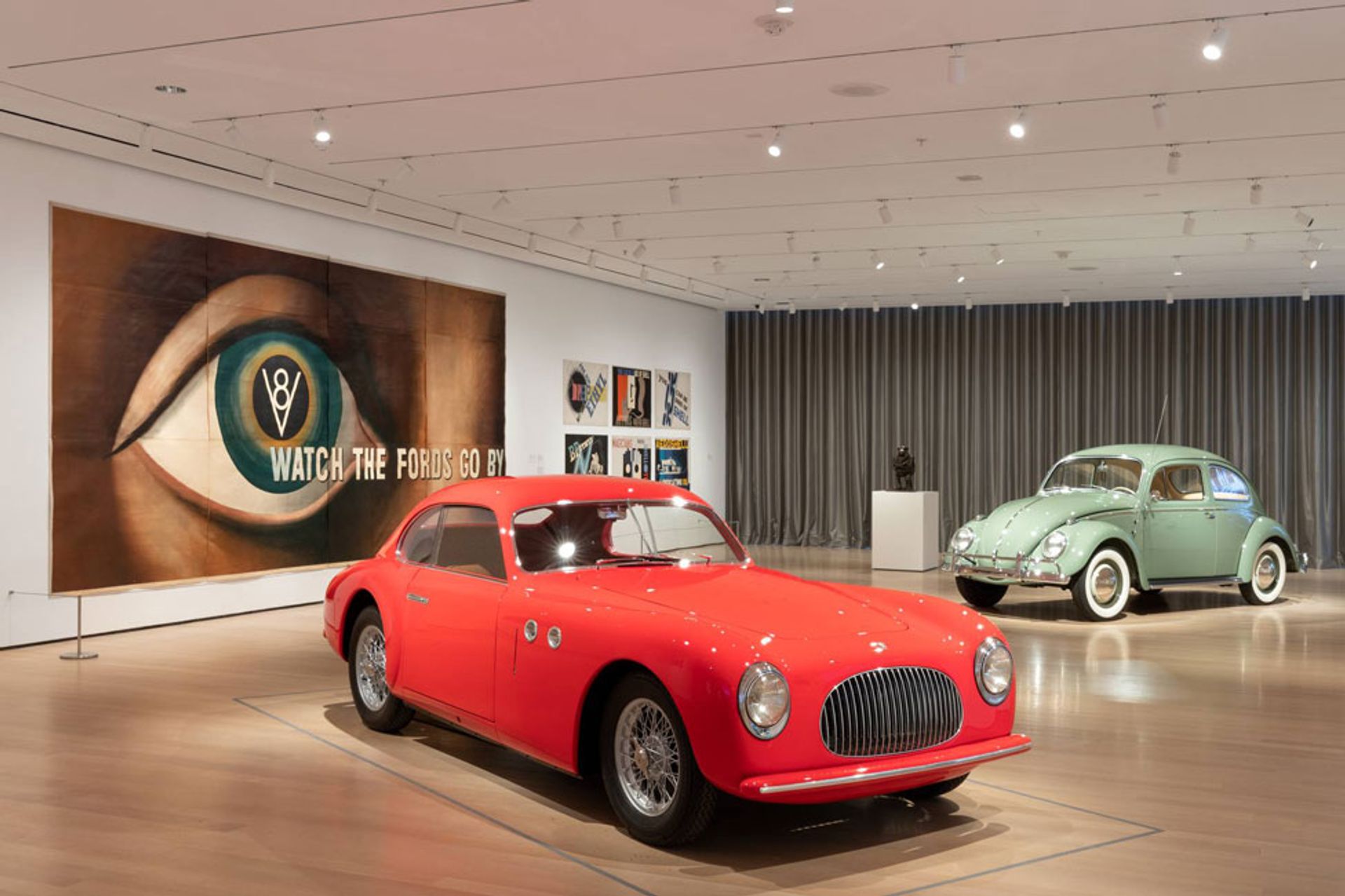
An installation view of Automania at the Museum of Modern Art in New York, featuring a red 1946 Cisitalia 202 and green Volkswagen Beetle© 2021 MoMA. Photo: Robert Gerhardt
Audiences driven to US museums
The top three most visited art museums in the US make for unsurprising reading, with New York’s Metropolitan Museum of Art (almost 1.96 million visitors to its Fifth Avenue site) followed by the National Gallery of Art in Washington, DC (1.7 million) and the Museum of Modern Art in New York (1.16 million). The three museums have comfortably topped the list of most popular US art museums at least as far back as 2007 (when our records for these specific figures begin). All three showed significant uplifts in attendance compared with 2020, with 84%, 133% and 64% more visitors respectively. But all remain well below 2019 levels, with 68%, 58% and 42% fewer visitors.
The four big New York museums—the Met Fifth Avenue, MoMA, Whitney Museum of American Art and Solomon R. Guggenheim—jointly welcomed 3.9 million visitors, almost doubling the previous year’s figure of 2.2 million as the museums were able to open for more days compared with 2020. But the total is still well below the almost 11 million who visited all four in 2019. In absolute numbers, MoMA had the most popular show of the four big New York museums, with Automania, an exhibition about cars that drove more than 475,000 people to the museum. Visitors taking a spin around the show were able to enjoy classic cars such as the Jaguar E-Type Roadster and the Volkswagen Beetle, as well as works of art inspired by vehicles including Andy Warhol’s Orange Car Crash Fourteen Times (1963) and Judy Chicago’s Flight Hood (1965/2011).
Meanwhile in California, museums that had undergone one of the longest US lockdowns in 2020—with most closed for well over 200 days—were able to welcome back visitors with gusto. The Los Angeles County Museum of Art was the most popular art museum in the state, with almost 621,000 visitors. Having to only close for 77 days compared with 249 in 2020, meant that it saw a 197% rise in visitors—but this was still down 36% on its 2019 figures. The state’s second most popular art museum was the Getty Center with 508,000 visitors, a 90% increase on 2020, followed by San Francisco’s M. H. de Young Museum with 394,000 visitors (up by 69%), no doubt helped by its most popular show, which brought together the treasured possessions of Frida Kahlo.
Melbourne bounces back
In Brazil, three of the four Centro Cultural Banco do Brasil outposts in São Paulo, Rio do Janeiro and Belo Horizonte—which in the past have successfully attracted thousands of visitors a day to blockbuster shows on the likes of Salvador Dalí and Yayoi Kusama—saw their numbers drop by more than 90% compared with pre-pandemic figures.
Meanwhile, on the other side of the southern hemisphere, the NGV International in Melbourne was the most popular museum in Australia, welcoming almost 802,000 visitors despite being based in the city that enforced the world’s longest lockdown. Visitors were up by 26% compared with 2020, but still down 67% on 2019. Across the Tasman Sea, the Museum of New Zealand Te Papa Tongarewa had 809,000 visitors, a 3% decrease on 2020 despite being open for more days (a spokesperson put this down partly to four months of daily visitor restrictions). The Australasian region has recently seen a huge spike in its coronavirus cases this year after having largely contained the spread for two years. But with plans to reopen borders, visitor figures are very likely set to go up.
As many countries attempt a transition into a “post-Covid” world, lifting restrictions in the hope that the disease that has plagued us for more than two years recedes, it will be interesting to see if next year’s survey points to renewed enthusiasm for museum-going or whether new habits have been formed. Until then, keep safe and carry on visiting those museums.
• Research conducted by Justin Kamp and Alva Muris
• Museums in the Top 100 list marked with an asterisk (*) indicate institutions with more than one building. We have separated the venues to give a more accurate reflection of footfall. The institutions’ additional venues and combined totals are: Metropolitan Museum of Art, Fifth Avenue (Met Cloisters: 153,400; total for the Met: 2,111,400); NGV International (Ian Potter Centre: NGV Australia: 149,214; total for National Gallery of Victoria: 950,913); Getty Center (Getty Villa: 259,256; total for both: 767,705); Gallery of Modern Art and Queensland Art Gallery (total for both: 840,553); M.H. de Young Museum (Legion of Honor: 170,078; total for Fine Arts Museums of San Francisco: 564,480); Smithsonian American Art Museum (SAAM) shares a building with the National Portrait Gallery and therefore both have the same visitor numbers (Renwick Gallery: 90,808; total SAAM and Renwick: 420,491); Upper Belvedere (Lower Belvedere closed in 2021; Belvedere 21: 39,101; total for Galerie Belvedere: 367,519).
https://airtable.com/shrvbzp203PDrwiTO/tblOI6leOqMnsFpxq?backgroundColor=red&viewControls=on


