Tuesday, June 29, 2021

new clubs or more swing lessons?


Should you buy new clubs or get more swing instruction? Here’s what the numbers say
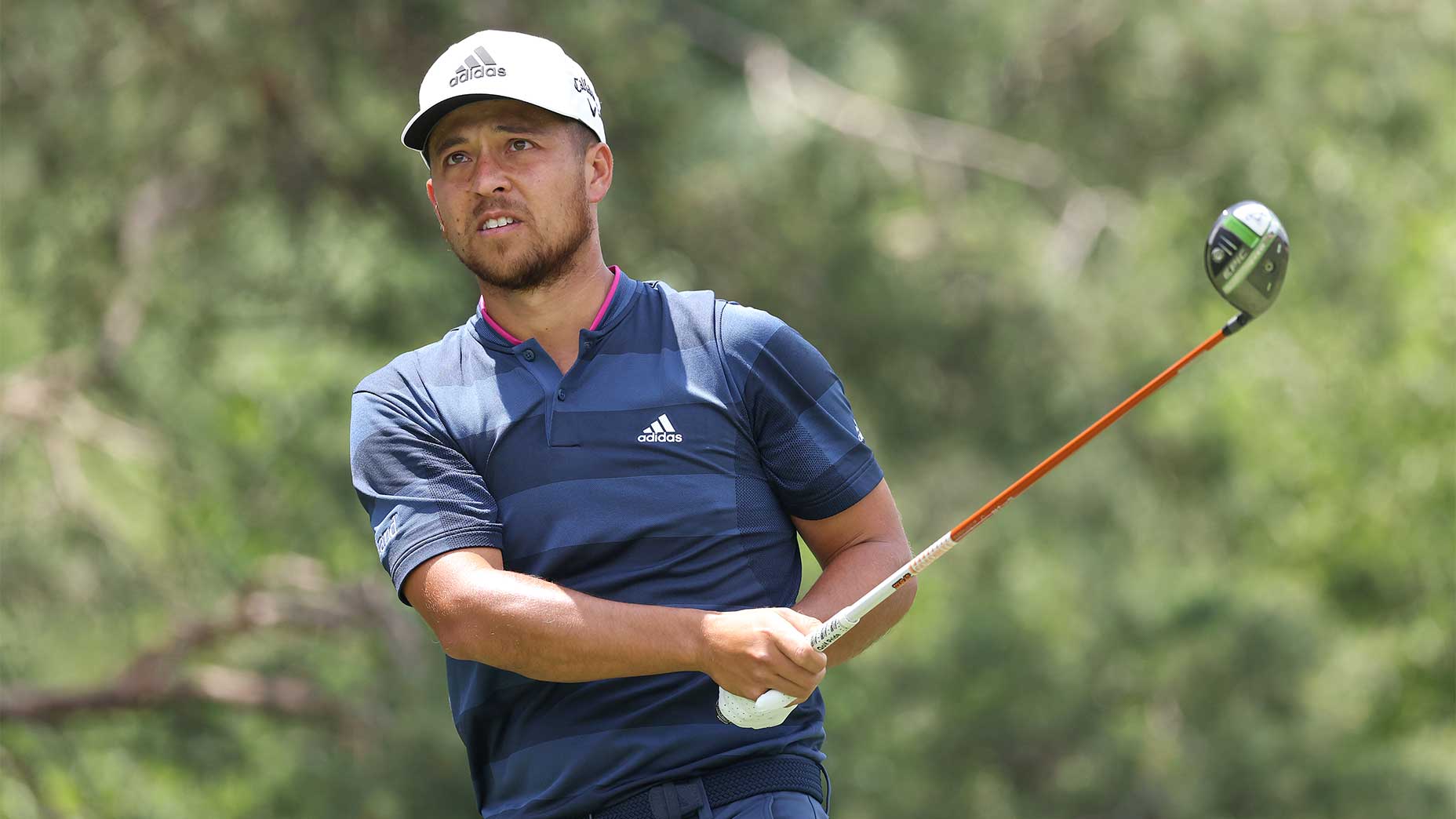
Xander Schauffele hits a tee shot

Even big-hitters like Xander Schauffele know, adding distance off the tee is about striking a balance between gear and instruction.

GETTY IMAGES

I’m not sure I have an opinion on the “chicken or egg” argument, but I am sure I’ve thought about it plenty.

At GOLFTEC, I see golf ’s version of the paradox all the time: Should I buy new clubs or invest in swing instruction? And, if I’m being honest, I’m not sure there’s a right answer to that question, either.

At the highest levels of golf, game improvement is a sliding scale between equipment and instruction. For the pros, some fixes require a swing adjustment, some dictate a gear shift and some require a little of both. Most average golfers think they need to invest their time and money into working only on their swing, without considering their equipment could be holding back gains in their technique. GOLFTEC coaches, myself included, know that game improvement lives in understanding where our students fall in the gray area between these two elements.

Take the example below, where Dan, a GOLFTEC student, saw a radical improvement in his performance after going through a fitting.
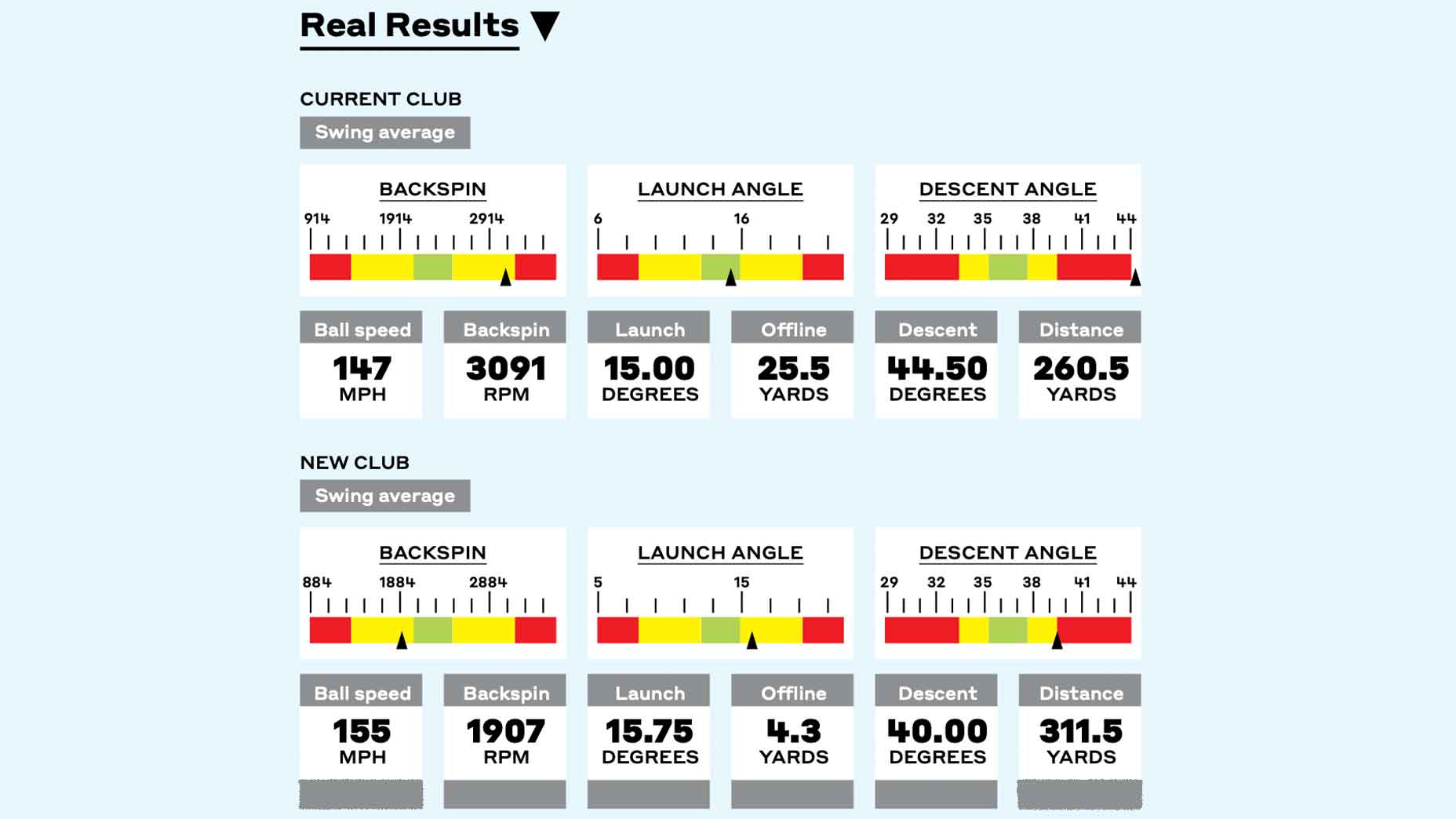
Dan’s tweaks paid major dividends, with 8 mph added to ball speed, 1,000 fewer rpm of backspin and a 5-degree improvement in descent angle — oh, and 51 more yards!

GOLFTEC

Even big-hitters like Xander Schauffele know, adding distance off the tee is about striking a balance between gear and instruction.

GETTY IMAGES

I’m not sure I have an opinion on the “chicken or egg” argument, but I am sure I’ve thought about it plenty.

At GOLFTEC, I see golf ’s version of the paradox all the time: Should I buy new clubs or invest in swing instruction? And, if I’m being honest, I’m not sure there’s a right answer to that question, either.

At the highest levels of golf, game improvement is a sliding scale between equipment and instruction. For the pros, some fixes require a swing adjustment, some dictate a gear shift and some require a little of both. Most average golfers think they need to invest their time and money into working only on their swing, without considering their equipment could be holding back gains in their technique. GOLFTEC coaches, myself included, know that game improvement lives in understanding where our students fall in the gray area between these two elements.

Take the example below, where Dan, a GOLFTEC student, saw a radical improvement in his performance after going through a fitting.

Dan’s tweaks paid major dividends, with 8 mph added to ball speed, 1,000 fewer rpm of backspin and a 5-degree improvement in descent angle — oh, and 51 more yards!

GOLFTEC

Check out the colored launch bars from Dan’s gamer. Tour players typically look for 2,000 to 2,500 rpm of spin off the tee—Dan’s normal driver had more than 3,000. His launch angle was usable, but his spin greatly affected his descent angle. His drives struck the ground like a 9-iron, not a driver.


Check out the colored launch bars from Dan’s gamer. Tour players typically look for 2,000 to 2,500 rpm of spin off the tee—Dan’s normal driver had more than 3,000. His launch angle was usable, but his spin greatly affected his descent angle. His drives struck the ground like a 9-iron, not a driver.

Dan’s gamer had 10.5 degrees of loft and a stock stiff shaft. Based on his launch monitor numbers and ball speed, both the loft and shaft were holding back his driving performance. Using Dan’s data, GOLFTEC coach Clint Lackey got to work putting together three custom drivers. Lackey shifted the loft to 9 degrees, tried an extra stiff shaft and used a Callaway Epic Max LS head to help cut down on spin.

The changes resulted in an 8 mph increase in ball speed, 1,000 fewer rpm of backspin and a 5-degree improvement in descent angle. In Dan’s game, that shift equated to 51 (!) yards of additional distance and an average ballflight that traveled close to 20 yards straighter than his previous gamer. And, since Lackey used stock components in building Dan’s new club, the setup came at no additional cost to the manufacturer’s sticker price.

Dan’s improvements, while eye-popping, are far from extraordinary. On average, players gain 18 yards over their old clubs in GOLFTEC driver fittings — to say nothing of overall performance improvements.

Perhaps it’s better to view a fitting as more of a checkup for your golf game than a sick visit. Remember, the point isn’t to get fit for the perfect club every time, it’s to make sure your current equipment isn’t holding you back. As for which part of the gear or instruction argument is going to improve your game? Stop by your nearest GOLFTEC to find out.

All of our market picks are independently selected and curated by the editorial team. If you buy a linked product, GOLF.COM may earn a fee. Pricing may vary.
Swing Evaluation for GOLF.com Readers

Ready to jump in and start your GOLFTEC journey? Fill out this form to book a swing evaluation or club fitting! A local GOLFTEC coach will contact you to discuss your game and goals.
BOOK NOW
Current Time 0:15
Duration 4:51
Loaded23.76%
 

Room for Improvement: Self Assessments

At GOLF.com, we live and breathe golf, but this game still leaves us all perplexed at times, just like you. We sent eight GOLF staffers on a journey for game improvement, in partnership with GOLFTEC and its locations all over the country.

generic profile image
GOLF.COM PHOTOGRAPHER

    Saturday, June 26, 2021

    play the best golf


    10 ways golfers can play the best golf of their lives

    Leaping golfer

    Yes, it's possible to play your best golf more often. Here's how.

    GETTY IMAGES

    It happens once in a while. You play really well, and leave the course feeling thrilled. But I’ve played nearly my entire life and I can promise you you’ll have more disappointing rounds than satisfying ones. Maybe that’s what makes the great rounds more special and fun.

    In any case, let’s take a closer look at the certain skills you’ll need to have more good days on the course.


    1. Have great fundamentals

    You may have heard me say this before in my other articles, because it’s always worth repeating: If your grip is good, you’ll be more likely to deliver a square clubface into the ball and hit straighter shots. It makes golf so much easier.

    When it comes to your posture: You want to bend at the hips and let your hands hang below your shoulders, with a slight knee flex. Good posture will help improve your overall contact, and the two things together are the foundation of every swing.

    2. Make consistent contact

    While this may seem too obvious, hitting the club properly in the sweet spot is a huge key to distance, accuracy, and overall consistency. It allows you to utilize the technology in the club to your advantage.

    One way I train for this is to mark the clubface with face tape or powder, so I can see where on the clubface I’m hitting it.

    Another of my favorite drills is to use two tees to form a gate. Place one tee outside the toe, another outside the heel, and swing the clubhead through it without hitting either of the tees.

    Start with smaller, slower swings until you groove that center contact. Once you do, gradually build-up speed.

    3. Have a Plan B swing

    Sometimes, golf rounds can feel more like a roller coaster. They can be fun, but also scary and out-of-control.

    When you feel the slide of a bad round coming, make sure you have a go-to Plan B swing you can count on. Mine’s a knockdown shot:

    • Take one extra club
    • Play the ball back in stance
    • Keep weight on front foot
    • Take a three-quarter swing
    • Finish in balance

    4. Keep drives in play

    Your best rounds always include hitting your driver well. Good drives make the entire hole easier.

    How do you maximize your chances of hitting the driver well? An important key is proper shoulder tilt at address, where your lead shoulder is higher than your trail shoulder at setup. This helps you hit up on the ball and launch the ball higher.

    5. Calibrate your wedge distance control

    The best golf of your life will require a respectable short game to cover for your errors.

    To get there, solid contact should be a given with your chips and pitches — which means budgeting more time than you think for chipping and pitching every time you’re on the range.

    And when you’re doing that, take the opportunity to calibrate your pitches in increments of 10 yards (10, 20, 30 yards, etc.) based on the size and speed of your swing. Write the information down, and use it the next time you’re on the course.

    RELATED: ‘It wasn’t glamorous’: Inside Dustin Johnson’s quest to fix his wedge game

    6. Eliminate three-putts

    You’ll never be able to eliminate three-putting entirely, but your best golf almost always coincides with good putting and distance control.

    The ability to read greens well and control distance takes good technique and practice — but it also takes preparation. I’m an ambassador for GolfLogix (an affiliate of 8AM Golf), and I encourage my students to use a green book for their local course. Really study it; I am endlessly amazed by how the green book always gives me the right read even when my eyes don’t see it.

    7. Know where NOT to hit it

    Good scores come from keeping the ball in play. We all know the spot where we want to hit our ball, but sometimes it’s just as important to know where you absolutely can’t miss. Obviously that means water hazards and out of bounds, but sometimes it can mean a fairway bunker, or a short-sided chip.

    Sometimes that also means taking less club to avoid these areas, or aiming farther away so a bad shot — like a slice — is still in play.

    Don’t only plan for your best shots, but consider what you often do when you miss the ball and build this into your game plan.

    8. Chip vs. pitch whenever possible

    Your lowest scores come not only from hitting solid shots, but having playable misses. When deciding which short game shot to hit, you should almost always default to chipping when possible, versus pitching.

    Pitching means a bigger swing that sends the ball higher; a chip requires a smaller stroke, with your weight pre-set on your forward foot, which helps guarantee contact with the ground after the ball. With a smaller motion, you’ll simply have more room for error.

    9. Manage your misses

    This is advice that my father gave me long ago and I believe this is a part of any golfer’s best golf. If your misses are in play and your short game can save you, you limit the stress of being in trouble. Missing the ball straight is a result of a good set up, aiming well and being in balance at your finish. They don’t need to be perfectly straight, and they may not be the prettiest shots (like a slight chunk, or a thinned iron). But as long as they’re in play, you can score.

    10. Have a pre-shot routine

    Playing your best golf often comes from getting into a good groove with your swing and your routine. Once you define this routine, you should repeat it and keep repeating it.

    This focus and willingness to repeat your same routine will help you have continued success and remain calm.

    When you watch the best players playing their best, you will see they do the exact same thing each time before each shot. This helps them to maintain focus and also this active routine helps to keep you moving, which leads to being athletic and calm.

    The best golf of your life doesn’t mean you play perfectly and hit each shot exactly as planned. Almost all rounds of golf have high and low moments. It is a matter of keeping the low moments to a minimum and knowing how to get through these with the least amount of damage. A competent short game is a must as well as a good attitude. Never give up learning, trying to improve, and doing your best on every shot.

    Most importantly, enjoy the good ones!