Thursday, February 18, 2021

Met director responds to backlash over sell-off


Met director Max Hollein defends controversial choice to sell off collection

by Nancy Kenney


NEWS
DEACCESSIONING

Met director defends move to consider deaccessioning for collections care rather than art purchases

Max Hollein argues that more art will not necessarily be sold, although proceeds can now go to other purposes amid the pandemic financial crisis

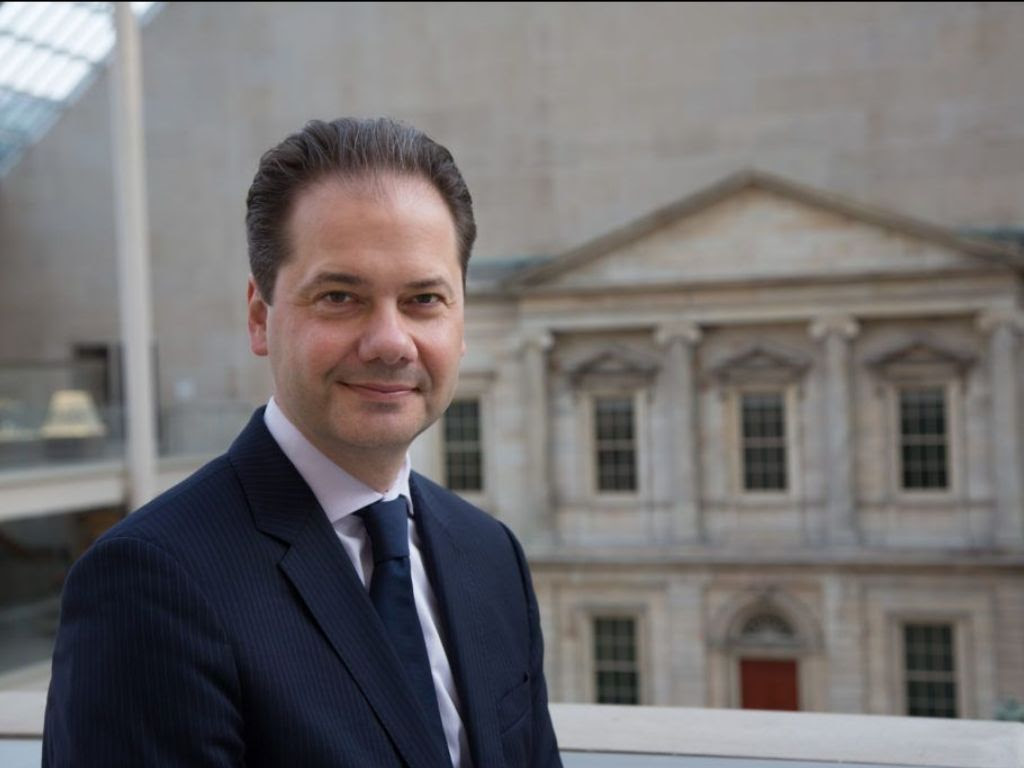
Metropolitan Museum of Art director Max Hollein
Metropolitan Museum of Art director Max Hollein Photo: Eileen Travell

The director of the Metropolitan Museum of Art, Max Hollein, today defended the museum’s decision to consider selling art, known as deaccessioning, to finance care of its collections and salaries for its employees. A New York Times report that it was mulling sales for that purpose had brought a wave of criticism.

“Nothing is going to change” in terms of the amount of art sold, Hollein said in an interview, and the works will be offered at public auction as usual and “we will make the process as transparent as possible.”

The expanded funding mission is allowed under loosened restrictions approved by the Association of Art Museum Directors (AAMD) last April to help American museums facing severe financial shortfalls precipitated by the coronavirus pandemic. Previously the association had limited museums to selling works for the sole purpose of financing acquisitions of more art, but museums have been seeking relief to pay their employees and otherwise finance their operations.

The relaxed standards, adopted to help museums fund “direct care” of their collections, are interpreted to sanction paying curators’ and conservators’ salaries as well as covering other operating expenses and are in force until April 2022.

Critics have said that the Met should turn to its wealthy trustees for additional funding before using art sales to finance operating costs, and that deaccessioning for such purposes could deter donors of important works of art.

In the interview, Hollein said that the only key difference from previous deaccessioning is that the proceeds will go elsewhere, once the museum’s board of trustees meets on 2 March and approves an official policy defining collections care as required by the AAMD.

“For two years, proceeds will go not toward purchasing more works but into collections care,” he explains. Acquisitions will continue at the normal pace, he adds, financed by “robust acquisitions funds” established by the Met.

“The Met has a responsibility to our field and our global community,” Hollein says in a long statement posted today on the Met’s website. But, declaring a “historic crisis” for museums, he says: “It is my professional opinion that a deliberate deaccession program is appropriate, useful and necessary for a museum like ours. I also believe that we must face this once-in-a-generation challenge brought by the pandemic by supporting the museum as a whole, especially its staff, while also taking the long view with regard to what is best for the museum.”

Acknowledging the Met’s role as a guidepost for other American museums, Hollein says in his online statement: “I take very seriously the impact that our actions have on other institutions. I also realise that others may have different philosophies.”

He says that the Met’s revenue from deaccessioning ranges from $45,000 to $25m annually, “driven by the wide range of values assigned to specific pieces and different media”. The average from year to year, the director says, is $15m.

The Met has said that it is facing a potential $150m shortfall in the fiscal year ending on 30 June due to its five-and-a-half-month closure in 2020, its ability to operate at only limited capacity since it reopened last August, the loss of fund-raising galas and the slide in retail sales–all resulting from the Covid-19 pandemic.

Hollein emphasises that the museum has always deaccessioned works that it no longer wants as it pursues art acquisitions. The criteria for deaccessioning, he adds, stipulate that the work being sold “does not further the mission of the museum”; that it is redundant within the museum’s holdings or a duplicate; that it is of lesser quality than other objects of the same type in the collection; and that it lacks “sufficient aesthetic merit or historical importance to warrant retention”.

According to the Met’s 990 tax filings as a nonprofit institution, revenue from deaccessioning amounted to around $13.8m in the fiscal year ended in June 2020, $6.18m in the year ended in June 2019 and $2.1m in the year ended in June 2018.

The museum's 990 report for the fiscal year ended in 2020, for example, listed two works sold that brought in excess of $50,000: Canaletto’s Santa Maria della Salute, a painting from around 1740, and Francesco Guardi’s Imaginary View of a Venetian Square or Campo, from the 1780s.

Cool Asians

 THE CUT IS A VOX MEDIA NETWORK. © 2021 VOX MEDIA, LLC. ALL RIGHTS RESERVED.


NYFW FALL 2021 

‘It’s Cool Asians in the Wild, Wild West’

Photo: Shxpir Huang

In response to the rising number of anti-Asian hate crimes in the U.S. since COVID, Asian Americans began taking to social media last week to raise awareness and call for inclusion in anti-racism discussions. On Monday, for its fall 2021 presentation, New York–based label Private Policy joined in the fight.

Designers Haoran Li and Siying Qu have spent the past year witnessing the way COVID-19 was branded the “China virus.” Tired of staying silent and letting bigotry dictate how they were perceived, they put together a collection inspired by the 19th-century Chinese immigrant workers who helped build the transcontinental railroad in the face of brutal inequality. “The least we could do is speak out against anti-Asian violence,” Qu told the Cut. “We want this collection to teach people about how generations of Asians have contributed to develop this country.”

The two dug into a trove of old photographs from the era with help from the Museum of Chinese in America. They dove into stories about the workers’ lives — like how they organized communities, how they attempted to unionize to demand fair wages, and how they moved to the Gold Coast in the hope of a better life. Visually, they were struck by the juxtaposition of Americana and traditional Chinese dress, including changshan jackets and wide-brimmed bamboo straw hats that cover the eyes.

From left: Photo: Shxpir HuangPhoto: Shxpir Huang

In the collection, it all translates to utilitarian looks fusing 19th-century Chinese garments with Western workwear. Straw hats in pistachio and pink are paired with oversize checker-printed separates, a qipao is anchored with cowboy boots, and denim midi skirts are finished with metal-knot buttons inspired by Qin-dynasty coins.

From left: Photo: Shxpir HuangPhoto: Shxpir Huang

Private Policy has a rebellious spirit, which you can see in the soft harness details on overshirts, quilted bomber jackets, vegan leather trousers, and graphic tees. (One features a crane clutching a slanted-checker flag, riffing off the bald eagle with an American flag.) “It’s cool Asian kids in the Wild, Wild West,” Qu jokes — a way of reaching back to the past but also fighting for a better future.

Monday, February 15, 2021

10 Films About Connections

 10 Films About Connections

Caixa de entrada

Aesthetica Short Film Festival office@aestheticamagazine.com através de smtp5.ymlpsvr.com 

domingo, 14/02, 11:23 (há 23 horas)
para mim
   
Traduzir mensagem
Desativar para mensagens em: inglês


Connections are more important than ever. Discover 10 short films from ASFF and beyond
that investigate a variety of relationships, bringing themes of family, nature and home into focus.
 
 
Ode to Desolation,
dir. Lindsey Hagen
 
Ode to Desolation shares the story of Jim Henterly as he contemplates the dwindling days of Fire Lookouts in North America. With the influence of technology and AI threatening to make his role obsolete, it asks how, in future, we will keep human interactions with the natural world alive.
 

Home,
dir. Thomas Gleeson
 
We often think of houses as strong, solid permanent things. In fact, they can be weak, fragile and mobile. Home explores the idea of what makes a house a home. This is a film about our relationship to the spaces we inhabit, and what it means to move on. A moving documentary short.


Brotherhood,
dir. Meryam Joobeur
 
An Oscar-nominated tale of a sudden, unexpected reunion. Mohamed is deeply shaken and suspicious when his estranged eldest son Malek returns home from Syria to rural Tunisia with a mysterious young wife. The emotional complexities of a family reunion and past wounds lead to tragic consequences.


No Crying at the Dinner Table, dir. Carol Nguyen
 
Filmmaker Carol Nguyen interviews her own family to craft an emotionally complex and meticulously composed portrait of intergenerational trauma, grief and secrets in this cathartic documentary about things left unsaid. Explore family connections, and the things that put them to the test.

One Another,
dir. Kevin Frilet

 
From the underground, a group emerges from the darkness. The bodies mingle and intertwine to form one being. With a regular step, they walk together towards the light in search of greatness. Watch this dance short with Aesthetica Film Festival’s online film library.


The Bigger Picture,
dir. Daisy Jacobs
 
Using seven-foot-tall characters performing on life- size sets, The Bigger Picture tells a stark and darkly humorous tale of caring for an elderly parent and the pressures that are faced. An exploration of family relationships through animation.


Sincerely, Erik,
dir. Naz Riahi

 
In Naz Riahi's first film, Erik, a lonely bookseller, navigates New York City's pandemic isolation as best as he can. Sincerely, Erik is a tender love letter to New York, books and the lonely hearts. This narrative short film was shot in late May at the height of Covid-19.


Partners,
dir. Joey Ally

 
Professional and life partners Kate and Leigh have shared everything for years, from their apartment to the popular bar they co-own. When a slump in their sex life forces them to reconsider their relationship, they must confront how intertwined their lives have become.


The Coin,
dir. Siqi Song
 
On Chinese New Year, finding the coin hidden in a dumpling (Jiaozi) brings good luck. A girl loses a jar on her journey to a new country, which contains the lucky coins she has been collecting growing up. Her new life begins with a search for the coin.


A Concerto is a Conversation, dirs. Ben Proudfoot & Kris Bowers
 
A virtuoso jazz pianist and film composer tracks his family's lineage through his 91-year-old grandfather, from Jim Crow Florida to the Walt Disney Concert Hall. A short film about discovering the things that bind us across generations.