Wednesday, April 22, 2020

How Far Can Air Carry Coronavirus?


Stay 6 Feet Apart, We’re Told. But How Far Can Air Carry Coronavirus?

Most of the big droplets travel a mere six feet. The role of tiny aerosols is the “trillion-dollar question.”
Credit...Caitlin Ochs/Reuters
The rule of thumb, or rather feet, has been to stand six feet apart in public. That’s supposed to be a safe distance if a person nearby is coughing or sneezing and is infected with the novel coronavirus, spreading droplets that may carry virus particles.
And scientists agree that six feet is a sensible and useful minimum distance, but, some say, farther away would be better.
Six feet has never been a magic number that guarantees complete protection. The Centers for Disease Control and Prevention, one of the organizations using that measure, bases its recommendation on the idea that most large droplets that people expel when they cough or sneeze will fall to the ground within six feet.
But some scientists, having looked at studies of air flow and being concerned about smaller particles called aerosols, suggest that people consider a number of factors, including their own vulnerability and whether they are outdoors or in an enclosed room, when deciding whether six feet is enough distance.
Sneezes, for instance, can launch droplets a lot farther than six feet according to a recent study.
No scientists are suggesting a wholesale change in behavior, or proposing that some other length for separation from another human, like seven, or nine feet, is actually the right one.
  • Help us report in critical moments.
Subscribe today to support The Times
“Everything is about probability,” said Dr. Harvey Fineberg, who is the head of the Standing Committee on Emerging Infectious Diseases and 21st Century Health Threats at the National Academies of Sciences, Engineering and Medicine. “Three feet is better than nothing. Six feet is better than three feet. At that point, the larger drops have pretty much fallen down. Maybe if you’re out of spitting range, that could be even safer, but six feet is a pretty good number.”
One complicating factor is that aerosols, smaller droplets that can be emitted when people are breathing and talking, play some role in spreading the new coronavirus. Studies have shown that aerosols can be created during certain hospital or laboratory procedures like when using nebulizers to help patients inhale medication, which makes such procedures risky for doctors who do them.
If the aerosols that people exhale in other settings are significant in spreading the disease, the six-foot distance would not be completely protective because those are carried more easily by air currents.
Aerosols are generally considered to be particles under 5 microns in diameter, about the size of a red blood cell, and can be spread in the environment by talking and breathing. But some researchers argue that this is a false dichotomy. Infectious droplets can’t easily be divided into those that are big enough to fall to the ground quickly and those that stay aloft because so much depends on environmental conditions and how deeply they penetrate into the respiratory tract.
Sign up to receive an email when we publish a new story about the coronavirus outbreak.
“It’s really a continuum,” said Dr. Donald Milton, who studies bioaerosols at the University of Maryland School of Public Health.
Even without the launching power of a sneeze, air currents could carry a flow of aerosol sized virus particles exhaled by an infected person 20 feet or more away.
“In any confined geometry like an office room, meeting room, department store, food store,” said Eugene Chudnovsky, a physicist at Lehman College and the City University of New York’s Graduate Center. In a study not yet peer reviewed, he analyzed air flow and showed how, “the vortices in the air are taking the virus to different places.”
A preliminary study at the University of Nebraska Medical Center found evidence of coronavirus genetic material on various surfaces in isolation rooms where infected patients were being treated, including on air vents more than six feet from the patients. The research, which has not yet been peer reviewed, indicates that the virus can occasionally travel long distances.
“The virus is so small, it can hitch a ride even on tiny, tiny particles,” Dr. Fineberg said. “But how important is each size and how well they can transmit disease is not fully understood.”
It is also unclear how many virus particles it takes to start an infection, how long the viral particles remain viable or if studies like the one in Nebraska simply detected the genetic calling card the virus left behind.
Spacing is an effective solution because it also reduces the number of people in a confined space. That reduces the likelihood of an infected person being in the group. And if there is one, fewer other people might be infected.
Dr. Michael Osterholm, director of the Center for Infectious Disease Research and Policy at the University of Minnesota, said the six-foot distance would clearly “reduce the number of droplets you come in contact with. I have no doubt about that.”
But, he said: “The question is what does it take for you to get infected? And that I think is the trillion-dollar question we have.”
He said, “Maybe all it takes is an aerosol. You don’t need any droplets at all.” If that’s the case, he said, then someone who is at high risk would not want to be in the same room with someone who is infected or might be infected.
Current guidelines already suggest that anyone at high risk should stay home and not be out in public in the first place. And they seem to be working. Places where people reduced travel and started social distancing weeks ago, especially in California, New York and Washington, are starting to show a reduction in the number of new coronavirus cases.
People still need to shop and take care of necessities, Dr. Osterholm said, but reducing the risk of exposure to all possible modes of transmission — infected surfaces, droplets and smaller aerosols — is important.
“Your job is to limit it as much as you can.”
James Gorman is a science writer at large and the host and writer of the video series “ScienceTake.” He joined The Times in 1993 and is the author of several books, including “How to Build a Dinosaur,” written with the paleontologist Jack Horner. 
Kenneth Chang has been at The Times since 2000, writing about physics, geology, chemistry, and the planets. Before becoming a science writer, he was a graduate student whose research involved the control of chaos. @kchangnyt
  • Frequently Asked Questions and Advice

    Updated April 11, 2020
    • When will this end?

      This is a difficult question, because a lot depends on how well the virus is contained. A better question might be: “How will we know when to reopen the country?” In an American Enterprise Institute report, Scott Gottlieb, Caitlin Rivers, Mark B. McClellan, Lauren Silvis and Crystal Watson staked out four goal posts for recovery: Hospitals in the state must be able to safely treat all patients requiring hospitalization, without resorting to crisis standards of care; the state needs to be able to at least test everyone who has symptoms; the state is able to conduct monitoring of confirmed cases and contacts; and there must be a sustained reduction in cases for at least 14 days.
    • What should I do if I feel sick?

      If you’ve been exposed to the coronavirus or think you have, and have a fever or symptoms like a cough or difficulty breathing, call a doctor. They should give you advice on whether you should be tested, how to get tested, and how to seek medical treatment without potentially infecting or exposing others.
    • Should I wear a mask?

      The C.D.C. has recommended that all Americans wear cloth masks if they go out in public. This is a shift in federal guidance reflecting new concerns that the coronavirus is being spread by infected people who have no symptoms. Until now, the C.D.C., like the W.H.O., has advised that ordinary people don’t need to wear masks unless they are sick and coughing. Part of the reason was to preserve medical-grade masks for health care workers who desperately need them at a time when they are in continuously short supply. Masks don’t replace hand washing and social distancing.
    • How does coronavirus spread?

      It seems to spread very easily from person to person, especially in homes, hospitals and other confined spaces. The pathogen can be carried on tiny respiratory droplets that fall as they are coughed or sneezed out. It may also be transmitted when we touch a contaminated surface and then touch our face.
    • Is there a vaccine yet?

      No. Clinical trials are underway in the United States, China and Europe. But American officials and pharmaceutical executives have said that a vaccine remains at least 12 to 18 months away.
    • What makes this outbreak so different?

      Unlike the flu, there is no known treatment or vaccine, and little is known about this particular virus so far. It seems to be more lethal than the flu, but the numbers are still uncertain. And it hits the elderly and those with underlying conditions — not just those with respiratory diseases — particularly hard.
    • What if somebody in my family gets sick?

      If the family member doesn’t need hospitalization and can be cared for at home, you should help him or her with basic needs and monitor the symptoms, while also keeping as much distance as possible, according to guidelines issued by the C.D.C. If there’s space, the sick family member should stay in a separate room and use a separate bathroom. If masks are available, both the sick person and the caregiver should wear them when the caregiver enters the room. Make sure not to share any dishes or other household items and to regularly clean surfaces like counters, doorknobs, toilets and tables. Don’t forget to wash your hands frequently.
    • Should I stock up on groceries?

      Plan two weeks of meals if possible. But people should not hoard food or supplies. Despite the empty shelves, the supply chain remains strong. And remember to wipe the handle of the grocery cart with a disinfecting wipe and wash your hands as soon as you get home.
    • Should I pull my money from the markets?

      That’s not a good idea. Even if you’re retired, having a balanced portfolio of stocks and bonds so that your money keeps up with inflation, or even grows, makes sense. But retirees may want to think about having enough cash set aside for a year’s worth of living expenses and big payments needed over the next five years.

Monday, April 20, 2020

dance away with Lorna, Russ e. a.

Images Reveal the World of a Soviet-Era Photographer

73ed94ee-f881-4ea1-8e1f-44f98483021c.png
April 20, 2020


30,000 Hidden Images Reveal the World of a Soviet-Era Photographer

The secret trove of film and negatives, stashed in a Russian attic.

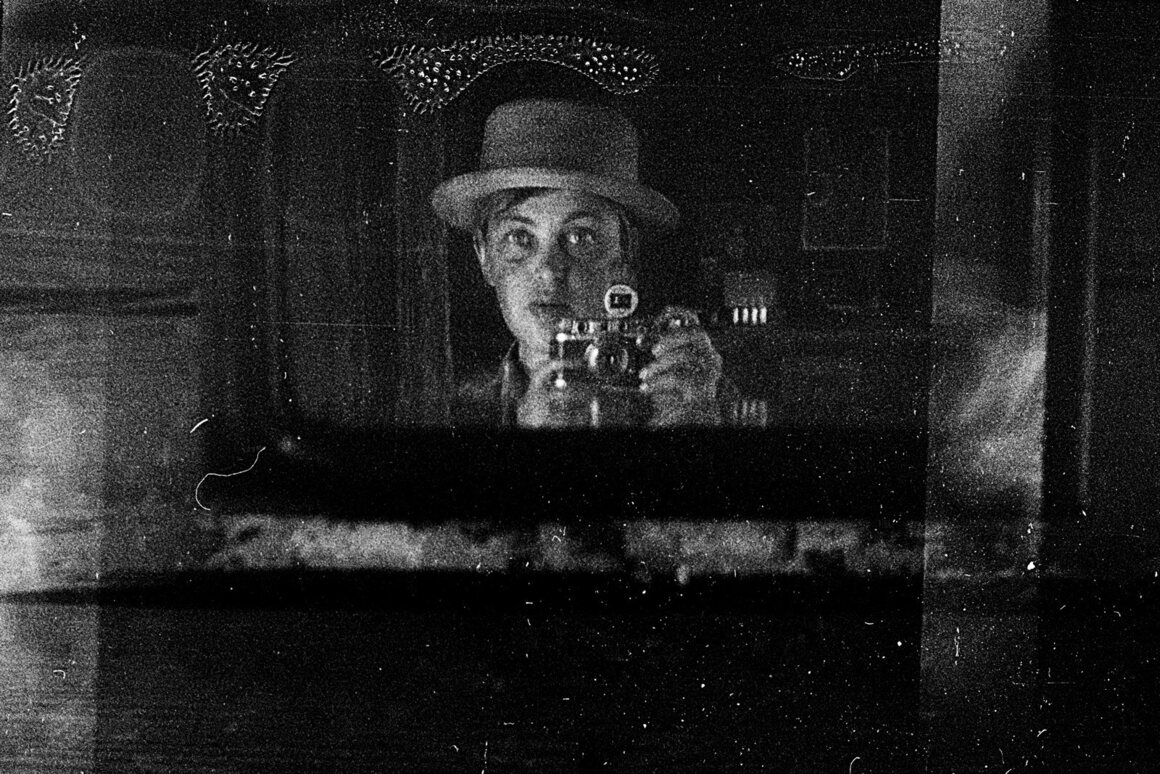
Masha Ivashintsova was born in Russia, in 1942. At 18 she started taking photographs, and became involved the underground arts movement in St. Petersburg, then known as Leningrad. She shot prolifically on the streets of the city, with either her Leica IIIc or Rolleiflex. But she never showed her work to anyone—some of it she didn’t even develop. When she died, in 2000, she left 30,000 photographs—in the form of negatives and undeveloped film—in a box, where they remained, untouched, for 17 years.
Late last year, while working on a renovation, Ivashintsova’s daughter Asya Ivashintsova-Melkumyan and her husband discovered the box in their attic. Slowly they began to explore this archive, and saw what Ivashintsova had seen, created, and then hidden.
<em>A children's playground, Krasnoy Konnitsy (Red Cavalry) Street, Leningrad</em>, 1978.
A children’s playground, Krasnoy Konnitsy (Red Cavalry) Street, Leningrad, 1978.
One photo from 1979 shows residents shoveling snow on the bitterly cold banks of the Neva River. Another captures a playground beside an abandoned building, with a jungle gym shaped like a rocket ship, quiet and unused. In a busy street scene, a man looks into the lens, mid-conversation, a cigarette hovering, a fur hat perched on his head.
There are also family snapshots and the occasional self-portrait. Ivashintsova also shot portraits of the notable artists with whom she was romantically involved, and felt eclipsed by: photographer Boris Smelov, poet Viktor Krivulin, and linguist (and father to her daughter) Melvar Melkumyan. “She sincerely believed that she paled next to them and consequently never showed her photography works, her diaries and poetry to anyone during her life,” Ivashintsova-Melkumyan writes.
<em>Anichkov Bridge, Nevsky Prospekt, Leningrad</em>, 1976.
Anichkov Bridge, Nevsky Prospekt, Leningrad, 1976.
Unlike these men, Ivashintsova was not recognized for her work. She held various jobs, and was unemployed by 1981. According to her daughter, without a job, Ivashintsova had two options: prison or institutionalization. For the next decade, Ivashintsova moved between psychiatric hospitals.
Ivashintsova-Melkumyan has now created a website and Instagram feed devoted to her mother’s work, and is planning an exhibition of these revealing, unusual images for this summer in Vienna. “During her lifetime whatever she did was never taken very seriously, neither by her family nor by the men she loved,” she said, in a recent interview with My Modern Met. There is a sense of validation that her mother’s work can finally be appreciated. And there are many more of the 30,000 images that still need to be developed, printed, and scanned. Atlas Obscura has a selection of Ivashintsova’s photographs.
<em>Leningrad</em>, 1978.
Leningrad, 1978.
<em>Michurinsky Garden, Leningrad</em>, 1975.
Michurinsky Garden, Leningrad, 1975.
<em>Vologda</em>, 1979.
Vologda, 1979.
<em>Arbat, Moscow</em>, 1988.
Arbat, Moscow, 1988.
<em>Pushkinskiye Gory, Pskovskaya Oblast</em>, 1976.
Pushkinskiye Gory, Pskovskaya Oblast, 1976.
<em>Moscow</em>, 1987.
Moscow, 1987.
<em>Leningrad</em>, 1977.
Leningrad, 1977.
<em>Self-portrait, taken in Dubroshkino, Leningrad</em>, 1989.
Self-portrait, taken in Dubroshkino, Leningrad, 1989.

Pandemic Street Art

Masks for cats, a carpet museum, and Texas before Tex-Mex.
Email not displaying correctly? View in your browser.
73ed94ee-f881-4ea1-8e1f-44f98483021c.png
April 20, 2020


Around the World in Pandemic Street Art

Messages of respect, hope, and frustration have appeared in our largely empty public spaces.

A policeman stands over graffiti about social distancing at a temporary market in Chennai, India, April 9, 2020. ARUN SANKAR/AFP VIA GETTY IMAGES
The bright yellow wall with bold, black words shouts for attention. Next to it there is a figure wearing sunglasses and a face mask, holding open a coat to reveal the word “HOPE” tucked into the pockets. Artist Corie Mattie found a wall in West Hollywood, California, and painted this mural by herself in less than 48 hours, according to her Instagram account. She is now seeking additional walls to deliver her illustrated tidings of hope.
Throughout the ages, artists have taken their messages to public spaces, from Pompeii’s walls in Roman times to New York City’s subway cars in the 1980s. Driven by the current pandemic and its unique aesthetic—knobby viruses, face masks, messages of solidarity—creatives around the world have continued to express themselves publicly. Cities and beyond are studded with love for healthcare workers, cynicism for politicians, frustration at the crisis, or simple encouragement.
Atlas Obscura has compiled a collection of these messages—direct, witty, poignant. The streets may be mostly empty of people during lockdown, but they’re not empty of humanity.
A mural in Los Angeles, California, April 4, 2020.
A mural in Los Angeles, California, April 4, 2020. APU GOMES/AFP VIA GETTY IMAGES
A mural reads "Fight!" near the construction site of a medical center's new building in Moscow, Russia, March 26, 2020.
A mural reads “Fight!” near the construction site of a medical center’s new building in Moscow, Russia, March 26, 2020. SERGEI SAVOSTYANOV\TASS VIA GETTY IMAGES
A man walks past art of a person pulling a chain with a germ attached to it, by the artist known as the Rebel Bear, in Glasgow, Scotland, April 3, 2020.
A man walks past art of a person pulling a chain with a germ attached to it, by the artist known as the Rebel Bear, in Glasgow, Scotland, April 3, 2020. ANDREW MILLIGAN/PA IMAGES VIA GETTY IMAGES
Visual artist Grandsan paints graffiti at a butcher shop in Kibera, Kenya, March 23, 2020.
Visual artist Grandsan paints graffiti at a butcher shop in Kibera, Kenya, March 23, 2020. YASUYOSHI CHIBA/AFP/GETTY IMAGES
Street art in Amsterdam's "Red Light District," April 4, 2020.
Street art in Amsterdam’s “Red Light District,” April 4, 2020. DEAN MOUHTAROPOULOS/GETTY IMAGES
This graffiti in front of Cologne Cathedral in Germany says "To hell with Corona," March 17, 2020.
This graffiti in front of Cologne Cathedral in Germany says “To hell with Corona,” March 17, 2020. INA FASSBENDER/AFP VIA GETTY IMAGES
Street artist Pegasus depicted Boris Johnson in Shoreditch, London, March 17, 2020.
Street artist Pegasus depicted Boris Johnson in Shoreditch, London, March 17, 2020. COVER IMAGES/ALAMY
Artist Kai 'Uzey' Wohlgemuth depicted a nurse as Superwoman in Hamm, Germany, April 8, 2020.
Artist Kai ‘Uzey’ Wohlgemuth depicted a nurse as Superwoman in Hamm, Germany, April 8, 2020. INA FASSBENDER/AFP VIA GETTY IMAGES
A man rides past a mural in Los Angeles, California, April 3, 2020.
A man rides past a mural in Los Angeles, California, April 3, 2020. ROBYN BECK/AFP VIA GETTY IMAGES