Monday, July 23, 2018

How Consumers Can Resist Companies’ Market Power


How Consumers Can Resist Companies’ Market Power

Image
CreditBrian Britigan
By Austan Goolsbee
A basic rule of economics is that the price depends on how willing consumers are to buy something else.
The less consumers pay attention when they buy — and the more they just follow a set shopping pattern — the greater the market power possessed by the seller, and the more that seller can charge.
Modern companies know this very well, and they do what they can to improve their advantages over unwary consumers.
I’ve unwittingly been caught in consumer traps myself.
About 15 years ago, for example, my wife and I decided to send out holiday cards using an online photo service rather than writing them out and sending them by hand. We picked Shutterfly, which did a good job. And we’re still using it, largely because after we had typed 100 addresses into the Shutterfly site, it would have taken a heck of a deal to persuaded us to type them in again somewhere else.
So the truth is we haven’t bothered to shop around much. We’ve just stuck with Shutterfly, and that is undoubtedly costing us money.
Economists have thought a lot about markets like the one exemplified by Shutterfly — those with significant “switching costs” and “lock-in effects.”
You have 1 free article remaining.
Subscribe to The Times
In such markets, companies should be extremely generous up front trying to earn your business, knowing you will be stuck with them. And, in theory, you will think about their future market power carefully when you first decide whether to sign up. That’s what a rational, forward-looking consumer should do.
But that theory might not describe the actual marketplace that well. When my wife and I chose Shutterfly, we didn’t really think about what competitors might exist 14 years later or how the prices might change once they got us signed up in 2004.
We probably should have thought about all of that, realizing that, down the road, cloud storage prices would become immensely cheaper and we could get better deals if we maintained our flexibility. Instead, we bumbled our way into giving a company the power to monopolize us.
That kind of thing happens a lot these days. People make quick shopping decisions that have long-term consequences.
Let’s say you bought an Alexa to help with tasks around the house. Did you know that Alexa would also consistently try to steer your purchases to Amazon’s house brands when you asked her to order something? Maybe not, but you gave Alexa market power the moment you plugged her in.
Big companies know that the more convenient they make their product or service, the less you will shop around and the more market power they will have. Plus they’ve gotten good at tailoring products to certain consumers to get them to give up comparison shopping altogether.
In a fascinating new analysis, the economists Brent Neiman and Joseph Vavra at the University of Chicago Booth School of Business studied data on 700 million purchases in grocery and big-box stores for 160,000 households over more than a decade to determine how specialized American consumers have become when they make purchases.
The researchers (who are, incidentally, my friends and colleagues) found that while companies sell many more products than before, as individuals we are increasingly buying only our one favored product in a given category. In other words, we are not comparison shopping or forcing companies to compete for business.
Take the case of tortilla chips. Fifteen years ago, Tostitos dominated all other chip makers, but sometimes consumers would buy Mission chips or a local brand if they were cheaper or the mood struck them.
Today, Tostitos is still the dominant brand but has expanded into 13 specialized varieties like Tostitos Hint of Lime, Tostitos Bite Size and Tostitos Multigrain. It also has five party sizes, four Simply Tostitos organic or sea-salted varieties and three different Tostitos Cantina styles.
Today, the same consumer tends to go into the store looking just to buy one of the specialized varieties of Tostitos: She really loves Hint of Lime or is intent on buying Tostitos Scoops (chips in the shape of tiny taco bowls). People don’t try alternatives the way they used to. They act as if they are locked in.
On the one hand, consumers shouldn’t complain about this. After all, Tostitos (or Frito-Lay, the Pepsi subsidiary that owns Tostitos) created lots of new products that people like better. That’s innovation. Good for them.
But this innovation comes with a downside. The more specific consumer tastes get, the more the companies can exploit their ability to cater to those tastes without competition. The Neiman and Vavra study shows exactly what you would expect: The more specialized the demand, the higher the prices people pay and the greater the market power possessed by a company.
Creating specialized demand is an intriguing way of locking customers into a product. Another method is selling a discount subscription — cable, magazines, pest control — that automatically renews at a higher price. Consumers have to remember and make the effort to cancel if they want to shop around. Companies offer convenience, but they make the consumers pay for it.
These behavioral traps may seem far removed from the macro-level discussions of market power that dominate economic analysis such as the staggering increases in corporate earnings and profit margins and the simultaneous stagnation of wages. Economists often argue whether the underlying causes of these phenomena are lax antitrust enforcement, rapid technological development, globalization, declining unions or other factors.
But even as we debate these larger notions, let us not forget the ways in which we, consumers at the very base of the economy, increase corporate market power with the ways we shop.
That isn’t meant to deny the importance of conventional macroeconomic factors in the rise of market power. And it certainly isn’t meant to play down the role that could be played by government policy like more aggressive antitrust enforcement, consumer protection or regulation.
ADVERTISEMENT
But beyond the effects of government or technology or globalization, individual choices matter. Companies don’t want you to comparison shop, which could force them to compete for your business. They want you to develop regular shopping habits. The more people do that, the higher the prices everyone will pay.
I try to remember that when I shop now. I remind myself not to just buy the first thing listed on a website or displayed on the rack at the checkout aisle. When I take a ride-hailing service, I will check both Uber and Lyft before choosing. Sometimes I check the price of things online without logging in or shift my browser to private mode to see if a company is offering better deals to new customers.
For an individual shopper, these actions are a bit of a pain, and they may not do much to improve matters over all. But if enough people behave this way — keeping companies guessing and making them work for our business — these small acts of consumer resistance can help keep corporate market power in check.
Austan Goolsbee, a professor of economics at the University of Chicago’s Booth School of Business, was an adviser to President Barack Obama. Follow Austan Goolsbee on Twitter: @austan_goolsbee
A version of this article appears in print on , on Page BU5 of the New York edition with the headline: Companies Are Happy When Customers Are Trapped. Order Reprints | Today’s Paper | Subscribe

Sunday, July 22, 2018

The Problem with Questions


ROUNDTABLE

The Problem with Questions

How the questions asked betray the anxieties of the times.
TUESDAY, JULY 17, 2018
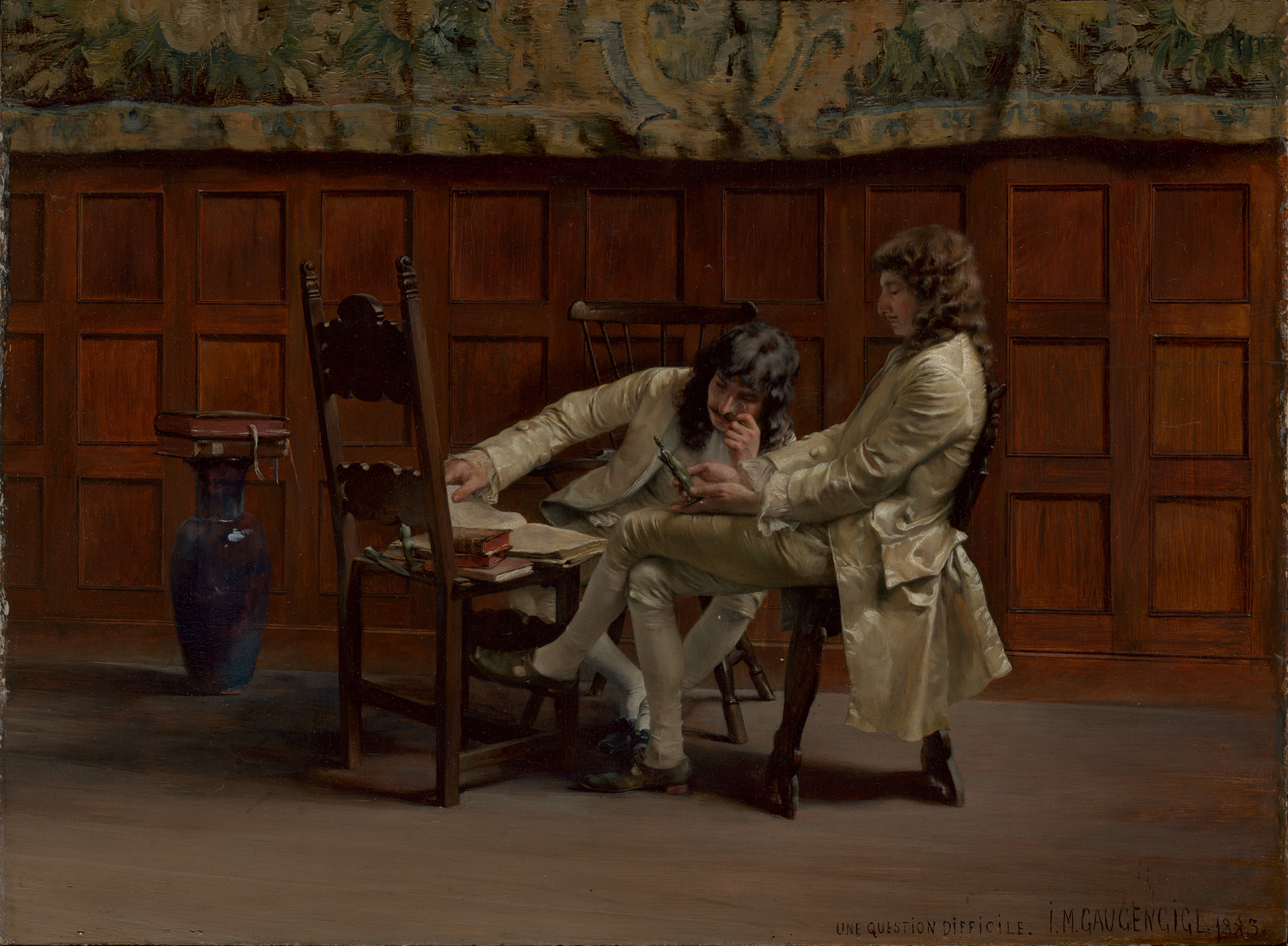
A Difficult Question (Une Question Difficile), by Ignaz Marcel Gaugengigl, 1883. The Metropolitan Museum of Art, Bequest of Martha T. Fiske Collord, in memory of Josiah M. Fiske, 1908.
A Difficult Question (Une Question Difficile), by Ignaz Marcel Gaugengigl, 1883. The Metropolitan Museum of Art, Bequest of Martha T. Fiske Collord, in memory of Josiah M. Fiske, 1908.
In his book The Main Questions of Modern Culture from 1914, the German philosopher Emil Hammacher wrote about the questions of his time—among them the social, woman, and worker questions—their causes, and the longstanding desire to solve them and others, tracing their causes and solution-seeking back to Immanuel Kant and other eighteenth-century idealists. “Since people began to be surprised by that which was once considered self-evident, there have been questions and tasks whose solution is felt as a need and a necessity,” Hammacher wrote on the eve of the Great War. “Never before have there been so many riddles storming the people as there are today.”
Emil Hammacher did not survive the war. He was killed at the front in France, but The Main Questions of Modern Culture was celebrated by no less a figure than Thomas Mann, who in 1918 praised Hammacher as “the young philosopher from Bonn…whom I would very much like to call my posthumous friend” in his conservative defense of Germany’s involvement in the war, Reflections of a Nonpolitical Man. In spite of Mann’s posthumous blessing, Hammacher did not even attain that moderate amount of fame required to be included in the German Biographical Encyclopedia. But his thought was as steeped in the problem of action (What is to be done?) as the leftist György Lukács’, and constitutes a more accurate summation of what the age of questions had wrought: namely, doubt and despair, and a loss of faith in the Lösung (solution).
When Hammacher wrote that “never before have there been so many riddles coming at people as there are today,” the passage continues: “It’s not so much that now a question appears with unprecedented intensity, but rather that absolutely all handed-down solutions of world- and life-problems have become doubtful.” This loss of faith in solutions did not devolve into pessimism for Hammacher, however. In the place of the Lösung, he fantasized about Auflösung (dissolution, or giving over). “The self-same conditions that pave the way to the end also lead to the highest maturation of mystical experience; it is in the state of dissolution that individuals can achieve a higher perfection than ever.”
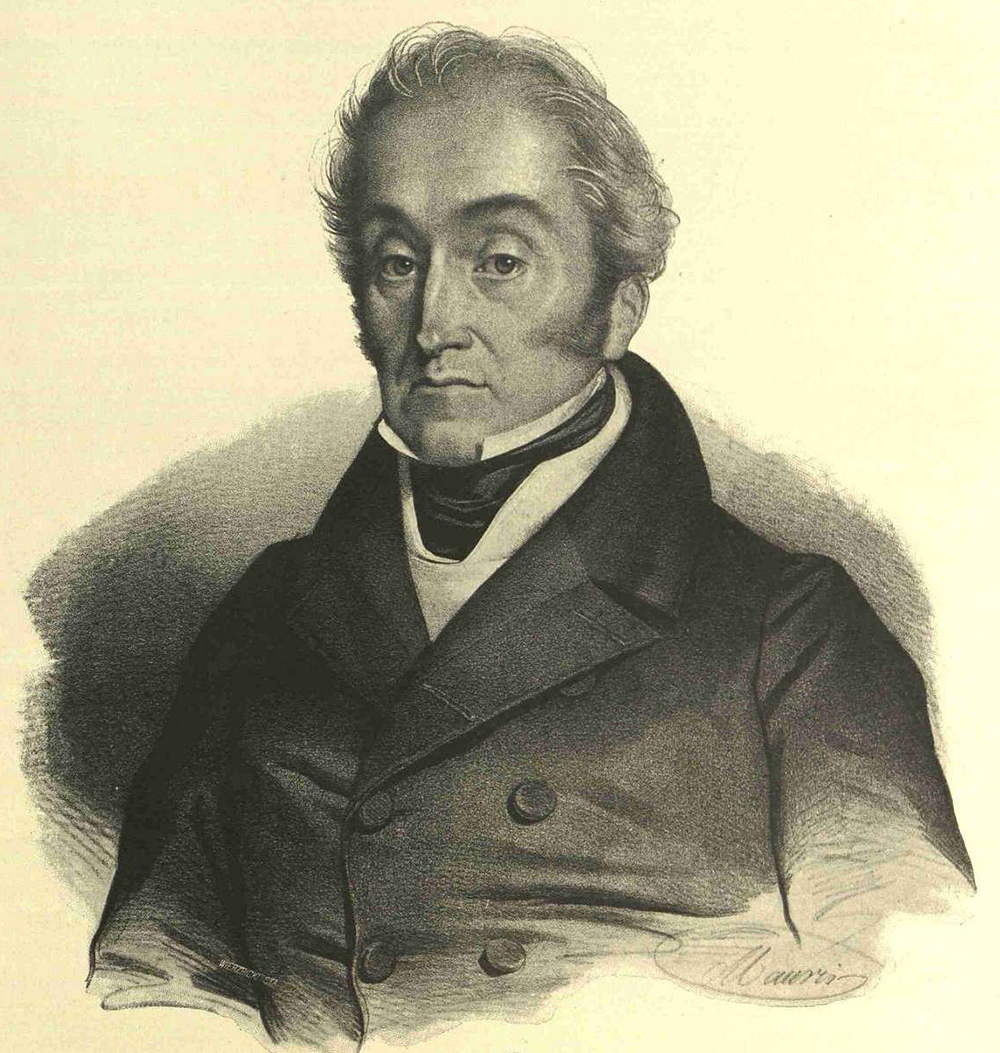
Adam Czartoryski, from “A Biographical Album of Distinguished Poles and Polish Women of the 19th Century” (1901).

When we juxtapose the Polish nobleman and statesman Adam Czartoryski with Hammacher, we see Hammacher engaged in an interrogation rather than a reaffirmation of the Polish statesman’s ideals and assumptions. Whereas Czartoryski believed that states were effectively “masses of personified individuals” and therefore subject to natural law and entitled to the same forms of liberty and equality as individuals, Hammacher wondered, “What right does a state have vis-à-vis others and to what extent are its citizens more than a coincidental legal community, a nation? Does the morality of the state operate under fundamentally different norms than those of the individual?” Whereas Czartoryski favored an order that was rational, just, and above all peaceful, Hammacher asked, “Is the war that [a state] fights for its own self-assertion or aggrandizement an amoral or at least fatuous residue of barbarism; is international spiritual culture [internationale Geisteskultur] and eternal peace the highest ideal?” His answer to both was no.
It might be argued that Hammacher’s perspective was uniquely German, colored by the German idealist and romantic traditions. And indeed Thomas Mann—in his Reflections of a Nonpolitical Man, part of a protracted argument with his liberal-progressive and politically engaged brother Heinrich—dubbed Hammacher’s book “an astounding synthesis” of “the Germany that had to enter the war.” So perhaps in seeking to fathom the age of questions with Hammacher as our starting point, we must conclude either that it came to be dominated by German thought or that we have traced only a specifically German trajectory through the age. Is it not possible that each nation charted its own course through that age, like the Russians with their “accursed questions” and incessant What is to be done?
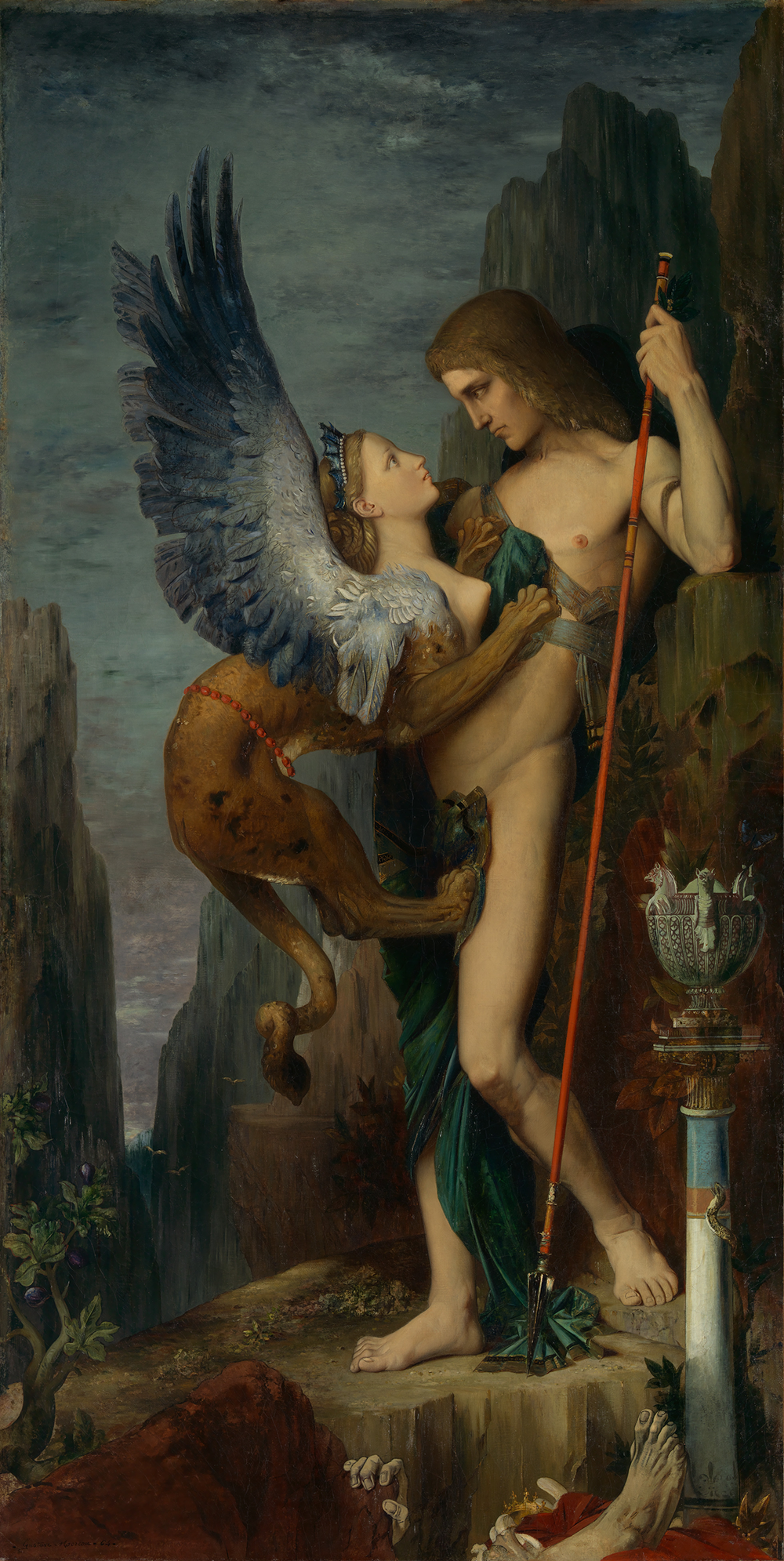
“Oedipus and the Sphinx,” by Gustave Moreau, 1864. The Metroplitan Museum of Art, Bequest of William H. Herriman, 1920.

But the ideas in Hammacher’s thesis were not uniquely German. The loss of faith in solutions was a more generalized phenomenon. Already in 1853, Marx and Engels wrote of the “eternal ‘Eastern question,’ ” a designation that was repeated by an anonymous pamphleteer in 1860. In 1865, the Hungarian statesman József Eötvös wrote in his book on the nationality question:
If some question is left open for a longer time, there is no shortage of proposed solutions, and sometimes it is precisely their number that makes for the greatest difficulty of certain questions; partly because—as in other cases, so herein, too—after the barrage of unsuccessful attempts at solution, the question becomes more complicated, and partly because political debates over means [to a solution] push the goal into the background such that those who agree on the goal nonetheless disagree on the means and face each other as enemies.
The possibility that some questions were therefore unsolvable moving targets troubled commentators on questions as much in Hungary as in Germany. “It is said that the question is settled,” the English archaeologist and statesman Austen Henry Layard said of the Eastern question in an 1853 speech before the House of Commons. “I contend that it is only a question deferred.”
Of the Irish question, the American attorney David Bennett King wrote in 1882: “I have not ventured to suggest a settlement of the Irish Question, nor even to predict very confidently what form it will next assume. One who has read Irish history is not likely to venture on so rash an undertaking.” Later the founder of modern Zionism, Theodor Herzl, wrote that the solution to the Jewish question should be sought in constant movement, like a plane held up by the motion of air around its wings. Richard Suschka, who worked in the financial directorship of the Hungarian Agricultural Academy’s branch in Magyar-Óvár, noted in 1897 that whenever it seemed as though the tuberculosis question had been solved, upon closer examination it turned out that it was not.
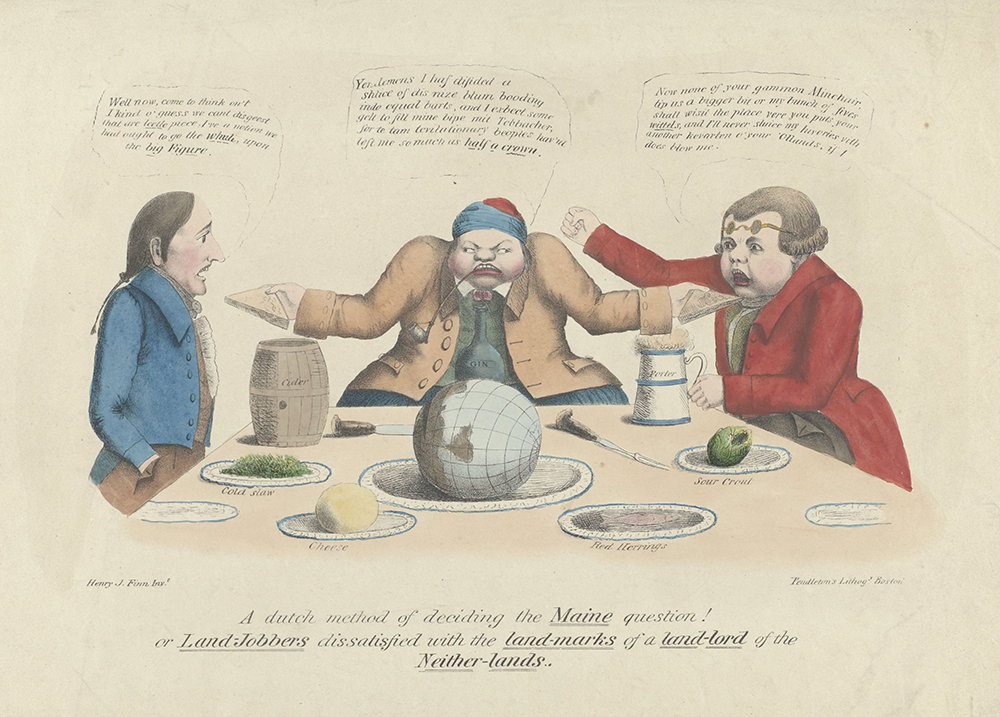
“A Dutch Method of Deciding the Maine Question!” by Henry J. Finn, 1831. Rijksmuseum.

In the years to come, similar assertions of insoluability would be made for the woman, sugar, Jewish, and maid questions, to name just a few. And though the Great War seemed to promise a solution to questions, in the eyes of many it merely exacerbated them. The German philosopher and historian Oswald Spengler, writing in 1918, lamented that “one was always endeavoring to find the solution to the question, rather than accepting that many questioners will have many answers, that a philosophical question is merely a thinly veiled desire to receive a particular answer that is already implied in the question itself, that the ephemerality of the time’s great questions is beyond measure.” Even the featured philosopher from the progressive argument, György Lukács, was less hopeful of finding solutions by the end of his life. At war’s end, Lukács weighed in when one of the premier Hungarian journals, Twentieth Century, ran a discussion forum on the nationality question. Prominent thinkers from different parts of Hungary were asked to respond to a provocative essay by the Hungarian political scientist Mihály Réz. The unfolding Bolshevik revolution in Hungary prevented some from submitting their views, but Lukács—though he was a minister in the revolutionary government—handed in a long essay refuting Réz’s racialized understanding of the nationality question, offering instead a materialist interpretation in line with the views of the Austro-Marxist Otto Bauer, who felt that national hatred is but transformed class hatred. The nationality question, Lukács argued, was one that would benefit from the approach of the “new philosophy,” which showed how apparent contradictions and unresolvable problems, when viewed from a different level, actually disappear.
But decades later, in his Ontology, Lukács argued that even a teleological progression could be interrupted by practical action and taken in a new direction. There was no automaticdisappearance of the problem. The shift in Lukács’ own thinking is remarkable, and perhaps traceable to the spectacular failure of the Republic of Soviets he served in 1919, after which his position came closer to that of Réz’s original essay in Twentieth Century. Réz had characterized the nationality question as an “organic mistake” that could not be solved by “single measures.” He noted that the reason the question seemed so intractable was that it was forever changing: as one national goal was achieved, a new one emerged on the horizon, and no matter how modest and reasonable their aims appeared initially, those aims would become broader with time until they finally demand to rule. Lukács’ ideas about practical action dealt a similar blow—albeit from the left—to the idea that questions could be solved once and for all.

The Ass Foretold


ROUNDTABLE

“The Ass Foretold”

A literary feud, rendered in verse.
THURSDAY, JULY 19, 2018
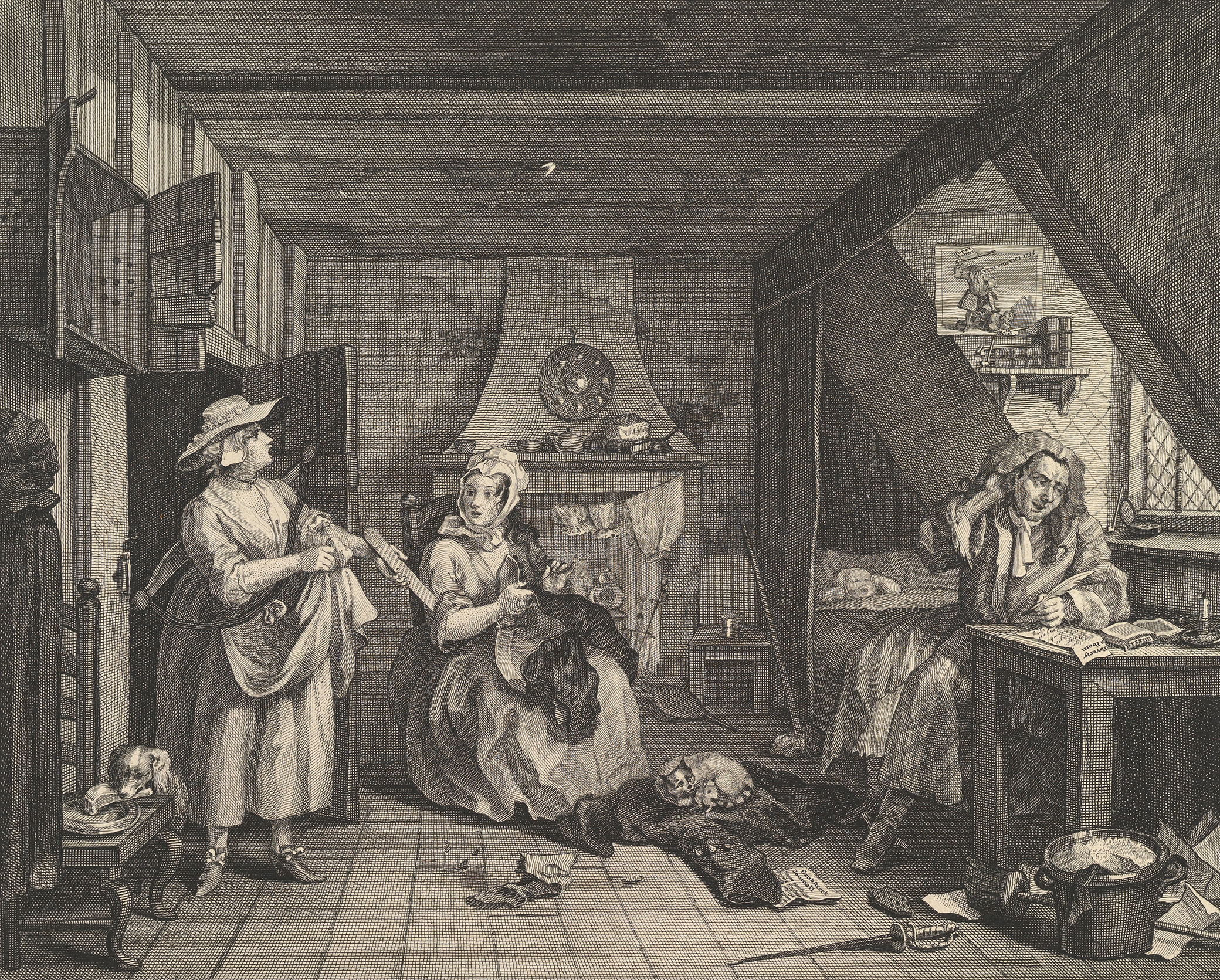
The Distrest Poet, by William Hogarth, 1737. The Metropolitan Museum of Art, Harris Brisbane Dick Fund, 1932.
Each issue of Lapham’s Quarterly, celebrating its tenth anniversary this year, addresses a theme—States of War, States of Mind, Food, Youth, Animals—by drawing on primary sources throughout history, finding the rhymes and dissonances in how these topics have played out and been perceived over the centuries. In this new series, we open up the sleuthing beyond our staff and four annual themes by letting historians and writers share what they have come across in their recent visits to the archives.
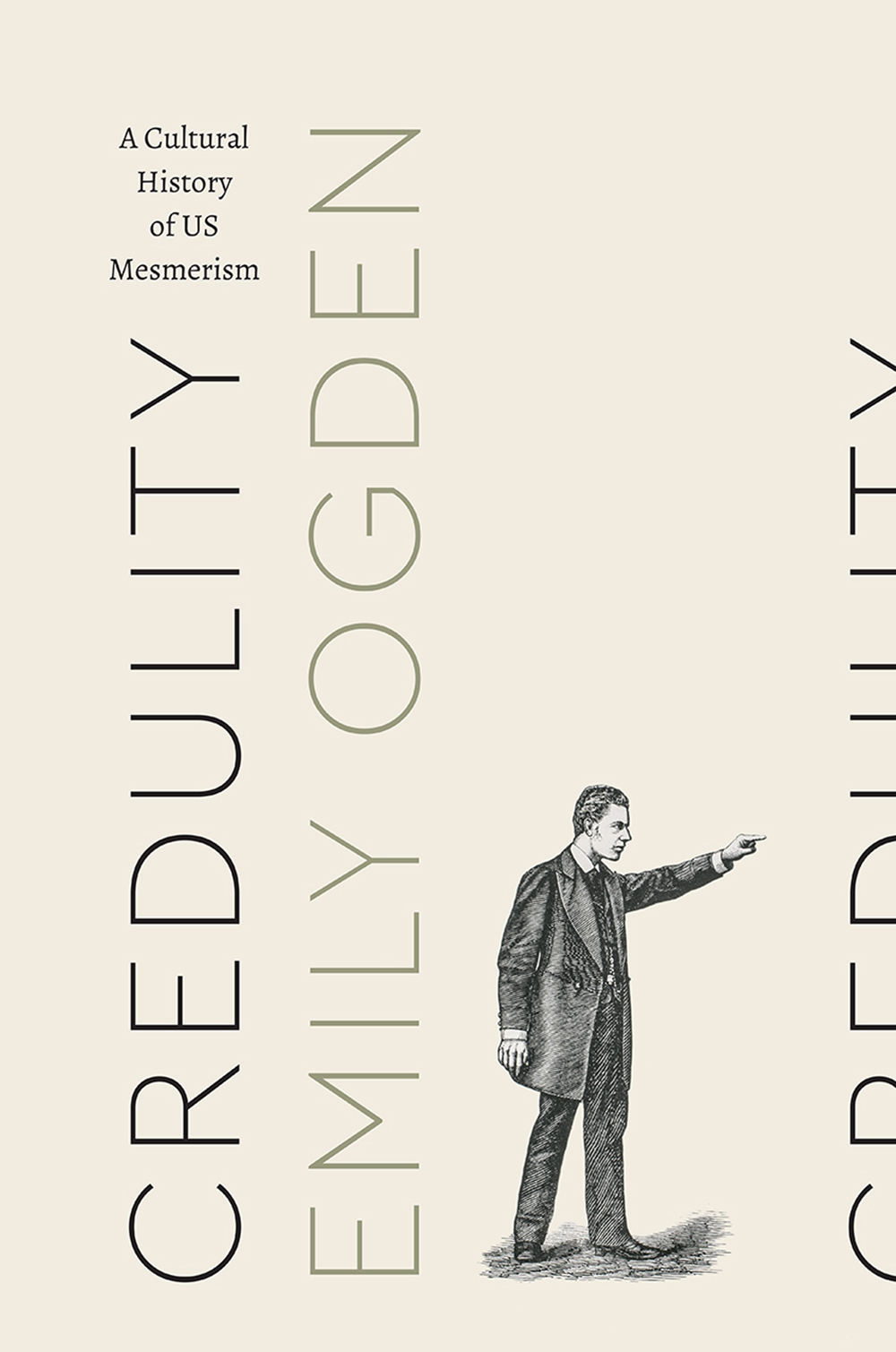
This week’s selection comes from Emily Ogden, author of Credulity: A Cultural History of US Mesmerism, out now from the University of Chicago Press.

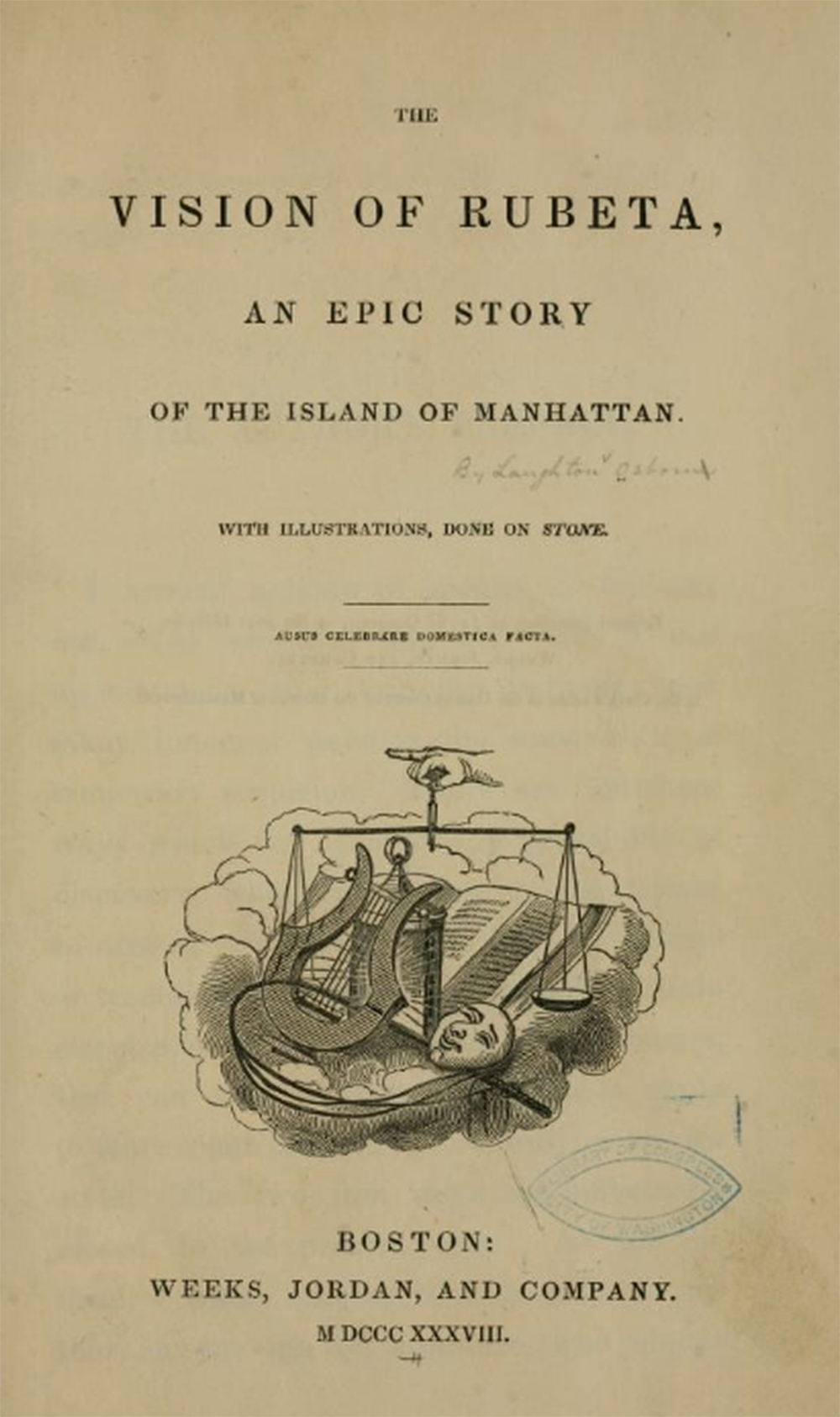
“The Vision of Rubeta: An Epic of the Island of Manhattan,” by Laughton Osborne, 1838. Library of Congress.

Edgar Allan Poe called it the best American satire ever written, but he admitted that Laughton Osborn’s Vision of Rubeta (1838) was “very censurably indecent—filthy is, perhaps, the more appropriate term.” With this mock epic, Osborn avenged himself on editor William Leete Stone, who had panned Osborn’s novel, The Confessions of a Poet, by Himself. The Vision recounts the career of the Manhattan demigod Rubeta, a thinly veiled version of Stone. Born upstate to the divinities Dulness and Levity, Rubeta sees his first newspaper while on a steamboat to the city. The thrill he feels at its “wholesale falsehood” and “obscene abuse” alerts him to his calling: he will become an editor.
Taking the helm of the New York Commercial Advertiser, Rubeta defends an abbess who has been accused—accurately—of pimping out her novitiates. (In reality, Stone had defended a Montreal convent against false prostitution charges.) “’Tis he!” the abbess exclaims when she first sees Rubeta, “the ass foretold me in my dream!” “Be bold,” she urges her champion, “I see, now, now, thy triumph nigh! / I see my ass spirt fountains to the sky!” The fountains the ass spirts are presumably the lies Rubeta will print in order to vindicate the abbess. That is not the only possible reading.
Osborn spent the better part of 1837 rhyming his couplets and nursing his grudge. Then in the fall, a gift from the universe: Stone made an ass of himself for real. Stone went to investigate mesmeric clairvoyant Loraina Brackett, who claimed to practice spirit travel, with the intention of debunking a hoax. He converted to her cause instead. That change of heart would dent Stone’s reputation and round off Osborn’s poem. Osborn threw together a final canto about Rubeta's love affair with the sibylline Loraina, and into print went the Vision.
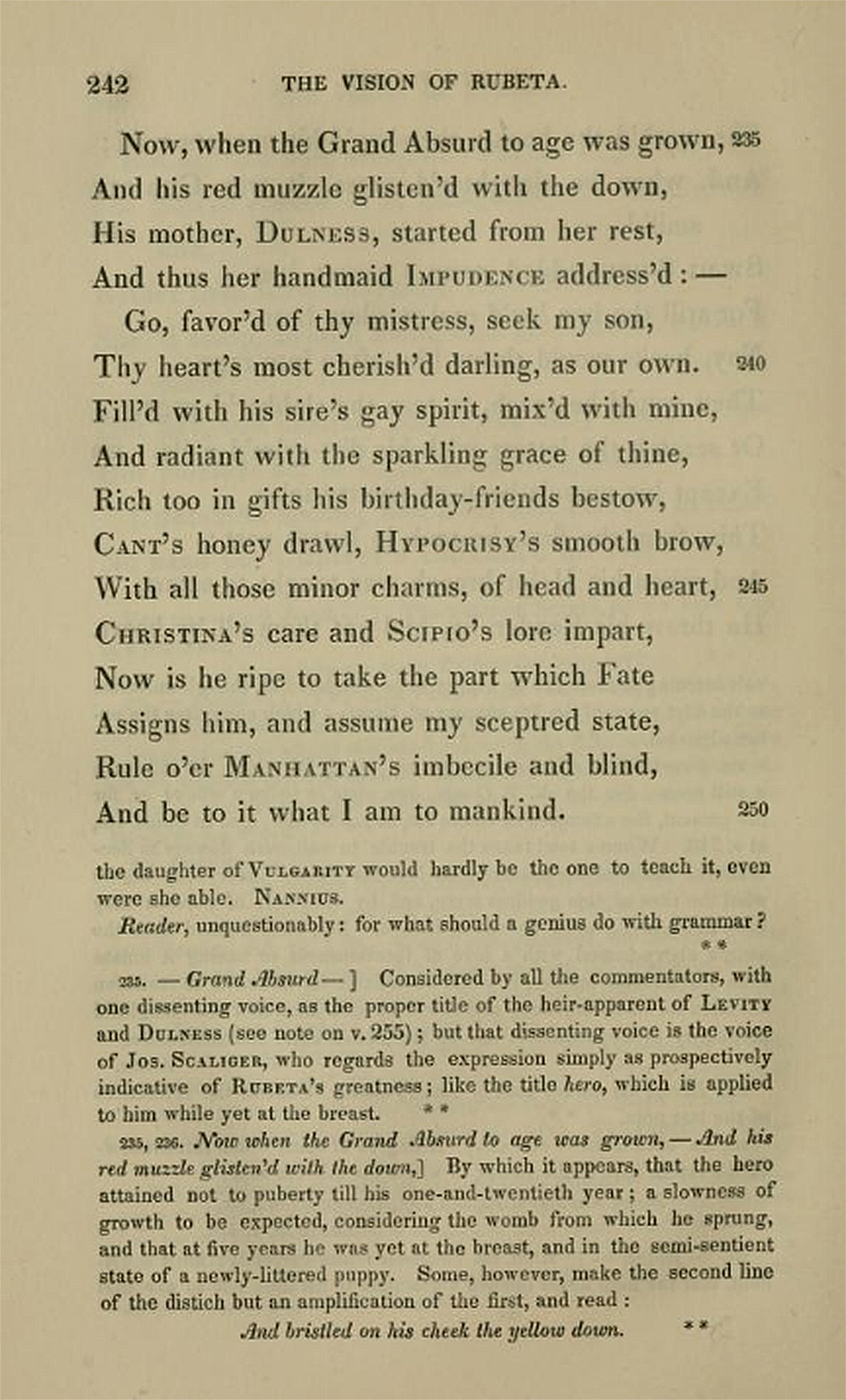
In the verses below from Canto IV, Dulness prepares to send her son Rubeta (the “Grand Absurd”) to Manhattan. The footnotes, part of Osborn’s faux-editorial apparatus, conjure an imaginary world of scholarly squabbling.
“The Vision of Rubeta: An Epic of the Island of Manhattan,” by Laughton Osborne, 1838. The Library of Congress.

   Now, when the Grand Absurd* to age was grown,
And his red muzzle glisten’d with the down,**
His mother, Dulness, started from her rest,
And thus her handmaid Impudence address’d:—
   Go, favor’d of thy mistress, seek my son,
Thy heart’s most cherish’d darling, as our own.
Fill’d with his sire’s gay spirit, mix’d with mine,
And radiant with the sparkling grace of thine,
Rich too in gifts his birthday-friends bestow,
Cant’s honey drawl, Hypocrisy’s smooth brow,
With all those minor charms, of head and heart,
Christina’s care and Scipio’s lore impart,
Now is he ripe to take the part which Fate
Assigns him, and assume my sceptred state,
Rule o’er Manhattan’s imbecile and blind,
And be to it what I am to mankind.

*Grand Absurd: Considered by all the commentators, with one dissenting voice, as the proper title of the heir-apparent of Levity and Dulness; but that dissenting voice is the voice of Jos. Scaliger, who regards the expression simply as prospectively indicative of Rubeta’s greatness; like the title hero, which is applied to him while yet at the breast. ↩
**Now when the Grand Absurd to age was grown, / And his red muzzle glisten’d with the down: By which it appears, that the hero attained not to puberty till his one-and-twentieth year; a slowness of growth to be expected, considering the womb from which he sprung, and that at five years he was yet at the breast, and in the semi-sentient state of a newly-littered puppy. Some, however, make the second line of the distich but an amplification of the first, and read: And bristled on his cheek the yellow down. ↩
Emily Ogden, “Credulity: A Cultural History of US Mesmerism” (University of Chicago Press, 2018).


Want to read more? Here are some past posts from this series: