More recently,
LOUIS XIII Cognac partnered with pop star Pharrell Williams to write a song that would be released in
100 years. The musician and sometimes-curator created a solitary recording printed on water-soluble clay and stored in a state-of-the-art safe that is only destructible when submerged in water. The idea? Unless mankind reverses the depredations of climate change, the recording, titled “100 Years, The Song We’ll Only Hear If We Care,” might be destroyed before it is ever heard.
The future may be bright, it may be dire, but it remains to be shaped by ideas yet unthought. In the spirit of looking forward to the uncertain world 100 years hence, we asked a broad range of artists, from Michelle Grabner to Doug Aitken to Nick Cave, to predict what the world—and art—will look like in a century.
To imagine art in 100 years, I’ve taken a cue from Marge Piercy’s 1976 speculative fiction novel
Woman on the Edge of Time (and yes, perhaps I’m hedging my bets too). Piercy’s protagonist Connie travels to two future 2137s, one where the environment has stabilized, racial and sexual equality have been achieved, and technology is “organically” interwoven into all life on the planet. The other future is far bleaker. Human dignity, clean air, and autonomous thought are commodities only available to the mega-mega-mega-rich. So here goes:
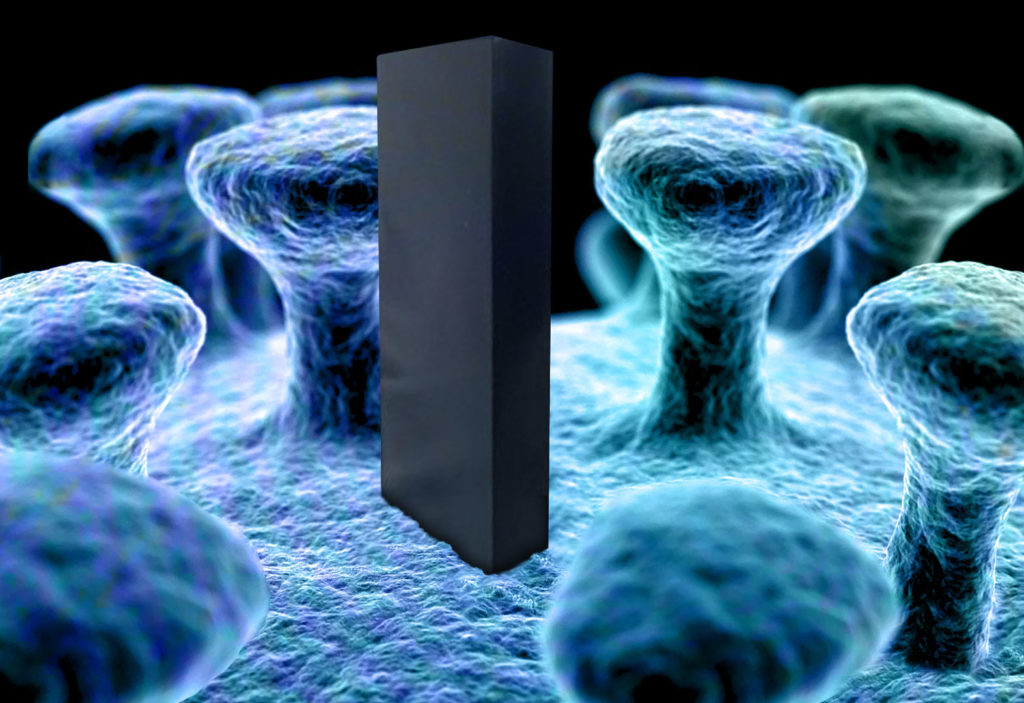
Carla Gannis’s Abstract Compressionism (2018). Image courtesy of the artist.
Scenario 01
By 2118, the Pentiumcostal Church has a congregation of billions, all worshiping the Master Algorithm in the Cloud, Godgle. The reigning art movement is Abstract Compressionism. The earth now has a population of about 20 billion people, and over 250 billion machines (now called plastes sapiens), and much of the earth’s surface is no longer inhabitable, thus there is very little real estate available for physical works of art. Art is produced and compressed by human “worshipers” using nanotechnology. It is easily viewable to machines & Singularites (cyborgs), but only visible to homo stultus (humans) via exorbitantly expensive virtual simulation implants (as well as church membership fees).
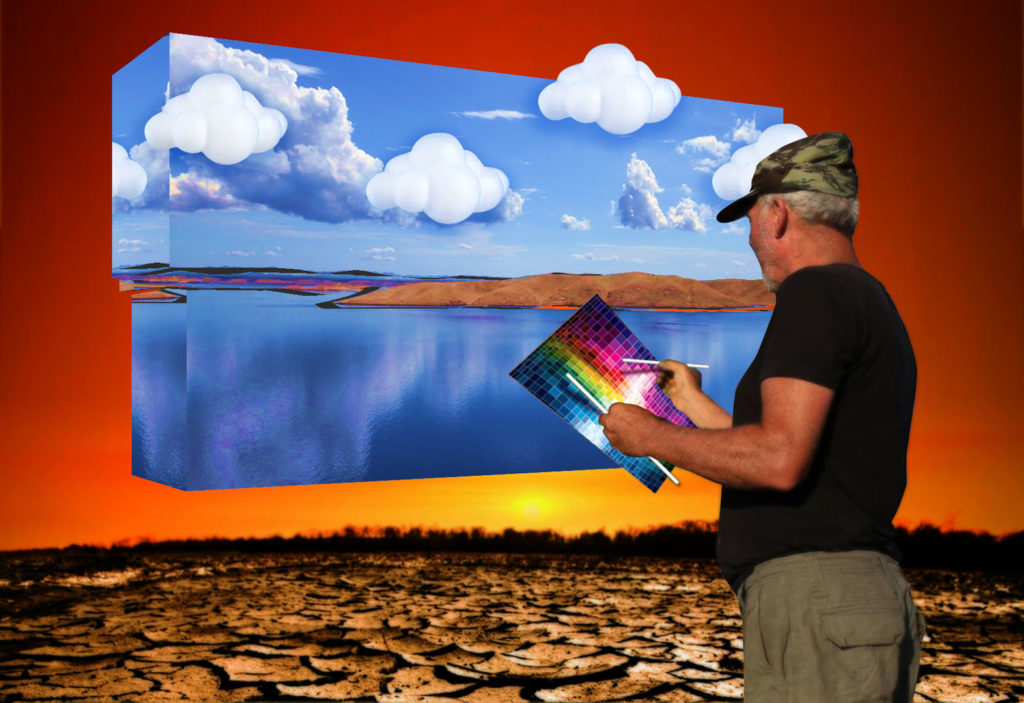
Carla Gannis’s Plein Air VRainting (2018). Image courtesy of the artist.
Scenario 02
Humans and machines live in harmony in the year 2118. After decades of living underground due to the bio hazardous fall out of the GR8 W@R of 2089, the machines have recently stabilized the environment and humans have emerged from their subterranean bunkers, bursting with creative verve. Plein-Air VRainting is all the rage. Every human is an interdataplinary artist now, since machines have proven to operate the government and economy more efficiently. Most refer to the Earth as the Art World now, and robots are keenly invested in universal art care for all humans; buying, trading, and selling art via a DNA blockchain system. Interestingly, a radical group of bio-genetically “dehanced” individuals, calling themselves les Fauves deux points zéro, have begun to garner attention. Painting on cave walls, with berries, roots and leaves, they produce strange images of space aliens and unidentified flying objects.
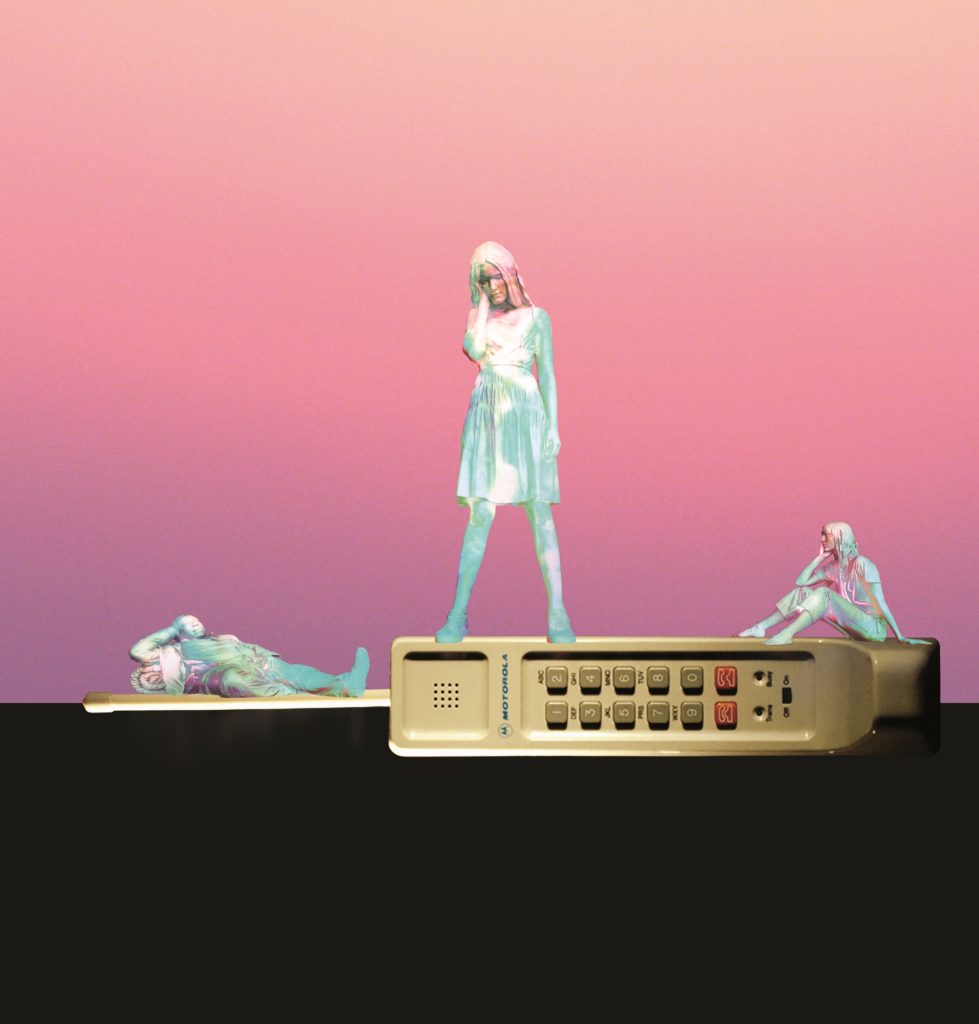
Doug Aitken’s 3 Modern Figures (don’t forget to breathe), (2018). Courtesy of the artist and Galerie Eva Presenhuber; Image by Doug Aitken Workshop.
I think art is moving in a direction where it will become increasingly de-material. Art in 100 years will be about complete connectivity and dialogue with the viewer with less and less of the detached formalism we see in art now. Art will take us to the edge of the horizon and question what is beyond. Art will seamlessly live both in the fast-flowing river of images and information and in the slow moving desire for true and unrepeatable personal experience.
We are only beginning to understand how technology is changing the human experience… we are scratching the surface. Creating images is perhaps an existential way of our society reminding us we are actually here on earth, and actually exist in living flesh and blood. It seems at times like life is the film… and we are all in it together, while at the same time each of us is directing our own live version.
In art, as we move forward, I think the viewer’s role will change and be less passive. There will be new forms of artworks that are living and continuously changing and artworks that will be more experiential. We will not see art as something that passively hangs on a wall.
Art will be a seamless part of our lives, not a decoration in our lives.
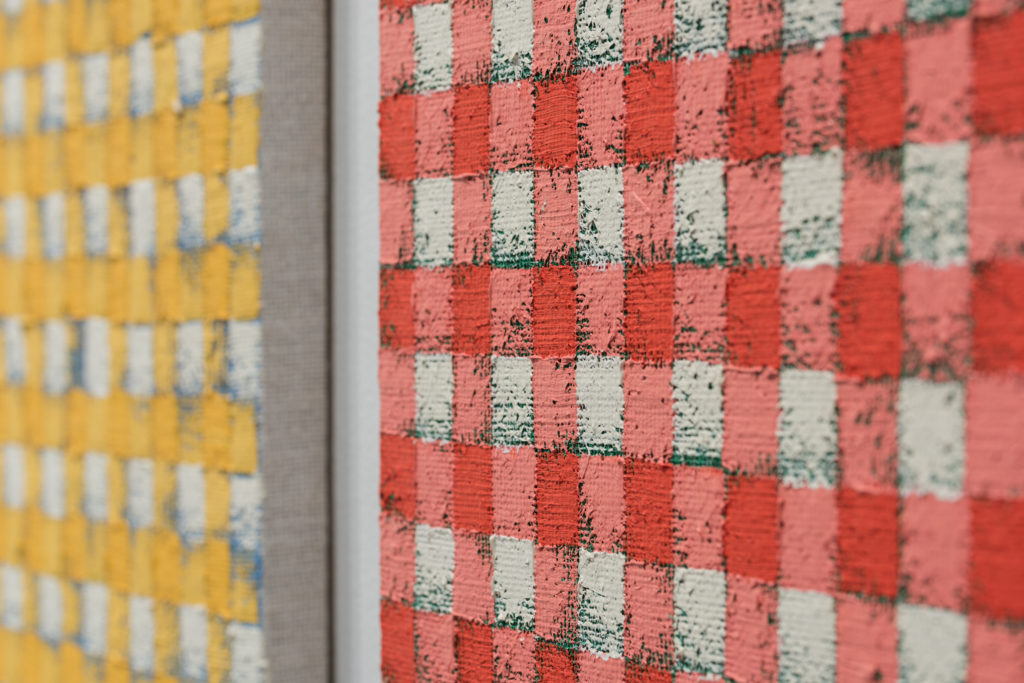
Detail of untitled works by Michelle Grabner (2017). Photo by Mario Gallucci, courtesy of Upfor Gallery.
Because the media revolution of the internet serves economic and not cultural ends, as the sociologist Jürgen Habermas
continues to remind us, it is likely that the literal object and subject of art will be subsumed into an evolving economy of digital networks. Whatever form art takes, we will not encounter it for long, as our attention will certainly be evermore commercialized.
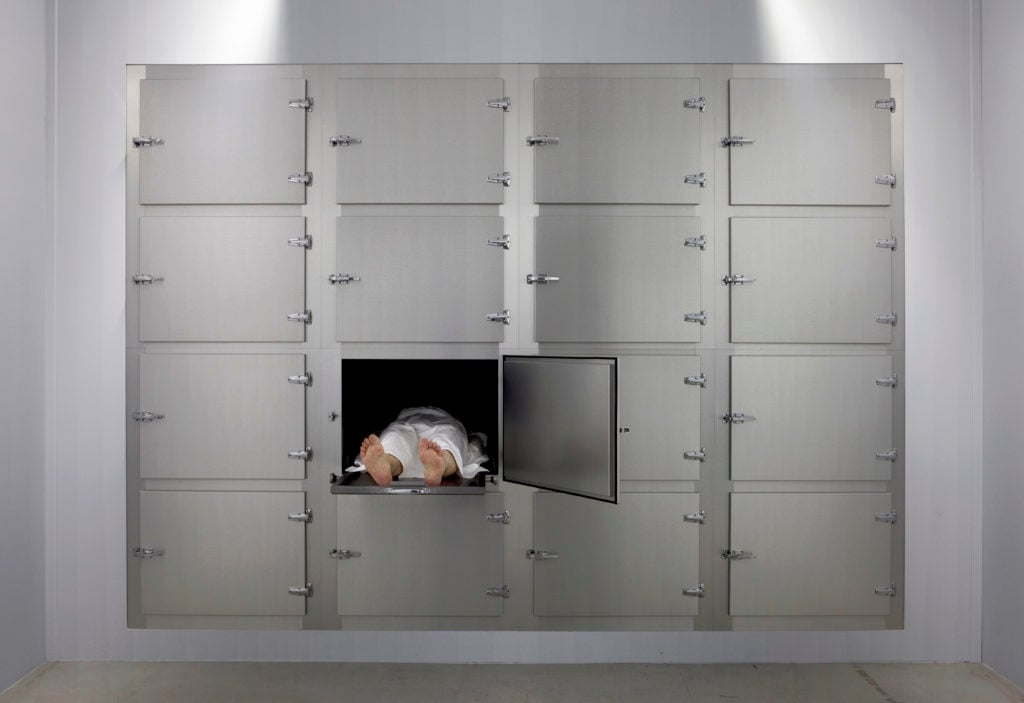
Elmgreen & Dragset, Untitled (2011). Photo Guillaume Ziccarelli, courtesy Galerie Perrotin.
In 100 years, our current global economic system will most likely have been exchanged with other formats of wealth distribution following the collapse of capitalism, and an art market as we know it today will no longer exist. However, that doesn’t mean that free and individual artistic expressions will have vanished, but that both artists’ practices and art institutions might have undergone radical changes in relation to their cultural functions within society. When it comes to the mediation of art, new generations will certainly have learned to filter the overload of information in more selective ways and will therefore have also become more immune to media-hyped cultural tendencies and mass hysteria.
Old-school media, such as painting or sculpture, have often been declared “dead”, only to show their renewed strength and relevance less than a decade later. With an increased digitization of our everyday realities, the need for artistic materiality will become even more urgent in order to remind ourselves that we are physical beings.
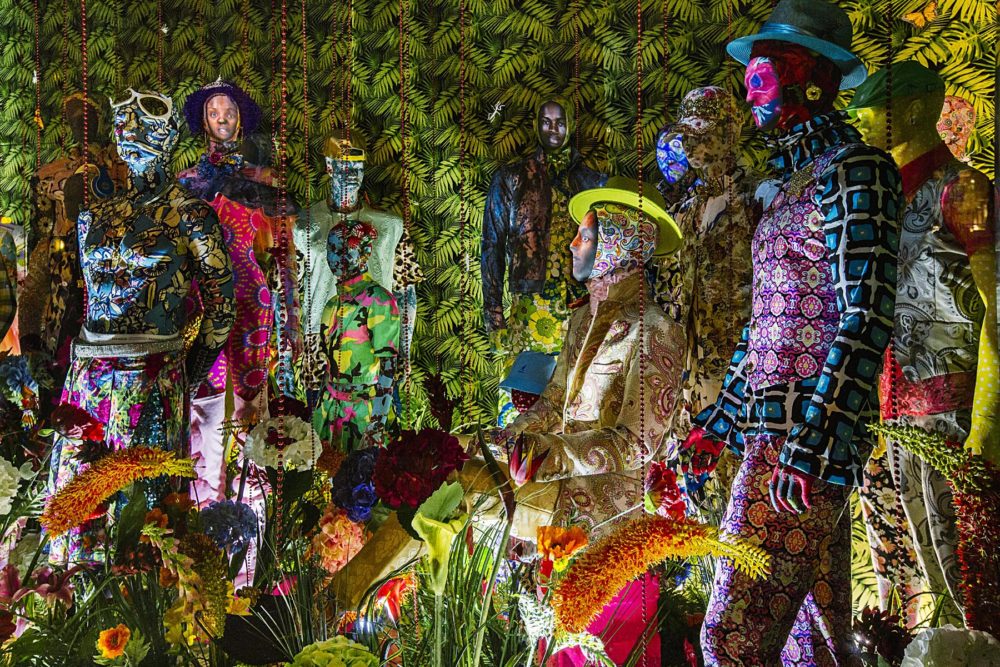
Ebony G. Patterson’s …PRESENCE… (detail). Image courtesy of the artist and Monique Meloche Gallery.
Hopefully art will reflect more truth. It will be more inclusive and reflect the truth of ALL of US and OUR HISTORIES.
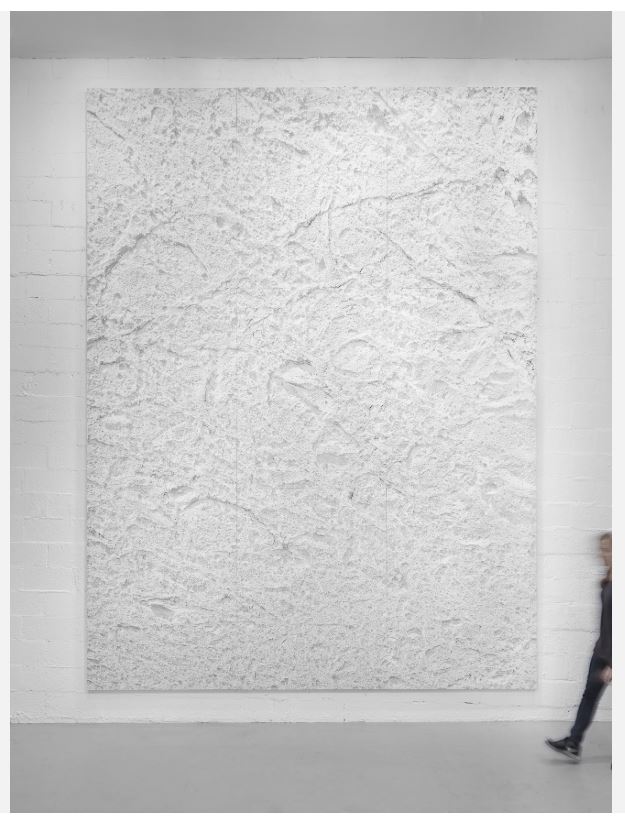
Justin Brice Guariglia’s JAKOBSHAVN I (2015–2016). ©Justin Brice Guargilia.
Art that rises to the great ecological challenges of today will be crucial for our survival as a species. In a recent issue of the journal NATURE, scientists showed that there is a 96 percent chance of a whopping 5 degrees Celsius of temperature rise by the year 2100. That kind of rise in the earth’s temperature is catastrophic for virtually all life on earth, making climate change the moral imperative of our time. Artists have not only the unique ability, but I would argue the responsibility, to give us new languages and tools to be able to better understand the world around us, which can help us solve these great existential problems. This puts tremendous pressure on artists to help society reimagine the future. I believe art as a social practice, where artists are invested in the great problems of today, will thrive in the immediate and long term future.
At the same time, AI will leave many people jobless. Forced to accept life in all it’s meaninglessness, art for art sake will flourish as a way humans will fill the “void of time” machines create.
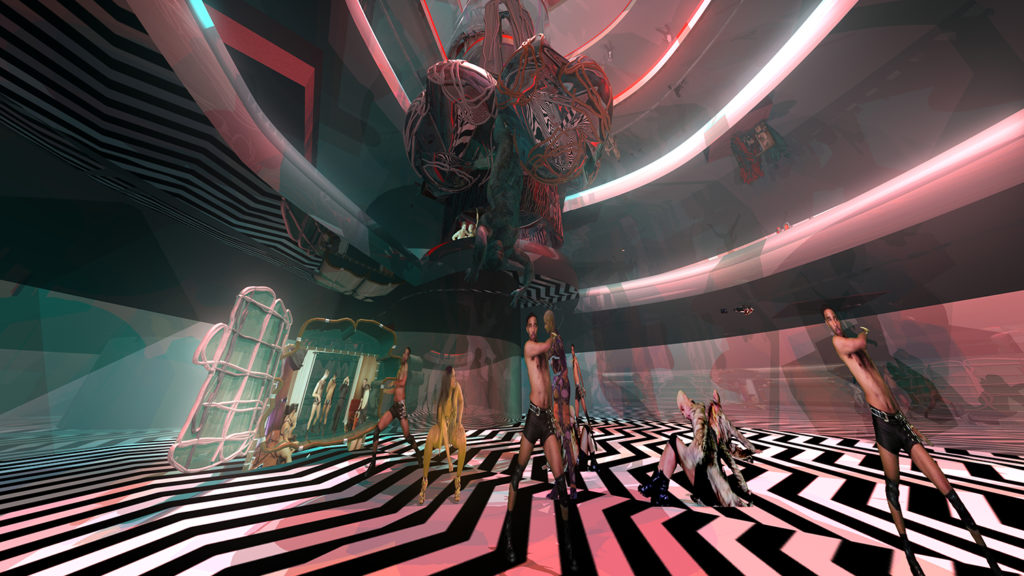
Jacolby Satterwhite, Blessed Avenue, still image. Courtesy of Gavin Brown’s Enterprise.
Architecture and Design probably will prevail as a fine art because of the urgency to survive Climate Change …. that is, if we are still here.
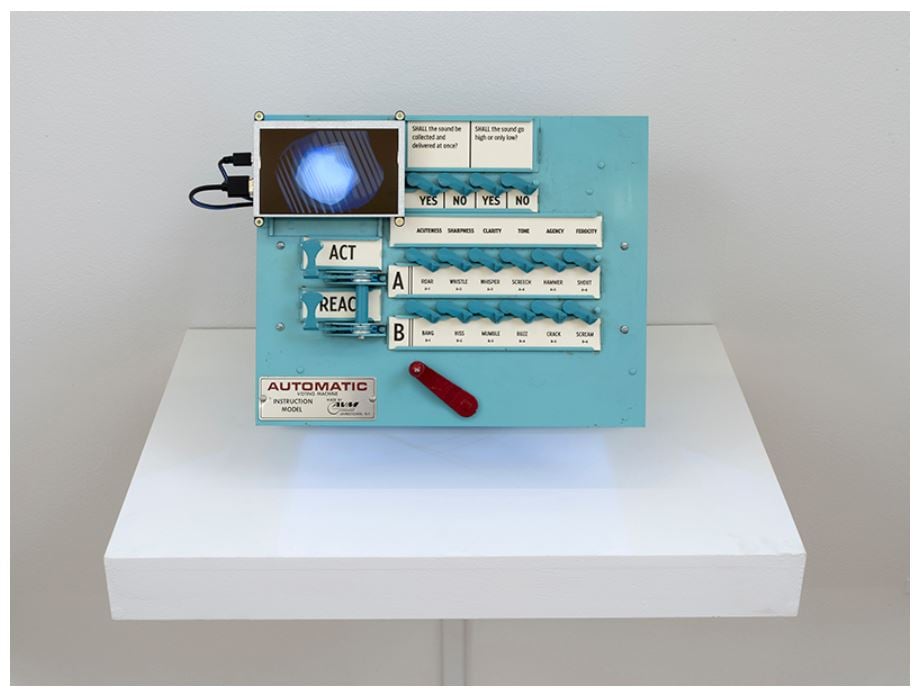
Luke DuBois’s Learning Machine #3 Sound (2016). © Luke DuBois, courtesy of bitforms gallery.
In
Hamlet on the Holodeck, Janet Murray posits a future where we experience media through social, seamlessly interactive narratives that surround us and allow us to directly engage in the performance, image, sound, and touch, as if film, theater, video games, books, and advertising had all merged into something where participants had agency and mere spectatorship would be the exception rather than the rule. With low-cost, game-engine driven virtual reality rapidly maturing, we can prototype this future with ease, though we still have a long way to go. So the question is: What about art objects that are, by their medium or because of the artist’s intent, more fixed? Do they too become mutable, or ephemeral, or interactive?
I would flip this question on its head and posit the following: every civilization will use the maximum level of technology available to it to make works of art, and these technologies, tactical obsolescence aside, will be additive to, not replacing of, earlier technologies. So solid-state players might crowd out Blu-Ray discs as a superior medium for digital video, but VR will never replace painting.
I think in 100 years what might change is the ways in which (some? many?) artworks are made, a sort of McLuhan/Benjamin apocalypse where everything becomes media, sampled and resampled, and authorship becomes diffuse, computer-assisted, computer-driven, AI-led—or perhaps meticulously “hand coded”, in an inevitable backlash to the machine learning. In the video introduction to
Cybernetic Serendipity, Jasia Reichardt really hits the nail on the head by problematizing artist-as-sole-author. If this was already muddy territory in 1968 with computer-driven algorithmic art and simple interactive robotics, by 2118 we might not have individually recognizable artists at all. Everyone will be creatively empowered to express work in any medium… or perhaps the machines will be on hand to ensure that no one will.
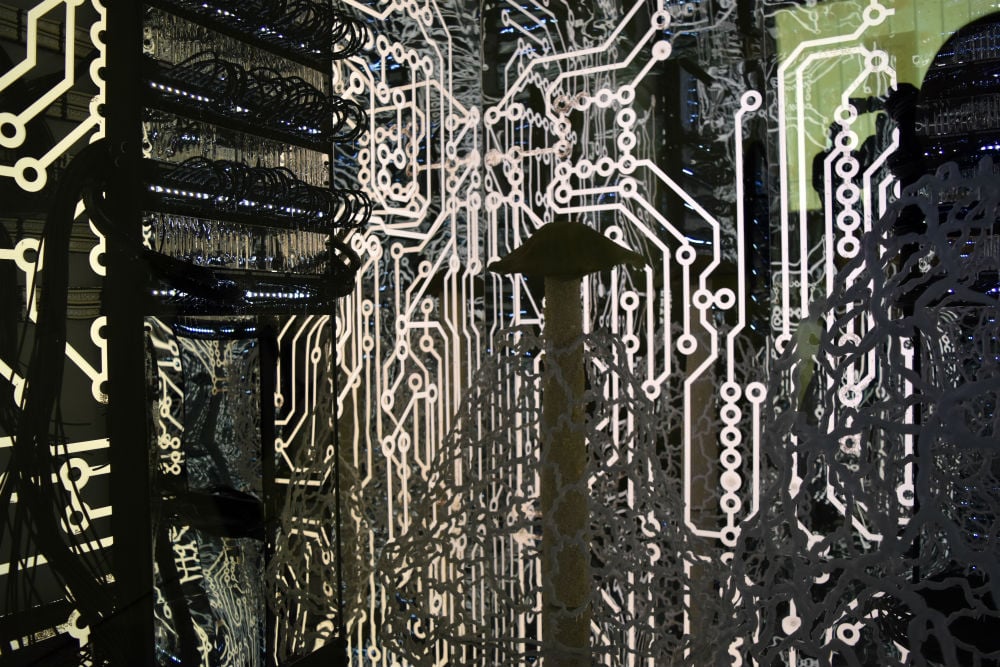
Anicka Yi, Lifestyle Wars at the Guggenheim. Image: Ben Davis.
If the singularity takes over our reality, there may not be a need for art. Do machines desire or require art? I’m not sure they would. No matter what, art might be more algorithmically foregrounded in 100 years.
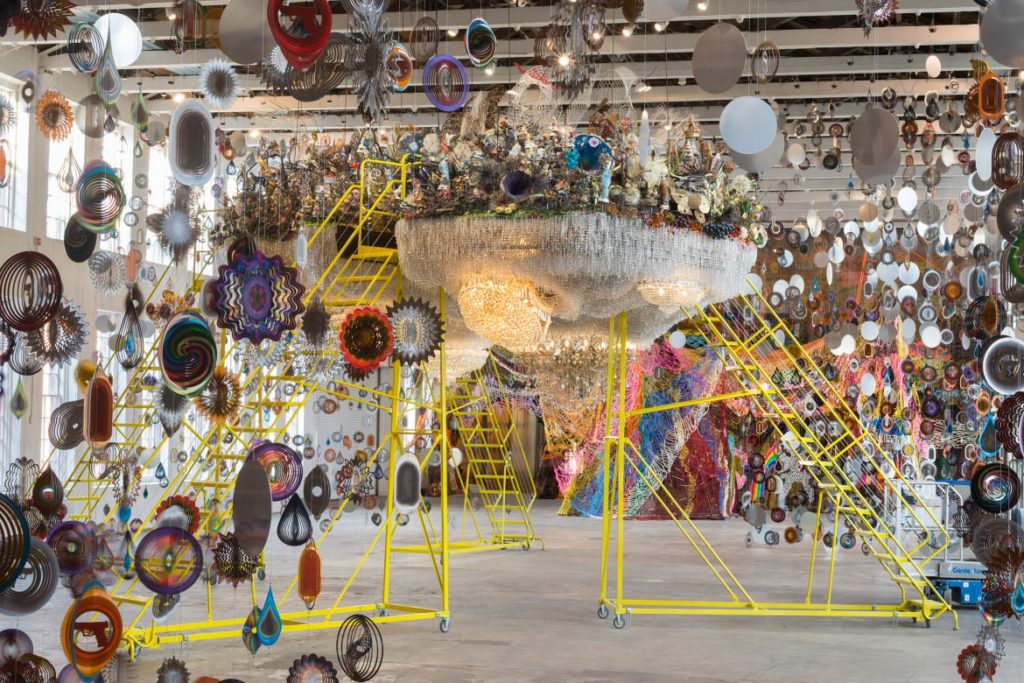
Installation view of Nick Cave’s Kinetic Spinner Forest and Crystal Cloudscape at “Until”, MASS MoCA (2016).
It’s all about evolution. Art evolves as we evolve. And it will embrace all the morphing and new mediums we can’t quite see yet.
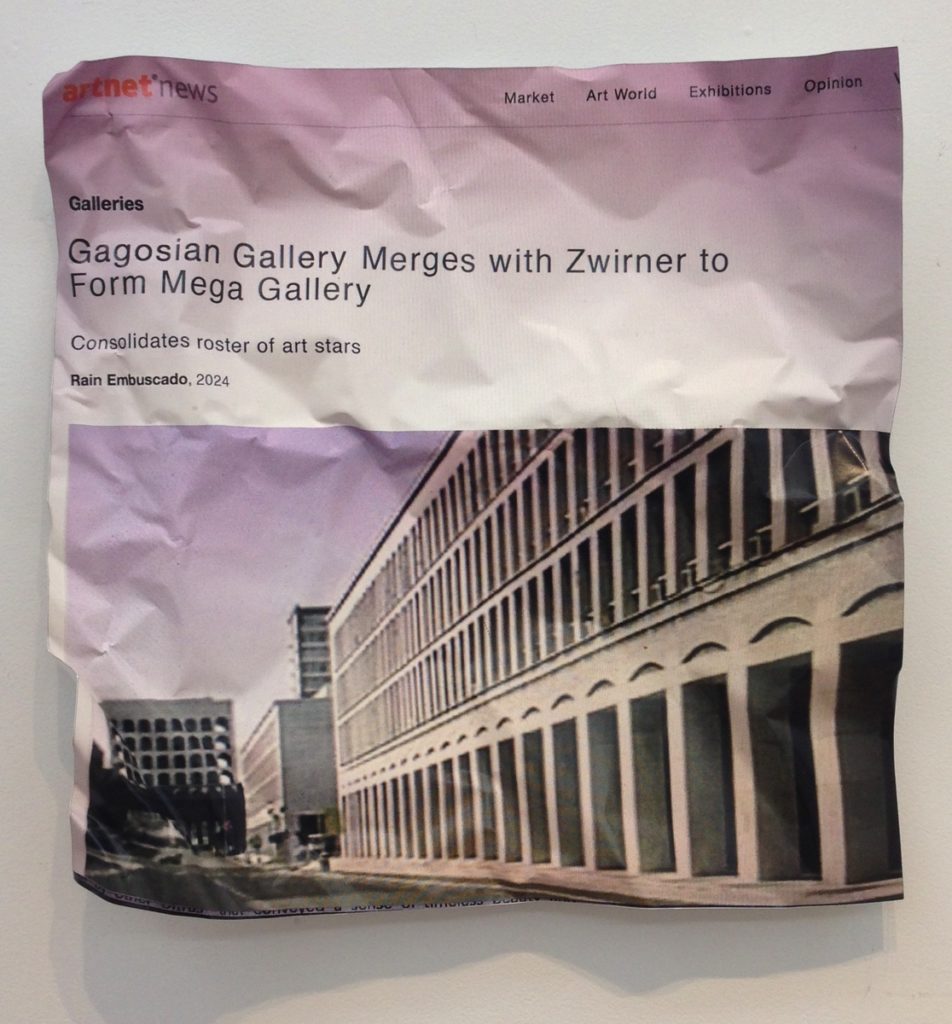
William Powhida’s Didactics (Gagosian and Zwirner) (2017). Courtesy of the artist and Postmasters Gallery.
Overall, 2118 will feel more like 1918 than our present contemporary moment.
Within the frame of global capitalism, we are experiencing a reversal of the post-war, democratic redistribution of wealth, putting the world on a trajectory towards previous social formations—nationalism, aristocracy, feudalism, fascism—that will be marked by intense class stratification and international strife as the effects of climate change unfold.
I imagine art will also stratify along the same lines, creating distinct classes of art for the ultra-wealthy, a limited managerial class, a consumer class, and dwindling numbers of a poor underclass (who will be struggling to survive the withering effects of climate change).
In 2118, there will still be name artists who will serve, and be celebrated by, a tiny audience of ultra-wealthy individuals in the familiar ways. The managerial class will serve as a “public” audience (meaning: crowds) for the inevitable biennials and art fairs that affirm the ruling class. Based on the formulas established by these name artists (who will likely come from the ultra-class themselves), production houses employing nameless designers and fabricators will serve up variations for the consumer class to experience “art” within an array of other pacifying forms of entertainment.
The rest of the world will likely be in survival mode, lacking the minimum amount of leisure time required for what we understand as art, but should still produce some forms of culture that people find entertaining to watch today—grim, post-apocalyptic scenarios.
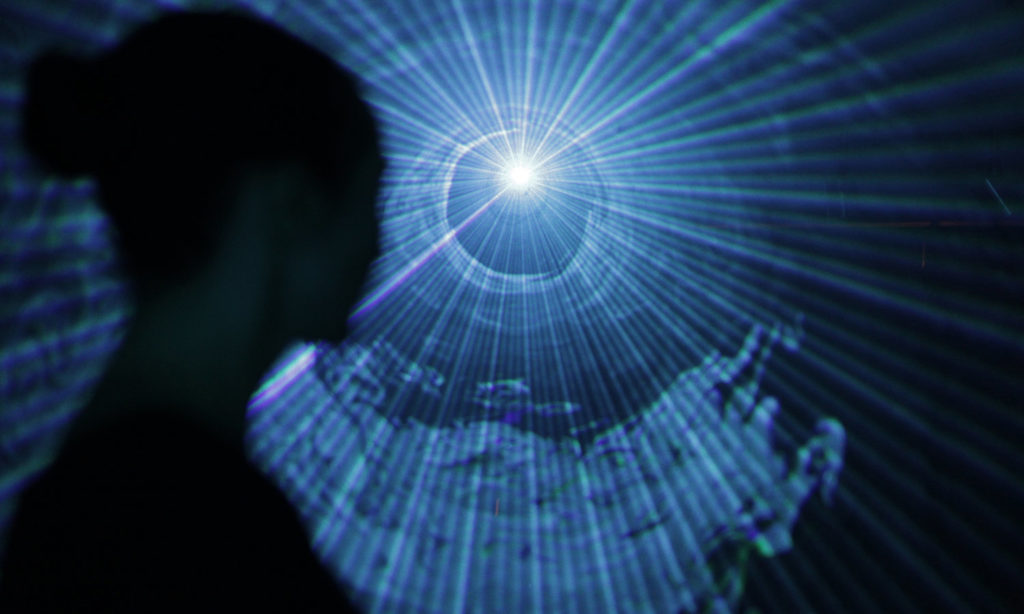
Lia Chavez’s “The Octave of Visible Light: A Meditation Nightclub” (2015). © Lia Chavez. Photo: Samuel Cox, courtesy of the artist.
If we still have food to eat and water to drink, in a hundred years human creativity will be the single most valuable offering in society. AI will be embedded within us, and data will have evolved to become knowledge for rent. The fourth industrial revolution known as AI will not displace human beings. The techno-materialist paradigm is incapable of grappling with transcendental spiritual experience, so it’s inherently limited in the scope of human experience for which it can account. The mysterious phenomenon of creative inspiration, with its attendant beauty and otherness, will continue to confound and delight us, just as it has since ancient times.
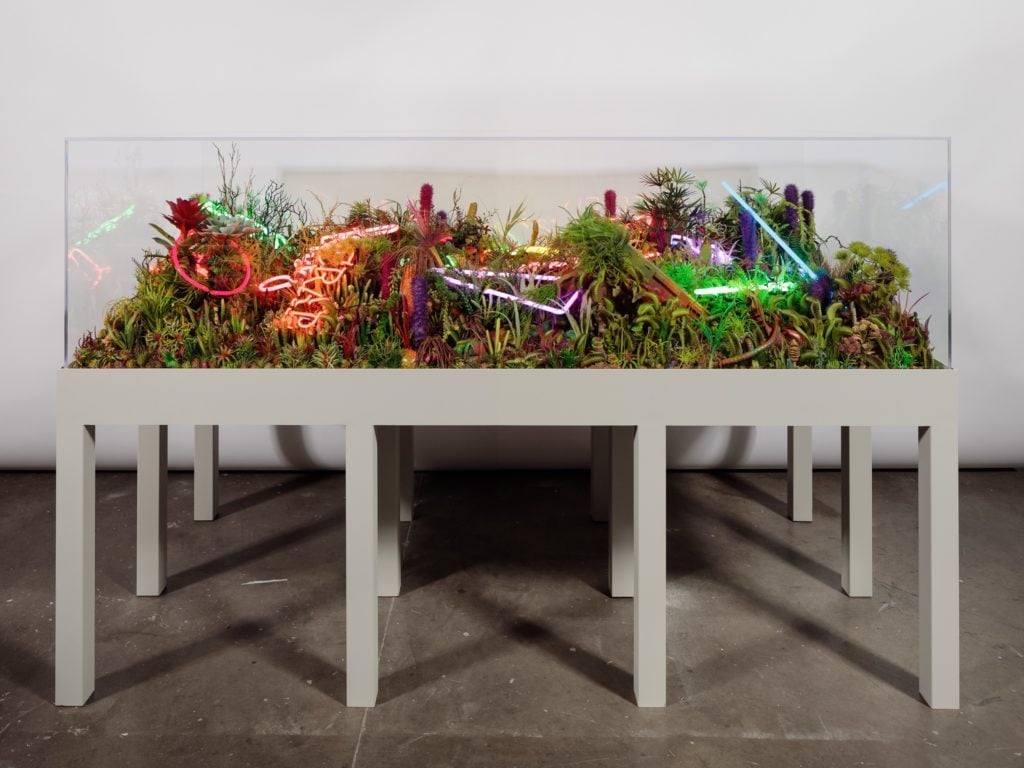
Max Hooper Schneider’s The Extinction of Neon 4 (2018). Courtesy of the artist and High Art Gallery.
In the next 100 years humans will be dislocated from their assumed position of centrality and superiority as knowers and actors in the world. The hominid fossil record will be graffitied upon by the extremophile and the insect. Art-making and it’s ontological language, if still intelligible to our species, will be opened up to new taxa of intelligence and agential lifeform.
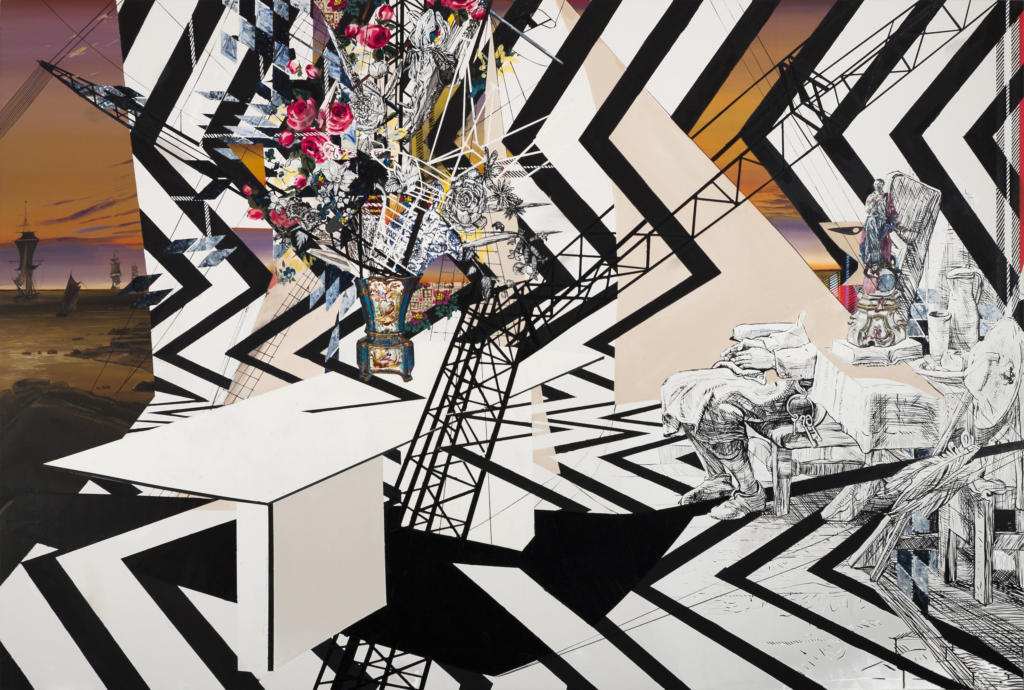
Francesca DiMattio’s Lobby (2010). Courtesy of the artist and Salon 94.
I think art will take on many different forms as it does today with some new forms we don’t know about yet. I predict that painting will still exist. Paintings participate in a historical conversation with works that have come before, and build a parallel abstracted history that I think has great meaning because of its constrains and limits. It maps a bizarre thread of human contemplation and operates in important contrast to the motivations of politics and technology. The Digital will become another tool like anything else, but as our days and world become more and more mediated by technology, the handmade will become even more important.
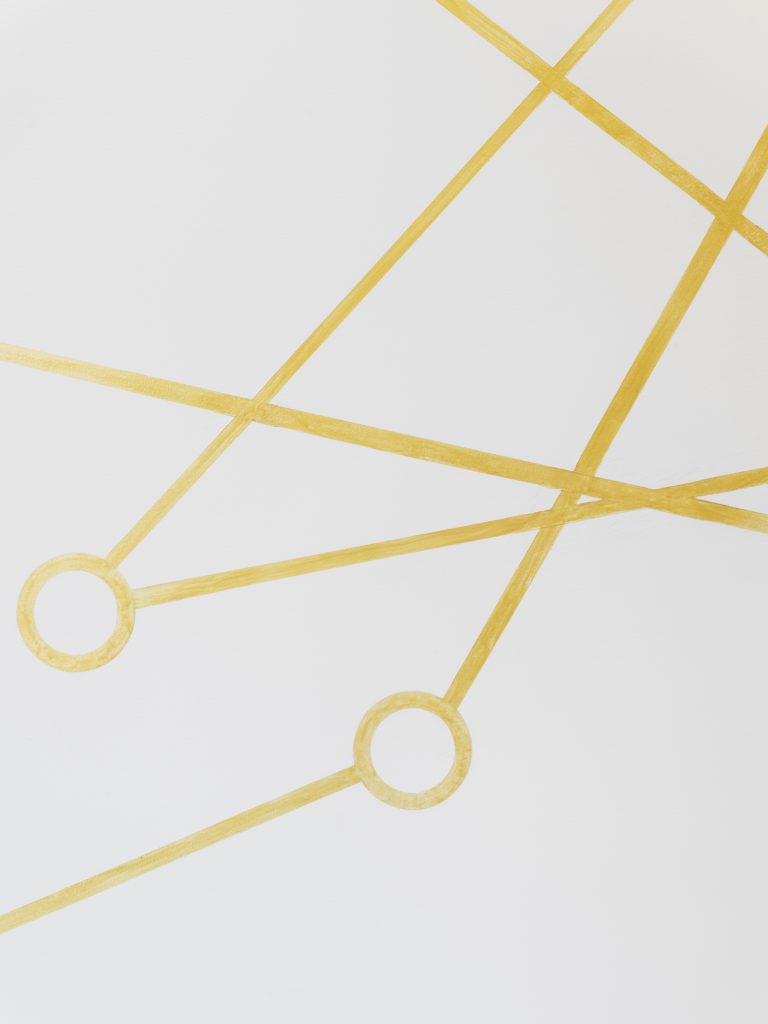
Abraham Cruzvillegas’s Downtown selfie [detail] (2018). Photo: EPW Stiudio/Maris Hutchinson. Image courtesy of the artist and kurimanzutoo, Mexico City.
In 100 years, art will be
democratic
affective
emotional
delirious
joyful
affirmative
sweaty
definitely unfinished
fragmentary
communal
empirical
coherent with the landscape
laughing
weak
inefficient
unstable
happy
self-constructed
contradictory
handmade
committed
generous
solidary
indecent
sensual
amorphous
renewed
needy
written/told
warm
brief
a craft
engaged
a blind date!