Friday, June 2, 2017

How the Fight to Own .Art Illustrates the Art World’s Inherent Contradictions
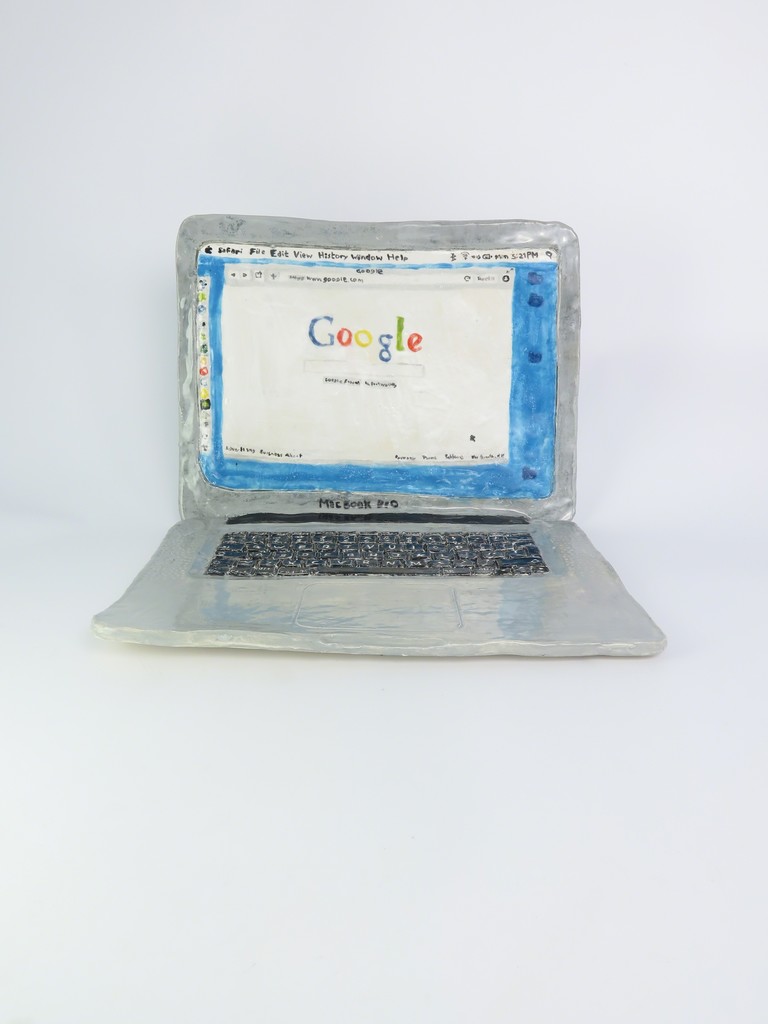
How the Fight to Own .Art Illustrates the Art World’s Inherent Contradictions

Beginning February 8th, a fresh wave of arts institutions, dealers and artists will apply for entry to a new frontier of the art universe: the online web domain .art. That’s when the preferred access period begins for a hand-selected group of “important arts organizations and professional members of the art world,” each of which will receive invitations to register their very own web address ending in .art.
The entity guarding the gates, UK Creative Ideas Limited (UKCI), bills .art as “the art world’s exclusive domain,” an unsurprising claim for an industry that’s often characterized by wealth and rarity. But the art world is also potentially limitless, including everyone from students to street artists to Instagram auteurs, raising the question of who gets to delineate the boundaries for inclusion.
That tension, between exclusivity and democratization, mirrors many of the contradictions within the art world itself. And as more arts institutions, artists, art lovers, and art dealers move online, the struggle over who claimed the .art domain provides an illustrative case study in how those tensions get resolved.
The story begins in 2012, when the Internet Corporation for Assigned Names and Numbers (ICANN) announced that applicants could request new top-level domains, or “TLDs.” Companies and organizations applied for ownership of a TLD of their choosing (1,930 proposals in total, ranging from .netflix to .love), which would grant them control of the domain and allow them to charge for its use. The process required applicants to submit a number of documents, including a mission statement and financial records that prove the entity’s ability to successfully operate a domain registry.
Ten groups applied for .art, making it ICANN’s fourth most contested domain name after .app, .inc, and .home. Perhaps due to the $185,000 application fee, a majority of the interested parties were commercial.
But there were two “community” applicants, New York arts organization e-flux and online art-sharing platform DeviantArt. (The two eventually endorsed each other in 2014 in an effort to strengthen their claims to the domain.) Entities applying for community designation must demonstrate that they will use the domain name to serve the needs of the community they represent, said James Cole, senior global communications coordinator for ICANN, a determination made by an outside group hired by the corporation. If an applicant’s community status is granted, it is automatically prioritized over commercial applicants.  
Russian tech entrepreneur, venture capitalist, and founder of UKCI Ulvi Kasimov stressed the potential of .art’s “brand” in an interview, calling it “a highly desirable segment of the internet with a potentially limitless user base.” E-flux founder Anton Vidokle, on the other hand, proposed a more grassroots approach to the .art domain. He envisioned an impartial council of arts professionals governing the distribution of .art addresses, channeling 10% of profits to grants and funding for under-resourced cultural institutions or projects.
In its application, e-flux claimed to serve what it called the “art community in its broadest sense,” a sentiment flatly rejected by ICANN’s evaluators, who described their vision as lacking “the clarity and delineation required of a community” specified by ICANN’s guidelines.
“The membership as defined in the application is overly dispersed and unbound,” reads the 2014 evaluation report, which ultimately refused both e-flux’s and DeviantArt’s requests for community designation.
In the end, UKCI beat out other commercial applicants in a private auction in 2015. The outcome is not unusual: Of the 1,215 domains that have been delegated, 51 have gone to community applicants. Cyrus Namazi, vice president for ICANN’s domain name services, noted the numbers reflected a broader application pattern. Fewer than 100 out of the over 1,900 overall applications ICANN received in 2012 were from entities seeking community status, he said.
But while the primacy of commercial interests may be innocuous in more explicitly commercial fields, Vidokle worries it could prove problematic for what he sees as the exceptional realm of art.
“This probably means that the internet sees art as no different from all other things: hotels, cars, tennis, pets, and so forth,” he said. “The challenge...will be to find a way to maintain the extraordinary, paradoxical character of art and not let it be flattened into merely another category of stuff.”
For now, Vidokle is choosing to work alongside UKCI as it launches .art. The entire e-flux mailing list will receive an invitation to join during the preferred access period, he said, which begins next month. After it closes in early May, new .art domains will be registered on a “first come, first serve” basis.
Some of the early .art adopters’ websites, including Fondation Beyeler, the Marina Abramovic Institute, and Amsterdam’s Stedelijk Museum, are already live, while others will go up in the coming months. In the meantime, Kasimov is carefully patrolling the “online neighborhood” of which he is the unofficial mayor.
“Our aim,” he said, “is to make .art the ultimate mark of belonging to, and identifying with the art universe.”

—Abigail Cain and Anna Louie Sussman


CORRECTION:

An earlier version of this article listed the senior global communications coordinator for ICANN as James Coles. His name is actually James Cole.


xfgn


Art world gets a roasting in Palme d’Or film

In The Frame
IN THE FRAME

Art world gets a roasting in Palme d’Or film

by THE ART NEWSPAPER  |  29 May 2017
Art world gets a roasting in Palme d’Or film
A still from The Square
The art world is skewered in The Square, the Swedish film that has scooped the Palme d’Or at this year’s Cannes film festival. According to the UK newspaper The Telegraph, the movie, directed by Ruben Ostlund, is a “blackly comic send-up of the art world’s pretensions and neuroses”. It centres on the director of a contemporary art gallery who makes a splash with a new performance art space called The Square. Peter Bradshaw reports in The Guardian that the most excruciating part is a formal dinner for patrons who encounter performance artist Oleg dressed as an ape. “The post-dinner entertainment will be provided by Oleg who will clamber into the dining hall, grunting and scratching and hooting and maybe poking the diners, and the guests in all their finery will naturally be amused by the resulting Darwinian insights. But Oleg has an intense method-style commitment to his act and it gets out of control.” To top it all off, UK actor Dominic West does a turn as a pompous visiting artist decked out in silk pyjamas. 

Revolutionize Pop-Up Art Show Scene

Q&A: ArtCircle Aims to Revolutionize Pop-Up Art Show Scene

Q&A: ArtCircle Aims to Revolutionize Pop-Up Art Show Scene
Elena Sereda, Natasha Chagoubatova and Volker Diehl. Photo by Vicente Mateu.
As the global art world continues to experience an increase in the popularity of pop-up art exhibitions, a new London-based initiative is attempting to revolutionize the pop-art art exhibition scene. ArtCircle is a new curator-led pop-up art platform which organizes one-off, short-term, exhibitions around the world, showing and selling museum-quality modern and contemporary art.
Founded by Natasha Chagoubatova, Elena Sereda, and German gallerist Volker Diehl, ArtCircle has been launched with the aim of enabling museums, commercial galleries, collectors, and artists’ estates to present museum-quality, scholarly short-term exhibitions in collaboration with internationally renowned curators and art historians.
ArtCircle co-founder Elena Sereda explains: “Until now, pop-up exhibitions have largely been focused on young and emerging artists. Our intention is to revolutionise this format, and present the type of shows that you might encounter either in blue chip art galleries or in the collections of major museums, displaying them in unusual spaces that transcend the conformity of the white cube.
“Along with Volker, who brings more than twenty-five years’ experience as a gallerist, Natasha and I already have strong relationships in the art world. However, to ensure our programme remains fresh and relevant, we are very much looking forward to working with other gallerists, curators and museums in the UK and beyond in the coming years.”
ArtCircle’s first exhibition showcases work by artists of the Zero movement, as well as the Kinetic Art and Op Art movements. Titled “Focusing Room” and curated by Bettina Ruhrberg of the MoMA in Goslar, the exhibition includes conceptual works by Adolf Luther, Heinz Mack, Alberto Biasi, Nanda Vigo and Christian Megert as well as works by Nicolas Schöffer, Grazia Varisco, and Peter Sedgley.
“Focusing Room” is currently on show at 48 Albemarle Street in Mayfair until June 9.
To find out more about ArtCircle, BLOUIN ARTINFO’s Nicholas Forrest got in touch with the founders and asked them a few questions.
What was the inspiration and the motivation behind the launch of the ArtCircle initiative?
ArtCircle came together after much deliberation and brainstorming on behalf of its team members who wanted to create something completely new, an art platform with a difference. ArtCircle hosts guest curators with an international reputation to produce content of high cultural value by special selection of top quality works from renowned artists, many of which would not have been on show before in the UK. The pop-up format of the show allows the platform to stay mobile, flexible and find unusual venues breaking the traditional display methods of the white cube gallery and catered specifically for the content and mood of works for each show. ArtCircle is an alternative as it does not compete or work within a usual gallery model, but instead provides a service that any gallery, museum or private collection could participate in.
What sort of activities and events will ArtCircle be involved with?
ArtCircle will create innovative, ‘one-off’ curated exhibitions worldwide in pop-up formats. The exhibitions will take place in unconventional locations within the convenience of the city center. ArtCircle will be responsible for the production of the shows from start to finish including the opening evenings which will carefully combine art, music and catering to enhance the visitors’ visual and emotional experience. We have two further shows planned for this year which will explore interesting collaborations with recognized individuals in the art world.
What role will ArtCircle play in the projects that it takes on?
ArtCircle is the organizational and promotional vehicle behind each exhibition, starting from collaboration with curators and art experts, to logistical and show production, documentation and commercial activities.
What are the initial projects being supported by ArtCircle?
ArtCircle works in close collaboration with and in promotion of curators as we believe that they are the inspirational and cultural forces essential for the creation of truly exceptional exhibitions and the choosing of pioneering artists and their works.
Where do you want to take the initiative into the future?
We have two further unique shows planned for this year in the UK and our vision is to expand our model internationally once we have proven our business strategy.
Blouin Artinfo


Thursday, June 1, 2017

zzzzwwwiiiiiiiiiiiiiinnnnnnnnn


ah the good life... but not for burglars, politicians and corrupts in general


ah the good life... but not for burglars, politicians and corrupts in general


Online Reviews Can Help Grow Your Small Business

John RamptonContributor
I help Startups navigate the online world.
Opinions expressed by Forbes Contributors are their own.
TECH  455 views

How Online Reviews Can Help Grow Your Small Business

Any successful business owner will inform you that having a solid reputation online isn’t just a luxury. It’s a necessity.
When you earn positive reviews, it reassures your potential customers that you’re reliable. You want customers to know you offer quality products or services. Knowing how to keep your existing customers satisfied will improve your bottom line.
Still not convinced?
According to Search Engine Land, 87% of potential customers won’t consider businesses with low ratings.
Additionally, an astounding 92% of consumers read online reviews of local businesses in order to determine whether these businesses are good or not, with 80% considering reviews just as important as personal recommendations.
Yeah. Online reviews are kind kind of a big deal.
But, how exactly can online reviews help grow your small business?

Builds Confidence In Your Brand

Unlike a well-known and established brand, customers don’t know what to expect from your small business. They may be hesitant to hand over their hard-earned cash to you. That’s when reviews come in handy.
These reviews legitimize your business and give potential customers a better understanding of what you do and why you’re superior than your competitors.

In short, online reviews help build confidence in your brand.

Helps You Find Out What They’re Unhappy About

Online reviews, both positive and negative, can be used to identify any areas of your business that could use improvement, such as customer service or faster delivery.
When you keep your customers happy, you can convert them into loyal customers, which means they’ll be sticking with you for the long run. It also shows that you care about any shortcomings your customers have expressed about your business.
Furthermore, you can use online reviews to win back lost clients. By knowing why they left gives you the opportunity to fix the problem, make amends, and convince them to come back.

Feedback On Products, Services, or Initiatives

Have you launched a new product, service, or initiative, like a marketing campaign? Online reviews can clue you in on what’s working and what’s not so that you can make the proper adjustments as needed.

Helps You Discover Your Strengths

At the same time, reviews can let you know exactly at what and where you excel–or not. That may not change your day-to-day operations, but it can give you something to boast about when marketing your business.
For example, if your customers are constantly raving about your customer service, then use that as selling point.

Lead Generation

Review aggregator sites like Yelp and Angie’s List have proven to be powerful resources for lead generation since people are using these sites when conducting research.
That’s why you need to rank high on Yelp and other review sites. These sites have become a breeding ground for leads.
To get started, make sure that you fill out your profile completely, ask for reviews, and respond to each and every review.

Reviews As Content

“In today’s culture, people are used to reading reviews before spending money,” writes Curtis Boyd, CEO/Founder of Future Solutions Media. “They inspire confidence in a service or product, as good reviews can be hard to come by in something of interest. They also let all the words do all the selling for you.”
“When you start using good reviews about your company as content, you are doing multiple things simultaneously,” adds Boyd.
  • Letting your old customers assist you in obtaining new customers.
  • Getting free, unique, and relevant content for your social media channels.
  • Showing potential customers that great experiences with your company can be expected.

How To Get Positive Online Reviews

We’ve established that online reviews are important in helping grow your small business. But, how exactly can you get positive reviews?
  • Always engage and interact with your customers on social media and respond to any questions that your customers ask in a timely manner.
  • Respond positively to all reviews of your business – even if the customer left a negative review. Thank them for leaving the review or feedback and offer solutions to those who left a negative review, like offering a refund, an exchange, or apology.
  • Invite customers to post testimonials on your blog and always ask for them to leave a review on sites like Yelp.
  • Provide excellent service or offer an incredible product.
  • Go above and beyond when it comes to customer service.
How have customer reviews helped your business? Do you have any tips on how to earn positive reviews? Let us know in the comments below.