Monday, October 3, 2016

FLASH-TRANCE | shades should be worn at all times | ENTER AT YOUR OWN RISK | you have been warned

Introduction


FLASH-TRANCE is a long lasting story by The Flipados Team and has been considered a FOPSA (Fully Operational Public Service Announcement)


Preamble


  Figure zero | Flash-trance is caused by this piece of Op-art!!


Prologue


 In this important and extended version of the story, we will tell you how to protect your eyes and your mental health from the evils of Op & Kinetic Art that we hoped was long extinct if not for the irresponsible actions of The Flipados team!


Foreword


 ... to be continued / developed / written and illustrated acording to the wild and rugged imagination of the Flipados...


The saga


Figure one | this old sunbathing eye protection might have worked but his expression suggests otherwise


Figure two | unlike Mister Brown (from fig. 1) Miz White managed to protect her skin but then her eyes... it's a whole different BALL game

Figure three | similar effects altered Miss Chita's usually friendly gaze

Figure four | so let's protect your eyes!

Figure five | this dark powder paint thing seems to be popular


Figure six | she looks determined to be protected... and she is very clumsy


Figure seven | too late for this weirdo (he likes to eat pussy)


Figure eight | OMG her eyes are OK but her face...


Figure nine | some people are vulnerable to kriptonyte


Figure ten | and they become case studies


Figure eleven | others make horrific decisions...


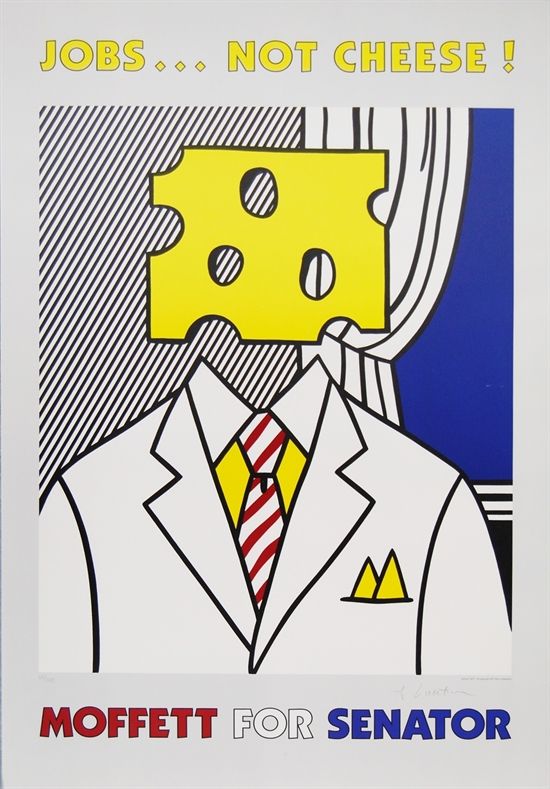
Figure twelve | ... that turn their faces into swiss cheese


Figure thirteen | Flash-trance has some serious SIDE effects


Figure fourteen | but surgical help is already on the way


Figure fifteen | with beautiful results


Figure sixteen | well not always


Figure seventeen | definitely not always


Figure eighteen | although that might depend on personal taste


Figure nineteen | eyes are like pyramids: very old


Figure twenty | big eyes look good on babies but...


Figure twenty-one | not all babies are alike


Figure twenty-two | anyway, BIG eyes will haunt you


Figure twenty-three | and mess with your brain


Figure twenty-four | then you commit social suicide using masochistic actions


Figure twenty-five | or by acting plainly wierd


Figure twenty-six | weird is a cultural thing


Figure twenty-seven | art goes beyond weird


Figure twenty-eight | but not to worry


Figure twenty-nine | it's all done within tradition family values


Figure thirty | in Kuwait orange is portugal


Figure thirty-one | in Portugal ku-vaite does not mean orange


Figure thirty-two | anonymity is like censorship...


Figure thirty-three | ... a bitch


Figure thirty-four | such a beauty... you can't get enough


Figure thirty-five | here she is again


Figure thirty-six | ... and again


Figure thirty-seven | going back to our purpose, let's check your eyes


Figure thirty-eight | no time to squint


Figure thirty-nine | is that thick enough to protect you?


Figure forty | could this be the solution against Flash-Trance?!


Figure forty-one | this is more traditional but less legal


Figure forty-two | therefore she will be punished


Figure forty-three | now this is completely different


Figure forty-four | and harmony is back to Op art


Figure forty-five | it's a delight to watch...


Figure forty-six | ... and to be watched


Figure forty-seven | then you have to turn the Page!


Figure forty-eight | NEW TECHNIQUES are tested everyday...


Figure forty-nine | ... for ladies


Figure fifty | ... and gentlemen


Figure fifty-one | ... for girls


Figure fifty-two | ... and boys


Figure fifty-three | ... for us (the portuguese)


Figure fifty-four | ... and them


Figure fifty-five | ... the infidels


Figure fifty-six | ... our girls


Figure fifty-seven | our heroes are the first to try


Figure fifty-eight | our armies are fierce


Figure fifty-nine | our soldiers are deadly...


Figure sixty | ... but they keep finding victims of FLASH-TRANCE :(


Figure sixty-one | could this be the solution against Flash-Trance?!


Figure sixty-two | or this?

Figure sixty-three | or even this?!


Figure sixty-four | face your fears


Figure sixty-five | and shout!


Figure sixty-six | put on your war paintings!


Figure sixty-seven | Let's check your eyes again!


Figure sixty-eight | there you have the culture crash (cf. fig. 61)


Figure sixty-nine | 69 indeed


Figure seventy | here's another contraption to deal with the nasty Flash-trance!


Figure seventy-one | otherwise you'll get striated eyes


Figure seventy-two | Always practice safe sex


Figure seventy-three | and safe mummification


Figure seventy-four | ... safe networking...


Figure seventy-five | ... but only up to a point!


Figure seventy-six | she's probably safe (eyes without a soul)


Figure seventy-seven | Boy George's son


Figure seventy-eight | Rozete from VANTAG


Figure seventy-nine | NOT Rozete


Figure eighty | and how are your eyes now?


Figure eighty-one | don't go there!


Figure eighty-two | your eyes seem to be ok but not FKA's...


Figure eighty-three | Oh my, if this chastiser could deal with the FLASH-TRANCE...


Figure eight-four | this Flash-Trance annihilation business is so exciting!!


Figure eighty-five | I'm so horny! mmmmmm... spank me spank you!!!


Figure eighty-six | Yeah baby yeah!!!... Hey?! where am I?


Figure eighty-seven | I got carried away by the sadomasochistic randiness of the situation and was trapped in an OP ART counter attack! OOOHH aaah I'm dizzy!


Figure eighty-eight | HELP!


Figure eighty-nine | Could it be LOVE?!


Figure ninety | I'm so confused!


Figure ninety-one | not again... it's moving!


Figure ninety-two | OP ART is winning!


Figure ninety-three | ... and I'm whining :(


Aftermath


This saga started in February 2016 with some of the images and was finished by early October with the texts


Post-scriptum


Now we will be developing new ways of displaying this storym that you will be able to enjoy without the perils of........ 


FLASH TRANCE


Famous last words


- "We'll be back!"


THE END


----------------------------------------- 

.

Thursday, September 29, 2016

Courage and free speech

Courage and free speech

Throughout human history there have been individuals who have been ready to risk everything for their beliefs

August Landmesser refuses to perform the Nazi salute during a visit to the Hamburg shipyards by Adolf Hitler in 1936. Photo courtesy Wikipedia
is a historian and writer. He is professor of European studies at the University of Oxford, Isaiah Berlin Professorial Fellow at St Antony’s College, and a senior fellow at the Hoover Institution at Stanford University. He is also the director of the Free Speech Debate. His latest book is Free Speech: Ten Principles for a Connected World (2016). 
Published in association with
Free Speech Debate
an Aeon Partner
1,600 words
Edited by Nigel Warburton
Republish - Licence Only
Why is free expression so important to us?
0Responses
‘Nothing is more difficult,’ wrote the German political essayist Kurt Tucholsky in 1921, ‘and nothing requires more character, than to find yourself in open contradiction to your time and loudly to say: No.’ First of all, it is intellectually and psychologically difficult to step outside the received wisdom of your time and place. What has been called ‘the normative power of the given’ persuades us that what we see all around us, what everyone else seems to regard as normal, is in some sense also an ethical norm.
Numerous studies in behavioural psychology show how our individual conviction of what is true or right quails before the massed pressure of our peers. We are, as Mark Twain observed, ‘discreet sheep’. This is what John Stuart Mill picked up when he wrote in On Liberty (1859); that the same causes that make someone a churchman in London would have made him a Buddhist or a Confucian in Beijing. The same truth is gloriously captured in the humorous song ‘The Reluctant Cannibal’ (1960) by Michael Flanders and Donald Swann, in which a young cannibal revolts against the settled wisdom of his elders and declares that ‘eating people is wrong’. At the end of the song, one of the elders exclaims, to huge belly laughs all round: ‘Why, you might just as well go around saying: “Don’t fight people!”’ Then he and his colleagues cry in unison: ‘Ridiculous!’
Yet norms change even within a single lifetime, especially as we live longer. So as elderly disc jockeys are arrested for sexual harassment or abuse back in the 1960s, we should be uncomfortably aware that some other activity that people regard as fairly normal now might be viewed as aberrant and abhorrent 50 years hence.
To step outside the established wisdom of your time and place is difficult enough; openly to stand against it is more demanding still. In Freedom for the Thought that We Hate (2007), his fine book on the First Amendment tradition in the United States, Anthony Lewis quotes a 1927 opinion by the Supreme Court Justice Louis Brandeis, which Lewis says ‘many regard as the greatest judicial statement of the case for freedom of speech’.
The passage Lewis quotes begins: ‘Those who won our independence… believed liberty to be the secret of happiness and courage to be the secret of liberty.’ This is magnificent, although it also illustrates the somewhat self-referential, even self-reverential, character of the modern First Amendment tradition.
Lewis cites Brandeis, who credits this thought to the 18th-century founders of the US. But those founders would have been well aware that they got it straight from Pericles’ funeral oration during the Peloponnesian War of the fifth century BCE, as reported – if not invented, or at least much improved upon – by Thucydides. ‘For you now,’ Thucydides’ Pericles admonishes his ancient Athenian audience, after praising the heroic dead, ‘it remains to rival what they have done and, knowing the secret of happiness to be freedom and the secret of freedom a brave heart, not idly to stand aside from the enemy’s onset.’
More directly, the US tradition of courage in the defence of free speech draws on the heritage of the 17th-century English. People such as John Lilburne, for example. In 1638, while still in his early 20s, Lilburne was found guilty by the Star Chamber court of helping to smuggle into England a tract against bishops that had been printed in the Low Countries. He was tied to the back of a cart on a hot summer’s day and unremittingly whipped as he walked with a bare back all the way from the eastern end of Fleet Street to Westminster Palace Yard. One bystander reckoned that he received some 500 blows that, since the executioner wielded a three-thronged whip, made 1,500 stripes.
Lilburne’s untreated shoulders ‘swelled almost as big as a penny loafe with the bruses of the knotted Cords’, and he was then made to stand for two hours in the pillory in Palace Yard. Here, in spite of his wounds and the burning sunshine, he began loudly to tell his story and to rail against bishops. The crowd was reportedly delighted. After half an hour, there came ‘a fat lawyer’ – ah, plus ça change – who bid him stop. The man whom the people of London had already dubbed ‘Free-Born John’ refused to shut up. He was then gagged so roughly that blood spurted from his mouth. Undeterred, he thrust his hands into his pockets and scattered dissident pamphlets to the crowd. No other means of expression being left to him, Free-Born John then stamped his feet until the two hours were up.
Get Aeon straight to your inbox
As an Englishman, I find particular inspiration in the example of Free-Born John, and those of all our other free-born Johns: John Milton, John Wilkes, John Stuart Mill (and George Orwell, a free-born John in all but name). More broadly, there is no reason to understate, let alone to deny, a specifically Western tradition of courage in the advancement of free speech, one that can be traced from ancient Athens, through England, France and a host of other European countries, to the US, Canada and all the liberal democracies of today’s wider West. But it would be quite wrong to suggest that this habit of the heart is confined to the West. In fact, there have been rather few examples of such sturdy defiance in England in recent times, while we find them in other countries and cultures.
Consider, for instance, the Chinese dissident Liu Xiaobo. Liu was sentenced to 11 years’ imprisonment in 2009 for ‘subverting state power’. Both his written response to the charges against him and his final speech in court are, like many of his earlier writings, lucid and courageous affirmations of the central importance of free speech. He definitely does not draw only on Western traditions. For example, in his book No Enemies, No Hatred (2012), he quotes a traditional Chinese 24-character injunction: ‘Say all you know, in every detail; a speaker is blameless, because listeners can think; if the words are true, make your corrections; if they are not, just take note.’
After paying a moving tribute to his wife (‘Armed with your love, dear one, I can face the sentence that I’m about to receive with peace in my heart’), Liu looks forward to the day ‘when our country will be a land of free expression: a country where the words of each citizen will get equal respect, a country where different values, ideas, beliefs and political views can compete with one another even as they peacefully coexist’. The judge cut him short in court before he had finished speaking, but free-born Xiaobo, like free-born John, still got his message out. In his planned peroration, Liu wrote: ‘I hope that I will be the last victim in China’s long record of treating words as crimes. Free expression is the base of human rights, the root of human nature and the mother of truth. To kill free speech is to insult human rights, to stifle human nature and to suppress truth.’
‘They will send me to prison,’ al-Johani says, ‘and I will be happy’
Liu was by this time famous, and that great speech made him more so. He was awarded the Nobel Peace Prize in 2010. But perhaps the most inspiring examples of all come from people who are not famous at all: so-called ordinary people doing extraordinary things. People such as the Hamburg shipyard worker who, at the launch of a naval training vessel in 1936, refused to join all those around him in making the Hitler salute. The photograph only achieved wide circulation on the internet more than 60 years later. There he stands amid a forest of outstretched arms, with both his own firmly folded across his chest, a portrait of stubborn worker’s pride. His name was August Landmesser. He had been a Nazi party member but was later expelled from the party for marrying a Jewish woman, and then imprisoned for ‘dishonouring the race’. After his release, he was drafted to fight in the Second World War and never returned.
Again, such moments are emphatically not confined to the West. During the Arab Spring of 2011, a ‘day of rage’ was proclaimed by dissidents in Saudi Arabia. Faced with a massive police presence at the appointed location in the country’s capital Riyadh, almost nobody showed up. But one man, a strongly built, black-haired teacher called Khaled al-Johani, suddenly approached a group of foreign reporters. ‘We need to speak freely,’ he cried, with an explosion of pent-up passion. ‘No one must curb our freedom of expression.’ A BBC Arabic service film clip, which you can watch on YouTube, shows a tall secret policeman, in white robes, headdress and dark glasses, looming in the background as he snoops on al-Johani’s speech. A little further away, armed police mutter into their walkie-talkies. ‘What will happen to you now?’ asks one of the reporters, as they escort the teacher back to his car. ‘They will send me to prison,’ al-Johani says, adding ironically: ‘and I will be happy.’ He was subsequently condemned to 18 months’ imprisonment.
In many places, we can find monuments to the Unknown Soldier, but we should also erect them to the Unknown Speaker.
This is an edited extract from ‘Free Speech: Ten Principles for a Connected World’ by Timothy Garton Ash © 2016, published by permission of Atlantic Books.

Ideas