Wednesday, July 6, 2016

World’s Oldest Operating Photo Studio Closes in India
News

World’s Oldest Operating Photo Studio Closes in India

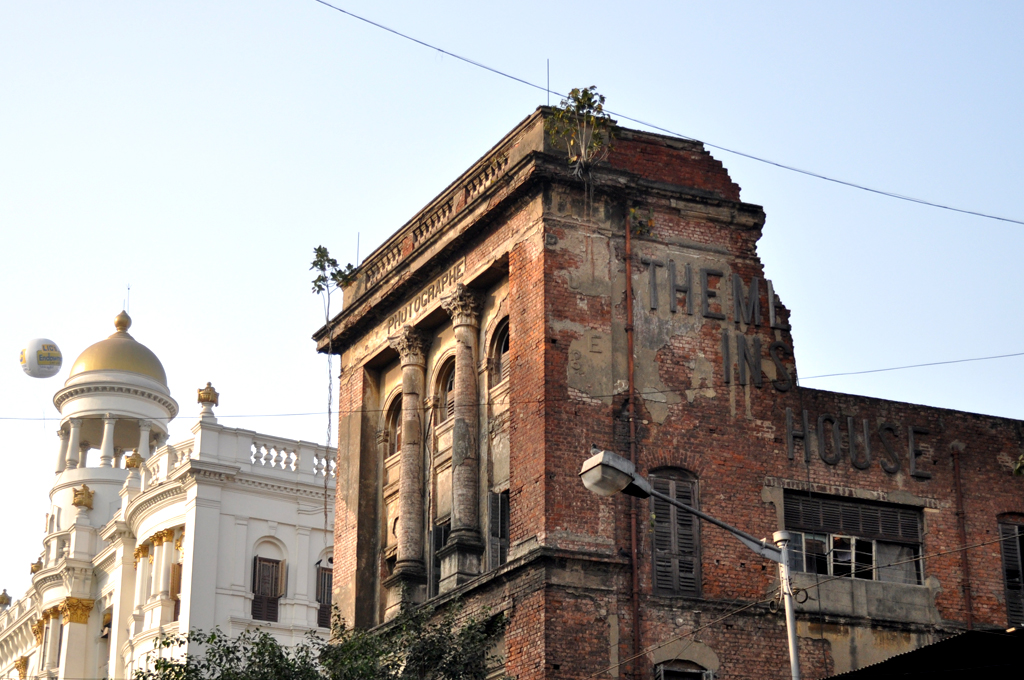
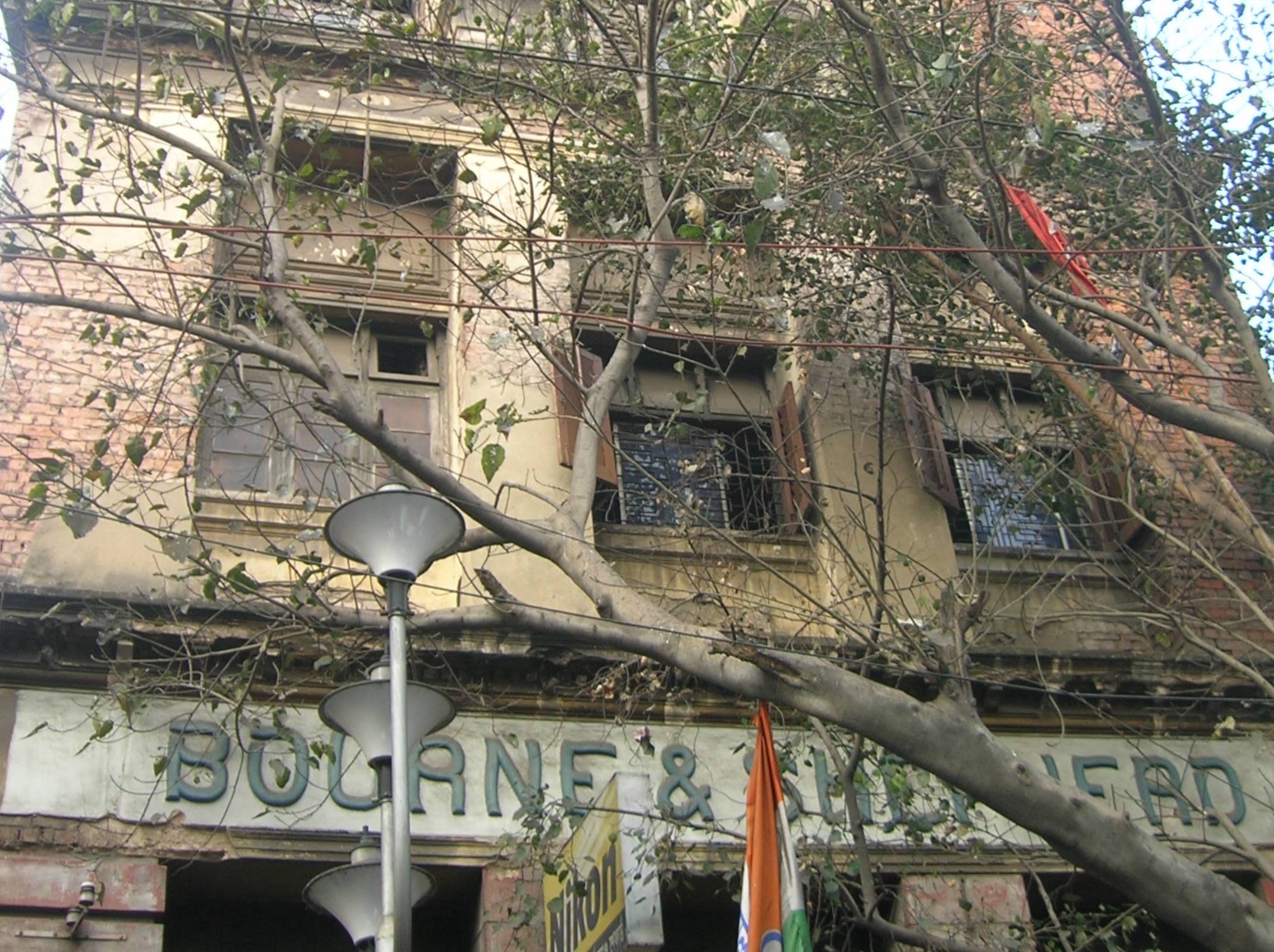
Bourne & Shepherd studio in 2011 (photo by Sudipta Mallick via Flickr, used under CC BY 2.0 license)
Bourne & Shepherd studio in 2011 (photo by Sudipta Mallick/Flickr)
After more than 150 years of documenting the faces and landscapes of India, a photo studio that many considered the world’s oldest in operation has shuttered. Bourne & Shepherd, named for its founding British photographers, Samuel Bourne and Charles Shepherd, officially closed earlier this month, following its last owners’ loss of a 14-year legal battle over the company’s sole space, a building in Kolkata’s busy Esplanade area. The studio — which, starting in the 1860s, produced cabinet cards and cartes de visite that propelled it to prominence — has since 1910 occupied an old, four-story structure owned by Life Insurance Corporation of India (LIC). What happens to its remaining archives and equipment, including a massive camera originally used by Bourne, a prolific travel photographer, is now uncertain.
Bourne & Shepherd studio in 2011 (photo by Biswarup Ganguly via Wikipedia, used under CC BY 3.0 license)
Bourne & Shepherd studio in 2011 (photo by Biswarup Ganguly/Wikipedia) (click to enlarge)
“We only had the building on lease and due to a space issue, and a discrepancy on the rent, [LIC] wanted it back,” co-owner Jayant Gandhi told the India-based Writing Through Light. “We filed a case in 2002 and finally lost the battle to the court order.”
Now in his 70s, Gandhi also cited the difficulty of running the business at his age and the impact of digital technology as reasons for the closure. He and co-owner K.J. Ajmer had expanded operations to include work on commercial shoots and processing services for 16 and 35mm motion-picture film, but reaping strong profits still proved challenging. Gandhi told The Hindu that he now intends to try and preserve the studio’s archives and equipment, although he has not shared any specific plans. A petition asking LIC to convert the space into a museum has emerged on Change.org, but it has so far amassed fewer than a dozen signatures. Listed by the Kolkata Municipal Corporation as a Grade IIB Heritage Property for its “architectural style,” the building itself should at least continue to receive protection and proper maintenance from LIC; according to the corporation’s guidelines, only “horizontal and vertical addition and alteration … compatible with the heritage building” are allowed.
LIC, however, has long neglected the structure. It still sports a massive hole in the roof that dates to 1991, when a large fire broke out. The main studio and library, then on the top floor, contained around 2,000 glass negatives — used to reprint images for sale — that were lost to the blaze: Gandhi told Times of India he had stored some of the archive’s most cherished ones in a large iron safe, but the flames damaged the metal and he was never able to open it again. Since the disaster, business has been on the decline.
Bourne & Shepherd's studio (photo by Pramanick via Wikipedia, used under CC BY 3.0 with slight crop)
Bourne & Shepherd’s studio (photo by Pramanick/Wikipedia)
At its peak, Bourne & Shepherd had numerous outlets not only across India but also in London and Paris. It began in the northern India city of Shimla, where Bourne founded a studio in 1863 with another photographer, William Howard. Initially a bank clerk in Nottingham, Bourne had acquired his first camera just a decade prior, according to photographic historian Hugh Ashley Rayner in his catalogue essay for the exhibition Bourne & Shepherd: Figures in Time (curated by Tasveer gallery, the traveling show just finished its run in India, only days before the studio closed). Bourne first approached photography as a hobby, snapping pictures of the marketplace from his window at work, but after exhibiting some of his images, he decided to move to India to pursue it as a profession.
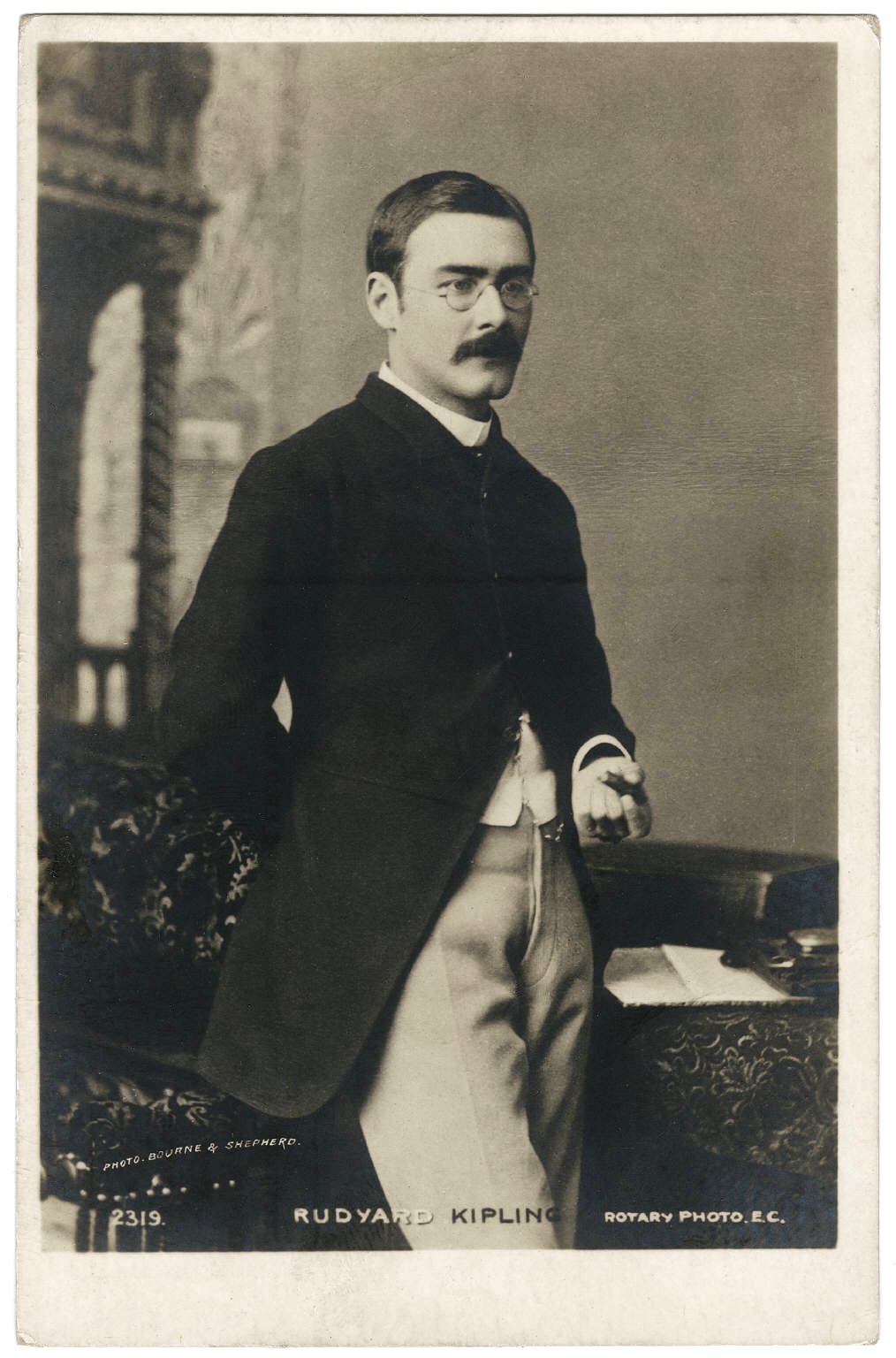
Bourne & Shepherd's photographic postcard portrait of Rudyard Kipling (courtesy of the Beinecke Rare Book & Manuscript Library, Yale University via Wikipedia Commons)
Bourne & Shepherd’s photographic postcard portrait of Rudyard Kipling (c. 1892) (photo courtesy the Beinecke Rare Book & Manuscript Library, Yale University, via Wikipedia) (click to enlarge)
Charles Shepherd, who had his own photo studio with a man named Arthur Robertson in the northern city of Agra, joined Bourne and Howard in Shimla in November 1863, as Rayner explains. Howard left about two years later, leaving the business with the two-partner name it’s kept for the past 150-plus years.
The company’s first studio in Shimla was known as “Talbot House,” named for photography pioneer William Henry Fox Talbot, Rayner writes on his website. By 1865 it also had a branch in then-Calcutta that moved locations a number of times before settling, in 1910, into its Esplanade premises. Bourne & Shepherd’s other studios closed over the years, but the Kolkata one endured, with the business prospering through the 20th century. Besides making portraits of people from Indian mystic Sri Ramakrishna to English writer Rudyard Kipling, the photographers also documented important events including the Delhi Durbars of 1877, 1903, and 1911.
“The company became the de-facto official photographers to the British Raj in India; and produced portraits of successive Viceroys and Governors, as well as most high officials and major political events,” Rayner writes. “Everyone who was anyone in British India, had their portrait ‘done’ by Bourne & Shepherd, at some point in their career!”
While Shepherd primarily worked as a printer, took portraits in the studio, and managed the commercial side of the business, Bourne traveled extensively, capturing the architecture, scenery, and people of India. He was an expert in the wet-plate collodion process, which required setting up a fully equipped darkroom tent near the capture site to quickly process the plates — and he apparently succeeded even while “perched on a mountainside in the remote Himalayas, with the thermometer approaching a hundred degrees and a dusty gale blowing,” as Rayner describes.
“Although not the first serious photographer to document the landscape and architecture of India, he was perhaps the first to produce such a large and coherent body of work of such consistently high technical quality and artistic merit,” Rayner continues. “His images recorded an India that was rapidly changing, and that has now largely disappeared.” Many of these images now reside in the collections of museums around the world, from London’s National Portrait Gallery to the Smithsonian Institution.
bs
Left: Bourne & Shepherd, “Jaipur, His Highness, Maharaja Ram Singh, G.C.S.I.” (1877); right: Bourne & Shepherd, “Udaipur, His Highness, Maharana Sajjan Singh” (1877) (photos courtesy MAP / Tasveer)
BS10FT05_PHY.00038
Samuel Bourne, “Agra, The Taj Mahal from the corner of the quadrangle” (1865) (photo courtesy MAP / Tasveer)
Bourne and Shepherd eventually moved back to Europe in, respectively, 1870 and 1879, with Bourne later developing an interest in watercolor painting. Ownership of the business passed to a number of people: It remained in European-only hands until 1955, when then proprietor Arthur Musselwhite sold it at auction; Ajmer and Gandhi then took control of the Kolkata studio in 1964 — almost exactly one century after Bourne and Shepherd began working together. Over the years, the building has welcomed such regulars as 1913 Nobel Laureate Rabindranath Tagore as well as filmmaker and writer Satyajit Ray, who memorialized the business in stories featuring his fictional character Feluda.
Despite this rich history, LIC is not interested in preserving the old Bourne & Shepherd studio, Gandhi told Times of India. He does not intend to sell any of the old photographs or equipment for fear that people may misuse them, but also doesn’t know where to find the space to hold all the artifacts he’s amassed over time.
“I am sad that it is gone,” he told Writing through Light. “But in the end, there are some things that are out of one’s control.”
Bourne & Shepherd's c. 1875 photograph of the rifle-toting Prince of Wales, posing with a tiger he killed and members of his hunting party during his tour of India (via the Library of Congress)
Bourne & Shepherd’s c. 1875 photograph of the rifle-toting Prince of Wales, posing with a tiger he killed and members of his hunting party during his tour of India (via Library of Congress)
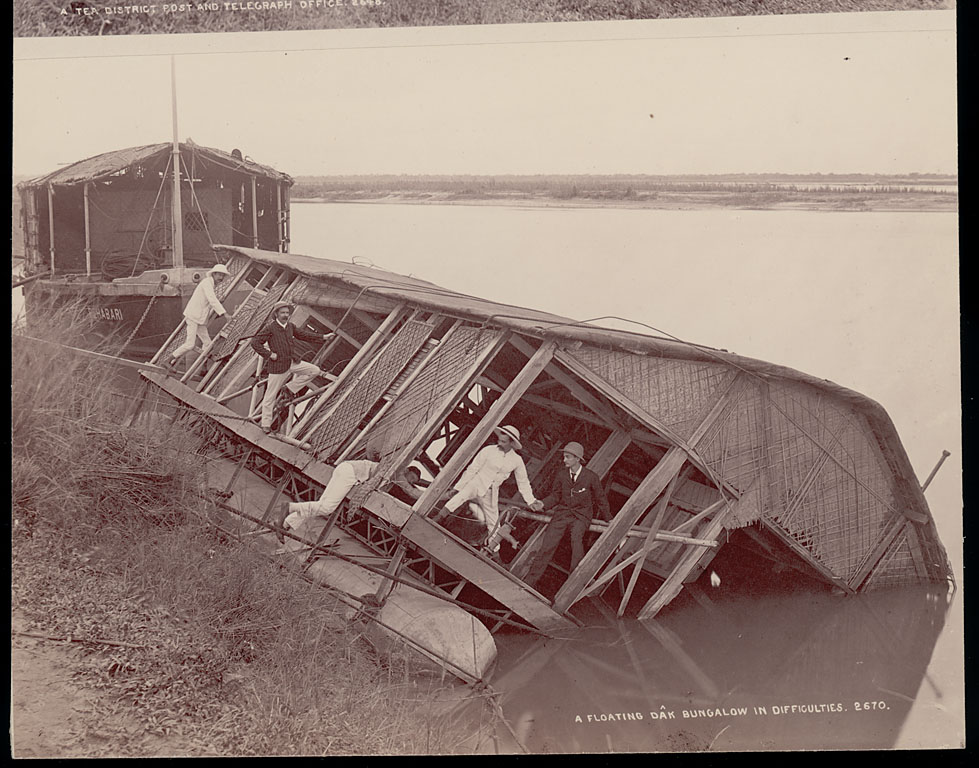
Bourne & Shepherd, "A Floating Oak Bungalow in Difficulties" (via the Emma A. Koch photograph collection of India, South Asia, and Australia, National Anthropological Archives, Smithsonian Institution)
Bourne & Shepherd, “A Floating Oak Bungalow in Difficulties” (c. 1903) (via the Emma A. Koch photograph collection of India, South Asia, and Australia, National Anthropological Archives, Smithsonian Institution)
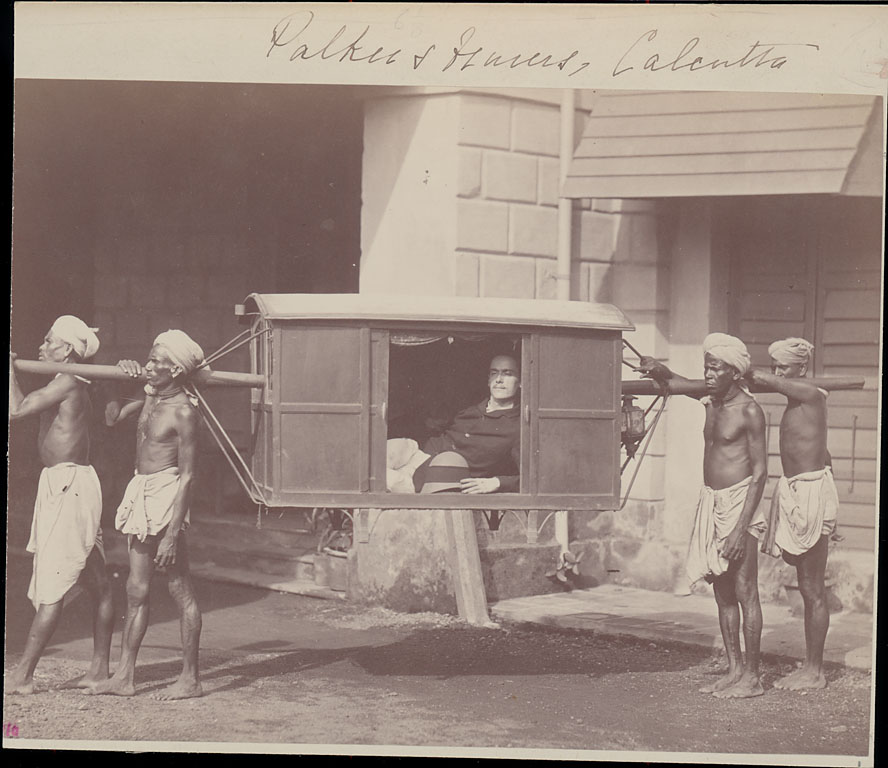
Bourne & Shepherd's photo of Four Bengal men carrying man in a palki or palanquin (via Emma A. Koch photograph collection of India, South Asia, and Australia, National Anthropological Archives, Smithsonian Institution)
Bourne & Shepherd’s photo of four Bengal men carrying a man in a palki or palanquin (c. 1862–85) (via Emma A. Koch photograph collection of India, South Asia, and Australia, National Anthropological Archives, Smithsonian Institution)
BS10FT41_PHY.01548
Samuel Bourne, “Varanasi (formerly Benares), Vishnu temples on the Ganges” (1866) (photo courtesy MAP / Tasveer)
BS10FT09_PHY.01635
Bourne & Shepherd, “Delhi, His Eminence, The Viceroy’s Elephant, Delhi Durbar” (1877) (photo courtesy MAP / Tasveer)
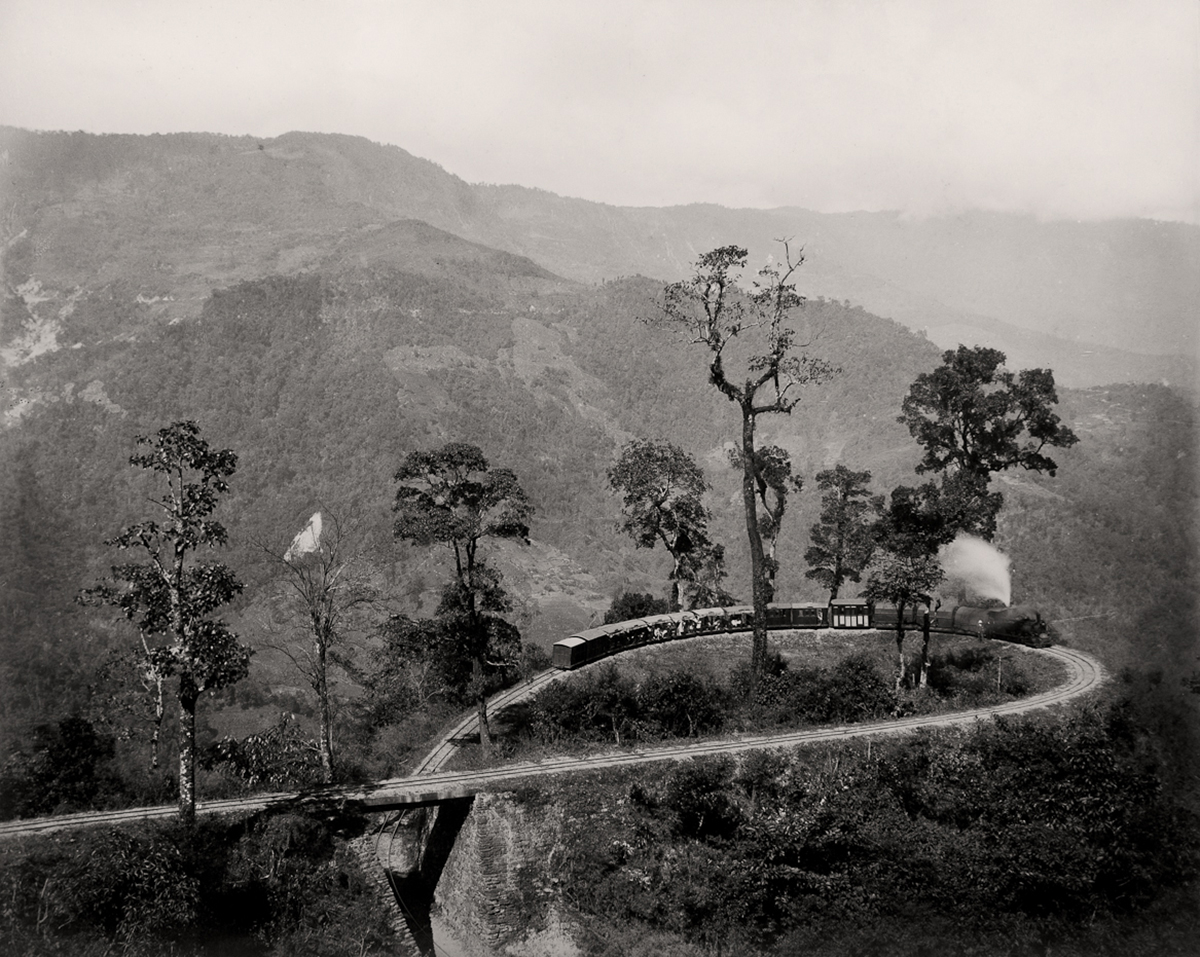
BS10FT08_PHY.01551
Bourne & Shepherd, “Darjeeling, The loop on the Darjeeling Himalayan Railway” (c. 1880) (photo courtesy MAP / Tasveer)
BS10FT03_PHY.00002
Samuel Bourne, “Agra, The interiors of the Moti Masjid” (c. 1860) (photo courtesy MAP / Tasveer)
BS10FT10_PHY.00011
Samuel Bourne, “Delhi, Safdarjung’s Mausoleum” (1865) (photo courtesy MAP / Tasveer)
BS10FT12_PHY.01359.AP
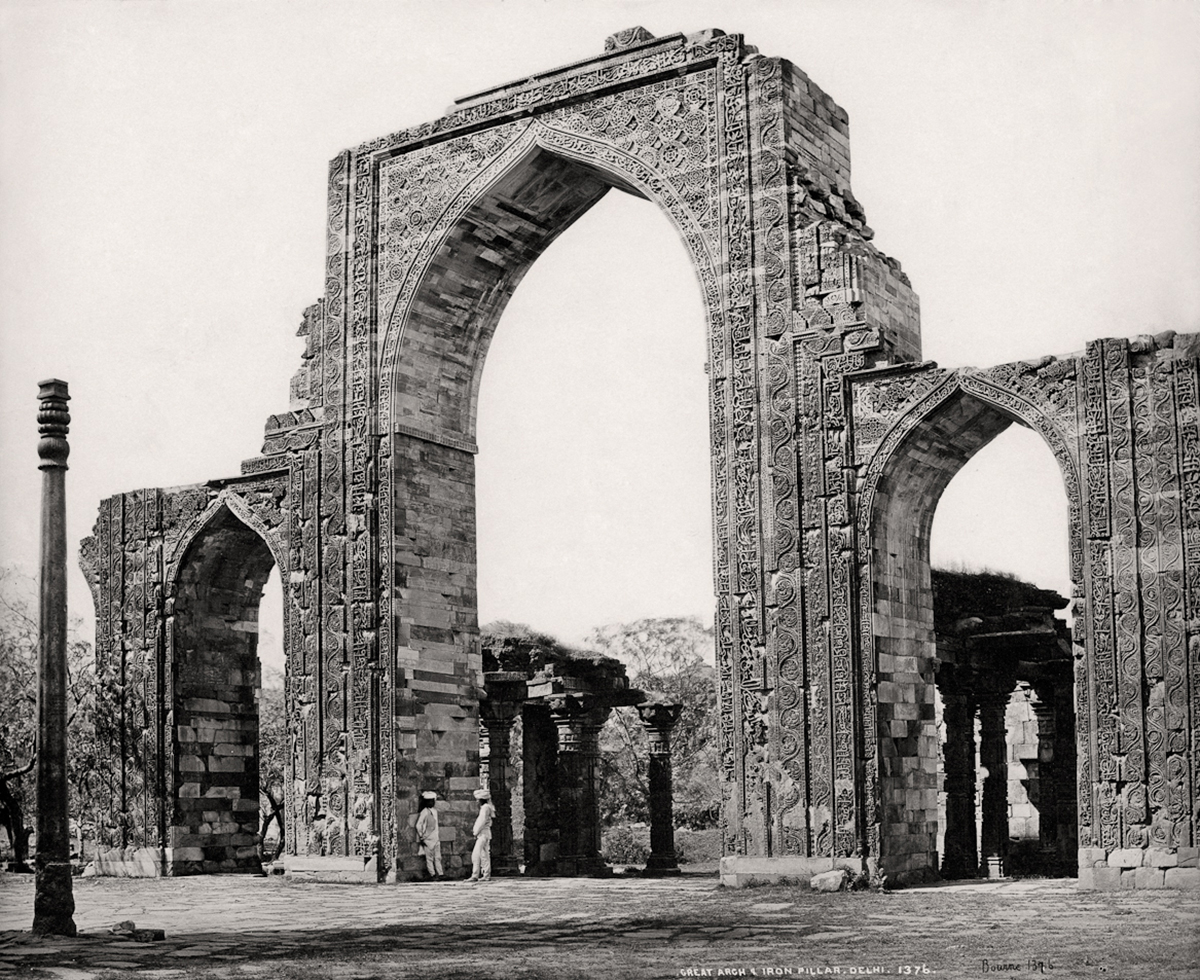
Samuel Bourne, “Delhi, The Great Arch and the Iron Pillar at the Qutub Minar” (c.1860) (photo courtesy MAP / Tasveer)



Picasso and Matisse Trade Blows in a Cubism vs. Fauvism Bar Brawl

Video

Picasso and Matisse Trade Blows in a Cubism vs. Fauvism Bar Brawl

aCvOsE5 - Imgur
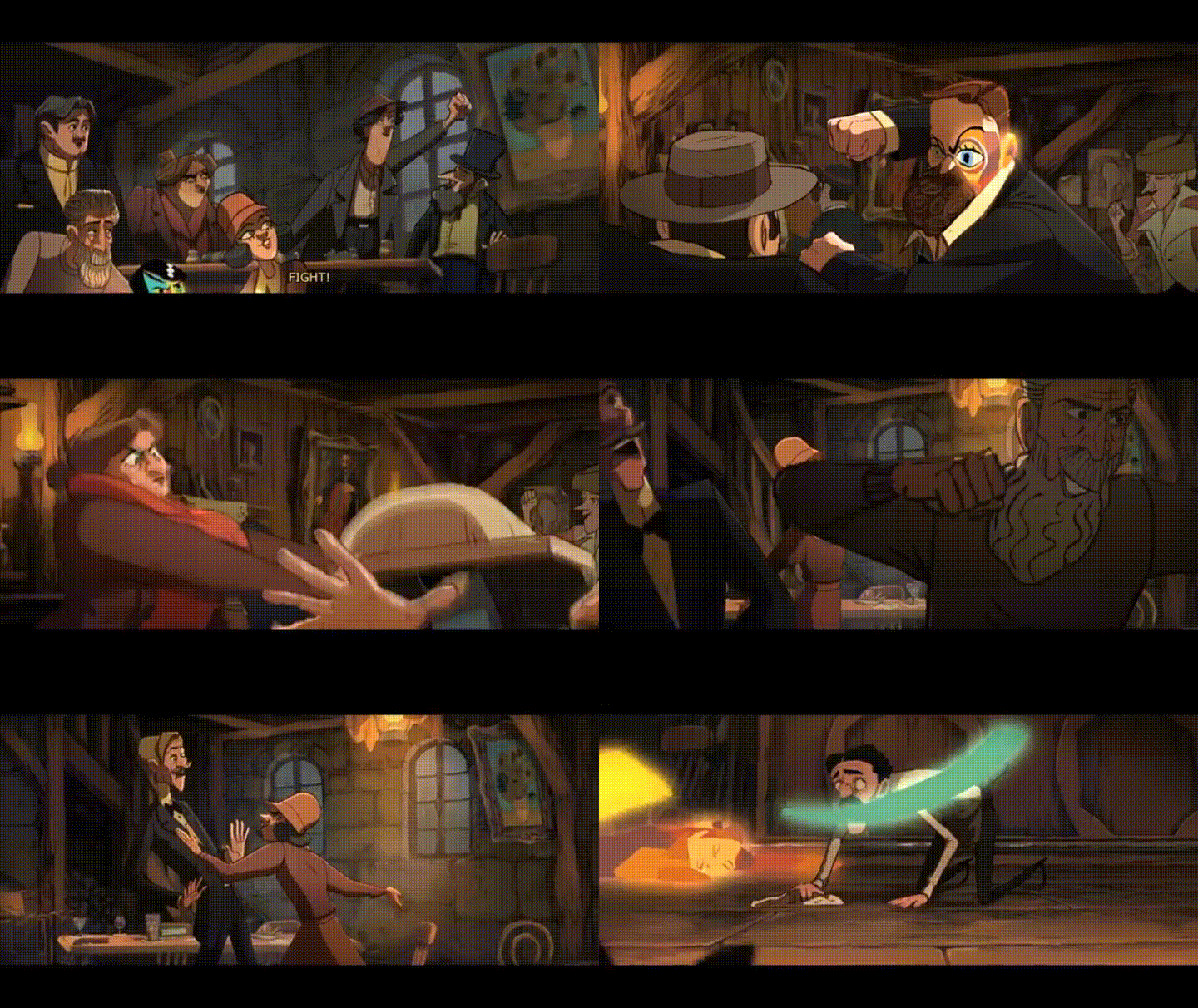
Gobelins L’École de L’Image, clip from “Au Lapin Agile” (2016) (All GIFs by the author)
Pablo Picasso and Henri Matisse were the 20th century’s greatest artistic frenemies. When Gertrude Stein introduced them in 1906, Matisse said he and Picasso were “as different as the north pole is from the south pole.”
An intense, competitive partnership followed, a kind of aesthetic war between Cubism and Fauvism. Picasso parodied and, some say, ripped off Matisse; Matisse condescended to the younger painter. But they also met regularly, traded paintings, and considered each other invaluable critics. As Picasso told Pierre Daix, one of his biographers: “You have got to be able to picture side by side everything Matisse and I were doing at that time. No one has ever looked at Matisse’s painting more carefully than I; and no one has looked at mine more carefully than he.”
Their rivalry was never consummated with a fistfight — unlike many artistic rivalries. If it had been, though, it might have looked a little like Au Lapin Agile, a new animated short by the renowned animation department of Paris’s Gobelins L’École de L’Image (or Gobelins School of the Image). Debuted at the Annecy International Animated Film Festival, it depicts Picasso and Matisse in an epic bar brawl rendered in vibrant Cubist- and Fauvist-inspired forms and hues. 

The fight goes down at the Lapin Agile, the Montmartre cabaret that was beloved of many generations of the Parisian avant-garde and that Picasso famously painted in 1905. In the painting, Picasso plays the part of a harlequin seated at the bar, next to his lover, Germaine Pinchot. In 1907, Picasso would paint his then-controversial masterpiece “Les Demoiselles d’Avignon,” for which Pinchot modeled. “Les Demoiselles d’Avignon” largely overshadowed Matisse’s “Le bonheur de vivre” (or “The Joy of Life”), painted a year earlier, and which some critics say had a direct influence on Picasso’s painting.
The pressure to take sides in the Picasso-versus-Matisse rivalry persists today, in exhibitions like Matisse and Picasso: A Gentle Rivalry at the Kimbell Art Museum in 1999. Those who were close to the painters had differing opinions about which one ultimately came out on top. “In their meetings, the active side was Pablo; the passive, Matisse,” said Françoise Gilot, one of Picasso’s partners. “Pablo always sought to charm Matisse, like a dancer, but in the end it was Matisse who conquered Pablo.” Watch the short film to see who prevails in the cartoon rendition of their rivalry.
jkYgAR7 - Imgur
Gobelins L’École de L’Image, clip from “Au Lapin Agile” (2016)
hJJ9tBD - Imgur
Gobelins L’École de L’Image, clip from “Au Lapin Agile” (2016)
h/t The Verge 

In the Jungle of Henri Rousseau’s Imagination

Museums

In the Jungle of Henri Rousseau’s Imagination

Henri Rousseau, “The Snake Charmer” (1907), oil on canvas (Paris, musée d’Orsay © RMN-Grand Palais [musée d'Orsay] / Hervé Lewandowski)
Henri Rousseau, “The Snake Charmer” (1907), oil on canvas (Paris, musée d’Orsay © RMN-Grand Palais [musée d’Orsay] / Hervé Lewandowski) (click to enlarge)
PARIS — Henri Rousseau is art history’s best-known naïf painter. The Cubists, Dadaists, and Surrealists were among the first to appreciate his zoomed-in, hyperreal aesthetic strengths. It all started when, in 1900, Pablo Picasso stumbled upon an unknown naïve painting by Rousseau; lacking conventional trompe l’œil representational skill, it was being sold as a toss-away canvas to be painted over. Picasso bought it for peanuts, loved its anti-classical aspect, and sought out the unsuccessful artist who had painted it. (Organizers of the official Salon exhibitions had regularly rejected Rousseau’s submissions.) In 1908, after purchasing Rousseau’s simple but massive “Portrait of a Woman” (1895), Picasso — who eventually bought two more Rousseaus — held a half-serious, half-burlesque banquet at his Le Bateau-Lavoir studio in Rousseau’s honor. He was dubbed Le Douanier (or customs officer, though his day job was technically as a toll collector) and enshrined as a father of Picasso and Georges Braque’s Cubist art. It was there that Rousseau famously and ridiculously remarked to Picasso: “We are the two greatest painters. You in the Egyptian manner; and I in the modern.”
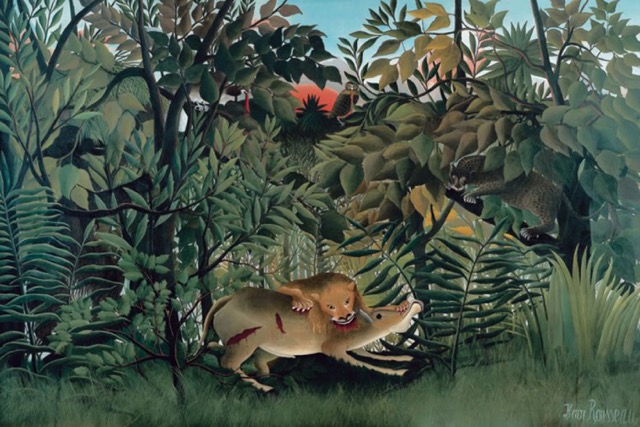
Henri Rousseau, “The Hungry Lion Attacking an Antelope” (1898/1905), oil on canvas (photo by Robert Bayer, Basel)
Henri Rousseau, “The Hungry Lion Attacking an Antelope” (1898/1905), oil on canvas (photo by Robert Bayer, Basel) (click to enlarge)
Attendees at the fête included Guillaume Apollinaire, Jean Metzinger, Juan Gris, Marie Laurencin, art critic André Salmon, art dealer and historian Daniel-Henri Kahnweiler and the collectors Leo and Gertrude Stein. Many of them were also fascinated by so-called “primitive” art, discovering in it a powerful form of emotional expression that felt modern. For them, Rousseau became a sort of home-grown primitive whose paintings captured something of the abstract verve they admired in African art. For example, Wassily Kandinsky, who in 1912 included African artifacts in the Der Blaue Reiter Almanach, acquired two of Rousseau’s paintings, commenting that Le Douanier opened the way to the possibilities of simplicity in art. These zippy avant-gardists praised Rousseau’s style of innocence based, they presumed, on his inner conviction of the rightness of his private vision.
In The Douanier Rousseau: Archaic Candour at the Musée d’Orsay, curators Beatrice Avanzi and Claire Bernardi pick up on this relationship with modernism and go deeper into art history, comparing and contrasting Rousseau’s paintings with earlier academic ones, like Adolphe William Bouguereau’s “Equality before Death” (1848). Of the show’s 78 paintings, 45 are by Rousseau. His more mysterious works, like “The Snake Charmer” (1907), stand up well to the comparison. For me, they produced an obscure empathy that evoked the profound mysteries of natural Transcendentalism. In a sense, this show became a tale of two Rousseaus: Henri and Jean-Jacques.
Adolphe William Bouguereau, “Equality before Death” (1848), oil on canvas (Paris, musée d'Orsay, dation, RF 2010 7 © Musée d'Orsay, dist RMN-Grand Palais / Patrice Schmidt)
Adolphe William Bouguereau, “Equality before Death” (1848), oil on canvas (Paris, musée d’Orsay, dation, RF 2010 7 © Musée d’Orsay, dist RMN-Grand Palais / Patrice Schmidt) (click to enlarge)
The philosopher Jean-Jacques Rousseau doubted the validity of previously socially constructed form, and, like Henri Rousseau did more than a century later, looked for answers within. Discovering and remaining true to one’s own nature was the primary aspiration for both Rousseaus. That said, Henri’s true nature is a bit of a caprice. Though he very often painted the foliage of the jungle, he never visited one. Rather, he went to the botanical garden in Paris and studied the plants and zoo animals there. And instead of painting the plants to scale, he would make them bigger than in reality, so that they came to resemble a drug-fueled fantasy world.
Rousseau had a very real and hard personal life. He had nine children with his first wife, Clemence, but she died young, as did his second wife after they had been married for only four years. Rousseau wanted to be known as a great artist, but was unappreciated for most of his life and died a rather lonely man in 1910, at the age of 66, from a leg infection. Reportedly, only seven people attended his funeral at the Cimetière Parisien de Bagneux (one of them was Paul Signac). But a year later, a tombstone was set up by Apollinaire, the painter Robert Delaunay, and a Monsieur Queval (Rousseau’s landlord). Also shortly after Rousseau’s passing, New York City saw the first one-man exhibition of the artist’s work ever held, arranged at Alfred Stieglitz’s gallery 291 by Rousseau’s friend, the US artist Max Weber. In 1913, Constantin Brâncuși and the painter Manuel Ortiz de Zárate engraved on Rousseau’s tombstone this epitaph, which Apollinaire had penned:
Hear us, kindly Rousseau.
We greet you,
Delaunay, his wife, Mondieur Queval and I.
Let our baggage through the Customs to the sky,
We bring you canvas, brush and paint of ours,
During eternal leisure, radiant
As you once drew my portrait
You shall paint
The face of stars
At the Musée d’Orsay, Rousseau’s masterpieces from the museum’s collection, the Musée de l’Orangerie, and elsewhere are displayed alongside paintings by Georges Seurat, Carlo Carrà, Diego Rivera, Max Ernst, Delaunay, Kandinsky, Picasso, and other lesser-known artists, such as the Nabis painter Félix Vallotton. Paul Gauguin’s “Schuffenecker’s Studio” (1889) is a particularly beautiful companion to Rousseau’s paintings for its flattened picture plane. Being together in the depths of an imaginary jungle is a central motif of the show, especially in the encounter between contemporary works and Le Douanier’s paintings. That is where a collective elaboration of meaning is to be found, in the symbolic and material versions of naiveté.
Henri Rousseau, “Child with Doll” (1904–05), oil on canvas (Paris, musée de l’Orangerie © RMN-Grand Palais / Franck Raux)
Henri Rousseau, “Child with Doll” (1904–05), oil on canvas (Paris, musée de l’Orangerie © RMN-Grand Palais [musée d’Orsay] / Franck Raux) (click to enlarge)
Over and above their naïve nature as semantic value, some of Rousseau’s paintings — like “Child with Doll” (1904–05) — display a strange form of folk art amateurishness. Granted, these terms have deep pitfalls. On closer look, “Child with Doll” gets weirder and weirder. It is not just the crippled-like legs of the child with a five o’clock shadow, but the way s/he is holding the doll by its crotch. Zoom in on the face of the apparently male doll in a dress, and the heavily blushing, worried look appears ominous. This painting might just as well remind you of a Henry Darger as a Gauguin. Regardless, Rousseau was the first naïve painter to receive serious critical recognition, and he remains regarded as a great master. At first, his fresh and direct vision appealed mainly to artists, but a number of major group exhibitions in the 1920s and ‘30s helped to develop the public taste for his work — most notably Masters of Popular Painting: Modern Primitives of Europe and America at the Museum of Modern Art in 1938. That show included perhaps the best know of his paintings, the Symbolist composition “War” (or “The Ride of Discord,” circa 1894). The painting depicts a woman-at-arms sitting sidesaddle on a pin-headed horse (or perhaps running next to it). Horse and rider are both floating — suspended in time and gravity — over a pile of corpses being picked over by a flock of black birds. As with “Child with Doll,” “War” rewards slow looking with uncanny creepiness. There are bent and twisted arms and legs to be relished, along with the beautiful, dark, twisted fantasies found in the left eye of a doomed man staring out at us. That despondent eye is matched with another left eye, closed and enclosed in a triangle at the figure’s crotch, with a small but lethal bullet hole above it. The pink sunset colors of the clouds and warm yellow backdrop give this flat painting an attractive, if ghastly, splendor. It is surprisingly placed next to Paolo Uccello’s Goth “Saint George and Dragon” (c. 1470), for no apparent reason that I could grasp, other than they looked cool together.
Henri Rousseau, “War” (or “The Ride of Discord”) (ca 1894), oil on canvas (Paris, musée d’Orsay © Musée d'Orsay, dist. RMN-Grand Palais / Patrice Schmidt)
Henri Rousseau, “War” (or “The Ride of Discord”) (ca 1894), oil on canvas (Paris, musée d’Orsay © Musée d’Orsay, dist. RMN-Grand Palais / Patrice Schmidt) (click to enlarge)
At the end of 19th century, Europe had developed a fascination for the exotic due to the expansion of and spoils from colonialism, but with Rousseau’s “The Hungry Lion Attacking an Antelope” (1898/1905) we are far from the trouble-free jungle that Jean-Jacques Rousseau considered the natural state of happiness. Even people like Le Douanier, who never left France, couldn’t buy into that delusion for long. Rousseau transmuted to canvas all sorts of hairy, gruesome activities in his fake jungle, which eventually spanned 25 paintings, including “Tiger in a Tropical Storm” (1891) and the unlikely masterpiece “The Dream” (1910). This and other late works received short shrift from critics at the time, no doubt partly because Rousseau was seen as a toll collector who dreamed of being a painter.
This exhibition fulfills Rousseau’s dream handsomely by placing him within a wide art historical context that connects his paintings to as far back as the 15th century, as demonstrated by the inclusion of the wonderful tempera painting “Portrait of an Unknown Man with a Red Beret” (1493) by Vittore Carpaccio from the Museo Correr in Venice. This work would, in turn, influence several generations of artists, including Fernand Léger, who took inspiration for his “The Mechanic” (1920, also included in the exhibition) from Le Douanier’s “Portrait de Pierre Loti” (1891), which was based on the Carpaccio. Here, Le Douanier’s paintings merge into an archaic stylistic jungle that can be described as anti-classical, standing in contrast to the “official” painting style — of his time, or any time. The show closes, fittingly, with a series of his invented jungle scenes inspired by the flora of Parisian public gardens, places where dawdlers go to daydream and escape banal daily realities. Rousseau’s awkward pipe dream paintings remind us that art is one manifestation of the broader human capacity to consciously reshape our image through deliberate whimsy — if only in order to explore our own capacity to do so.
Henri Rousseau, “The Dream” (1910), oil on canvas (© 2016 the Museum of Modern Art, New York/Scala, Florence)
Henri Rousseau, “The Dream” (1910), oil on canvas (© 2016 the Museum of Modern Art, New York/Scala, Florence) (click to enlarge)
The Douanier Rousseau: Archaic Candour continues at the Musée d’Orsay (1 Rue de la Légion d’Honneur, 7th arrondissement, Paris) through July 17.

Tuesday, July 5, 2016

Harm van den Dorpel’s Algorithmic Art

Family Function: Harm van den Dorpel’s Algorithmic Art

Harm van den Dorpel: Shtonk Vtejuwoh Bonifac, 2016, multilayered UV prints with white channel on CNC-cut, laser polished plexiglas, unique edition, 39 ⅖ by 39 ⅖ inches. Courtesy the artist and Neumeister Bar-Am, Berlin.

Perhaps some aspects of the creative mind can be stored in code, but all of it? While the analytical capabilities of artificial intelligence are recognized as “real,” many refuse to acknowledge that simulations of taste can be equally authentic.  The common-sense consensus seems to be that aesthetic feeling is too complex to ever quantify, as it is generated by dozens of factors, from class upbringing and education, to social influences and pressures, to remembered and learned preferences.
In Death Imitates Language, Harm van den Dorpel attempts to formalize artistic agency through an automated fitness function. Over the course of three months, the Berlin-based artist has developed an algorithm that learns his aesthetic choices as he expresses them over thousands of iterations and accretive steps. As the algorithm is perfected, the images it produces should suggest something like his taste and, eventually, come close to replicating it, possibly through a neural network that he will design. The system will not only measure van den Dorpel’s aesthetic choices, but also regenerate and simulate them in order to run without his input.
Death Imitates Language takes the form of a website populated by hundreds of stunning, strange, and difficult digital paintings. Six pieces have been pulled from the site and executed as UV prints on CNC-cut, laser-polished Plexiglas, and are featured in “wer nicht denken will fliegt raus,” a group exhibition organized by Heinrich Dietz at the Museum Kurhaus Kleve in Germany. (A seventh software piece shows an animation of all the paintings in the series.) The show—which includes eight other artists, including Hito Steyerl and Alice Channer—takes its title from a provocative saying by Joseph Beuys, which can be translated, “He who does not think will be thrown out.” In an interview, Dietz said he wanted to further explore Beuys’s suggestion that the engagement and interpretation of art is entirely contingent on the ability to think. The works by van den Dorpel challenge the notion that thinking and the capacity for making and appreciating art are exclusive to human beings.
Each work in Death Imitates Language is the child of two parents, which themselves are the children of their own parents, all the way back down the page to Painting 0 and Painting 1, which van den Dorpel titled Adam and Eve. Eve is a blank white square; Adam is a white, crumpled sheet, with a spiral of tiny circle outlines blossoming in the upper central field. At genesis, Adam and Eve passed down information sequences in phrases of code that determined the visual characteristics for each of their descendants by generating constellations of colors and forms, their repetition, scale, degree of transparency, and arrangement within the frame. The qualities are encoded as chromosomal sequences of 0s and 1s: Adam is set to all 0s, and Eve is all 1s.
Van den Dorpel based his algorithm on one widely used in the technical sciences—to refine radio antennae, for instance. The program chooses whether a “gene” will be taken from parent or both parents. Variation emerges over time as van den Dorpel steps in to select which children will live, which will breed, and which will get killed off. The ones that live fade through a simulated aging process.
As you scroll through the site, aspects repeat, shift, and evolve from one family to the next. Blurry spots, reminiscent of viral forms in a petri dish, multiply. Abstractions of diseased eyes on an ophthalmologist poster contract and expand. Heavy black L-shapes cut into outlines fine as needlepoint. Galactic spirals like the one in Adam move across the field and vanish, only to emerge a generation later, double the size or mirrored or with dozens more arms.
Eventually, the thousands of micro-feedbacks fed into this algorithm should constitute what van den Dorpel calls “a Harm-like taste.” Death Imitates Language suggests that the positive decisions that users offer to a network say more than they realize about what they really enjoy. “The algorithm itself is the aesthetic process,” van den Dorpel wrote in an email. “The ideology is in there, in the code.”
Van den Dorpel further pointed out how sudden shifts in art appreciation can result from social and political movements or the influence of institutions, art historians, and other hierarchical figures. “The outcome of such a process can be aggregated, analyzed, and reproduced by algorithms,” he said. But he added that algorithms couldn’t cause them. No current computational system could innovate or redefine taste. Human aesthetic feeling requires context. It occurs in a body that has grown up over time in a social matrix, with memories and experiences shaped by interpersonal relationships.
This past February, the Musée du quai Branly in Paris let a robot art critic named Berenson loose in its halls. The unsettling apparatus wore a white scarf and a bowler hat, tottered about the galleries, sharing its negative and positive opinions about pieces after analyzing museumgoers’ facial expressions. The project was most successful as a formal reflection of one crucial aspect of how we cultivate our own taste: by mimicking or rejecting the cues of our peers.
Death Imitates Language can replicate van den Dorpel’s aesthetic decisions. But it won’t object to his taste, or develop its own. “It might sound funny and unreasonable to expect this from an algorithm,” van den Dorpel said, “but for me, such traits would be prerequisites of intelligence.” He added that he admires the work of philosopher Hubert Dreyfus, whose research is based on what computers cannot yet do.
Anxiety over whether the creative mind could be stored in code often raises another considerable specter of fear, namely, of obsolescence. However, van den Dorpel’s work does not suggest that an aesthetic sensibility can make artificial intelligence fully human. Automata that can make and differentiate art are not a threat to personhood.
Some taste is simulated, and some taste is human, and they could exist in a hybrid system or a feedback loop. Van den Dorpel noted that his work of training the algorithm has influenced his own sensitivity for shapes and colors. As artificial intelligences approximate human attitudes and inclinations, they can be considered companions, not competitors. A future robot art critic running on the neural network that van den Dorpel may someday build could only enhance art criticism, challenging human and humanoid aesthetes to refine their own language for discussing taste.

Lee Ufan Refuses Police Request to Confirm 13 Forgeries of His Work

Lee Ufan Refuses Police Request to Confirm 13 Forgeries of His Work

The artist disagrees with police experts who say the works are fake.
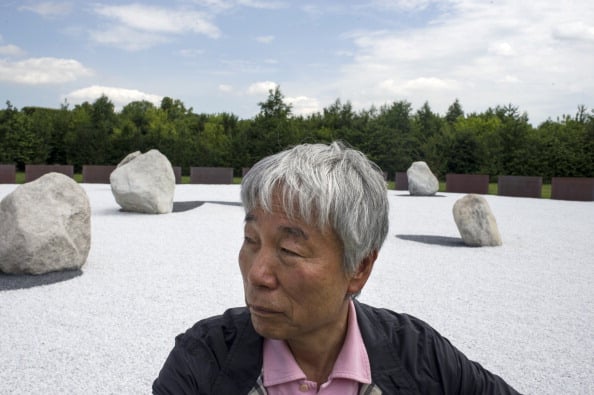
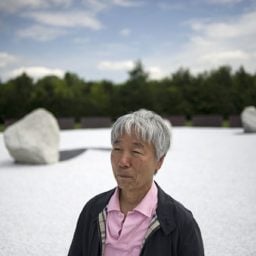
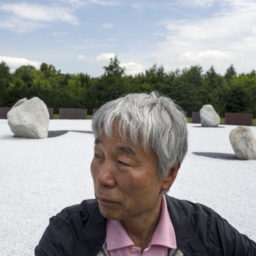
South Korean artist Lee Ufan poses beside one of his installation artworks entitled L'Ombre des Etoiles (Shadow of the Stars), on June 11, 2014, at the Chateau de Versailles, during the exhibition
South Korean artist Lee Ufan poses beside one of his installation artworks entitled L'Ombre des Etoiles (Shadow of the Stars), on June 11, 2014, at the Chateau de Versailles, during the exhibition "Lee Ufan Versailles." Courtesy Fred Dufour/AFP/Getty Images.
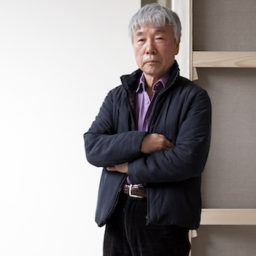
Earlier this year, Seoul police launched a full investigation into 13 suspected forgeries of South Korean art star Lee Ufan‘s paintings. Now, having examined the works for himself, the artist maintains that the alleged fakes are real, despite a confession from South Korean art dealer named Hyeon.
“On June 27, police asked me to acknowledge that the four pieces that Mr. Hyeon admitted to having forged were indeed fakes in an attempt to reach a compromise,” Lee told reporters, according to Korea Joongang Daily. “But I refused.”
Related: Korean Art Dealer Indicted for Forged Lee Ufan Paintings
The National Forensic Service and Seoul Metropolitan Police had previously given forensic testimony suggesting that the paintings are counterfeit. Hyeon, who was indicted in June, reportedly admitted to forging and circulating counterfeits of the artist’s works at the Seoul Central District Court last week.
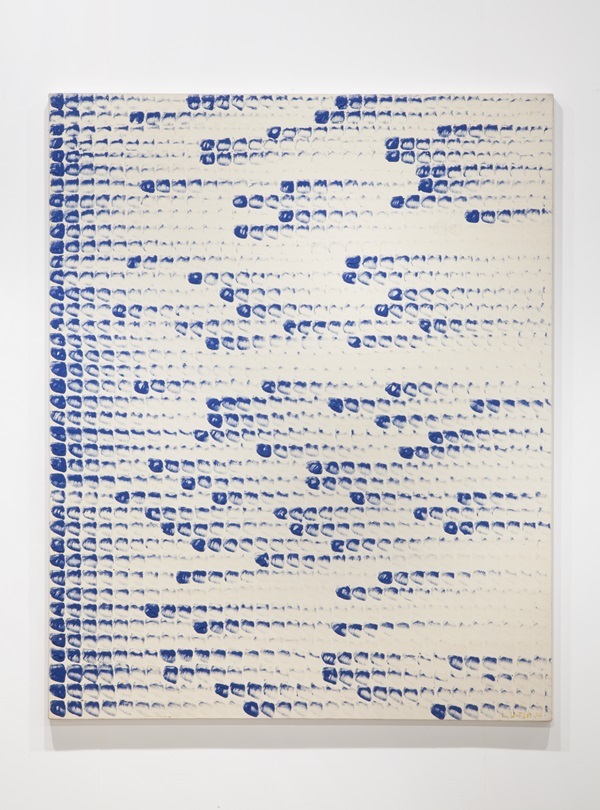
Lee Ufan, From Point (1974). Oil on canvas. Photo: Courtesy Kukje Gallery
Lee Ufan, From Point (1974). Courtesy of Kukje Gallery.
“I concluded that there is not anything strange with a single piece,” Lee said, adding: “The use of breath, rhythm and color were all my techniques.” Lee reportedly brought his magnifying glass and two catalogues of his work for good measure.
The Daily reports that Ufan was asked to come in for two separate examinations. A spokesperson for the police said that they will “respect Lee’s opinion,” but will proceed to investigate the forgeries, as the artist’s confirmations of the works’ authenticity conflicts with official forensics reports conducted by police authorities.
Related: ‘Poorly Forged’ Lee Ufan Paintings park Investigation in South Korea
According to the Korea Times, this was the first time that Ufan saw the suspected forgeries in person. “I was being discreet on the issue because I didn’t see the paintings personally,” Ufan added. “An artist can recognize his own piece at a glance.”
Follow artnet News on Facebook.
Share


Article topics

Gallerists Are Finding Room for Art Where You’d Least Expect It

From a Bank Vault to a Deli, These Young London Gallerists Are Finding Room for Art Where You’d Least Expect It

Installation view of works by Marco Strappato, Jonathan Baldock, and Amy & Oliver Thomas-Irvine at the Averard Hotel, london. Photo courtesy of Slate Projects.
“It only lasted 10 days; we had to run generators off the roof, and it was incredibly cold,” says the young curator Alex Meurice, who works under the moniker Slate Projects. He’s describing the revelatory project, staged in an abandoned villa opposite the Victoria and Albert Museum, through which he uncovered the untapped potential for showing art in West London’s empty mansions. “There were lots of problems, but we had a very positive response.”
Unable to afford even the small, short-term warehouse spaces in the once-affordable East London, it was a galvanizing moment for Meurice when he realized that much larger, grander properties might be available further west, and so he began an active search. He came upon the Averard Hotel, a hulking slab of white stucco a stone’s throw from Hyde Park, by chance, through an advert on the online listings site Gumtree. Unbeknownst to the hotel’s owners, the posting was made by an errant employee who was hoping to make a quick buck on the sly. The property was in a transitional moment, awaiting its demise as luxury apartments go up in its place, and fortunately, the owners eventually saw the gains (read: hard cash) to be had by renting out the space to Meurice. “It’s not something they’d ever thought about,” he notes, “so there was quite a long process of explaining that we weren’t crazy.”
Meurice’s story resonates with the experiences of several other young gallerists navigating London’s art scene at present, who are turning property speculation to their advantage. While the prospect of renting out a sleek, glass-plated gallery in St James’s or Shoreditch is a pipe dream for most, these individuals have found what might be a way to hack the system—transient art programs run out of buildings left vacant or earmarked for redevelopment.
Installation view of works by Nicholas Johnson. Photo courtesy of Slate Projects.
The interior of the Averard Hotel is extraordinary—the definition of faded grandeur. As one wanders from room to voluminous room, many bedecked with elaborate plasterwork ceilings, paint peels, and water drips, footsteps echo across rough floorboards. The hotel’s atmosphere alone has proven to be a draw to big-name artists—Richard Wentworth was featured in a recent exhibition, while the current show, curated with Bianca Baroni, features in-demand artists Becky Beasley and Lawrence Lek. And even though the closure of the space is an imminent reality—its final day will be October 31st of this year—Meurice is sanguine. It’s had its challenges as well as its triumphs. “I couldn’t do another winter in the hotel,” he says, “it’s just too cold—colder inside than outside.” But he’s found the inherent ambiguity of a non-gallery exhibition space to be productive—the combination of contemporary art and crumbling architecture confounds people’s expectations. Now looking for another space, in London or further afield, he wouldn’t consider a purpose-built gallery.
Exhibitions at the Averard Hotel have been a positive presence in the community as well, Meurice notes. Locals were pleased to see an unoccupied building, a now-familiar sight, as West London’s mansions increasingly function to accumulate capital for investors as often as they house families, brought back to life. More than anything though, he sees occupying buildings like this as a way out of the bind of the commercial gallery model. By hiring spaces out for one-off events, he’s able to cover his costs, and to make creative decisions without the looming pressure to sell work.
This model of short-term challenges offset by longer-term gains is also invoked by Cornelia Marland, who runs Geddes Gallery together with Alice Bygraves in Kings Cross. Their program occupies a former Italian deli, once beloved by local residents, who were not quick to embrace the building’s new function. “People loved coming in here,” says Marland, “we had to make it very clear that we didn’t kick [Leo, the deli’s owner] out. He chose to retire!” Keenly aware of the role of art in gentrifying erstwhile down-at-heel areas, Marland points to the family-focused activities the gallery runs to engage the local community. “I think it’s hard to come into an area and say ‘this is now an art space, we’re here now, we’re bringing our people,’” she reflects, and also notes that local businesses have played an invaluable role for the gallery, from fixing leaky roofs to providing drinks for openings. 
Photos courtesy of Geddes Gallery.
A visit to Geddes Gallery—with its former shop fittings redolent of a bygone era largely still intact—suggests that the unique setting is an important factor in the gallery’s success. And like Meurice, Marland curates with the architecture of the building in mind. While the Averard Hotel’s high ceilings and ornate 19th-century fixtures sit well with art that deals with questions of imperialism, luxury, and economics, the outmoded and anachronistic “village shop” feel of Geddes Gallery compliments art that engages with ideas of the domestic. Exhibitions typically also make use of the apartment above the shop, where one finds an ancient sofa and a near-fossilized stove—unremarkable objects that manage to effect a sense of poignancy through their abandonment. For a recent show, artists Robert Rush and Rose de Borman filled the kitchen (even the oven), with ceramic foodstuffs in a play on abundance.
Geddes Gallery differs from Averard Hotel, though, in its operations—artists pay a hire fee to cover the costs of their exhibitions. Works on show generally don’t sell, in part because much of it is made in response to the space itself, yet Marland sees the current model as an experiment that will evolve. Both Marland and Bygraves currently work other jobs, and they acknowledge that a shift to more saleable shows is necessary for the gallery to be sustainable in the long term. Like the Averard Hotel, the building will be returned to the property developers this year and the gallerists will look for a new home for Geddes, ideally nearby.
While hard work and determination are clearly key to setting up an independent art program, chance also has a hand in the proceedings, particularly when it comes to finding a space. Gabriella Sonabend, who now runs The Koppel Project, an art space in a disused bank vault, developed her program after an impromptu meeting with her future mentor. “Although I always dreamed about running my own space and had many conversations about how my ideal space might be, I didn’t intend to start a gallery; I wasn't even looking for a space,” she recalls. Gallery owner and educator Gabriel Gherscovic changed all that when he took over the lease for a building on Baker Street and asked Sonabend to submit a proposal for creative use of the seemingly unusable bank vault in the basement.
Artists Sarah Roberts and Katie Hayward exploring the vault at The Koppel Project. Photo courtesy of The Koppel Project.
Though the space presented significant challenges—“the first time we tried to drill into the walls we realized we’d need a bank heist-style drill bit to penetrate the heavily reinforced vault walls”—Sonabend sees the architecture as a perfect mirror to her curatorial style, which she shares with collaborator Hannah Thorne. The labyrinthine layout proved to be an elegant match for their narrative-led exhibitions. Fittingly, for a project run out of a bank vault, The Koppel Project is built on a sustainable business model, with exhibitions funded by sales as well as partnership with a cafe and a Phaidon bookshop (the only London outlet is hosted by the gallery), both of which occupy the ground floor of the building.
As these models exemplify, an openness to unusual—bordering unusable—spaces can lead to unique exhibition programs that gleefully deviate from the template that many London galleries employ. This kind of creative opportunism means finding space where one can, and results in programs popping up in areas not previously colonized by galleries, diffusing their distribution across the city. Though these exhibitions may match their settings in their idiosyncrasies, budding, fresh galleries offer young artists memorable, inspiring surroundings; shows are most successful when they respond directly to their locations. By occupying spaces caught in the tide of redevelopment, these programs offer vantage points from which to comment on the housing bubble, a phenomenon that impacts the art world, dictating where artists live, have studios, and show their work. The uptake of these unlikely spaces, whether by choice or necessity, can pay dividends both to an art-going public tired of generic exhibitions and to gallerists eager to find curatorial freedom and challenge new contexts. Sonabend may capture the spirit of these programs best: “I would rather work with a bank vault than a white cube any day.”

—Laura Purseglove

“Maybe your lens is scratched?” is on view at the Averard Hotel, Jun. 24–Jul. 24, 2016.

Share article

Paul Outerbridge


Paul Outerbridge, a friend of Man Ray's and Duchamp's, brought a witty eye and careful composition to early color photography.