Thursday, April 14, 2016

News | Science confirms money can buy you happiness

Nature, nudity and liberation

Nature, nudity and liberation by Morgan Lugo

Published on 13 April 2016

Which Style of Yoga is Right for You?

Home / Training / Workouts For Women / Yoga

Which Style of Yoga is Right for You?

Not into yoga? It’s possible you just haven’t found the right class.

Jenessa Connor | September 18, 2015
     

You tried yoga and didn’t like it. That’s fair. Not every form of exercise or wellness practice is right for everyone.
However, there are a lot of reasons weight lifters should work some yoga in their routines. Yoga stretches the hip flexors, hamstrings and the shoulder girdle. It also helps develop core strength and stability and activates the glutes—all important considerations for the regular lifter.
Yoga comes in many forms. There are dozens of types of classes, all of which incorporate different poses and move at varying paces. It is entirely possible that your next yoga class, should you choose to take it, will look nothing like the previous one.
Before you sell your gently used sticky mat on eBay, why not give yoga another shot? September is, after all, National Yoga Month. Tons of studios across the country are offering free community classes and new member specials, so now is the perfect time to experiment and find the yoga style that’s right for you.
To give you a starting point, we put together this simple guide. It contains just a few of the most common yoga styles, all of which we’ve matched to different workout preferences.

If you’re easily bored and like to keep moving, try Vinyasa.

Vinyasa, which is also sometimes referred to as “Vinyasa Flow,” is one of the most popular forms of yoga. If your gym has a yoga class, it’s most likely a Vinyasa class. Vinyasa can vary quite a bit even within its own category, but most classes incorporate flowing sequences of poses that are connected to specific breath patterns. You will likely break a sweat and increase your heart rate in a Vinyasa class, which makes it a good option for people who have found less physical forms of yoga a little boring.

If you like to push yourself physically and are looking for your next challenge, try Bikram.

This form of yoga definitely belongs in the “not for everyone” category. But the yogis who love it really love it and report benefits ranging from weight loss to clearer skin. The 90-minute class is held in a heated room – usually around 105 degrees – and consists of 26 poses or “postures.” Many of the postures are challenging, and instructors will encourage students to push their levels of flexibility, strength and balance. Oh, and you will sweat. A lot.
One thing to note: every class is exactly the same no matter where you go. Bikram Choudhury, the school’s founder, has prescribed a very specific sequence that all instructors are required to follow with no variation. So if you’re looking for a class that mixes things up, Bikram may not be for you.

If you want to improve your focus, posture and alignment, try Iyengar.

Pretty much any form of yoga can help reverse the “keyboard slouch” that so many of us have succumbed to, but Iyengar yoga puts added emphasis on overall body alignment in all of its poses. So if your shoulders roll forward, you have a sway back or you’re guilty of letting your knees extend over your toes when squatting, Iyengar may help you get back on track from a physical perspective. Also, focusing on holding poses for extended periods of time can be a great exercise for mindfulness. You may find that an hour of fine-tuning your body’s alignment is just what you needed to quiet a racing brain.

If you’re mostly interested in relaxing and gentle stretching, try Restorative.

Restorative yoga is a great option for pretty much anyone, but it’s important to come to class with the right expectations. You won’t be powering through sun salutations or practicing challenging arm balances. As its name suggests, Restorative yoga is all about relaxation and recuperation. It’s like a mini-holiday for your body. It’s also perfect for the rest days that fall in between your scheduled workouts.
Restorative classes typically contain fewer poses than a Vinyasa class, for example, and you may spend more time in reclining positions like reclining bound angle pose and savasana. Your instructor may ask you to use yoga props like blocks, blankets and straps. These items will support your body and help you receive the maximum benefit from each pose.
What style of yoga best matches your personality?

You May Also Like

Tuesday, April 12, 2016

International Center of Photography Announces Opening Date


International Center of Photography Announces Opening Date

                                                
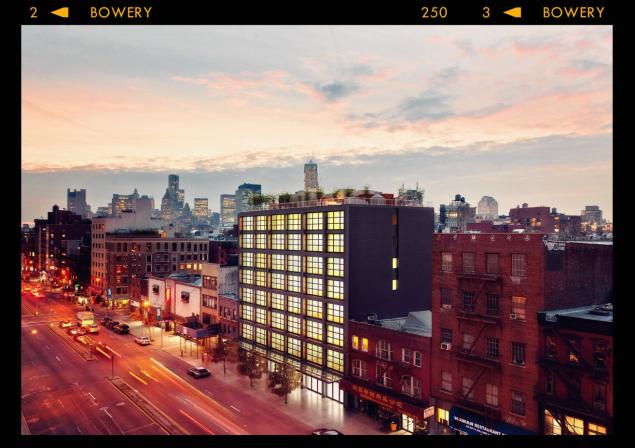
250 Bowery, the home of the new International Center of Photography. Photo: Doug Elliman Real Estate.
250 Bowery, the home of the new International Center of Photography.
Photo: Doug Elliman Real Estate.
Mark your calendars: New York's International Center of Photography (ICP) will reopen on Thursday, June 23.
The museum's executive director, Mark Lubell, stole the show at the ICP Infinity Awards on April 11; on stage, he paused for dramatic effect before revealing the date and telling hundreds of attendees "I'm inviting all of you" to the official unveiling.
"Images are so fundamental to all of our communication," Lubell told artnet News. "I think of ICP as a place the public can discuss the issues of the day."
The International Center of Photography's former building. Photo: Jim Henderson via Wikimedia Commons
The International Center of Photography's former building.
Photo: Jim Henderson via Wikimedia Commons
The inaugural exhibition in the new facility at 250 Bowery will be organized by curator in residence Charlotte Cotton, who previously held positions at the Victoria and Albert Museum in London, and the Wallis Annenberg Department of Photography at LACMA.
One theme during the awards dinner was the changing nature of photography in a world where the front page of the newspaper is no longer dictating what pictures dominate the public discourse. Lubell hopes future exhibitions can draw on the long history of photography to help viewers understand the medium as it exists today and the role it will play as we move forward.
The museum, which was formerly located at 1155 Avenue of the Americas, a building owned by the Durst Organization, has been closed since January 2015. The space went out with a bang with "Genesis," an exhibition of Sebastião Salgado's stunning environmental photographs, and has been holding itinerant exhibitions while awaiting the completion of the new facility.
Rendering for Essex Crossing, a development on six acres of vacant land on New York's Lower East Side that will house the second branch of the Andy Warhol Museum. Photo: Delancey Street Associates / SHoP Architects.
Rendering for Essex Crossing, a development on six acres of vacant land on New York's Lower East Side. Photo: Delancey Street Associates/SHoP Architects.
(In a strange coincidence, the Infinity Awards took place the same day that piano-manufacturers Steinway & Sons opened its new flagship in the museum's old digs.)
If it seemed like a long wait for a new ICP, it's been an even more delayed journey for the 250 Bowery building. Before the recession, the lot was going to be a luxury hotel with condos, but by 2009 the project was mired in a foreclosure lawsuit. In addition to the ICP, the building now has condos on the upper floors, with the New York Daily News reporting in 2014 that Scarlett Johansson and Paul Simon were among prospective tenants.
As photography lovers look forward to a new ICP, it's worth noting that the institution's days at the Bowery space may already be numbered. In January, during a public meeting about the development of Essex Crossing on the Lower East Side, a construction representative let slip that ICP was one of three planned tenants for the SHoP Architects-designed complex.
A screenshot of the ICP website.
On the ICP website, the page for future programming shows a photo of a construction site and refers vaguely to "opening exhibitions" with the dates June 15, 2016–April 1, 2020.
Whatever the future holds for ICP, for now, the focus is firmly on their current space. "I think it's the right place, the right time, and I cannot wait to open," said Lubell. "It's going to be an incredible chapter in ICP's history."
Follow artnet News on Facebook.

Monday, April 11, 2016

Art Is Stolen By “People in the Business”

Global Coverage ~ Unique Analysis

zero

1. RECOUNT
Report: Trump Gave $0 to Charity
A list of Donald Trump’s donations over the past five years, compiled in a list by his campaign, did not include a single contribution of his own money, a Washington Post analysis reported. Trump has claimed he’s given more than $102 million to charity in the last five years. But the Post found of the 4,844 donations listed in the campaign’s report, most of the contributions consisted of free rounds of golf at his courses for charity auctions and raffles. The newspaper also reported the largest donations on the list were land-conservation agreements to waive development rights on some of his properties. While many of the Republican presidential frontrunner’s gifts came from the Donald J. Trump Foundation, that organizaiton did not receive a personal check from Trump between 2008 and 2014.

YES!!! Award Cancelled Over Bitter Legal Dispute...


Milagre... até admira!! Os artistas têm que perceber que os intervenientes mais importantes no mundo da arte, a seguir a eles, são os compradores/colecionadores/financiadores de museus.

E de facto tinha ficado chocado com a atribuição do prémio a este gajo que está numa disputa jurídica importante e em curso...

.........................................

Art World

Award Cancelled Over Bitter Legal Dispute Between Artist Danh Vō and Collector Bert Kreuk


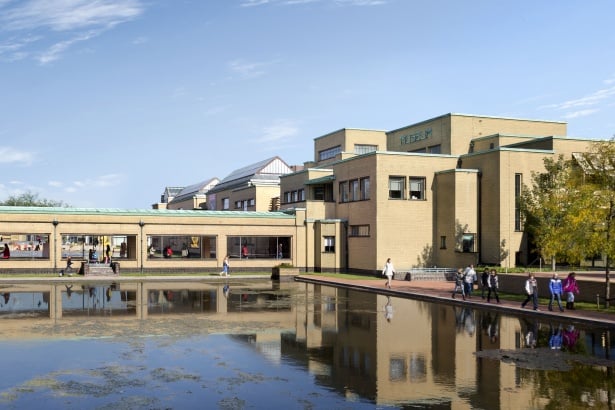
Gemeentemuseum, the Hague. Photo: courtesy Gemeentemuseum.
Gemeentemuseum, the Hague.
Photo: courtesy Gemeentemuseum.
The fallout from the ugly legal battle between Danh Vō and collector Bert Kreuk continues, with the suspension of Europe's prestigious Vincent van Gogh Biennial Award for Contemporary Art in Europe.
Honoring mid-career artists living or working in Europe, the award, better-known as the Vincent Award, was to be hosted by the Gemeentemuseum Den Haag in the Hague, which was recently caught up in the bitter dispute between Kreuk and Vō over a work the artist was asked to create for an exhibition at the museum. In January, 2016 nominees Nairy Baghramian, Jutta Koether, and David Maljkovic all withdrew their names from consideration, with Baghramian citing the institution's role in the Kreuk case.
"The jury believes the recent discussion has overshadowed the intention of the award and could eventually compromise the nominated artists," reads a statement on the Vincent Award website. "After close consultations with the Broere Foundation, the jury has decided to cancel the Vincent Award 2016." The organizers are quick to point out that the Gemeentemuseum "was never party to the dispute." Nevertheless, the institution's chairman and director, Benno Tempel, who is a member of the Vincent Award jury, was called on to testify in the case, which settled in December.
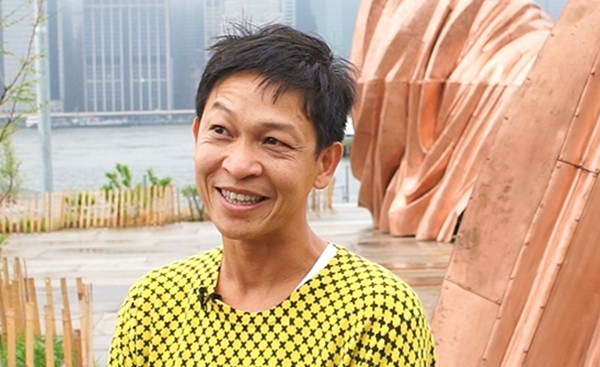
Danh Vo interview.
Danh Vo.
Photo: artnet News.
"Even though I'm aware that the Vincent Award is independent from the Gemeentemuseum, where the exhibition of all nominees will take place this time," Baghramian told artnet News after rejecting his nomination, "I have to question the involvement of the museum in the legal case between the artist Danh Vō and the collector Kreuk."
The case, which hinged on whether Vō had to make good on his promise to deliver Kreuk a large-scale site-specific installation, was characterized by animosity. When a judge initially ruled in Kreuk's favor, Vō agreed to fulfill the terms of their arrangement with a wall-work titled "SHOVE IT UP YOUR ASS, YOU FAGGOT." This obviously offended Kreuk.
Bert Kreuk Photo: Courtesy Gemeentemuseum Den Haag, via Art Daily
Bert Kreuk.
Photo: Courtesy Gemeentemuseum Den Haag.
Established in 2000, the Vincent Award comes with a prize of €50,000 (about $57,000). Anri Sala won in 2014.
The now-cancelled edition of the award was to have been presented in November by jury members Sabine Folie, a Vienna-based independent curator; Hamburger Kunsthalle, director Hubertus Gassner, Julia Peyton-Jones, outgoing co-director of the London's Serpentine Galleries; Jaroslaw Suchan, the director of the Muzeum Sztuki, Lodz, Poland; and Tempel. The next edition will be held in 2018.
Follow artnet News on Facebook.