Wednesday, December 23, 2015

we’re getting too old to be precocious

Growing Pains

May 28, 2015 | by

Huslig_Uoverensstemmelse
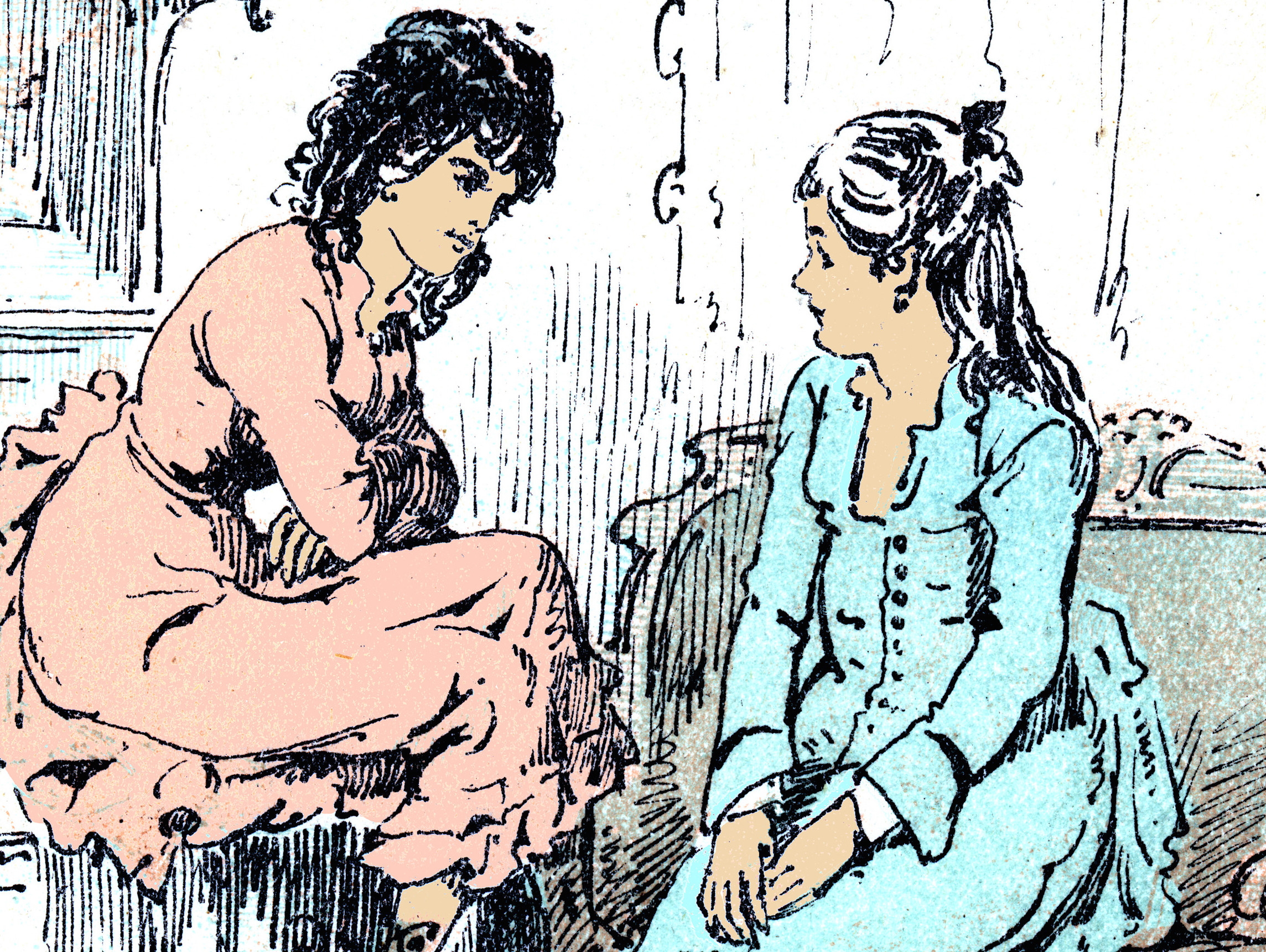
From Punch, 1877.

“Do you realize,” my friend Susannah said to me, “that we’re getting too old to be precocious?” This was at the start of the sixth grade. Susannah was, in fact, very precocious: politically minded, she had styled herself as an outspoken feminist, organizing an abortive boycott of a substitute gym teacher’s sexist softball practices. “I know,” she said sympathetically when she saw my face. “That’s how I felt, too—I almost cried. It’s a tragedy.”
This was dramatic, but Susannah wasn’t wrong. In some ways, the sands of time were running out, and our glory days were behind us. Soon, behaviors we’d once been rewarded for would be recognized as obnoxious, or precious, or odd. We’d have to hide them rather than flaunt them. What had been advanced was now arrested. Students at this point were honored for work and accomplishment rather than for quirks of early development.

a girl in my class began to claim she was ambidextrous

Previous Post   |   Blog Home   |  

New Words

April 8, 2015 | by
1000px-Ambidextrie.svg
Sometime in the third grade, a girl in my class began to claim she was ambidextrous. Previously, this girl had said she wanted to be a marine biologist. She also claimed to have athlete’s foot. This girl was a pretentious liar.
In fairness, marine-biology ambitions were all the rage that year. We were just moving beyond the easy descriptor stage; it was no longer enough to want an occupation you could identify from a Richard Scarry book, such as baker, doctor, or fireman. Now people wanted to be not just teachers but middle-school teachers, not just football stars but running backs—ideally, our choices conveyed an element of mystery and worldliness to the other kids. Still, generally speaking, our ideas for future careers were about as complicated as those you see in contemporary romance novels, where the heroines have easily explained jobs that seldom seem to interfere with the business of being a glamorous grown-up. Marine biology, with its vague hints of tropical waters and dolphins, seemed like a perfect career path for both the frivolous animal-lover and the committed scientist. None of us was sure what it entailed. 

What the philosopher learned from his time in elementary-school classrooms


Wittgenstein, Schoolteacher

March 5, 2015 | by
What the philosopher learned from his time in elementary-school classrooms.

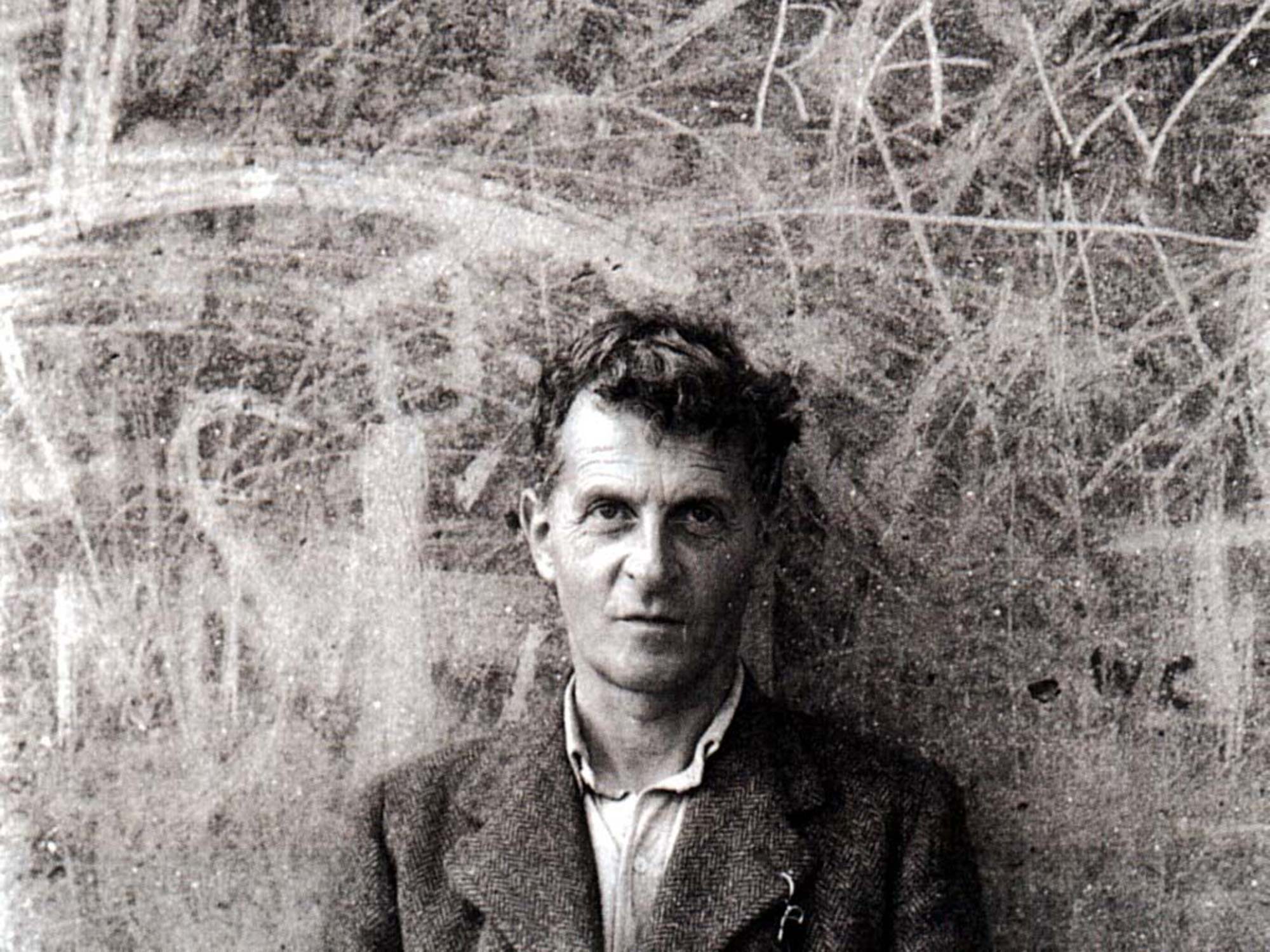
Ludwig Wittgenstein, who knew how to sully a chalkboard with the best of them.

Every philosophy major has at some point had to answer the standard challenge: “What are you going to do, teach?” It’s especially frustrating after you realize that, for someone with a humanist bent and a disinterest in worldlier things, teaching is a pretty good career choice. Unemployables in the humanities might take comfort from the fact that one of the twentieth century’s greatest philosophers, Ludwig Wittgenstein, made the same choice. He revolutionized philosophy twice, fought with shocking bravery in World War I, inspired a host of memoirs by people who knew him only glancingly—and for six years taught elementary school in the mountains of rural Austria. Biographers have tended to find this bizarre. Chapters covering the period after his teaching years, when Wittgenstein returned to philosophy, are usually called something like “Out of the Wilderness.” (That one’s from Ray Monk’s excellent Ludwig Wittgenstein: The Duty of Genius. The next chapter is called “The Second Coming.”)
By the time he decided to teach, Wittgenstein was well on his way to being considered the greatest philosopher alive. First at Cambridge, then as an engineer and soldier, Wittgenstein had finished his Tractatus Logico-Philosophicus, at once an austere work of analytic philosophy and—for some readers, Wittgenstein apparently included—an almost mystical experience. In it, he claimed charmingly and not without reason to have solved all the problems of philosophy. This was because of the book’s famous “picture theory of meaning,” which held that language is meaningful because, and only because, of its ability to depict possible arrangements of objects in the world. Any meaningful statement can be analyzed as such a depiction. This leads to the book’s most famous conclusion: that if a statement does not depict a possible arrangement of objects, it doesn’t mean anything at all. Ethics, religion, the nature of the world beyond objects … most statements of traditional philosophy, Wittgenstein contended, are therefore nonsense. And so, having destroyed a thousand-year tradition, Wittgenstein did the reasonable thing—he dropped the mic and found a real job teaching kids to spell.

Influential Art World Cities


The 15 Most Influential Art World Cities of 2015

There are many ways to take stock of influence in the art world—critical reception, popularity, and market prowess are among them. As the art world continues to expand, that becomes all the more difficult. We’re in a moment of regionalization—with art scenes thriving in São Paulo, Singapore, and Istanbul—as much as we are in one of consolidation around the global financial capitals of New York and London, with a core contingent of the art world making a yearly migration, crisscrossing the globe to visit them all. (Click through the map below to watch.) Here, we’ve crunched Planet Art’s data on contemporary art’s most mentioned cities in the media in 2015, pulled figures on fairs, museums, and galleries, and racked our editors’ brains to rank the art world capitals of 2015.

01 New York City

1,000+ Galleries in 2015

75+ Art Museums and Institutions

30+ Art Fairs in 2015

It’s hard to find an art-related stat in which New York City fails to come out on top. The city is home to more galleries and more major art institutions than any other. And its marketplace is bigger than others by a large measure. Two-thirds of auction sales over $1 million take place in the city, and all 10 of the most expensive works purchased at auction in 2015 were sold from the New York sale rooms of Christie’s and Sotheby’s (all but two from the former). For the Armory Show and Independent art fairs in March, and Frieze New York in May, the city welcomes swarms of international galleries and collectors to its grid. But while impressive, that all says little about the wealth of artists that continue to call New York their home, with studios and artist-run spaces dotting the outer boroughs—and Manhattan too.

02 London

500+ Galleries in 2015

60+ Art Museums and Institutions

10+ Art Fairs in 2015


Your Guide to London’s Bustling Art Scene
Read full article
Over the past decade, the London contemporary art scene has taken a spiking, upward turn. Thanks in no small part to the city’s ability to attract the global elite, international galleries including David Zwirner, Pace, Gagosian, and Marian Goodman have all opened shop within London’s limits as the stock of the city’s native dealers—Lisson, Sadie Coles HQ, and White Cube among them—soars. Then, of course, there’s Frieze London. The 13-year-old fair brings the art world to the British capital in droves each October, and since 2012, Frieze Masters has added historical weight to the week. From Whitechapel Gallery, to the Royal Academy of Arts, to the Tate, the city’s museums at least rival those of New York. Tate Modern’s Turbine Hall and the installations within it have done much of the heavy lifting for all invested in the promotion of culture by bringing vast new swaths of the public into a contemporary art institution.

03 Miami + Miami Beach

75+ Galleries in 2015

10+ Number of Art Museums and Institutions

20+ Art Fairs in 2015


Your All-Encompassing Guide to Miami’s Art Scene
Read full article
Though Miami’s wealth of private collections—from Don and Mera Rubell to Ella Fontanals-Cisneros—and increasingly acclaimed institutions like the Pérez Art Museum Miami (PAMM) are elevating the city’s cultural stock, it’s in December that an avalanche of attention hits South Beach thanks to Art Basel in Miami Beach. The city serves as the art market’s gateway to Latin and South America, and numerous satellite fairs and fêtes have joined the 14-year-old main event to mark a tropical send-off to the art-world calendar.

04 Venice

40+ Galleries in 2015

10+ Art Museums and Institutions

0 Art Fairs in 2015


A Short History of the World’s Most Important Art Exhibition
Read full article
The art world touched down in Venice once again this May for the 56th Biennale, with its central exhibition, “All the World’s Futures,” headed up by Haus der Kunst director Okwui Enwezor. For the past 120 years, the biennale has been a touchstone for artistic progress, from Filippo Tommaso Marinetti dropping his Futurist Manifesto from the clocktower in 1909 to Marina Abramović’s 1997 “Balkan Baroque.” This year was no different, with Christoph Büchel’s conversion of the city’s Santa Maria della Misericordia church into a mosque both touching a nerve and driving social practice forward, while Simon Denny’s NSA-centric New Zealand pavilion plumbed the politics of data.

05 Paris

500+ Galleries in 2015

60+ Art Museums and Institutions

5+ Art Fairs in 2015


Your Guide to Paris’s Traditionally Avant-Garde Art Scene
Read full article
Europe’s longtime home of culture, Paris welcomes the art world each October for the Grande Dame of art fairs, FIAC—and, this year, the impressive young upstart Paris Internationale. Meanwhile, its host of influential gallerists, from Thaddaeus Ropac to Emmanuel Perrotin, and institutions like the Centre Pompidou and the Palais de Tokyo bolster the critical conversation year-round. Exhibition highlights in 2015 ranged from Mona Hatoum’s retrospective at the former to Ugo Rondinone’s homage to John Giorno at the latter.

06 Berlin

400+ Galleries in 2015

35+ Art Museums and Institutions

3+ Art Fairs in 2015

Known first as a home to artists and artistic production, Berlin is in many respects the conceptual soul of contemporary art. Its galleries—which range from Esther Schipper, neugerriemschneider, Galerie Neu, and KÖNIG GALERIE to younger programs influencing art’s cutting edge like Tanya Leighton, Supportico Lopez, and PSM—take that remit seriously. And while April’s Gallery Weekend and September’s Berlin Art Week may attract the biggest amount of attention to the city each year, Berlin remains a key locale across the calendar for anyone in the art world keen to know what’s next.

07 Los Angeles

200+ Galleries in 2015

20+ Art Museums and Institutions

3+ Art Fairs in 2015

Though the Southland is home to art fairs Art Los Angeles Contemporary (ALAC), Paris Photo LA, and Paramount Ranch, it’s the city’s recent mass-influx of artists that has perhaps drawn the most fervent art-world attention. Two thousand fifteen was an especially good year among the past few for the city’s upward trajectory. Galleries like New York’s Maccarone, London and Berlin’s Sprüth Magers, and Hauser & Wirth all announced or opened new L.A. outposts. Meanwhile, in September, the city’s biggest artistic benefactors, Eli and Edythe Broad, opened The Broad, a $140 million new home for their collection, to critical acclaim.

08 Basel + Zürich

75+ Galleries in 2015

15+ Art Museums and Institutions

10+ Art Fairs in 2015

Though Basel and Zürich both have vibrant art scenes in their own right, the mere hour-long commute between the pair (less than half of what it often takes to cross L.A.) means that an art-focused trip to one almost always includes the other. Such is the case each June when the art world stops off in Zürich for its annual gallery weekend ahead of the art market megalith that is Art Basel in Basel. The latter’s location on the borders Switzerland, France, and Germany (and its resulting status as a freeport) place it in the midst of Europe’s deepest pockets. Meanwhile, the cities’ highly influential Kunsthalle Basel and Kunsthalle Zürich set the tone for contemporary art’s future.

09 Hong Kong

50+ Galleries in 2015

5+ Art Museums and Institutions

4+ Art Fairs in 2015

Art Basel christened Hong Kong a major art-world capital in 2013 when they purchased ART HK, which moved to March under its new moniker this year. The city, which serves as Asia’s economic hub, has for some time been in the crosshairs of the major auction houses, with Christie’s opening a gallery in 2010 and Sotheby’s in 2012. An increasing number of major galleries like Gagosian, Simon Lee, and Lehmann Maupin have set up outposts in the city. Museums like the forthcoming M+ are being developed at a rapid pace. And new fairs are opening like Art Central, which became Art Basel in Hong Kong’s first satellite in 2015. All that momentum makes Hong Kong one of art’s buzziest centers, with all eyes on where the city will go next.

10 São Paulo

40+ Galleries in 2015

10+ Art Museums and Institutions

2+ Art Fairs in 2015

Though 2015 did not include an edition of the ever-influential São Paulo Biennial—Jochen Volz’s “Incerteza viva” (“Live Uncertainty”), the biennial’s 32nd edition, will take place next fall—Brazil’s financial center remains South America’s first city for art. That’s thanks to April’s SP-Arte and a host of influential galleries such as Mendes Wood DM, Galeria Nara Roesler, Galeria Jaqueline Martins, and Galeria Fortes Vilaça. The rapid economic growth that characterized Brazil’s last decade or so has taken something of a nose-dive in the past year, putting the brakes on Brazilian collecting habits. Still, those dealers and the country’s artists continue to hold a strong position on the international art radar.

11 Singapore

40+ Galleries in 2015

5+ Museums and Institutions

3+ Art Fairs in 2015

It’s hardly surprising that a city with such economic might as Singapore would attract a hefty art scene. Major investments have been made in the country’s cultural infrastructure in recent years, including the 2012 opening of Gillman Barracks, which brought in international galleries such as ARNDT, Pearl Lam, Sundaram Tagore, and ShanghART. The city hosts Southeast Asia’s biggest fair, Art Stage Singapore. And, in November 2015, the National Gallery Singapore opened its doors. The city-state’s first major art museum merged the former City Hall and Supreme Court buildings and welcomed over 170,000 visitors in its first two weeks.

12 Istanbul

30+ Galleries in 2015

10+ Art Museums and Institutions

3+ Art Fairs in 2015


Tour Istanbul’s Age-Old, Art-Rich Landscape
Read full article
dOCUMENTA (13)’s beloved artistic director Carolyn Christov-Bakargiev curated the 14th Istanbul Biennial this year, drawing all eyes to the Bosphorus’s shores this fall. While the Syrian conflict, ISIS’s rise, and the ensuing refugee crisis is said to have kept some away from the biennial and Istanbul’s two major market events (ARTINTERNATIONAL and Contemporary Istanbul), the city’s unique position between East and West continues to make it a rich context for art to unfold within.

13 Beijing

75+ Galleries in 2015

10+ Museums and Institutions

2+ Art Fairs in 2015

Shanghai may host mainland China’s biggest market events—West Bund Art & Design, ART021, and Photo Shanghai—but Beijing remains the first city for artists in the world’s second-most-powerful economy. The scene is centered in the 798 Arts District where major institutions like the Ullens Center for Contemporary Art (UCCA) abut dealers like Galerie Urs Meile, Galleria Continua, Long March Space, and de Sarthe Gallery. And the capital appears poised for an even greater renaissance, with Chinese artists and art professionals flocking back home to ride the tide.

14 Brussels

75+ Galleries in 2015

15+ Art Museums and Institutions

5+ Art Fairs in 2015

Known for its significant collector base—likely the world’s highest concentration in any one metropole—and their penchant for emerging art, Brussels boasts an enviable bunch of galleries from established outfits like Xavier Hufkens, Meessen de Clercq, and Almine Rech to cutting-edge youngsters like Super Dakota, C L E A R I N G, and LEVY.DELVAL. Each April Art Brussels welcomes those outfits and a host of others from around the world to Belgium. And while buzz was high this year, with news that the fair is moving to a new location in 2016, the former industrial site Tour & Taxis, and that New York’s beloved Independent art fair is launching a Brussels edition around the same time, the city is definitely one to keep an eye on in the future.

15 Detroit

20+ Galleries in 2015

2+ Art Museums and Institutions

0 Art Fairs in 2015

Detroit has been lauded as America’s Berlin for the past several years. And despite the fact that L.A. likely has great claim to that title, the Motor City continues to attract alternative spaces looking to jump the coasts’ hustle (and steep rents). Most notably, Galapagos Art Space set down in Motown this year after ditching their Brooklyn digs. (In 2016, they’ll launch Detroit’s first-ever biennial.) Detroit also serves as a stand-in on this list for the many emerging art capitals worldwide, from Mexico City to Mumbai, Bogotá to Beirut, and beyond that are in the midst of explosions of artistic activity and may well break into this list in 2016.


https://www.artsy.net/article/artsy-editorial-contemporary-art-s-most-influential-cities


dasss

O Natal português também é celebrado pelo mundo

Mundo Português


O Natal português também é celebrado pelo mundo

21/12/15 ATUALIDADE Imagem

Entre a saudade e a nostalgia, o Natal dos emigrantes portugueses torna mais vivas, as lembranças da terra natal...


:::::||CONTINUAR A LER|---»-»


http://www.mundoportugues.org/article/view/63193


http://www.mundoportugues.org/article/view/63210


Monday, December 21, 2015

Japanese Photography: The Birth of a Market


http://www.blouinartinfo.com/photo-galleries/the-assessment-japanese-photography


Japanese Photography: The Birth of a Market

Eikoh Hosoe and Yukio Mishima's "Killed by Roses," 1963.
(Courtesy Bauman Rare Books)
“When we first had the Daido Moriyama exhibition in 2004, nobody was interested,” recalls Cologne gallerist Priska Pasquer of the photographer whose most prized bodies of work from the 1960s and ’70s document the seedy streets of the Shinjuku district in Tokyo. “This changed completely in the past decade.”
Moriyama is but one of several postwar Japanese photographers to be rediscovered by Western markets over the last 10 years. Among the others whom Pasquer herself promoted at Paris Photo in the 2000s are Eikoh Hosoe, whose first book, Killed by Roses, 1963, featured Yukio Mishima as model and muse in psychologically fraught erotic imagery; and Shomei Tomatsu, who collaborated with Ken Domon on the photo book Hiroshima–Nagasaki Document 1961, which explored the lingering effects of the atomic bombs. These three, together with Masahisa Fukase, Yutaka Takanashi, Takuma Nakahira, and Kikuji Kawada, rank among the top tier of photographers gaining recognition in Europe and America under the banner of the Provoke movement, named for a short-lived avant-garde magazine many were affiliated with. (Another key Provoke artist, Nobuyoshi Araki, was already familiar in the West, though principally for his later, sexually explicit works.) In the aftermath of World War II, these artists cast aside the dispassionate observations of the documentary tradition and embraced deeply subjective styles, producing images that are jittery and stark, and often expose erotic machinations.

Western collectors’ newfound curiosity about the Provoke artists follows a concerted campaign by a handful of players that demonstrates both how changing tastes alter markets, and how markets can change tastes.
That campaign’s success so far rests on a confluence of trends. By the turn of the century, dealers and auction houses had successfully established a canon of Western photographers, flushed out most troves of their vintage work, and driven prices for it beyond the reach of new collectors. Dealers set out to find new sources of affordable material, and several Europeans looked to Asia. At the same time, the once marginalized field of photography was becoming more entwined with contemporary art, and young collectors who came to the medium through the work of later American artists like Larry Clark and Nan Goldin were primed for the earlier Japanese photographers’ gritty aesthetic, which soon earned the label are, bure, boke (“rough, blurred, out-of-focus”). Dealers were not alone in rediscovering this work. A number of museum curators, eager to explore new material and attracted to these pieces’ affordability, mounted exhibitions that in turn amplified dealers’ efforts to attract and educate collectors.
While both vintage and new prints now claim prices undreamed of by the photographers 15 years ago, they remain relatively affordable. “We are seeing a unique window in which you can buy masterworks for under $10,000 to $20,000,” says London photo dealer Michael Hoppen, whose gallery deals with many of the photographers or their estates, including Fukase, Kawada, and Miyako Ishiuchi. “If you were to look at masterworks by American or European photographers—even late prints by OK photographers—they are going for much more than that.”
Art markets regularly stage rediscoveries of both individual artists and supposedly undervalued movements—witness the recent rise of Gutai. The Provoke story appears to be a success: Endangered works have been brought to light and preserved, institutional validation of their art historical worth has been established, and prices have increased at a measured pace. But before the full impact of the market-driven resurgence is understood, questions remain, ranging from issues of recontextualization to the balance of supply and demand.
The market growth in the West has not been matched in Japan. This may be chalked up to the relatively small size of the country’s photo collector base. Likely, however, the lack of a surge in Japan stems also from collectors there being more attuned to the photographers’ original intentions, which revolved almost exclusively around the creation of photo books.
“Contemporary Japanese photographers have values that seem distinct from those of the photographers of the West,” wrote Shoji Yamagishi, the highly influential editor of Camera Mainichi, in 1974. “They are, for example, not particularly interested in the quality of the finished print.” That attitude reflected the fact that these artists’ primary vehicle, from the late 1950s through the late ’70s, was photo books, sometimes excerpted in magazines like Camera Mainichi and Provoke. The book format encouraged work produced in series, and not infrequently hinting at sequential narratives, while diminishing concern for the individual print. “At the time Moriyama started to work, the edition system didn’t exist,” says Christophe Guye, who began working with the artist seven years ago and also shows younger photographers, such as Kosuke and Kazuna Taguchi, who have been influenced by the Provoke artists. “Moriyama’s photographs were used as printing proofs.”
Yuka Yamaji, senior photo specialist at Phillips London, notes how foreign the single, framed photo was in Japan, and not just among Provoke artists. “The notion of an ‘original print’ was virtually unknown,” she says. “For this reason, original prints from the 1960s and ’70s are very rare and highly sought after. It was only in the 1990s, with the advent of institutional photography collections and regular programs of photography exhibitions, that the Japanese public began to understand photography as prints.”
That institutional support came slowly. Zeit-Foto Salon, the first gallery to specialize in photography in Japan, opened in Tokyo in 1978. But it wasn’t until 1988 that the Kawasaki City Museum in Kanagawa Prefecture became Japan’s first public art museum with a department of photography. It is only since the 1990s that gallerists like Taka Ishii, Sayaka Takahashi, and Tomoka Aya began tracking down the Provoke artists and reorienting them to the contemporary markets, laying the groundwork for the Western dealers who would come in the 2000s seeking material.
Japan’s postwar innovators piqued the interest of American and European curators decades before the dealers took notice. In 1974, Domon and Kawada were among those recognized in the first survey outside the country, “New Japanese Photography,” curated by Yamagishi and John Szarkowski for the Museum of Modern Art in New York. More surveys followed in this first wave, at the Graz Municipal Art Museum in Austria in 1976 and ’77, at Bologna’s Museum of Modern Art in 1978, and at the International Center of Photography in New York in 1979.
By the late ’70s, a younger generation of Japanese photographers who were more attuned to international practices, such as Hiroshi Sugimoto, were emerging. Western curatorial interest waned, though a few prescient institutions like the San Francisco Museum of Modern Art (SFMOMA) continued to collect work by the earlier artists.
Two decades later, when the recent wave of European dealers first made the trek to Japan, they found what they had been looking for. Hoppen reports encountering a 20th-century trove that appeared “unstripped,” with a demonstrated craftsmanship superior to what he had seen in any other country. “If you could equate it to Europe, it was a bit like going to Paris and being shown 20 Man Rays when you were hoping you might get to see 1,” Hoppen recalls of his first trip, in 2000.
In 2001, New York rare-book dealer Andrew Roth published The Book of 101 Books, an international compilation of important postwar examples of the form that included Moriyama’s third book, Bye, Bye Photography, Dear, 1972. Since then, the Western audience has been receptive to Provoke artworks in their original form, with many important titles experiencing a renaissance as reprints. Scholarship by Martin Parr and Anne Tucker has provided further impetus to consider the work in its original, unframed context.
But a modern art market cannot be built around goods selling for less than $100—the typical price for later reprints of Bye, Bye Photography, Dear. So dealers in the 2000s went looking for more valuable material: publishing proofs, rare vintage prints, and first editions (Bye, Bye Photography, Dear originals have sold for more than $5,000). Through the middle of the decade, they promoted this work to a small but growing audience, garnering assistance with name recognition from the reprint publishers.
Commercial viability was confirmed, and prices for nearly all artists got a solid bump in 2008 and 2009 when photography specialist Yamaji engineered annual Japanese photography sales for Christie’s, her employer at the time. “Distinctly Japanese,” held in London on May 15, 2008, set records for Moriyama’s Smash-up, 1969 (£31,700; $62,000); Yasuhiro Ishimoto’s Machi, 1960/1968 (£6,000; $12,000); Kawada’s Woman of Sankt Pauli, 1969 (£18,500; $36,000) and his seminal photo book Map, 1965 (£16,100; $31,000); and Yutaka Takanashi’s Untitled from the series “Toshi e,” 1968 (£6,875; $13,000).
The following year, in July, the Christie’s London sale “Distinctly Japanese II” registered more high-water marks with Ikko Narahara’s Engraved Arrow, 1972 (£6,250; $10,000) and Young Men, Niida, Akita City, 1952 (£18,750; $31,000) by Ihee Kimura, a postwar photographer not affiliated with Provoke.
In the fall of 2009, market-makers got their next big break in the form of SFMOMA’s exhibition “The Provoke Era: Postwar Japanese Photography,” built entirely from the museum’s collection and featuring Fukase, Hosoe, Moriyama, and Tomatsu, among many others. It was the first of several museum shows that have further galvanized the market over the past six years.
The market, in turn, has played a role in driving the museum exposure through the Provoke material’s relative affordability. Tate Modern, for example, never collected photography before curator Simon Baker joined the institution in 2009, immediately facing the challenge of building the collection from scratch while staying within budget. The attractive price point of the Provoke-era photography as well as access to living photographers who were able to make available complete bodies of work—the museum’s preferred method of collecting—helped make the effort feasible. “We don’t collect things because they are cheaper,” says Baker. “But with the Tate starting its collection very late, there are some things we see that are not viable for a museum—that arguably should have been bought when they were at a reasonable value, or that we should wait for as donations. We really have to think about how we use the resources we have.” Having collected work from a range of Provoke photographers in short order, the museum has in recent years mounted two shows with heavy emphasis on the field: “William Klein+Daido Moriyama” in 2012 and “Conflict, Time, Photography” in 2014. A third, “Performing for the Camera,” opens in February 2016, with work by Hosoe and Fukase, among others.
One Japanese gallerist with ties to many of the movement’s photographers has witnessed the uptick in museum purchases firsthand. “A few years ago,” says Taka Ishii, “American and European curators came to Japan to do research for the international art festivals and exhibition shows, but nowadays the museums are the ones visiting, bringing their patrons in order to collect for their institutions.” Ishii adds that they mainly focus on collecting vintage photographs.
And institutions around the world have expressed interest. M+, the museum of visual culture currently under construction in the West Kowloon Cultural District of Hong Kong, for example, is vacuuming up art from the region, including Japanese photographic prints. “Is Japanese photography more recognized than, say, Japanese painting or Japanese sculpture?” asks Doryun Chong, chief curator at M+. “I think mostly you can say yes. Photography has been incredibly strong in Japan and is a natural area for us to focus on and to include in significant ways in the collection.” So far, the museum has acquired documentary photos from the 1960s (by Kiyoji Otsuji, Noritoshi Hirakawa, Narahara, and Shigeo Anzai), as well as work done by bona fide art photographers like Araki, Moriyama, and Hosoe. Chong also expresses interest in acquiring work by the female Surrealist Toshiko Okanoue.
This season, more curators are staging Provoke-era shows, starting with the J. Paul Getty Museum’s October opening of “Ishiuchi Miyako: Postwar Shadows,” which runs through February 21. “She is worshiped by all the big, bad boys in Tokyo. When you mention her to Araki and Moriyama—these red-blooded Japanese photographers—they go, ‘Oh, yeah, she’s the real deal, we are nothing,’” says Hoppen, who works with Ishiuchi. The dominance of men in the movement was, in part, the impetus for Getty curator Amanda Maddox to organize the show.
October also saw the unveiling at New York’s Japan Society of “For a New World to Come: Experiments in Japanese Art and Photography, 1968–1979,” running through January 10 and featuring the work of Ishiuchi, Moriyama, Tomatsu, and Jiro Takamatsu. And in January 2016, the Albertina in Vienna will debut a show of Provoke photographs curated by Matthew Witkovsky; it moves to the organizing museum, the Art Institute of Chicago, in July.
Ultimately, this raft of shows may play a part in pricing museums out. “The scholarship that is coming forward and turning into curatorial practice has a real impact on the market,” observes Alison Bradley, an independent curator and dealer who helped organize a special sale titled “Provenance: Japan” as a part of Phillips contemporary sales series in New York last month. During the November 10 day sale, Provoke photographers including Fukase, Ishiuchi, Moriyama, and Tomatsu were represented by a total of 13 photos in eight lots.
The next day, a pair of special sales at Christie’s London focused on Japanese art, and work by Araki, Ishiuchi, Moriyama, Rinko Kawauchi, and Asako Narahashi was among the offerings. This past summer Sotheby’s tried opening the market in China with a two-week-long selling exhibition at its S2 gallery space in Hong Kong titled “Shashin! Japanese Photography Then/Now,” which paired young photographers like Mika Ninagawa and Kawauchi with Moriyama, Araki, and Hosoe.
The move by auction houses to capitalize on the current moment has not gone unnoticed by the dealers who toiled for years to build the market. “This is virgin market with no actual control yet, which is why I think all the big auction houses are jumping in,” says Hoppen. The dealer cautions that the rush to bring new material to light may attract those interested in the market potential more than the aesthetics. “I don’t think one should be under the illusion that this is going to be driven purely by taste.”
Despite Hoppen’s concerns, the early dealers themselves have played a role in pushing ever more material to market. Most Provoke photographers are now septuagenarians and octogenarians, but many still living continue to work. Once the vintage output inventory became more difficult to find, some dealers in Japan and the West also started working with the photographers to create modern prints of old work on demand. “There is a great demand for the vintage prints,” says Zurich dealer Guye. “However, collectors can also benefit from the availability of modern prints, as Moriyama’s most iconic images are still available, and modern prints hand-proofed by the artist become vintage prints over time.” Gallerist Pasquer insists that the cultural divide still persists, making modern prints issued in open editions an inevitability. “You cannot work with Japanese photographers with this Western idea of editions,” she says.
There may still be more vintage material if one looks carefully enough. For the past four years, Michele Vitucci of Micheko Galerie in Munich has traveled to Tokyo and Hokkaido in August to spend time with the photography communities there. “There is a huge treasure of photography that risks disappearing,” he reports. “I have seen guys with shoe boxes full of subjective photography; each print would sell for $5,000 to $10,000 at Kicken Gallery in Berlin. They have no concept of saving this stuff, though—some of it is half-eaten by mice. It’s really a shame.”
The lingering uncertainty about the actual amount of vintage material that may ultimately become available, combined with the relatively recent introduction of modern prints, some issued in open editions, may pose the greatest risk to long-term prospects for a Western market for Provoke art. Until the scope of supply is more fully understood, buyers are often left to calculate monetary value in comparison with other photographic material of similar aesthetic value. Where that kind of calculus will lead the market in the long run is hard to know.
But for now, the dealers’ long-term commitment seems to be paying off. Or as Hoppen says, “It’s getting louder and louder—that’s the way I think you could describe it.”   


                    Blouin Artinfo