Nicolas Bourriaud on ‘Opera about today’s space’
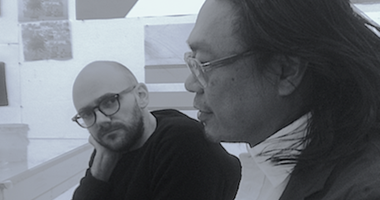
Nicolas Bourriaud. Photo: Sergio Rosales Medina.

In anticipation of the 15th Gwangju Biennale, artistic director Nicolas Bourriaud discusses relational space, artists as anthropologists, and the staging of an opera in Gwangju.

In the catalogue for Traffic, an exhibition he curated at CAPC Musée d'Art Contemporain de Bordeaux in 1996, Bourriaud wrote that the 30 participating artists were 'not linked by any style, and even less so by any theme or iconography,' but by a common interest in creating works based on interhuman relationships.1
Central to the exhibition was the time the artists spent together, exchanging ideas and building relationships as they created their works. During the show, several artists enlisted visitors as collaborators: Rirkrit Tiravanija provided cardboard armchairs and refreshments to gallery-goers, while Dominique Gonzalez-Foerster invited them to draw a floor plan of their childhood home in Séances Autobiographiques (Autobiographical Sessions, 1996). Because the artists in Traffic stressed social interaction, Bourriaud regarded them as producing 'relational space-times'.2
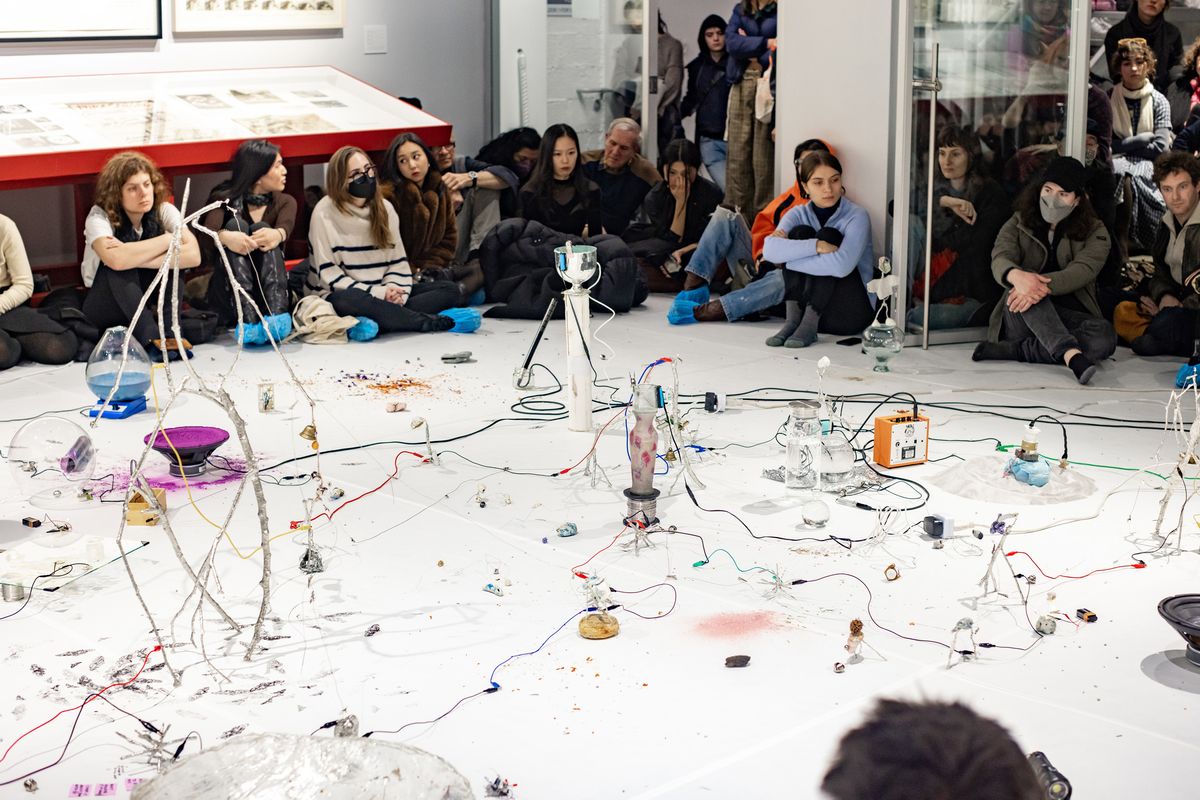
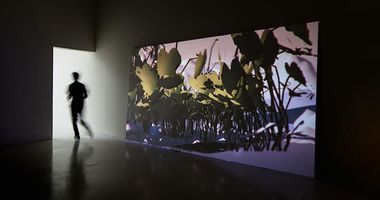
Over the past decade, Bourriaud's interest in relational space-times has expanded to encompass climate change—a product of human activities on the planet that we call home—in several large-scale projects. For the 2014 Taipei Biennial, titled The Great Acceleration, he explored the idea of the Anthropocene and its effects on the natural environment. As curator of the 16th Istanbul Biennial in 2019, he cited the Great Pacific Garbage Patch—the largest island of non-degradable plastic floating in the ocean—as the inspiration for its theme, The Seventh Continent.
In 2022, following a six-year directorship of MO.CO. Montpellier Contemporain, which he also founded, Bourriaud launched Radicants—an international curatorial cooperative. Radicants' first group exhibition was Planet B: Climate Change and the New Sublime at Palazzo Bollani in Venice, which questioned the Romantic concept of the sublime through works by 27 contemporary artists living on a planet impacted by global warming.
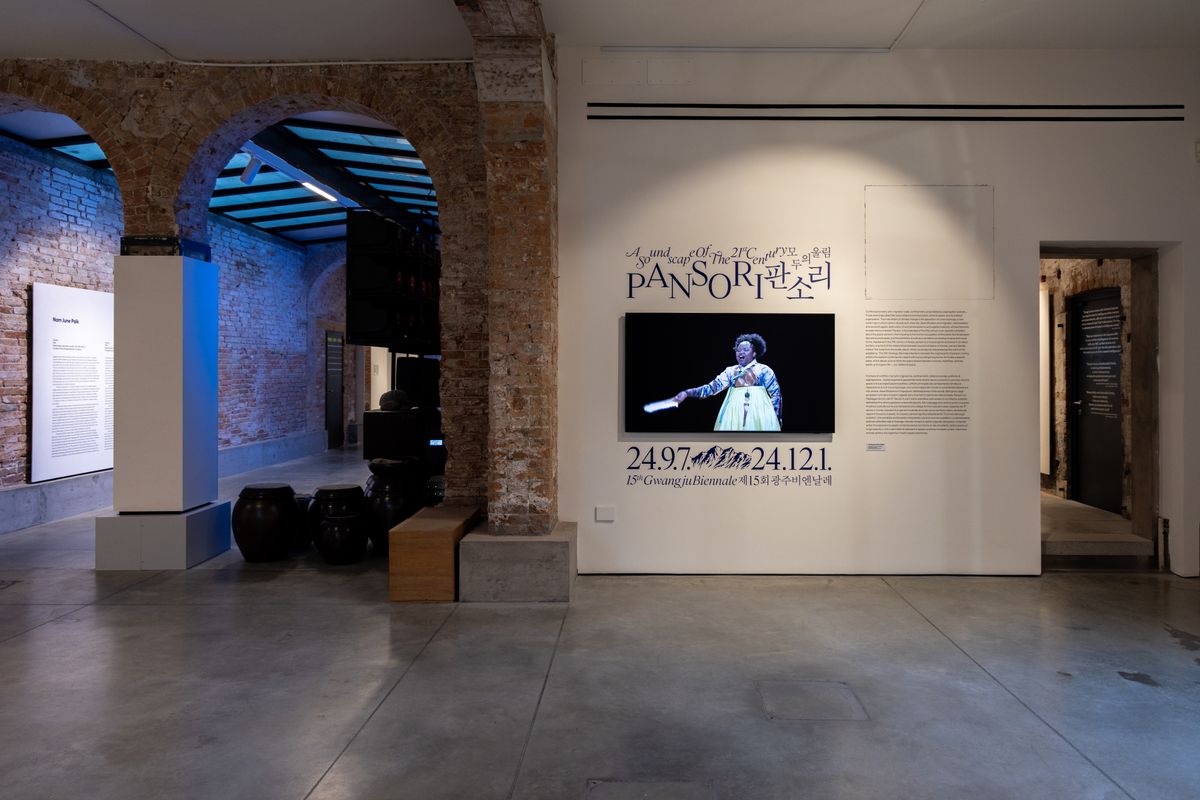
At the 15th Gwangju Biennale, titled Pansori, a soundscape of the 21st century (7 September–1 December 2024), sound and space are the main lenses through which Bourriaud explores our changing environment and the evolving modes in which we cohabit with nonhuman living forms.
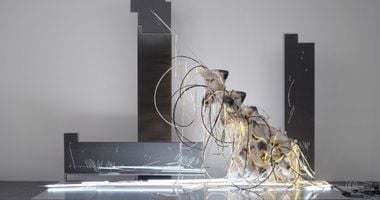
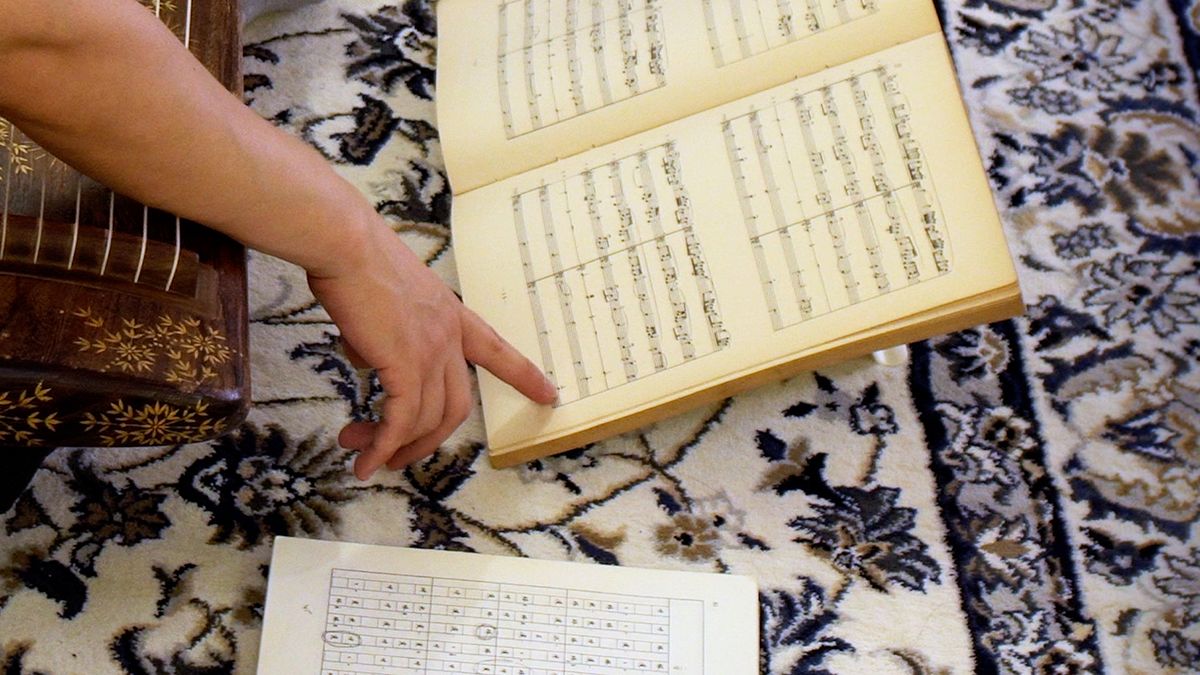
The word pansori, which translates as 'the noise of the public space', denotes a Korean musical art originating in the 17th century that was historically staged in places of gatherings. Performers and the audience are collaborators in pansori: a solo singer retells well-known folk tales or legend employing a range of vocal techniques, such as deliberate off-notes, while a drummer provides rhythm and the audience contributes by making periodical exclamations. Madang, the word used to describe each act, refers to another space of community: the courtyards in traditional Korean homes where meetings and celebrations were held.
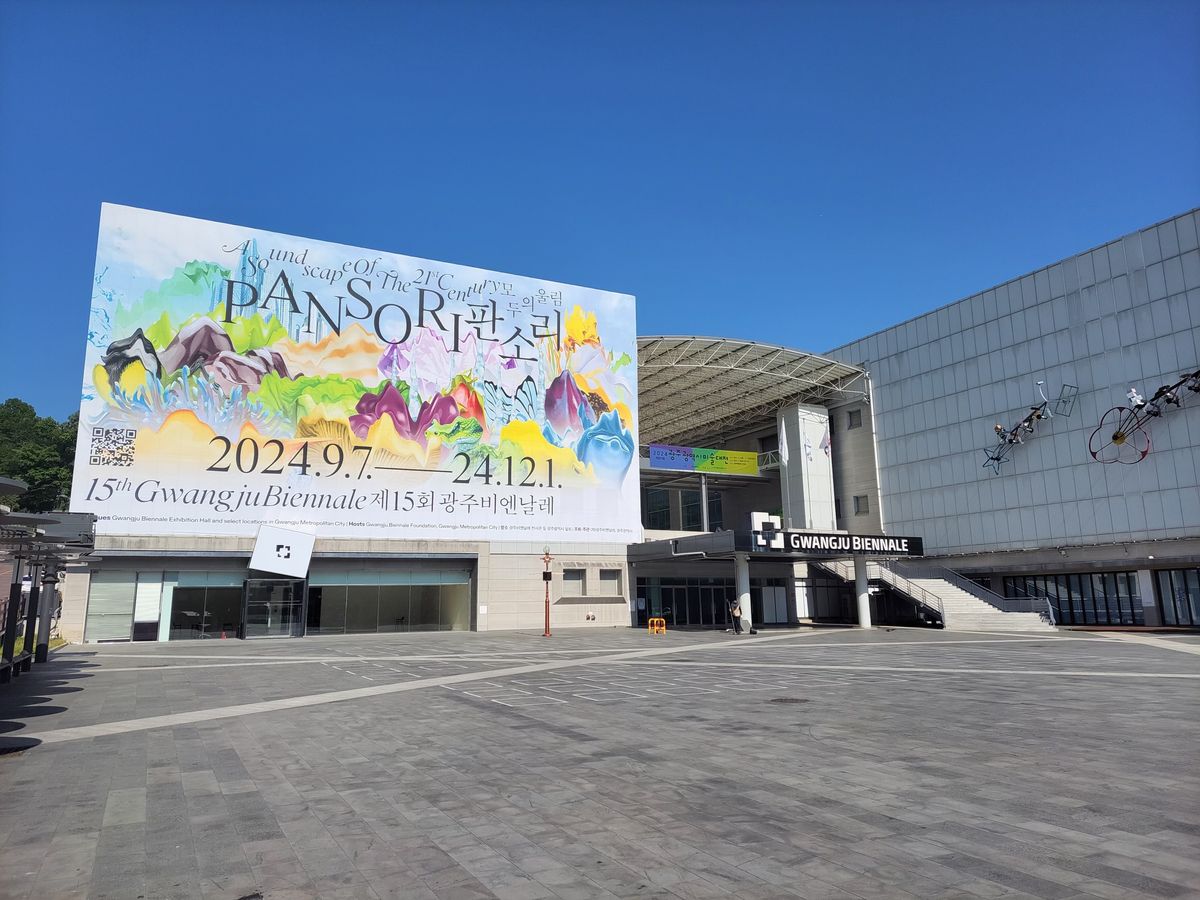
This year's edition—which brings together works by 72 artists and collectives from 30 countries in the event's long-standing venue, the Gwangju Biennale Exhibition Hall—is divided into three sections, each named after a sonic phenomenon. 'Larsen effects', which describe the overlap between two audio emitters, opens with a long, dark tunnel installed with a sound piece by Nigerian artist Emeka Ogboh titled Oju 2.0 (2022). The second section 'Polyphony' considers artists' engagement with nonhuman forms in their work, while the last, 'Primordial sound', reflects on the cosmic and infinite properties of sound.
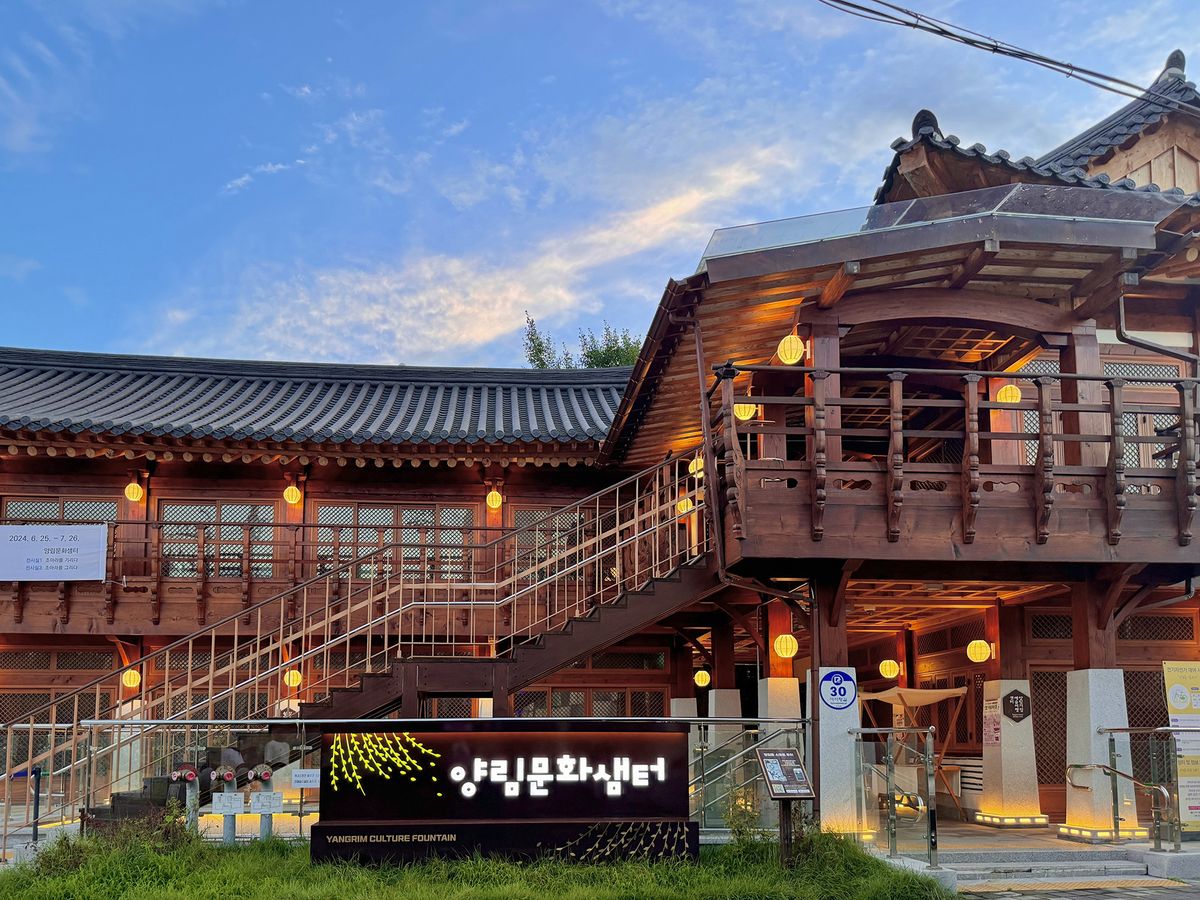
On the opening day, Amphitheatre in Jungoe Park presents Pansori on stage, a 40-minute spectacle based on a text by Gwangju-born writer Han Kang. In addition to The Vegetarian (2007), for which she won the 2016 Man Booker International Prize, Han has written about victims and survivors of state brutality during the 1980 Gwangju Uprising in her powerful novel Human Acts (2014).
Beyond the main exhibition hall, the biennale spills out into numerous satellite venues across the historic neighbourhood of Yangnim-dong as well as into a series of national pavilions, which have grown in number from nine at the last iteration to 31 this year. For those in Europe, concurrently on view in Venice at Il Giardino Bianco Art Space is Madang: Where We Become Us, an exhibition commemorating the biennale's 30th anniversary, which runs until 24 November.
In the following conversation, conducted ahead of the biennale opening, Bourriaud discusses his discovery of pansori and his interest in the emergence of a relational space that considers both interhuman and nonhuman connections.

SPPansori used to be a common form of entertainment for Koreans, but this is no longer the case today. How did you arrive at it as an overarching theme of the biennale?
NBFor the Gwangju Biennale, I wanted to go on questioning climate change through a different angle than in my previous exhibitions. I chose to address the most banal theme, which is space: everyone has something to say about it, from a taxi driver to a quantum physician. Secondly, I was interested in the relationships between sound and space after reading about the studies of a German physicist from the 19th century, Ernst Chladni, who discovered that both space and sound come to us as vibrations.
. . . artists pay attention to the others, to the nonhuman sphere, and they represent the world as a set of relationships with living elements.
So, I tried to find a vernacular image to link them, an image that would speak to Korean people—that's how pansori came to my mind, when I watched an old Im Kwon-Taek movie, The pansori singer [Seopyeonje, 1993]. As a musical genre, pansori originally accompanied shamanistic rituals, and shamanism is a mind-travel, an exploration of spaces that are out of this world. I also wanted to organise the exhibition by sequences, like an opera linking visual and sonic elements, and pansori is the most minimalistic operatic form.
SPIn an interview with ArtReview with 2014, you said, 'a good biennial is in the first instance a good show, that a good show must affirm an aesthetic position.' How would you describe the aesthetic position of Pansori: a soundscape of the 21st century?
NBI think that at the end of their journey throughout the exhibition, the visitors will have the feeling that a new kind of space is building up in art: a relational space. Meaning that today's artists don't see their surroundings as a simple decor for action, but as a space filled with life forms, elements to interact with. Like shamans in the past, they can enter nonhuman worlds and dialogue with matter.
As human beings, we cannot face the world and consider it as an 'environment' anymore—we are embarked, immersed into a planet that is a whole, not a collection of potential materials to be processed and sold. Because they strongly feel this immersion into a global space, artists pay attention to the others, to the nonhuman sphere, and they represent the world as a set of relationships with living elements. Well, that is my aesthetic position.

SPCould you discuss one or two artworks that helped consolidate the theme of the biennale or were considered for inclusion from the early stages of discussion?
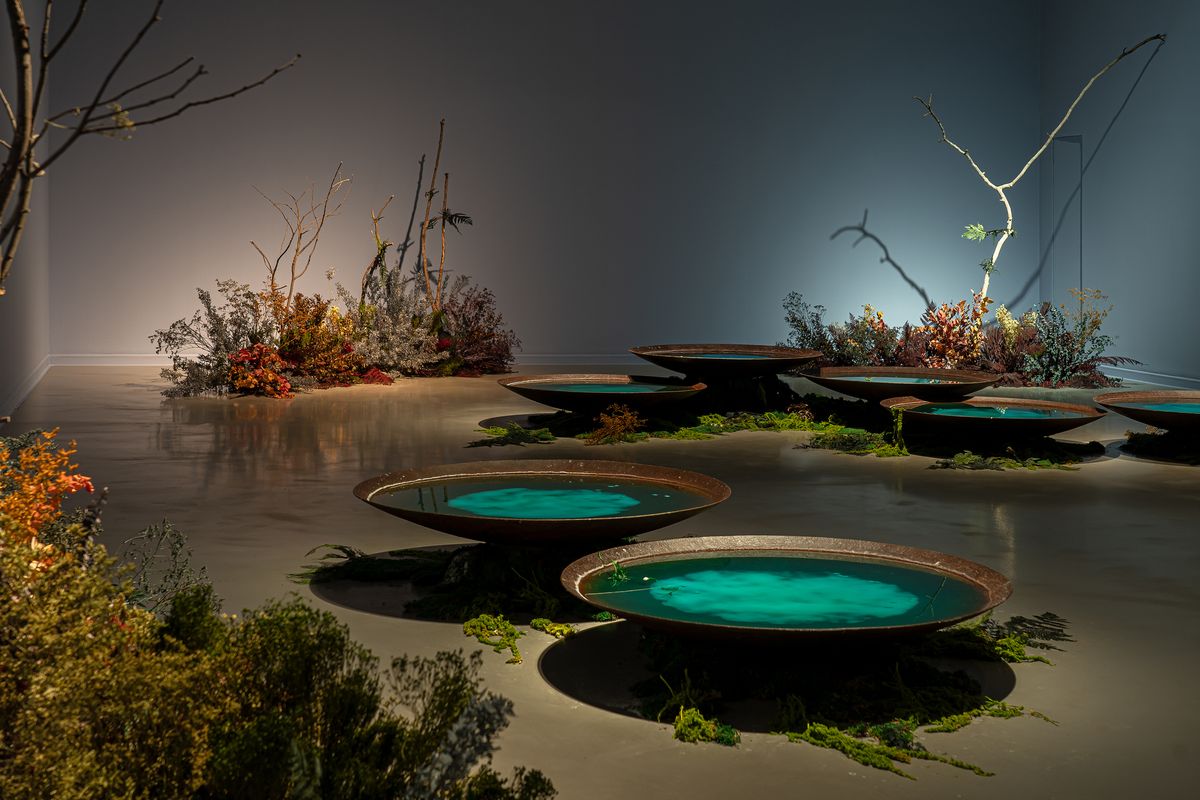
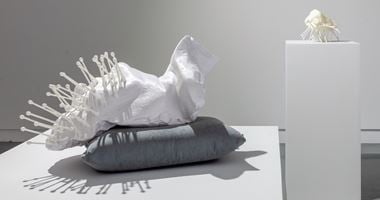
NBIt is always weird to highlight one work from the ensemble, as the show is built as an echo chamber, where works are resonating with each other. But some projects were seminal to the exhibition, like Marguerite Humeau's installation, which deals with the origins of the world in a musical mode. Or the immense ecosystem conceived by Max Hooper Schneider, an epic visual poem about the intertwinings between the biosphere and industrial technology. But I could also quote the new paintings by Ambera Wellmann, which reflect a new apprehension of space, or the ones Matthias Groebel produced for the exhibition. But the first artist I called was Marina Rosenfeld, and [the conversation] was about sound.
SPCould you walk us through the exhibition's design at the Gwangju Biennale Exhibition Hall and how the architecture was (re)organised to respond to the three sections, 'Larsen effect', 'Polyphony', and 'Primordial sound'?
NBThe exhibition aims to explore the analogies between space and sound, which are both vibrations. Feedback effect, or Larsen effect—it is the same thing—is a sonic phenomenon that appears whenever two emitters are too close to each other. In other words, it is created by the lack of space, by intense proximity.
I tend to see today's artists as driven by an anthropological attitude
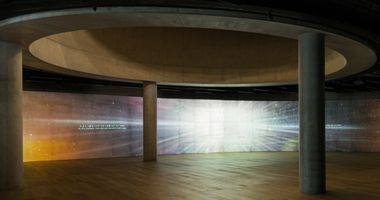
Two floors of the exhibition hall are placed under the sign of feedback effect. The first one, very urban, even claustrophobic, is built as a kind of maze. Visitors will enter the exhibitions through a very long, dark tunnel where a sound piece by Emeka Ogboh will bring in the streets of Lagos and its markets. It's a deep, very dense soundscape. The first floor corresponds to this impression of saturation. The second floor gathers artists who address the question of the industrialisation of nature. It shows the countryside as an extension of the factory, becoming automated.
The third floor is about polyphony: how artists integrate other living forms into their practice: animal, vegetal, even mechanic forms. And the last two floors are devoted to the primordial sound, which is 'ôm' in the Hindu tradition. The primordial sound is twofold: one, the immensity of the cosmos; two, the infinitely small. I see that many artists are exploring either the minuscule or the gigantic, and many of them are interested in shamanism, which is an interreign exploration, a spiritual technique to explore other worlds. To sum it up, the exhibition starts with saturation, and ends on the infinite. The more you go, the more the space will open: the last floor, the fifth one, will be devoted to the infinitely small.
SPSince your first book Relational Aesthetics (1998), in which you observe a tendency to make art inspired by interhuman relations, you have considered the human gaze and humankind's relationship with nonhumans. In your latest book Inclusions: Aesthetics of the Capitalocene (2020), you draw parallels between the work of artists and anthropologists. How is this reflected in the works presented in Pansori?
NB[British anthropologist] Tim Ingold defined anthropology as 'philosophy with the people in'. I consider my theoretical work not as speculative thoughts, but as 'theory with the artists in'. Field work, in anthropology, has always been crucial. It is dialogical and inclusive, and one of the few sciences where the object teaches something to the supposed subject. That is why it interests me so much, and I tend to see today's artists as driven by an anthropological attitude, they are often enquiring, interviewing, collecting information.
. . . a biennale has to dare to affirm aesthetic values and stand for a vision of art.
For this biennale, among the artists who led such enquiries, I can quote Hyewon Kwon filming the submarine caves of Jeju Island, Mira Mann exploring Korea with her mother in search of pansori, or Na Mira tracking the ghosts of the U.S. military presence in Seoul.
SPThis year sees a dramatic increase in the number of national pavilions, from nine last year to 31. Why does Gwangju Biennale need national pavilions and how are they in conversation with the main theme of this year's edition?
NBThe Gwangju Biennale has been created as an Asian answer to the Venice Biennale, and the pavilions have always been important in its development, its interest in dialoguing with the whole world. But here, as opposed to Venice, they are not necessarily the emanation of a state—they can be organised by private museums or NGOs. There is no direct dialogue, as they all are free to develop their own topics.
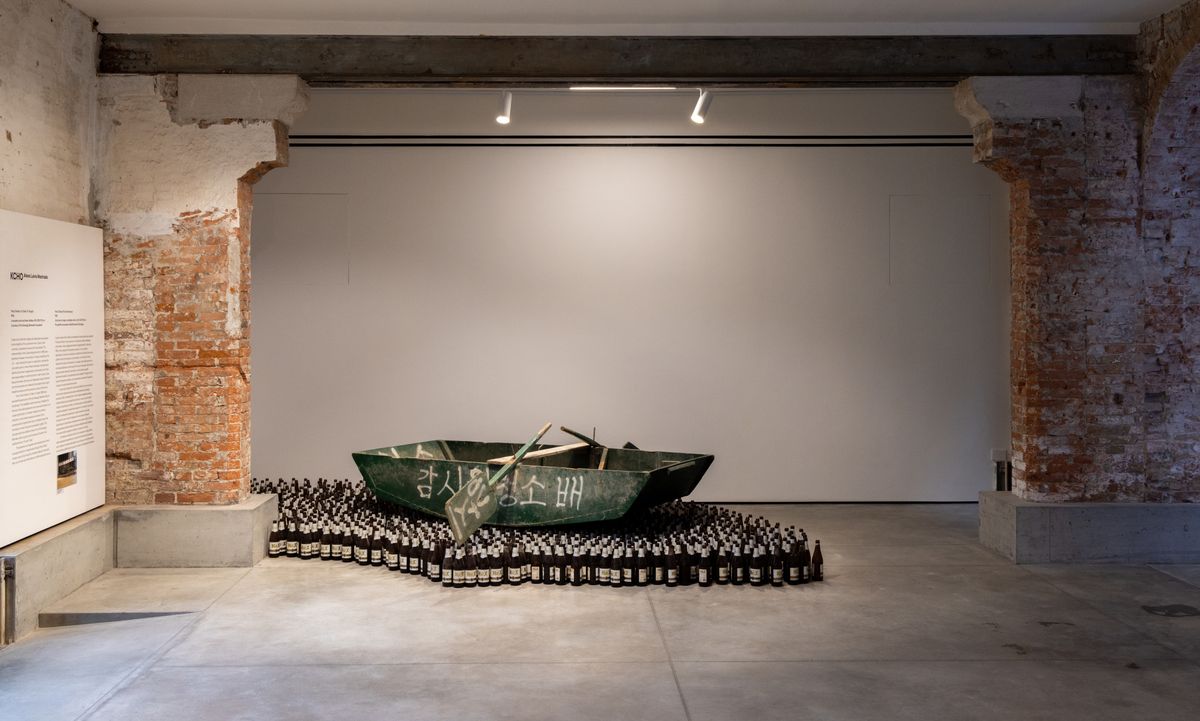
SPThe 30th-anniversary exhibition, Madang: Where We Become Us, has been on view in Venice since April. What can we expect to see in Gwangju?
NBThis exhibition in Venice has been the occasion to present the video essay that accompanies and introduces the stakes of the biennale. It is called Learning from pansori, its off voice is interpreted by Michael Joo, and I conceived it as a short movie or a trailer, summing up all the ideas behind the exhibition and showing some samples of the presented artworks. I don't think it has been done before for a biennale.
On the opening day, there will be a kind of live prolongation of the exhibition, Pansori on stage: it is a 40-minute spectacle, a kind of opera based on a text written for us by the great Korean writer Han Kang. In a way, it is a contemporary pansori... Some artists from the exhibition are contributing, performing music. Another new thing is the Madang Food Lab, a pop-up restaurant open during the biennale time, whose chef Gilles Stassart invents new ways of ordering food.

SPWhat new possibilities or reflections on the old does this year's Gwangju Biennale propose for future biennales?
NBEach project leads to the next one. I think the specificity of this year's biennale is its sequential composition. It is an opera about today's space, but an opera you can walk into. The only message I would like to leave behind me is: a biennale has to dare to affirm aesthetic values and stand for a vision of art. Please dare.
SPFounded in memory of the Gwangju Uprising, the biennale has commemorated its legacy through new commissions and special exhibitions that have, at times, drawn voices of concern that they relegate it to a thing of the past. How does this year's edition approach Gwangju's history?
NBThe 'Gwangju spirit' that appeared here after the uprising is about freedom, free thinking, and daring. I hope that my project is a tribute to this spirit. —[O]