The Best Books on Writing, ...
A celebration of timelessly wonderful reads in an elaborate diorama of papercraft book sculptures.
BY MARIA POPOVA
 As an enormous lover and patron of public libraries, I was beyond delighted when the fine folks at the New York Public Library asked me to curate a selection of books for their bookstore and gave me free range to do whatever I wished. My original thought was to do a single reading list around a specific theme, much like I had been doing for the TED bookstore. But my chronic maximalism soon kicked in — the single reading list swelled into four reading lists (wisdom on writing, great reads about New York City, heart- and brain-stirring books on pets and animals, and timeless treats for young readers) and the simple tabletop display became an elaborate installation in the bookstore’s main window. That’s when I reached out to the impossibly talented Kelli Anderson, with whom I’d previously collaborated on the Curator’s Code and The Reconstructionists projects, and invited her to bestow her singular gift for disruptive wonder upon the library as we both donated our time and resources to the project.
Kelli, with her own brand of idealistic maximalism, decided to turn the reading lists into a magnificent papercraft wonderland featuring oversized three-dimensional sculptures of each of the books amidst an intricate paper cityscape of the Manhattan skyline.


Yes, it is just as incredibly time-consuming as it sounds — Kelli and her team spent countless hours cutting and hand-gluing each of the letters onto the books, engineering the physics of the suspension, and masterminding the minutest detail of this enormous labor of love. The ever-talented Debbie Millman provided the hand-lettering and Jacob Krupnick of Wild Combination (the team behind Girl Walk // All Day) photographed the process and filmed this beautiful timelapse of the assembly:
And the end result, up close and personal:
Here are the four reading lists, along with my original text that appears in the library bookshop window, followed by some production photos to give you an idea of the incredible love and energy Kelli and her team poured into bringing this to life.


Why I Write (public library) by George Orwell: Literary legend Eric Arthur Blair, better known as George Orwell, remains best remembered for authoring the cult-classics Animal Farm and 1984, but he was also a formidable, masterful essayist. Among his finest nonfiction feats is this 1946 masterpiece, in which Orwell traces how the painful experiences of his childhood steered him towards writing and lays out what he believes to be the four universal motives for writing, most of which resonate with just about any domain of creative work. Sample it with the fantastic title essay on the four universal motives for writing.
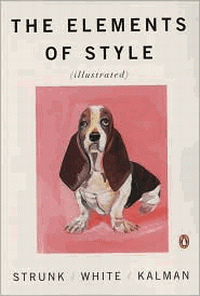
The Elements of Style (public library) illustrated by Maira Kalman: For anyone who thinks grammar can’t be fun, here comes beloved artist Maira Kalman, whose colorful whimsy breathes new life into Strunk and White’s indispensable 1959 style guide to create an instant classic in its own right. More here.

Bird by Bird: Some Instructions on Writing and Life (public library) by Anne Lamott: This 1994 classic is as much a practical guide to the writer’s life as it is a profound treasure-trove of wisdom on the life of the heart and mind, brimming with insight on everything from overcoming self-doubt to navigating the osmotic balance of intuition and analytical thought. More here.

The Wisdom of the Heart (public library) by Henry Miller: “On how one orients himself to the moment depends the failure or fruitfulness of it,” Miller writes in the title essay of the anthology, and indeed his singular orientation to life permeates this sublime collection of his short stories, profiles, and literary criticism. Sample it with his meditation on the art of living.

Reflections: Essays, Aphorisms, Autobiographical Writings (public library) by Walter Benjamin: “The more circumspectly you delay writing down an idea, the more maturely developed it will be on surrendering itself,” legendary German literary critic, philosopher, and essayist Walter Benjamin advises in his indispensable dictum “The Writer’s Technique in Thirteen Theses,” one of the many gems in this compendium of his essays, aphorisms and autobiographical writings.

Zen in the Art of Writing (public library): Here, our beloved Bradbury shares not only his wisdom and experience in writing, but also his contagious excitement for the craft. Blending practical how-to’s on everything from negotiating with editors to finding your voice with snippets and glimpses of the author’s own career, the book is at once a manual and a manifesto, imbued with equal parts edification and enthusiasm. More here.

Writers On Writing (public library): This remarkable collection of 46 timeless essays from The New York Times features contributions from such literary icons as Saul Bellow, Ann Patchett, Joyce Carol Oates, and John Updike, spanning the entire spectrum from the playful to the profound, the practical to the philosophical. Sample it with Mary Gordon on the joy of notebooks and writing by hand as creative catalyst.

About Writing: Seven Essays, Four Letters, and Five Interviews (public library) by Samuel Delany: “Talented writing makes things happen in the reader’s mind — vividly, forcefully — that good writing, which stops with clarity and logic, doesn’t,” argues celebrated author and literary critic Samuel Delany — who, for a fascinating factlet, penned the controversial 1972 “women’s liberation” issue of Wonder Woman — in this synthesis of his most valuable insights from thirty-five years of teaching creative writing. Sample this volume with Delany’s wisdom on talented writing vs. good writing.

Why We Write (public library) edited by Meredith Maran: Twenty acclaimed authors — including Jennifer Egan, James Fray, and Michael Lewis — pop the hood of the literary machine to probe the internal engine of writing. Sample this volume with some fantastic contributions by Susan Orlean, Mary Karr, and Isabel Allende.

As Consciousness Is Harnessed to Flesh: Journals and Notebooks, 1964–1980 (public library) edited by Sontag’s son, David Rieff: An intimate glimpse of the inner life of a woman celebrated as one of the twentieth century’s most remarkable intellectuals, yet one who felt as deeply and intensely as she thought. Oscillating between conviction and insecurity in the most beautifully imperfect and human way possible, Sontag details everything from her formidable media diet of literature and film to her intense love affairs and infatuations to her meditations on society’s values and vices, revealing in the process her immeasurable insight on writing. It has given us Sontag’s wisdom on writing, boredom, censorship, and aphorisms, her radical vision for remixing education, her insight on why lists appeal to us, her illustrated wisdom on art, and her bulletpointed bodily self-portrait.
[...]