Tuesday, July 4, 2017

The Workshop Where Famous Artists Get Their Neons Made
The Workshop Where Famous Artists Get Their Neons Made

  • Courtesy of Let There Be Neon.
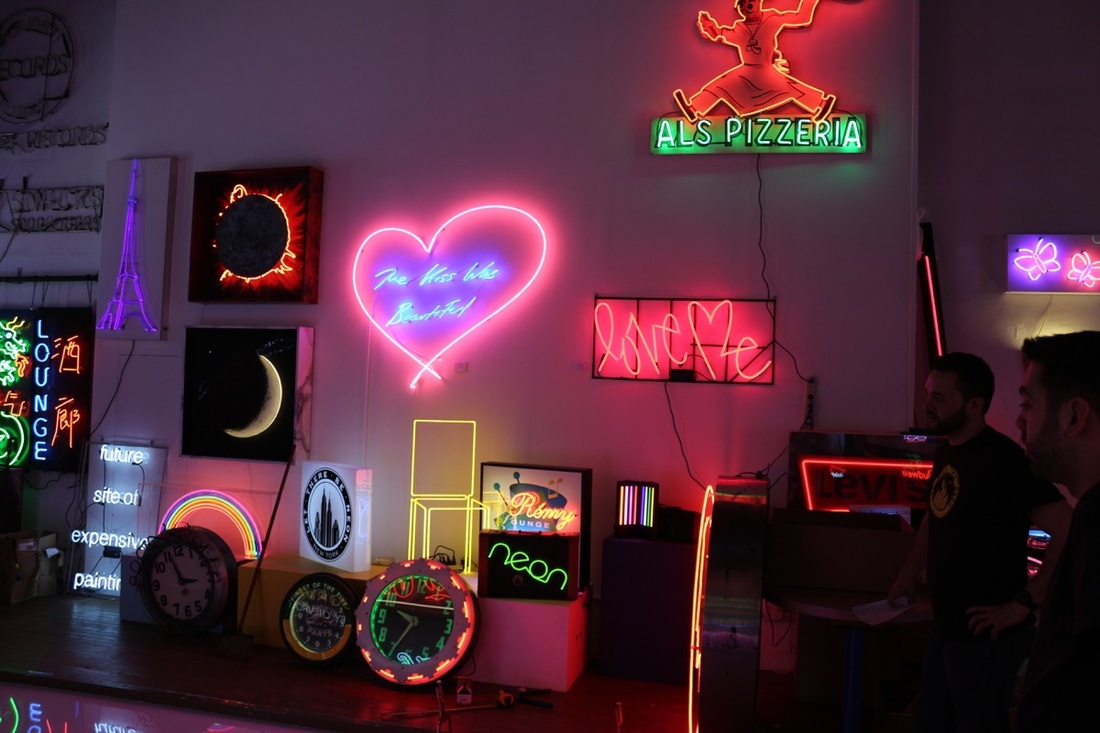
On any given day along Tribeca’s White Street, you’ll find spellbound pedestrians gazing at a tangle of gas-filled, bent-glass tubes hanging outside Let There Be Neon, one of New York’s last surviving neon workshops.
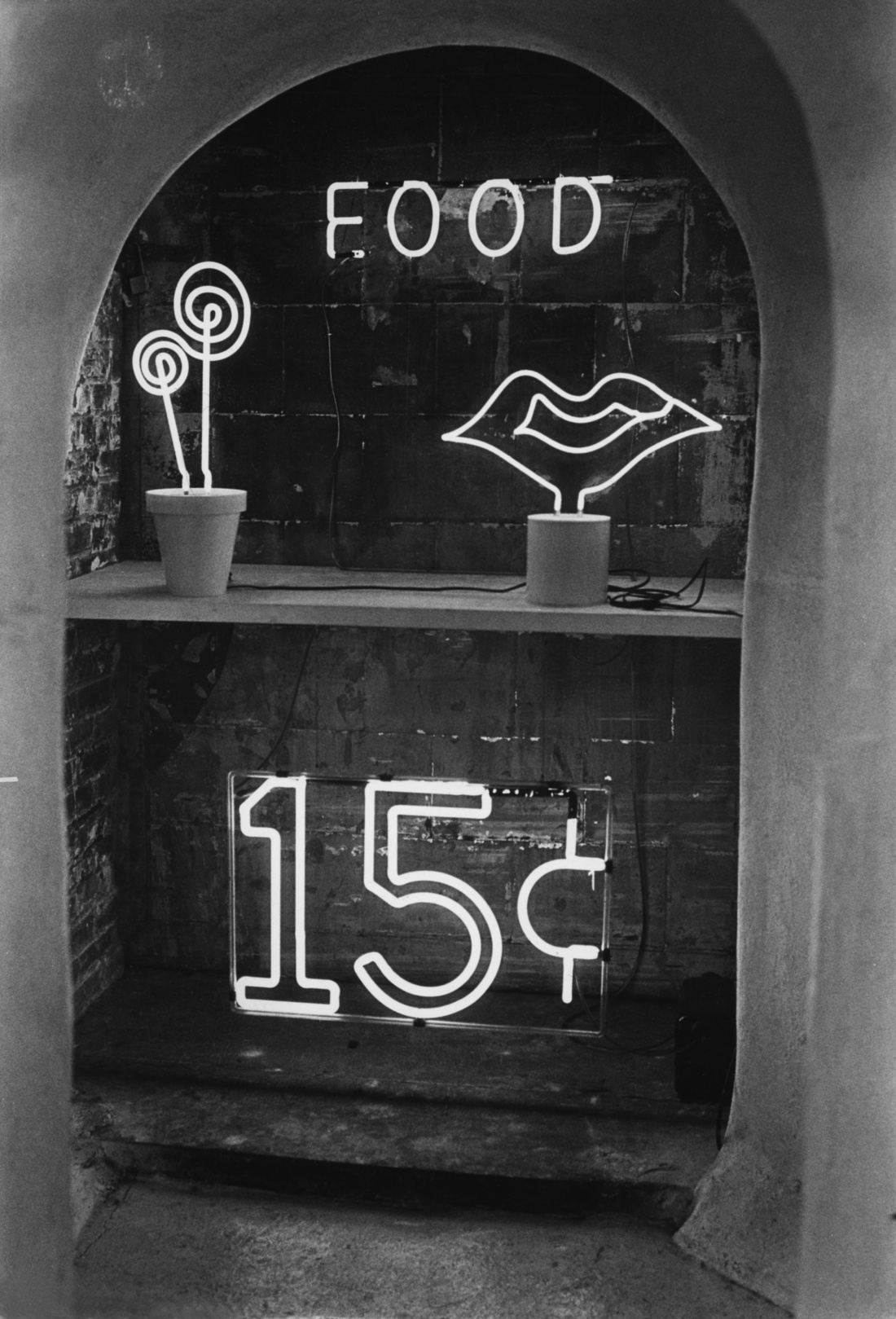
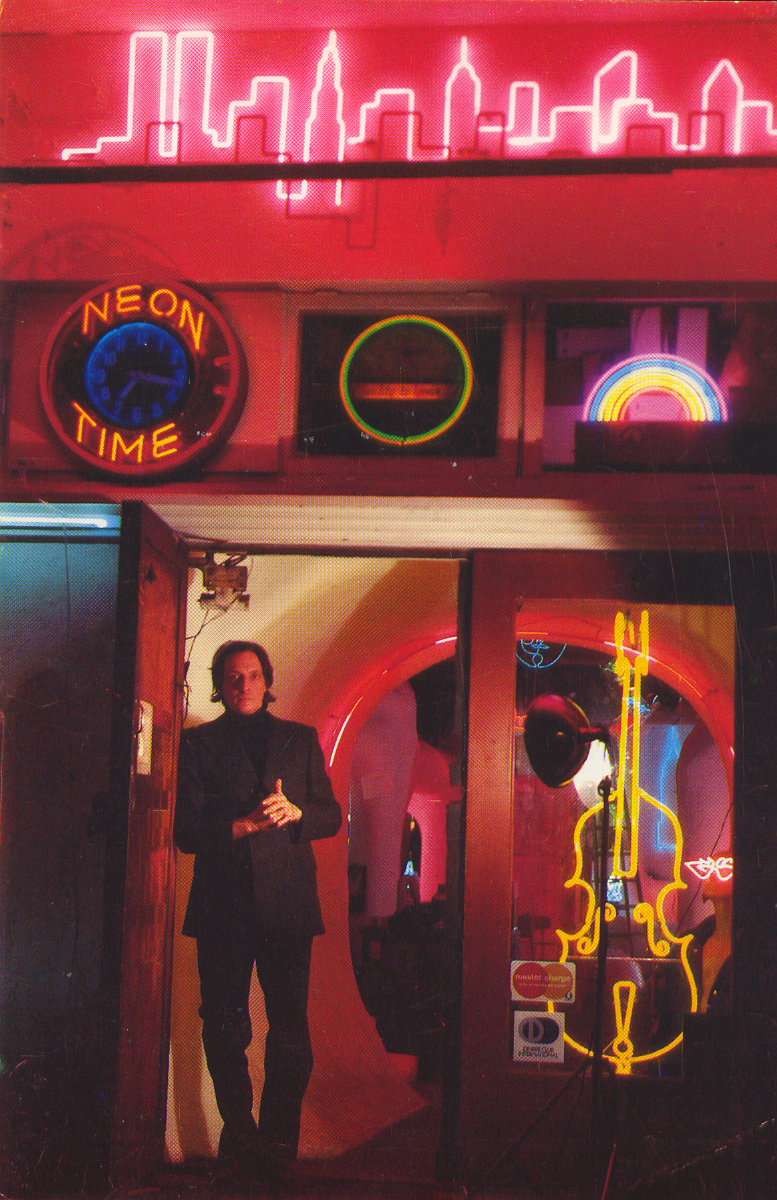
Opened in 1972 as a means to make the medium more accessible, the shop is the go-to manufacturer for artists like Tracey EminDoug WheelerPhilippe Parreno, and Martin Creed. Other items on the shop’s resume—from a pink truck-stop girl sign for The Sopranos to countless glowing and flickering BAR, PIZZA, and DINER signs for storefronts around the country—attest to the enduring influence of its late founder (and artist) Rudi Stern, who’s widely credited with reviving the craft of neon and revolutionizing its use in art and commerce.
  • Courtesy of Let There Be Neon.
  • Courtesy of Let There Be Neon.
While Stern trained as a painter with Hans Hofmann and Oskar Kokoschka, his primary medium was light. In the 1960s, after earning a bachelor’s degree in studio arts from Bard College and a master’s degree from the University of Iowa, Stern moved to Manhattan, where he created psychedelic light shows for rock outfits like The Byrds, The Doors, and Timothy Leary. He designed installations for artist Laurie Anderson, signs for Broadway shows, and, as an early advocate of video art, co-founded an experimental video and performance space called Global Village in 1969. Stern soon developed a fascination with vintage neon signs, and set his loft ablaze with electric relics.
Neon has come a long way since its earliest days. Introduced by French engineer and chemist Georges Claude at the 1910 Paris Expo, the medium made its commercial debut at a Parisian barbershop in 1912, and was first used in the United States by the Packard car dealership in Los Angeles in 1923. After America’s prohibition laws were overturned, neon became a fittingly garish marker for boozing venues, and became synonymous with advertising and industry. But its popularity fell into decline during and after World War II, when cheaper fluorescent-lit plastic signs were more widely deployed.

  • Work by Keith Haring. Courtesy of Let There Be Neon.
Stern felt compelled to pursue not only his interest in neon, but also his sense of responsibility in preserving the medium. So he set about establishing a neon gallery, Let There Be Neon, where old neon signs were displayed and sold. And he soon discovered a viable business opportunity.
“Early on, Rudi made a brilliant discovery: he could offer people custom signs,” says Jeff Friedman, who joined Let There Be Neon in 1977 and became its owner in 1990. In the ’60s and ’70s, neon was finding its way into the realm of fine art in the form of sculptures by artists like Dan Flavin. (Argentine sculptor Gyula Košice was among the first artists to utilize the medium in the 1940s). But now, for the first time, anyone—not only artists—could have their vision realized in skillfully bent, luminous glass tubes.
“Rudi built a team that created this fresh new thing—artistic neon,” Friedman says. “It was unheard of!”

A Hidden Room at the Guggenheim Will Transport You into a Soundless, Sublime World
Friedman remembers the shop’s early work for New York’s Infinity Disco, the first dance club to feature neon as its primary light source, and Studio 54, where flashing, spinning neon panels descended from the ceiling as one of the space’s main lighting effects. Today, he maintains an increasingly diverse clientele: The day I visited, pieces for Chanel, WeWork, the High Line, Coach, and a cigar shop were in the works, while others in wood shipping crates were awaiting pick-up in front of the 3,500-square-foot space.
The shop recently completed a series of backlit runways for Wheeler’s immersive, soundless installation PSAD Synthetic Desert III (1971), currently on view at the Guggenheim.
Friedman waxes poetic about the artists he’s worked with, indicating the close, collaborative effort required for each piece. The shop began working with Emin nearly two decades ago, and now manufactures all her neon pieces for projects in North America. A 2012 artist’s proof of Emin’s The Kiss Was Beautiful (2013) is on permanent display in the storefront. “Tracey is very much responsible for the new popularity of neon, and for allowing people to have a different point of view about neon,” Friedman says, citing a growing trend of clients asking for neon signs that hang indoors.
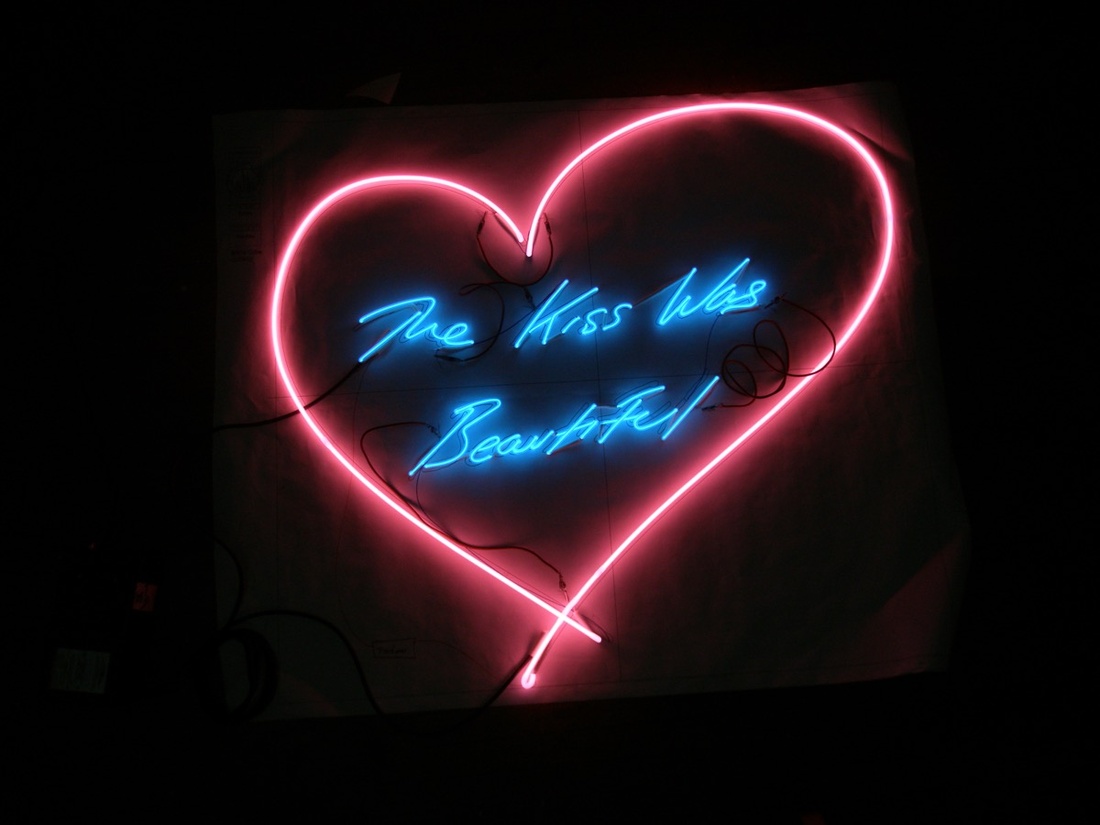
  • Tracey Emin, The Kiss Was Beautiful, 2013. Courtesy of Let There Be Neon.
Working with artists requires the shop to both draw from its extensive knowledge bank and to continually innovate. With help from a chemist at a leading raw glass manufacturer, for example, it makes two custom colors exclusively for Wheeler. It frequently works with Iván Navarro, the Chilean-born, Brooklyn-based artist for whom it has created trippy infinity chambers and furniture silhouettes. Artist Curtis Kulig commissioned the shop to render his iconic “Love Me” tag and “Love Me” smiley in neon; it also manufactured Ugo Rondinone’s neon-lit Hell, Yes! sculpture (2001) that once hung on the New Museum’s facade.
Keith HaringRobert RauschenbergDennis Oppenheim, and John Lennon and Yoko Ono have all worked with the shop.
Neon has long toed the line between science and art: Even the simplest designs take multiple hands to create. Each project at Let There Be Neon is made on-site by a team of master glass benders, who work in shifts to ensure a constant chain of production. When the shop receives a file or drawing, it’s digitally tweaked and printed as a life-size pattern. The specs are then given to a glass bender, who uses an open flame to heat glass rods that come in a variety of colors. Once noodle-like, they’re twisted into shape and fused together. The glass is then purified and filled with gas: either neon, which is red, or argon, which is blue.
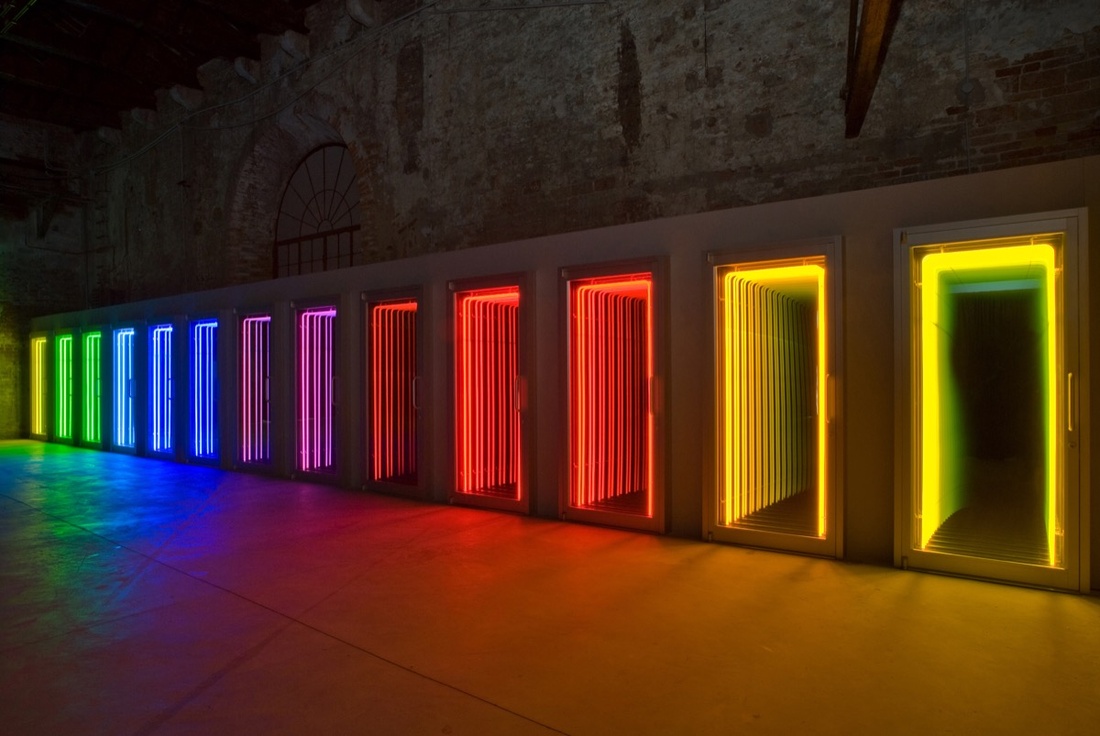
  • Work by Ivan Navarro. Courtesy of Let There Be Neon.
“So if you take a blue tube and put red gas inside, you get pink,” Friedman says. “It’s like mixing watercolors with light.” Electrodes on each tube allow an electrical current to flow through it when turned on, exciting the molecules inside and producing light.
“Our work with artists is totally different [than working with commercial clients],” Friedman says. “But it helps us, too.” He recalls working with Olafur Eliasson on his Daylight Map (2005), in which a series of neon tubes, overlaying a world time zone map, fade from light to dark according to where daylight exists at a given time. Its complexity required extra attention from the shop’s engineers and computer programmer, who made Eliasson’s concept a reality with the help of a clock, sequencer, and transformer placed in each tube.
“It was crazy,” Friedman says. “But that knowledge is part of our DNA now—that’s how the circle works.”
One of the shop’s veteran glass benders, Ed Skrypa, told me the neon-making process hasn’t changed in one hundred years. Stern’s unbridled vision for neon is similarly enduring. “Rudi always said, ‘Neon is like drawing with light,’” Friedman says. “It’s a beautiful visual, isn’t it?”

—Tiffany Jow


Monday, July 3, 2017

Philosophy has a lot to learn from film

Philosophy has a lot to learn from film

Costica Bradatan
is a professor of humanities at Texas Tech University and an honorary research professor of philosophy at the University of Queensland, Australia. He is the author, most recently, of Dying for Ideas: The Dangerous Lives of the Philosophers (2015). Bradatan serves as the religion/comparative studies editor for The Los Angeles Review of Books and is the founding editor of Philosophical Filmmakers, an interdisciplinary book series at Bloomsbury.  
1,500 words
Edited by Sam Haselby
REPUBLISH
What philosophical lessons have you learned from film?
 10Responses
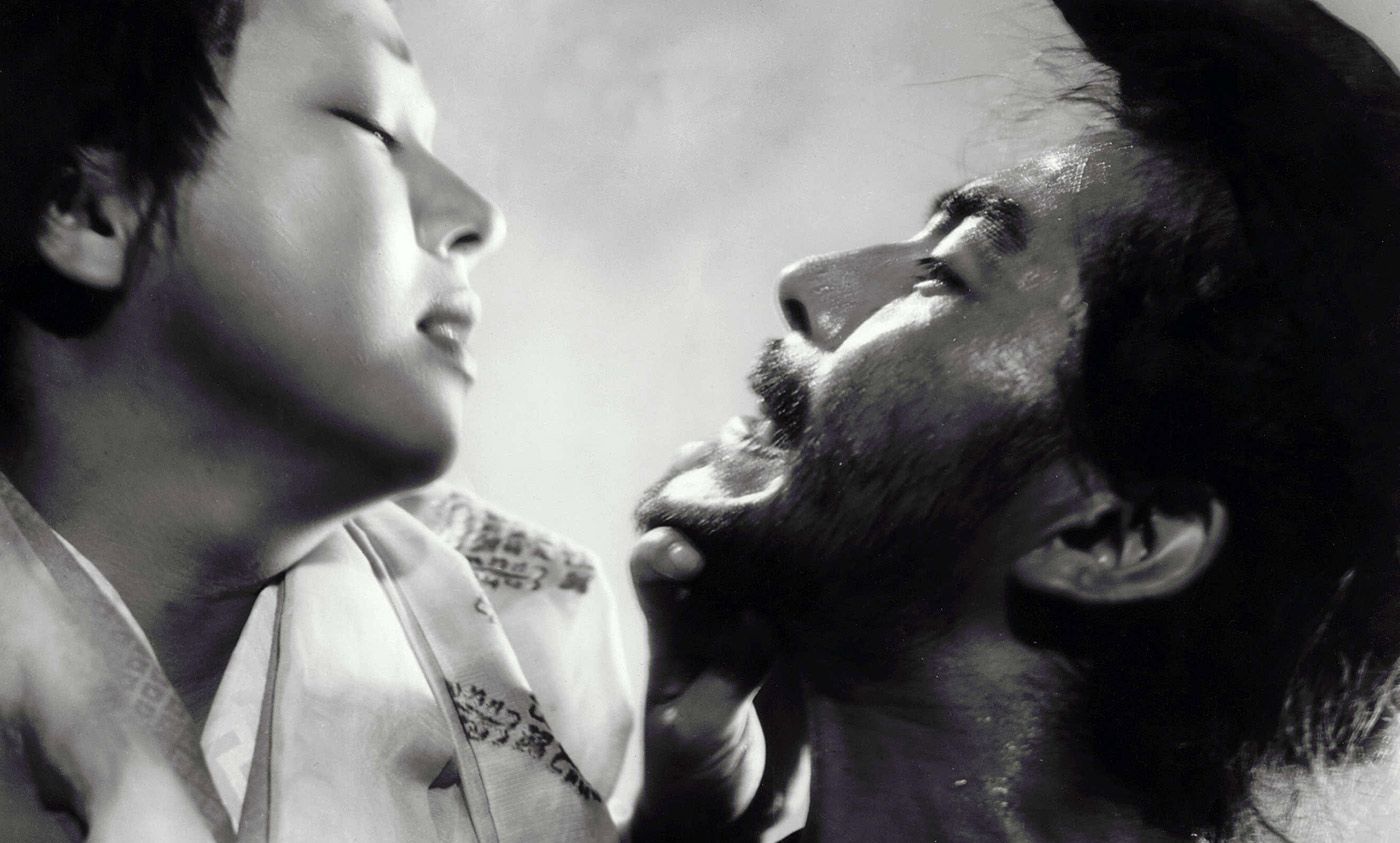
Machiko Kyō and Toshiro Mifune in Kurosawa's <em>Rashômon</em> (1951). <emPhoto by Rex Features</em>
Machiko Kyō and Toshiro Mifune in Kurosawa's Rashômon (1951).
Picture this: a man – a samurai – is killed in a grove. One by one, all those involved are brought before a court. The woodcutter talks of the horror that seized him when he stumbled upon the body. The priest testifies that he had seen the man earlier and identifies a likely attacker. Then the attacker, Tajōmaru, is brought in. He claims he tied up the samurai, seduced his wife right in front of him, and afterwards killed the samurai in a swordfight.
Some readers might recognise the plot outline. The film is Akira Kurosawa’s masterpiece Rashômon (1950), which treats viewers to a unique feast: thinking on screen, philosophising not through any structured argumentation, nor in abstruse language, but via exquisite storytelling, compelling imagery and innovative cinematography. 
It’s then the turn of the samurai’s wife to give testimony. In her story, she is raped by Tajōmaru, who leaves without killing her husband. After the rape, she unties her husband, but then passes out, only to awake to find her husband dead next to her, having committed suicide.
The philosophical puzzle at the core of Kurosawa’s film is clear already: what if we can’t really know and tell what’s going on? If whatever account we produce about the world around us is a world unto itself, and each person’s account is wildly different from any other’s, with no way of knowing whose one is actually the case?
Sign up for Aeon’s Newsletter
Even more compellingly, we then hear, via a medium, the version of the dead samurai himself: after Tajōmaru sleeps with his wife, the brigand begs her to go away with him, which she accepts on the condition that he kills her husband. But Tajōmaru suddenly takes her husband’s side. Somehow the lady manages to escape, the brigand frees the samurai and leaves, and the latter commits suicide.
Kurosawa’s characters look at the same world, yet for moral or cognitive reasons their accounts of what they see are worlds in themselves, making it impossible to know what the actual world is like. The film’s ultimate message is that we are fundamentally unable to ‘tell the truth’.
What we hear next is yet another version, the woodcutter’s. He had witnessed the whole thing, but didn’t tell the court. He gives his account after the trial, under the Rashômon gate: after Tajōmaru sleeps with the lady, he begs her to marry him. Unmoved, she frees her husband and challenges him to fight the brigand. The samurai engages Tajōmaru in a swordfight, in which he is killed.
This is the latest version, but we can’t say it’s the true one. Had there been more people involved, we would have heard even more accounts, each more different than the last. Philosophically, this is nothing new: from Friedrich Nietzsche’s deconstruction of truth in terms of the ‘will to power’ to Richard Rorty’s notion that truth is ‘made rather than found’ to our own age’s ‘social construction’ of everything, we’ve got accustomed to a world that seems to have dispensed itself of the need to know where the truth lies. Disturbing as its message might be at a human level, Kurosawa’s film joins a conversation that has been going on for a while now in Western philosophy.
Yet, you could wonder, what is a filmmaker doing joining philosophical conversations? According to an as-yet marginal, but increasingly influential line of thought, Kurosawa does exactly what any good filmmaker should do: provoke viewers into transcending what they see on screen, engage with big questions about the human condition, pursue philosophical ends through cinematic means. From Gilles Deleuze and Stanley Cavell to Stephen Mulhall and Robert Sinnerbrink, an argument has been made that film can be philosophy. Indeed, that cinema can serve philosophy not in some ancillary role – for example, by providing ‘illustrations’ of philosophical problems in classroom settings – but in its own right, with its own means, and in a manner irreducible to the methods of traditional philosophy. Obviously, not all films are eminently philosophical, but some are, and that’s enough. As Mulhall puts it in On Film (2001): ‘Such films are not philosophy’s raw material, nor a source for its ornamentation; they are philosophical exercises, philosophy in action – film as philosophising.’
Philosophers are nothing if not argumentative, so the ‘bold thesis’ of film as philosophy has been appropriately besieged. Film cannot be philosophy, the main line of attack goes, because it does not work with arguments, as philosophy always should, but with images, emotions and such like. In other words, filmmakers cannot be philosophers because they don’t live up to an understanding of philosophy that boils down to making argument and preempting counterarguments. However, by this definition, quite a sizeable number of philosophers are not philosophers either: there is no place in it for Heraclitus or Diogenes, neither for Confucius nor Nietzsche.
Regardless of whether films satisfy some technical definition of philosophy, the fact remains that they can have on us the same effect that the great, perennial works of philosophy do: shake and awaken us, breathe new life into our minds, open us up to new ways of seeing ourselves and the world around us. There is a purity of gaze, a depth of vision and a quality of insight in the works of Andrei Tarkovsky, Ingmar Bergman, and Kurosawa, on a par with those of the great philosophers.
Most important, however, given philosophers’ unhealthy obsession with rationality, filmmakers can teach them what it means to be human: about our messy ways, about how shifty, complex and ultimately irrational we can be. We are driven by emotions and passions as much as we are by reason; we employ mythical imagination just as much as argumentative thinking. And, perhaps, philosophy should for its own good be more generous with its definitions and humbler in relation to other fields. From film, for example, it can learn many a useful thing – human warmth, social urgency and a way of speaking directly to the human heart – things that don’t abound in philosophical texts.
Kurosawa’s Rashômon does exactly that. Not only does the film flesh out the old notion that truth is man-made, but it dramatises and intensifies it in a way that philosophy alone is unable to. Through narrative, filming style, performance, mise-en-scène and such like, we get a sense of what the inability to grasp the real feels like: the conflicting stories are told in flashback, which raises the crucial issue of truth’s relationship to memory and forgetting, remembrance and misremembrance. The remembering and retelling is done during a relentless downpour: it is as though everything in this world – reality, truth, ourselves – has become liquid; the setting of remembering is a site of devastation, a temple in ruins – a reminder, if one was needed, that ‘God is dead’ or at least very silent. In the court, we never see the judges’ faces, only those of the people brought in to give their wildly conflicting testimonies: they are talking to us – we are the judges, we have to take everything in; then there are shots directly into the Sun, which creates a lingering sense of blindness and disorientation. All this only deepens the overwhelming impression that what we witness – an ending to our ability to tell the truth – is a tragedy of cosmic proportions. The Buddhist priest’s lamentations are haunting:
War, earthquake, winds, fire, famine, the plague. Year after year, it’s been nothing but disasters. And bandits descend upon us every night. I’ve seen so many men getting killed like insects, but even I have never heard a story as horrible as this. Yes. So horrible. This time, I may finally lose my faith in the human soul. It’s worse than bandits, the plague, famine, fire or wars.
Of course, all this is ‘only a movie’. In addition, it’s been so much fun toying around with the notion that truth is a human fabrication, that everything can be endlessly constructed and deconstructed. So much fun. And yet. The time for payback could have come earlier than we expected. For when the government pushes us to accept lies not as lies but as ‘alternative facts’, we know that the frame of reference is no longer Rorty or Nietzsche, but George Orwell’s 1984 (1949). And it’s not a fiction we read, it’s one we start to inhabit.
We should have at least seen it coming. After all, Rashômon gave us plenty of warning.
REPUBLISH

Christoph Niemann and Nicholas Blechman publish their visual conversations


Christoph-niemann-nicholas-blechman-conversations-illustration-publication-top
Work / Publication

Christoph Niemann and Nicholas Blechman publish their visual conversations

1032
Illustrator Christoph Niemann and creative director of The New Yorker Nicholas Blechman have published Conversations, a six-month project which saw the two creatives exchange drawings and photographs via their smart phones. The only rules for the project were that Nicholas used black ink and Christoph used blue, and the conversation had to be non-verbal.
The project initially started in the late 90s, “as an outlet to mainstream illustration” and was called 100%. “I worked as an art director at The New York Times and also needed a break from editorial design,” explains Nicholas. “Each book was a collaborative limited edition drawing project on a theme (maps, architecture, love). After September 11, we drew on the theme of evil and published with Princeton Architectural Press. That was in 2005 – we have not done a book since.”
Last year, the pair picked back up on the project as part of the Met Museum’s new group show, which opened last month titled Talking Pictures: Camera-Phone Conversations Between Artists. “The premise of the show is to use the cameras in our phone to have a visual conversation. Christoph and I both saw this as an opportunity to publish another edition,” say Nicholas.
This new edition sees Christoph and Nicholas photograph and draw their surroundings, including sights such as a “lonely cargo container of empty tarmac of Tegal airport, a skiing trip in the Alps”, as well as some “political anxiety, inspired by our shock of Trump”. The choice of using two ink colours was to give each creative an identifiable voice with Nicholas using a fine-nibbed pen for his neat, considered linework and Christoph a brush for his looser mark makings.
Christoph-niemann-nicholas-blechman-conversations-illustration-publication-itsnicethat-17
As well as appearing in the exhibition, the project is also a self-published book containing 142 pages of conversation, which was a natural progression of the project. “After a while we wanted to review the conversation. We found it hard to judge what we were doing by clicking through a folder of images,” says Christoph. “For both of us the most natural step was to put it into a layout. Once we realised how the question/answer setting of two opposing pages helped the series, we knew this had to be a book.”
A big challenge of the project was categorising images and being able to tell the difference between a good image and one that worked well for the project. “After a while we realised that if an image worked all by itself, it didn’t work for the conversation. We found that the strongest images made no sense by themselves, but only became meaningful when juxtaposed or facing, another person’s image,” explains Christoph and Nicholas.
“As a designer/illustrator/artist you are trained to make every image as strong and convincing as possible,” says the pair. “It was interesting how some strange images turned into compelling spreads or series. On the other hand we edited out many nice drawings that worked by themselves but felt foreign when place in the narrative.”
The work flows as an easy dialogue between the two, full of wit, observation and insight into the everyday. But Christoph and Nicholas have been careful to avoid an overarching message, rather they see the images as simply speaking to each other, like friends on the phone.
Talking Pictures: Camera-Phone Conversations Between Artists is on show at the Met Museum now until 17 December 2017. And you can get a copy of the book here.
Christoph-niemann-nicholas-blechman-conversations-illustration-publication-itsnicethat-1
Nicholas Blechman & Christoph Niemann: Conversations
Christoph-niemann-nicholas-blechman-conversations-illustration-publication-itsnicethat-2
Nicholas Blechman & Christoph Niemann: Conversations
Christoph-niemann-nicholas-blechman-conversations-illustration-publication-itsnicethat-3
Nicholas Blechman & Christoph Niemann: Conversations
Christoph-niemann-nicholas-blechman-conversations-illustration-publication-itsnicethat-4
Nicholas Blechman & Christoph Niemann: Conversations
Christoph-niemann-nicholas-blechman-conversations-illustration-publication-itsnicethat-5
Nicholas Blechman & Christoph Niemann: Conversations
Christoph-niemann-nicholas-blechman-conversations-illustration-publication-itsnicethat-6
Nicholas Blechman & Christoph Niemann: Conversations
Christoph-niemann-nicholas-blechman-conversations-illustration-publication-itsnicethat-7
Nicholas Blechman & Christoph Niemann: Conversations
Christoph-niemann-nicholas-blechman-conversations-illustration-publication-itsnicethat-8
Nicholas Blechman & Christoph Niemann: Conversations
Christoph-niemann-nicholas-blechman-conversations-illustration-publication-itsnicethat-9
Nicholas Blechman & Christoph Niemann: Conversations
Christoph-niemann-nicholas-blechman-conversations-illustration-publication-itsnicethat-10
Nicholas Blechman & Christoph Niemann: Conversations
Christoph-niemann-nicholas-blechman-conversations-illustration-publication-itsnicethat-12
Christoph-niemann-nicholas-blechman-conversations-illustration-publication-itsnicethat-13
Nicholas Blechman & Christoph Niemann: Conversations
Christoph-niemann-nicholas-blechman-conversations-illustration-publication-itsnicethat-14
Nicholas Blechman & Christoph Niemann: Conversations
Christoph-niemann-nicholas-blechman-conversations-illustration-publication-itsnicethat-15
Nicholas Blechman & Christoph Niemann: Conversations
Christoph-niemann-nicholas-blechman-conversations-illustration-publication-itsnicethat-16
Nicholas Blechman & Christoph Niemann: Conversations
Christoph-niemann-nicholas-blechman-conversations-illustration-publication-itsnicethat-18
Nicholas Blechman & Christoph Niemann: Conversations
Christoph-niemann-nicholas-blechman-conversations-illustration-publication-itsnicethat-19
Nicholas Blechman & Christoph Niemann: Conversations
Christoph-niemann-nicholas-blechman-conversations-illustration-publication-itsnicethat-20
Nicholas Blechman & Christoph Niemann: Conversations