Sunday, December 27, 2015

Painters’ Lives Chronicled as Infographics

Articles

10 Painters’ Lives Chronicled as Infographics


by Allison Meier on July 24, 2013
Visualising Painter's Lives by Accurat
Detail of “Visualising Painter’s” Lives by Accurat (all images courtesy Accurat)
At about the same time Abstract Expressionist painter Jackson Pollock was losing himself to depression, Matisse’s longterm relationship with his wife was unwinding, and when Mondrian was discovering Cubism, Miró was delving into Surrealism. All these little landmarks of 10 abstract painters’ lives have been charted into infographic form, so you can contrast the timelines of what it takes to be an artist.
The infographics, part of a project called “Visualising Painters’ Lives,” were made by the Milan-based design agency Accurat under the direction of Giorgia Lupi and Michela Buttignol. They’ve also mapped “geographies of time” by social media use and created a visual data column for La Lettura.
“The painters’ selection was arbitrary,” the creators explained to Hyperallergic. “We selected 10 we found more materials about, almost contemporary as a time span, and sharing the same influences. We selected abstract painters because our attempt was to ‘abstract’ shapes and elements we could re-use as symbols to build the visualization with.”
All 10 timelines together
All 10 timelines together (click to view larger)
On each of the painter’s individual charts these begin with a sort of logo compiled from their iconic shapes, as well as their hand usage and zodiac sign, and then sprawl out into travels, acquaintances with the influential, awards, important exhibitions, and color charts of their styles, major works, and controversies, making it more than just a timeline, although like a timeline it does culminate in their ultimate death with a tiny black cross. Each of the 10 artists has their own symbolism used to mark acquaintances or other details, such as some crossed gold mobile lines for Miró and black splatters of paint for Pollock, and their color palette shifts as the years and art periods tick by.
Where they are all layered together on a “visual index page,” you can really see the breadth of their careers, with Pollock’s shockingly short in comparison to Picasso, or the wealth of love affairs, where Picasso again wins and Mondrian goes forward unattached. A woman named Lily Stumpf also appears as a love interest for both Klee and Kandinsky, and you can even compare traveling and see Matisse rambling from all over from Paris to London to Morocco to Russia to the United States.
Here are excerpts from each of the 10 artist’s infographic lives:
Visualising Painter's Lives by Accurat
Pollock’s infographic (click to view larger)
Detail of Pollock's timeline
Pollock’s early life troubles, including the death of his father and battles with depression, although then he gets to meet Lee Krasner
Visualising Painter's Lives by Accurat
Picasso’s life (click to view larger)
Detail of Picasso's timeline
Picasso’s numerous love affairs
Visualising Painter's Lives by Accurat
Miró’s life (click here to view larger)
Detail of Miro's timeline
Miro’s impressive acquaintances
Visualising Painter's Lives by Accurat
Mondrian’s life (click to view larger)
Detail of Mondrian's timeline
Mondrian getting his start, along with his influences
Visualising Painter's Lives by Accurat
Klee’s life (click to view larger)
Detail of Klee's timeline
Chronicle of Klee’s art periods, major works, and color palette
Visualising Painter's Lives by Accurat
Boccioni’s life (click to view larger)
Detail of Boccioni's timeline
Boccioni’s art career, cut short by his death in WWI
Visualising Painter's Lives by Accurat
Kandinsky’s life (click to view larger)
Detail of Kandinsky's timeline
Kandinsky was right handed, and a Sagittarius
Visualising Painter's Lives by Accurat
Klimt’s life (click to view larger)
Detail of Klimt's timeline
Detail of Klimt’s life, where his works were criticized as pornographic
Visualising Painter's Lives by Accurat
Dalí’s life (click to view larger)
Detail of Dalí's timeline
Dalí tries out all the art movements
Visualising Painter's Lives by Accurat
Matisse’s life (click to view larger)
Detail of Matisse's timeline
Matisse’s busy travels and crossing love affairs
View all of Accurat’s “Visualising Painters’ Lives” infographics on their Flickr.


Have a Creepy Christmas with These Unsettling Cards!!

Articles

Have a Creepy Little Christmas with These Unsettling Victorian Cards


"May Christmas be Merry" (19th-century Christmas card) (via Lilly Library at Indiana University, Bloomington)
“May Christmas be Merry” (19th-century Christmas card) (via Lilly Library at Indiana University, Bloomington)

Anthropomorphic cats, murderous frogs, and insects dancing by the moonlight aren’t exactly part of our Christmas card tradition today. However back in the 19th century, Victorians thought nothing unusual about sending their loved ones a grim image of a dead robin with the words “May yours be a joyful Christmas,” or a card with a boy greeting a jellyfish hovering in the air.
Many of these strange Victorian Christmas cards are making the rounds on social media this holiday season (@HorribleSanity has shared some especially disturbing ones, like the scene of a frog-on-frog stabbing, and Saint Nicholas stuffing a kid in a sack). But where do these visuals come from, and what do they mean? Some of that significance is now lost to history, yet it’s important to consider that Christmas wasn’t widely celebrated in the early 1800s. So over the 19th century, the iconography of the pre-Santa Saint Nicholas, the trees, the presents, the snow, evolved gradually.
“May yours be a Joyful Christmas” (via Tea Tree Gully Library)

"A Merry Christmas to you" (via Horrible Sanity)
“A Merry Christmas to you” (via Horrible Sanity)

The rise of Christmas in Victorian England is often cited as going back to Queen Victoria, who with her German-born husband Prince Albert celebrated their 1848 holidays by decorating an evergreen tree, something captured in an illustration widely shared by the Illustrated London News. According to the BBC, the first major Christmas card dates to 1843, with Henry Cole illustrating a happy family around a dinner table. It was a little expensive for the average citizen, still the tradition caught on, so in 1880 alone, the BBC states, the new industry “produced 11.5 million cards.”
So competitive was the new trade that, as Tara Moore writes in Victorian Christmas in Print, even Alfred, Lord Tennyson was given 1,000 guineas to write a Christmas card poem. Moore adds that “there is the assumption that a culture that encourages Christmas is at least tacitly Christian; nonetheless, people of other beliefs at times found it beneficial to take part in what they saw as a celebration of middle-class values and English identity.” Some poetry and imagery fixated on the nativity story, but others were more about a cultural Christmas, often purposefully removed from religion.
And alongside, pagan traditions endured in Britain and throughout Europe. In 2013, Sarah Elizabeth Troop chronicled a few of these “Monsters of Christmas” for Atlas Obscura, such as the well-known Krampus, a sort of evil counterpart to Saint Nicholas, and the more obscure Mary Lwyd, a skeleton horse from Welsh tradition who challenges people in a battle of rhymes. There’s some influence of this on the cards, as well as general interests of the era, whether science, art, or religion. Ernst Haeckel’s natural history illustrations of squids and jellyfish made it into card illustrations, and social messages were often evoked, such as dead birds reminding people of the poor children dying in the winter streets. So while they are profoundly, undeniably, bizarre to view now, even the creepiest of Victorian Christmas greetings likely had some contemporary meaning to the sender.

"A heart Christmas greeting: Four jovial froggies / a skating would go; / They asked their mamma, / but she'd sternly said, 'No!' / And they all came to grief in a beautiful row. / There's a sweet Christmas moral for one not too slow. / Just so!" (via Nova Scotia Archives/Flickr)
“A hearty Christmas greeting: Four jovial froggies / a skating would go; / They asked their mamma, / but she’d sternly said, ‘No!’ / And they all came to grief in a beautiful row. / There’s a sweet Christmas moral for one not too slow. / Just so!” (via Nova Scotia Archives/Flickr)

"May all jollity 'lighten' your Christmas hours" (19th-century Christmas card) (via Lilly Library at Indiana University, Bloomington)
“May all jollity ‘lighten’ your Christmas hours” (via Lilly Library at Indiana University, Bloomington)

A boy with a blue jellyfish, illustrated by Ernst Haeckel (via John Holbo/Flickr, who has more examples online)

"Absent friends [natives, may we soon see them again! A merry Christmas to you" (1876) (via National Library of Ireland/Flickr)
“Absent friends [natives], may we soon see them again! A merry Christmas to you” (1876) (via National Library of Ireland/Flickr)

"I have come to greet you" (inside it says: "Loving Christmas greetings, may smiling faces ring around your glowing hearth this Christmas day, may fun and merriment abound, and all your world be glad and gay" (via TuckDB Ephemera)
“I have come to greet you” (inside it says: “Loving Christmas greetings, may smiling faces ring around your glowing hearth this Christmas day, may fun and merriment abound, and all your world be glad and gay” (via TuckDB Ephemera)

"A happy Christmas to you" (late 19th century (via Royal Pavilion & Museums, Brighton & Hove)
“A happy Christmas to you” (via Royal Pavilion & Museums, Brighton & Hove)

"Best wishes for Christmas" (via Nova Scotia Archives/Flickr)
“Best wishes for Christmas” (via Nova Scotia Archives/Flickr)

"A joyful Christmas" (via Derbyshire County Council Record Office)
“Wishing you a Merry Christmas” (via Derbyshire County Council Record Office)

"A happy Christmas" (1908) (via NYPL)
“A happy Christmas” (1908) (via NYPL)

An example of one of the first Australian Christmas cards, collected by Bessie Rouse (via Sydney Living Museums)

A Krampus Christmas card (via Tea Tree Gully Library)

"A joyful Christmas" (via Derbyshire County Council Record Office)
“A joyful Christmas to you” (via Derbyshire County Council Record Office)

(via the Library of Birmingham)
A rather gloomy Moth-themed card (via the Library of Birmingham)

"A happy Christmas" (via Boston Public Library)
“A happy Christmas” (via Boston Public Library)

"So please excuse this impecunious card, As all I'm good for is a used up." (via Tuck DM Ephemera)
“So please excuse this impecunious card, As all I’m good for is a used up.” (via TuckDB Ephemera)

(via the Library of Birmingham)
“Every good wish for your Christmas,” with frogs! (via the Library of Birmingham)

"A Merry Christmas and Happy New Year" (1876) (via National Library of Ireland/Flickr)
“A Merry Christmas and Happy New Year” (1876) (via National Library of Ireland/Flickr)

"A happy Christmas to you" (via TuckDB Ephemera)
“A happy Christmas to you” (via TuckDB Ephemera)

"Wishing you a merry Christmas," featuring a goldfinch, bee, and cricket (via University of Glasgow Library/Flickr)
“Wishing you a merry Christmas,” featuring a goldfinch, bee, and cricket (via University of Glasgow Library/Flickr)

A Christmas pudding-themed card (via Laura Seddon collection/Machester Metropolitan University)

"With many merry Christmas greetings" (via TuckDB Ephemera)
“With many merry Christmas greetings” (via TuckDB Ephemera)

"Who's Afraid?" (via TuckDB Ephemera)
“Who’s Afraid?” (via TuckDB Ephemera)

"Wishing you a purr-fectly happy Christmas" (via Nova Scotia Archives/Flickr)
“Wishing you a purr-fectly happy Christmas” (via Nova Scotia Archives/Flickr)

"A happy Christmas to you" (via TuckDB Ephemera)
“A happy Christmas to you” (via TuckDB Ephemera)

"Here's a crow for Christmas" (via TuckDB Ephemera)
“Here’s a crow for Christmas” (via TuckDB Ephemera)


Wednesday, December 23, 2015

Fake

The Conceptual Argument for China’s Big Business in Fake Art

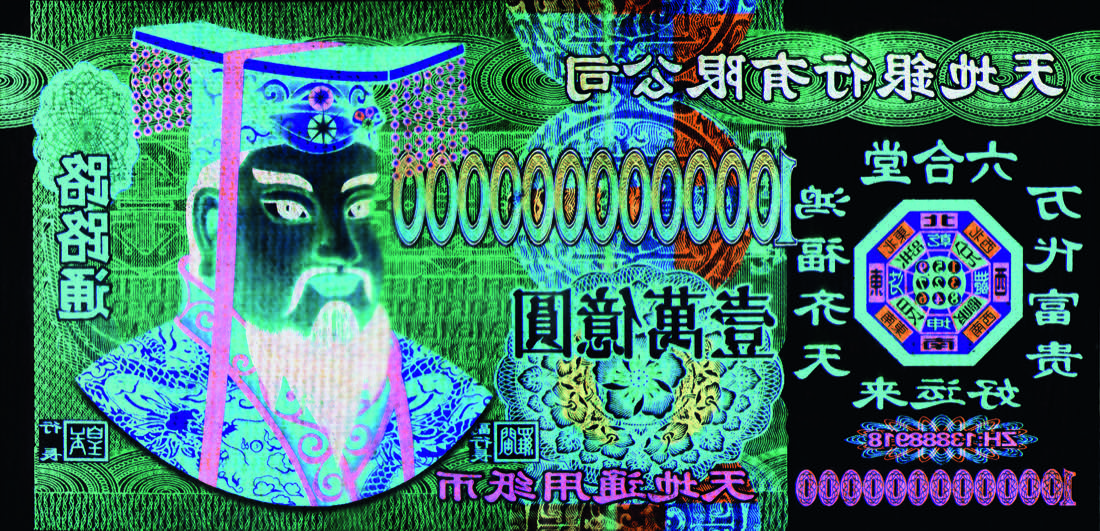
Tao Hongjing, Hell Money, 2015. Courtesy of the artist and Red Gate Gallery.
“Those who do not want to imitate anything, produce nothing,” said late, great Surrealist master, Salvador Dalí. Redolent of China’s ongoing challenges—and contrivances—surrounding appropriation, plagiarism and conceptualism in contemporary art, Dalí’s words are also relevant to an incident in China last month in which a white French artist effectively killed off the Chinese (and, significantly, already dead) alter ego he’d been hiding behind for a decade.
“On April 4th 2015, Tao Hongjing passed away in a mysterious construction site accident while conducting research for his next project,” read the press release for the artist’s recent exhibitions at Red Gate Gallery and Shun Gallery. All was not as it seemed, though, and on the eve of the show’s Beijing unveiling, the French ‘curator’ of this merry masquerade, Alexandre Ouairy, revealed that he and Tao Hongjing were, in fact, one and the same—and had been for the past decade.
Tao Hongjing, detail of To Get Rich..., 2006. Courtesy of the artist and Red Gate Gallery.
Forged artworks from China is big business. A cursory search of Chinese e-commerce site Alibaba quickly turns up copies of works by Yue Minjun and Zhang Xiaogang, all going for less than $500. Likely painted in one of China’s fabled artists villages, they’re convincing enough—when viewed on a laptop screen at least. (It’s worth pointing out that a majority of the canvases produced in these hives of industry—not to mention talent—are totally legit decorative pieces created without an acknowledged author, which likely hang in a hotel or model home near you.)
One such Chinese replica was hung in the hallowed hallways of Dulwich Picture Gallery in spring 2015, hidden there by American conceptual artist Doug Fishbone amidst the institution’s 270 displayed masterpieces. Called “Made in China,” the experiment raised issues surrounding the value we ascribe to art with regard to its authenticity and accomplishment. Apparently very impressive, perhaps the same talented copyist was responsible for an allegedly forged canvas by Geng Jianyi, Hairdressing 2, being withdrawn from China’s Poly Auction in October 2015 after the artist denied its authenticity.
Although it is unusual for forged works attributed to big-name contemporary artists to make it so far along the high-end selling process (the biggest challenge being that the artists themselves are very much alive, vocal, and vigilant), Chinese antiquities are notoriously mired in fakes. The problem has become almost farcical: In July 2015, the former chief librarian of Guangzhou Academy of Fine Arts admitted stealing more than 140 paintings from a gallery under his charge, replacing them with fakes he painted himself. Soon, however, Xiao Yuan noticed that his own fakes were disappearing from the gallery and being replaced by others, lending truth to the librarian’s defense: Everybody’s doing it.
Installation view of  Xu Zhen’s “Seeing One's Own Eyes,” 2009.  Courtesy of MadeIn Company.
Daft as it may sound, Xiao Yuan’s explanation strikes a chord with bonafide Chinese contemporary artists. Take Xu Zhen, for example, for whom an ongoing and very deliberate blurring of authenticity, identity, and value attribution is a core component of his associated practices. To date, those identities include Xu Zhen’s art corporation MadeIn Company (launched 2009), MadeIn Company’s “brand” Xu Zhen (launched in 2013), and the man himself (born in 1977).
Is differentiating between the three personas necessary, particularly for buyers? “Collectors are more understanding and open and fun than we might perceive them,” says Xu Zhen, suitably evasively. With ambiguity as a hallmark, the artist’s mash-ups of cultural symbols and identifiers include 2010’s Seeing One’s Own Eyes at Birmingham’s Ikon Gallery, comprising objects made in China by a fictional group of Middle Eastern artists.
Whether conceptual caper, duplicity, or simply selective amplification of certain truths over others, Chinese artists’ identities have long been integral to their value. In the breakneck ascent to Chinese contemporary art’s zenith in the West—those frothy early 2000s—things were palpably indiscriminate… just so long as the work was Chinese. And as an insatiable appetite for signature Cynical Realism and Political Pop grew, so too did a kind of appropriation of the emblems of Chinese contemporary art: Zeng Fanzhi-esque masks, for example, or Mao Jackets à la Sui Jianguo. Mimicking—not necessarily copying—the show-stealers of the time, they continued the dialogue around contemporary Chinese art, ultimately saturating a certain scene to the point of cliché.
Installation view of  Xu Zhen’s “Seeing One's Own Eyes,” 2009.  Courtesy of MadeIn Company.
While the fervor in the West may have cooled, the gauntlet has been firmly passed to a new breed of young, monied Chinese collectors, flaunting their buying prowess at auction and at art fairs internationally. Much like Xu Zhen’s parodying of the commodification of art in China, an upcoming solo by Elmgreen and Dragset slated for January 23rd–April 17th at Beijing’s UCCA will take the form of a faux art fair, complete with art fair-style booths.
Both present an uneasy satire on the now fetishized affinity between art, China, and money. It’s an ironic juncture indeed when China’s fake fairs, forged art, stylistic plagiarism, and deliberate plays on the “Made in China” stereotype reveal the country’s contemporary issues more than some of their “legitimate” peers. Above all, the likes of Xu Zhen, those anonymous Alibaba artists, and perhaps even Tao Hongjing raise questions of value, and where the monetary worth of art lies. In China, itself a mecca for fake handbags, fake food, and in the case of Zaha Hadid’s Wangjing Soho (a Beijing building complex which was subsequently copied in another Chinese city), even fake architecture, “fakeness” today carries connotations of an ironic authenticity.
As China’s arts ecology continues to mature, today’s frenzied buying will inevitably stabilize, and in doing so, put the market for knock-offs squarely in its place. Until then, a murky world of simulacrum, intellectual property (and sometimes out-and-out fraud) does precisely what art should be doing: it reflects contemporary culture, and outs taboos.

Frances Arnold

Relevant Art Today

The Complex Meaning Behind One of Christmas’s Most Enduring Symbols

The Complex Meaning Behind One of Christmas’s Most Enduring Symbols

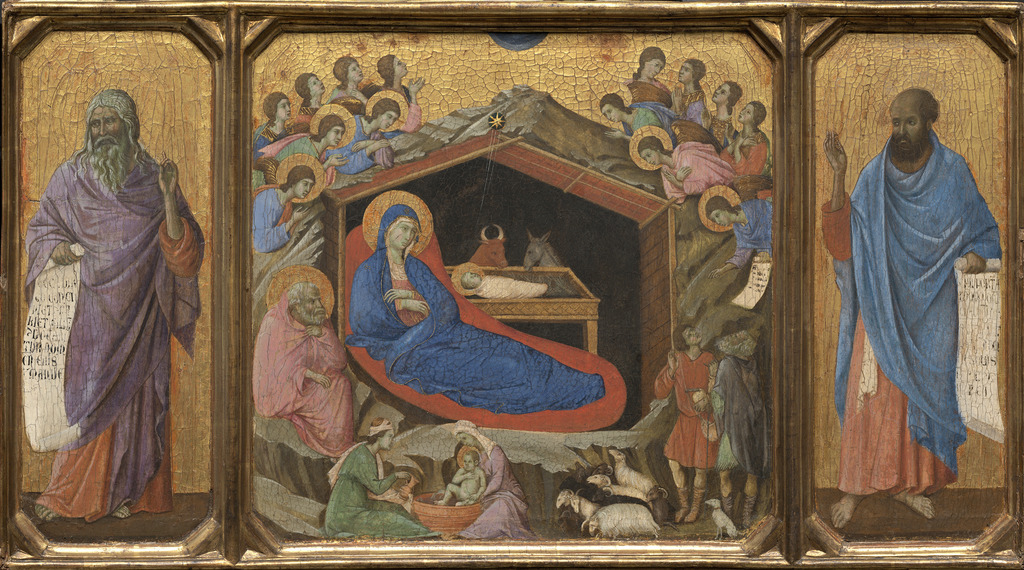
One of the most recognizable scenes of Christian art, the Nativity may be surpassed in popularity only by the Crucifixion, its historical counterpoint. Nativity scenes recount the birth of Christ and his adoration, which is narrated tersely in the Gospels of Luke and Matthew. For centuries, the centrality of the subject for the Christian religion meant that it attracted the wealthiest patrons and most acclaimed artists. Many examples of the scene are deemed masterpieces of art in their own right—Duccio’s Nativity with the Prophets Isaiah and Ezekiel (1308/1311), for example, or Domenico Ghirlandaio’s Nativity and Adoration to the Shepherds (1485)—and emblematic of major artistic movements and innovations. Below, we highlight this enduring symbol’s key developments over the last 1,700 years.


The First Nativities

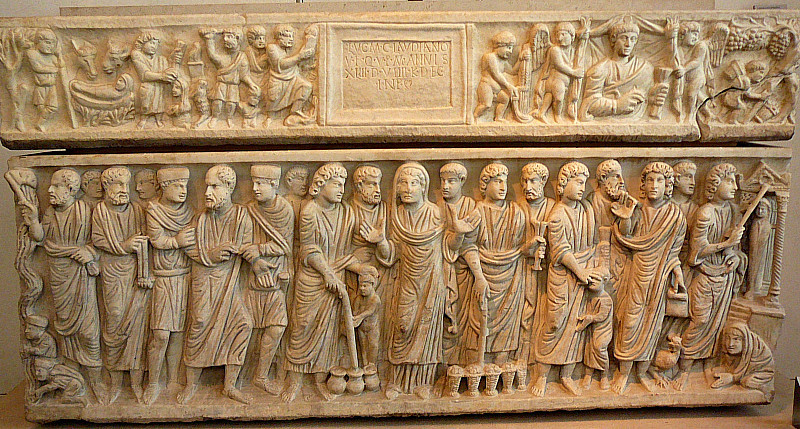
The earliest depictions of the Nativity were very different from our current conception; they typically formed part of a larger cycle narrating the life of Christ carved into the surfaces of Roman sarcophagi, thus bringing the message of death inherent to a sarcophagus in direct relationship to the most important birth in the history of Christianity. 
Sarcophagus from San Giacomo in Settimiana, Via della Lungara, Museo Nazionale, Rome, c. 330-340, marble. This early Nativity is very similar to the first securely dated example of the Nativity in history.
The earliest securely dated example of the Nativity scene is from 343 A.D., from a sketch of a now-lost fragment of a sarcophagus from the catacombs of Saints Marcellinus and Peter in Rome. It depicts the infant wrapped in swaddling cloths, lying in a trough close to the ground, surrounded by an ox, an ass, two shepherds, and a tree. In other words, this sculpted scene contains several of the main components of what would become the Nativity’s standard composition. Notably, Mary is absent. It was only with changes in Christianity, as her status as the human bearer of God became solidified in the next century, that she became an indispensable part of Nativity scenes.


Diverging Traditions in East and West 

Over the course of the next millennium, separate traditions for the composition emerged in the East and West, accompanying the split between the Roman Catholic Church and the Eastern Orthodox (Byzantine) Church. The particular significance of the Nativity stemmed from the fact that it showed Christ as a human, his incarnation being an indispensable part of the economy of salvation in early and medieval Christianity. (The economy of salvation is the notion of God’s plan for the redemption of mankind through Christ’s incarnation from an earthly mother and his predestined sacrifice). Indeed, even as the Eastern Orthodox and Western iconographic traditions diverged, what remained central to both was the connection between Christ’s birth and his sacrifice, and Nativity scenes were thus elaborated to include allusions to the Crucifixion (Christ’s execution). These scenes came to communicate opposing ideas of sin and redemption, good and evil.
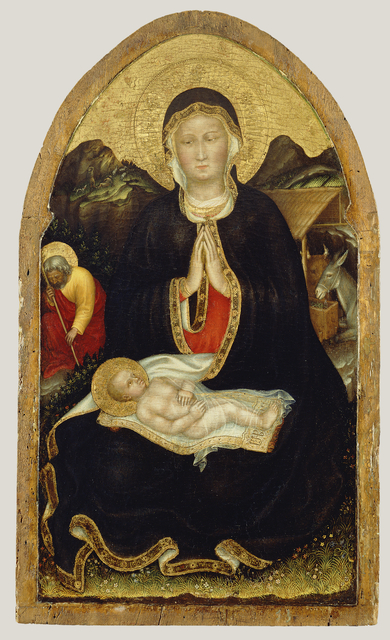
Perhaps the best-known example of this development is Gentile da Fabriano’s Nativity, painted between 1420 and 1422. It shows a novel scene: Mary adoring the infant Christ, an image that emerged around 1300 in connection with mysticism and Franciscan devotional writings. There is innovation, too, in the treatment of Mary; she is shown isolated, pushed to the foreground, and elevated to the most important protagonist in the scene. The naked child appears at the center of the composition as a sacrificial offering. In this way, Gentile turns the Nativity scene into a devotional icon, with Mary acting as exemplar for the viewer’s prayer. Strikingly, this work thus acknowledges the viewer, a shift characteristic of the 15th-century interest in creating close-ups of narrative scenes and powerful, almost cinematic imagery.


Creative Nativities in the Renaissance

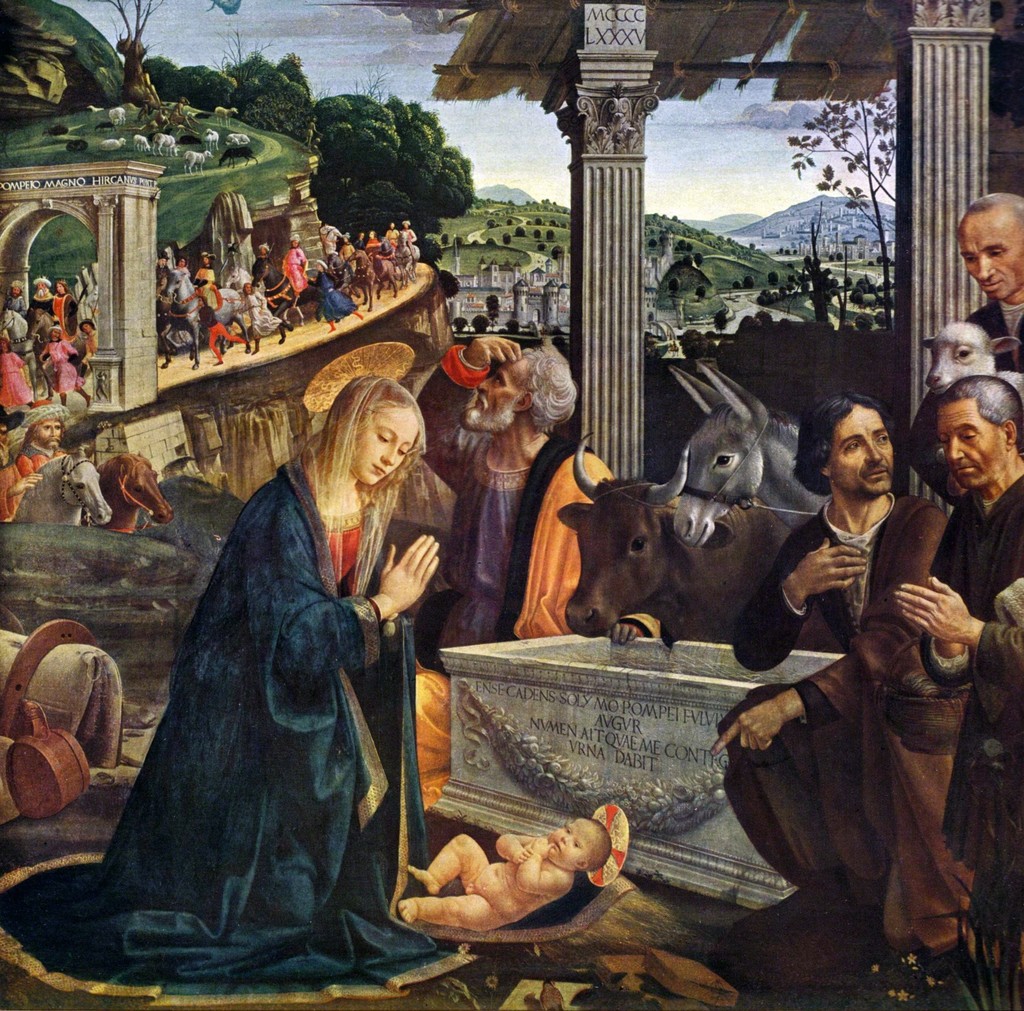
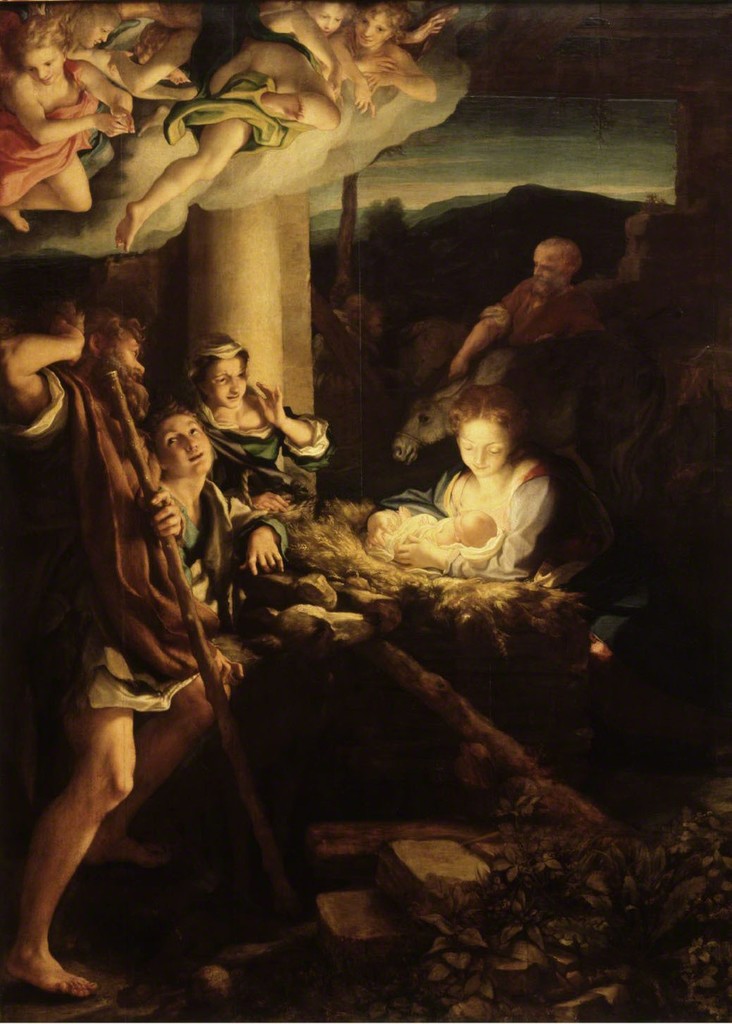
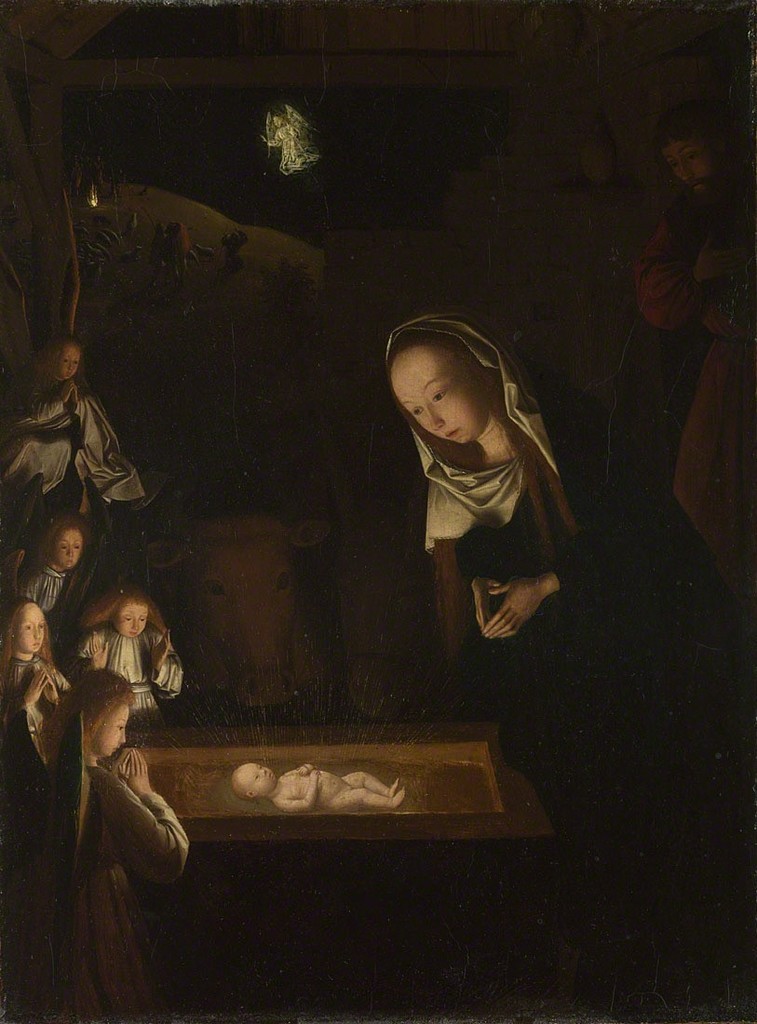
Starting with the Renaissance, artists produced incredibly diverse depictions of the Nativity, ranging from nighttime scenes (such as those of Geertgen tot Sint Jans and Antonio da Correggio) to Pieter Brueghel the Younger’s The Census at Bethlehem (circa 1605-1610), which bustles with narrative detail from his contemporary Flanders. Examples range from mystical elaborations to variations that reflected the specific interests of the patron and artist. One such creative commissioned work is The Nativity and Adoration of the Shepherds (1485), an altarpiece by Domenico Ghirlandaio in the Sassetti Chapel in Santa Trinità in Florence. It reveals the late 15th-century fascination with classical architecture—most prominently in Ghirlandaio’s use of two highly detailed Corinthian piers as a support for the roof of the shed. The work boasts vivid detail in the long retinue of the Magi approaching on the left. The scene still retains a strong symbolic character—as if drawing on the Nativity’s very origins, we see the manger depicted as a sarcophagus to suggest the altar, and Mary kneels in adoration of the infant Christ.
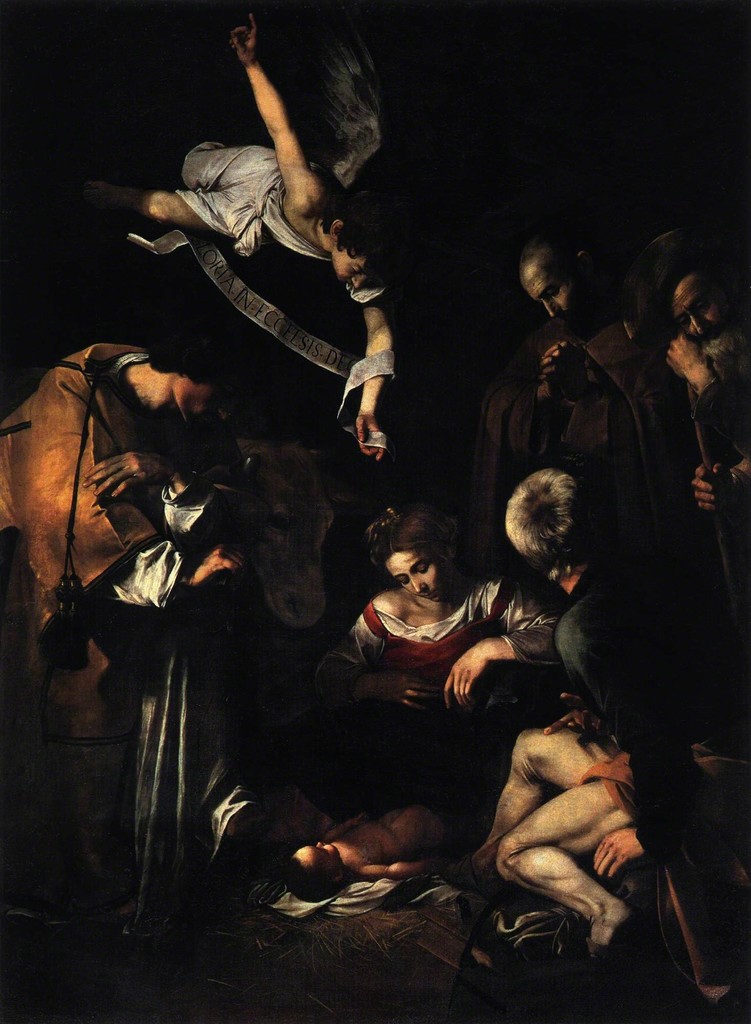
Strikingly dissimilar to Ghirlandaio’s idealized Mary is Caravaggio’s depiction of her in the Nativity with St. Francis and St. Lawrence (1609). (In one of the most renowned—and still unsolved—cases of art theft, the work was stolen from the Oratory of San Lorenzo in Palermo in 1969, and has yet to be returned.) Here, Mary is depicted as a modern woman, wearing a sleeveless dress and chemise typical of working-class women of the time. Because the painting showed Mary weary from exhaustion after giving birth, it was perceived as not befitting her holiness. And since Christian theology held that Christ’s birth was miraculous and devoid of pain, the work presented a dogmatic contradiction. The angel pointing upward, proclaiming Heaven’s exaltation at the arrival of the Savior, the sharply lit figures, and the low horizon line all add to the scene’s theatricality, creating a dramatic composition that brings the viewer into the realm of the painting.


The Nativity Today

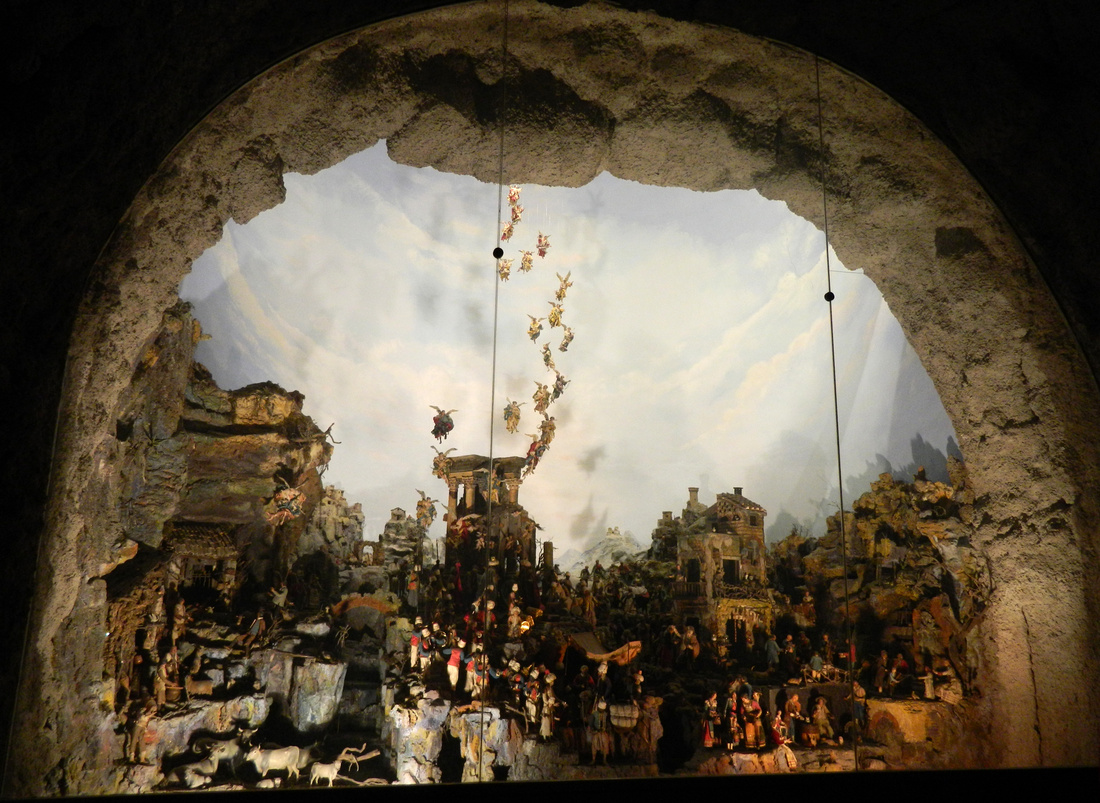
"Nativity" Presepe Cuciniello, Museo di San Martino, Napoli, Wikimedia Commons
The plastic Nativity scenes most of us are familiar with today—brought out on church lawns and domestic mantelpieces around Christmas—derive only in part from this iconographic tradition. In fact, they ultimately go back to the late Middle Ages, when they were used in religious plays. Drawing on these, the famous presepi (“cribs,” in Italian) of 18th-century Naples were elaborate, stage-like settings containing numerous figurines, typically made from terracotta, combining street scenes, costumes, and landscapes that provided realistic and lively depictions of Neapolitan life. Perhaps the most elaborate of these is the “Cuciniello Nativity,” created by a playwright in the late 18th-century, which contains over 600 miniature objects and figures.
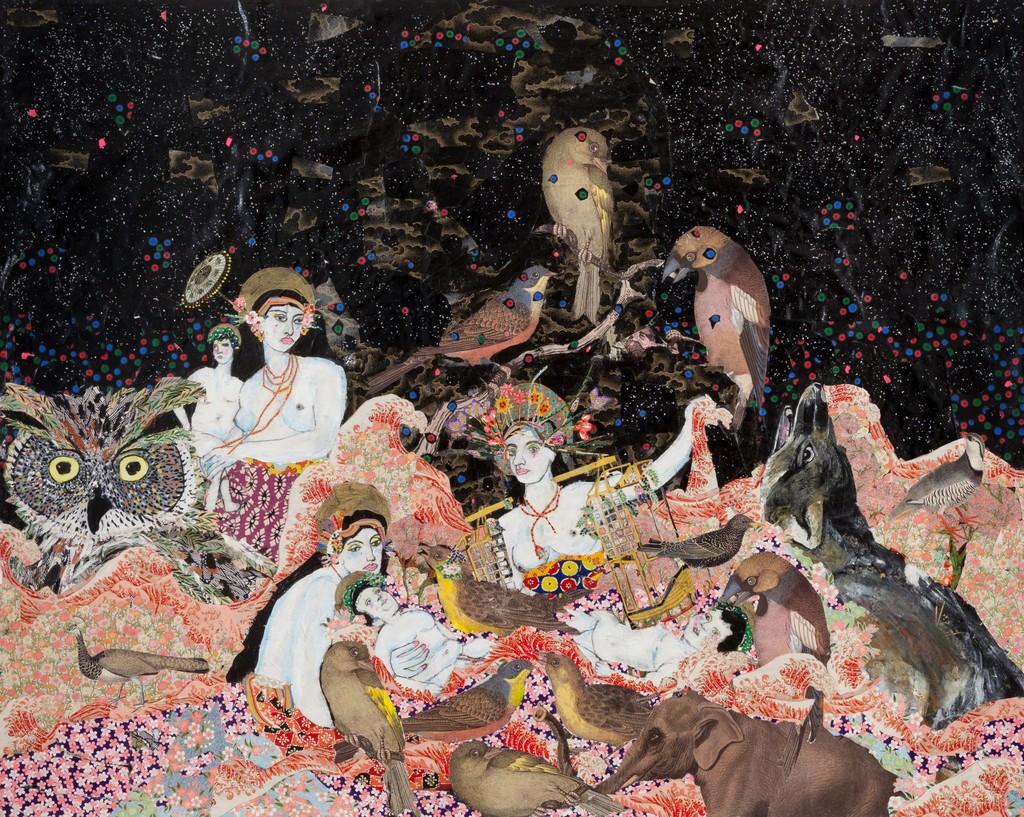
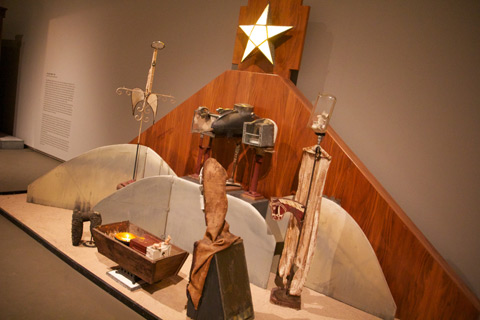
Despite its associations with popular culture, the Nativity still proves fruitful subject matter for contemporary artists. Edward Kienholz created his Nativity in 1961 using discarded objects and ephemeral materials, a provocative gesture for what is understood as the holiest and most timeless moment in Christian history. Contemporary Colombian artist Maria Berrio’s Nativity (2014) surprises with the exotic ornamental nature of the figuration allotted to the subject. Berrio’s work is an intricate collage of patterned Japanese paper, sequins, watercolor, and acrylic paint on canvas. The scene, taking place at night, is populated by three pairs of mothers and children, and hosts a plethora of animals against a patterned landscape that imbues the scene with a dreamy, fairy-tale quality. Her work thus taps into a long iconographic history—society’s collective mythologies—to connect sacred ideas with the theme of female solidarity.


—Konstantina Karterouli

Explore more Nativity scenes on Artsy.

An Oblique Interview with Heidi Julavits

Chez Donald Judd

Previous Post   |   Blog Home   |  

Chez Donald Judd

July 6, 2015 | by
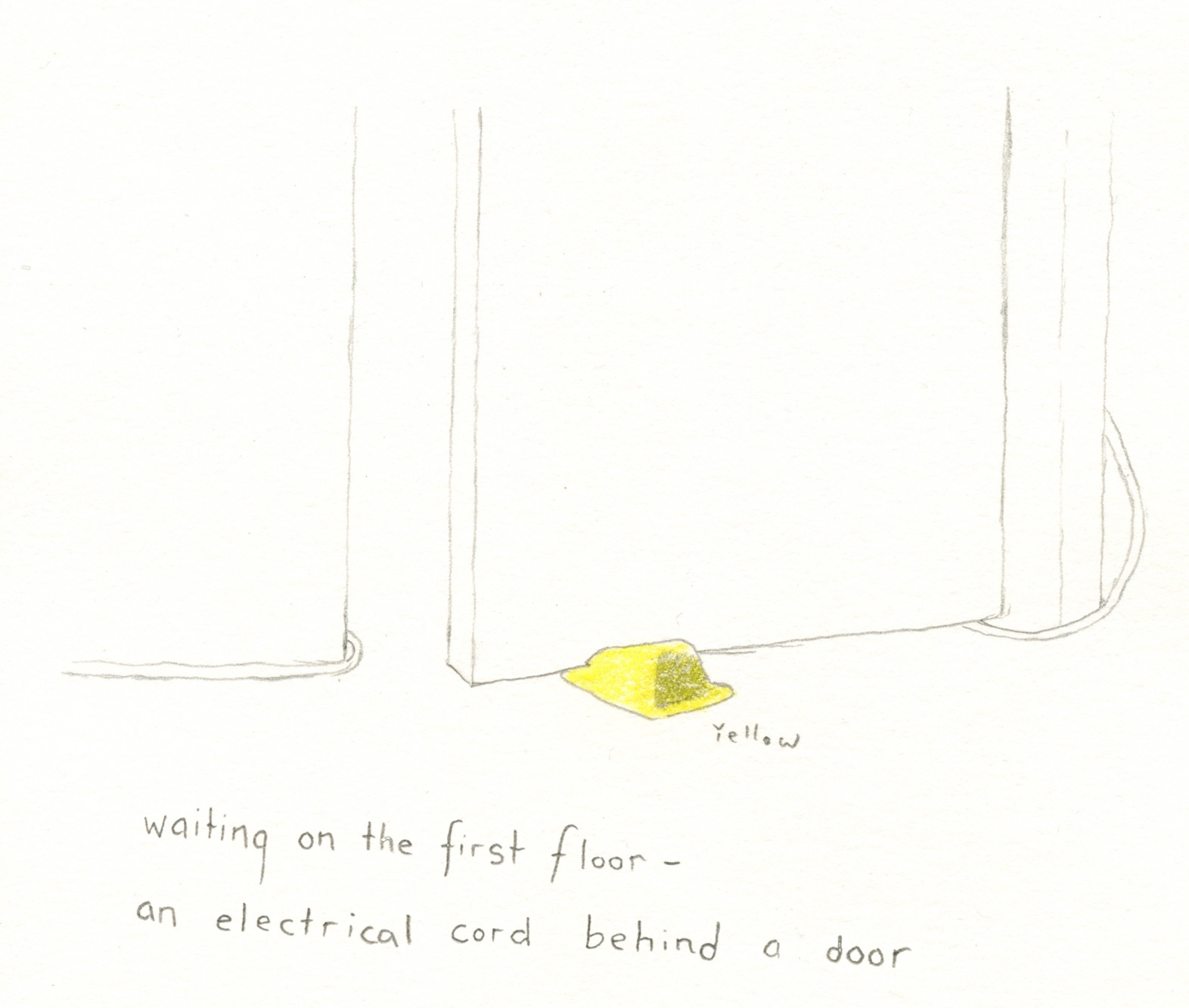
RebeccaBird_butter_doorstop-3
Donald Judd moved into 101 Spring Street, in New York’s Soho neighborhood, in 1968. The area was then the “Wild West,” as artist Trisha Brown once put it: a wasteland in which anything was possible. Judd had purchased the five-story, century-old building for sixty-eight thousand dollars and immediately set about restoring its interior, floor by floor, detail by detail—a project that would take him nearly a quarter century to complete. (Today, it is the only single-use cast-iron building remaining in Soho.) He aimed to create open, minimal spaces for working and living in which all elements existed in harmony, both in the context of the building’s architecture and with regard to his own aesthetic. On the fourth floor, for instance, he reproduced the parallel wood planes of flooring on the ceiling; the room feels like a light-filled wooden box.
Judd also intermixed nineteenth- and early twentieth-century objects—such as a cast-iron wood-burning stove, tin ceilings, an oak rolltop desk—and pieces from his substantial personal art collection, which includes sculpture, drawing, painting, furniture, and prints by John Chamberlain, Carl Andre, Lucas Samaras, Marcel Duchamp, Alvar Aalto, and others. Some of his interventions, however, are less formal: in the second-floor kitchen, a flap of wood on the wall opens to reveal a puppet theater Judd devised for his children.