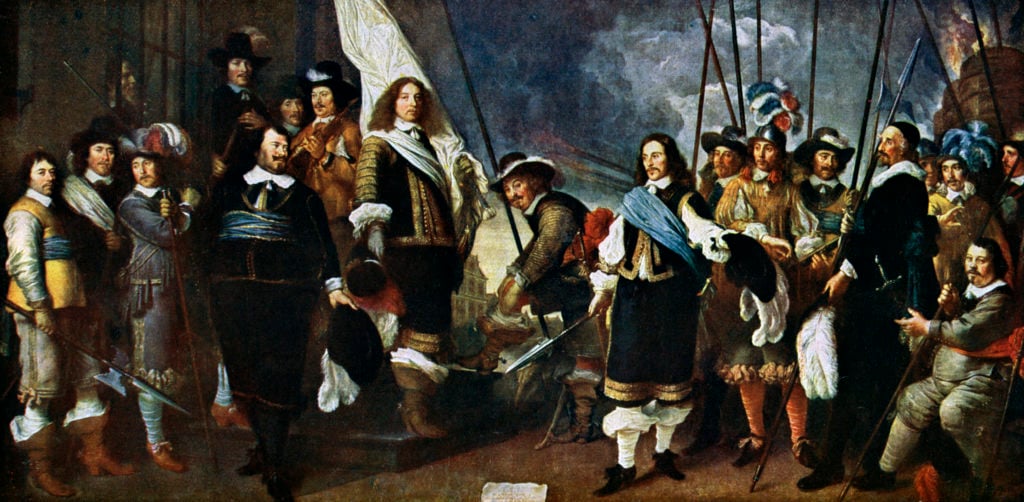
NEW YORK (NYT NEWS SERVICE ).- A four-volume Leonardo da Vinci compilation, the writings of Jill Johnston, a seductive collection of Carlo Mollino’s photography and a deeply researched book about imbalances in MoMA’s permanent collection. The New York Times’ art critics have chosen a truly eclectic array of art books this year — books that kept surprising them with each turn of the page. Below, they share their thoughts about their selections, listed in no particular order.
HOLLAND COTTER
‘Unspeakable Acts: Women, Art, And Sexual Violence In The 1970s’ By Nancy Princenthal (Thames & Hudson). This cogent, nuanced book — long in the works — focuses on the ways the rape of women has been depicted in the visual arts. For centuries, images of it were in the hands of male artists and often filtered through a scrim of mythology and religion. In the 1960s and ’70s, female artists — Yoko Ono, Ana Mendieta, Valie Export and Suzanne Lacy among them — laid claim to the subject, manifesting its trauma in their own bodies, in uncompromising performances that were market-resistant in their day and feel right on time for a misogynist present.
‘William Blake’ By Martin Myrone and Amy Concannon (Princeton University Press). Published to accompany the major, one-stop-only Blake retrospective now at the Tate Britain (through Feb. 2), this beautiful book distills the spirit of the revolutionary poet, artist and prophet-saint of what we now call social justice. The scholar E.P. Thompson once said that to study Blake (1757-1827) is to realize that there are “a great many William Blakes.” And there’s a new one to be found here at every turn of the page.
‘Love, Icebox: Letters From John Cage to Merce Cunningham’ By Laura Kuhn (The John Cage Trust). The 39 letters in this slender volume date from 1942 to the mid-1940s. Preserved by Cunningham and discovered after his death in 2009, they constitute the foundation stones of one of the great Modernist love affairs, one that began as a teacher-student crush (Cage was the teacher) and blossomed into an artistic collaboration and 50-year marriage. We only get Cage’s view of the affair in the letters, but the emotions expressed are intense enough to speak for two: “I nearly left this earth a few minutes ago — ecstasy — word from you,” he writes, and, again and again, “Love you.” As a bonus, scattered throughout this book-as-valentine are snapshots of the New York City home the couple shared.
‘Beatriz González: a Retrospective’ By Tobias Ostrander and Mari Carmen Ramírez (DelMonico Books/Prestel). Too rarely exhibited in North America, the esteemed Colombian painter Beatriz González, now in her 80s, is the subject of a retrospective at the Museum of Fine Arts, Houston (through Jan. 20), for which this book is the catalog. In what might be called a noir-pop style, the artist combines sensationalist images from Colombian tabloids (crimes, assassinations) with outtakes from Western art to chronicle a country gripped by continuous civil strife — La Violencia — since the 1940s. The resulting paintings are, almost impossibly, both grief-laden and witty. And the book appears at an auspicious moment. González’s only public art work, “Auras Anónimas,” dedicated to victims of violence, installed in Bogotá’s central cemetery, and long under threat of demolition by conservative city politicians, was recently declared a national asset of cultural interest by the National Cultural Heritage Council of Colombia.
‘AI-5: 50 Years — It Still Isn’t Over Yet’ (“AI-5: 50 Anos — Ainda Não Terminou De Acabar”) Edited by Paulo Miyada (Instituto Tomie Ohtake, São Paulo, Brazil). AI-5 (Institutional Act Number Five), a decree issued in 1968 by Brazil’s military dictatorship that curtailed political and press freedoms, leading to the institutionalization of censorship and torture to suppress opposition. Last year, on the 50th anniversary of the adoption of AI-5, Instituto Tomie Ohtake organized a breathtaking archival exhibition documenting the response of artists to the draconian decree. The show’s long-delayed catalog, thick as a brick and data-crammed, isn’t exactly user-friendly for English-speakers — it’s in Portuguese, with a translation in very small type at the back — but it’s a keeper, a how-to manual for an art of resistance. And still pertinent: A top official in Brazil’s current right-wing government recently referred AI-5 in a speech warning against government protest.
‘Lynn Hershman Leeson: Anti-Bodies’ (Hatje Cantz). The artist Lynn Hershman Leeson has always been ahead of the pack in her fusion of art and science. As early as the 1960s she foresaw the technology-permeated world of today. She was making computer-based work in the 1970s, and went on to experiment with artificial intelligence and virtual reality as art media. Genetics and biotechnology have been her focus in an elaborate recent installation called “The Infinity Engine.” The succinct catalog, produced when the piece was shown in her 2018 exhibition “Anti-Bodies” at the House of Electronic Arts in Basel, Switzerland, offers a clear précis of her thinking. This book is far more a reading experience than a looking experience. And it’s a read worth doing. At a time when so much new art feels so old, this work feels like the future, which is now.
‘Art and Race Matters: The Career of Robert Colescott’ By Raphaela Platow and Lowery Stokes Sims (Rizzoli Electa). Biracial artist Robert Colescott (1925-2009) didn’t fully claim his black identity until he was in his 40s, but he did so with a vengeance in a series of hair-raisingly funny, offend-everyone paintings that marked him as one of 20th-century America’s most incisive satirists. The catalog for his current traveling retrospective (organized by the Contemporary Arts Center in Cincinnati, where it’s on view through Jan. 12), covers the span of his art. But it also concentrates on the late, richly brushed political takedowns in his works, which anticipate, in tone, one of the stand-up comic strategies of current White House Twitter discourse: delivery of weaponized insults followed by a “just kidding” that no one is meant to believe.
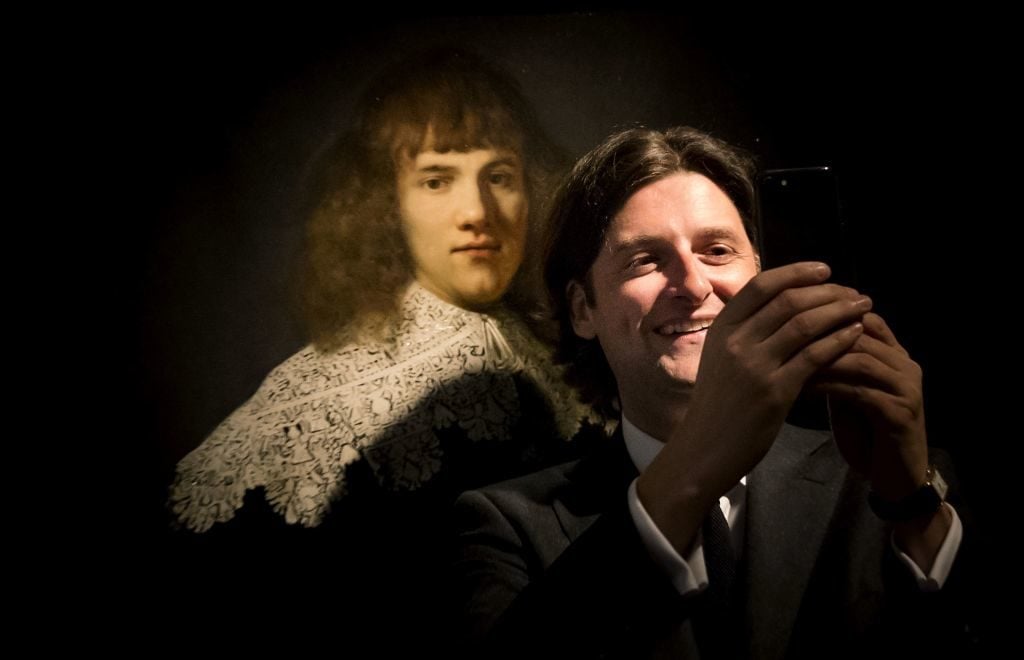
‘Leonardo da Vinci Rediscovered’ By Carmen C. Bambach (Yale University Press). You probably won’t be able to lift it and some of us can’t afford it: This four-volume Leonardo compilation is mega in every way. It gives you Leonardo — paintings, drawings, manuscripts — more or less complete, meaning you get far more of him than in the current Paris and London exhibitions combined, and the addition of extensive commentary by art historian Carmen C. Bambach. (One volume is devoted almost entirely to footnotes.) What you don’t get is jostling crowds, timed admission, smartphones and selfie-sticks, which makes it a bargain.
—
ROBERTA SMITH
‘Among Others: Blackness at Moma’ By Darby English and Charlotte Barat (Museum of Modern Art). This book is exemplary for its combination of new research, interpretive analysis and quantities of information. Given free rein in the Museum of Modern Art’s archives, the authors mined the untold story of the museum’s fraught relationship with race in general and black artists and their work in particular. Mabel O. Wilson, the designer and professor of architecture at Columbia University, backs them up in an essay that zeros in on the lost potential, especially in urban design and therefore social justice, caused by the unusual whiteness — even by MoMA’s standards — of its architecture and design holdings. There follows in alphabetical order and running to some 350 pages, all the black artists who have works in the museum’s collection, accompanied by photographs of their art and commentary by one of about 130 curators, art historians or artists. Works by artists who touch on racial difference or injustice, like Brancusi, José Clemente Orozco and Alice Neel, are also included.
‘Bauhaus Mädels: A Tribute to Pioneering Women Artists’ By Patrick Rössler (Taschen). With a title taken from a contemporary newspaper headline (in English the dubious “Bauhaus gals”), this thick novel-size book celebrates the scores of women, mostly little-known, if at all, who studied at the important but short-lived multidisciplinary school (or its successor in Dessau). Each woman is represented by as much biographical information as Rössler was able to unearth and at least one photograph, taken by teachers, fellow students, spouses, lovers or themselves. The book reflects much — from the rise of photography as hobby, profession and art form to popular hairstyles (short) and poses. The women’s post-Bauhaus trajectories, many affected by the rise of the Nazis (who forced the school to close), form a dizzying tracery. Some remained artists, others did not. Either way, learning about them is a gift.
‘Great Women Artists’ (Phaidon Press Limited). The middle word of the title is wittily crossed out on the book’s cover and opening page, as if to imply that the gender of those included is irrelevant. Alphabetical order prevails; each artist is given a large color photograph, biographical information and a bit of aesthetic interpretation of the work pictured. One pleasant surprise is the number of female painters working in Europe in the 17th and 18th centuries. This is a “great,” immensely useful book, though opinions will vary about whether each contemporary artist included qualifies as great or is simply currently visible and marketable. Also, everyone will be able to name artists who should have been included here. (Among mine: Trisha Donnelly, Dona Nelson, Goshka Macuga and Celia Paul.) Send them to Phaidon. Help make the second edition even greater.
‘Tarsila do Amaral: Cannibalizing Modernism’ Edited by Adriano Pedrosa and Fernando Oliva (MASP). In this lavishly illustrated, multivoiced and comprehensive catalog, some dozen curators, critics and writers insistently create more space between the work of this singular and singularly Brazilian artist and the European influences she absorbed in Paris in the early 1920s. Factoring in Tarsila’s upper-class origins (she was always called by her first name) and Brazil’s social turmoil, they approach her work from many angles — topography, primitivism, popular culture and even contemporary performance art — in ways both precise and expansive.
‘The Pocket: A Hidden History of Women’s Lives, 1660-1900’ By Barbara Burman and Ariane Fennetaux (Yale University Press). Before pockets were finally sewn into women’s garments — long after men’s were — they were tied onto the waist and worn above or beneath aprons or skirts and filled with all sorts of personal items, small tools and necessities, like keys. In this riveting book, the authors take advantage of the pockets’ frequent survival in textile museums, private collections and family holdings across Britain, tracing their presence in art, literature, political satire, domestic organization and court records. In the entwining of art, social and material history, few stones are left unturned.
‘Edith Halpert, The Downtown Gallery, and the Rise of American Art’ By Rebecca Shaykin (Jewish Museum and Yale University Press). This catalog accompanies a fascinating exhibition, “Edith Halpert and the Rise of American Art,” now on view at the Jewish Museum (through Feb. 9). The show is a rare look at an art gallery’s history, and the exceedingly capable woman behind one of New York’s most influential one, devoting her considerable energies (and canny grasp of publicity) to the promotion of American artists like Stuart Davis, Jacob Lawrence and Charles Sheeler, as well as American folk art. Naturally the catalog is more comprehensive and it reproduces more works than the exhibition, making it a must-have for anyone interested in American art before Jackson Pollock and in the origins of the New York art world.
‘Ludwig Bemelmans’ By Quentin Blake and Laurie Britton Newell (Thames & Hudson). At 111 pages, this delightful, extensively illustrated book is among the slimmer, more satisfying accounts of an artist’s life, development, career and achievement. The creator of the world-famous Madeline, her 11-girl cohort, sundry nuns and their lives in and around a Parisian convent school, Bemelmans (1898-1962) grew up and for a while, worked in his father’s hotel in Austria. In 1915, he pursued hospitality skills in New York hotels (the Ritz-Carlton, for one) before turning full-time to book illustration, commercial design and mural painting (like the one in the bar named for him at the Carlyle Hotel). At the end of his life, he turned to oil paint and comported himself quite well, in a style related to that of Raoul Dufy, another of 20th-century art’s great, underestimated lightweights.
—
JASON FARAGO
‘The Social Photo: On Photography and Social Media’ By Nathan Jurgenson (Verso). The cameraphone is enacting the profoundest change to our experience of art in a century — and yet we still talk about photography with language as old as the Kodak Colorsnap. Jurgenson, founding editor of the ambitious digital magazine Real Life, makes a first sortie toward a new understanding of the photograph, wherein artistry or documentary intent have given way to communication and circulation, and where each year pictures become crisper and more pointless. (An ordinary snowstorm will now be photographed more than the Battle of the Bulge, and forgotten the day after.) Like Susan Sontag’s “On Photography,” to which it self-consciously responds, “The Social Photo” is slim, hard-bitten and picture-free. For if the average photo is ever dumber, photography matters even more; the social photo, in Jurgenson’s phrase, has effected a “fusion of media and bodies” that has made every gallerygoer a cyborg.
‘Hannah Ryggen: Threads of Defiance’ By Marit Paasche (The University of Chicago Press). In the early Renaissance it was the most prestigious art form of all; now tapestry is back, part of a reputational revival of textile arts that’s also unclouded the achievements of neglected modernists. One is the Swedish-born Norwegian weaver Hannah Ryggen (1894-1970), whose monumental tapestries, drawing on Picasso’s deformed figures and steeped with feminist and anti-fascist conviction, come to life in this newly translated biography, illustrated in color throughout. (Paasche is also the co-curator of a Ryggen retrospective up now at the Schirn Kunsthalle Frankfurt.) Ryggen lived on a farm with no electricity, she even used the urine of (ideally drunk) men to dye wool, but she was no “outsider”: Ryggen was acclaimed throughout her lifetime in Norway, and this biography establishes her as a model of artistic and political engagement.
‘Antonello da Messina’ Edited by Caterina Cardona and Giovanni Carlo Federico Villa (Skira). Still too little known here, Antonello was among the first Italians to adopt the Flemish innovation of oil paint, whose slower drying times permitted unprecedented realism. Finally, this catalog of a beautiful show at the Palazzo Reale in Milan offers English speakers a full view of this 15th-century Sicilian master, whose portraits radiate divine ardor and human pain. Mixed in with the book’s authoritative technical and historical essays are shorter literary reflections on Antonello’s portraiture, including one by Jhumpa Lahiri, the Pulitzer Prize-winning American author lately writing in Italian.
‘Balkrishna Doshi: Architecture for the People’ Edited by Mateo Kries, Khushnu Panthaki Hoof and Jolanthe Kugler (Vitra Design Museum/the Wüstenrot Foundation). Last year, at 90, the architect Balkrishna Doshi became the first Pritzker Prize laureate from India — but he had long ago secured his legacy in and around Ahmedabad, where he specializes particularly in affordable housing and educational institutions. Doshi, a student of Le Corbusier and Louis Kahn, rethought western Modernism for Indian climates and communities, and his buildings’ expanses of brick and concrete privilege public encounters and humane growth. This book offers both authoritative history and gorgeous visuals: The Berlin firm Double Standards provides an austerely handsome layout, while photographs by Iwan Baan and Vinay Panjwani show the open-air mingling that Doshi’s architecture inspires.
‘Julie Mehretu’ Edited by Christine Y. Kim and Rujeko Hockley (Whitney Museum of American Art/DelMonico Books/Prestel). This artist’s imperative midcareer retrospective — up now at the Los Angeles County Museum of Art, and traveling next year to the Whitney in New York and the High Museum in Atlanta — comes with a rich catalog that captures her paintings’ stuttering intensity and discloses her abstracted source material (wildfires, riots). Mehretu’s early, architectonic paintings came at a high-water mark for globalization; her recent art, more anxious and more impressive, features thrumming, multilayered fields of color and ricky-tick calligraphic swoops that seethe with the contemporary volatility of states and climates. The book is dedicated to the pioneering Nigerian curator Okwui Enwezor, who died before he could complete his contribution, but whose global engagement animates many of its other essays.
‘Carlo Mollino: Photographs 1934-1973’ Edited by Francesco Zanot (Silvana). The sly, eccentric Italian industrial designer produced biomorphic buildings and interiors across booming postwar Turin, as well as furniture that now sells for millions. Mollino was also obsessed with photography, and this compact, seductive volume includes more than 450 images he shot of Turin’s 18th-century monuments, of aerodynamic sports cars that look like well-fed frogs — and, not least, of half-dressed women posing in the secret, shrine-like Turin apartment he used only for photography, not for sleeping. Found after his death in 1973, these compelling and perverse pictures suggest private games between artist and model, and disclose how design can be an erotic enterprise.
‘Charlotte Perriand: Inventing a New World’ Edited by Sébastien Cherruet and Jacques Barsac (Gallimard). She didn’t just design the now world-famous chaise longue basculante, an easy chair on a movable crescent-shaped steel armature — Charlotte Perriand even modeled it for promotional photography, lazing on the ultra-modern-for-1928 recliner while sporting a necklace strung with industrial ball bearings. In this hefty catalog for the blowout retrospective on view now at the Fondation Louis Vuitton in Paris, Perriand comes across as a design reformer who also knew, better than many of her colleagues, how to sell and how to persuade. Prepare to swoon over her ski resorts, to envy the impossibly chic Air France offices she designed in London, Tokyo and Rio de Janeiro, and to scour eBay listings for vintage Perriand chairs for the rest of your life.
‘A Year Without a Winter’ Edited by Dehlia Hannah (Columbia Books on Architecture and the City). In 1815, the most powerful volcano eruption in human history took place in what is now Indonesia and led to extreme climate abnormalities: global temperatures dropped and crops were devastated, inspiring apocalyptic visions from painters like J.M.W. Turner and Caspar David Friedrich and writers like Lord Byron and Mary Shelley. For the artists, architects and writers in this absolutely engrossing book, the “year without a summer” two centuries ago offers cultural antecedents for our present climate crisis. In short stories, artistic interventions, and postcards that Hannah and the artist Julian Charrière sent while trekking to the notorious volcano, this book makes plain the moral and emotional stakes of art in these hottest years on record — and steps out from what Byron called “the pall of a past world.”
—
MARTHA SCHWENDENER
‘FESTAC ’77’ By Chimurenga (Chimurenga, Afterall Books and Koenig Books). Coinciding with a residency at the Vera List Center for Arts and Politics at the New School, the Pan-African collective Chimurenga assembled this extraordinary catalog devoted to FESTAC ’77, also known as the Second World Black and African Festival of Arts and Culture held in Nigeria in 1977. Packed with photographs and reproductions of artwork, posters and newspaper articles, this visually rich tome examines an event Ebony magazine described as “the largest single group of African Americans ever to return to Africa in one body,” and included creative luminaries like Faith Ringgold, Alice Walker, Stevie Wonder and Sun Ra.
‘Gyorgy Kepes: Undreaming the Bauhaus’ By John R. Blakinger (The MIT Press). An overdue treatment of the Hungarian-born artist and designer Gyorgy Kepes (1906-2001) explores his career, from designing books in Berlin in the 1930s to teaching at the New Bauhaus in Chicago and founding the Center for Advanced Visual Studies at MIT Technology and war are often common threads in Kepes’s work. Innovating forms of camouflage during World War II, his designs coincided with clashes around MIT’s connections with the military during the Vietnam War. Blakinger argues that Kepes represents a new form of modern artist fluent in and influenced by technology: “the artist as technocrat.”
‘Jill Johnston: The Disintegration of a Critic’ Edited by Fiona McGovern, Megan Francis Sullivan and Axel Wieder (Bergen Kunsthall/Sternberg Press). There are breakaway artists and there are critics who follow their trajectories. Jill Johnston wrote about downtown New York dance and performance in the 1960s, during the heyday of the Judson Dance Theater. The writings here were published in the Village Voice, which was co-founded by Norman Mailer, with whom Johnston had some notable public run-ins. Johnston later wrote the radical-feminist text “Lesbian Nation” (1973), the writings gathered here focus on art and were the subject of a research project last spring, not in New York, but at the Bergen Kunsthall in Norway.
© 2019 The New York Times Company
 ‘Leonardo da Vinci Rediscovered’ By Carmen C. Bambach (Yale University Press).