Sunday, October 21, 2018

‘In Rehearsals It Worked Every Time’


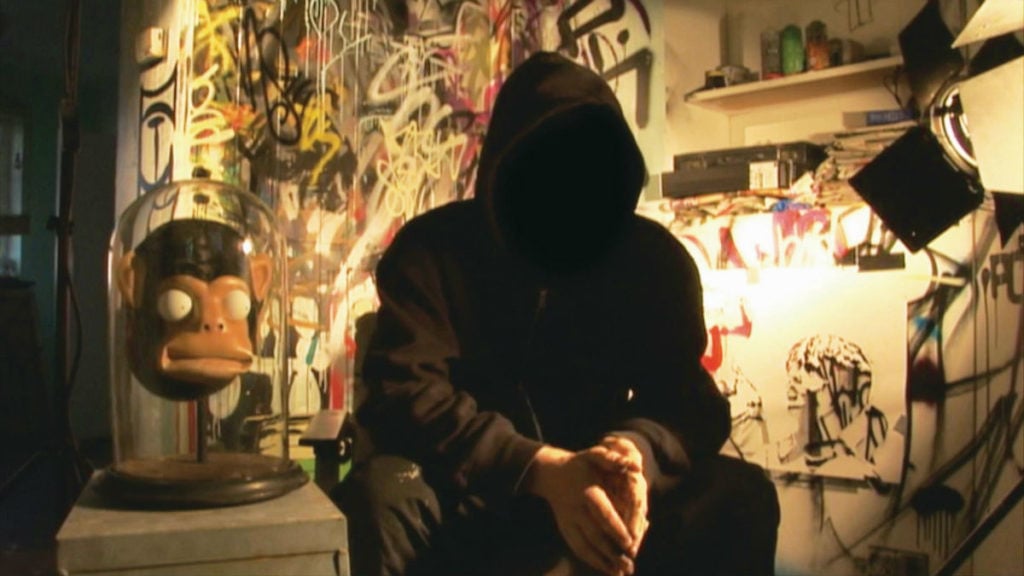
Press image from Exit Through the Gift Shop.
Banksy, as seen in a press image from Exit Through the Gift Shop.

BEST👍


Banksy Milks His Prank for All It’s Worth – Banksy refused to relinquish the spotlight this week, uploading another video to his Instagram page to confess that despite flawless practice runs of the shredding stunt, a malfunction at Sotheby’s was to blame for only completing half the job. He also announced that, despite rumblings that Sotheby’s had a hand in the prank, “they weren’t” in on the trick.



‘In Rehearsals It Worked Every Time’: New Banksy Video Shows How His Sensational Sotheby’s Stunt Was SUPPOSED to Work

The frame was actually supposed to shred the whole thing.
The art world can’t stop talking about Banksy’s latest prank, shredding one of his own artworks moments after it hammered down for $1.3 million at Sotheby’s London. (We can’t either! But only because you can’t stop reading about it! It’s a vicious cycle.)
A week and a half after the stunt, the anonymous street artist is continuing to fuel the fire. Today, he posted a new video to his website titled “Shred the Love,” billed on Instagram as a “director’s cut” to “Shredding the Girl With Balloon.”
“Some people think it didn’t really shred. It did,” Banksy insisted. “Some people think the auction house were in on it. They weren’t.”
The film opens to the sounds of power tools, the shredder being carefully secreted within the frame. It gives a much better look at the hidden mechanism than the previous clip (images of knife blades, placed lateral to the frame, had provoked questions about whether such a set-up would actually work. The actual device looks more like a conventional shredder mechanism.)
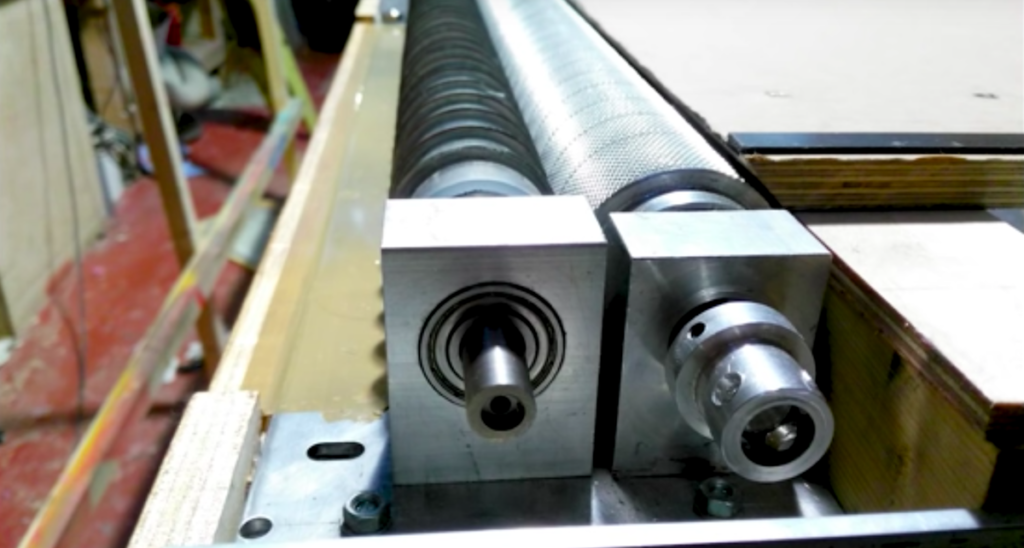
The mechanism hidden in the frame of Banksy's <em>Girl With Balloon</em>, as seen in the "Director's Cut" of his video.
The mechanism hidden in the frame of Banksy’s Girl With Balloon, as seen in the “Director’s Cut” of his video.
It then cuts to footage of Sotheby’s fancy auction preview. As wealthy collectors sip bubbles and chase hors d’oeuvres, a man, presumably a Sotheby’s employee, talks up the now-infamous work, Girl With Balloon (2006).
“It’s I think by far the most asked-about lot in the sale,” he offers. “The artist put the frame on as well. You get that quite often with Banksy; he quite likes the romanticism of having a very ornate, you know, National Gallery-esque frame.”
It then shows the moments leading up to the activation of the device, and even a quick cut to a finger pressing the button of the device.
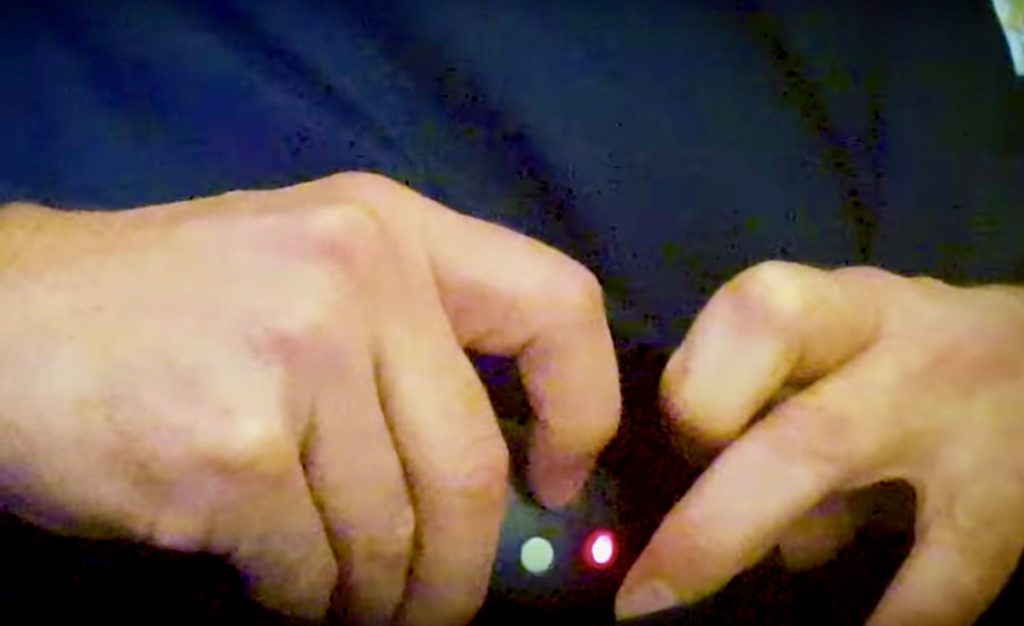
The moment the shredder mechanism was activated, as seen in the new video.
As far as pranks go, it’s been enormously successful—a viral news story that has spread far beyond the art world, dominating headlines in major newspapers and serving as a reliable topic for water cooler talk. An epilogue in the new video, however, proves that the frame only worked half as well as intended.
“In rehearsals it worked every time,” reads a subtitle. Then, there’s a test run of the frame in action, shredding not just halfway, but from top to bottom.
Still, we can’t help but wonder if the buyer, who agreed to pay for the work despite the unexpected damage, would have been quite so amenable if the piece wasn’t still partially framed, and therefore capable of being displayed more or less as-is. After the stunt took place, Banksy rechristened the work Love Is in the Bin and issued a new certificate of authenticity.


Follow artnet News on Facebook: 

Want to stay ahead of the art world? Subscribe to our newsletter to get the breaking news, eye-opening interviews, and incisive critical takes that drive the conversation forward.
  • Access the data behind the headlines with the artnet Price Database.
SHARE
Article topics


Sarah Cascone

Senior Writer


REBOOTS 

Banksy’s ‘Self-Destructed’ Painting Is Reborn As a New Work

The original work, Girl with Balloon. Photo: ADRIAN DENNIS/AFP/Getty Images
On October 5, anonymous street artist and art-world prankster Banksy shocked onlookers at Sotheby’s (and subsequently the world) when the artist’s beloved “Girl with Balloon” was sold at its London auction for the equivalent of over $1.2 million then proceeded to “self-destruct.” After the work slid from its ornate frame, shredding like office paper, a question remained, what happens next? Thanks to a statement from Sotheby’s on Thursday, we now have an answer. Like a phoenix rising from its ashes, the tattered “Girl with Balloon” by Banksy has been reborn, recertified, and renamed as “Love Is in the Bin,” and the winning bidder is keeping the work, strips and all.
The buyer, described as a “European collector” and “long-standing client of Sotheby’s,” will proceed with the purchase at the same price as auctioned, not more, as some speculated. According to Sotheby’s, the buyer commented: “When the hammer came down last week and the work was shredded, I was at first shocked, but gradually I began to realize that I would end up with my own piece of art history.”
That same day on Instagram, Banksy wrote a quotation, “The urge to destroy is also a creative urge,” attributed to Picasso, along with a video showing how the shredding device was built into the frame.
In the statement, Banksy’s former gallerist Steve Lazarides shut down any further speculation that the stunt was done in collaboration with the auction house. “I worked for him for 12 years,” he said, “the idea of him colluding with an institution to pull off a stunt is the complete antithesis to his philosophy.”
If you happen to be in London this weekend, the “new” work will be on view to the public at Sotheby’s new Bond Street Galleries on October 13 and 14.

TAGS:


Friday, October 19, 2018

High Art Helped Make Paris’s Gallery Scene Hip Again


Art Market
How High Art Helped Make Paris’s Gallery Scene Hip Again
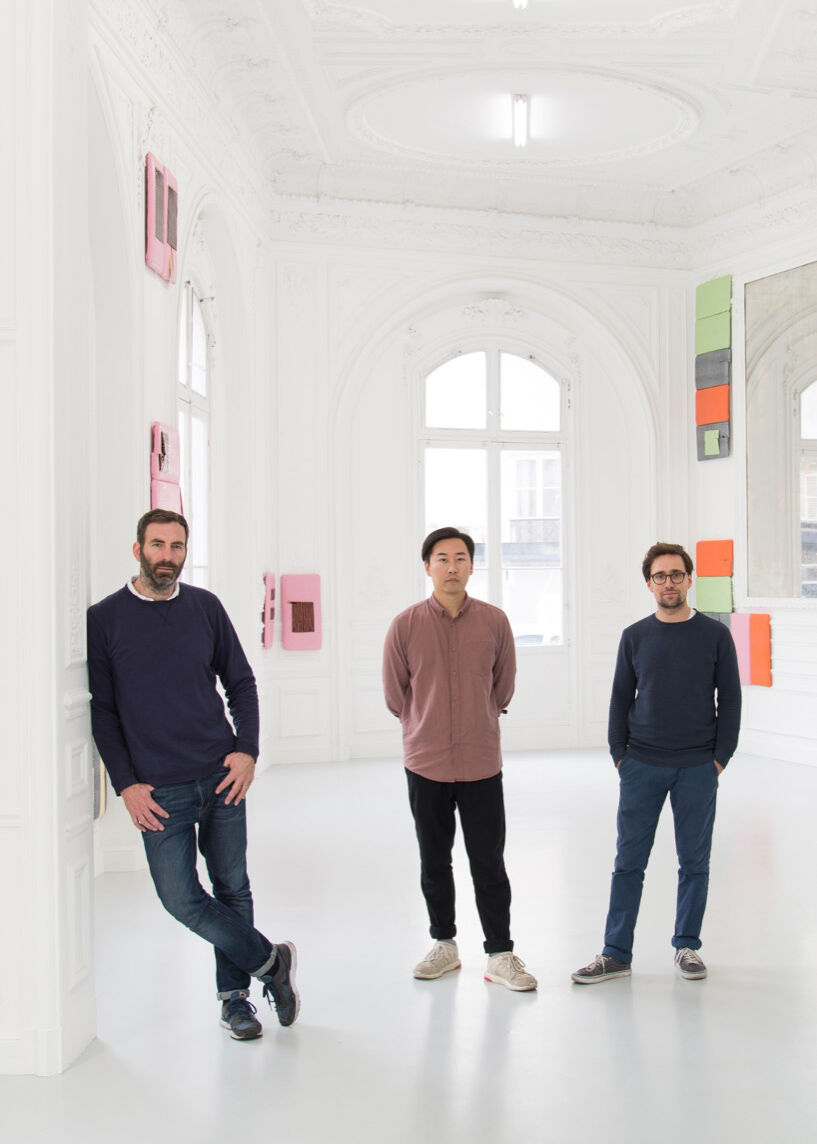
Philippe Joppin, Jason Hwang, Romain Chenais  in High Art. Courtesy of High Art.
Philippe Joppin, Jason Hwang, Romain Chenais in High Art. Courtesy of High Art.
Dealers setting up shop in Paris generally choose between two different districts. There’s Le Marais, where galleries started sprouting up after the Musée Picasso opened in 1985, and is now home to Thaddaeus Ropac, Galerie Max Hetzler, and Marian Goodman Gallery, alongside the Paris-bred establishment. Then there’s Belleville in the 20th arrondissement, where young dealers can open spaces with cheap rents.
Meanwhile, High Art, the 5-year-old gallery that graduated to the International Contemporary Art Fair (FIAC) this year after three years at the secondary fair Paris Internationale (which it also co-founded), left Belleville a year ago, choosing instead seedy Pigalle, a stone’s throw from a dozen sex shops, late-night cabarets, and a bar called Dirty Dick.
Such environs belie the fact that in its short life, High Art has evolved from a shoestring project space to one of the most vital young galleries in Paris. Its directors—Romain Chenais, Jason Hwang, and Philippe Joppin—graduated from the scruffy Belleville set and gained a global clientele by regularly appearing in major fairs, such as Frieze London and Art Basel in Miami Beach and Hong Kong. It has a proven track record for discovering talent: The gallery gave early solo shows to artists such as  , and  , who have since had shows at the Whitney Museum of American Art, the High Line, and Dallas Contemporary, respectively. This year, Keane had a museum show at Dallas Contemporary in January 2018, when she was just 28. High Art gave Rose her first solo gallery show in 2014, and by 2015, she had a solo show at the Whitney. In 2017, Hooper Schneider had gotten a commission to install his intricate and original terrarium works on the High Line for its 7 million annual visitors.
On Tuesday, the day before the VIP preview of FIAC, High Art was abuzz with art handlers and gallery assistants as Los Angeles–based artist   installed his solo show, “Susceptibles.” His last solo show at High Art, in 2015, featured a grey and black palette of lead and aluminum. This year, he presented an immediate burst of color, courtesy of two witty and visually eye-catching sculptures installed on the wall: One was an old-fashioned alarm bell, made out of rubber, resplendent in hot orange and blue. “I was trying to go against expectations,” Jacoby said.
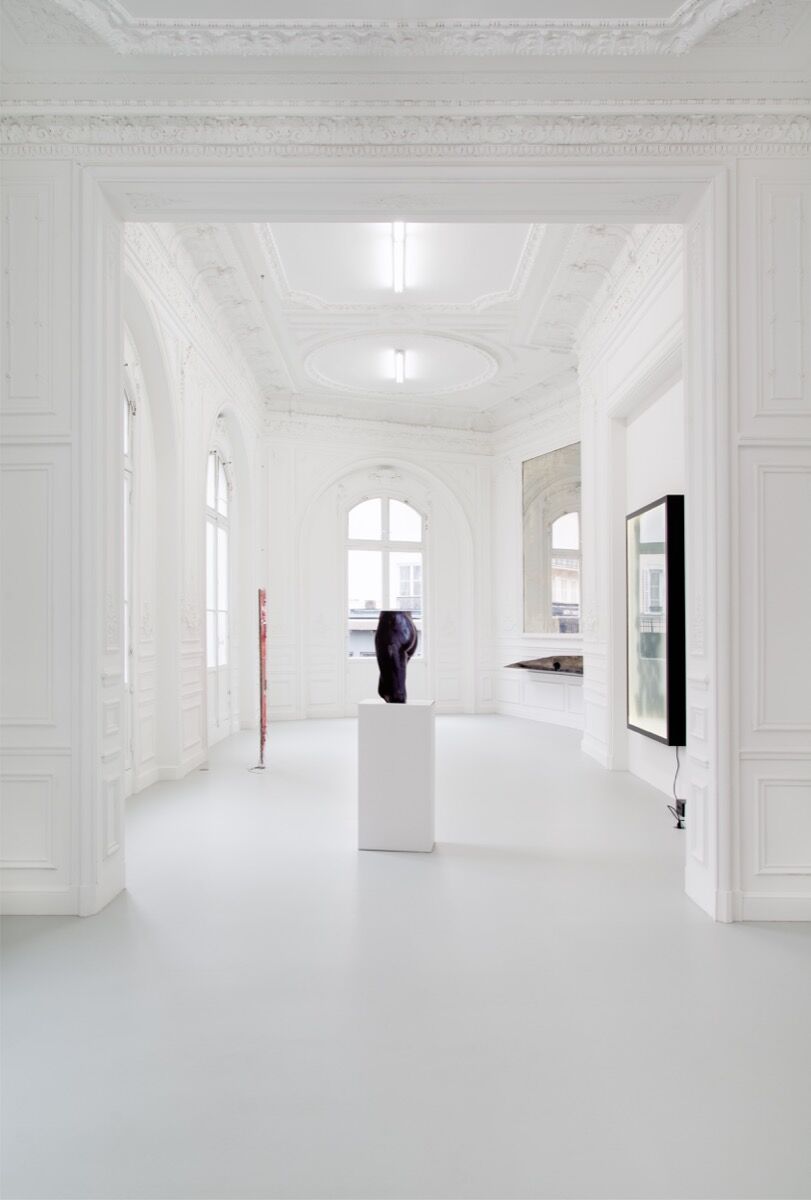
In the next room were mattress-like forms made by stuffing shards of aluminum into a metal cloth, with robin’s-egg blue stress balls studding the surface to make the mattress beads. As we walked through the second room, Jacoby explained that the new Pigalle space was a major factor in the gallery’s success. Its unique quality comes from the two different architectural styles at play: The first room is in an 18th-century  building with ornate frescos and curlicues framing the ceiling, while the second room, in the same building and connected through a small doorway, is your classic white cube.
“It’s almost like you have to make two different shows for each one,” Jacoby said.
Keane, who makes large, quicksilver-like cut-acrylic sheets that hang elegantly from the ceiling, also attributed the gallery’s strong roster to its directors’ excellent sense of space: They understand the power of installation-as-art when done right, a quality that many fear may be disappearing as galleries do more and more of their business at fairs.
“Because my work is relational to its site, its installation sometimes incorporates a lighting effect or a modification of the actual architecture,” she said. “High Art has always been open to these more elaborate constructions around my work.”
She also described them as dogged in their search for new talent.
“Philippe, Jason, and Romain were interested in my work very early on, at a time when I’d only shown in New York, in non-commercial project spaces or apartment galleries,” she said.
Interior view of High Art. Courtesy of High Art.
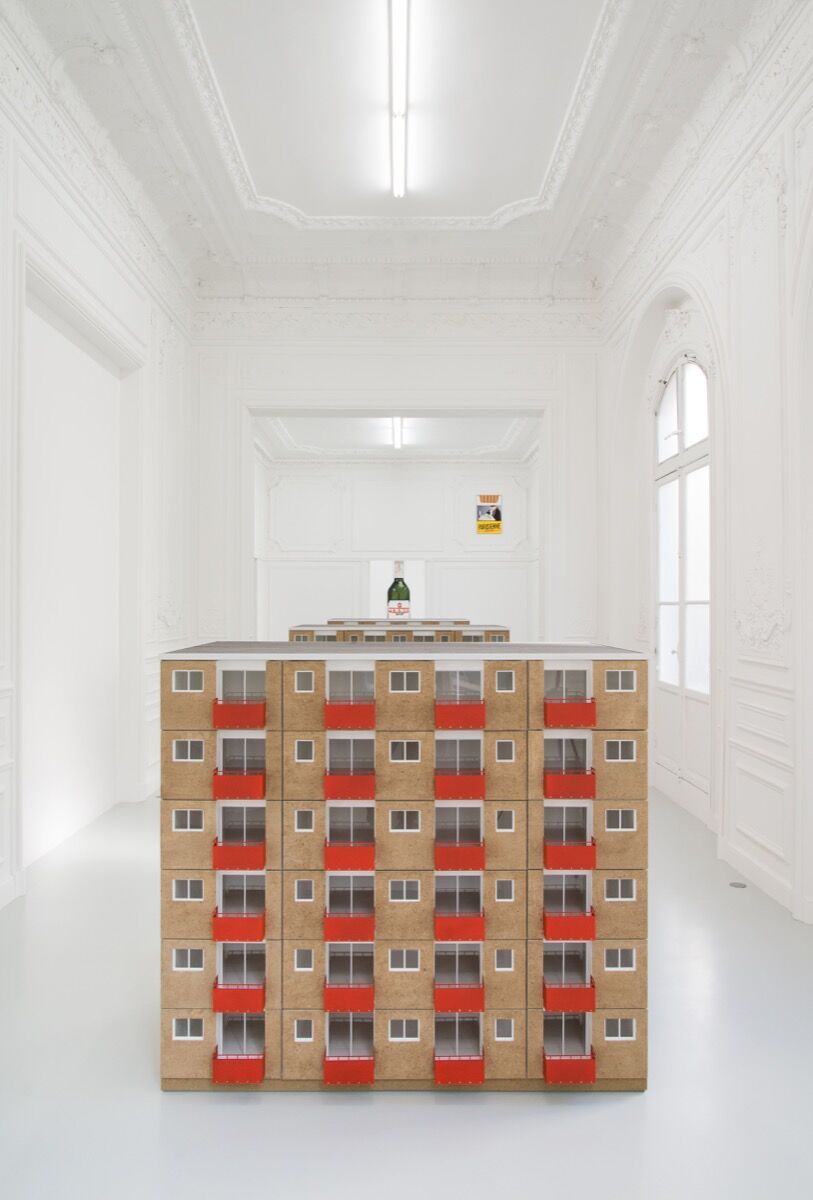
Pentti Monkkonen, V.S.O.P, 2017. Courtesy of High Art.
Pentti Monkkonen, V.S.O.P, 2017. Courtesy of High Art.
After Jacoby took me through the show, Hwang and Chenais bounded into the gallery fresh from the Grand Palais, where they had been putting the finishing touches on a FIAC booth that includes work by Jacoby alongside Hooper Schneider,  , and  . Chenais was wearing some of the gallery’s merch, a sweater that has a giant marijuana leaf on it—“High Art” indeed. We walked to one end of the   side of the gallery, which truly is a contrast to the second half of the space, the sleek, modernist white cube. One is the classic place in Paris to first see a show, the pre-war salons with art hung among living spaces, and the second is the post-war place to see a show, in a designated minimalist exhibition space. When I asked Hwang about dueling environments, he said: “It was kind of an inside joke between us, because we were interested in the two histories of art, split between modernism and rationalism. It’s the salon, and then the white cube.”
They moved into the space a year ago after searching all over the city for months. Prior to that, they had staged shows in Belleville, first with a project space called Shanaynay, which started in 2011. They originally gravitated toward the 20th arrondissement because, well, they didn’t have any money.
“It was just pragmatics, because we started the gallery with nothing,” Hwang said. “We didn’t have backers, we didn’t have anything, we just pooled money together and opened a small gallery.”
The programming switched to a more formal gallery setting in 2014, when High Art opened its first space in Belleville. (Shanaynay is still going strong under other directors.) In 2016, they decided to expand, and ultimately chose to look at other parts of the city. Hwang said that they were having conversations with other gallery owners in Belleville as they weighed the decision to leave.
“We didn’t want to be gentrifiers,” Hwang said. “When we opened the gallery with Shanaynay, the idea of a gallery being a gentrifier didn’t exist at that point. People were still being hipster gallery owners. That was a model.”
They looked to the Marais, but it felt like it was at “the tail end of the gentrification,” as Hwang put it. They found a space in Pigalle in a building where George Bizet is said to have written the 1875 opera Carmen, and decided to convert only half to a gallery—half would become the white cube, and half would be the raw remnants of Paris’s avant-garde culture in the 1800s.
“When we saw this space, it felt so natural—but it also felt really difficult,” Hwang said. “One of the ideas that we always talked about was that the space is an obstacle, physically and conceptually. In our experience, when artists have an obstacle they tend to respond better.”
A year after the new space opened, collectors arrived at the Grand Palais for FIAC on Wednesday and saw High Art in the context of the global mega-galleries who come to Paris to show there, such as Hauser & WirthDavid Zwirner, and Pace.
“I think we were just ready to expand our audience,” Hwang said. “FIAC was opening us up to something else. That’s how we saw it and how our artists saw it, too.”
But they have nothing but respect for Paris Internationale, which they co-founded in 2015 with Galerie Antoine Levi, Galerie Crèvecoeur, Gregor Staiger, and Galerie Sultana—and Guillaume Sultana, that gallery’s owner, said that there was no bad blood.
“They are still founders because they founded it with us,” he said in the Sultana booth at Paris Internationale, which was showing work by  . “Some galleries want to change and grow, it’s different for each gallery.”
He added that High Art had reached a level that was beyond what the smaller, funkier fair could offer.
“They wanted to be able to show more expensive artists and more established artists,” Sultana said. “In a way, it’s kind of a normal evolution for them.”
Hwang doesn’t see Paris Internationale as a secondary fair to FIAC, but rather a fair catering to a specific clientele. Hwang also praised the nonprofit nature of the fair, which is operated on a volunteer basis by the galleries who co-founded it.
“The amount of work you have to put into Paris Internationale is intense,” Hwang said. “They’re running the entire fair.”
And as far as the gallery’s place in the storied Paris art scene, Hwang said he was simply humbled that, seven years removed from a scrappy project space, it could be spoken of among the city’s best galleries, who consider its owners as peers. Unlike some young dealers in Paris who grew up around the market due to their collector parents, the High Art founders had no financial ties to the art world, no connections that they could work, no leg up.
“We started with nothing—we don’t come from art, any of us; our parents weren’t collectors, none of us knew anybody,” he said. “When me and Romain started Shanaynay, we had to write a four-page text on a show to get artists to show at Shanaynay, because a text is how we got artists to show with us. They were like, ‘Who the hell are you guys?’”
Hwang paused for a second to look around the room, at Jacoby’s brightly colored sculptures popping against the white-washed ornate designs of the salon room.
“And now we have a conversation with Chantal Crousel every once in a while,” Hwang said. “And with Air de Paris. I geek out on it sometimes.”
Nate Freeman is Artsy’s Senior Reporter.