Sunday, May 14, 2017

How Duchamp’s Urinal Changed Art Forever
How Duchamp’s Urinal Changed Art Forever

On April 9th, 1917, just over 100 years ago, Marcel Duchamp achieved what was perhaps the most brilliant and absurd art event of the 20th century.
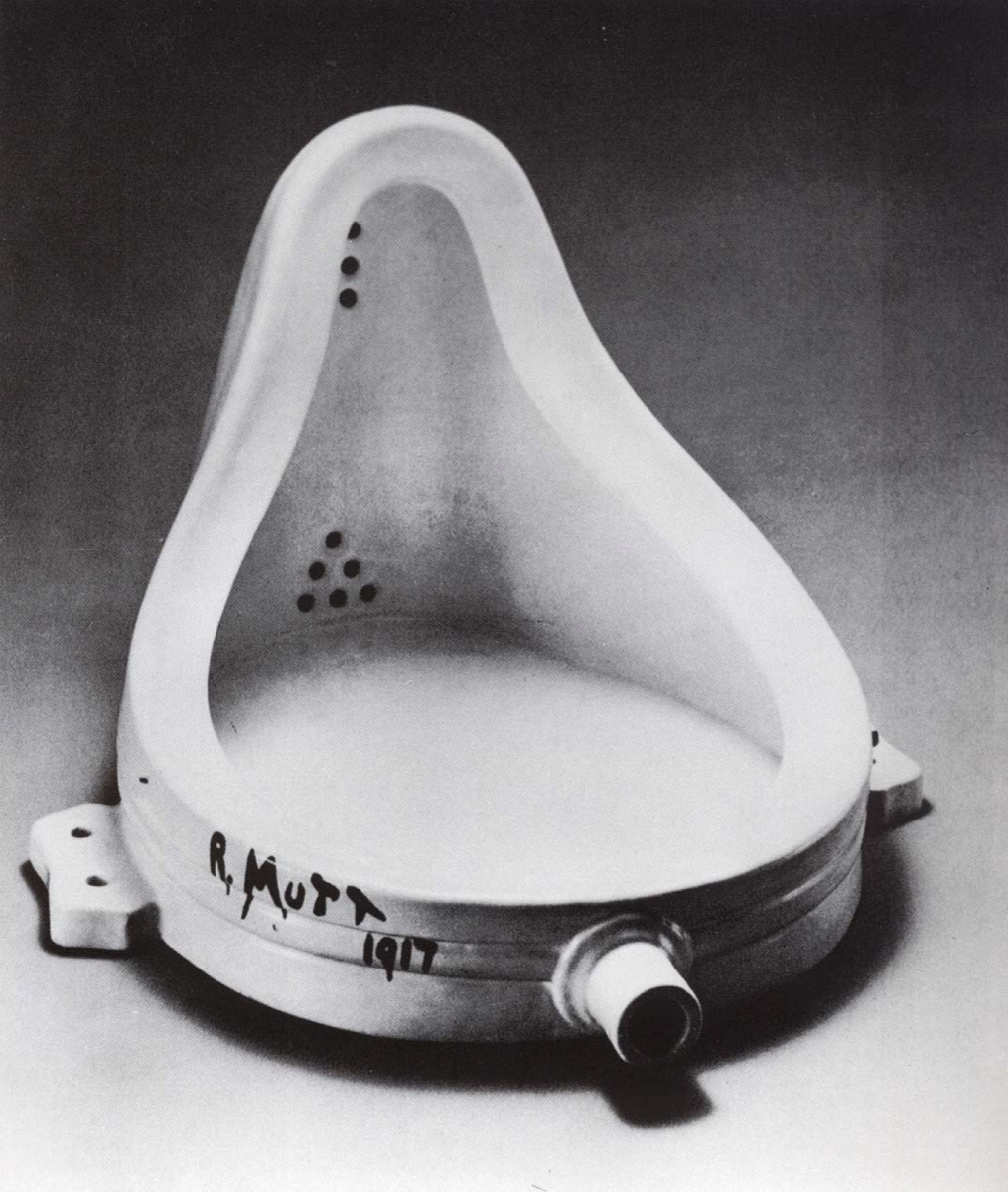
The story is legend. Duchamp, wanting to submit an artwork to the “unjuried” Society of Independent Artists’ salon in New York—which claimed that they would accept any work of art, so long as the artist paid the application fee—presented an upside-down urinal signed and dated with the appellation “R. Mutt, 1917,” and titled Fountain.  
The Society’s board, faced with what must have seemed like a practical joke from an anonymous artist, rejected Fountain on the grounds that it was not a true work of art. Duchamp, who was a member of that board himself, resigned in protest.


Is it really art?


Artists and intellectuals surfaced on both sides of the issue, with perhaps the clearest explanation of Fountain’s importance coming from an anonymous editorial believed to be written by the artist Beatrice Wood.
It read: “Whether Mr Mutt with his own hands made the fountain or not has no importance. He CHOSE it. He took an ordinary article of life, placed it so that its useful significance disappeared under the new title and point of view—created a new thought for that object.”  Wood, who had followed Duchamp’s work closely, recognized the groundbreaking power of the work.
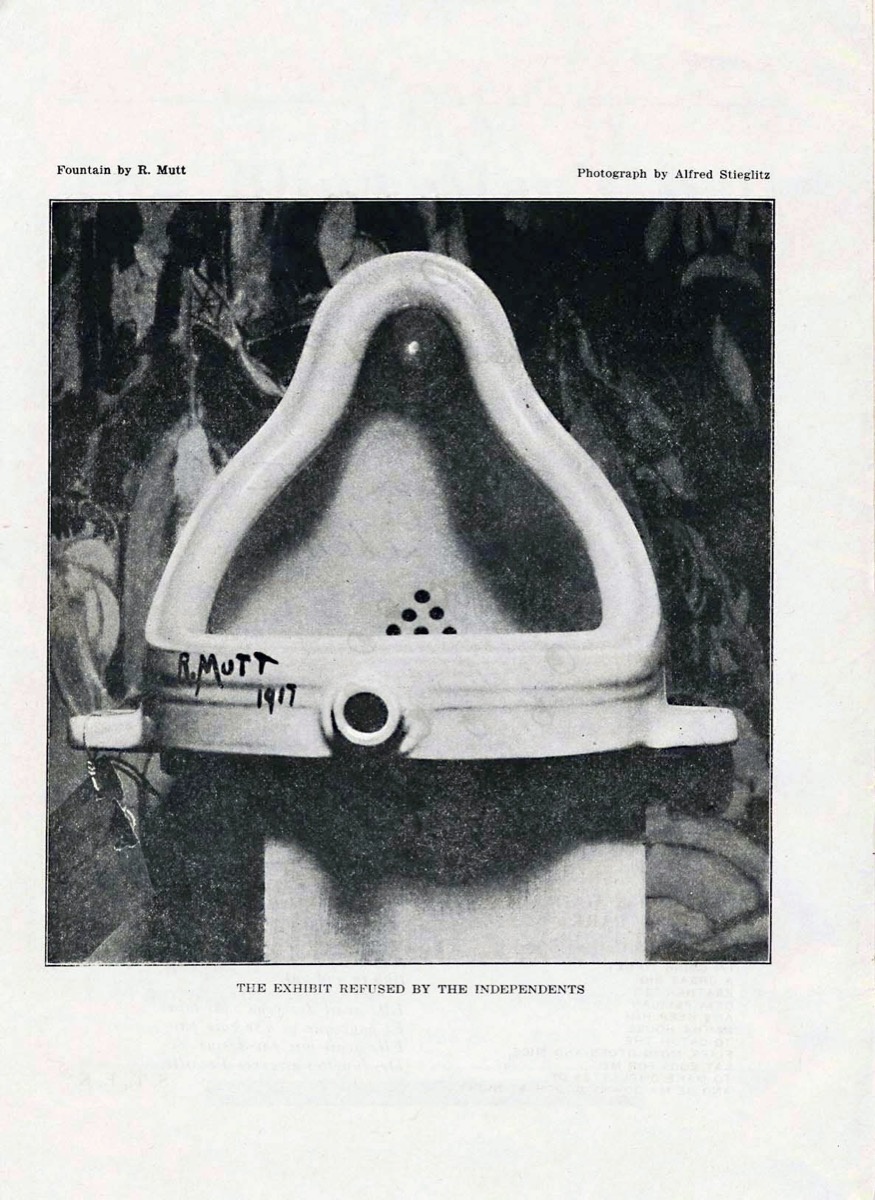
  • Alfred Stieglitz photograph of Marcel Duchamp's Fountain, 1917. Image via Wikimedia Commons.
And Duchamp had for years championed the use of “readymades”—existing objects taken from real life and modified or re-contextualized to function as works of art. The idea at hand, of art primarily as a concept rather than an object, is what would make Fountain arguably the most intellectually captivating and challenging art piece of the 20th century.
What is a work of art? Who gets to decide, the artist or the critic? Can a work derive from an idea alone, or does it require the hand of a maker? These questions strike at the core of our understanding of art itself.

The influence of Fountain


Over the past century, Duchamp’s Fountain has spawned myriad offspring and fueled numerous debates: How was the work conceived? What did the artist intend?
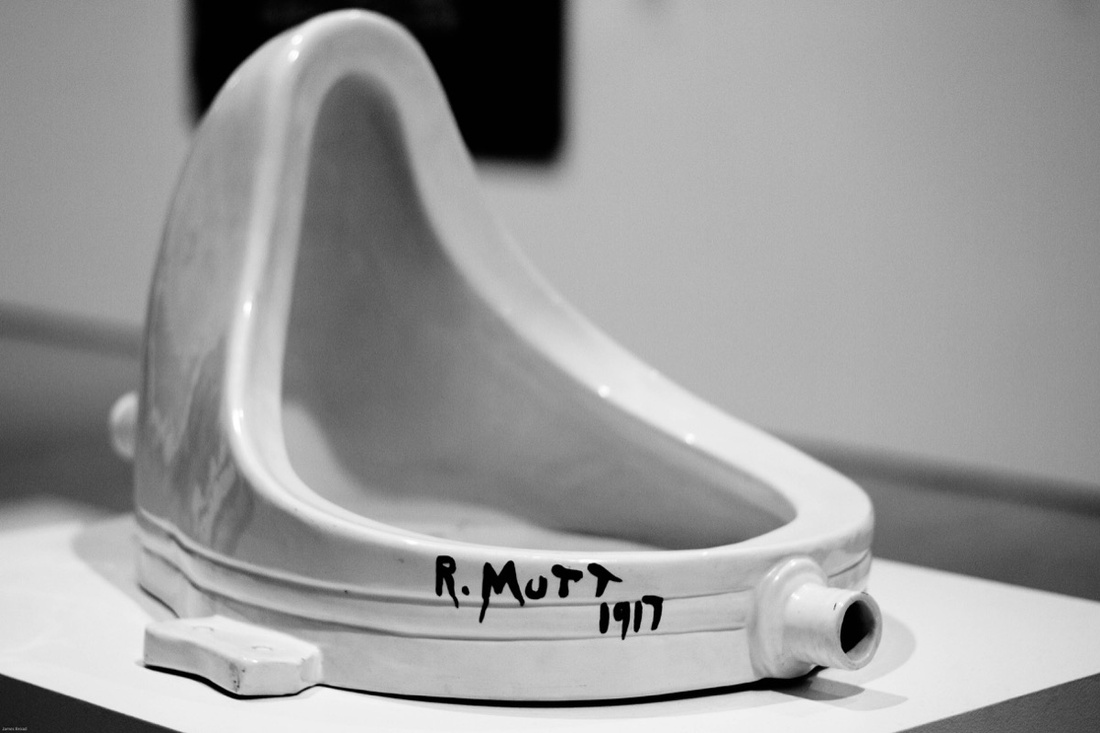
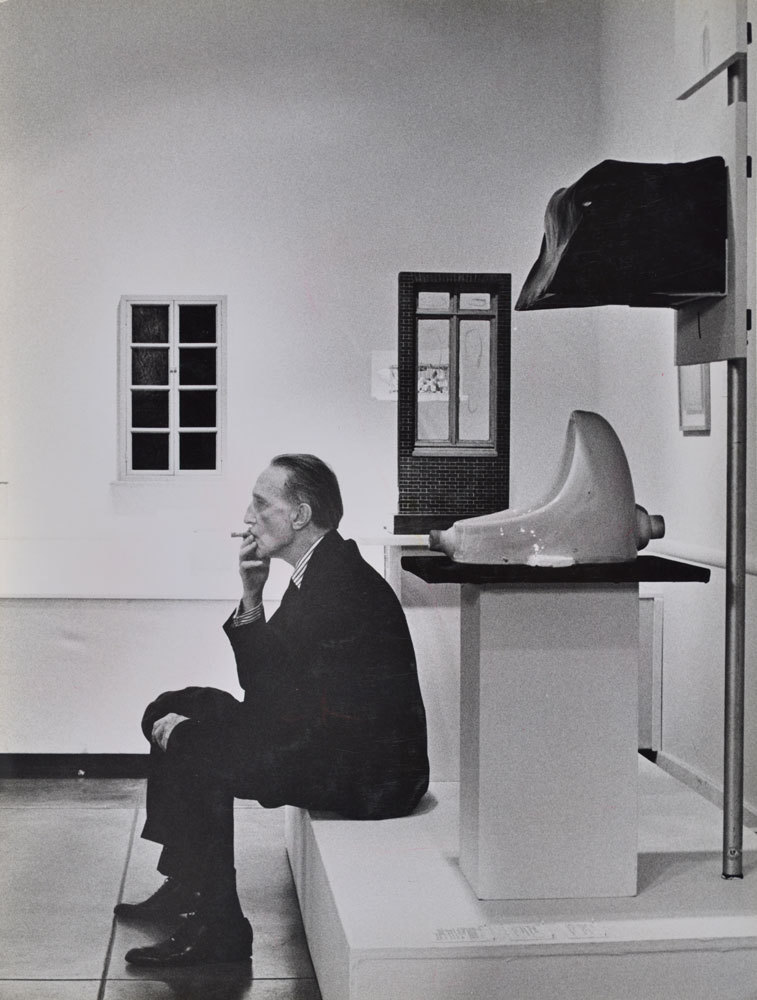
  • Installation view of Marcel Duchamp's Fountain, 1917. Photo by James Broad, via Flickr.
There are even theories about whether Duchamp came up with the work at all—one account has him attributing the work to a female friend who sent him the urinal under the male pseudonym “R. Mutt,” which he then signed on it. Similarly, his famous quip that the only works of art America had contributed to the world were “her plumbing and her bridges” has been tentatively restored to its true author: our erstwhile Duchamp defender Beatrice Wood.
But to try and establish the true authorship of the Fountain is exactly the kind of quixotic undertaking that would have had Duchamp in stitches. Let’s take a moment to recall that Monsieur Duchamp took a urinal, turned it upside down, signed it “R. Mutt,” and submitted it to a salon; the pursuit of truth was decidedly not his quest.
Rather, the unanswered questions that Fountain provoked are precisely what contributed to its conceptual underpinnings and its enduring (and confounding) legacy.

Contemporary artists riff on Duchamp

Among the contemporary artists that have explored these questions by riffing on Duchamp’s work is Mike Bidlo, with his Fractured Fountain (Not Duchamp Fountain 1917) (2015). Made as an edition of eight works that directly reference Duchamp’s “original,” the work provides a perfect example of the way in which Duchamp exploded everything that came before.
Bidlo’s version is a lovingly handcrafted porcelain copy that he then smashed, reconstituted, and cast in bronze.
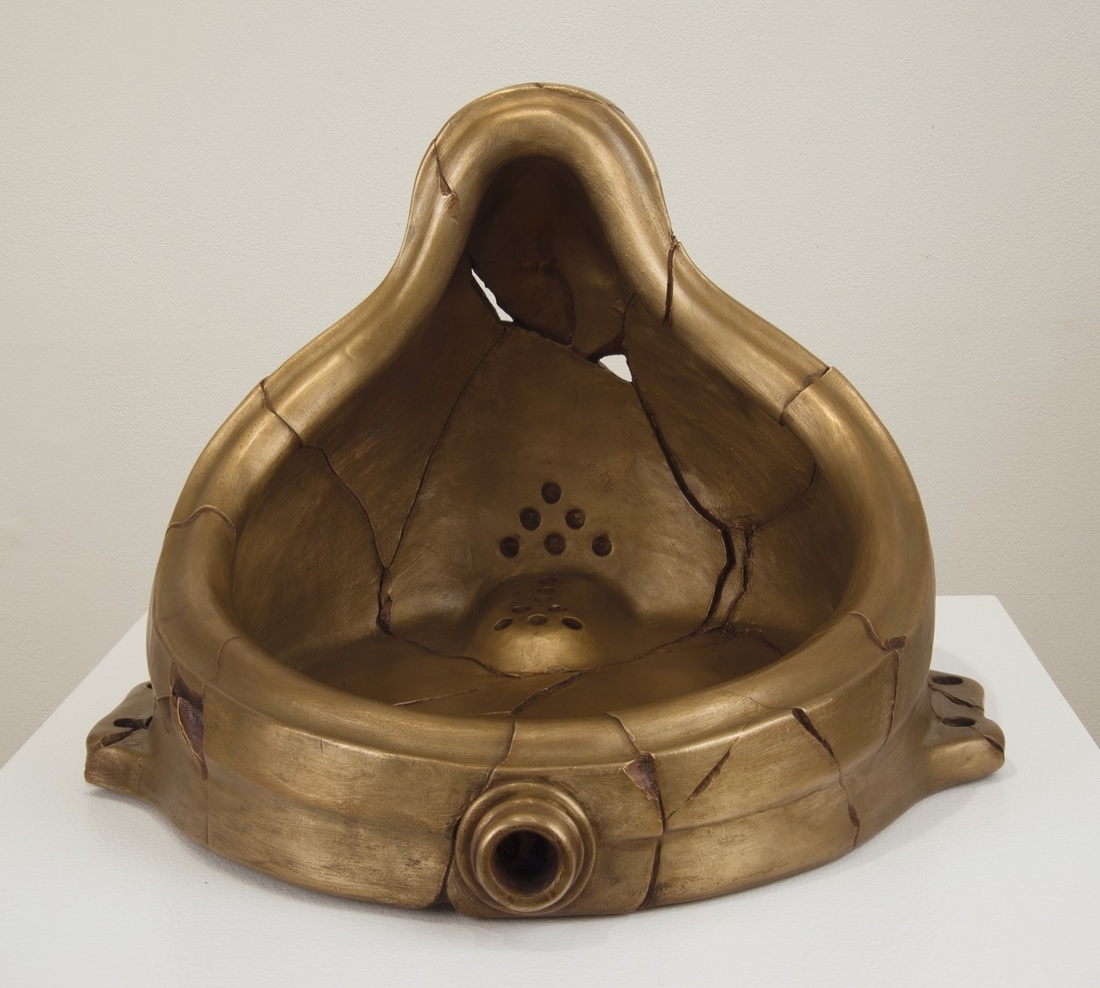
One recalls the cracks allowed in classic celadon pottery that were believed to enhance its aesthetic value, or the Roman practice of making marble copies of beautiful Greek bronzes that were slated to be melted down to make weaponry to further the Empire—but here, both function in reverse. Bidlo’s work follows Duchamp in depriving his object of both beauty and utility, furthering his challenges to artistic value.
Sherrie Levine’s Fountain (Madonna) (1991), a bronze cast after Fountain, preserves more of the original while pushing its questions of authorship further: To what extent does it matter that a male artist “chose” the work in 1917? To what extent does it matter that a female artist chose to reproduce the work in bronze in 1991?
What unites the artists that have riffed on Duchamp across the century is not only that they recognize the value of the questions it raises, but also that they move forward with the sort of ingenuity and wit that Duchamp’s legacy demands.

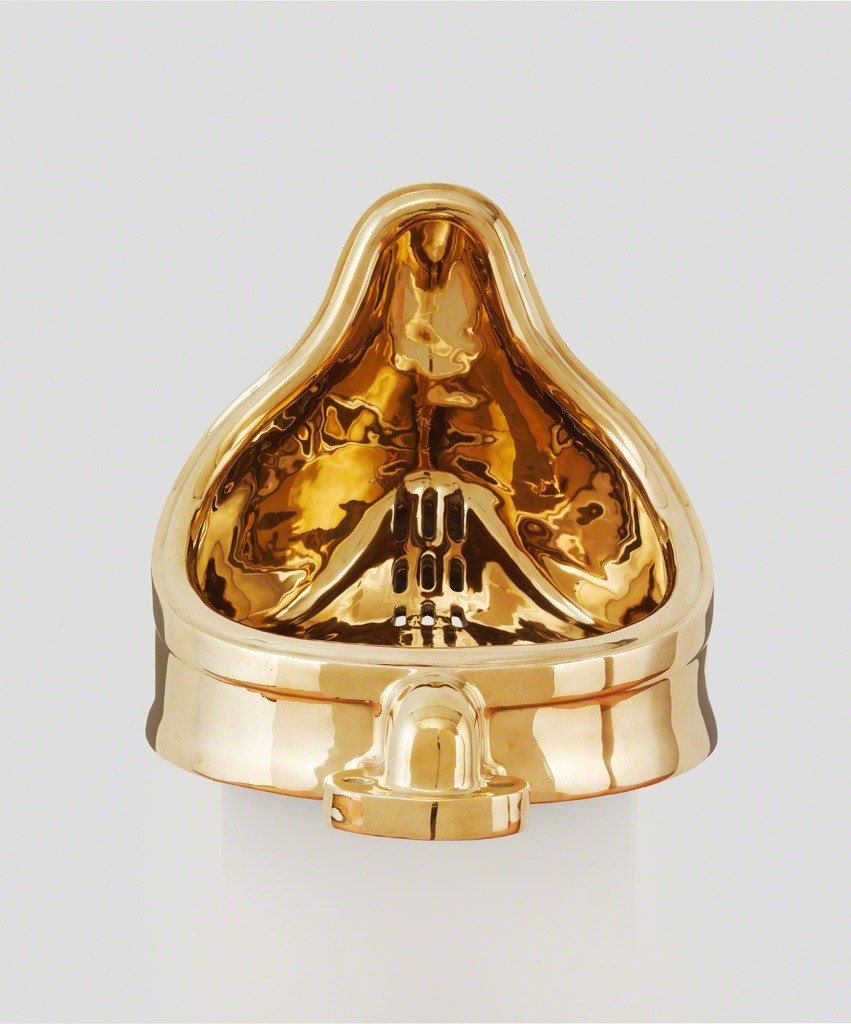
10 New Yorkers Weigh in on Cattelan’s Gold Toilet at the Guggenheim

Where is Duchamp’s original?

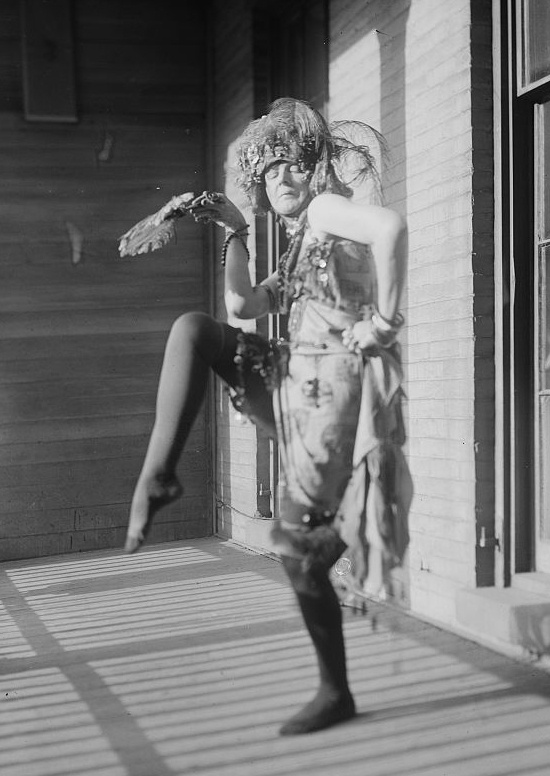
  • Baroness Von Freytag. Photo by Bain News Service from the United States Library of Congress Prints and Photographs division. Image via Wikimedia Commons.
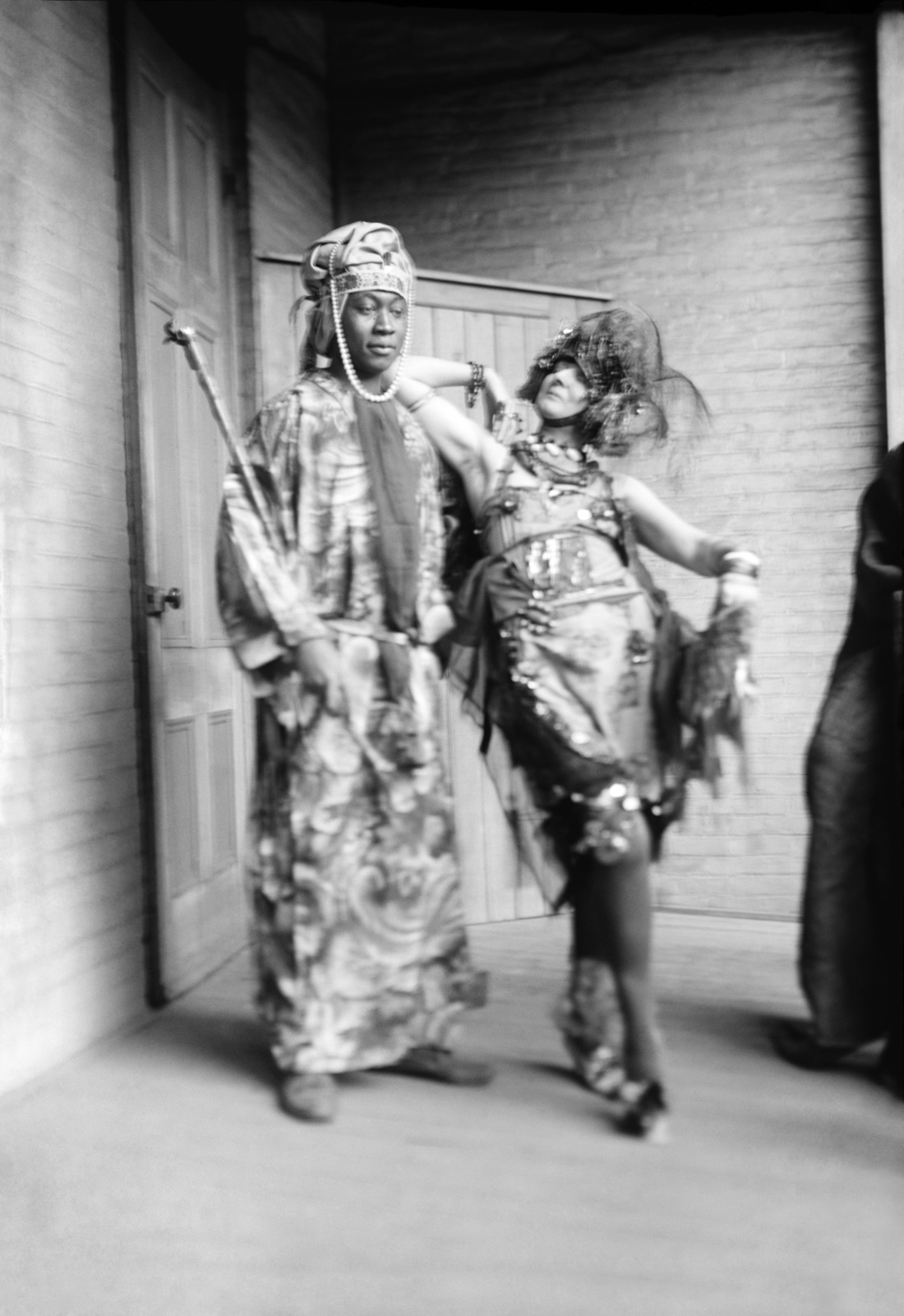
  • Elsa von Freytag-Loringhoven and Claude McKay, 1922. Image via Wikimedia Commons.
That doesn’t mean we have to take it seriously. It also doesn’t mean that we can’t revel in the Unsolved Mysteries-like scenario of Fountain’s mysterious disappearance: To this day, no one knows what became of the “original.” We only have 17 copies that Duchamp created in the 1960s.  Perhaps it was indeed one of his provocative female friends—the names Elsa von Freytag-Loringhoven and Louise Norton have been suggested—who came up with the whole urinal idea in the first place. The nebulous origins of the Fountain only add to its many layers and complexities.
If the genesis and meaning of Fountain remain elusive, it has provided countless artists with something of a starting pistol for the idea of art-as-concept in the 20th century, underscoring the fact that the definition of art itself is up for grabs.

—Jon Mann


Saturday, May 13, 2017

the Next Big Digital Shopping Experience

Photo
Ian Rogers, the chief digital officer of LVMH, is working to introduce 24 Sèvres, a shopping website and mobile app. CreditDmitry Kostyukov for The New York Times
PARIS — Ian Rogers, chief digital officer of LVMH Moët Hennessy Louis Vuitton, sat in his sunlit office on Avenue Montaigne last month, alongside a large cactus with a mélange of Pucci-pattern skateboards and black and white rock band photographs arrayed on the walls behind him. Using a tattooed finger, he punched in a pass code that would unlock access to “Babylon”: the code name for the top secret project he has been working on since his arrival 18 months ago at the world’s largest luxury group.
“We believe we are on the cusp of revealing something very exciting,” Mr. Rogers, 44, said in hushed tones.
The “we” was the project’s 60 employees, many of whom have been hired from the Paris technology sector and who are hidden far from the corporate headquarters in new offices in the 15th Arrondissement. Mr. Rogers rolled up the sleeves of his navy V-neck sweater and added, “I guess it’s time to see if the customers think so, too.”
He was referring to the imminent unveiling of LVMH’s high-stakes foray into multibrand luxury e-commerce. Rumors of a shopping platform that would fall under the branding umbrella of Le Bon Marché, LVMH’s upmarket department store, have swirled for months. Now 24 Sèvres, a boutique shopping website and mobile app named after the Paris street that Le Bon Marché is on, goes live in under a month.
It is a gamble that has divided many of the fashion industry’s power players. On the one hand, 24 Sèvres will be yet another contender in an already crowded sector, where established rivals such as Yoox Net-a-Porter, FarFetch and MatchesFashion.com have long been jostling for the world’s wealthiest consumers. Anticlimactic performances by more recent entrants like Style.com, Condé Nast’s multimillion-dollar digital boutique, indicated that even the most reputable names in fashion can struggle when arriving late to the game.
Continue reading the main story
A successful entry by LVMH, however, could shake up everything.
Controlled by the French billionaire Bernard Arnault, the conglomerate owns 70 luxury brands, including Christian Dior, Louis Vuitton, Bulgari, Fendi and Givenchy. LVMH wields hefty firepower thanks to its financial footing, a monopoly over so many labels (including where and how they can be sold) and hundreds of bricks and mortar stores worldwide.
“Le Bon Marche is already a multibrand physical retailer; moving that store online is a clear and natural next step,” said Luca Solca, a luxury goods analyst with Exane BNP Paribas. “Of course, the natural advantage for LVMH is that they can get so many brands to play ball straight away, because the businesses belong to them. Easy, no?”
Not so fast. LVMH has previously faltered in the multibrand luxury space. The website eLuxury, closed in 2009, was a rare and high-profile misstep. What makes the group think it can succeed now where it has failed before?
“One word: Timing,” Mr. Rogers said.
Other people, though, might say that he is the answer.
Born in Goshen, Ind., Mr. Rogers has a résumé rarely seen in haute luxury. He is a computer science graduate and onetime roadie for the Beastie Boys who first became a father at 17 (that daughter, now 26, is finishing her Ph.D. in genetics in the United States).
He spent the early part of his career as president of new media for the band’s record label Grand Royal. (“I wouldn’t be anywhere without those guys,” he said of the Beastie Boys, looking affectionately to their picture up on the office wall).
Then came a stint at digital music group Nullsoft, a period at the helm of Yahoo Music and later the position of chief executive of Beats Music, which he held during its $3 billion takeover by Apple in 2014 before becoming head of iTunes Radio.
But, he said: “I was ready to move on from music because it felt like a solved problem. The main players are now established. The space has gone from science fiction to mainstream, from an industry in denial to an industry in free-fall to an industry in growth.
Photo
Packaging for items from 24 Sèvres, the new shopping site and mobile app from LVMH.
“And I just had this feeling about retail, that it would be the next frontier to really change, where the real winners are yet to be determined. Then LVMH approached me with this opportunity. And I realized if I really believed that, there could be no place better to go.”
Since his arrival in Paris from California, where he lived for 20 years, Mr. Rogers has made steps to adapt to life in the French capital. He takes his 10-year-old daughter climbing at the MurMur Escalade, and has sampled as many great restaurants as possible, citing Miznon, Le 21 and Le Bon Georges as highlights. He has skated the mini-ramp at République, done graffiti at the Bercy skatepark and trained for numerous marathons. Of his work at the company, Bernard Arnault has been “incredibly supportive,” Mr. Rogers said. He added that Mr. Arnault’s digitally attuned son, Alexandre, 25, had been his “key ally.”
“A lot of the stuff we’ve been working on, I just wouldn’t have been able to do without Alex,” Mr. Rogers said, emphasizing that his responsibilities extend far beyond the introduction of 24 Sèvres, where day-to-day operations are run by its chief executive, Eric Goguey. He also oversees the LVMH brands’ e-commerce strategies, customer data management upgrades, the building of the online wholesale business in perfumes and spirits and LVMH’s China digital strategy.
“There is a lot on our plate right now,” Mr. Rogers said. “And Alex, outside of his full-time day job, is very switched on as to where this business needs to go.” The younger Mr. Arnault is the chief executive of Rimowa, a luggage brand owned by LVMH.
Still, there is no question that this e-commerce endeavor is extensive and eagerly anticipated. Mr. Rogers said LVMH had considered every branding possibility for 24 Sèvres, which will initially stock only woman’s wear, but settled on maintaining a connection to Le Bon Marché because of its 160-year history as a pioneer in catalog sales.
“I find it interesting that the Parisian perspective on fashion has been missing from the e-commerce landscape until now,” he said. “In my view it is a conspicuous absence and a huge market gap that we intend to fill.” He declined to reveal the exact cost of this investment for LVMH to date other than to say that it was relatively “modest — a brick-by-brick, start-up style approach.” He added that 24 Sèvres is also the name of the current loyalty program run by the department store, with legions of existing members. That program will also now be shared with users of the website and app.
Photo
Alexandre Arnault, left, and his father, Bernard, the chief executive of LVMH.CreditPatrick Kovarik/Agence France-Presse — Getty Images
In many ways 24 Sèvres shares characteristics with its more established rivals, including fast delivery times to scores of international locations; chatbots or stylists-on-demand; glossy packaging, complete with Eiffel Tower cutout pop-ups and love notes from Paris; and an efficient checkout process. Luxury e-commerce has become about the price of the consumer’s time, Mr. Rogers said, leading to an increasingly competitive field in terms of service across the retail spectrum. But there are differences, too.
“The move toward social media platforms like Instagram and Snapchat comes hand-in-hand with the rise of the internet as a more visual medium and of mobile domination,” Mr. Rogers said, his hand on “Louis Vuitton Windows,” a suitcase-size Assouline tome by the Louis Vuitton visual image director, Faye McLeod, that sits as a touchstone in the middle of his office (Ms. McLeod has been heavily involved in the creative direction of 24 Sèvres). “Increasingly consumers want pictures over words,” he said. As a result, he added, “if you look at our site, we lean far further toward visually-led merchandising than the more editorial skew of our competitors.”
Tiny exquisite illustrations by Hadrien Durand-Baïssas and colorful tongue-in-cheek GIFs are scattered throughout the site. Each product category header is a monochrome photograph of artists’ models contorted into various sculptural shapes, a quiet nod to LVMH’s dizzying array of cultural efforts. Yet of the 150 brands initially on 24 Sèvres, only around 20 to 30 will be LVMH owned (that will include Louis Vuitton and Dior, neither of which are available via any other multibrand online boutique). In the case of LVMH-owned businesses, it will be possible to source inventory from across those brands’ independent retail networks. For non-LVMH labels, inventory with either be acquired wholesale or controlled by those brands that operate their own shop-in-shop style retail channel, the same model operated by the store.
“Don’t think of this as the LVMH e-commerce project; think of this as us taking Le Bon Marché international via the internet,” Mr. Rogers said, playing down expectations for the first step of an overhaul of the group’s approach to reaching customer. The initial success of the project will be measured by sales, although he emphasized that LVMH is a group that consistently takes a long-term view.
“Where I am from, people always said to me, ‘You’re late,’” he said. “It’s already too crowded a space. But with Beats, we showed them they were wrong. I’ve walked that path before. I see that path here again.”
Plenty will be watching that journey closely, from established multibrand luxury rivals like Yoox Net-a-Porter and FarFetch, to technology platforms like Amazon, which has long expressed its clear intention to dominate the online fashion market, though with a limited degree of success to date.
“We actually currently have more Vuitton stores in the U.S. than Amazon does distribution points, which is great,” Mr. Rogers said. “In context, it means that hypothetically we could have as much logistics capacity in the U.S. as Amazon does. And as for our rivals, well, it is a big sky. There is still plenty of room for growth for all the players.”
Referring to eLuxury, he added: “We don’t want to be early adopters. We have been before and we paid the price for that. And when it comes to the internet specifically, there isn’t necessarily a reward for being first. There is, however, currently a major focus on omnichannel and experience, and we are moving from a mass culture to a mass of niches. If there’s quality in what you do, you’re not threatened. Timing-wise, this is exactly where LVMH wants to be.”