Friday, April 22, 2016

Dealer Perry Rubenstein Arrested

People

LA Dealer Perry Rubenstein Arrested After Deals With Eli Broad, Michael Ovitz Go Sour

                                                
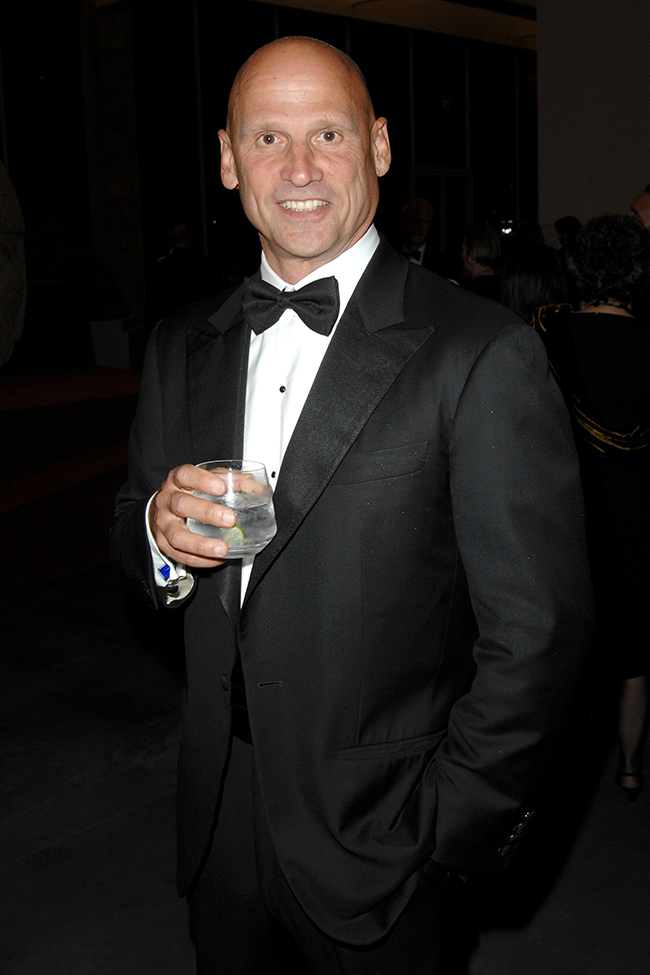
Perry Rubenstein at a 2010 gala at the Los Angeles County Museum of Art. Photo: courtesy Patrick McMullan Co.
Perry Rubenstein's fortunes have gone from bad to worse. The Los Angeles dealer was arrested on charges of fraud on April 21, with a legal complaint requesting he be held on $1 million bail.
"We deny all these allegations and look forward to clearing his name and getting his reputation back," his lawyer, Stephen Sitkoff, told the Los Angeles Times, which had the story. "There's no criminal conduct on Perry's part."
Art collector Michael Salke claims that Rubenstein defrauded him after they signed a contract for the 2011 sale of a work by Takashi Murakami to the Eli and Edythe Broad Foundation. Broad, according to documents, paid $825,000 for the work, while Rubenstein told Salke that the buyer had paid just $630,000. Salke initially brought suit when Rubenstein attempted to add $20,000 to his commission, reports the Times.
Hollywood mogul Michael Ovitz claims that Rubenstein sold works by Richard Prince for him but failed to turn over the funds.
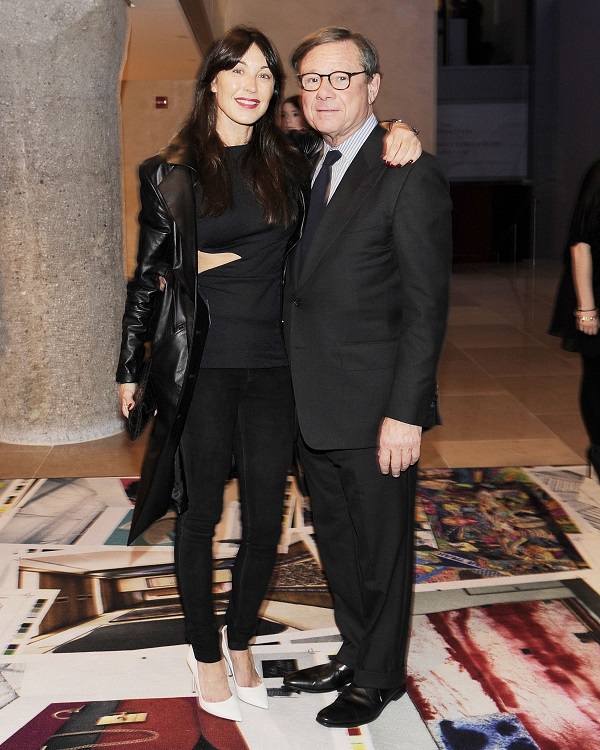
Tamara Mellon, Michael Ovitz Photo:  Nicholas Hunt/PatrickMcMullan.com
Tamara Mellon, Michael Ovitz
Photo: Nicholas Hunt/PatrickMcMullan.com
Rubenstein filed for bankruptcy in 2014. His creditors, according to the website Business Bankruptcies, included artist Shepard Fairey, actor Simon Baker, and Ovitz, former Walt Disney Co. president and founder of the Creative Artists Agency. Also named as creditors are the IRS, New York attorney Aaron Richard Golub, California law firm Browne George Ross, and New York lawyer Claudio E. Iannitelli.
"We explored every viable alternative to sustain the gallery as it was intended,"Rubenstein told artnet News at the time, "every option from refinancing and restructuring and ultimately concluded in these past two months that insolvency was the only viable path."
Follow artnet News on Facebook.

Damien Hirst Makes Bold Return to Gagosian Gallery

Market

Damien Hirst Makes Bold Return to Gagosian Gallery

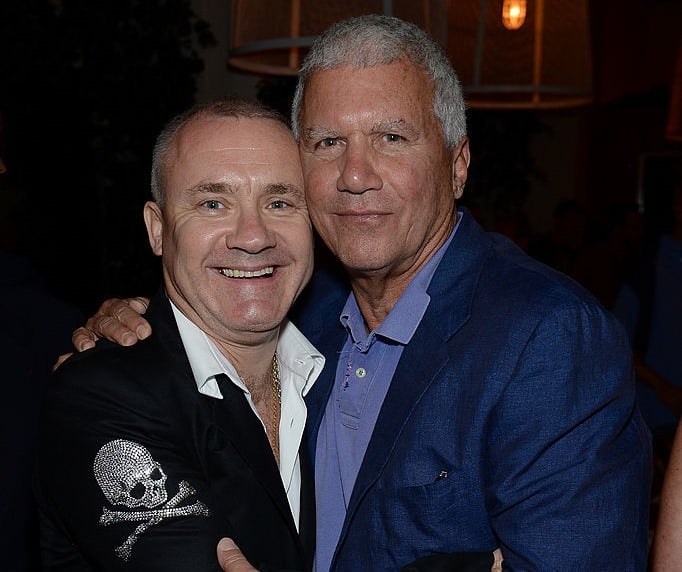
Damien Hirst and Larry Gagosian were close even during their separation; they're shown here in 2013.<br>Photo: Dimitrios Kambouris/Getty Images.
Damien Hirst and Larry Gagosian were close even during their separation; they're shown here in 2013.
Photo: Dimitrios Kambouris/Getty Images.
Two of the biggest brands in the art market are set to reunite after a three-year separation. British artist Damien Hirst, known for provocative artworks like a sculpture with a shark preserved in formaldehyde, and dealer Larry Gagosian, who oversees a global empire with some sixteen locations in cities from New York to Hong Kong, will once again join forces, according to the New York Times.
The YBA split with the mega-dealer just days after the Art Basel in Miami Beach fair in 2012. That departure accompanied Yayoi Kusama's exit to rival gallery David Zwirner as well as longtime Gagosian artist Jeff Koons's show at Zwirner.
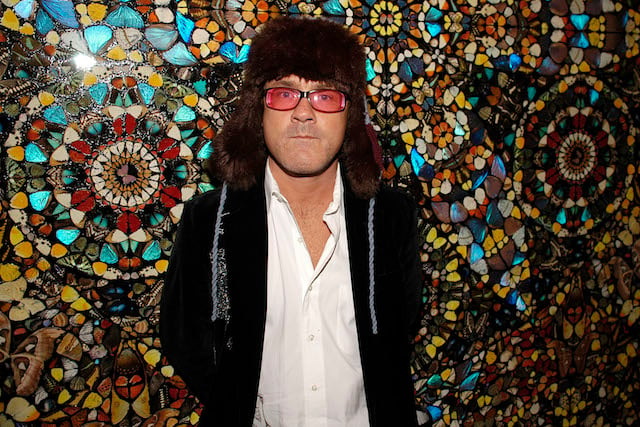
Damien Hirst. Photo: Billy Farrell courtesy Patrick McMullan.
Damien Hirst.
Photo: Billy Farrell courtesy Patrick McMullan.
Hirst is known for doing things his own way. The split with Gagosian came four years after the artist took the unprecedented move of organizing an auction of his own work, which he dubbed “Beautiful Inside My Head," at Sotheby's London. The sale totaled £40.9 million for 167 works, with the top lot fetching £2.3 million.
Just as neither party spoke publicly about the reasons for the split, neither will specify just what occasioned the reunion. However, Gagosian will mark the reconciliation by devoting his booth at Frieze New York next month to Hirst's work.
Damien Hirst, 5-Fluorotryptamine (2007)
Damien Hirst, 5-Fluorotryptamine (2007),
Photo: Courtesy Phillip's Ltd. 2014.
The dealer and the artist made waves together in 2012 when all of Gagosian's locations worldwide (a paltry eleven at the time) showcased Hirst's spot paintings. That show, naturally, made a huge splash, but not everyone loved it. ArtFCity's Will Brand posted this scathing assessment:
There is, we recognize, a historical danger here. Someday, the record of this exhibition might be dug up by a young art historian, or perhaps a blogger like us, or perhaps some sort of future blogger who does things with brainwaves. They'll see that there was a massive show spread across every location of the most successful gallery of the time, entirely comprised of one of the most successful artists of the time, and that it was supported by some of the most illustrious voices money could buy. So I'm going to lay this down, just to clarify, so that nobody from the future gets confused: we hate this shit. Everyone hates this shit. These spots reflect nothing about how we live, see, or think, they're just some weird meme for the impossibly rich that nobody knows how to stop.
Hirst's auction record stands at $19.2 million, set at Sotheby's London in 2007, according to the artnet Price Database. That high was fetched by Lullaby Spring (2002), a nine-foot-wide steel cabinet including hundreds of painted reproductions of various pharmaceuticals.
Earlier this week, Hirst was in the news following a study that found that low levels of noxious gases are leaking from some of his best-known works, namely those pricey formaldehyde sculptures.
Follow artnet News on Facebook.

Was the 'Mona Lisa' Based on Leonardo's Male Lover?


Art World

Was the 'Mona Lisa' Based on Leonardo's Male Lover?

                                                
Leonardo da Vinci, "Mona Lisa" (1503–1517)
Leonardo da Vinci, Mona Lisa (1503–1517).
Photo: Wikipedia Commons.
The mysterious smile of Leonardo da Vinci's Mona Lisa has captivated viewers for generations, but the true identity of the Renaissance artist's most famous subject has eluded art historians for centuries. Now, a theory put forth by an Italian researcher posits that the image was primarily based on a young man who was Leonardo's apprentice and possible lover.
Silvano Vinceti, head of the National Committee for Cultural Heritage, believes that the Mona Lisa bears several striking similarities to Gian Giocomo Caprotti, known as Salai. He also examined infra-red scans of the world-famous artwork and compared it to other works by the master that Salai was known to have modeled for.
"You see it particularly in Mona Lisa's nose, her forehead, and her smile," Vinceti told the Telegraph. At a Foreign Press Association news conference, he cited Leonardo's St. John the Baptist and Angel Incarnate, an erotic drawing of a young boy with an erection, as other works based on Salai.
Leonardo da Vinci, <em>St John the Baptist</em> (1513). Photo: Wikimedia Commons.
Leonardo da Vinci, St John the Baptist (1513).
Photo: Wikimedia Commons.
Salai was apprenticed to Leonardo at around age 10, in 1490, and was known for being somewhat of a troublemaker—his nickname means "little devil." He worked with the Renaissance master for two decades, and the two are widely believed to have been romantically involved.
The most accepted theory on the Mona Lisa is that painting's model was Lisa Gherardini, the wife of an Italian silk merchant. The couple's Tuscan villa went on sale for $11.3 million earlier this month. Others have argued that the Mona Lisa is actually a self-portrait, or a depiction the artist's mother and that she was a Chinese slave.
Leonardo da Vinci, <em>Angel Incarnate</em> (1513–15). Photo: Wikimedia Commons.
Leonardo da Vinci, Angel Incarnate (1513–15).
Photo: Wikimedia Commons.
Although Vinceti is not the first scholar to raise the possibility that Salai sat for the iconic portrait, the idea has not been met with universal approval. Art historian and Leonardo expert Pietro Marani told Agence France Presse that the theory was "groundless," while Martin Kemp, a professor emeritus of art history at Oxford's Trinity College told the Telegraph that Vincenti's claims were "a mishmash of known things, semi-known things, and complete fantasy."
By Vinceti's reckoning, Salai wasn't the only source for inspiration for the canvas. "The Mona Lisa is androgynous—half man and half woman," he said. The female influence, he allows, could be from Gherardini, or perhaps Beatrice D'Este, wife of Milanese duke Ludovico Sforza, whose court Leonardo worked at during the late 15th century. While most historians believe Leonardo began the Mona Lisa in 1503, Vinceti contends that he may have started the masterpiece while he was living in Milan in the 1490s.
Follow artnet News on Facebook.

Frank Stella Is Secretly the Art World’s Funnyman


Frank Stella Is Secretly the Art World’s Funnyman

Artist Frank Stella.
Artist Frank Stella. (Photo: Bob Berg/Getty Images)
Frank Stella knows how to crack a good joke. On Wednesday, during an informal talk with Art in America editor Lindsay Pollock for the annual Appraisers Association luncheon at the ritzy New York Athletic Club, the 79-year-old artist proved he’s far from shy about sharing his feelings on art, inspiration and newfound celebrity. The soft spoken artist had attendees laughing nonstop.
An excited crowd of art dealers, market experts and press packed the regal dining room overlooking Central Park for a chance to hear Mr. Stella, this year’s honoree and guest speaker. The room was so crowded, luncheon co-chair Nancy Harrison announced that not only did tickets sell out, they were so “impossible to get” that there was a wait list. Past honorees have included big named artists such as Ilya and Emilia Kabakov, Ai Weiwei and Christo and Jeanne-Claude. And while Mr. Stella is certainly no newcomer to the scene—world famous for his boldly colored geometric canvases and unwieldy sculptures—he has become something of a bonafide star following his widely praised 2015 Whitney Museum retrospective. But despite the attention, he remains modest, at times cynical, and utterly spirited.
Following an address from keynote speaker Thomas Crow, a historian and professor of art at NYU, Mr. Stella took the stage with Ms. Pollock, who warned that their discussion would move quickly and be prompted by projected slides that featured his work.
“Whatever,” Mr. Stella proclaimed, holding his hands up with an amiable shrug, more than willing to go with the flow.
Ms. Pollock began by asking him how involved he was in the planning of his Whitney retrospective, and to comment on collaborating with museum director Adam Weinberg.
“It depends how aggressive he [Mr. Weinberg] wants to be,” Mr. Stella said.
“And how aggressive was he?” responded Ms. Pollock.
“Moderately aggressive,” said Mr. Stella, with a smile.
With a level of sincerity rarely seen when discussing the inner workings of bureaucratic institutions, the artist provided insight into the politics behind mounting a major museum solo show, pausing intermittently for effect. “You can’t lay out a museum yourself,” he said. “They build the walls and then it’s over. Once they build them, they tell you how expensive it was. When they’re done telling you how expensive everything is, then they tell you they’re losing time.”
On the seriality of his work, particularly his Moby Dick series, Mr. Stella rejected the notion that his ideas were as neatly preconceived as history suggests. “The Moby Dick series wasn’t necessarily a series,” he said. “I just gave myself permission to do whatever I wanted and call it a Moby Dick piece.”
Mr. Stella is known as much in his appearance for his signature big rimmed glasses and curly hair as he is for puffing on cigars. In 1995, he was even profiled by Cigar Aficionado magazine, which chronicled the beginnings of his now iconic smoke ring series of photographs, prints and sculptures. When Ms. Pollock called upon an image of two works from the series, Mr. Stella took the cue and appropriately reached for a cigar in his pocket. “I can only do this because my wife’s not here,” he chuckled.
“Are you still making those paintings?” asked Ms. Pollock, referring to the smoke series.
“Still milking it,” he replied.
The conversation jovially flowed from there. Mr. Stella remarked that his monumental steel work, Raft of the Medusa, which was gifted to the Whitney by collector and chairman emeritus Leonard Lauder (for whom the museum’s building was recently named) resembled debris you might find laying around the Department of Sanitation Department.
Of course, the topic of his lengthy and often extravagant titles was broached—he has named paintings with references from literature, history, and even wildlife over the years. “I was desperate to get away from Moby Dick, but I was still on the water,” Mr. Stella said of his work Raft of the Medusa.
In regards to the 40-foot-long painting Earthquake in Chile, which greeted visitors with a bang at the entrance of his Whitney show, Mr. Stella said, “You wouldn’t have enjoyed the number of discussions we had about the entrance.”
Mr. Stella was an early adopter of digital imaging software, which he uses to help realize his large-scale sculptures. Drawing, he said, is often just a diagram for his three-dimensional pieces. For AiA‘s October 2015 issue, the artist conceived an original artwork for the cover. When asked about his use of computer intervention for the piece, he replied once again with a shrug. “Well … it’s Photoshop,” he said.
While the crowd were eager to hear more of Mr. Stella’s off the cuff comments about his pioneering paintings, he still had art to make. Before wrapping up, Ms. Pollock offered the artist a chance to say any final thoughts he might have.
“No, I think I got enough off my chest,” he quipped.
Ms. Harrison gleefully told Mr. Stella as he exited the stage, “If you ever stop making art, you could always consider standup comedy."
  

The Online Art Market Is Booming—Here’s What You Need to Know


The Online Art Market Is Booming—Here’s What You Need to Know

On Tuesday, art insurance company Hiscox released its fourth annual report detailing the state of the online art trade. Their findings, which examine data gathered by art market research firm ArtTactic, confirm indications in last month’s TEFAF report that the cooling of the global art market has not yet affected online sales—on the contrary, they are at an all-time high. Below are five takeaways from the 2016 report.
Installation view of Xavier Hufkens’s booth at Art Basel in Miami Beach, 2015. Photo by Oriol Tarridas for Artsy. 


Online sales jumped 24% last year, to a high of $3.27 billion.


Fueled by the expansion of a number of online platforms, the online art market has grown from $1.57 billion in 2013, to $2.62 billion in 2014, to last year’s figure of $3.27 billion. Such growth prompted Hiscox to revise its forecast for the sector up 5%, from the 19% found in previous editions of the report to 24% this year. If growth continues at this rate, the online art market will be worth around $9.58 billion by the end of the decade. The report notes that their growth outlook of 24% for the online art market is in line with the general online luxury goods sector, which has grown 27% year over year from 2009 to 2014. Due to the fact that Hiscox’s numbers are based off publicly available sales info and estimates of the “main online art and collectible sales platforms” they are assumed to be a conservative indication of growth. Also not counted is the entirety of the online art market in China.
The growth comes amid a market that is variously seen as either uncertain or cooling. Given that the online art market is comprised primarily of works on the lower end of the price spectrum, selling for less than $10,000, it may be more resilient to a general downturn or even positively impacted as buyers become more attuned to their spending during a contraction.


Online art market buyers are likely to return, with 92% saying they would buy the same amount of—or more—work online in the next 12 months.


Of those surveyed, 48% of art buyers said they would be buying more art and collectibles online in the next 12 months, while 44% said they would buy the same amount and 8% said they would buy less (a drop of 6% from last report’s 14%). Four percent fewer people said they would purchase more art online this year than they did in 2015. But this didn’t amount to an exodus from the market, with a 10% year over year increase being tallied among those responding that they would purchase the same amount of art online. The amount of new art buyers in the online market lessened slightly (from 43% to 41%), indicating that current buyers will make up a larger chunk of the 92%. Complicating matters, however, is the fact that, as the report notes, “the majority of existing art buyers see the online art market as an alternative channel for acquiring art rather than a substitute and therefore an overall slowdown in sales is likely to also have an impact on the online art market for these type of buyers.”
The 10 Most Important Takeaways from the 2016 TEFAF Art Market Report
Read full article
Of the 672 art buyers surveyed (up from 519 last year), only 10% (or 67 people) reported spending more than £100,000 on art and collectibles in 2015 and 5% reported spending between £50,000 and £100,000. The vast majority of online art buyers have relatively small budgets, with 69% spending less than £10,000 per year, and roughly half of that number spending less than £1,000. Hiscox suggests that this distribution is a positive indicator for the online art sector’s long term health: Growth in the online art market may in fact be coming from new buyers, unknown to those conducting the study, who are making small purchases.


Online marketplaces are eclipsing online auctions as the favored method of purchasing art, indicating that buyers appear increasingly interested in fixed-price options.


Although all online platforms have seen an increase in the number of buyers active on their sites in the past year, the largest boost was in the realm of “online art marketplaces.” Compared to 21% in 2015, 41% of this year’s respondents had purchased art from online marketplaces. These platforms are even more popular among buyers between the ages of 18 and 35, where just over half of respondents are purchasing art through online marketplaces. This marks the first time online marketplaces have surpassed online auctions in popularity, albeit only slightly—37% of buyers surveyed for the 2016 report had purchased art via auction. These numbers seem to indicate a growing preference for “buy now” options, as opposed to timed or live auctions. Online auction aggregator Invaluable acknowledged the shift early last month by introducing a fixed-price alternative on their website; traditional auctioneers Christie’s and Bukowski’s already sell a portion of their works online for a set price.


Online art sales are joining the migration from desktop to mobile.


There’s been a shift in the way we surf the web—just last month, people in the U.S. spent more than a trillion minutes online with mobile devices, close to double the amount of time they spent on desktop computers. This trend is reflected in the Hiscox report, which demonstrates a growing reliance on smartphones and other devices to access online art platforms. On average, 40% of visitor traffic and 24% of bids and transactions came through mobile, according to data collected from 9 online art sellers. Although the level of mobile traffic appears relatively consistent between companies, mobile sales vary significantly. Artfinder is the most mobile-oriented of the companies surveyed, with a notable 43% of bids and transactions taking place via mobile. Artsy and Paddle8 fall above average, at 30%; Artspace and Invaluable, however, sell only about 15% of their works via mobile.
Top Stories on Artsy
On average, this data matches up with the report’s survey of art buyers. 81% say they purchase artwork using a laptop or PC, with the other 19% using a tablet and 13% using a mobile device. Interestingly, this number remains consistent even when looking at younger art buyers—82% of 18- to 35-year-olds purchase art from a desktop computer. These figures represent an increase from last year, when only 68% of respondents said they used a desktop to buy art online. It appears as though mobile offers an outlet for browsing, but when it comes time to make a purchase, buyers tend to return to their PC.


Among Generation Y buyers—also known as millennials—19% made their first-ever purchase online, up from 9% last year.


Besides highlighting the important growth that will come from this age group, Hiscox notes some interesting things about habits of the Gen Y cohort. For one thing, they’re emotional—92% citing some kind of feeling as a motivating factor to buy art. They haven’t entirely escaped being bitten by the finance bug, of course, with 57% also citing “investment” as a purchasing reason, followed by “identity/status” (44%) and then “social” (39%). They also tend to gravitate towards fine art, with 81% responding that they buy art online. The next closest category is “decorative art and design,” at 61%.
Of this technology-savvy generation, 46% of those surveyed said that they purchase art online. However, an equal 46% among those said that they prefer offline transactions (40% said they have no preference and 14% prefer purchasing art online). Gen Y individuals who do purchase art online are likely to buy more than once, with 49% purchasing between 2 and 5 works in the last 12 months and 68% saying they’re looking to buy more in the next 12.

Abigail Cain and Isaac Kaplan


Thursday, April 21, 2016

Who gets what when...


Art market news


Art market news

Who gets what when artists and galleries split up?

When artists such as Yayoi Kusama and Marc Quinn sever ties with their galleries, it raises questions about assets, shows and production costs
by Cristina Ruiz  |  21 April 2016
Who gets what when artists and galleries split up?
Yayoi Kusama in her studio in Tokyo. © AP Photo/Itsuo Inouye
White Cube, the gallery that made its name promoting the work of the Young British Artists, has taken the unusual step of confirming that it severed ties with Marc Quinn, the first artist to collaborate with Jay Jopling, the gallery’s founder, nearly 30 years ago. A spokeswoman for White Cube told The Art Newspaper it had “terminated its relationship” with the artist in February, ending speculation that it was Quinn who chose to leave. The reasons for the split are not known. The spokeswoman declined to comment further and Quinn did not respond to emails.

When a long-term relationship comes to an end, what is the fallout? Who gets the unsold art? And what if the gallery has invested in the production of work that is still in its possession? We set out to answer these questions by canvassing nearly 40 gallerists, dealers, artists and other art-world professionals. Ten spoke to us and, of those, two agreed to be named in print.

Marc Quinn (above) at a 2015 exhibition at White Cube, before the gallery ended its representation of the artist. © David Levene / eyevine
“Nobody wants their disputes in the public domain,” says a senior art world source who has witnessed difficult breakups between artists and galleries. “When long-established relationships break down, it’s a bit like a divorce. There are lots of emotions flying around and you have to divide the assets. Generally speaking there isn’t a written contract, so the issues are typically: what does the gallery have in terms of inventory? What are the sales in progress and to what extent can the gallery close these sales? What costs of production have been invested? And who is entitled to what? What happens if the gallery has put money into a museum show that is two years’ away?”

Gift or advance?

The key issue is production costs, says another senior art world professional. “Artists treat production costs as a gift, galleries treat them as an advance. How do galleries get the money back if there is a breakup?” It is even worse when there is no written agreement. Multiple sources say that, for the most part, Quinn and other globally successful compatriots such as Anish Kapoor and Antony Gormley finance the production of their own work so if they leave their galleries, the art goes with them unless they agree to leave it behind. Any written deal between top-tier artists and their gallery is likely to be skewed heavily in favour of the talent.

For younger artists, contracts with galleries are a rarity. “It’s particularly unlikely if the artist and dealer join forces when they’re both starting out, like Jopling and Quinn,” says a senior source in Berlin. “It’s comparable to students marrying; they wouldn’t sign a pre-nuptial agreement. But if people marry when they’re in their mid-40s and have successful careers and accumulated assets, they’re much more likely to.”

More generally, the sale of contemporary work is often regulated by one-off consignment agreements between artists and their dealers. This “is a standard tool all dealers should be using with all their artists that resolves these issues soundly. The terms of this agreement should cover clearly how long each work is on consignment—that is, how long the gallery has to sell the work before the consignment ends or is extended by both parties,” says the New York dealer Edward Winkelman.

Kusama wanted work back

“For a sale in progress it can be more tricky,” he adds, “particularly if the sale doesn’t conclude before the consignment expires, but unless there is bad blood between the artist and dealer, and there’s reason to believe the sale will go through within a reasonable amount of time, an extension of the consignment for that particular work is generally easy to secure and generally good for the artist, if not necessarily their next dealer.”

Even with a consignment deal in place, things can still go wrong. When Yayoi Kusama left Gagosian Gallery in 2012, she asked for all her work to be returned to her within a month. It took nearly a year, according to a source close to the artist, because the gallery was trying to recoup its costs by selling as much of its [Kusama] stock as possible. “Our arrangement with Ota Fine Arts [Kusama’s Tokyo gallery] was that we would return all remaining inventory at the end of our final consignment agreement. Ends and separations are never easy, but nevertheless we wish Yayoi Kusama and her team all the very best, as always,” Gagosian Gallery said in a statement.


Meet the Anti-LGBT Bigot “Marrying” His Computer


Photo Illustration by The Daily Beast

MAN AND MACHINE

04.21.16 6:00 AM ET

Meet the Anti-LGBT Bigot “Marrying” His Computer

Meet Mark Sevier, a Christian music producer with a lengthy arrest record and a history of bogus lawsuits.
It’s a love story as old as time itself. Man meets laptop. Man fills laptop with pornography. Man sues state for the right to marry his masturbatory aid.
In 2014, former Tennessee lawyer and Christian electronic dance music producer Mark “Chris” Sevier filed a motion in Florida arguing that if same-sex couples “have the right to marry their object of sexual desire…then I should have the right to marry my preferred sexual object,” in this case his “porn-filled Apple computer.”
The motion was dismissed, of course, but Sevier is back again with a new Texas lawsuit demanding that he be granted a 14th Amendment right to wed his laptop.
As the Houston Chronicle reports, Texas Attorney General Ken Paxton has already asked for the lawsuit to be dismissed, arguing that “the right to marry one’s computer is not an interest, objectively, deeply rooted in the nation’s history and tradition.”
At the very least, Sevier appears to be monogamous. The laptop named in this new suit is the same 2011 MacBook that he asked to marry in 2014.
But Sevier, who has said that “the Constitution is being hijacked” by same-sex marriage, does not seem to actually be in love with his computer. The EDM artist has a long history of bogus legal actions designed to undermine marriage equality.
He also has a lengthy arrest record, including a 2013 aggravated stalking charge for—among other things—allegedly sending what the Associated Press could only describe as “a half-naked picture of himself draped in an American flag and covered in a substance that represented blood” to country music singer John Rich.
Sevier wasn’t always so enamored with his laptop. In 2013, he sued Apple in federal court claiming to be “a victim of Apple’s product that was sold to him without any warning of the damage the pornography causes.”
In the “Facts” section of that suit’s 50-page complaint, Sevier tells the tale of his star-crossed meeting with his aluminum bride-to-be. They found each other at an Apple Store in Tennessee, where Sevier purchased the laptop so that he could “create music” for his musical group “Ghost WARS” and also so that he could “log onto the Internet.”
All was well for a brief honeymoon period but then, one day, Sevier “accidentally misspelled ‘facebook.com’ which lead him to ‘fuckbook.com’ and a host of websites that caused him to see pornographic images that appealed to his biological sensibilities as a male.”
Sevier claimed that he “had never seen pornographic images” prior to purchasing the computer and that he quickly developed “an unwanted addiction with adverse consequences.”
To be clear, porn addiction is not a legitimate psychological diagnosis but Sevier claims nonetheless that his “addiction” made him “prefer the cyber beauties over his wife, which caused his marriage to fail.” All of this he blamed on Apple for not including a “safe mode” on the computer that would protect him from the dangers of pornography.
It didn’t take long, apparently, for Sevier to accept a lifelong future with his mechanical companion. In May 2014, he filed a lawsuit in Utah claiming that a county clerk had denied his request for a marriage license, noting that “one man and one machine” did not a marriage make.
Sevier didn’t take “no” for an answer, arguing in his suit: “Those of us whose sexual orientation has been classically conditioned upon orgasm through the straightforward science of dopamine to prefer sex with inanimate objects and animals do not have public support, like the gays, so we are especially vulnerable here.”
But the full Utah motion (PDF) does not make it seem like Sevier actually wants his relationship with his Mac to be legally-recognized. He speculated that, if the court ruled in his favor, then “we will progress into a Nation that gives equal protection to all classes of sexual orientation allowing everyone to marrying anyone and anything to suit their appetite in the name of ‘tolerance,’ ‘equality,’ and ‘love’—becoming slaves of our glands, not slaves of virtue.”
Get The Beast In Your Inbox!
By clicking "Subscribe," you agree to have read the Terms of Use and Privacy Policy
Thank You!
You are now subscribed to the Daily Digest and Cheat Sheet. We will not share your email with anyone for any reason
His rapidly-dismissed Florida motion was filed around the same time.
If Sevier’s MacBook were capable of feeling human emotion, it would likely be heartbroken to learn that it is being used a political pawn.
In an e-mail interview with The Daily Beast, however, Sevier insisted that he would indeed go through with marrying his laptop if a court ruled in his favor. Asked what kind of wedding he would hold, he replied, “Your question is not substantive to the legal proceeding at hand and is reductionistic and irrelevant to these matters.”
“The case is not a ploy to undermine same-sex marriage rights,” he claimed. “It is a demand that the courts restore Constitutional integrity.”
Sevier was more direct with the Houston Press, which asked if he was comfortable with the possible but improbable outcome of “destroy[ing] marriages and families across the country” by undermining Obergefell v. Hodges. Sevier reportedly “said yes.”
“The state is not doing anyone any favors by encouraging people to live that lifestyle,” he told the Press. “We have to define marriage.”
If Sevier is seeking a definition of marriage, he should avoid consulting the MacBook dictionary, which notes that marriage is a “formally recognized union of a man and a woman” or of “two people of the same sex” depending on the jurisdiction.