Tuesday, February 20, 2024

Gucci’s Electrifying Art


Gucci’s New York SoHo Store Is Revamped With Electrifying Art
Art World
Gucci’s New York SoHo Store Is Revamped With Electrifying Art
By William Van Meter


artnet
Afternoon Briefing
February 20, 2024


Gucci’s New York SoHo Store Is Revamped With Electrifying Art

Freshly-appointed creative director Sabato De Sarno is realizing his sleek new vision for Gucci in both his fashion collections and art curation.


An interior view of Gucci Wooster. Courtesy of Gucci.
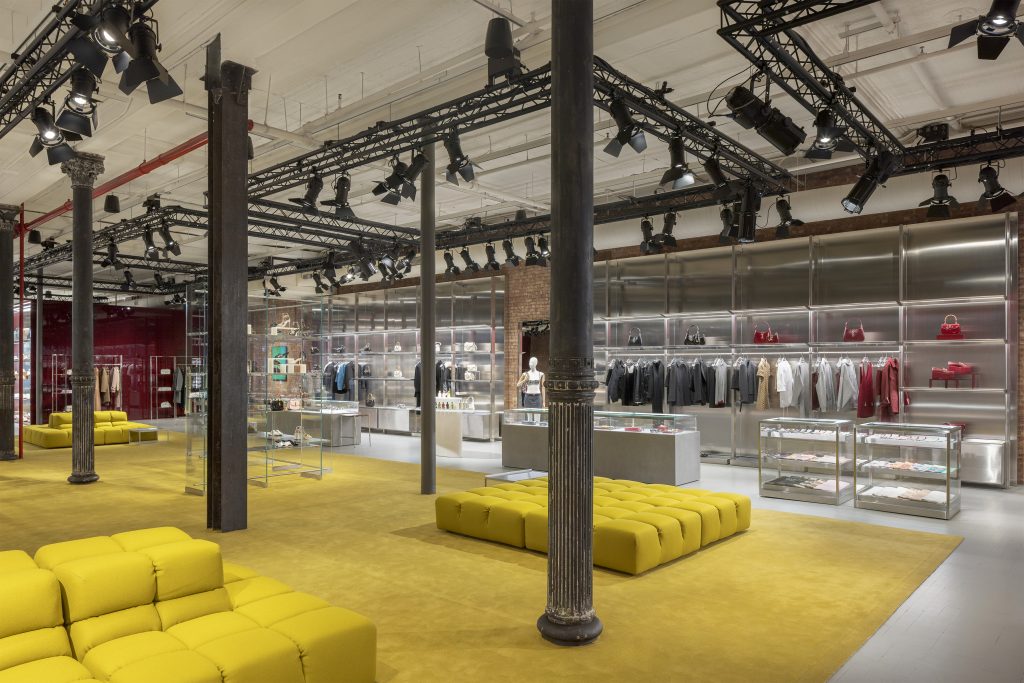


It’s a brand-new day at Gucci. The vaunted Italian luxury house further cemented its complete aesthetic pivot under nascent creative director Sabato De Sarno by unveiling the refurbishment of its New York SoHo store, Gucci Wooster, over the weekend. It’s a testament to the brand’s devotion to De Sarno’s sleek, modern vision as well as a renewed, fortified push to position art as one of the brand’s key codes.

Surprisingly, there is nary a painting in sight. The curation rather focuses on video art with some sculpture. It’s a very plugged-in experience, and a retro-futuristic through-line pulsates across the venue. As luxury brands continue to flex their art portfolios in the retail realm, Gucci’s high-tech-meets-old-school edit cleverly sets it apart from other brands wielding high art as a merchandising lure.

De Sarno collaborated with the Milan-based Norwegian independent art advisor Truls Blaasmo to curate the 10,000-square-foot space. They assembled works by a spectrum of artists, ranging from Arte Povera legends to ultra-contemporary upstarts, including Autumn Knight, Larry Bell, Alghiero Boetti, and Sasha Stiles. Gucci sourced works from private collections and galleries such as Hauser & Wirth and Helly Nahmad.
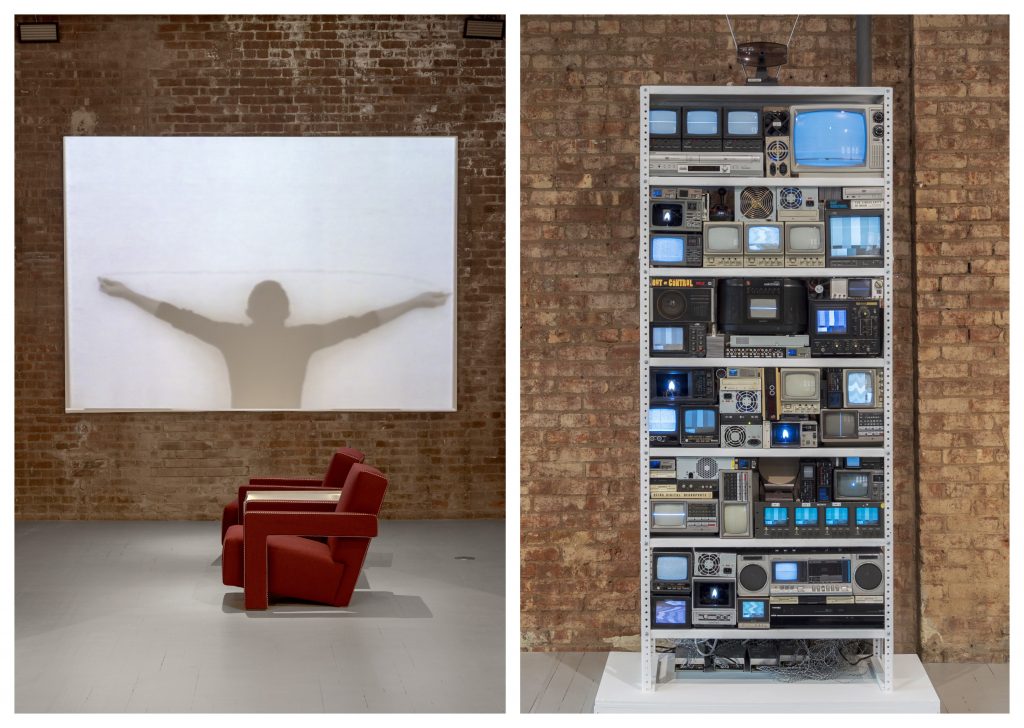
Alighiero Boetti’s Giovedì ventiquattro settembre millenovecentosettanta (1970) is projected on the wall (L). Artwork courtesy of Agata Boetti. Taezoo Park, Tower-1 (2024). Courtesy of the Artist and Amanita. Images courtesy of Gucci.

Bell’s colored cubes are serenely perched atop white pedestals, the light passing through the glass structures and adding a prism effect to the ground. Taezoo Park, a Korean artist based in New York, has assembled Tower-1, a sculpture of outdated electronic equipment that looks like its components were sourced from the Crazy Eddie appliance outlet in the 1980s—the artist recently wrapped a solo show at the hip Bowery gallery Amanita. McLaren, a Canadian artist, presented hand-drawn 1970s video animations that flicker hypnotically, reminiscent of what might play on a television sets at 3 a.m. between broadcasts.
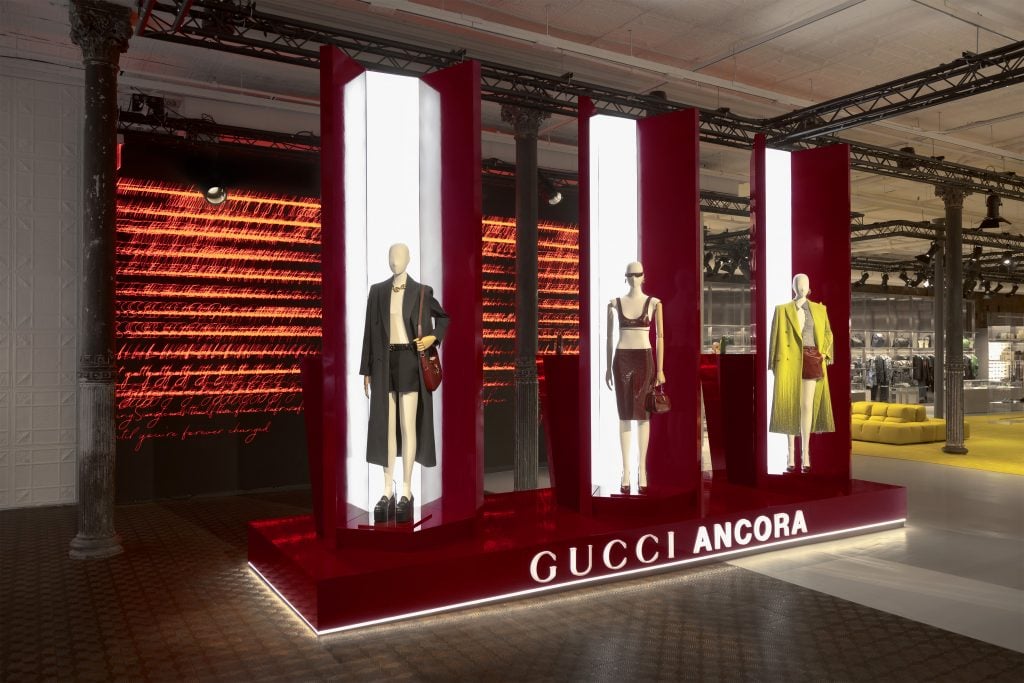
The poetic lovelorn A.I. ramblings of Sasha Stiles’s REPETAE: Again, Again can be seen behind the mannequins at the Gucci Wooster entrance. Courtesy of Gucci.


Most of the video works come with a sound component and an accompanying earpiece connected to the wall. Poet, artist, and A.I. researcher Sasha Stiles blends text and technology in her installation work REPETAE: Again, Again, a projection of scrawled generative poetry. “Instead the familiar refrain until you are forever changed,” the artwork was jotting across the wall on a recent visit.

Also on display on a large gleaming chrome shelf system was Gucci Prospettive n.1, Milano Ancora.the label’s accompanying art tome that corresponds to each new clothing collection.

Gucci Wooster is in a 155-year-old landmarked building, a former pencil factory, and vestiges of its old life remain apparent, from an intricately carved tile floor, to exposed brick walls and ornate tin ceiling. Contrasted with the remnants of yesteryear is a selection of modern Italian furniture, including Cassina armchairs and a sofa, and an elegant Minotti “Gladstone” table. Everything is dominated by the lush mustard carpeting which is becoming an unofficial Gucci motif, an ochre wave that has washed away the old codes and prior regime.
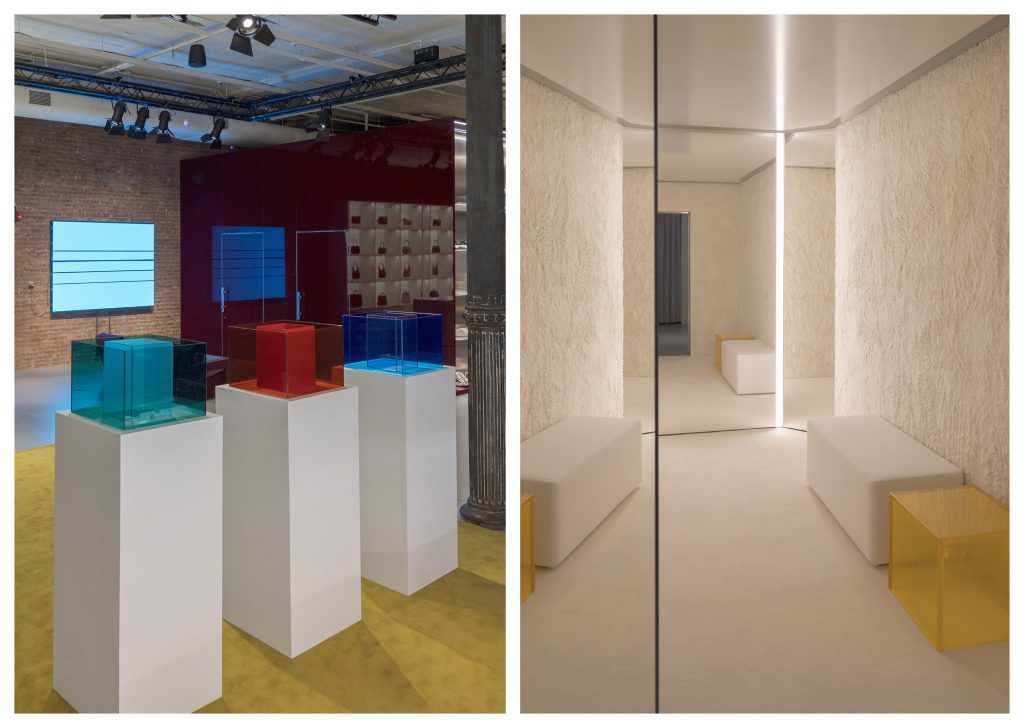
Larry Bell’s sculptures adorn the new interior of Gucci Wooster in New York’s SoHo (L). The fitting room interior. (R) Courtesy of Gucci.

There are also gleaming, pod-like Rosso Ancora-lacquered fitting rooms—the dark crimson is a signature of Gucci’s new direction—that bely the space age Zen of the interiors. Guests can pop in to try on the lastest Gucci looks, or just peruse the art selection, which will be an ever-evolving exhibition.

Gucci Wooster is located at 63 Wooster Street in New York.



Layers of Fakery

As Seen on ‘The Thomas Crown Affair’: A Monet Canvas That Reveals Layers of Fakery

The painting doesn’t appear in the museum’s collection, and the museum isn’t the museum.


artnet
Afternoon Briefing
February 20, 2024


As Seen on ‘The Thomas Crown Affair’: A Monet Canvas That Reveals Layers of Fakery
Pop Culture
As Seen on ‘The Thomas Crown Affair’: A Monet Canvas That Reveals Layers of Fakery
By Brian Boucher


Pierce Brosnan in The Thomas Crown Affair (1999). Photo: Metro-Goldwyn-Mayer/Getty Images.

An Impressionist canvas at the center of the 1999 heist-romance film The Thomas Crown Affair effectively echoes some of the movie’s themes, in ways that art nerds will love. 

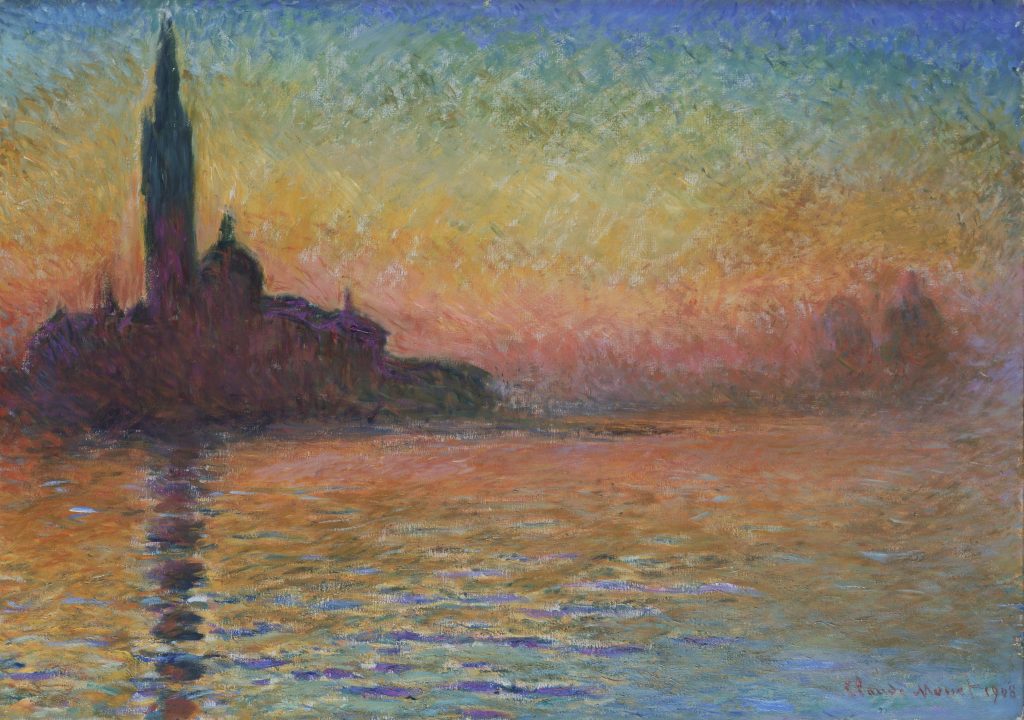
Directed by John McTiernan (Die HardThe Hunt for Red October), the movie is a remake of the 1968 heist film starring Steve McQueen and Faye Dunaway. It casts Pierce Brosnan, Denis Leary, and Rene Russo in the lead roles, with a painting of Venice at dusk by Claude Monet in a supporting role. Let’s see how the canvas, recreated for the screen by replica painters Galerie Troubetzkoy, and one of the key shooting locations echoes the film’s central themes. 

The titular character is a playboy billionaire who steals Monet’s Venetian landscape San Giorgio Maggiore at Dusk from New York’s Metropolitan Museum of Art; the painting is said to be worth $100 million (which isn’t far off from the actual value of Monet’s priciest works at auction today). Detective Michael McCann (Leary) heads up the investigation, with insurance investigator Catherine Banning (Russo) also on the scene. 

Crown lends a Camille Pissarro to take the Monet’s place; Banning intuits that he committed the crime purely for the fun of it. When she manages to search his home, she discovers the “Monet,” which turns out to be a copy painted over a canvas of dogs playing poker. When she confronts Crown with her findings, they consummate a building sexual tension.

After various romantic and investigatory developments, Crown offers to return the Monet. Police stake out the museum, but Crown foils their attempt to arrest him as numerous men, dressed identically in bowler hats as if stepping out of a René Magritte canvas, proliferate in the lobby. Crown sets off a smoke bomb and the museum’s sprinklers activate, washing the paint off of the Pissarro he lent, revealing—ta-dah!—that it is none other than the stolen Monet. 

In the final scenes, Banning goes to Crown’s apartment but finds only a man in a bowler hat, who presents her with a painting that she once told Crown she preferred over the Monet. She sends the painting to McCann and boards a flight to London, where she is reunited with fellow-passenger Crown. 


Claude Monet, San Giorgio Maggiore by Twilight (1908). Photo: National Museum & Galleries of Wales Enterprises Limited/Heritage Images/Getty Images.


Two key facts in the film depart from the artistic reality. They are both a kind of counterfeit, so they align perfectly with the movie’s themes. 

For one, the Met, while it is stocked with dozens of Monets, does not own a copy of San Giorgio Maggiore at Dusk (which exists in two versions, now residing in museums in Wales and in Japan). It does, however, own the Impressionist’s The Doge’s Palace Seen from San Giorgio Maggiore (1908). So there is a kind of reversal here that echoes the various reversals in the plot; the museum owns a painting not of San Giorgio Maggiore, but rather one with the view from that islet. 

Second, anyone who knows the New York museum will recognize that the climactic scene with the men in bowler hats does not take place in that hallowed building. (The request to film there was reportedly “respectfully declined” so the museum would not be seen as endorsing wrong impressions of how security works.) Some museum scenes were shot on a soundstage, but the dramatic scene of the Monet’s return was shot two miles south, at the main location of the New York Public Library (famous for the lions guarding its entrance). It, too, sports grand marble architecture and dramatic stairways, so in one way it’s simply close enough for jazz, as the saying goes. But in another, it’s actually funny and appropriate that the filmmakers chose a counterfeit location—and, like Crown himself, left the fake in plain view.


Musk is finally


Elon Musk is finally resigned to making X more like old-school Twitter

A series of changes to the platform highlights the challenges of running a social media platform—no matter how radical its owner claims to be.

Elon Musk is finally resigned to making X more like old-school Twitter
[Source Photos: X and Diego PH/Unsplash]

When Elon Musk bought Twitter for $44 billion in October 2022, he promised to stick up a middle finger to propriety. He ran roughshod over the platform, pulling hosting servers while they were still operational and ultimately firing about 80% of the company’s staff. Twitter’s eventual rebrand as X was then positioned by both Musk and his CEO, Linda Yaccarino, as a move toward a radically different app—one that goes beyond social media to also offer messaging, banking, shopping, and much more.

But 16 months later, a number of the changes Musk initially enacted have been unwound or reversed, as reality has hit the billionaire’s “idealistic” vision.

Some of those changes are small: In mid-2023, Musk dithered over making dark mode the default and sole color palette on X, before deciding to ditch the plan entirely. He’s also restored headlines to links posted on the platform, an about-face from a few months prior, when he claimed scrubbing that information would improve the app’s aesthetics.

Other changes have been more significant. In late January, ahead of an appearance by Yaccarino in front of the U.S. Senate, the company announced it would be hiring 100 content moderators to staff a new “Trust and Safety center of excellence” based in Austin, Texas. The 100 staff are a small fraction of the number fired in the immediate aftermath of Musk’s takeover of Twitter—when entire content moderation teams were gutted within days. But it’s a start, and an acknowledgment that X is, inch by inch, becoming more like old-school Twitter than Musk first envisaged.

X did not immediately respond to a request for comment, but former staffers are unsurprised by the rollback of some of Musk’s initial changes. “There does appear to be a way to run a service, and even in pure spite, Elon can’t escape that,” says one former Twitter content moderation staffer, who spoke on the condition of anonymity.

The former moderation staffer pointed out that it’s partly market pressure at work and partly the threat of government regulation—it’s notable that the Austin moderation hub was announced just before Yaccarino appeared in front of elected officials—but that it also highlights the gulf between how Musk wants to run things, and what he’s actually able to accomplish. “His idea of innovation is so skewed from how practically things work,” says the former staffer. “It’s an amazing case study for trust and safety, and wider online guidance.”

The Musk experiment of getting rid of most of its content moderation workforce was a radical experiment, and one that ultimately highlighted the importance of a trust and safety division. “With Twitter, Elon gutted all that and showed everyone what happens,” the former staffer says. “It’s pure evidence of what it takes to make a service usable and safe.”

Whether Musk will be able to staff up that Austin center is another challenge, says a second former employee fired by Musk who also asked for anonymity. “Anyone worth their salt in trust and safety would never, ever work with him, especially after what he did to Yoel [Roth],” they say. Roth, Twitter’s former head of trust and safety, stepped down from the role in 2022; shortly thereafter Musk falsely claimed that Roth had once argued “in favor of children being able to access adult internet services in his PhD thesis.” That incident alone may make it harder to wind the clock back on content moderation. 

“If you think about it, people who work in trust and safety and moderation are considered and thoughtful, and like to spend a lot of time—potentially, too long—thinking about the nuances of a term or an issue,” says the former employee. “Nobody who is that considered is going to work for Musk. It would be career suicide.”


Navalny’s widow keeps fighting

 Tuesday Briefing: Aleksei Navalny’s widow keeps fighting


Morning Briefing: Europe Edition

February 20, 2024

Good morning. We’re covering Aleksei Navalny’s widow continuing his fight, and the spate of femicide cases in Africa.

Plus: Unexpected film award categories.

A seated woman in a blue dress sits with her hands folded on a table.
Yulia Navalnaya, the widow of the Russian opposition leader Aleksei Navalny. via Alexei Navalny YouTube channel

Navalny’s widow pledged to keep fighting

Yulia Navalnaya, the widow of the Russian opposition leader Aleksei Navalny, vowed to continue his fight against President Vladimir Putin’s autocratic rule.

Navalny, who died at a penal colony on Friday, spent years denouncing Putin and the corruption he saw within his government. Before yesterday Navalnaya had largely shunned the spotlight, but she said she had to fill the void that Navalny’s death left in the opposition movement.

“I am going to continue the work of Aleksei Navalny and continue to fight for our country,” Navalnaya said on her husband’s YouTube channel, adding, “I ask you to share my rage — to share my rage, anger and hatred of those who have dared to kill our future.”

The dangers Navalnaya faces in trying to unite the fractured pro-democracy movement against Putin are significant. The government in 2021 declared her husband’s foundation an extremist organization and disbanded it, sending the group’s main investigators into exile. If Navalnaya returns to Russia, she could be arrested because of her association with the group.

Navalny’s final months: Navalny’s letters show that his mind stayed active, even as brutal prison conditions wore down his body.