Featured article How Sage Group is supporting resilience in small and medium-sized businessesCEO Steve Hare on the ways in which one of the U.K.’s biggest software companies uses flexibility and empathy to help both employees and customers through hard times. by Deborah Unger and Marco Amitrano |


| Ideas that work |
February 11, 2021 |
Share:     |
How Sage Group is supporting resilience in small and medium-sized businesses
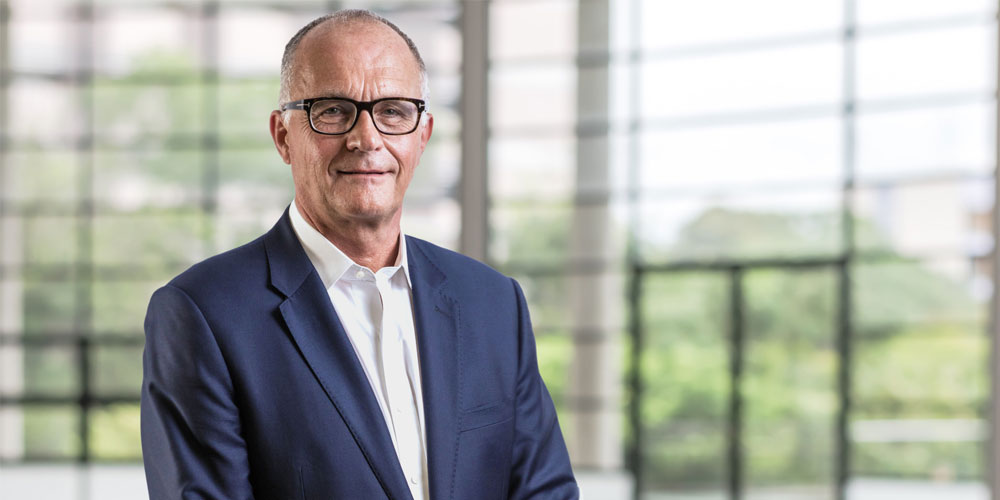
In September 2020, Steve Hare, chief executive of Sage Group, became Glassdoor’s highest-rated CEO in the U.K. during the COVID-19 pandemic. The workplace review site cited the level of communication and employee engagement Hare and his management team maintained during the crisis. “It is the key for all of us, including me personally, to make sure that we’re all keeping connected,” Hare said recently.
Related stories



This focus on connection also holds true for Sage Group’s relationships with its customers, the small and medium-sized businesses that buy or subscribe to its accounting and back-office management software, including systems for payroll, HR, and payments. At the start of the crisis, Sage began offering short-term payment holidays to help clients as they assessed their situations. To date, Sage has lost very few clients, and although profits dipped slightly for the fiscal year ending in September 2020, revenues were up almost 5 percent, to £1.6 billion (US$2.1 billion).
Based in Newcastle, in the northeast of the U.K., Sage was founded in 1981 and started out selling business software for personal computers. It was the year IBM launched its first PC; Apple’s Mac was still three years away. In 1991, Sage entered tothe U.S. market, and today it operates in more than 20 countries, employs 12,000 people, and serves more than 2 million customers. Hare was named chief financial officer in 2014 and took over as CEO in 2018. He joined two video calls with strategy+business and PwC, the magazine’s publisher, at the end of 2020 to share his thoughts on resilience and leadership, both during the pandemic and beyond.
S+B: What has the impact of COVID-19 been on Sage and its clients?
HARE: Right from the start, the number one priority has been and is the welfare of our people. We’re making sure that whilst we’re working remotely, we’re keeping our people engaged. That, in turn, allows us to successfully look after our customers. In the early stages of the pandemic, probably in the first few months, we started to see customers wanting to cancel some of their subscriptions — not big numbers, but we did start to see some evidence of it. We were very proactive. We offered, for example, short-term payment holidays to help people through. And what we found was, a lot of the concern was initial anxiety rather than fundamental business issues. Six, seven months later and our customer churn — our rate of customer loss — was exactly the same as it was pre-COVID.
At first, it was a little harder to acquire new customers, because people were in that phase where they were thinking things through and assessing whether they were going to survive. But again, interestingly, over the last three months [October to December 2020], we’ve started to see new customer–acquisition levels normalize as well. The overall impact in terms of the prospects for the business hasn’t changed as much as perhaps people would think. We’ve done some independent research with our customers, and small and medium-sized businesses in general are pretty optimistic about the longer term because they are agile. So, we’re feeling surprisingly optimistic.
S+B: Is that optimism because the situation is not as bad as people feared, or is it the case that we are seeing the effects of government support programs?
HARE: There will clearly be businesses that won’t survive once government support is removed. But there are also many businesses that, as I say, are agile. They figured out how to adapt to the environment. Small businesses are used to being on their own. And therefore, they’re used to making decisions in order to drive the success of their business and protect the people who work for them.
Will there be some structural changes once government support is removed? I’m sure there will be, and that’s why we’ve been lobbying the government to introduce tax breaks, for example, to incentivize people to invest more heavily in the digital economy. Particularly in the U.K. — but it’s also true in other countries — we think that small and medium-sized businesses are underinvested when it comes to digital technology. And if we want productivity and adaptability to increase, that’s where investment needs to go.
I’d like to see government doing more to support long-term [investment]. I understand it’s difficult. They have to balance difficult things in the short term. But we need a thriving long-term economy. And the furlough schemes, for example, are not going to do anything to create long-term thriving economies.
S+B: Were there any big surprises for you during 2020?
HARE: I have been surprised by the resilience of our people and how quickly they have adapted to working from home — or to this kind of mixed environment of sometimes working from home, sometimes going into the office — and the way that we’ve been able to support our customers throughout that. I admitted to somebody the other week that probably in the past, if someone’s child or pet had entered a meeting room pre-COVID, whether it was a virtual meeting room or a real meeting room, I would have seen it as a work distraction. Now, I embrace it. It starts a conversation that wouldn’t have ever started. That impacts your leadership style, because it gives you more empathy on a day-to-day basis as opposed to having empathy at the overview level.
S+B: How has this been reflected at your company?
HARE: I think our employee engagement scores are at record levels. Now that’s probably a result of the fact that we’ve absolutely put more effort into it, particularly into mental health issues. We made the Headspace [mindfulness and meditation] app available to all employees. And the way that’s been received has been fantastic. And I think we’ve spent more time really listening to our people. We created something called Always Listening, which is a live poll where colleagues can anonymously tell us how they’re feeling at any time.
Our best [average] score two years ago on Glassdoor was very low, 2.9. It’s now 4.4, which is the highest it’s ever been. I’d like to think some of that is because of how we behaved as leaders, but it is also because people want to lean in. They want to support one another, as well as supporting customers. And that has been a real positive that has come out of this pandemic.
S+B: Has remote working changed the way you look at your business?
HARE: We serve small and medium-sized businesses, and we have always done a bulk of our customer acquisition over the phone, and increasingly, it’s done digitally. But I think what [remote working has] really made us think about is how we approach the customer and the conversation we’re having with the customer. I remember we had a leadership meeting [early in the pandemic], and I made a statement that took the team a little bit by surprise. I said that I wasn’t sure we should be selling at all. Because if our customers are worried about surviving, it looks very self-serving that we’re hammering this drum about wanting to upsell them, or indeed, trying to acquire new customers.
So we changed the tone of our conversations and our advertising. We went from a focus on selling to communicating the message “We’re here for you.” We need to acquire customers for the right reason, and we need to be successful because we make our customers successful.
S+B: Given all that has gone on over the last year, what do you see as the future of the workplace?
HARE: What we’ll see is a more flexible, more adaptable world. I think if you employ high-quality, smart people, you can trust them to go about their work. Am I best doing this from home? Do I need to go and collaborate with my colleagues? Do I need to collaborate with customers?
The one thing I’m absolutely positive about is that human beings are social beings, and whilst they do not need to be in an office from 8:00 on a Monday morning, five days a week, until late on a Friday, I completely disagree with any concept that says a company at scale will operate at its best with 100 percent remote working. Our people are saying, “We need people to spend time together to maintain productivity on collaborative projects.” And it doesn’t need to be, as I say, five days a week. It needs to be when people choose that it makes sense. But you need your office space.
S+B: So given where we are now, and the continued uncertainty, where do you see the big opportunities for your business today?
HARE: I’m in a very optimistic frame of mind. Why? Because I think finally, and particularly among small and medium-sized businesses, people realize that digital transformation is absolutely essential. There’s no way of getting away from it. We need to invest. For example, the U.K. as a country, before the pandemic, had a major issue with productivity. That hasn’t gone away. But the way you deal with that is to invest in the future, and the future is a thriving digital economy. Small and medium-sized businesses are half the economy and more than 60 percent of jobs. If we support them and get them ready for the future, there is absolutely no reason why in the medium to long term, we can’t have a strong, growing, thriving economy.
What we have seen everywhere is that more small and medium-sized businesses have survived during the pandemic longer than people would have expected. Now there’s a difference, obviously, between surviving and thriving, and I think in this initial wave more businesses are just surviving. What we’re seeing is that typically, what businesses have done initially is to spend less. So, if you look at our installed base, our churn rates haven’t increased. They’re the same as the pre-COVID levels. We’re retaining customers.
But what we are seeing that’s different is that the propensity to consume more — to respond to additional modules or to take on additional things — has been subdued, because businesses are reviewing their finances. People are reluctant to make decisions when they are in the height of anxiety. You go through this cycle of asking, “Well, am I going to survive? If I’m going to survive, have I got the confidence to look forward and invest, or do I take the very defensive approach and just try and conserve every dollar, conserve every penny, and wait to see how this is going to play out?” In Europe, particularly France and Spain, which had particularly severe lockdowns, there were periods when you could see impacts on interest levels, inquiry levels from new customers, and spending levels.
S+B: What do you think is top-of-mind now for small and medium-sized businesses?
HARE: We’ve done multiple surveys, and what we see is, before the pandemic, less than 20 percent — I think it was 17 percent of small and medium-sized businesses that we surveyed — were thinking about major digital investment. Whereas now, about 70 percent have either started to invest or are thinking about investing.
If you take, for example, somebody who runs a restaurant, the reason they are now investing or considering digital investments is that they are probably doing a combination of eat-in and takeaway food. They’re also, because of the restrictions, having to take advanced bookings, and they’re having to do all that digitally. I know one of our customers who has a takeaway restaurant who set up an online booking system and got people to pre-choose what they were going to eat days in advance. He said it’s very efficient, because he knows what he has to order. He said he’s making more money now offering this type of takeaway service with this efficient digital booking system. It’s that type of adaptability that is so impressive in small and medium-sized businesses.
And then another point involves having the confidence to invest. That’s why we’ve been lobbying the government in the U.K. for tax breaks for investment. Yes, businesses need short-term support to get through periods of uncertainty, but what they really need is help and confidence to invest in creating a future.
S+B: Is it still possible to do forecasting in such an uncertain world?
HARE: Forecasting and planning are incredibly important. To not do them would be a mistake. You have to run the business for the long term, but you can’t run it blind. You need a clear vision and idea of where you are taking the business. But you need more flexibility than you’ve had in the past. In the past, people have done budgets and lots of detailed financial plans, and then said, “Right, that’s what we need to deliver against.” What you need to do more of now is scenario planning, and you have to have a better grip on the fundamentals of what it is that could change.
So, if you take Sage as an example, you start with your existing customers. What assumption are you making about how many of those customers you will retain? And obviously, the range of outcomes is wider now, but there’s still a range of outcomes. It’s not infinite. You’re not going to lose 100 percent of your customers. So you have to have a good sense of the probable.
The second piece is, having retained the customers, how much do you think they are likely to spend? Are you going to be able to persuade them to consume more? Or is your installed base going to be static? Or, indeed, is it going to decline?
And then the third piece is, you have to make assumptions about how many new customers you will be able to acquire. If you look at the fundamentals of the market and the moves toward digital transformation, you would say that in due course — the question is when — that number will actually increase. But people are taking longer to make decisions. So it’s pointless saying, “Well, this month or this quarter, this is exactly where we’ll be.” But you can plot over the next six, 12, 18, 24 months, roughly where you think things are heading.
And you shouldn’t overreact when you do slightly better or slightly worse than your projections, because it doesn’t mean very much. It just means that the short term is uncertain. What you need to do is really be super-focused on understanding whether the fundamentals are changing, which of course they are. So you have to assess which fundamentals are changing. As people adapt to a more flexible world — perhaps working remotely more often — that will change the fundamentals of a business. Watch for that rather than short-term uncertainty, which is often driven by emotion and sentiment and not the fundamentals.
S+B: Do you think the nature of evaluating the success of a business has changed given the rise of nonfinancial reporting?
HARE: I hope that the way that performance in businesses is assessed will become more balanced and more sophisticated, and not just be about single financial measures. I think we’re seeing lots of positive signs. There are a lot of big investment firms that are now asking questions about how to behave as a corporation.
I’ve been clear that at Sage, we will invest through this cycle. And we’re still growing, but we’re growing a bit more slowly, largely because our existing customers are spending a bit less. In our recent full-year results, I gave an assessment of where we were, both operationally and strategically, against all the things we’re working on — colleagues and culture, customers and customer satisfaction, technology, innovation, and so on. And I said that as a result of that assessment, we were going to continue to invest. And in the short term, we were going to reduce our operating margin to 19 percent [from 22.1 percent]. On that day, our share price went down 13 percent.
The market is the market. Our stakeholders — our customers, our community, and our people — remain our priority. When we show them that we have delighted customers, we have engaged people, we have compelling technology, and in a subscription model we are producing very predictable results, it proves we have the winning formula. All the research shows that the way to produce sustainable commercial financial results for your stakeholders is to do it the right way.
S+B: Do you feel in the spotlight as a leader now that you are the CEO? And now that you have the top spot, are there different things that you need to be aware of?
HARE: I’m very conscious as a leader that people watch me. They watch my body language; they watch how I’m reacting. I want to make sure that I’m calm and I’m consistent. And the temptation as a leader is to always want to empathize with the issue in front of you, and therefore, there’s always a tendency that you overcommit in terms of what you’re going to do. And that creates a reality gap. People will say, “I’ve heard him say that three or four times, and nothing has happened.” That’s something you have to look out for.
S+B: We’ve talked about leadership and how to delight all stakeholders in these difficult times. What do you see as the biggest short-term threats in your sector?
HARE: Most small and medium-sized businesses don’t really want handouts. They want to be able to trade and do whatever it is they’re in business to do. And if that business is impacted, sure, they would like some help. But what small businesses and medium-sized businesses tend to hate is sitting and doing nothing because their business is shut.
What we need to do is learn to keep the economy working and flowing whilst COVID-19 still exists. And I think wholescale shutdowns of the economy, or even sectors within the economy, are very dangerous, because you are not confronting the issue that is here and learning to live with it. There are two ways of confronting a problem. You can either be very defensive, hunker down, and wait until it goes away, or you can advance toward it, embrace it, find the opportunity, and learn to live with it. I think small and medium-sized businesses are desperate to be in the latter category, and I think too much government support is in the former category.
S+B: And in the longer term?
HARE: When I look at longer-term trends, what we want in all countries around the world is to promote and accelerate the number of new businesses that are created. We want to create a culture and a framework that encourages people to go out and set up their own businesses. To create long-term success requires conviction. We shouldn’t court pessimism and sensationalism and complain about the present, and project about what might happen in the future, like taxes are going up. That can create a sentiment that very much works against what I’ve just been saying. If you’re thinking about setting up a new business, and all you can see around you is a wall of negativity, it takes a lot of conviction to go on. I think we underplay how much impact sentiment can have in success and failure.
Author Profiles:
- Deborah Unger is a senior editor with strategy+business.
- Marco Amitrano is head of clients and markets for PwC UK and has nearly 30 years of experience in advisory and assurance services. Based in London, he is a partner with PwC UK.