Wednesday, January 31, 2018

Hong Kong’s New Art Market Epicenter


Art Market
David Zwirner Opens in Hong Kong’s New Art Market Epicenter
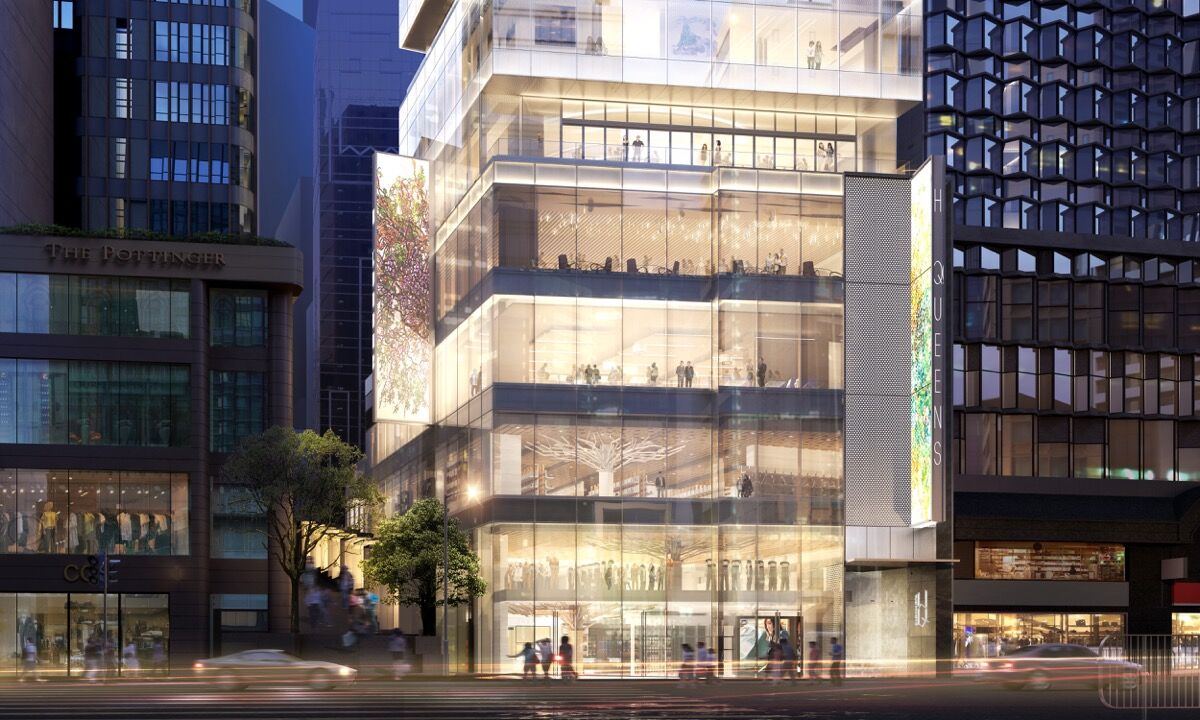
Rendering of HQueen’s. Courtesy of Sutton.
International galleries have flocked to Hong Kong over the past decade, beginning in earnest with Ben Brown Fine Arts in 2009 and intensifying following the purchase of the Art HK fair by Art Basel in 2011. Thanks to this influx, the city, which has long been the region’s financial hub, has become the center of the art trade in Asia. However, densely populated Hong Kong’s historic buildings, with their low ceilings, compact floor plans, and high rents, have put substantial limitations on all but a few major galleries’ ambitions of what they can show in Hong Kong—and on the ultimate aspirations of the city’s art scene as a result.
A new addition to the Hong Kong skyline, H Queen’s, is out to change that. Eleven of the building’s 24 floors have so-far been purpose-built for seven galleries and one auction house; the structure features open floor plans, UV coated glass walls, high ceilings, and a gondola system to lift large crates of works. Hong Kongers got a sneak peak into the H Queen’s offering in December with the opening of Tang Contemporary Art.
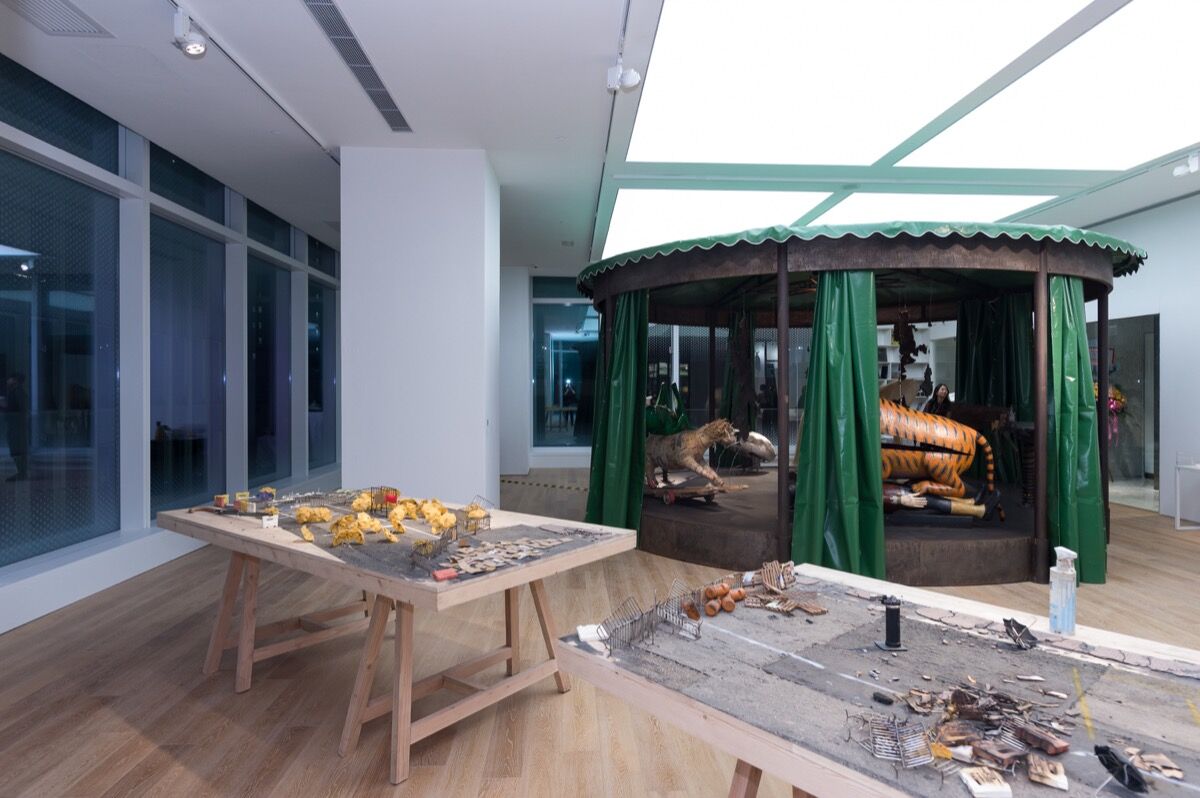
Installation view of Tang Contemporary’s “Theater of the World.” Courtesy of Tang Contemporary.
On Saturday, David Zwirner becomes the first of several international mega-galleries to open outposts in H Queen’s, to be followed by the likes of Hauser & WirthPearl Lam Galleries, and Pace Gallery, all opening just ahead of Art Basel in Hong Kong in late March. Jennifer Yum, who left Christie’s to direct Zwirner’s new outpost alongside former Shanghai dealer Leo Xu, said the dealer began looking to open a space in Hong Kong years ago but hadn’t found a suitable location until seeing the plans for H Queen’s.
“What drew the us to this particular space were the open ceilings, open air, and the opportunity to make Central Hong Kong more of an arts district,” she said.
The inaugural show, which coincides with Zwirner’s 25th anniversary celebrations in New York, features the work of Michaël Borremans: unsettling depictions of bloodstained cherub-like children, some of whom have been partially dismembered, set sparsely against taupe cloth-like backdrops as if being photographed in a studio. Borremans describes them as a metaphor for the human condition.
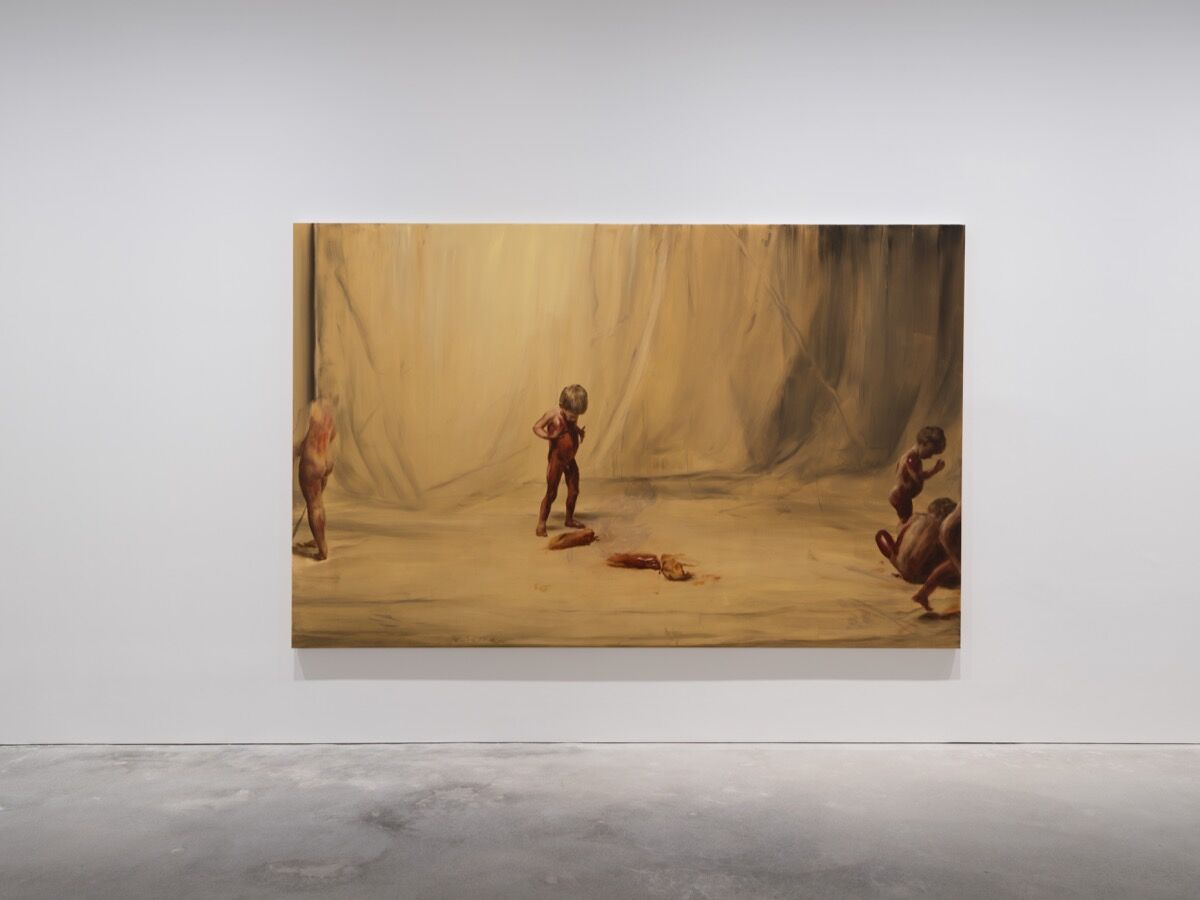
Installation view of Michaël Borremans, “Fire from the Sun,” David Zwirner Hong Kong, 2018. © Michaël Borremans. Photo by Kitmin Lee. Courtesy of David Zwirner.
H Queen’s was inspired by architect William Lim’s personal experiences as a collector in Hong Kong, spending Saturdays walking up and down the hills of Central to attend exhibitions and openings. “It was an awful experience to go to galleries, especially the ones in office buildings,” he said. “I saw an opportunity with the growth of Art Basel and the scene in Hong Kong, that there was actually this need.”
Lim’s team took cues from the growing association of contemporary art in Greater China as being part of a larger lifestyle and decided to fill its remaining floors not with office space but with other activities demanded by gallery goers. That includes restaurants such as Écriture by celebrated Hong Kong restaurant group Le Comptoir and luxury brands like Audemars Piguet.
“From the beginning we realized it was essential to have more than just art,” said Kristine Li, Deputy General Manager of Portfolio Leasing at H Queen’s developers Henderson Land Development Company Limited.
The idea is to allow people to wander off the highly trafficked Queen’s Road, make their way into a gallery, head downstairs for a cup of coffee or a bite to eat, then jump back on the elevator to continue their gallery hop.
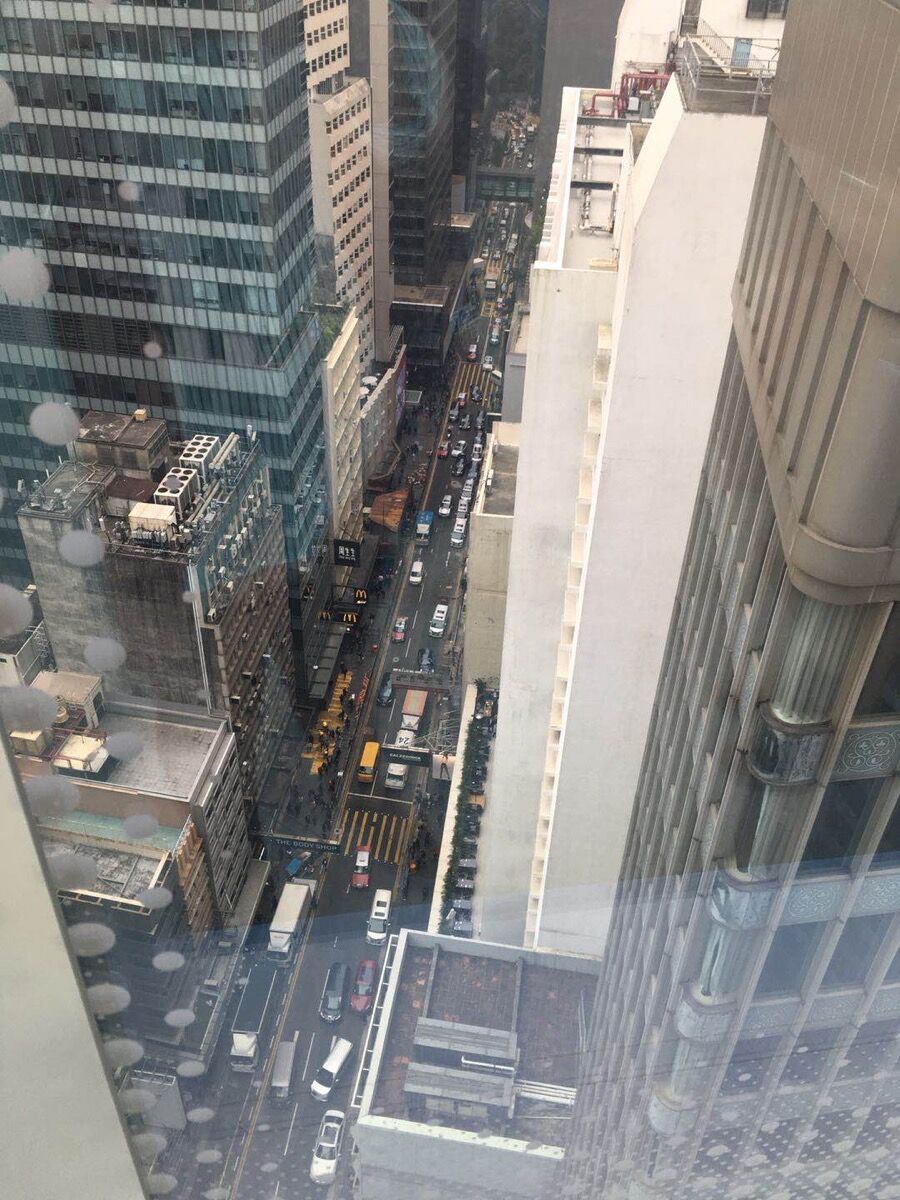
Shot of the street from inside HQueen’s. Photo by Sarah Forman.

Rendering of HQueen’s. Courtesy of Sutton.
The benefits of the improved viewing conditions at H Queen’s are ample for collectors but Lim also hopes the building can engage and educate a wider public about art. “Galleries shouldn’t be intimidating. They should welcome visitors, bring schools in; this is how you’ll encourage the development of art by having people see more art,” he said, echoing hopes Zwirner director Xu articulated when he announced the closure of his Shanghai gallery and move to Hong Kong.
H Queen’s is far from the only location set to take on such a role in Hong Kong. The city’s major museum for visual culture, M+, is scheduled to open in 2019, and renovations continue at the former Central Police Station, or Tai Kwun, which is being transformed into a cultural and arts hub. But by the time the international art world descends on Hong Kong for Art Basel this Spring, the city’s art market epicenter will be H Queen’s.
Sarah Forman

Start Collecting Art in Your 20s


Art Market
How to Start Collecting Art in Your 20s


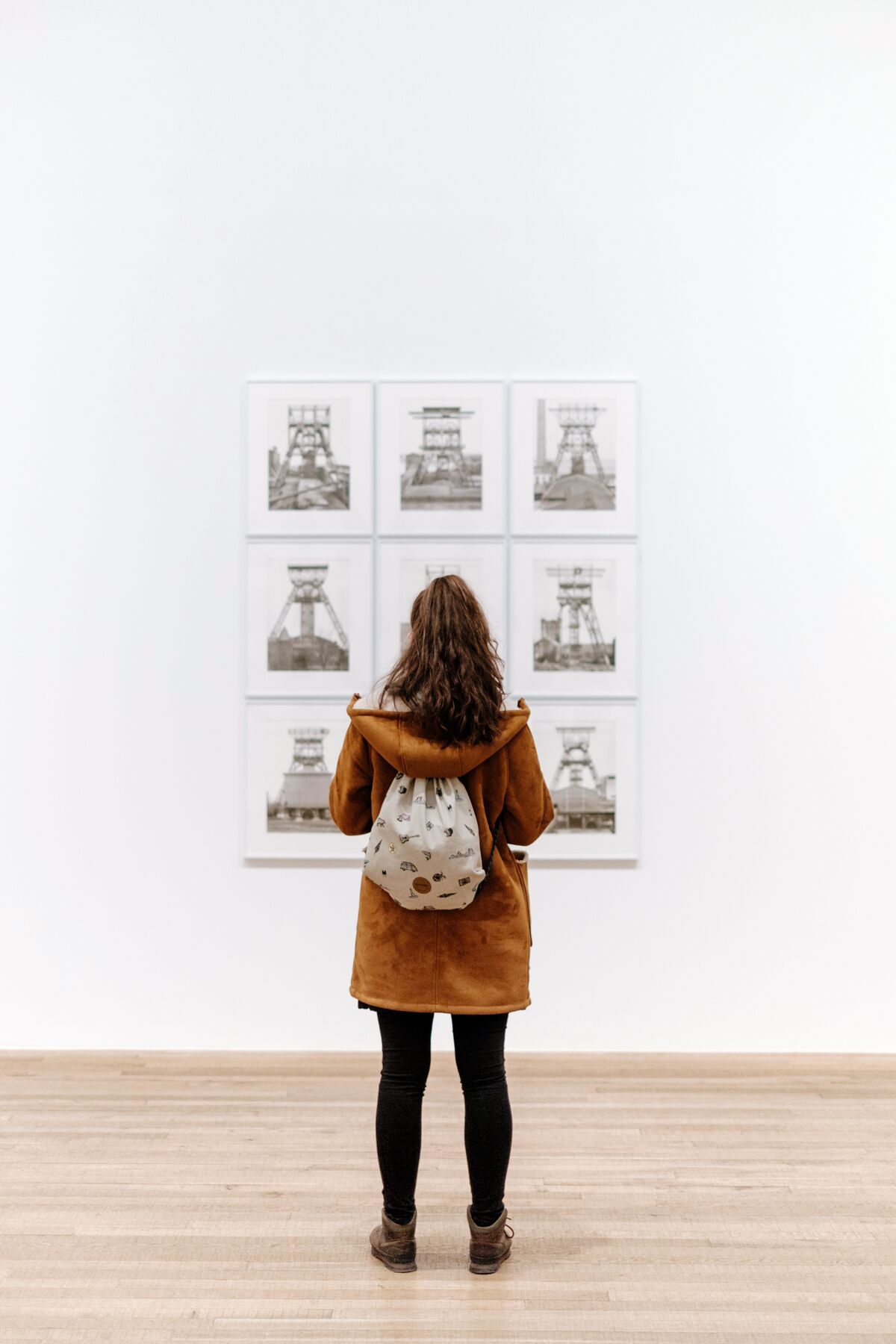
Photo by Samuel Zeller.
For many people in their twenties, art collecting can seem like a far-off pipe dream, the preserve of the older and wealthy. Millennials, after all, don’t typically make oodles of money: The average income for college graduates was just under $50,000 in 2017. While that’s a 3% increase from the prior year, student debt levels and the cost of living in job-creating urban centers are continuing to rise as well.
But the art market isn’t all $450 million Leonardo da Vinci paintings and snooty evening auctions, and many in the industry are taking steps to lower barriers to entry and bring in newer collectors, including young people.
“The misconception that art is only for the wealthy is my pet hate,” said Paul Becker, the founder of Art Money, which provides no-interest loans to art buyers. “There is such a rich ecosystem of quality and value beyond the obvious and expensive tiers.”
Around 10% of those using Art Money are in their twenties, Becker said, with many of them falling into a group he called “creative professionals”—people working in fashion, design, publishing, marketing, and other similar fields.  
Art Money, which Becker founded in 2015, allows collectors buying in the United States to borrow anything between $1,000 to $50,000, and pay it off in 10 monthly installments, while taking the work home with them on the day they pay a 10% deposit.
Collectors in their twenties can also check out lower-cost mediums like works on paper, photographs, and smaller artworks generally (although “lower” is still relative, of course). And they can avoid sticker shock by knowing how much they can afford to spend, and sticking to that budget, even if they fall in love with a work.
“The hardest thing is the budgeting—balancing how much you want the piece and how much it costs,” said Neil Hamamoto, an artist and collector. He began buying art in earnest a few years ago, partially using savings from his previous life in San Francisco working in tech while still sticking to a budget that made sense for him. He’s now 24 years old and has a collection of around 10 works varying in size by artists including Josh Sperling, Chris Burden, Tom Sachs, and Robert Moreland, along with two small works by Jeff Koons and Yayoi Kusama.
Hamamoto acknowledged that even if one has the resources with which to collect, wall space can be a challenge, especially in New York City, where Hamamoto lives. The apartments are usually small and rents are high. “If you want to buy something big, you better have a nice wall waiting for it,” he said.
Resource and space constraints aren’t the only barrier to entry. New collectors also have to discover their likes and dislikes, and know where to find and buy the art they enjoy. Auction houses, which hold free and public previews of their high-profile sales, are a fun place to see works up close, as are, of course, museums themselves, art galleries, and commercial fairs, said Emily Kaplan, head of Contemporary Curated at Sotheby’s.
“Every season, there are more and more young people coming in to see the auction previews,” Kaplan said, although young buyers still make up a relatively small share of buyers at live auctions.
But Kaplan pointed out that Sotheby’s did away with buyer’s premiums for online-only sales this summer, one way the traditional auction house is appealing to younger buyers. At online auctions, work can sell for as low as a few hundred dollars, well within the budget of younger collectors.
“That can be a surprise to a lot of people who think that if they want to collect art they have to spend tens of thousands,” Kaplan said. And since waving a paddle in a room is not a familiar way to buy for most people, online auctions (think of eBay, where you may have bought a piece of furniture or clothing) can be a familiar first step. Kaplan also noted that presale estimates are just that—estimates. If you see a work you like, you can speak to a specialist, who can give you a sense of the level of interest and whether the price might be lower.
Perhaps most importantly, young collectors can support artists who are also just starting out themselves. Buying the work of an emerging (or even unknown) artist isn’t about bringing home a $450 million trophy for your wall. It is about fostering the career of a young artist you respect and enjoy. “A collection doesn’t need to start with a da Vinci,” as Hamamoto puts it.
So next time you see a work that you like and it fits your budget, “go for it,” Becker said. “Owning a unique creation from the hand of an artist is something you’ll enjoy for a lifetime.”
Isaac Kaplan is an Associate Editor at Artsy.