Friday, June 30, 2017

Is ‘Condo’ The Wave of the Future for Small and Mid-Size Galleries Feeling the Art Fair Pinch?

Is ‘Condo’ The Wave of the Future for Small and Mid-Size Galleries Feeling the Art Fair Pinch?

International dealers find a low-cost way to collaborate.
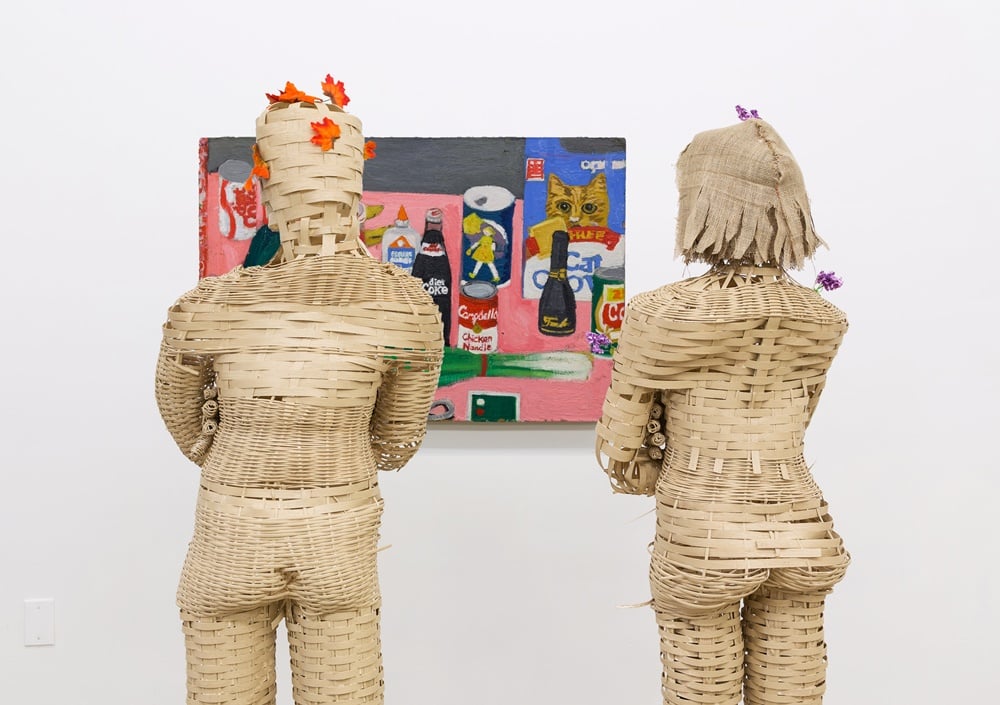
Dylan Spaysky, Daniel and Alivia (2017), with Mary Ann Aitken, Untitled (1989). Courtesy What Pipeline, Detroit.
Dylan Spaysky, Daniel and Alivia (2017), with Mary Ann Aitken, Untitled (1989). Courtesy What Pipeline, Detroit.

Is Condo the cure for what’s ailing mid-size galleries?
The new art initiative, which debuts in New York City this week after two well-received London runs, is a collaborative exhibition of international galleries in which host venues (in this instance, New York City spaces) share their facilities with visiting dealers, either by co-curating shows or divvying up the space.
Strategically timed for less eventful art world months—think summer slowdown—this iteration involves 16 Manhattan galleries hosting 20 US and international dealers from cities ranging from Los Angeles to London and from Dublin to Shanghai, as well as dealers from Latin America (namely Guatemala and Mexico).
And it couldn’t come at a better time, given the wave of recent gallery closures in New York and California, and hand-wringing over pricey and seemingly necessary (but not necessarily profitable) participation by small to mid-size galleries in global art fairs. With an extremely accessible fee of $850, compared with as much as tens of thousands of dollars for a booth at a major art fair, the program is an especially attractive option for galleries wanting to maximize their footprint and exposure while minimizing risk.
After Carlos/Ishikawa gallery founder Vanessa Carlos launched the quasi-fair in London in 2016, New York dealers Simone Subal (who participated in the most recent London iteration) and Chapter NY principal Nicole Russo rallied for a New York edition.
PUBLICIDADE
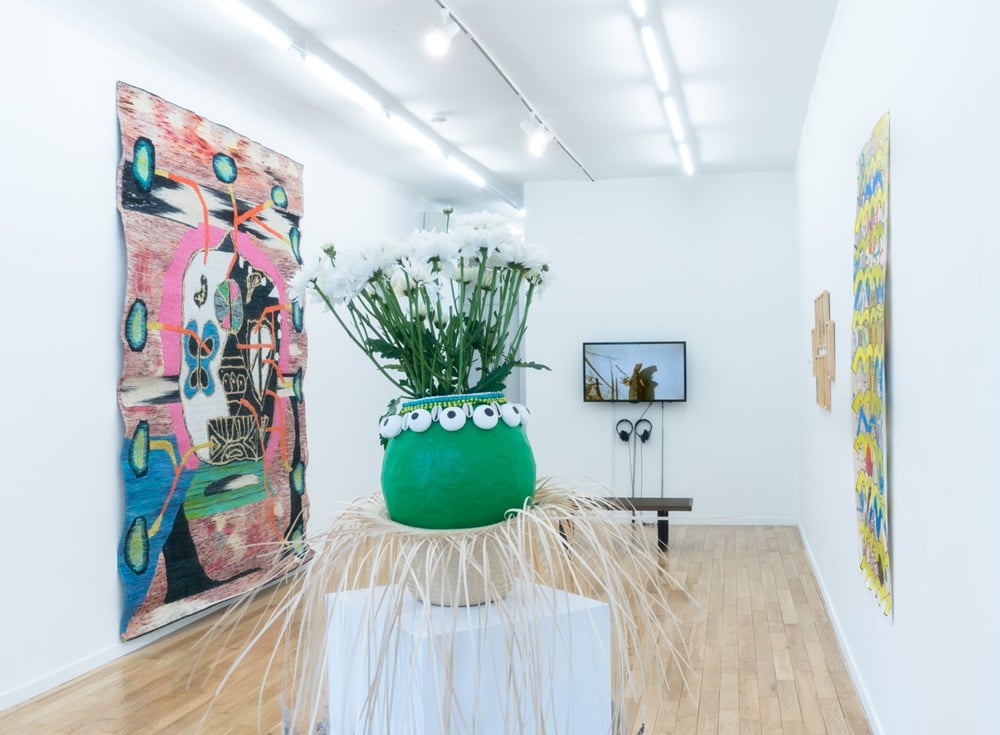
Installation view at Chapter Gallery which is hosting Agustina Ferreyra for Condo New York.
Installation view at Chapter Gallery, which is hosting Agustina Ferreyra.
“For me, what is quite amazing about Condo is that it’s really focusing on exhibition-making again,” Subal told artnet News in a phone interview. “The triangle that’s formed between the work and the space and the viewer has always been extremely important for me. That sometimes gets lost at an art fair. You see someone for two minutes and it’s hard to have a meaningful conversation.” Her eponymous Lower East Side gallery is hosting Tanya Leighton of Berlin and Gregor Staiger of Zurich.
Smaller and mid-size galleries are in “an increasingly difficult spot, especially at art fairs,” says Subal. “Very often, the way our math works is that we have to sell out the booth just to break even—and that just does not happen.”
“This is potentially a game changer globally,” said Finola Jones, director of Dublin gallery mother’s tankstation, in a phone conversation. The gallery is being hosted by Callicoon Fine Arts on the Lower East Side, and will show works by Mairead O’hEocha, Yuri Pattison, James Hoff, and Benjamin Kress. “The coalition of the little is retaking the ground at the all-important gallery level,” Jones said. “This is doing what we all love to do, and the pressure and expense of fairs can suck the heat out of this.”
Jones said that in addition to filling in an otherwise dead time in the calendar, the London edition served as an experiment to see if the model of inter-gallery collaboration was interesting to gallerists and, more importantly, to the audience. “That certainly worked,” Jones said. “The opening days of the second London edition were magical, with remarkable quality as well as volume of foot traffic, but also tremendous enthusiasm and support from the art public. It’s exciting to see if this translates to New York.”
Participating galleries are extremely optimistic. “We’ve already received positive and excited responses about our participation,” said Alivia Zivich, a partner at What Pipeline gallery in Detroit, who is showing Mary Ann Aitken and Dylan Spaysky at Andrew Kreps Gallery in Chelsea. “Foot traffic is generally lacking for most businesses here, and Condo NY is an opportunity for us to show in one of the busiest gallery districts in the world.”
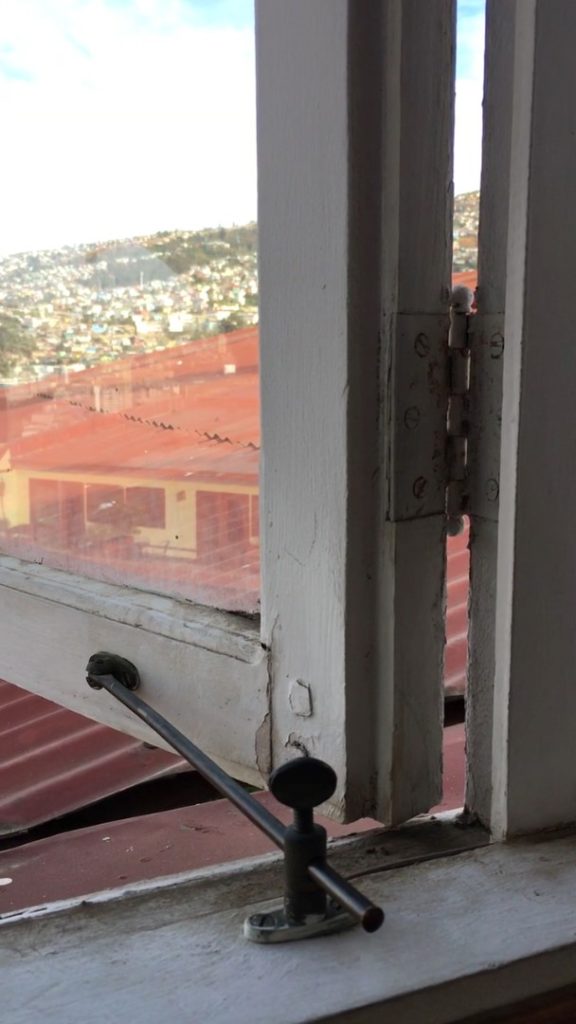
A still from Joe Zorilla Valparaiso. Courtesy of the artist and Hannah Hoffman, Los Angeles.
A still from Joe Zorilla Valparaiso. Courtesy of the artist and Hannah Hoffman, Los Angeles.
Condo New York co-founder Russo says the collaboration process was interesting to watch. “It was an organic thing,” she told artnet News. “Some people asked us to suggest galleries, while others had ideas for themselves.” Some have overlapping programs or co-represent artists, while others saw it as a chance to connect with a space they don’t normally communicate with.
Los Angeles gallerist Hannah Hoffman is showing LA-based artist Joe Zorrilla at Bortolami Gallery, newly relocated to TriBeCa from Chelsea. Zorrilla is LA-based and went to Cal Arts, says Hoffman, noting that the artist “has a really strong network of support here in both institutional and private collections. Bortolami has a longer history than my gallery does and a very established, well-respected program. To be able to be a part of that for even just a month is really an honor.”
Perhaps a bit surprisingly, the logistics of a three-dozen gallery collaboration were relatively smooth, with both Russo and Subal saying the galleries largely took planning upon themselves after cementing the collaborations.
Subal says it’s a “low budget” deal: “I made sure when I was in London just to keep my shipping as low as possible. I FedExed some things, others I brought literally in my suitcase,” she said.
“The logistical challenges are not that different from any projects that we realize outside of LA,” says Hoffman, “whether it’s an art fair or an artist project.”
What are the challenges for What Pipeline? Says Zivich: “For us, just getting the work from Detroit to NYC, but, this being Detroit, we have a car.”
Amid all the gloom about pressure on smaller galleries, Hoffman says Condo is “a really elegant solution to some of the problems and conflicts being discussed right now, especially at this moment, where the conversation is so international. As a small gallery you’re fixed in a very specific location, and this represents a really intriguing model in terms of expanding influence and dialogue without taking on additional space.”
Subal echoed that notion, saying: “I don’t see Condo as anti-art fair, but I do see it as a different option, an alternative for younger galleries” who realize they cannot compete with mega-galleries like Zwirner or Gagosian.
Finally, she says, “You have to stop complaining and just do something.”
Condo NY continues through July 28.
Follow artnet News on Facebook.
  • Access the data behind the headlines with the artnet Price Database.
SHARE


Article topics

Here’s How Much Money Museum Employees Really Make


Here’s How Much Money Museum Employees Really Make

It's the first time the Association of Art Museum Directors has made their research public.

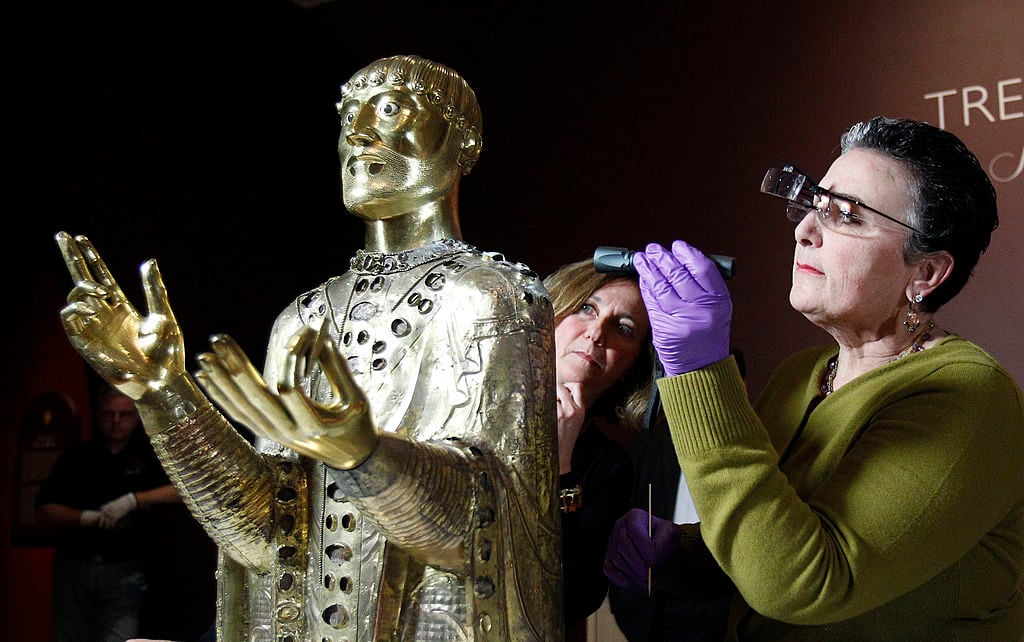
Shelley Paine, objects conservator at the Cleveland Museum of Art inspects the French National Treasure at Cleveland Museum of Art on November 8, 2010 in Cleveland, Ohio. Photo by David Maxwell/Getty Images for Cleveland Museum of Art.

It would be difficult, if not impossible, to find a museum professional who got into the arts for the money. But even curatorial assistants have to pay rent.
new survey conducted by the Association of Art Museum Directors (AAMD) provides hard data on the average salaries for curators, conservators, registrars, and other museum staff members—as well as which roles in this notoriously poorly paid field have seen the biggest salary bumps in recent years.
The AAMD teamed up with the consulting and analytics firm Stax, Inc., to survey 219 museums in the US, Canada, and Mexico about what they pay their employees. (Each response was completed by one representative from the museum—usually an HR coordinator.) The AAMD launched its first salary survey way back in 1918 and began collecting the data in a more formal way in 1991, but this marks the first time it has made its report free to the public.
Unsurprisingly, top administrative positions are the best compensated: The highest-paying museum gigs are director ($293,988 average annual salary), deputy director ($173,572 average salary), and chief operating officer ($172,872).
Chief curators ($143,412) and chief conservators ($118,271)—two roles that require either an advanced degree, lengthy training, or both—also fall towards the top of the salary hierarchy. The lowest-paid positions are: security guard ($33,974), education department assistant ($37,801), and curatorial assistant ($42,458).
PUBLICIDADE
These salaries—particularly for entry-level curators and educators—may not be enough to pay off hefty student loans, but they are higher than equivalent positions at many international institutions. Last year, for example, London’s Tate posted three jobs for assistant curators with salaries starting at £24,360 ($31,535).
Not everyone’s income is growing at the same rate, according to the survey. COOs saw the largest average annual increase: 5.5%. The survey’s authors attribute this growth to the increasing complexity of museum operations, which is driving institutions to offer more money to retain more qualified candidates. (Unlike art conservation, for example, operations management is a highly transferable skill: a COO could likely take her talent to another for-profit institution for a lot more money.)
The second fastest-growing salaried position? Curator.
Curators saw their salaries rise 4.6% per year, on average, between 2011 and 2016—in part because museums had rising demand for the position during that time. But don’t race off and enroll in a master’s degree program just yet: The number of curators is expected to grow 7% between 2014 and 2024, according to the Bureau of Labor Statistics, which is only average in terms of job growth. “Applicants should expect very strong competition for jobs,” the BLS remarks.
For their part, museum directors experienced only a 1.6% growth in median salary between 2015-2016—hardly greater than the rate of inflation. Don’t feel too sorry for them, though: Directors were also more likely than any other employee to receive vehicle and housing allowances.
Below, we’ve broken out all the job titles covered in the AAMD report, putting them in order by salary to give a sense of the museum hierarchy. The numbers represent the average (median) salary across the institutions in the survey. (When titles are broken up into As and Bs, such as with “Finance A” and “Finance B,” the As are the position within a department with more responsibility.)
  • Museum Director: $233,398
  • Chief Operating Officer/Administrator: $150,100
  • Deputy Director: $142,994
  • Chief Curator/Director of Curatorial Affairs/Curator A: $123,725
  • Director of Development/Development A: $120,000
  • Chief Conservator/Conservator A: $107,832
  • Director of Information Systems/Chief Information Officer: $106,692
  • Director of Finance/Finance A: $103,000
  • Senior Curator/Curator of Special Collections Area/Curator B: $102,500
  • Director, Planned Giving/Institutional Giving: $95,000
  • Director of External Affairs: $94,500
  • Human Resources Director: $92,830
  • Senior Conservator/ Conservator B: $83,771
  • Curator of Exhibitions/Curator C: $81,017
  • Systems Manager/Technology Director/Director of New Media: $79,000
  • Director of Education/Curator of Education/Education A: $77,030
  • Facilities Director/Building Manager/Operations Manager: $75,400
  • Marketing Director: $74,375
  • Director of Finance/Finance B: $73,917
  • Associate Curator/Curator D: $69,340
  • Editor/Director of Publications: $68,688
  • Engineering Manager: $67,009
  • Exhibition Designer: $66,955
  • Head Librarian/ Librarian A: $64,272
  • Associate Conservator/ Conservator C: $61,165
  • Web Manager: $60,600
  • Public Relations Officer: $60,458
  • Grant Manager/Institutional Giving Manager/Development B: $60,416
  • Chief of Security: $60,416
  • Photographer: $58,915
  • Assistant Curator/Curator E: $58,052
  • Registrar A: $55,973
  • Associate Librarian/Librarian B: $55,703
  • Graphic Designer: $55,620
  • Special Events Manager: $54,368
  • Assistant to Director: $53,960
  • Chief Preparator/Preparator A: $53,077
  • Museum Store Manager: $53,000
  • Associate Registrar/Registrar B: $52,755
  • Development Associate/Development C: $52,020
  • Associate Educator/Educator B: $52,000
  • New Media Manager: $50,000
  • Associate Librarian/Librarian C: $49,728
  • Associate Preparator/Preparator B: $45,127
  • Volunteer Coordinator: $43,722
  • Assistant Educator/Educator C: $43,000
  • Assistant Registrar/Registrar C: $41,787
  • Curatorial Assistant: $40,000
  • Membership Assistant: $39,100
  • Education Assistant: $36,025
  • Museum Security Officer/Museum Security Guard: $31,213
Follow artnet News on Facebook.
SHARE
Article topics

The Fallon vs. Colbert Fight for Late Night Is About More Than You Think