Sunday, September 13, 2015

Iconic Fashion Photographs

From Designers in Dresses to Models Off Duty, 11 Iconic Fashion Photographs from the Past Three Decades

Mercedes-Benz Fashion Week takes over New York this week, flooding the city with stiletto-clad fashionistas, the celebrity set, and designers from across the globe. As the models walk the runway, we invite you to take a front row seat as we revisit some of the industry’s most iconic images, from the 1980s to today. 
BY KATE HAVELES

Herb Ritts

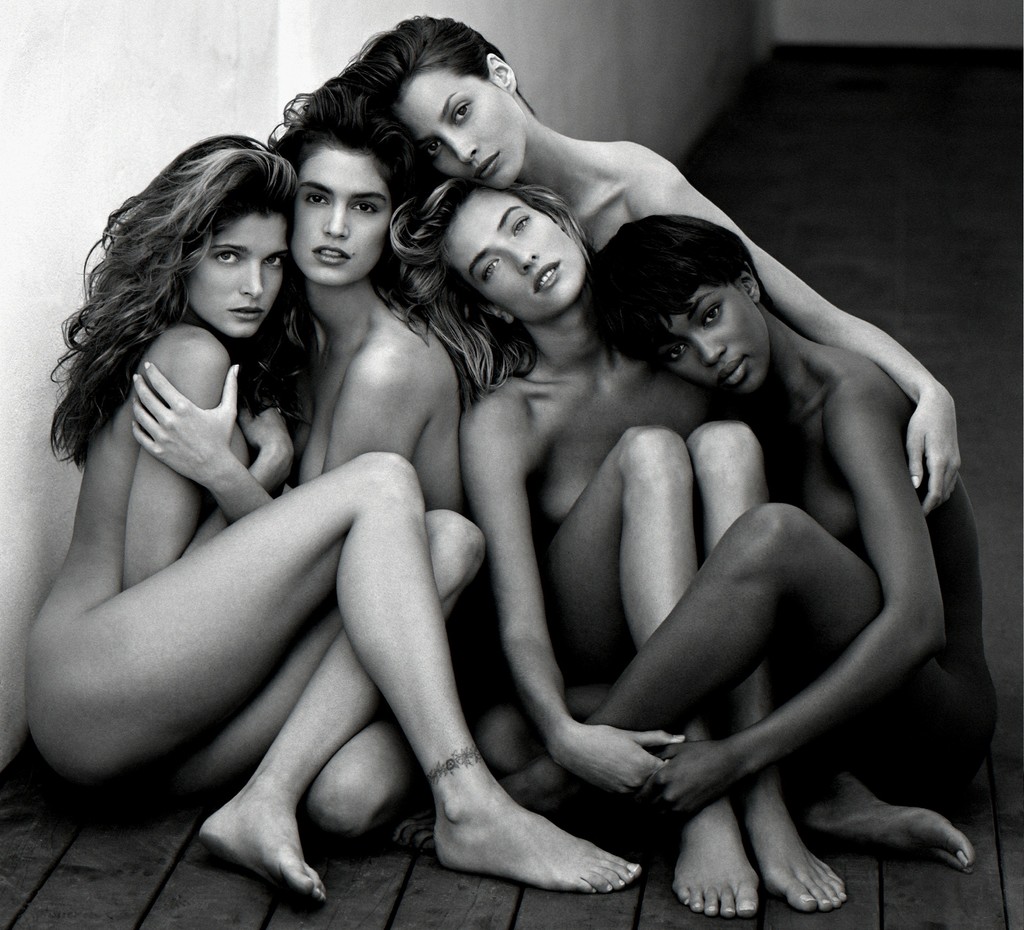
Herb Ritts’s high-contrast black-and-white images of supermodels and celebrities—which placed bodies and faces (in lieu of clothing) at the fore—have become synonymous with 1980s and ’90s iconography. Ritts gained attention in the ’80s while living in L.A., where he took the sultry portrait of a tank-top-sporting Richard Gere that launched his career. After shooting a 1981 Elle cover starring Brooke Shields, Ritts was soon working with top magazines and brands, as well as directing pop music videos and dozens of commercials (Revlon was a frequent client). Perhaps Ritts’s most recognized shot is his supermodel-jam-packed portraitStephanie, Cindy, Christy, Tatjana, Naomi, Hollywood (1989), published in Rolling Stone. His seminal Calvin Klein underwear campaign, featuring Kate Moss and Mark Wahlberg in tighty-whities, comes in at a close second.  

Paolo Roversi
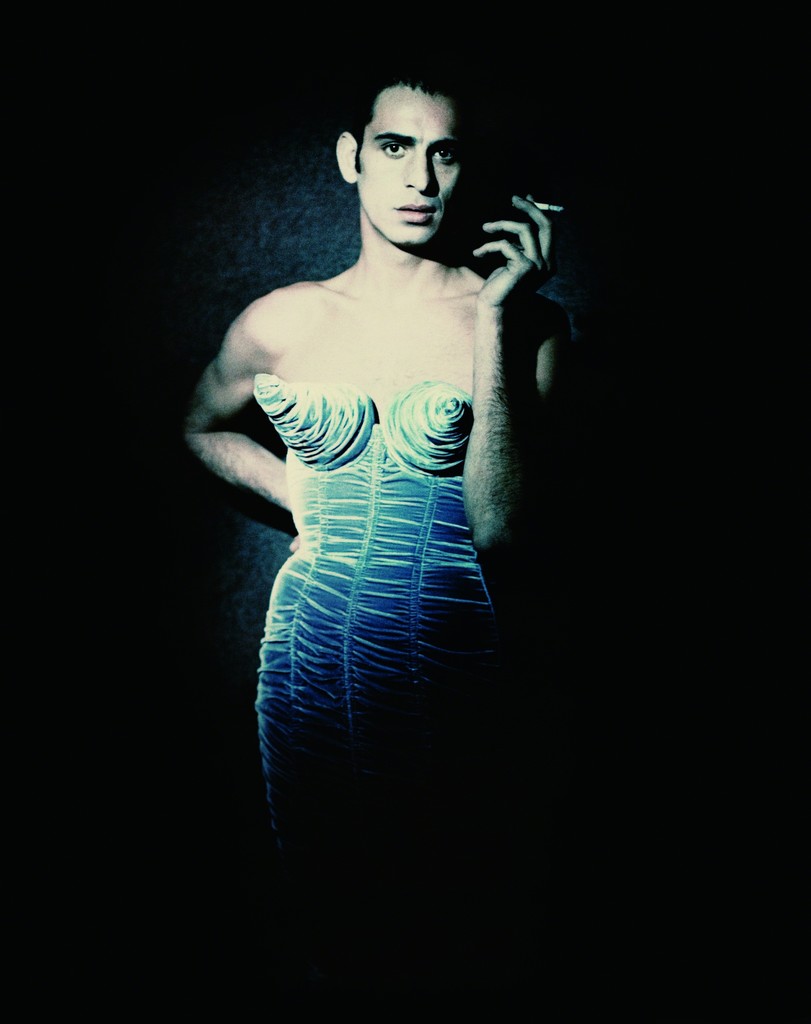
Pablo Roversi’s dreamy fashion images made their first major appearance in Marie Claire, and soon after in the Italian editions of Vogue andHarper’s Bazaar, and big-league ad campaigns for cutting-edge Japanese brands like Yohji Yamamoto and Comme des Garçons. The haunting portrait of model Tanel Bedrossiantz in an ultra-femme gown from Jean Paul Gaultier’s iconic “Barbès” collection, taken by Roversi in 1992, was featured in the internationally exhibited survey of the designer’s career, mounted in 2013 at the Brooklyn Museum.

Arthur Elgort
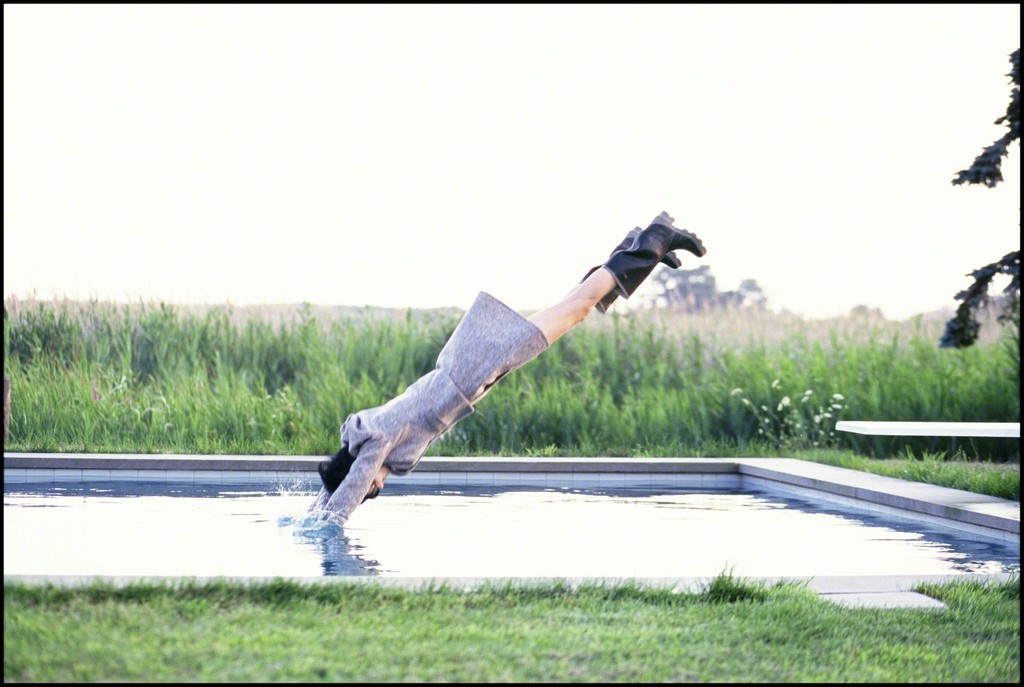
A staunch proponent of the candid photograph, Arthur Elgort ushered in a new age of fashion editorials, where models were free to romp across the frame, casually smoke cigarettes, dance on tables, or dive into swimming pools, as Stella Tennant does in this 1995 photo for Vogue. Trained first as a painter, Elgort debuted in British Vogue in 1971 and almost immediately rose to prominence; his relaxed, spontaneous style is now ubiquitous in magazines and advertisements worldwide.

Helmut Newton
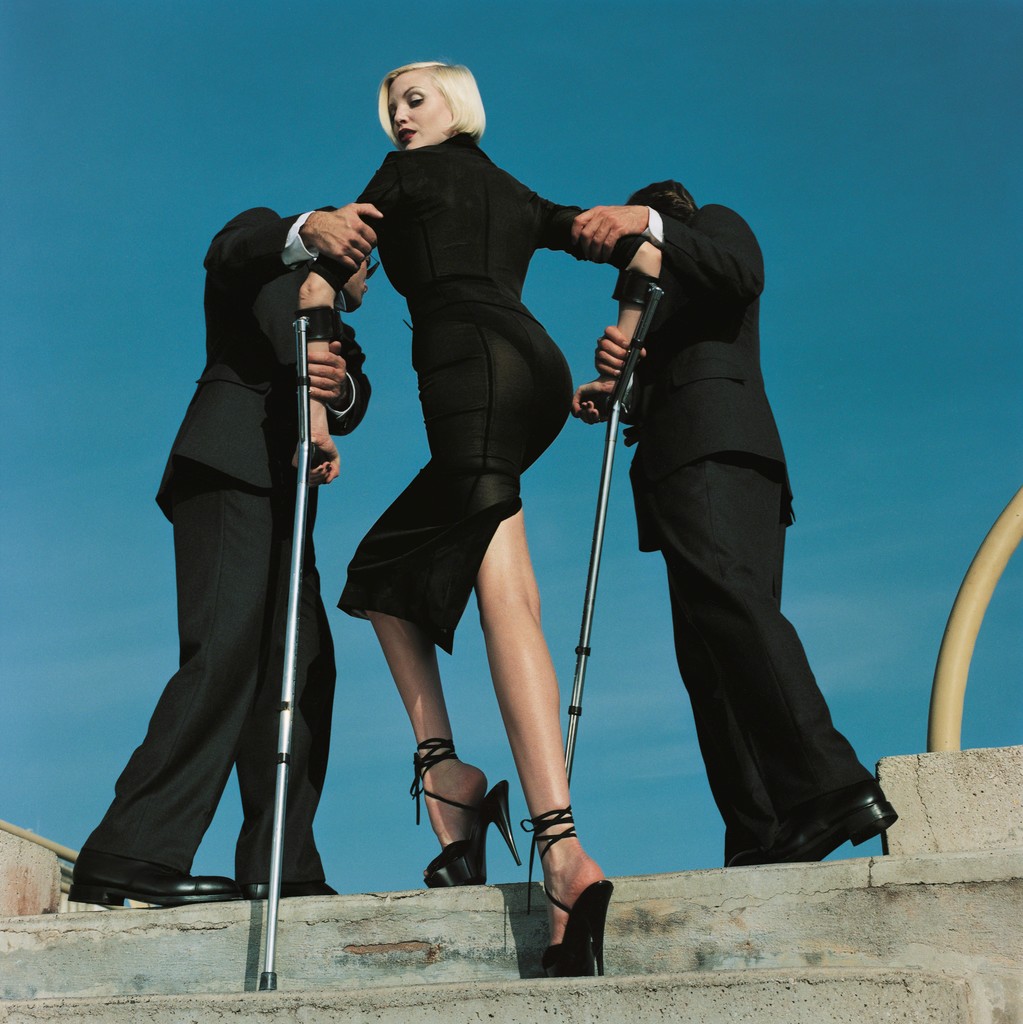
“King of Kink” Helmut Newton’s photographs are instantly recognizable for their explicit voyeurism, with scantily clad models lolling about hotels and reclining languorously around the studio. Newton escaped Nazi Germany as a teen and held many jobs before eventually landing a contract with British Vogue in 1957, working later with Vogue Paris,Harper’s Bazaar, and Playboy. Published in 1995 in Vogue, Newton’s editorial spread featuring Nadja Auermann in the latest fashions—plus all manner of leg braces, crutches, wheelchairs, and casts—drew controversy for its borderline fetishization of physical disabilities.

David LaChapelle
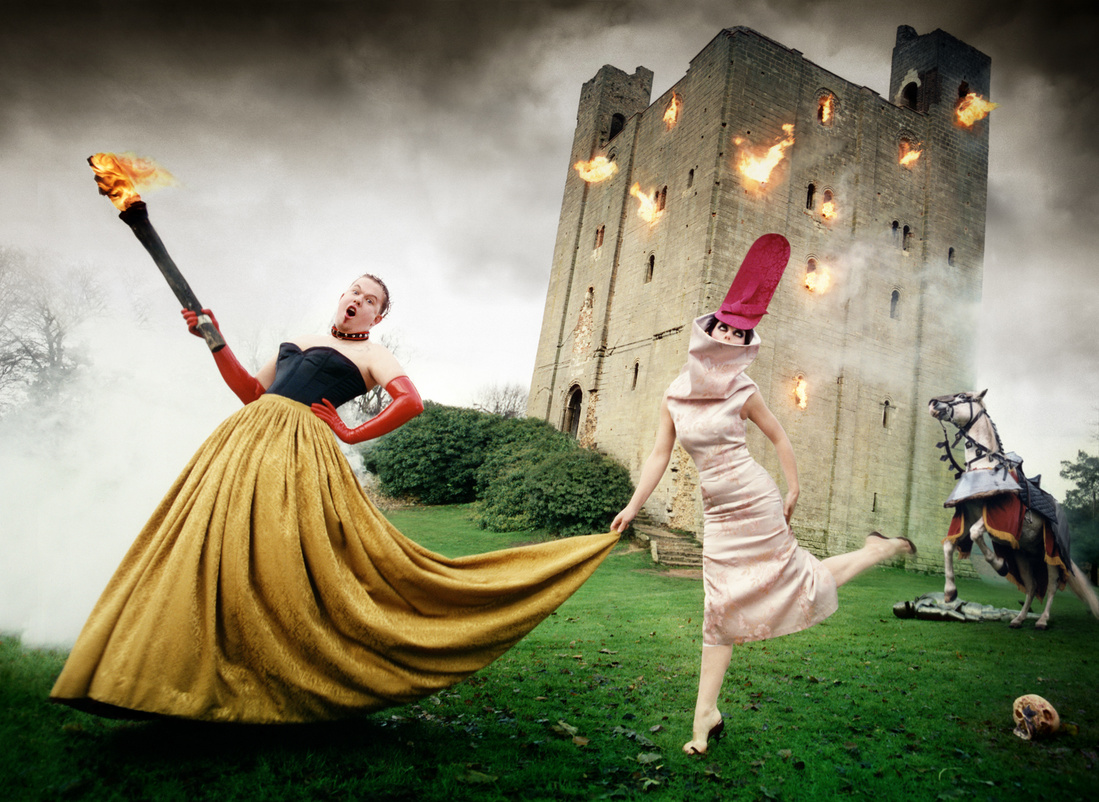
David LaChapelle, Alexander McQueen and Isabella Blow: Burning Down the House, 1996. Image courtesy of Staley-Wise Gallery.
Andy Warhol offered David LaChapelle his first commercial photography gig in the early ’80s, enlisting him to shoot for Interviewmagazine. Ever since, LaChapelle has amassed a vast body of both commercial and fine art work, producing slick, high-color images that take cues from all areas of art history and culture, incorporating Pop andSurrealism alongside religious iconography and consumerist ideals. LaChapelle’s pandemonious, yet still very British, portrait of the late designer Alexander McQueen and his muse Isabella Blow, skipping riotously across the frame in McQueen’s own designs, was published inVanity Fair’s 1997 “Swinging London” issue. Fifteen years later, following the tragic deaths of both subjects, the National Portrait Gallery acquired the photograph for its collection.

Juergen Teller
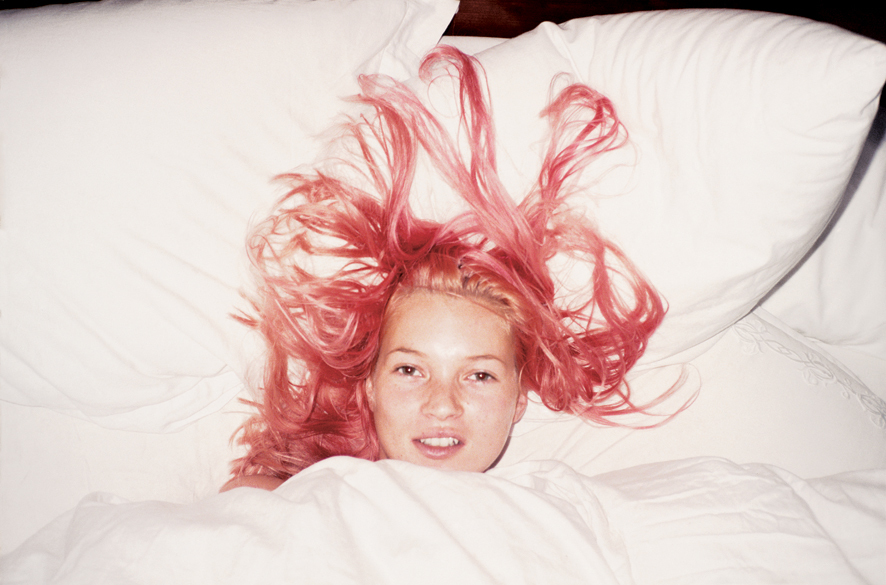
Quick snaps, bright flash, raw subjects—Juergen Teller’s distinctive photographs present moments that feel plucked from personal home archives, with all the typical, rigid glossiness of editorial photography removed. Appearing regularly in alternative fashion magazines likePurplei-D, and AnOther Magazine, Teller’s overexposed color images have also become synonymous with Marc Jacobs, who first contracted the photographer in 1998 for an advertising campaign. The portrait he took that year of Kate Moss in bed, her punky pink hair splayed around her un-made-up face, was captured in the model’s London home in a casual shoot during downtime between other major fashion campaigns.

Patrick Demarchelier
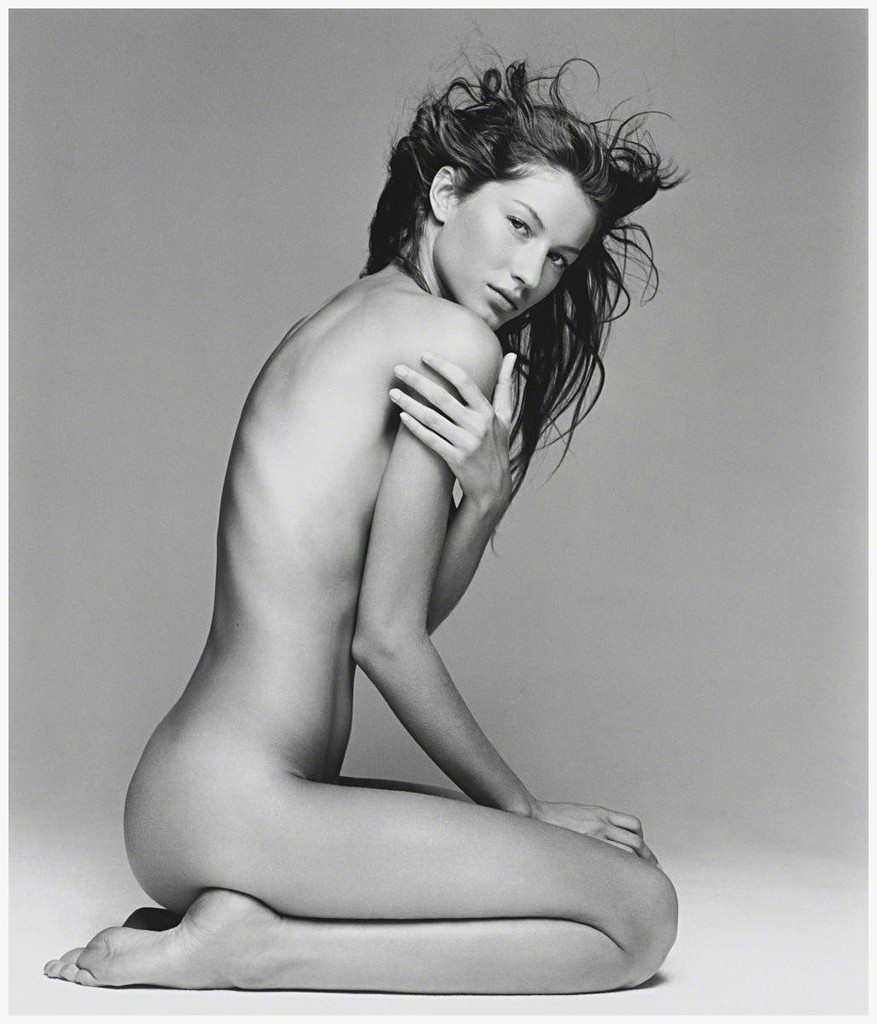
Once the official photographer for the British Royal Family, Patrick Demarchelier has shot endless editorial and commercial images for Vogue,Harper’s BazaarVanity Fair, Dior, Louis Vuitton, Chanel, YSL…the list goes on. Something of a pop culture icon now (he’s often named-dropped in TV shows and films, like The Devil Wears Prada and Sex and the City), Demarchelier photographed the similarly iconic Gisele Bündchen as a coy, fluid nude for Bazaar in 1999, when the model was first stepping onto the scene. Following the issue’s publication, the Brazilian model began popping up on magazine covers all over the world.

Mario Testino
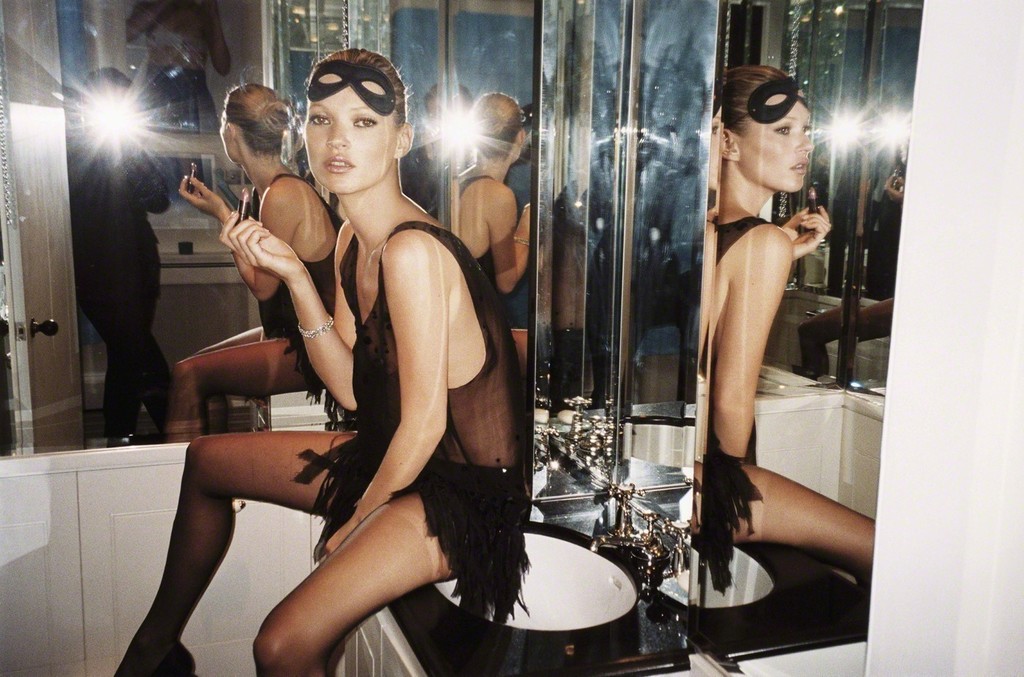
Another photographer to the royals, Mario Testino’s big break came in 1997 when Vanity Fair commissioned him to photograph Princess Diana for their cover (Testino had been living in London since ’76, and working for Vogue since ’83). He has since firmly staked his place amidst the greats in the pantheon of fashion photography, having worked with all the biggest names and received numerous awards, not to mention a smash-hit exhibition at the National Portrait Gallery. This casually glamorous, behind-the-scenes portrait of Kate Moss from 2006 epitomizes Testino’s desire to capture moments rather than staged scenes. Moss has long been a muse and close friend to Testino; in 2010 he published a collection of his Moss portraits, and the following year photographed her wedding to musician Jamie Hince.

Ellen von Unwerth
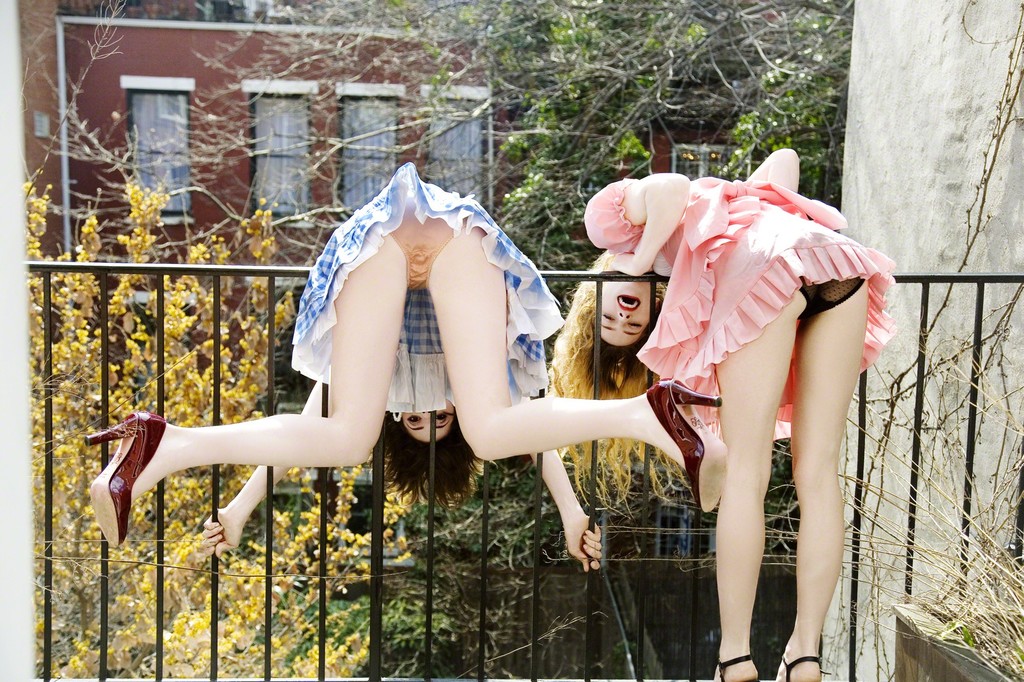
After spending a decade on the other side of the camera, Ellen von Unwerth transitioned from fashion model to photographer, with work published in magazines including VogueVanity Fair, and Interview, along with a great deal of commercial work for various music-world celebrities (von Unwerth has created cover art for Duran Duran, Janet Jackson, Christina Aguilera, and Rihanna, among others). Her photographs exhibit a deeply erotic view of femininity—sometimes playful, sometimes dark. Her 2009 book Fräulein features portraits of modern sex icons like Claudia Schiffer, Dita von Teese, and Adriana Lima, plus scores of images of models running amok in sexually charged scenarios, including the naughty-and-nice girls pictured here in Double Trouble (2008).

David Bailey
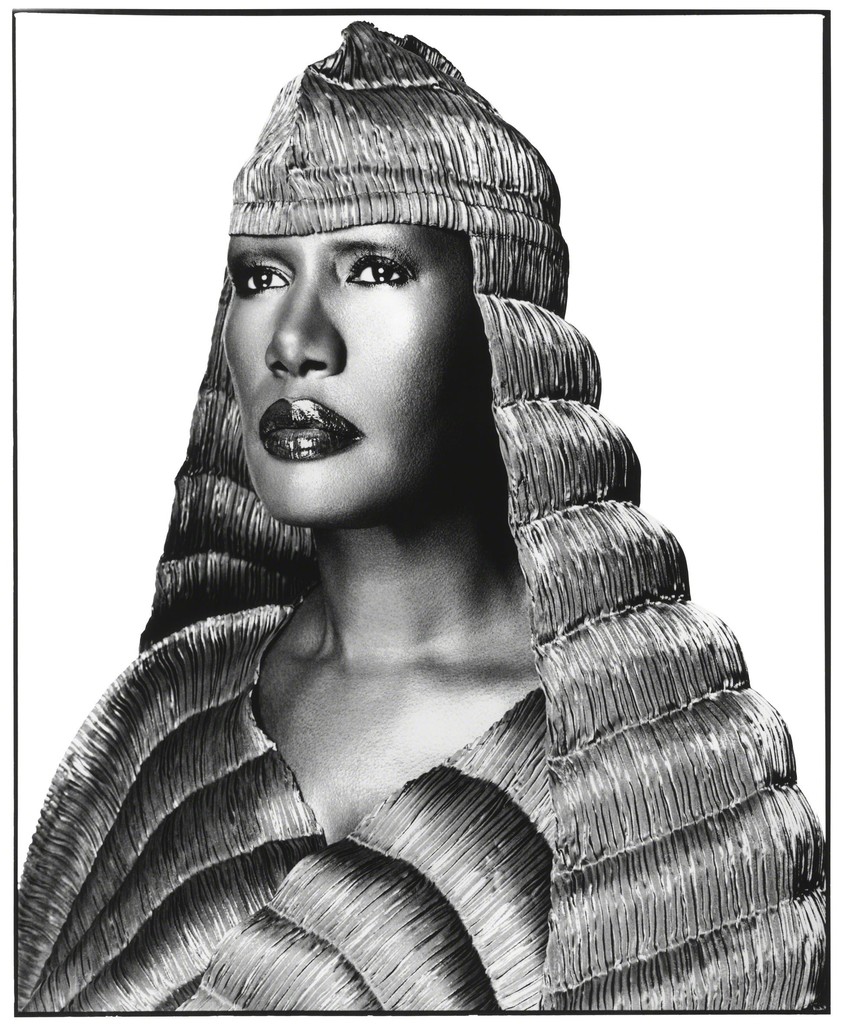
Legendary chronicler of London’s Swinging ’60s—capturing musicians, actors, supermodels, gangsters, and everyday Eastenders on film—David Bailey is as much a celebrity as his diverse subjects. Originally created in 1965, “David Bailey’s Box of Pin-Ups” was a series of pocket-sized portraits of ’60s heartthrobs, artists, and rebels, featuring the likes of Mick Jagger, Andy Warhol, Cecil Beaton, Jean Shrimpton (Bailey’s one-time girlfriend), David Hockney, the Beatles, and Michael Caine. Bailey continued to create portraits in the same straight-forward, clean style (in addition to fashion editorial and documentary work), like this photograph of model-musician Grace Jones, captured in goddess-esque splendor in 2008.

Peter Lindbergh
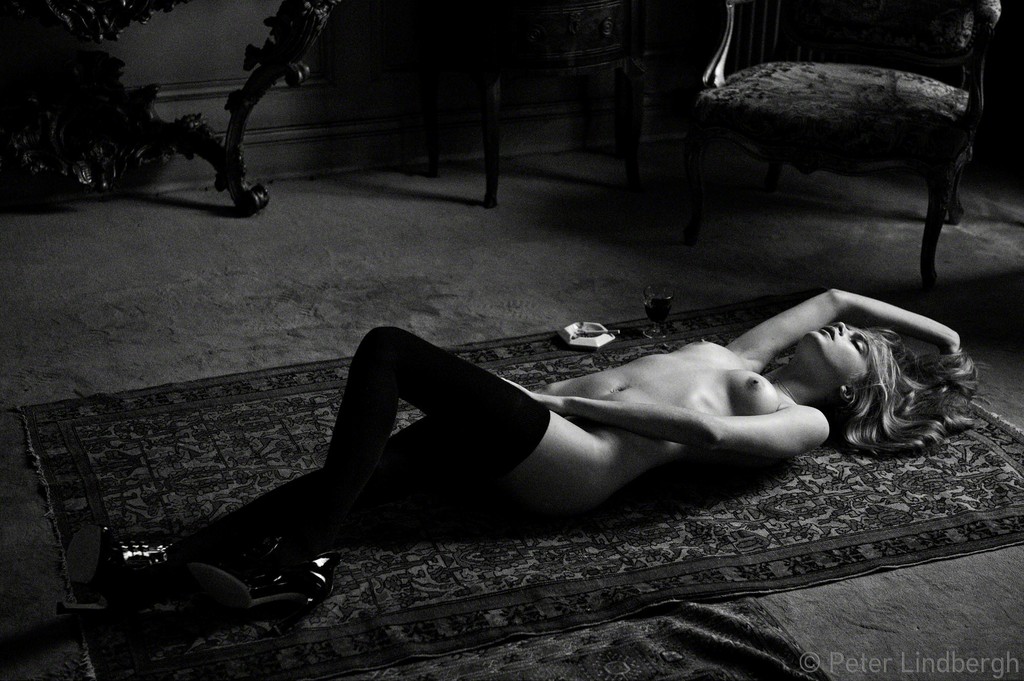
Arguably the driving force behind the era of The Supermodel, Peter Lindbergh has photographed dozens of the 20th and 21st centuries’ most recognizable models. His very first Vogue spread in 1988 bubbled over with then-newcomers Christy Turlington, Linda Evangelista, and Tatjana Patitz, among others. Now with many Vogue editorials under his belt, Lindbergh continues to create work typified by powerfully intimate black-and-white portraits, be they of supermodels—like this 2013 photograph of Cara Delevingne—designers, or movie stars.

—Kate Haveles

SHARE THIS ARTICLE

Mourinho's Daughter

José Mourinho's Daughter Matilde Dazzles On GQ Men Of The Year Awards Red Carpet In Eye-Popping LBD (PICS)


José Mourinho was outshone by his daughter Matilde at Tuesday night’s GQ Men Of The Year Awards after she took to the red carpet with her father in an eye-popping LBD.
The 18-year-old ensured all eyes were on her - and not her football manager father for once - in the revealing black mini-dress.
jose matilde
José Mourinho and his daughter Matilde at the GQ Men Of The Year Awards

Looks like there’s a new ‘Special One’ in town, sorry José.
The pair joined the likes of Lewis Hamilton, Sam Smith, Elton John and Ronnie Wood at the Samuel L. Jackson-hosted bash at London’s Royal Opera House.
Earlier this year, Matilde was linked to One Direction’s Niall Horan after the pair were spotted partying together.
But reps for the singer were quick to deny there was anything romantic going on between the pair, insisting they were “just friends”.
jose matilde
A source told The Mirror that Niall’s love of football - and his friendship with José - brought the pair together.
“Niall is friends with Jose, and is a real football fan, as is Matilde, so they get on really well.”Posted: Updated: 

Friday, September 11, 2015

Fashion Week Parties Warm Up


                     REMEMBER WE ARE WIDE SCREEN                   
3
Theme of the Week Add Note Flag Image

pixel


Fashion Week Parties Warm Up


Slide
By Katie Rogers
In a prelude to New York Fashion Week, Target hosted a party Wednesday that paid homage to vintage Vogue covers as well as high and low fashion. Guests included Emily Ratajkowski, dressed in Balmain and a Target necklace, who said she was not quite a fashion week veteran.  “I’m kind of like a sophomore or junior,” she said.
Amy Lombard for The New York Times


Slide
Camila Alves, dressed in Zac Posen and carrying a Target clutch, posed with one of the interactive displays.
Amy Lombard for The New York Times


http://www.nytimes.com/slideshow/2015/09/10/fashion/fashion-week-parties-warm-up/s/10SCENE-WARMUP-slide-2ANF.html


Slide
Mickey Boardman peered through one of the vintage Vogue covers placed throughout the party space. He wore Dolce & Gabbana sunglasses with his usual Lacoste shirt and a pair of J Brand jeans.
Amy Lombard for The New York Times


Slide
The actress Amanda Seyfried, who wore a Valentino dress, Givenchy shoes and a Target necklace, was excited for fashion week. “I really only ever go to Givenchy shows in Paris,” she said.  


Slide
The party was held at Cedar Lake in Chelsea.
Amy Lombard for The New York Times

Slide
An actress modeling a vintage Vogue cover applied lipstick for several hours.


Slide
The model Lindsey Wixson surveyed the scene.


REMEMBER WE ARE WIDE SCREEN       


Who’s Responsible for the Refugees?

The Opinion Pages | Op-Ed Contributor


Who’s Responsible for the Refugees?


Photo

Refugees from various nations being escorted along a rail line near the town of Szeged, Hungary, close to the border with Serbia. Credit Attila Kisbenedek/Agence France-Presse — Getty Images            
Policy paralysis over the refugee crisis is convulsing Europe: Of course we want to help, but if we’re too generous, more will come.

As a former adviser to the British prime minister, David Cameron, I understand the pressure politicians face from citizens demanding controlled immigration and tightly policed borders. As the son of immigrants welcomed into Britain from Communist Hungary, I feel a strong moral instinct to extend a similar welcome to others fleeing their homelands in even worse circumstances. But still. Before condemning European politicians, aid agencies or anyone else, let’s try to cut through the complexity with some simple human truths.

First, stop blaming Hungary. For months before this crisis hit the headlines in America, my hometown, Szeged, was the front line. Just days before I was there on a family vacation in July, 700 refugees were discovered in the woods where we used to play as children. My cousins told me, outraged, about the seemingly unending flow of new arrivals stealing fruit from their friends’ trees and vegetables from their gardens; urinating and defecating in public places throughout the town; clogging up public services.

You could say: How xenophobic. Or instead: How would you feel if your daily life was being made intolerable while the authorities, thanks to European Union rules about registering refugees, seemed unable to restore order? Hungary is small and relatively poor. It’s a little unfair, to put it mildly, to condemn Hungary for callous — even racist — treatment of migrants when those doing the condemning bear far more responsibility for the crisis. Yes, America, I’m talking about you.

And here’s the second simple truth. While we can argue forever about the causes of conflict in the Middle East, it is impossible to ignore the impact of American foreign policy on what’s happening in Europe. It was shocking to see an “expert” from the Council on Foreign Relations quoted on Saturday saying that the situation is “largely Europe’s responsibility.” How, exactly? The Iraq invasion (which could reasonably be described as “largely America’s responsibility”) unleashed a period of instability and competition in the region that is collapsing states and fueling sectarian conflict.
European leaders wanted, years ago, to intervene directly in Syria in order to check President Bashar al-Assad’s cruelty; the United States didn’t. You can understand why — I wouldn’t for one second question the judgment of American political leaders that their country was reluctant to participate in another military conflict. But at least acknowledge the consequences of nonintervention: the protracted Syrian civil war, the emergence of a lawless territory ripe for exploitation by the sick zealots of the Islamic State, and the resulting flood of millions of displaced people.
So it’s a bit rich for American commentators to lecture Europeans when part of the reason the refugees are arriving on Europe’s doorstep is American foreign policy. It’s great that the United States is by far the largest provider of humanitarian assistance to Syrians, but America is bigger than Europe, and wealthier. Why should Europe be expected to take around a million refugees practically overnight and the United States, hardly any?

This is America’s chance to say, “We have a moral responsibility to help. So the United States will welcome as many refugees as Europe: Not just thousands; hundreds of thousands. But there has to be a bargain. We cannot keep doing this. So we will now embark on a new effort to bring the basics of a decent life to the world’s hot spots.”
There are practical steps we could take to entice leaders in the Middle East to open up their economies and provide greater rights and freedoms. The Oxford economist Paul Collier has proposed a plan for “job havens” bordering Syria, using an existing, but empty industrial zone minutes from the largest refugee camp in Jordan, where a future Syrian economy could be incubated, providing both an income and an incentive to stay for millions of displaced people.


The economist Hernando de Soto, backed in part by the United States Agency for International Development, has cataloged the vast untapped value of the informal economy in countries like Egypt, Tunisia and Algeria. If these assets were formalized, people across the region could own property, grow businesses and develop the desire to stay and build stable societies. We should put pressure on their rulers to implement the necessary legal reforms by cutting aid payments until they do it.
The Obama administration led the establishment of the Open Government Partnership, a well-designed effort to promote public sector accountability worldwide. Now let’s give it real teeth: make trade deals and market access contingent on progress toward its goals. We have plenty of leverage if only we’d use it to pursue long-term structural reform.

Yes, it’s a complicated world. But that’s no excuse to do nothing. For America to lead in this way is not about imposing “Western values” on the rest of the planet. It’s much more basic than that. It’s about treating every human being with humanity.