Sunday, December 10, 2017

Art Market | Completely Revamped Art Basel in Miami Beach Sees Upswing in Early Sales


Art Market
Completely Revamped Art Basel in Miami Beach Sees Upswing in Early Sales
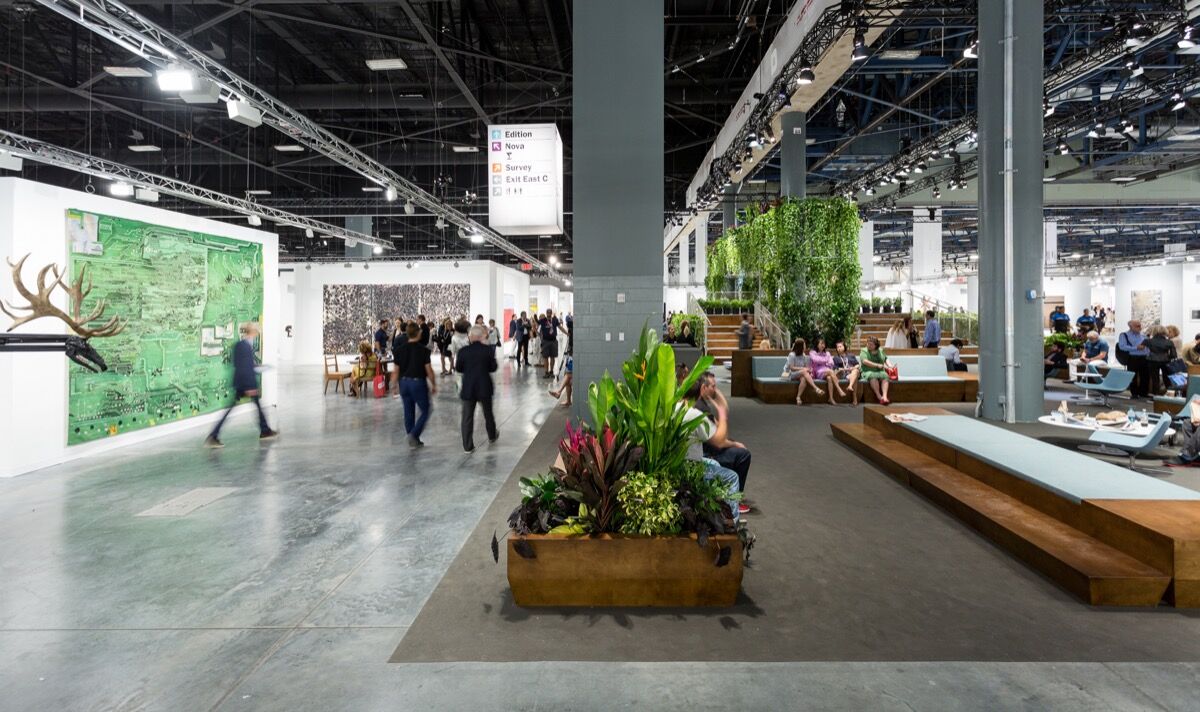

Art Basel in Miami Beach, 2017. Photo by Alain Almiñana for Artsy.
What happens when you take dozens of the world’s most important collectors, line them up on an 82-degree day in Miami’s famous sunshine outside of a convention center that’s mid-renovation, and change up the layout so their favorite dealers aren’t where they last saw them?
Turns out, they still buy art.
The 16th edition of Art Basel in Miami Beach opened on Wednesday morning to VIP guests with a newly renovated interior that adds 10% more space to the Miami Beach convention center and a complete reshuffle of every gallery on the map. The new layout offers dealers more room to spread out their wares, and gives visitors wider halls to walk along and a pair of large plant-filled plazas in which to sit, talk, or even exercise: In one, a fairgoer in bright purple sneakers sat doing his morning stretches. But the changes meant some people were a bit spun around, players in an art-fair game of Pin the Tail on the Donkey.
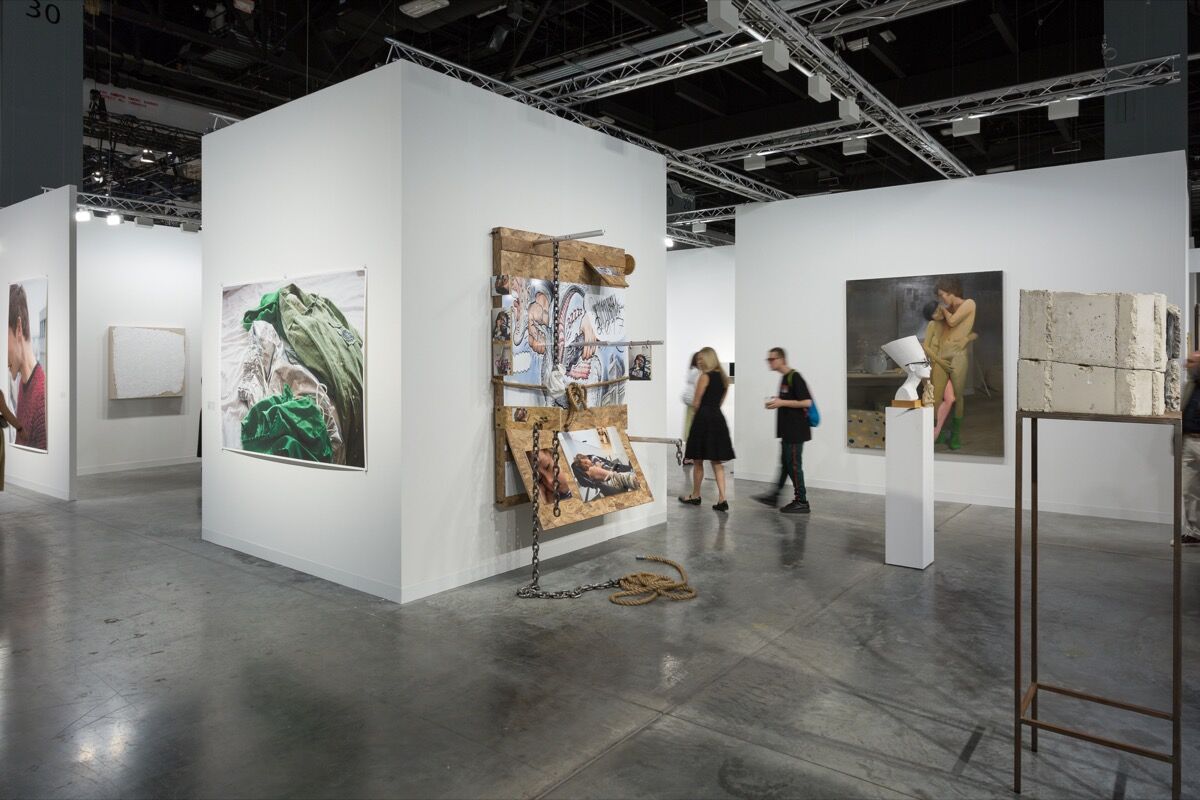
Installation view of David Zwirner’s booth at Art Basel in Miami Beach, 2017. Photo by Alain Almiñana for Artsy.
“I think people are having a hard time finding what they used to find, and there were some complaints about getting in as it was quite a long wait,” said David Zwirner, who had a booth near the entrance where VIPs picked up their passes. “But once people are in here I think they’re very happy.”
Zwirner adjusted to the new layout and the delayed entry by updating his normal rules: Instead of the typical one-hour window he allows for collectors in Miami to decide whether to pull the trigger, they were given two to locate his booth, see the works in person, and make a decision. At 12:15, just over an hour into the fair, he lacked his usual ebullience. But an hour later, the cloud had lifted, and he reeled off something like a dozen sales (a large share of them to Americans, he said) in one breath.
They included a Neo Rauch painting that went for $1.2 million, Josef Albers’s red Homage to the Square (1957) for an undisclosed sum, a Yayoi Kusama painting, Standing at the Flower Bed (2013) for $1 million, a Franz West sculpture for $800,000, a Donald Judd sculpture for $850,000, a Brice Marden for $700,000, and three works by Wolfgang Tillmans (Central Nervous System, 2013; river bed​, 2017; and moonrise October, 2017) for $95,000 each.
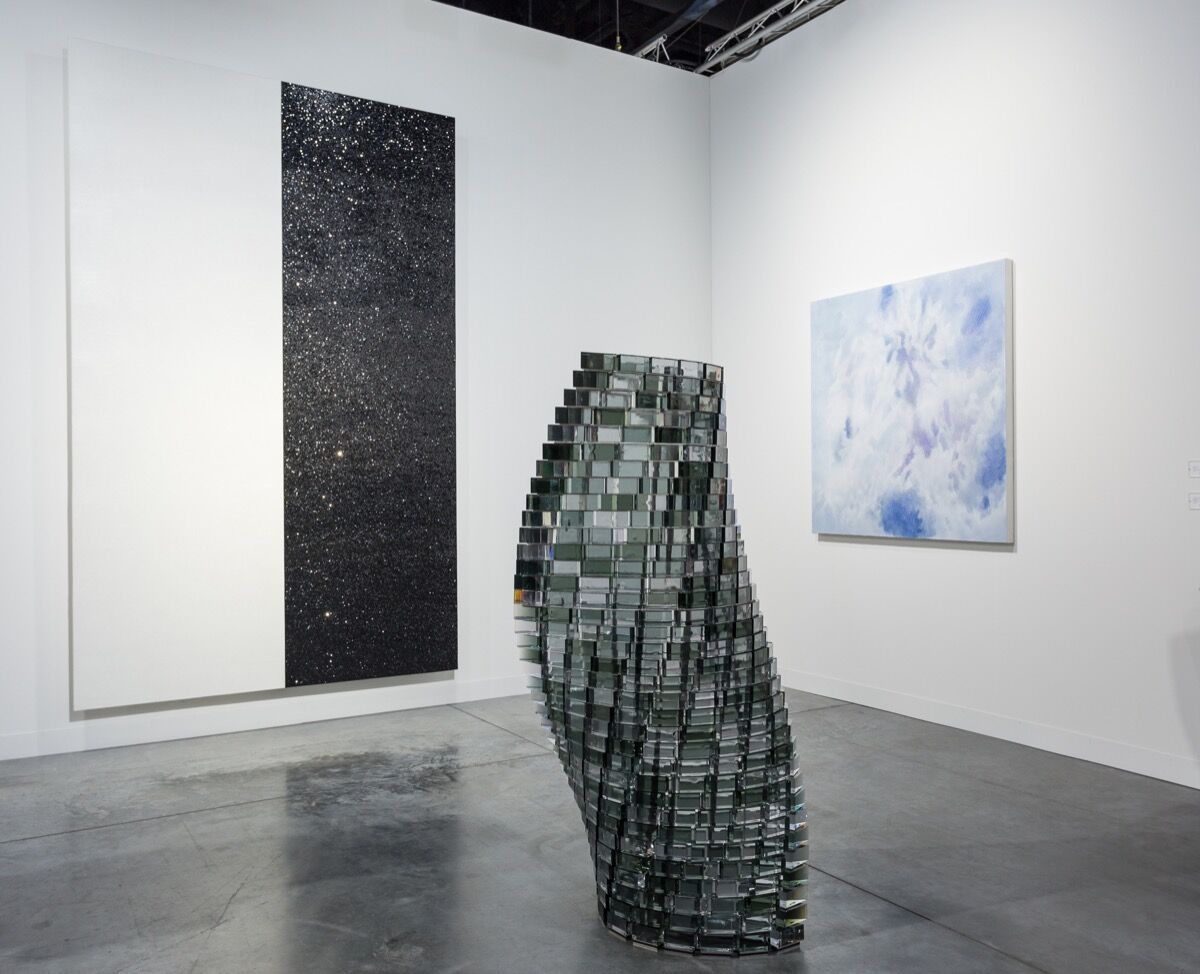
Installation view of Lehmann Maupin’s booth at Art Basel in Miami Beach, 2017. Photo by Alain Almiñana for Artsy.
As we know in the art world, appearance is (kind of) everything. The cosmetic changes were largely applauded by dealers, especially those with booths on the east side of the convention center, closest to the entrances. David Maupin of New York- and Hong Kong-based gallery Lehmann Maupin said the changes had gotten rid of visual disruptions like electrical boxes, making the fair “much smoother, more elegant.”
“It’s much more comprehensible to the visitor,” Maupin said. “The new layout is definitely an improvement.”
His booth, on the east side of the building, was buzzing with collectors on Wednesday, and he called it a “great day,” with an improvement in sales from last year. Two recent paintings by Chinese artist Liu Wei sold for between $200,000 and $250,000, as did two woven glass bead works by Liza Lou: the smaller Relief 2 (2017) for between $115,000 and $125,000, and the larger Relief 3 (2017) for between $130,000 and $140,000, which went to a trustee of the Albright-Knox Art Gallery in Buffalo, New York. Lou’s first New York show in a decade will open Lehmann Maupin’s new 24th Street location next year.  
Maupin said that while the fair’s new look certainly helped, it was attention from institutions and curators that are the biggest factor in driving sales for his artists. One example was Mary Corse, who is due to open two shows in the spring, including a presentation at Dia:Beacon and a solo show at the Whitney Museum of American Art in New York. Two large paintings from her 2017 “DNA” series sold for between $250,000 and $300,000.
“These things really drive the interest, whether it’s museum exhibitions or curatorial interest, it’s very important to these artists’ careers, that kind of validation or endorsement,” Maupin said.
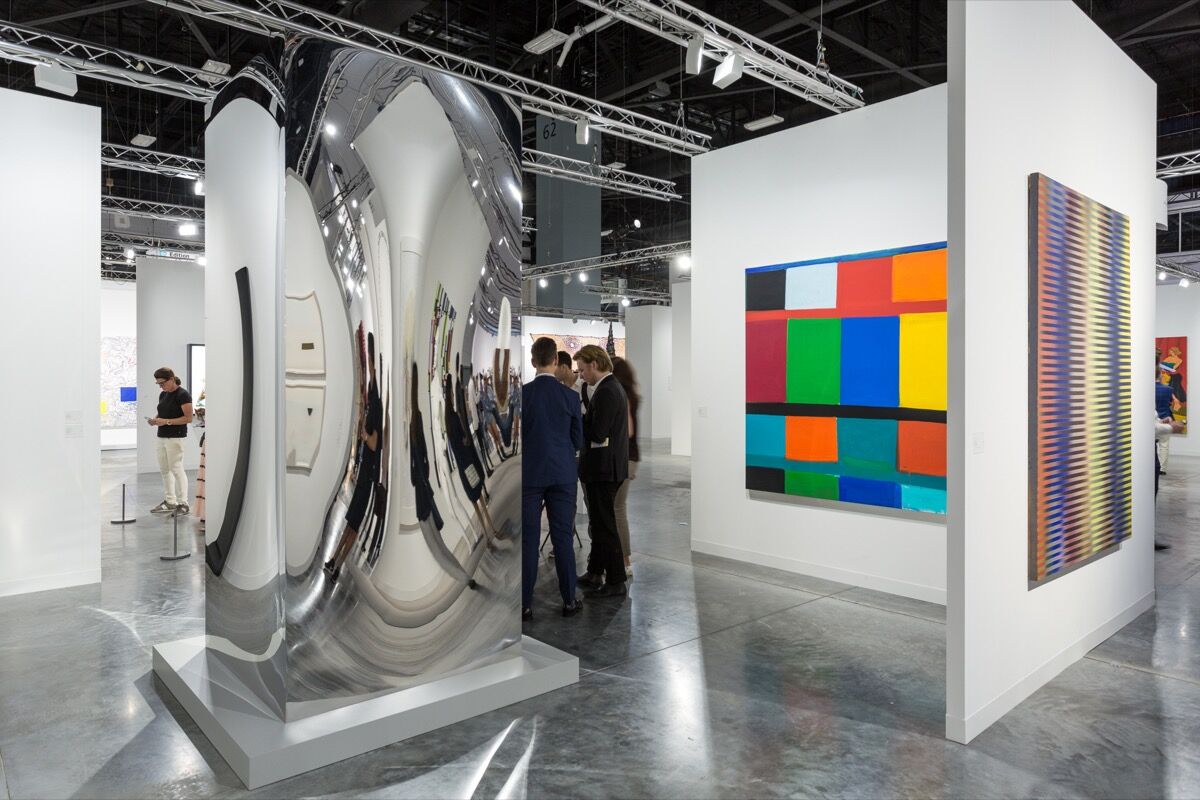
Installation view of Lisson Gallery’s booth at Art Basel in Miami Beach, 2017. Photo by Alain Almiñana for Artsy.
Lisson Gallery, which has outposts in London and New York, had not moved dramatically from its usual location, and was still near the B entrance. But Alex Logsdail, Lisson’s international director, said the layout had pushed more people towards his booth than in prior years.
“The number of people we’re getting through, because there are only [three] entrances rather than four, is just overwhelming,” Logsdail said.
Sales were brisk, too, including two Mary Corse paintings from the gallery’s Miami inventory, although a shimmering silvery-white Corse painting in the booth, Untitled (White Inner Band, Beveled) (2012), was still on reserve as of Wednesday evening, with an asking price of $325,000 (Lisson represents her in London). Lisson also sold a red untitled acrylic and aluminum Carmen Herrera floor sculpture Untitled Estructura (Red) (1962/2015), created as a monument to her deceased brother, for $500,000; Anish Kapoor’s Glisten (Organic green Satin) (2017) for £600,000; a Rodney Graham for $180,000; a Shirazeh Houshiary for $125,000; a Pedro Reyes for $55,000; a Stanley Whitney for $100,000; and a Daniel Buren for €130,000. Overall prices in the booth ranged from the mid-five figures to over $1 million.
Art Basel in Miami Beach locates itself at a key connection point between the North, Central, and South American art markets, and Logsdail said many of his sales were driven by Latin American collectors. He cited Brazil, Venezuela, Argentina, and Colombia as countries from which his collectors hail, although some of them may be based in Miami. He said the gallery has been cultivating relationships with the continent for years, doing SP-Arte in São Paulo and Zona Maco in Mexico City.
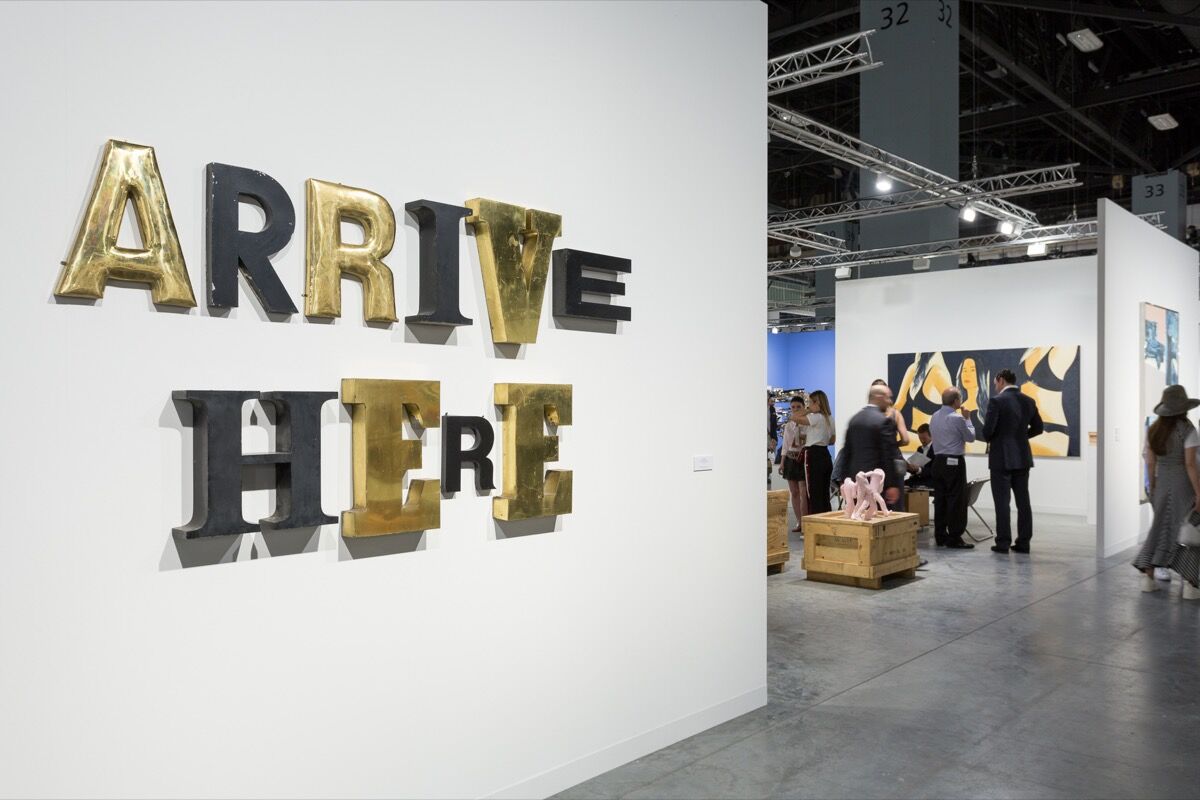
Installation view of Galerie Thaddaues Ropac’s booth at Art Basel in Miami Beach, 2017. Photo by Alain Almiñana for Artsy.
Thaddaeus Ropac, owner of the eponymous gallery with outposts in Salzburg, Paris, and London, said North American and, to a lesser degree, European buyers were his strongest clients on opening day, with Latin American and local Miami collectors even less of a factor for his sales. Those included a James Rosenquist, Coenties Slip Studio (1961), for $2.7 million; a John Chamberlain painted steel wall sculpture, Sashimi Mendoza (1979) for $1.35 million; and an Alex Katz painting of Calvin Klein models, CK 21(2017) for $550,000. He said nearly the whole booth was sold or on hold by midday.
The redesign meant that some galleries on the western side of the building were a little farther away from front-of-the-house action. Many of the booths focused on secondary market sales, which were furthest away from the entrances but directly at the entrance to the VIP lounge, were a little quieter than their contemporary peers.
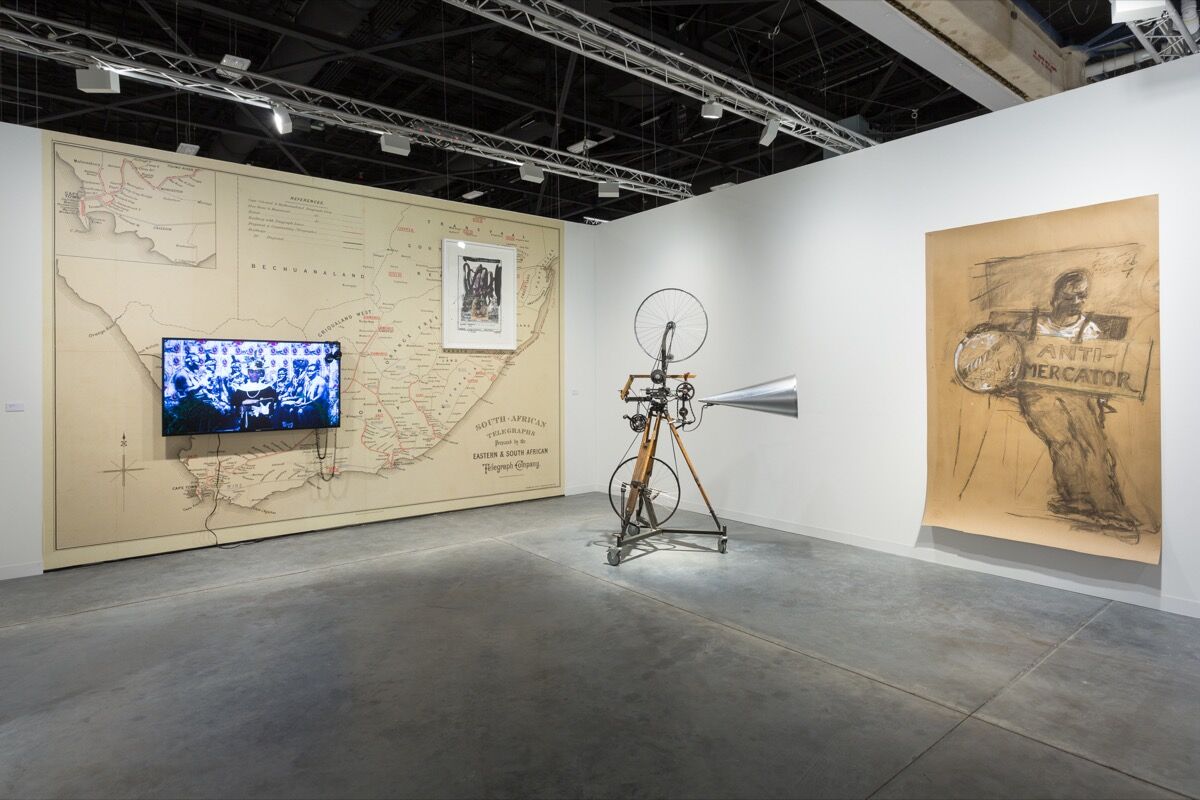
Installation view of Goodman Gallery’s booth at Art Basel in Miami Beach, 2017. Photo by Alain Almiñana for Artsy.
Elizabeth Callinicos of South Africa’s Goodman Gallery, which represents artists from across Africa as well as international artists, said her booth’s new location felt to her “a bit hidden.”
Still, she said she was having a lot of conversations with institutions, and within the first hour had sold out all available paintings by young Zimbabwean artist Misheck Masamvu. The gallery also sold all three editions out of five that it had on offer of African-American artist Hank Willis Thomas’s lenticular All or Nothing/Nothing at All (2017), in which the two phrases blur into each other as you walk past.
The gallery also sold works by two other Zimbabwean artists, Gerald Machona and Kudzanai Chiurai, by the end of the day. Goodman’s owner, Liza Essers, said in a statement she was pleased to see collectors “engaging with work that speaks to a diversity of global perspectives.”
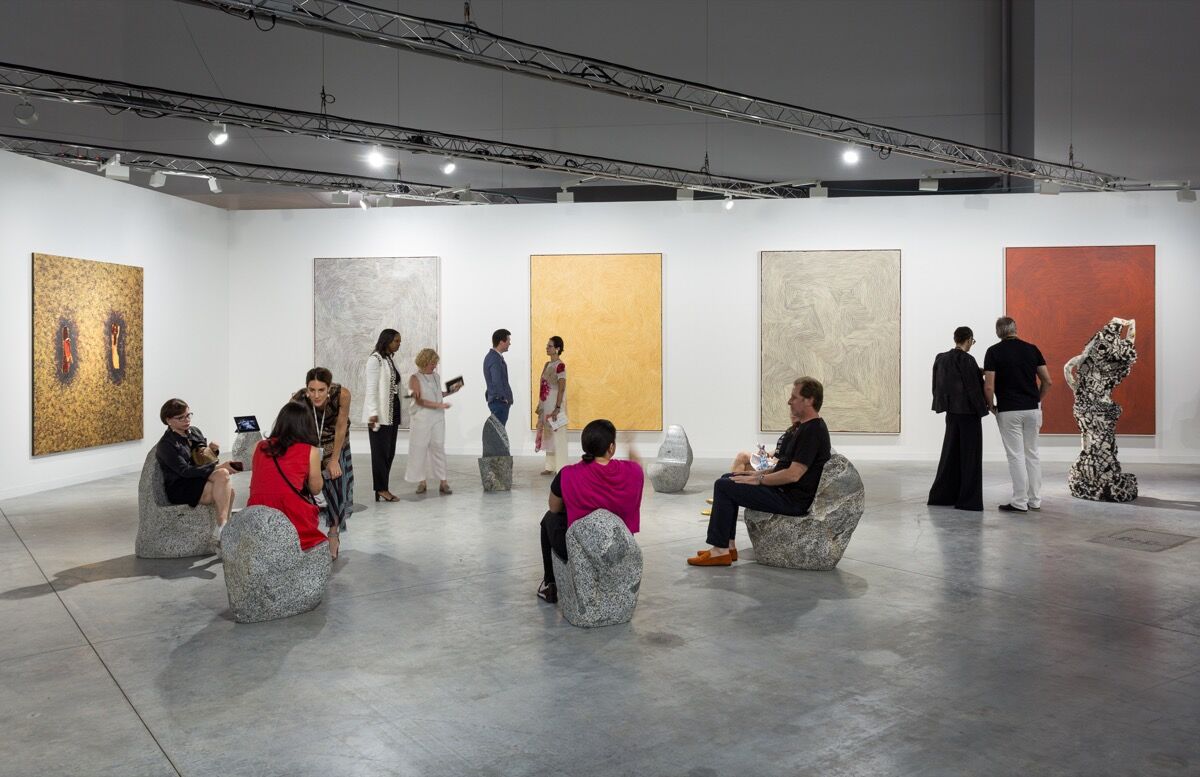
Installation view of Salon 94’s booth at Art Basel in Miami Beach, 2017. Photo by Alain Almiñana for Artsy.
Just next to the entrance, New York’s Salon 94 showed a selection of four large paintings, each around six feet by eight feet, by Aboriginal painter Warlimpirrnga Tjapaltjarri, who partner and director Alissa Friedman said first showed at Art Basel in Miami Beach three years ago, soon after he joined the program. Tjapaltjarri also had a show at the gallery in the fall of 2015. Two out of the four untitled works from this year on offer had sold within the first half hour.
The location was new for Salon 94—and newly prominent.
“We are front and center in a way that we haven’t been before,” Friedman said, calling the atmosphere “slightly frenzied” in the fair’s early hours.
“But,” she said, “it feels like good energy!”
Anna Louie Sussman is Artsy’s Art Market Editor.

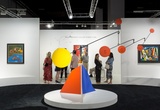
Why Miami’s All-Women Art Fair Doesn’t Have Anything for Sale


Art Market
Why Miami’s All-Women Art Fair Doesn’t Have Anything for Sale
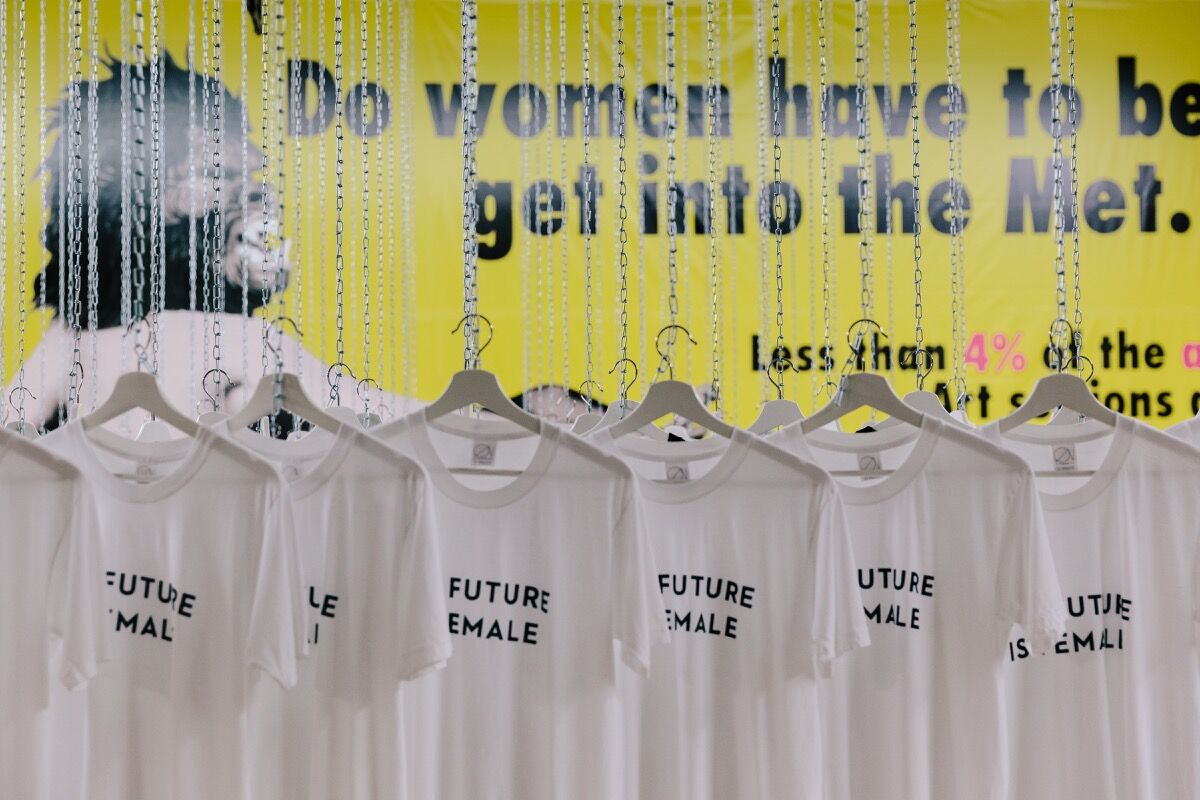
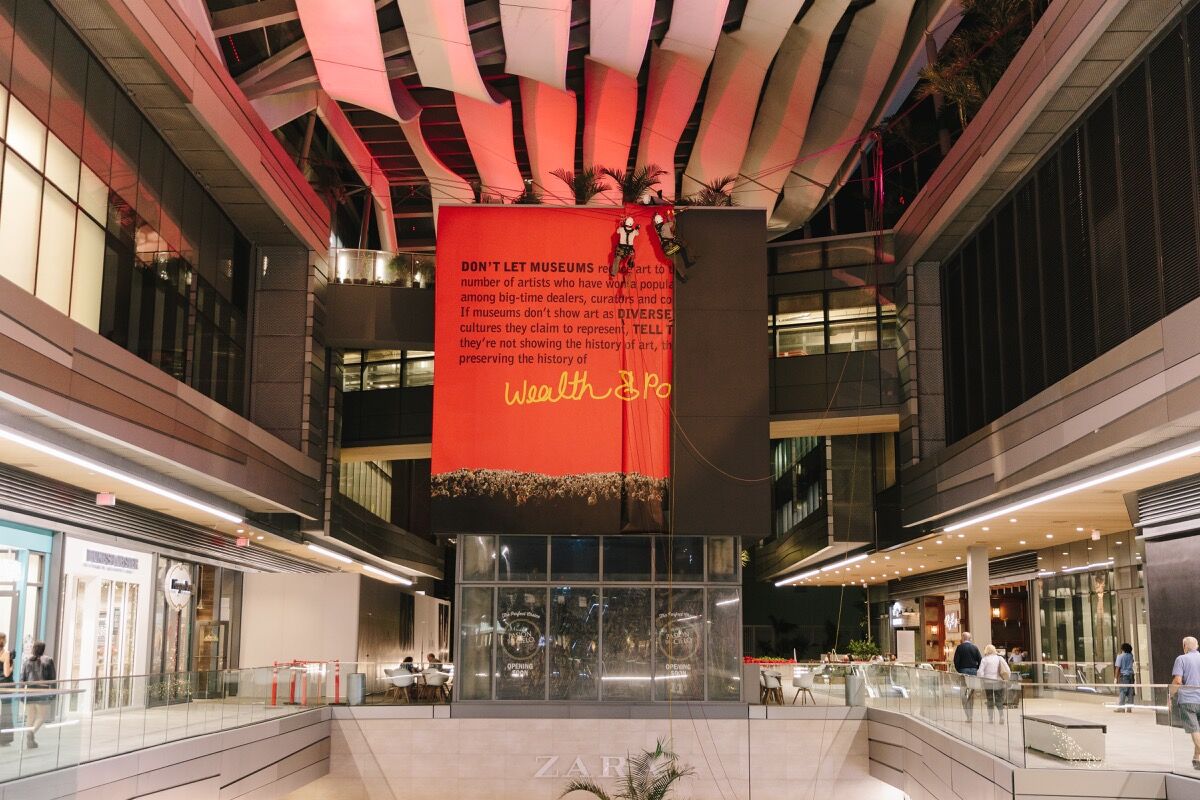
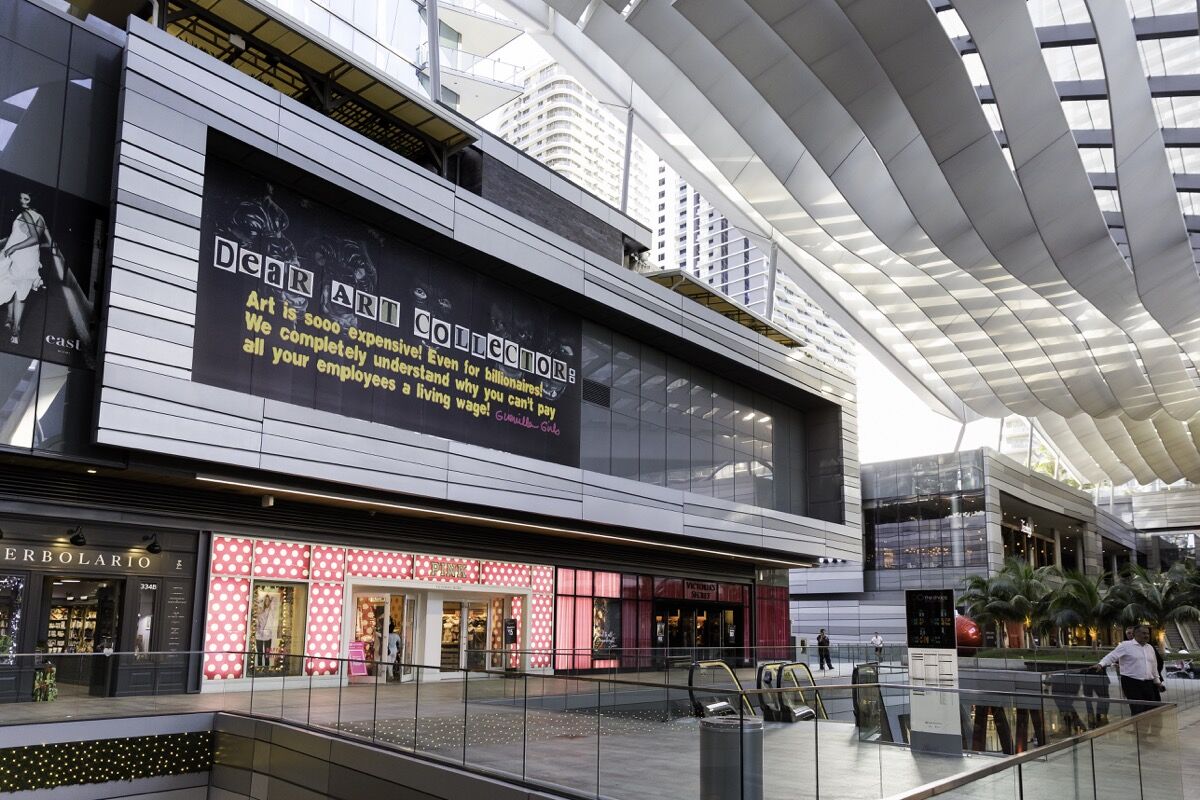
Installation view of the Guerrilla Girls at Fair. Photo by Diana Larrea. Courtesy of Fair.
I rolled up to Fair.—somewhat confusingly billed as an “alternative, non-commercial art fair,” featuring all women artists—intent on buying feminist trinkets and t-shirts for the people on my holiday gift list from the event’s “Fair Market.”
The point could not have sailed past me any more cleanly if it tried.
Despite being located Brickell City Centre, in one of Miami’s glitziest shopping malls—one passes Saks Fifth Avenue, a Parisian spa, and the high-end menswear store Kiton on the escalator up to Fair Market—Fair. is serious about its “non-commercial” status. Absolutely nothing is for sale, not even the feminist t-shirts hanging from racks in the Market section.
“We didn’t want it be a space where objects were exchanged, but rather where ideas were exchanged,” said Zoe Lukov, the fair’s director.  
Installation view of the Guerrilla Girls at Fair. Photo by Diana Larrea. Courtesy of Fair.
Fair. arrives at a time when many female artists’ markets are gathering momentum as museums, commercial galleries, and fairs look back across art history to identify overlooked artists, many of whom are women and people of color, and making proactive efforts to diversify their programming (not to mention their own staff demographics).
Produced by Anthony Spinello, of Miami-based Spinello Projects, Fair. showcases a mix of artists from different places, backgrounds, and generations—from the 32-year-old Taja Lindley to the Guerrilla Girls, active since 1985, who finally receive their first Miami exhibition. It includes two other sections: Fair Trade, a number of public works and live performances taking place around the mall, and Fair Play, a video program curated by Los Angeles artist Micol Hebron and presented with The Femmes’ Video Art Festival at the mall’s movie theater.  
On Thursday afternoon, shortly after it opened to the public, last-minute elements were still coming together. One of four Guerrilla Girls banners was still being hung above the sushi restaurant across from Fair.’s entrance, and one of the works intended to go in the elevators hadn’t yet been installed. But Fair. already seemed to be having its intended effect on visitors, some of them shoppers who wandered in out of curiosity, and others, like Nestor Rodriguez and Nelson Brito, both visual arts undergraduate students at New World School of the Arts, who had shown up on purpose.
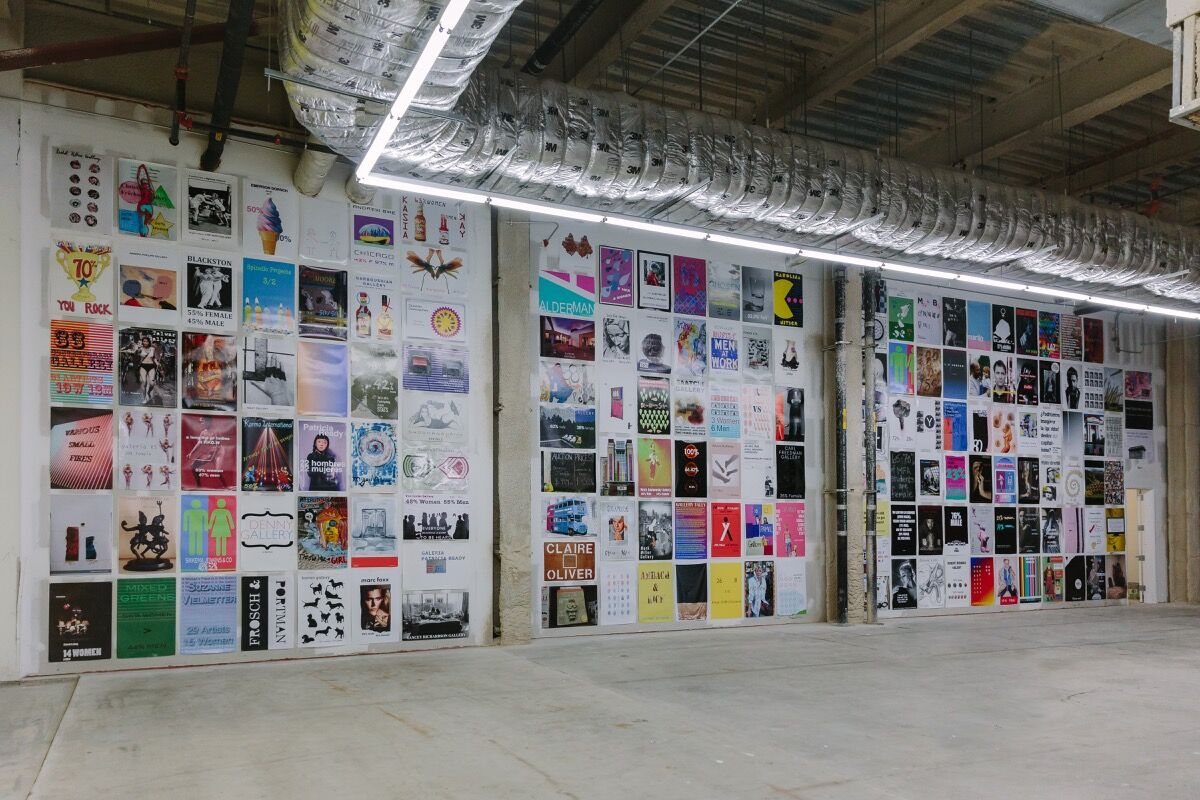
“These pieces are very strong,” said Brito, who said he and Rodriguez were sent by their professors and would be analyzing the works they saw for an assignment. “They talk about women nowadays, the stereotypes. It makes me think differently.” He was particularly taken by Micol Hebron’s Gallery Tally (2013–present), a selection of 160 posters (out of 560 produced so far) bearing the names of galleries and the gender breakdown of their rosters; the artist crowdsourced the work’s designs from around the world.  
Installation view of Micol Hebron at Fair. Photo by Diana Larrea. Courtesy of Fair.
Brooklyn-based artist Taja Lindley’s work, This Ain’t a Eulogy: A Ritual for Re-Membering (2017), arose out of a conversation with a group of young women from the Lower East Side with whom she worked with as part of the Sadie Nash Leadership Project, about the deaths of Michael Brown and Eric Garner, and the decisions to not charge the police officers involved. It features a wall of black plastic garbage bags, with over 200 of them bearing the handwritten names of the unarmed black men and women killed in police-involved shootings since 1999.
Showing at Fair., she said, skirted “awkward” questions about the ethics of selling the piece, which came up when she showed it in a commercial setting at the Spring/Break Art Show during Armory Week in New York.
“I really appreciate being a part of a show, during a very commercial time, and to be able to show work that’s not up for sale,” Lindley said. “This isn’t going in someone’s private collection. And honestly I don’t know how I feel about parting with the names…because [it’s] my labor, my hands—I sat with people’s stories as I painted them.”
Lindley added that participating in an all-women fair reinforced the context of her work, rooted in the #BlackLivesMatter movement, which she noted is largely led by black women.
“I see my work as part of a long legacy of a black feminist practice for racial justice,” she said. “While it's not directly addressed in the piece, This Ain’t A Eulogy is made possible” thanks to the labor of these women, she said.
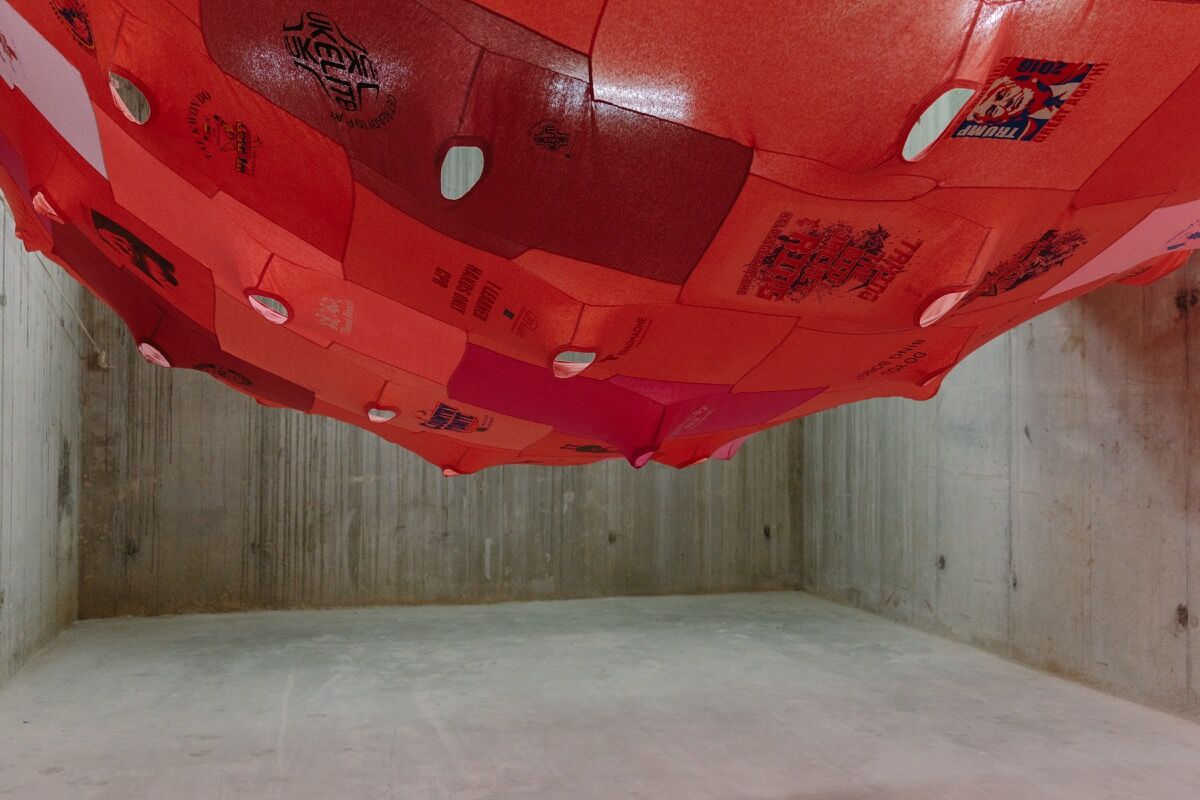
Installation view of Pia Camil at Fair. Photo by Diana Larrea. Courtesy of Fair.
But the non-commercial aspect of Fair. does raise the question of how it helps materially correct gender-based wage imbalances in the art industry (famously highlighted by the Guerrilla Girls), even as works by female artists at Art Basel in Miami Beach across town were selling for the mid- to high six figures (although—to Fair.’s point—that’s a fraction of the multi-million-dollar sales notched by their male peers).
“I don’t think there’s anything wrong with galleries making sales, and I don’t think there’s anything wrong with women selling their work,” said Lukov. “I think this conversation is about that, actually. How does capital move and how does it change hands, and whose hands is it going to?”  
Indeed, several of the works address these questions head-on, such as Nathalie Alfonso’s work Cleaning the Line, for which she spends four days hand-drawing a long, thick line in charcoal along a white wall, then erasing it by hand, making visible the unpaid work that women do.
Alex Colley Hart, who was visiting Miami from Indianapolis, Indiana, where he works as a stockbroker and a part-time curator, said he loved the non-commercial nature of the fair, and its focus on women.
“I wish more fairs and art organizations actively thought about women and how they contribute to the art market,” he said. “I wonder how the artists are getting paid, but my thinking is, maybe compensation isn’t their primary motive here, it’s to showcase the great work women are making, so it’s more of a political statement rather than a commercial endeavor.”
Installation view of the Guerrilla Girls at Fair. Photo by Diana Larrea. Courtesy of Fair.
The budget (Lukov declined to disclose it publicly) was provided by sponsor Swire Properties Inc., in partnership with the John S. and James L. Knight Foundation. Lukov said she offered the participating artists small honoraria based on the guidelines established by artist activist group Working Artists and the Greater Economy, or W.A.G.E. The space was provided by Swire, the developer of Brickell City Centre, and other aspects such as the food and beverages for the opening reception were provided in kind.
She acknowledged the irony of offering small honoraria to artists she knew were “worth much, much more,” but hopes to be in a position to be able to pay them more in the future.
Marieka Heinlen, an illustrator visiting from St. Paul, Minnesota, was keen on the idea of an all-women show that was a non-commercial alternative to the big fairs happening in the rest of Miami. She said Cheryl Pope’s A Silent I (2011), sports-championship-style banners bearing phrases drawn from workshops she conducted with high school students (such as “I give more than I take” and “It’s never about me”), had resonated with her.
“It’s women’s voices to themselves, basically, the things you say to yourself,” Heinlen said. “Right now it feels relevant that women’s voices are supporting each other.”
Anna Louie Sussman is Artsy’s Art Market Editor.
Correction:
A previous version of this article mistakenly stated that the officers involved in the killings of Michael Brown and Eric Garner were acquitted, a term that only applies to cases that have been brought to trial; they were not indicted for the killings. It has been updated to state that no charges were brought against them.