Sunday, December 10, 2017

What Sold at Art Basel in Miami Beach


Art Market
What Sold at Art Basel in Miami Beach
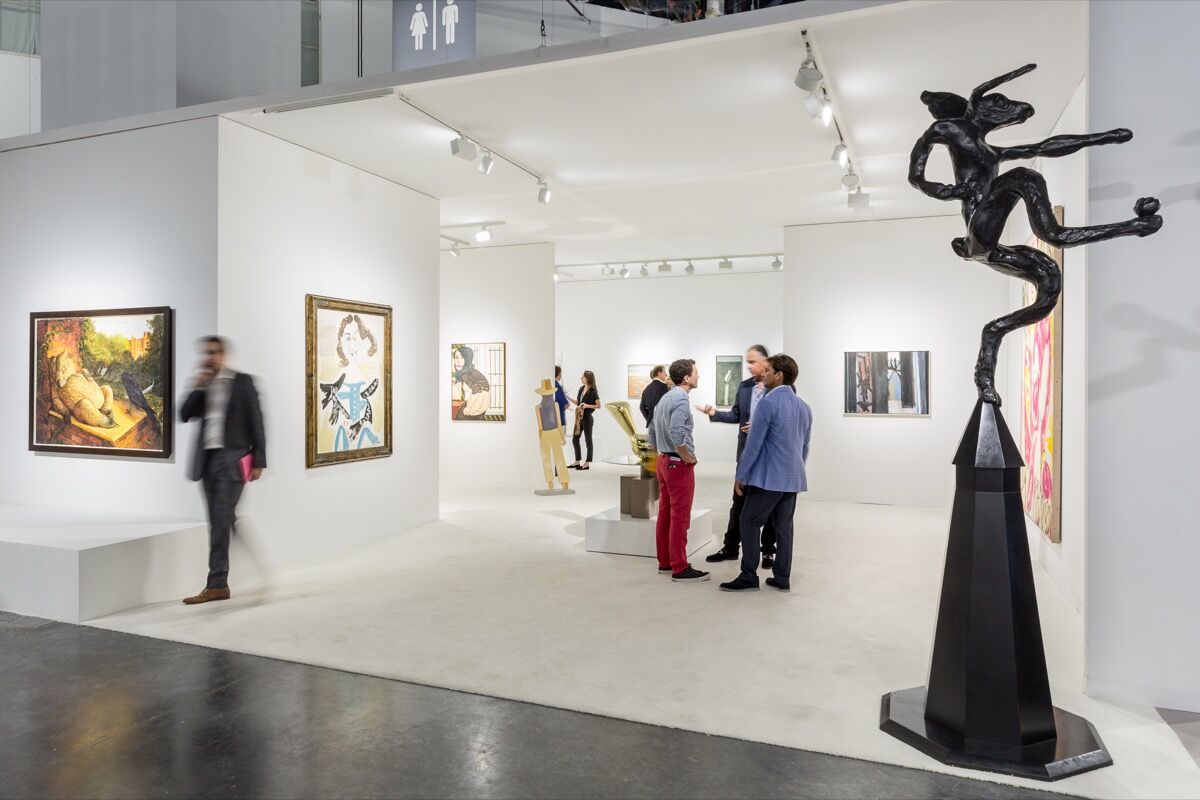
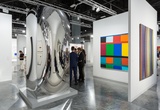
Installation view of Paul Kasmin’s booth at Art Basel in Miami Beach, 2017. Photo by Alain Almiñana for Artsy.
Will 2017 simply be known as the year of the $450 million Leonardo da Vinci or is a real art market rally underway? Signs pointed towards the latter at this year’s edition of Art Basel in Miami Beach, which closes on Sunday evening after a five-day run and offered some $3.5 billion in art for sale.  
Despite gallery closures and continued challenges for mid-sized dealers, 2017 will likely see an improvement in the art market’s size over 2016. According to UBS chief investment officer Mike Ryan, “an obvious appetite for art right now, especially in the ultra high net worth space,” has combined with a near-unprecedented eight-year expansion in global equity markets (currently the third-longest in history), providing the liquidity to feed that appetite.
Whispers among dealers and collectors that a downturn in the market is on the horizon were prevalent at Art Basel in Miami Beach and analysts at Bank of America have predicted a correction in equity markets will take place in mid-2018. However, Ryan said he doesn’t expect the backdrop fueling the art market’s rebound to change in the near-term, and projects the current expansion will continue not just through 2018 but well into 2019.
“As long as the economy is doing well and corporate earnings are growing at a healthy rate, which I think they will, that’s going to generate the kind of income that’s going to be important to supporting the art market,” he said.
“Bull markets do not die of old age; they die of cause,” Ryan said, citing data from the San Francisco branch of the Federal Reserve that shows the likelihood of recession does not to rise significantly as periods of expansion grow older.
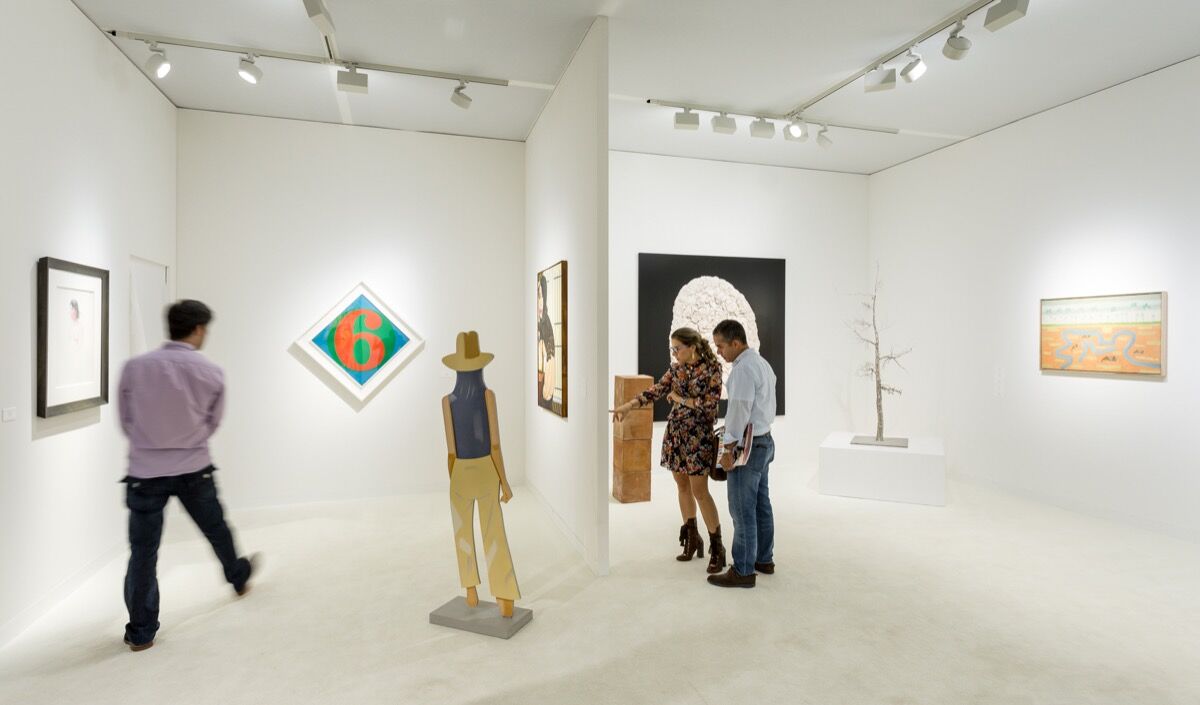
Installation view of Paul Kasmin’s booth at Art Basel in Miami Beach, 2017. Photo by Alain Almiñana for Artsy.
What could trigger a downturn? Miscalculations in monetary policy in the United States and Europe, political uncertainty, and geopolitical conflict, among other things, said Ryan, bringing the expansion to a halt and dragging the art market back down with it. But the Swiss bank believes these risks are relatively minimal at the moment, despite heated rhetoric between international leaders.
The macro drivers still need to pass through an individual’s psychological filter in order to lead to art buying. According to new research released by UBS on Thursday, 71% and 54% of collectors cite personal enjoyment and passion, respectively, as the key drivers of their buying, while 40% view art with an investment lens. Nonetheless, “some days you feel more flush than other days,” said Chicago collector Irving Stenn Jr., and on those “more flush” days, you tend to buy more (and more expensive) art. This year, seven-figure sales were significantly more prevalent than last.
Among others, Paul Kasmin Gallery sold Lee Krasner’s Sun Woman 1(1957), featured in her 1984 MoMA retrospective, for which it was asking $7 million. Mnuchin Gallery notched an early sale of Mark Bradford’s Fly in the Buttermilk (2002) for $3 million. Lévy Gorvy placed Ellsworth Kelly’s Sumac (1959), which had been in the same collection since 1989 and was included in the artist’s 1996 Guggenheim retrospective, for between $4 million and $5 million. Michael Werner sold Sigmar Polke’s Transparent #8(1988) for $1.5 million; Eva Presenhuber sold Ugo Rondinone’s hunger moon (2013) for $1.2 million; and Mazzoleni sold Alberto Burri’s Bianco Plastica B 1 (1967) for $1.5 million.
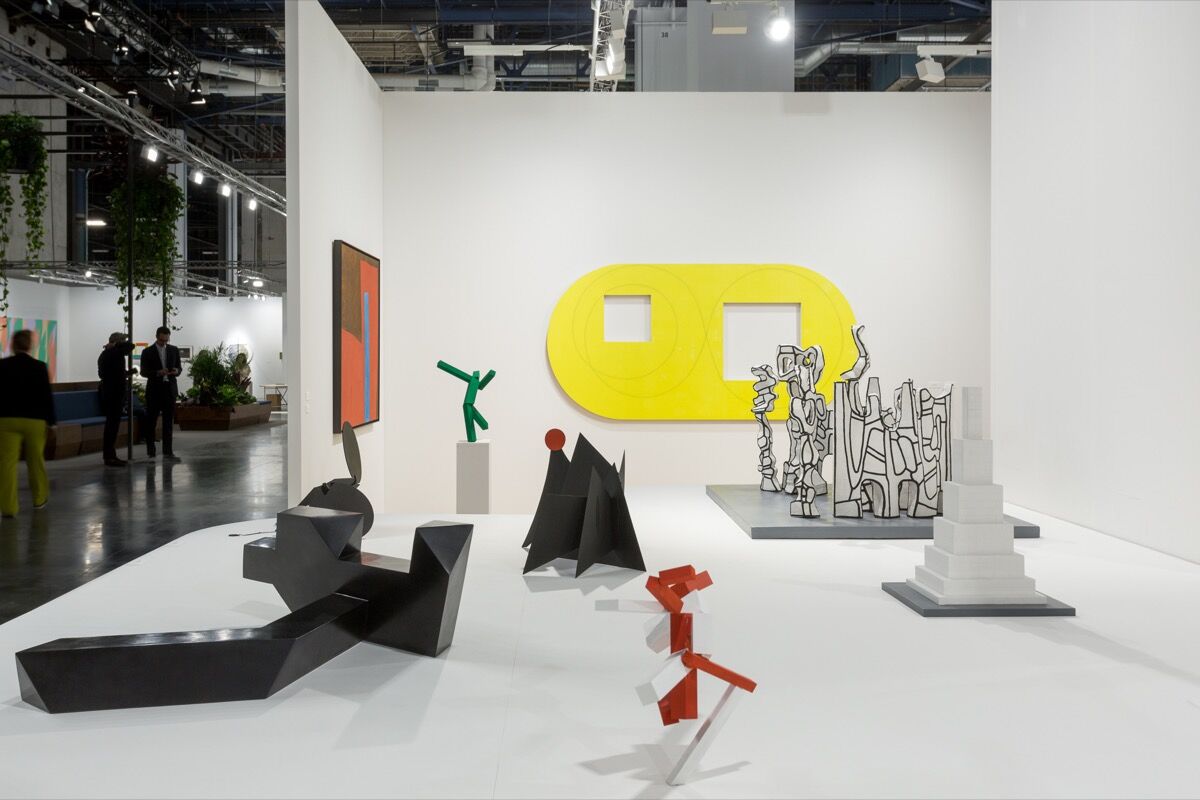
Installation view of Pace Gallery’s booth at Art Basel in Miami Beach, 2017. Photo by Alain Almiñana for Artsy.
Pace also had a strong performance in this range, with Yoshitomo Nara’s Young Mother (2012) selling for $2.9 million and Pace Prints selling all 100 editions of KAWS’s set of nine silkscreens, THE NEWS (2017), for $45,000 each or $4.5 million in total. Additionally, a Willem de Kooning oil on paper work (Untitled, c. 1967) sold for $450,000, Michal Rovner’s video Urgency (2017) sold for $140,000, an untitled Joel Shapiro bronze went for $350,000, and a Wang Guangle canvas (170326, 2017) went for $325,000. Pace Gallery president Marc Glimcher attributed the brisk buying to increased wealth among high net worth collectors.
“The art market reflects that by being extremely strong and kind of liquid,” he said. “There is a lot of work moving around.” Glimcher said the number of new collectors entering the market at a very high level has prompted older collectors to sell.
Mathias Rastorfer of Swiss gallery Gmurzynska notched what was likely the fair’s biggest sale with Roy Lichtenstein’s Study for “Peace Through Chemistry”(1969). (Rastorfer would not confirm how much the gallery was asking for the work, but Art Agency, Partners’s Charlotte Burns reported a rumored price of $12 million.) But he said that dealers’ practice of sending extensive preview information to their collectors—and often pre-selling works before the fair has opened—was leading to lower turnout on Art Basel in Miami Beach’s first and second day resulting in, for some dealers, a slower pace of sales.
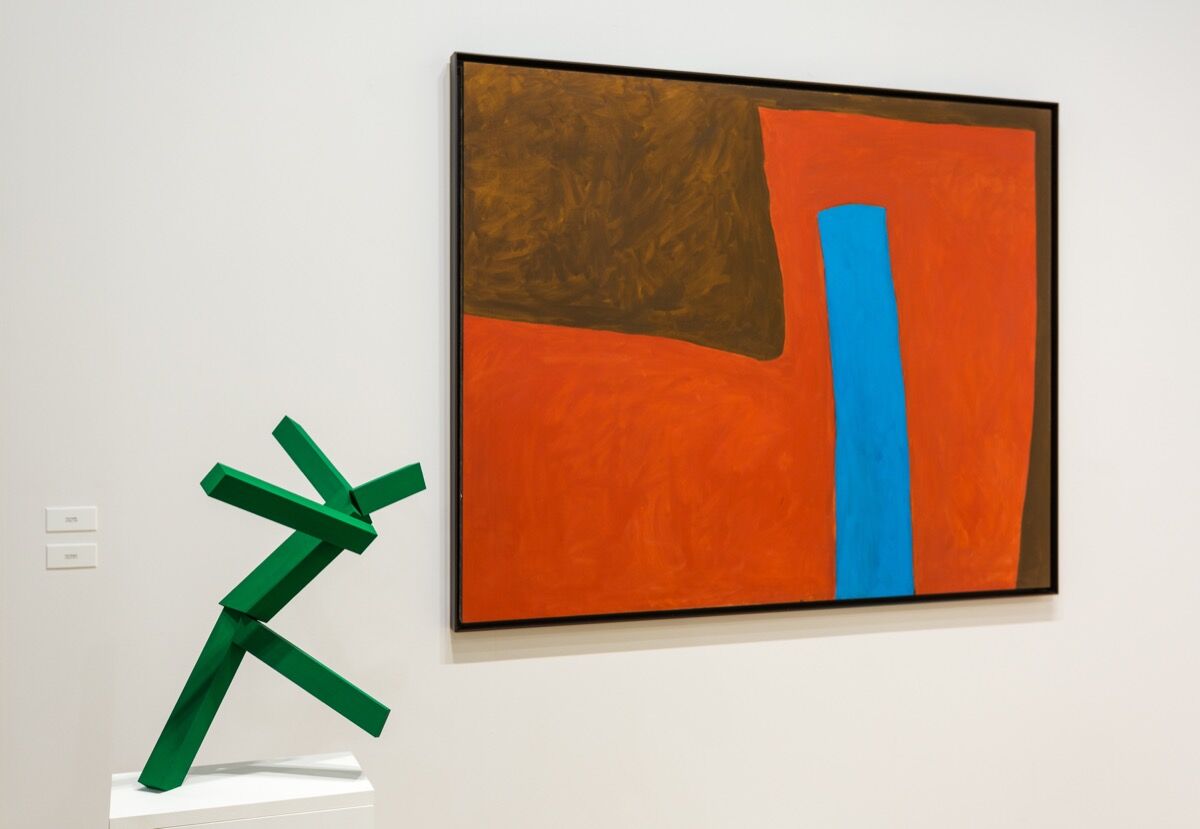
Installation view of Pace Gallery’s booth at Art Basel in Miami Beach, 2017. Photo by Alain Almiñana for Artsy.
“You have to be careful not to shoot yourself in the foot by pre-selling, pre-offering too many works because then you don’t have a reason to come to Miami,” he said. “It sort of cuts the branch off the tree that you’re sitting on. If you don’t create enough magic and enough sense of discovery, where is the necessity to come?”
Multiple advisers I spoke to throughout the week were delighted their clients were transacting via text message rather than in person (you can sell more art when you’re not limited to walking one buyer around the aisles at a time). One said that, after skipping the fair last year due to concerns about the Zika virus, his clients no longer saw the need come to Miami.
Whether art fairs need to be big, socially-driven events that draw collectors for the extracurricular activities or streamlined into industry events more closely resembling a trade show is open to debate. Art Basel has certainly built a brand (and a new business in Art Basel Cities) on its ability to attract vast audiences to a city for art programming, an effect that’s perhaps most visible on the fair’s bustling public days. But many dealers have been eager to diversify their activities outside of fairs, both commercially and academically.
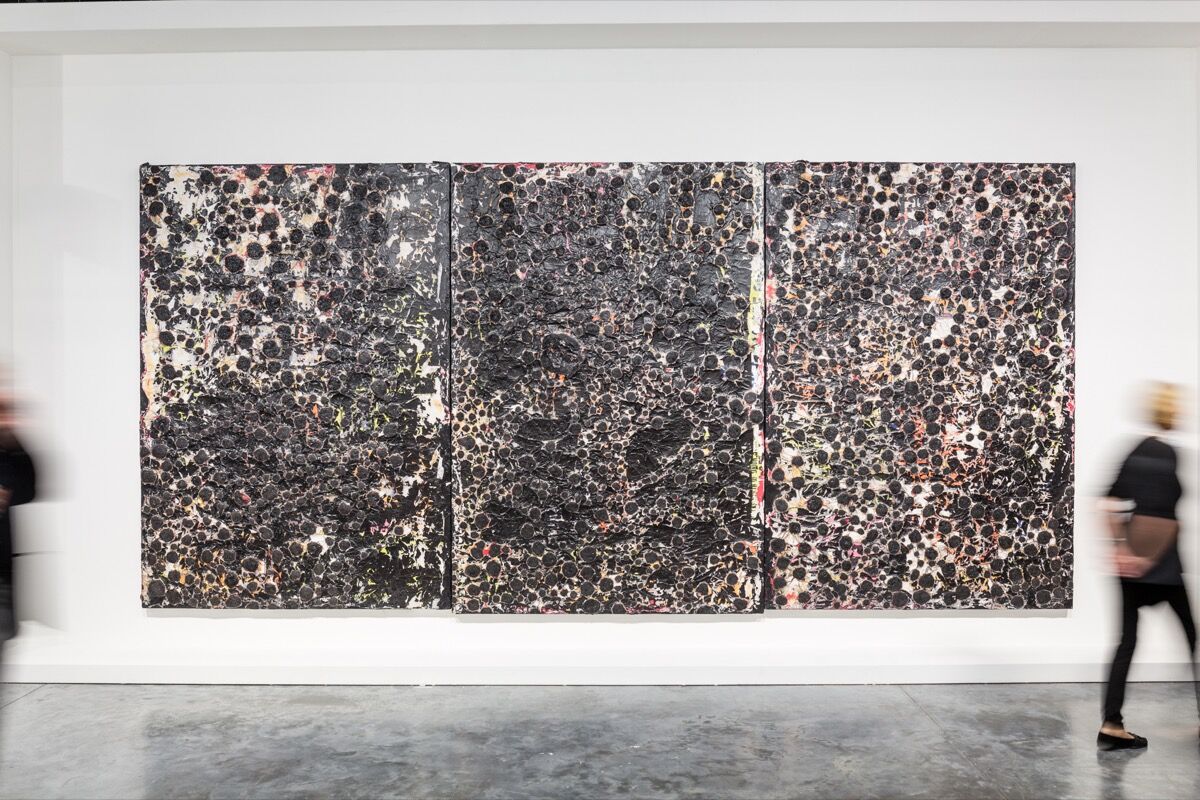
Installation view of Hauser & Wirth’s booth at Art Basel in Miami Beach, 2017. Photo by Alain Almiñana for Artsy.
Mega-galleries such as Hauser & Wirth have benefitted disproportionately from the growing concentration of wealth in the hands of a small sector of the global elite, giving them the resources to take on many of the functions that were previously the domain of curators, academics, and museums. Director Fiona Römer estimated the gallery has around 200 employees, which she joked can sometimes feel “completely understaffed” relative to the number of ambitious projects they take on at any one time and the number of foundations and estates they now represent (around 25 as of the end of 2017, the latest of which being Eduardo Chillida).
This June the gallery added the estate of Piero Manzoni and a large pair of the late artist’s works were on view in the booth—one of which is on loan, but not for sale, from a private collection. The gallery published a 43-page book for the occasion and the for-sale example, Achrome (ca. 1959), had found a new home by Thursday afternoon. Römer said the price was  “super top secret.” She said they had rehung the booth both Wednesday and Thursday night, after sales including Bruce Nauman’s 1989 mobile Untitled (Two Wolves, Two Deer) (1989), which went to a private collection in Asia for $9.5 million, a Roni Horn work on paper (Yet 3, 2013/2017) for $750,000, and Jack Whitten’s Barney’s Legacy II (1980) for $950,000.
Römer said that while the gallery has recently invested heavily in Asia, and will open a Hong Kong location next spring, it hasn’t taken focus away from the U.S. “The American market is still very strong,” she said.
Sales in the six-figure range numbered into the hundreds across the convention center floor. By comparison, most fairs on the art world calendar may notch only a handful of transactions in this range or none at all. And much more activity, still, was taking place in the five-figure range.
On the one hand, this shows the power of fairs to generate revenue (galleries reported around 41% of their sales come from art fairs, according to The Art Market | 2017, a report underwritten by Art Basel and UBS). However, this level of activity is also a necessity at Art Basel where the stakes are incredibly high: costs are such that galleries that mostly show mid-career artists can have what on paper looks like a very successful week here and still walk away in the red or barely in the black.
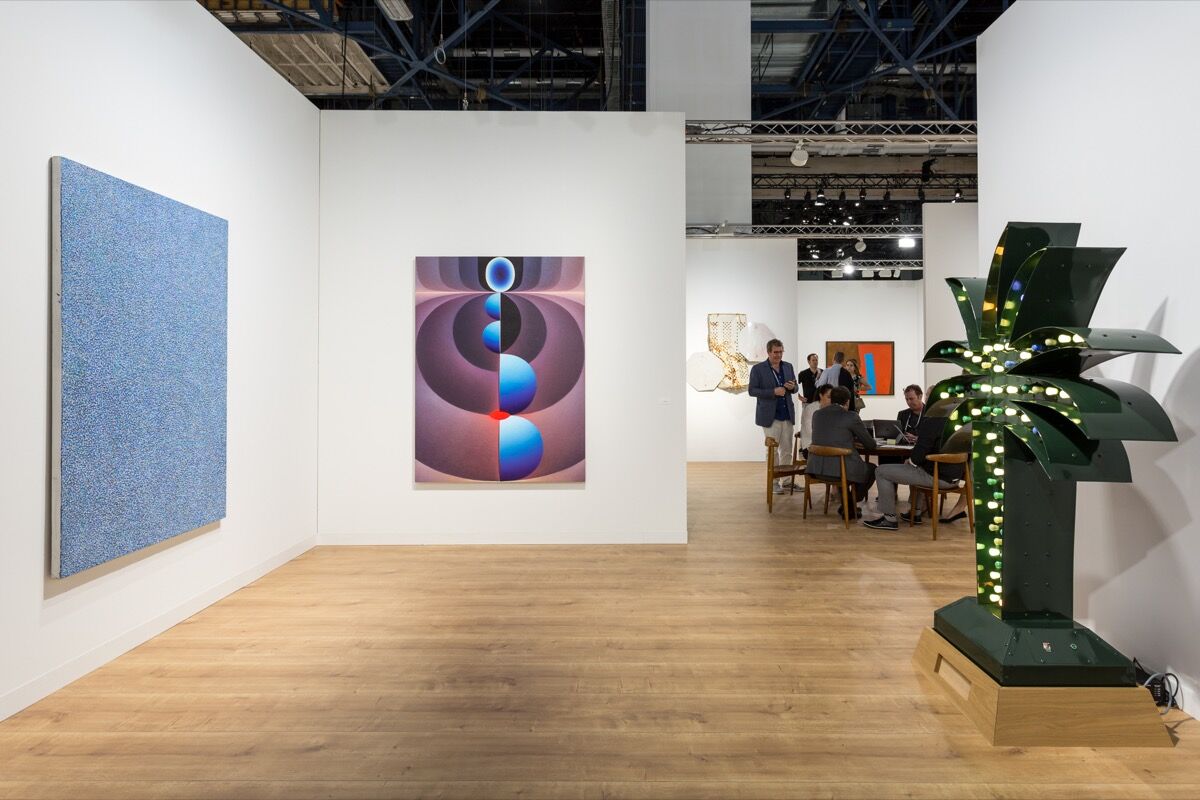
Installation view of Pace Gallery’s booth at Art Basel in Miami Beach, 2017. Photo by Alain Almiñana for Artsy.
Tina Kim said that her New York gallery and its sister gallery Kukje in South Korea had been able to avoid the pitfalls that have befallen many who sell works in a similar price range due to their niche position as experts in Korean art internationally and their strong roster of international artists for the market in Asia. She also cited the number of Korean curators currently in place at major institutions (including Clara Kim at the Tate Modern and Doryun Chong at Hong Kong’s M+ museum) as a boost to their program.
“We can ride above the wave,” of volatility in the market, Kim said.
She sold two works by Korean minimalist Ha Chong-Hyun (Conjunction 17-04 and Conjunction 17-05, both 2017) for $100,000-110,000, Kyungah Ham’s What you see is the unseen / Chandeliers for Five Cities DSC02-D-03-R(2016) for $70,000-80,000, Haegue Yang’s Semi-dépliable-Andante (2011) for $65,000, and Minouk Lim’s Headset (2015) and Portable Keeper Unha-ri(2011) for $30,000-35,000 apiece, among others.
Many more dealers (including very successful ones) questioned just how sustainable the current art fair calendar is and expressed a desire to reexamine how much time, money, and energy they’re putting into fairs in the coming year.
“Fairs are eating up a lot of our time and it’s been more work this year,” said Berlin gallerist Esther Schipper. She said that fatigue felt by dealers is not only due to the constant pace of preparing for and traveling to art fairs but also due to the fact that they are platforms that don’t deliver results evenly across a gallery’s stable.
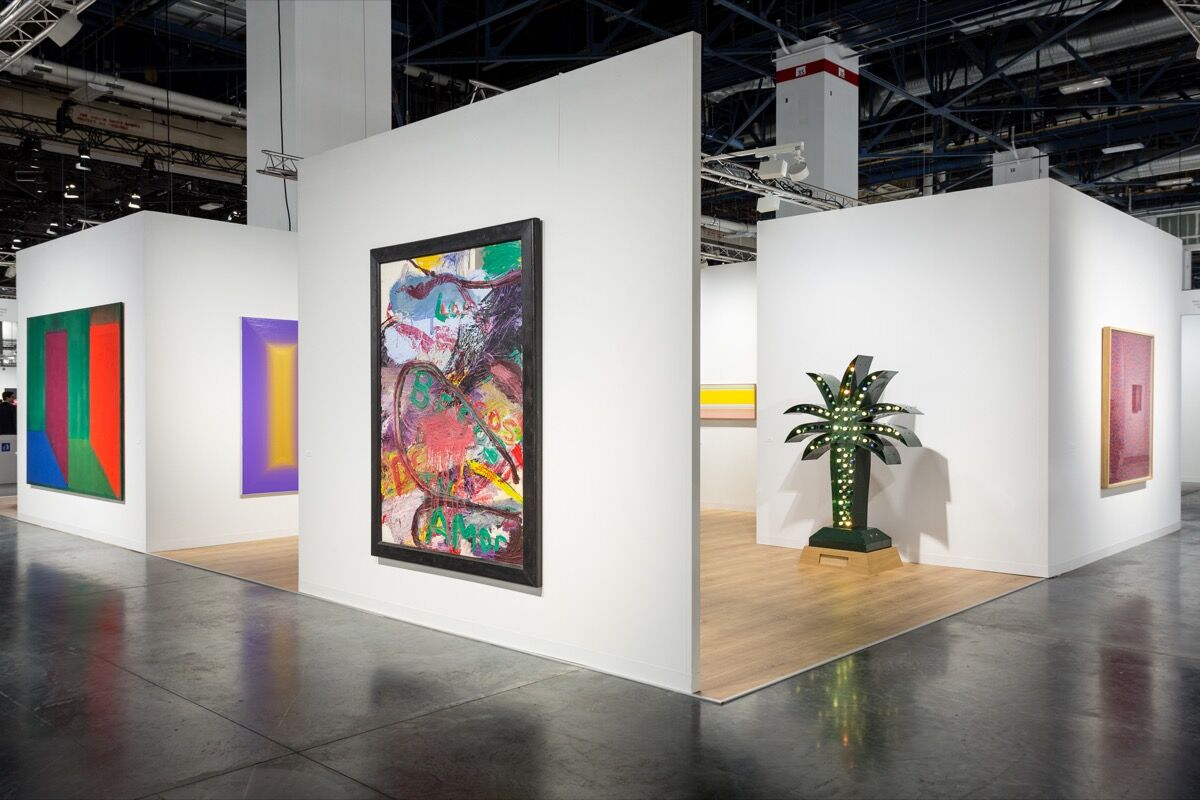
Installation view of Pace Gallery’s booth at Art Basel in Miami Beach, 2017. Photo by Alain Almiñana for Artsy.
“For certain artists it works incredibly well,” she said, citing sales of pieces by Tomás SaracenoMatti Braun, and General Idea during Art Basel in Miami Beach’s first three days. “But there is also a lot you cannot show.”
The rise in the cost of fairs—not only of the booths themselves but also the cost of hotels, meals, flights, and shipping—can contribute to a greater emphasis on the more market friendly artists of a gallery’s program at these major events. Galleries can’t artificially increase the cost of their artists’ works to keep up, but the lucky ones are able to increase sales volume.  
“You don’t come here to break even,” Schipper said.
Robbie Fitzpatrick of young Los Angeles gallery Freedman Fitzpatrickechoed the sentiments of  fatigue on both the collector and gallery side. “It felt like there were people missing, but it might just be part of a larger sentiment of art fair fatigue,” he said, noting that he and his partner were looking to slim down the number of fairs they currently participate in to just three or four next year.
He said that they were excited to invest more heavily in pop-up exhibitions like ones they recently organized in Berlin (at Galerie Neu) and in Tokyo, citing concepts like CONDO, in which young galleries in two cities trade spaces for an exhibition each year, as interesting alternatives to traditional art fairs if maybe not “the grand solution.”
Nonetheless, Fitzpatrick was happy with the gallery’s results at Art Basel in Miami Beach, where, by the end of the day on Friday, they had sold all of the works they had on offer by Jill Mulleady for between $6,500 and $12,000.
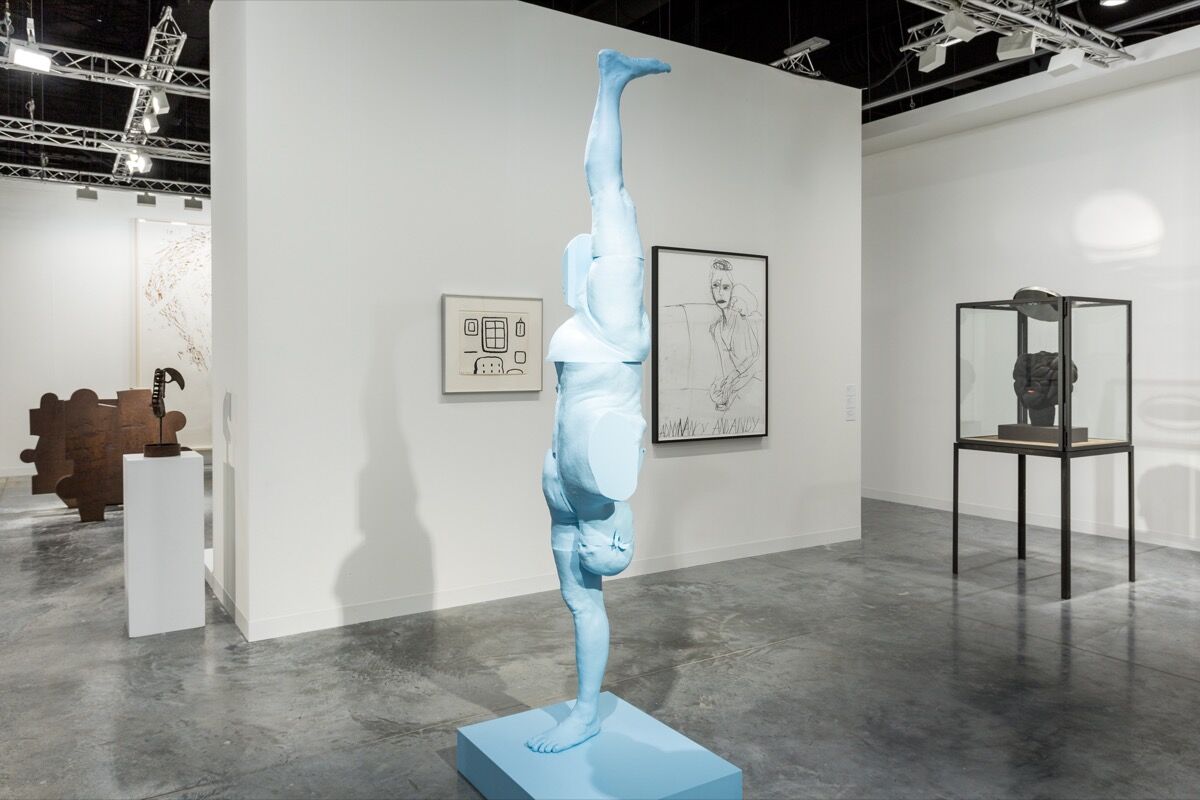
Installation view of Hauser & Wirth’s booth at Art Basel in Miami Beach, 2017. Photo by Alain Almiñana for Artsy.
Two-year-old Chicago gallery Patron also reported selling out their booth. The gallery brought eight works by Harold Mendez to the fair, which went on the range from $5,000 to $20,000. Mendez took part in this year’s Whitney Biennial and was selected for MoMA’s influential New Photography show next year.
Patron’s co-founder Emanuel Aguilar said that, while they do experience the same pressure from the rising cost of fairs as other young galleries, they are relatively protected from the other major factor that closing galleries have cited recently: rising rents.
“Being in Chicago is part of our business model,” he said, noting that in the time since they opened, several other new spaces have come up in the Windy City. “What we would spend on rent in New York goes towards us being able to travel to visit collectors and curators and spend time with our artists in their studios.” He suggested that an industry-wide reckoning regarding expenditures and business strategy has only just begun.
This reckoning has mainly been the domain of small and mid-size galleries thus far. But despite a bullish economic outlook for 2018, some blue chip American dealers suggested that the growth they’ve seen in 2017 may not carry on into the new year.
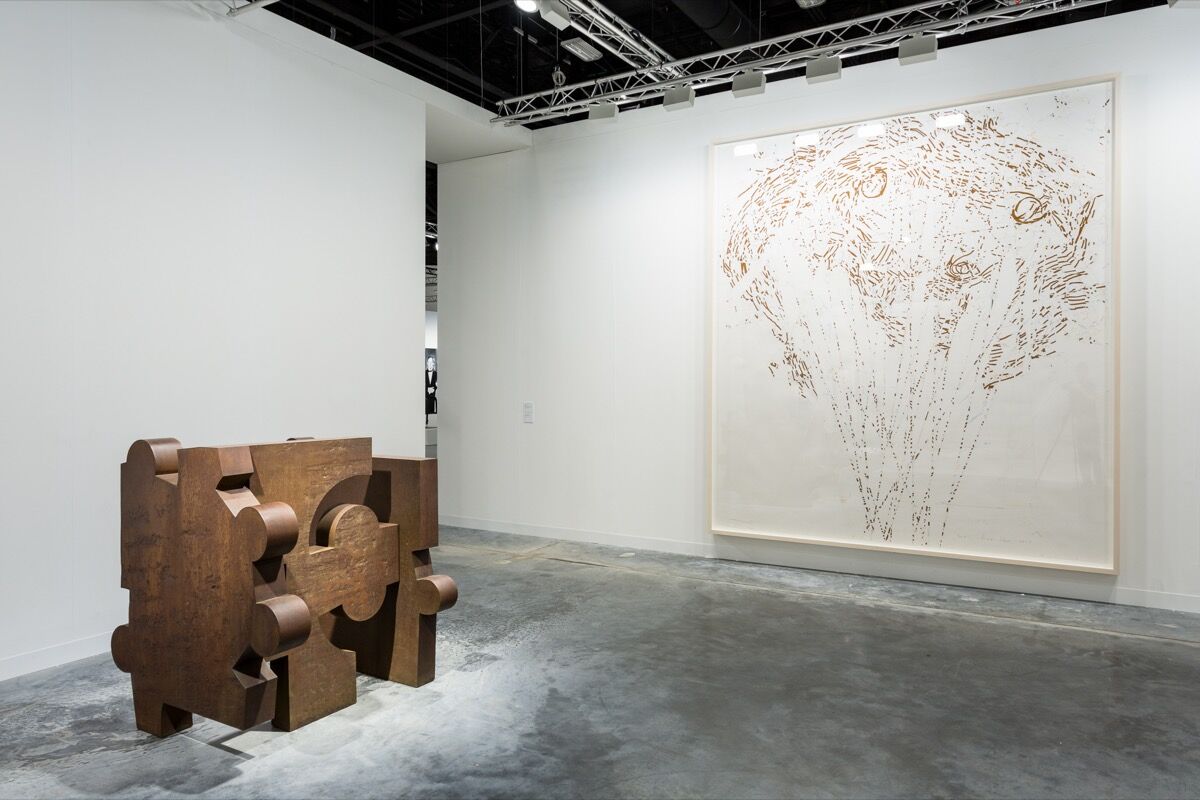
Installation view of Hauser & Wirth’s booth at Art Basel in Miami Beach, 2017. Photo by Alain Almiñana for Artsy.
Pace’s Glimcher said he expects the supply currently fueling the top end of the market to wane in the new year. “We’re facing a disadvantageous tax situation coming up,” he said, referring to the elimination of Section 1031 of the tax code as of January 1, if the current bill becomes law. (The provision allows U.S. collectors to forego capital gains taxes on artwork sales if profits are invested in a similar asset for investment purposes.) Heirs will also have less reason to sell, if the estate tax is done away with as proposed, removing the first of the three D’s—death, divorce, and debt—that also drive supply in the market.
The bill’s elimination of deductions for state and local taxes could also hit demand, Glimcher said, since American collectors tend to live in high-tax states like New York and California on the east and west coasts.
“It’s going to affect the very high end of the market for Americans and Americans make up a very big chunk of the very high end of the market,” he said. “Some major collectors are going to sell a little less, which is going to push up the prices and also mean that fewer people will be able to participate.”
While in the sunshine state this week, though, the feeling was: make hay.
Alexander Forbes is Artsy’s Executive Editor.
Correction:
An earlier version of this article misstated the number of employees at Hauser & Wirth. It is around 200 not over 300.

Saturday, December 9, 2017

"A grande conversa universal" by Zilda Cardoso


A grande conversa universal
Rodeio-me naturalmente daquilo que considero belo. É, em geral, a natureza, quero dizer, a paisagem e aquilo que os homens criaram para o seu bem-estar e que embelezou a paisagem e os recantos recolhidos onde gosta de viver.
Há aí coisas delirantemente feias e há coisas belas, é a minha opinião, nunca chegaremos a acordo quanto a isto. Nunca chegaremos a acordo quanto às qualidades e às características da maior parte dos objectos e dos acontecimentos deste mundo.
Mas estou a simplificar de forma desconcertante.
Se me for possível, e faço por isso, vou ver o pôr-do-sol incandescente, eternamente único, há uma ínfima diferença de detalhe, cada dia. Vou vê-lo. Isso me satisfaz ao ponto de me sentir feliz por poder contemplá-lo, sem mais, sem pensamentos entrelaçados que são, por vezes, tremendamente asfixiantes.
Fico tranquila e tento ver com singeleza o que lá está.
Não é apenas o poente que me dá este conforto. Todas as belezas que os Poetas celebram merecem que eu as exalte, merecem ser celebradas.
A Lua de há dias, plenamente luminosa no céu, espelhou no mar como um sol, em plena noite.
É o Céu com as magníficas constelações de estrelas que muitas vezes o decoram e o iluminam.
O Mar triunfante ou pacífico, com ou sem transparentes rendas brancas sumptuosas, com reverberações e desenvolturas, e invulgares brilhos irradiantes e mesmo ofuscantes.
Do outro lado, a majestade das montanhas com os cumes cada vez mais altos, desejosos de se aproximarem do céu ou da divindade.  E os rios e os riachos sinuosos, amorosos, sensuais.
Sou facilmente seduzida pelo silêncio, por certas alusões enigmáticas, pela musicalidade leve que nem sempre é macia e pelas ilusões que se perseguem.
É um espectáculo megalómano talvez aquele de que falo e que prezo, mas também é mágico.
Nenhum tédio palavroso de alguém menos prevenido me leva a parar para escutá-lo.
As fealdades (torpezas, indignidades, hediondezas…) não me cativam nem na natureza nem nas obras construídas ou criadas pelos homens. Por isso, não gosto de obras de arte contemporânea que em geral apresentam uma visão do mundo catastrófica, carregada de ruídos anacrónicos, de sombras e de monstros fazendo esgares.
Não quero saber, não escreverei sobre essas experiências de tristes realidades. Não esbanjo o meu tempo com contemplações tais.
Ruídos… só aprecio, comovida, os das asas dos pássaros que por aqui passam em bandos copiosos, ao fim do dia, a caminho do seu poiso habitual no Parque, do recolhimento. Às vezes, parecem sussurrar…cantar pianinho. Ou talvez sejam apenas ecos, o que ouço, ecos luminosos, sem dúvida.
A perfeição… já não pretendo topar. Quiçá essa busca de perfeição seja essencial para a ciência progredir. Podia dizer: procuro mas sei que não encontro. E não me importo com esse progresso… Seria em que sentido?
Não, não darei forma a outros mundos, não ajudarei a criá-los. Não tenho esperança de...
O que, por vezes, ainda procuro é o sentido tão disperso do mundo. De resto, é esse o progresso que ainda desejo.
Eis as melhorias apetecidas: assim… que haja debate para formulação de ideias novas; debate lúcido, autêntico, livre, desinteressado e intuitivo. O debate sereno da Filosofia.
 É o meu simples compromisso com seja o que for.
Na minha contemplação deste mundo tal como o vejo hoje, há motivos suficientes para o amar.
Encontrei, sim, a serenidade.

Zilda Cardoso
Porto, Portugal
qui 07-12-2017 08:57


Thursday, December 7, 2017

The Old Suburban Office Park Is Getting a Big Reboot


Photo
An aerial view of a former Colgate office park and manufacturing site in New Jersey, which is currently being developed into a mixed-use “town center.” CreditChristopher Occhicone for The New York Times
The aging office park is getting a face-lift.
Once a proud symbol of suburban working life now suffering from high vacancy rates in many parts of the country, corporate office parks are being reimagined as sports domes, upscale townhouses, retail shops and green gathering spaces, among other possibilities.
“It’s an obsolete model for an office,” said Robert Youngentob of the Maryland-based developer EYA, which has begun constructing upscale townhouses in sections of an office park in suburban Bethesda, Md., including some that are selling for about $1 million.
That office park, called Rock Spring Park, is at the junction of the Capital Beltway and Interstate 270 and is home to Lockheed Martin and Marriott International. Marriott is planning to move in the next few years to a downtown Bethesda location, citing the desires of its 3,500 employees for a more urban setting with easy access to restaurants, retail and public transit.
“In today’s world, most office tenants want access to public transportation in more walkable areas with retail amenities,” Mr. Youngentob said. “It’s about recruiting employees and creating an attractive work environment. Many of these older buildings do not meet the needs of today’s office workers.”
That has opened the way for EYA and several other developers around the country to consider new uses for the car-centric office and industrial parks, which are often lifeless spaces far from restaurants and retail but frequently near major highway interchanges.
Continue reading the main story
The Urban Land Institute, which has been studying new uses for office parks and other commercial and industrial areas, found that in the Washington metropolitan area, about 16 percent of suburban office space had been deemed obsolete because of outdated buildings and limited access to amenities. In suburban Montgomery County, Md., site of Rock Spring Park, a recent Urban Land Institute study found that the office vacancy rate in two office parks near major highways was higher than 21 percent, compared with an overall office vacancy rate in the county — which includes urban centers such as Bethesda and Silver Spring — of about 14 percent. In the Rock Spring area, the study found, the office park’s proximity to highly rated public schools, and a prime location even without easy access to the Metro system, made it desirable for other kinds of uses.
Office parks, said Rich Forslund, executive vice president for Colliers International in Indianapolis, are finding success when they are either modernized or repurposed. Most important, he said, is that they offer “a sense of place, creating areas where people can create somewhat of a community.” He said that some office parks in and around Indianapolis were remaining all office, but trying new looks, including installing central green spaces for outdoor dining and retooling buildings to provide internal spaces that encourage workplace collaboration.
The potential to convert office and industrial space into something else is also driving redevelopment in East Fishkill, N.Y., where IBM for decades employed thousands but began to consolidate operations in the last several years. In one of the two 700-acre former IBM campuses, Dan Fraioli, president and owner of Air Structures American Technologies, is planning to build what he said would be one of the largest indoor sports domes in North America. Mr. Fraioli said he was expecting it to open next year to provide a place for young athletes to hone their craft.
“Youth sports has exploded,” Mr. Fraioli, the father of three boys who spent many years on the baseball diamond. In the northeastern United States, he said, those trying to excel can be disadvantaged by “weather conditions that are not conducive to the demand of youth sports.” As a result, he said, “we can’t bring these kids to their full potential as they do down south.”
The sports dome, being built on about 30 acres at the former IBM site, will have climate-controlled indoor turf fields for baseball, field hockey, lacrosse and soccer.
Photo
Joseph M. Forgione of JMF Properties is working to redevelop the former Colgate office park.CreditChristopher Occhicone for The New York Times
“Our hope is that we become a Southern state — without the heat,” Mr. Fraioli said.
Ronald Hicks, assistant county executive in Dutchess County, said the indoor sports facility should be a boon for high school teams, adult leagues and others who compete for limited public fields and are hampered by cold weather.
“We don’t have a lot of land available, or a lot of open parks,” he said.
Not every approach is successful. In Hopkinton, Mass., Steven Zieff, a developer, struck out after several years of trying to persuade town officials to approve his proposal for a “new town” in an underused office park near Interstate 495, southwest of Framingham in the outer ring surrounding Boston.
Mr. Zieff and a partner had proposed that the town allow them to build a hotel and apartments and create retail spaces.
“It was a full-on mixed use development,” Mr. Zieff said. But in retrospect, he thinks his big-picture approach may have scared off local officials. “We should have taken it in bite-sized pieces.”
Hopkinton, a town of about 15,000, claims several buildings on the National Register of Historic Places. At public meetings to discuss the project, residents offered a litany of worries, including concerns about building heights and traffic.
“People were agitated that we were going to gentrify the downtown,” Mr. Zieff said.
But other projects have gained local approval. In October, officials in the Township of Morris in New Jersey, near Morristown and Hanover, approved the outlines of a proposal from JMF Properties and RD Management to redevelop an industrial and office site where Colgate once made liquid hand soap, body wash, antiperspirant and deodorant. The plans include retail space and market-rate and affordable housing.
“The idea is to create a destination and downtown,” said Joseph M. Forgione, founder of JMF Properties.
In Tempe, Ariz., the Wentworth Property Company acquired an aging office park and modernized it by adding high-tech infrastructure for internet access and incorporating some urban amenities, such as restaurants, walking paths, workout stations and bike rentals, as well as a shuttle bus system to connect with nearby retail. Another developer has added two hotels.
“It was a very rundown, industrial office campus that used to be occupied by Motorola,” said Steve Butterfield, a Wentworth spokesman. “We came in with a new vision and transformed it from a single tenant to multiple tenants.”
Deborah K. Bilek, who has studied office parks for the Urban Land Institute, said there was no one solution for adapting corporate parks to new uses. She points to some highly successful models, such as some of the Silicon Valley tech campuses, which have brought amenities — gyms, restaurants and other perks — directly to employees, and provide transportation to and from work.
She also sees reuse of office and industrial parks as a way to resolve one of the most vexing problems that urban areas face: the high cost of housing. “Different types of housing products could be offered,” Ms. Bilek said.
Mr. Youngentob of EYA agreed. “The greatest challenge for millennials is the affordability issue,” he said. “They would like much the same location as the empty nester, close in, convenient to retail amenities, access to transit and good schools.” Large tracts of land occupied by office parks and former industrial sites could provide some of those opportunities, he said.

Wednesday, December 6, 2017

Stephen Colbert Says Trump Has Cornered The Market On ‘Being A S**t’

HuffPost
HuffPost


ENTERTAINMENT 
12/04/2017 04:04 pm ET

Stephen Colbert Says Trump Has Cornered The Market On ‘Being A S**t’

“Honesty suddenly seems cool,” the late-night host said.

NEWARK, N.J. ― The way Stephen Colbert sees it, President Donald Trump has cornered the market on “being a s**t.” And apparently some good is coming from it.
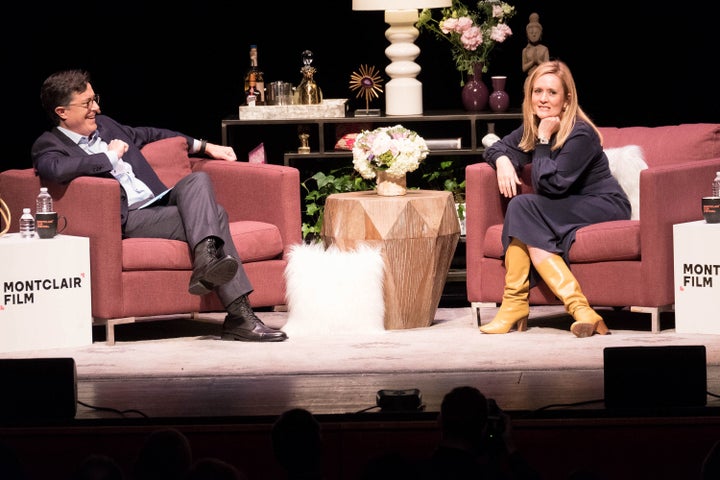
“What’s nice about Trump is he’s so horrible that it’s kind of hip to be nice,” the late-night host said in a conversation with Samantha Bee during a fundraiser for New Jersey’s Montclair Film Festival. “It’s counter-cultural. It’s counter-cultural just not to be a complete selfish heel all the time. Honesty suddenly seems cool.”
The commander in chief came up more than a few times during the conversation between Bee and Colbert at the New Jersey Performing Arts Center Saturday.
“He’s the opposite of me in every single possible way, and also tearing apart these gentlemen’s agreements that we’ve all lived with for so long,” Bee said of Trump. “I don’t exactly know how we get back to a good place once he’s gone.” 
It’s not all bad, though. For example, the pair said the U.S. could get back to some sort of political equilibrium at the local level.
The “Full Frontal with Samantha Bee” host said that she believes that one of the good things about the administration is “the emergence of people’s activism” and the spirit of decency Trump’s hate has inspired.
Colbert reiterated that point, adding that people have no choice these days but to be nice. “Isn’t that interesting,” said Colbert. “Yeah, ’cause if he corners the market in being a shit, then being decent suddenly becomes the only marketplace left for you.”
The “Late Show” host brought up an anecdote about his “Tonight Show” rival Jimmy Fallon to illustrate his point.
“Jimmy and I are friends, nobody believes that, but Jimmy and I are friends. He’s so nice when you’re with him, it’s not an act, and when the cameras shut off, he’s still like that ― exhaustingly like that,” said Colbert. “He’s so nice you’re like, I think I might be a complete dick, because there’s no nice left in the room for anyone else.”
The pair went on to talk about the deluge of sexual harassment stories coming out in the news.
Colbert recalled one of his children telling him, “You know, if sexual impropriety were weather, this is hurricane season! Every day, there is landfall of another hurricane. An idol, a career, gets ripped away!” 
PAUL ZIMMERMAN VIA GETTY IMAGES
Subscribe to the Entertainment email.
Get exclusives, scoops and hot takes on the news all your friends are talking about.
“Yeah, it is a tsunami of penises,” added Bee.
Their conversation also touched on Louis C.K., who was scheduled to appear on Colbert’s “Late Show” the same day The New York Times dropped a story about the comedian sexually harassing various women, behavior that’s been rumored about for years. Colbert called himself dumb for not knowing more about Louis C.K.’s past.
He said that had the comedian been on the show, he would have addressed the rumors by asking him a question posed in Louis C.K.’s movie “I Love You, Daddy.”
“One of the characters says, ‘Can you separate an artist from rumors about him?’ Well, how would you answer that question? That was going to be my tact,” said Colbert
PAUL ZIMMERMAN VIA GETTY IMAGES