Do Artists Really Need Galleries?


In 1992, Mitchell Johnson was first disappointed by a gallerist. A young painter who had recently moved to California from New York for work, Johnson had met the dealer Paula Kirkeby and showed her some of his paintings. “Wow, these are great,” he remembers her saying, “let’s have a show in the fall.” The promise never materialised. When Johnson followed up some months later, Kirkeby’s response had changed. “‘We’re definitely not having a show’,” he recounts more than 30 years on. “It was harsh. I remember it very well.”
Rather than allow the experience to crush his hopes of success, Johnson decided to take matters into his own hands and reject the rejection. He rented a space of his own, just down the block from Kirkeby’s Smith Andersen Gallery in Palo Alto, and hosted an independent solo show in which he put his own work on display.
In the decades since, Johnson has worked on exhibitions with many dealers. Yet he was struck by the nagging sense of dissatisfaction that continued to accompany his interactions with the gallery world. “I would always feel this combination of excitement and then disappointment,” he tells me. “I saw a potential that wasn’t shepherded through.”
“Why shouldn’t artists leave galleries behind altogether and strike out on their own?”
The conventional wisdom in the art world is that a great artist needs a great gallery representing and advocating for them. Ideally, this function involves fielding and vetting opportunities including press, private sales, and museum exhibitions and acquisitions. Too many times, Johnson saw his galleries fumbling such opportunities.
Today, he acts as his own dealer. He regularly sells paintings priced at $10,000–$100,000, from which he doesn’t owe any middleman a commission. Instead, he promotes his work using social media and premium advertising spots in global print publications including Vogue, The Wall Street Journal and The New Yorker, whose readers might typically expect to see adverts for luxury brands and blue-chip galleries. I first saw Johnson’s name on a back cover of The New Yorker. The advert displayed one of his colour-saturated paintings from New England, advising that postcards can be bought from Amazon and that anyone interested in buying a painting should contact a personal Gmail address.
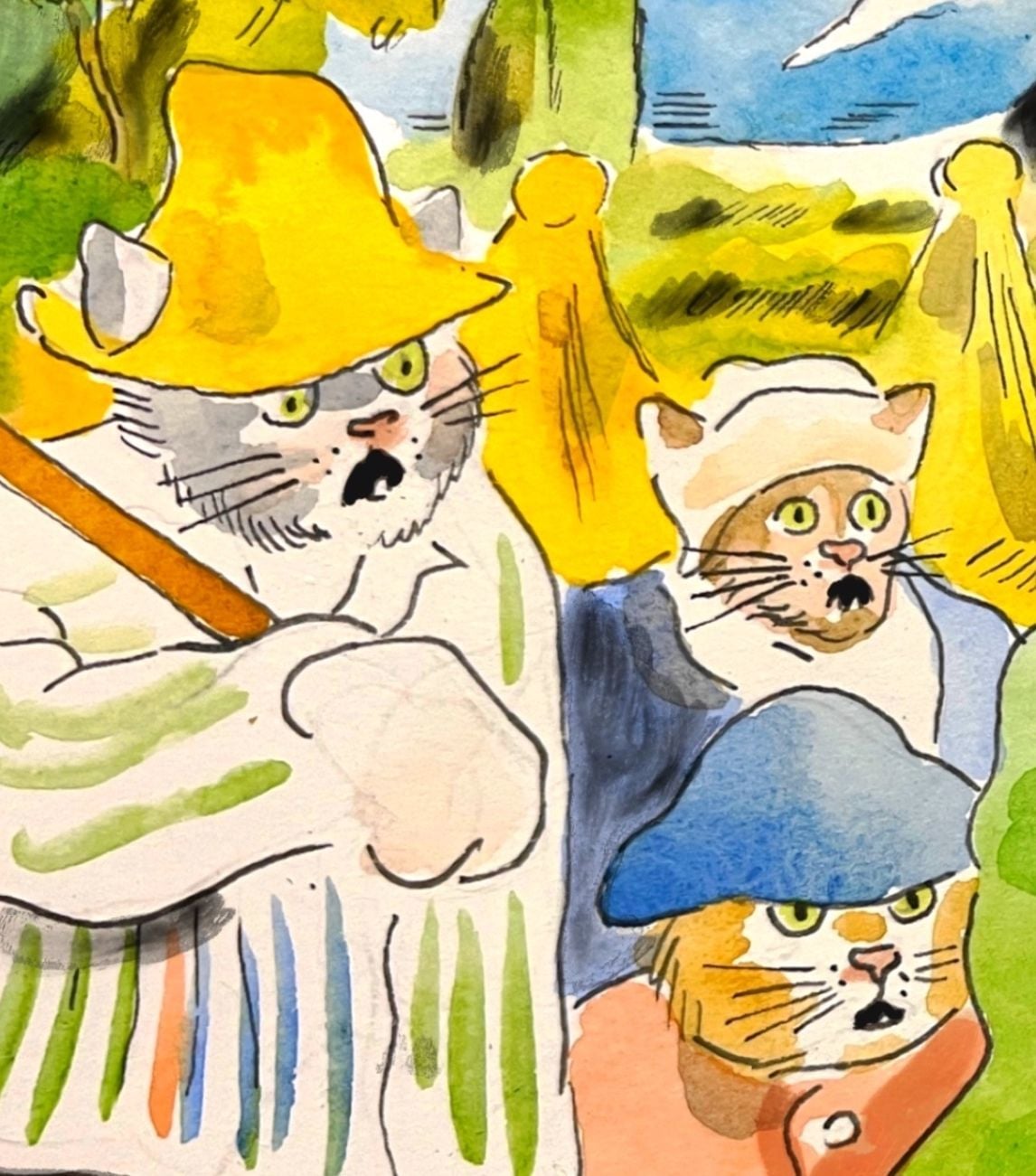
Johnson’s approach is far from the set-up that most aspiring artists imagine for their future career. It is often assumed that a gallery is a prerequisite to finding commercial success and a place in the history of art. But a growing number of artists are rejecting that notion and going—to use the kind of commercial lingo that the art market likes to avoid—Direct to Consumer (DTC).
To take this route requires a business acumen that is relatively rare in artists, most of whom are shielded from the dealmaking end of the industry by their gallery representatives. Johnson has to promote his work, engage buyers and, as he puts it to me, “…be comfortable saying: ‘Yeah, write me that cheque for fifty thousand dollars.’ Not every artist can do that.” For Johnson, the challenges of joining a gallery’s roster are more stark. “I’m trying to get through my life, and a lot of galleries are just trying to get through the week or through the month,” he says, “It’s such a different agenda.”
This tension was thrown into sharp relief last month when global megadealer Pace Gallery culled 50 artists from its stable of around 135. “The whole art gallery art system became too big, too commercial, too impersonal and too corporate,” Marc Glimcher, Pace’s chief executive, told The New York Times.
His words (and accompanying actions) have led to speculation that the gallery system is no longer fit for purpose. Art Galleries Are Not OK, former director of Art Basel Marc Spiegler argued last month in The New York Times, describing galleries as “the art world’s engine”, a categorisation that some took issue with. The artist Lari Pittman wrote in a letter to the Times’ editor saying that “…galleries are not the engine of the art world. Artists and their art are.” If so, why shouldn’t artists leave galleries behind altogether and strike out on their own?
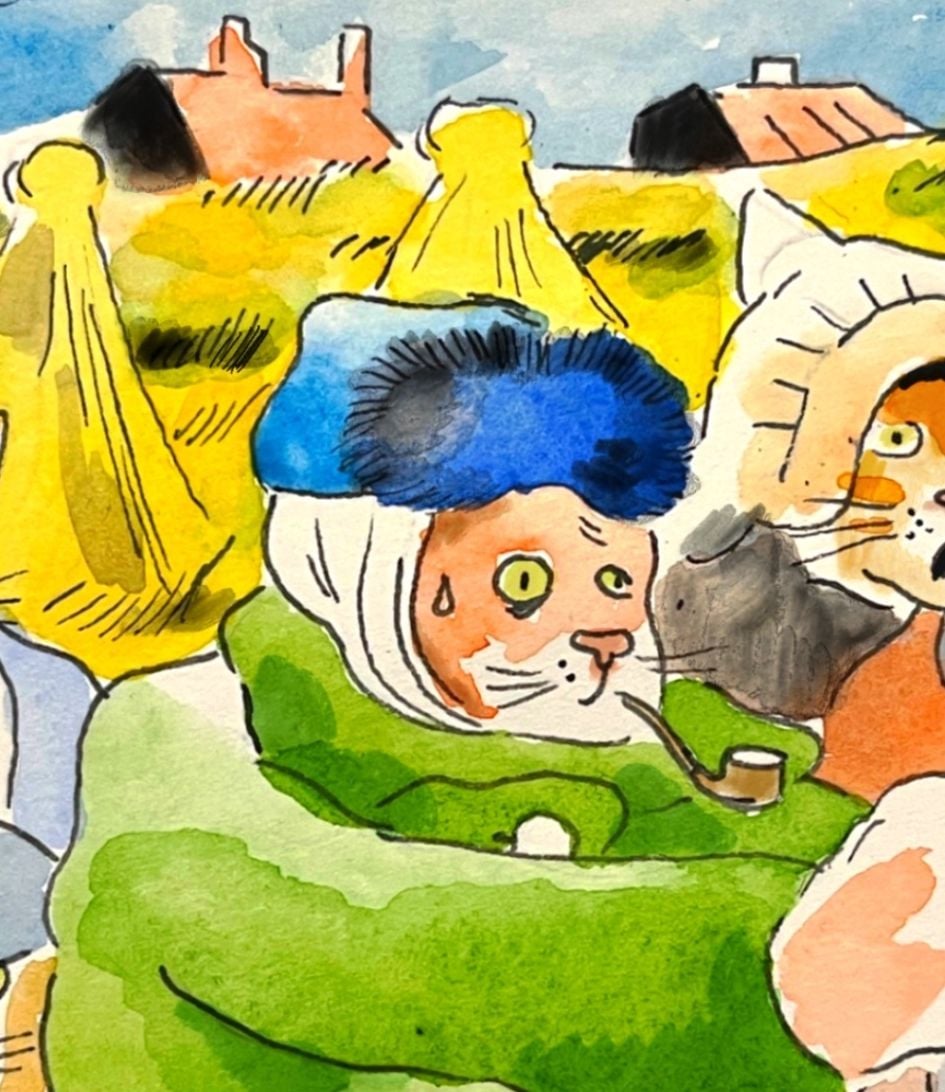
Earlier this month, the South African, Sydney-based painter Werner Bronkhorst made his auction debut at Phillips. A work of his sold for almost double its high estimate at $283,000. You have probably seen his sports-themed paintings on TikTok or Instagram, where he has more than 2.5 million followers combined—and are unlikely to have encountered them anywhere else. Bronkhorst’s website describes him as “the artist, exhibitor and seller of his work”, and he leads a generation of self-taught, social-media-native artists who ignore—and are generally ignored by—the traditional mechanisms of the art market.
The art world, whose reputation for being dogmatic and elitist isn’t entirely unearned, tends to approach figures like Bronkhorst with cynicism. There are some good reasons to question his remarkable ascent. It’s difficult to justify his six-figure prices given his lack of any kind of traditional cultural footprint. But isn’t that the case for much of the hyper-contemporary art being pushed by many galleries today? At a time when art buyers are increasingly hard to find, the more significant fact about Bronkhorst, who sells work directly via his website for $30,000–$300,000, is that he’s reaching a far wider audience than the art world is traditionally able to access—and this audience has money to spend.
“The whole art gallery art system became too big, too commercial, too impersonal and too corporate”
But while artists without galleries can clearly sell their work, there remains the widely held assumption that it’s difficult for them to enter the cultural canon by way of institutions. Gallerists often broker the placement of works within significant institutional collections on behalf of artists—and these negotiations can take years.
The artist Lubaina Himid, who this year is representing Great Britain at the Venice Biennale, joined her gallery Hollybush Gardens in 2013 after three decades of working independently. She told the Financial Times last year that the museum exhibitions that she has had since then, including at the New Museum in New York in 2019 and Tate Modern in London in 2021, “could not have been achieved without the gallery’s moral support and industry expertise.”
Himid’s career trajectory during the past decade is a convincing argument in favour of gallery representation for artists who want to cement their place in art history. But not all artists do. British art critic, writer, former BBC broadcaster and artist Matthew Collings left his dealer, Vigo Gallery, in 2023. During the Covid-19 pandemic, he had found commercial success on Instagram with the sale of his often-polemical drawings of artists, public figures and politicians. To date, he has sold 3,000 such drawings, priced at £200–£400.
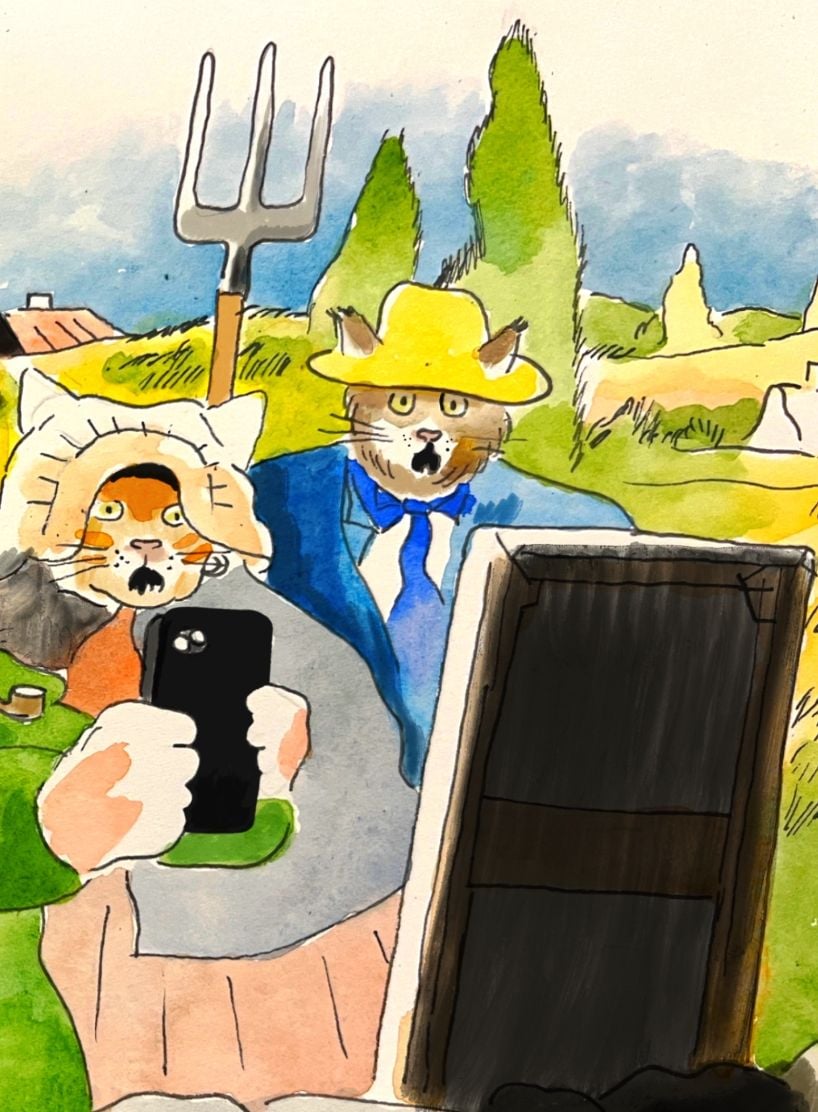
Some of these works deride the Israeli government and its supporters, and Collings is open about his own politics and denunciation of Benjamin Netanyahu’s ongoing offensive in Gaza, which a UN commission has called a genocide. Collings’ decision to operate without a gallery is “absolutely ideological”, he tells me. “It would be impossible, really, for me to say the things I say and yet be showing within the gallery system.”
“The only thing I lack, I suppose, is a cultural profile,” Collings says. But this lack of recognition within institutions doesn’t move him. “It’s not like there’s some kind of serious, intellectual world out there processing art—that culture doesn’t really exist any more.” For Collings, the integrity of most galleries, museums and critics has been trampled by their silence on the very issues that he makes drawings about. Many artists might see things differently—if the art world is the kind of charade that he describes, many continue to engage in it—but his words demonstrate that the usefulness of institutional ties offered by galleries is tied to the credibility of those institutions, which isn’t a given.
As every successful DTC artist demonstrates, there are many ways to engage with the art world and market as an artist, and working with a dealer is just one of them. Galleries won’t disappear any time soon but, with a growing number of options available to artists seeking success outside of their bounds, their hegemony over the primary art market may. —[O]

Art Galleries Are Not OK
June 19, 2026
Credit...Dmitry Kostyukov for The New York Times
Listen · 7:55 min
·
Share full article
·
·
By Marc
Spiegler
Mr. Spiegler, a
former Art Basel global director, reported from Basel, Switzerland.
See more of
our coverage in your search results.Add The
New York Times on Google
I’ve spent nearly 30 years in the art world. For half
that time I led Art Basel, the global art fair now staged five times a year —
in Miami Beach; Paris; Hong Kong; Doha, Qatar; and this week, at its namesake
original location in Basel, Switzerland.
In many ways, these should be the best of times for
the galleries participating in the fair: The number of ultra-high-net-worth
individuals — i.e., potential collectors — has grown enormously in the past
decade. And auction houses recently grabbed
headlines with sales including a $181 million Jackson Pollock and a Brancusi,
marketed with a Nicole Kidman video, that sold for $108 million.
Auction sales get a lot of press, but galleries are
the art world’s engine. And talking to gallerists recently, as they prepared to
gather for the big fair this week, uncertainty abounded. Many are questioning
the fundamentals of their business. It’s as if the art world they know has
fallen off its axis.
Galleries around the world have been closing at a
steady clip this past year. The so-called megagallery Pace, which has locations
in New York, Los Angeles, London, Geneva, Seoul, Tokyo and Berlin, shocked the
art world in early June by announcing it would cut 50 artists
from its roster and reduce its staff by 20 percent. “The art world has changed
dramatically over the past decade, and the current gallery model isn’t only
broken, it’s unfixable,” explained the Pace chief executive, Marc Glimcher.
“Every gallery is currently making temporary fixes and compromises to prop up a
system that no longer works.”
What went wrong? The short answer is: The art world
expanded wildly, but the art market — the total dollar volume of art sales —
did not. In fact, if you read the Art Basel/UBS Art
Market Report for 2026 carefully, and adjust for inflation,
the data shows that the art market has stagnated. The 2025 numbers are on par
with those from the 2009 recession and the 2020 pandemic periods.
This stagnation has hit many galleries hard, with, as
the report puts it, “variable and slower sales for some and consistently rising
costs.” The report makes clear that, although there are new galleries opening,
there is considerable tumult within the sector. That’s a problem for the larger
art world, because galleries are the foundation of the entire market. They
bring new artists into play.
They offer free access to high culture. They are the
shadow financiers of museum shows and biennials and the essential mechanism
driving private patronage to artists, at a time when governments, corporations
and museums offer ever-dwindling funding. There’s a direct correlation between
the health of the gallery system and the ability of artists to produce work
long term.
Thank you for your patience
while we verify access. If you are in Reader mode please exit and log into your Times account, or subscribe for all of The Times.
Thank you for your patience while we verify access.
Already a subscriber? Log in.
Want all of The Times? Subscribe.
Site Index


No comments:
Post a Comment