Opinion
The Art World Has Become Cinema’s Favourite Joke
Do The Gallerist and I Want Your Sex paint a fair picture of the art world, or is the gallery universe simply serving as a convenient magnifying glass for today’s social grievances? Brittany Rosemary Jones writes.


The art world is poised to become a favourite subject for cinema in 2026, if the annual Sundance Film Festival, which took place at the end of January, is any indication. This edition’s line-up included a cluster of films and pilots preoccupied with the machinations of contemporary art and its associated personalities, from artists to gallerists and collectors. What unites these projects is a perception of the art world as a social and economic formation shaped by the broader conditions of modern life. The non-fiction programme, for example, included the pilot of the limited series The Oligarch and the Art Dealer, a chronicle of billion-dollar art market swindle the ‘Yves Bouvier affair’. And two of the most highly anticipated fiction premieres, I Want Your Sex and The Gallerist, offered the first cinematic critiques of the contemporary art industry since Netflix’s kitschy art-horror Velvet Buzzsaw (2019) and Ruben Östlund’s The Square (2017). Both these 2026 movies are irreverent, campy satires depicting the art world as a theatre of performance and power, exploiting familiar archetypes to ridicule the cultural logic of society itself.
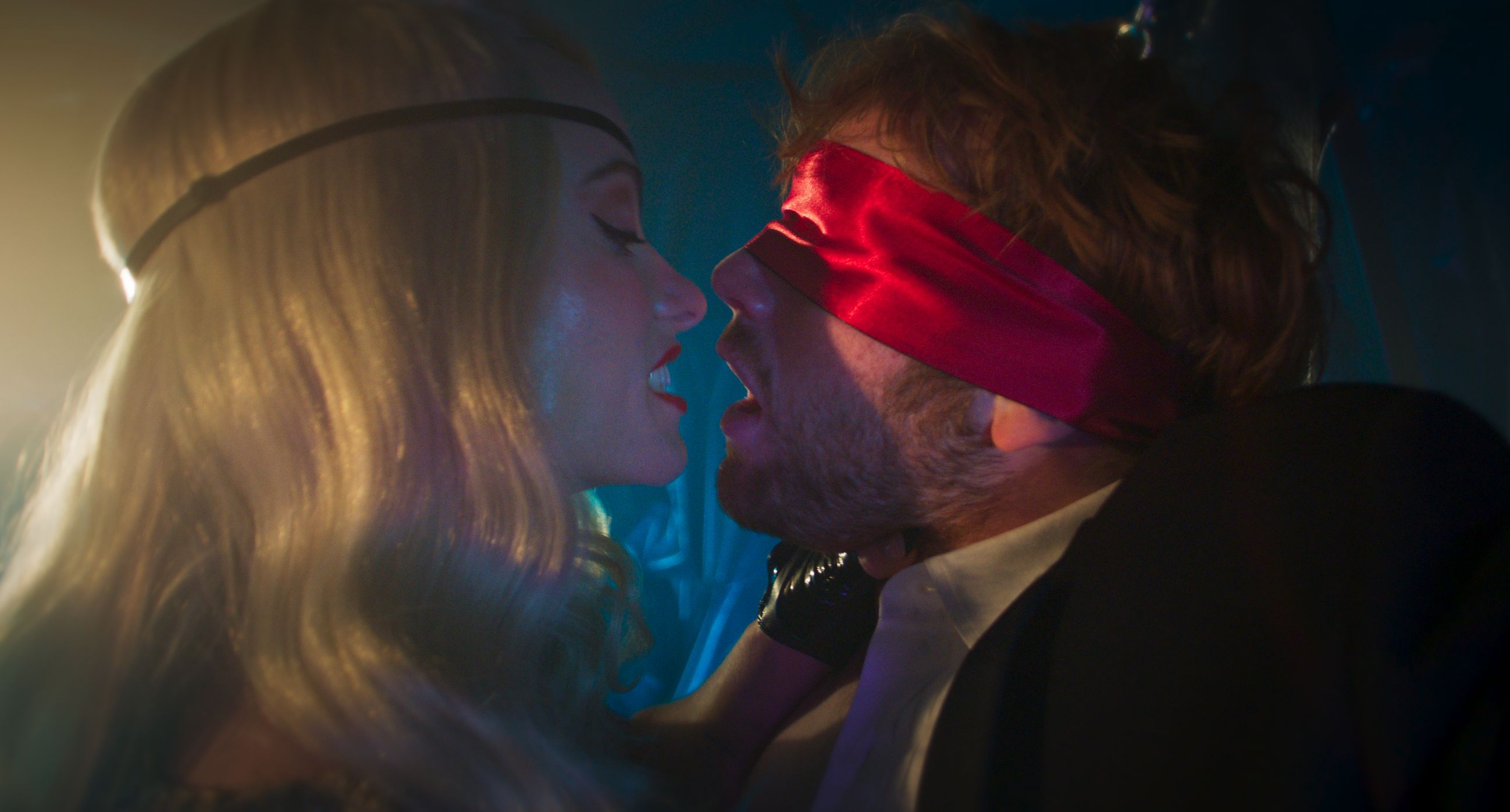
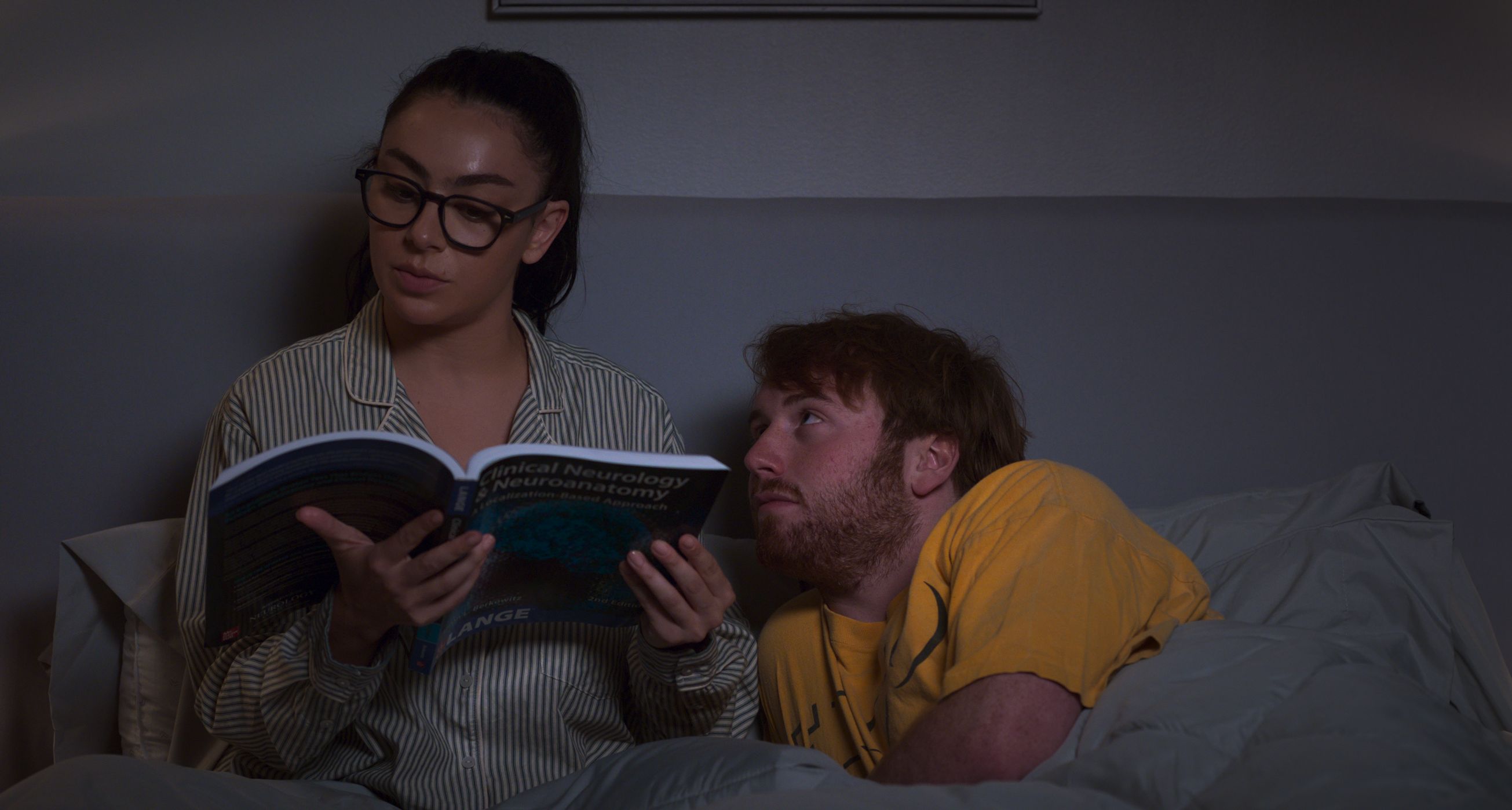
I Want Your Sex, a romp directed by the cult American filmmaker Gregg Araki, follows a fresh-faced university graduate named Elliot (Cooper Hoffman) who lands a studio assistant position for a famous Los Angeles-based artist, Erika Tracy (Olivia Wilde). Erika’s studio is a large-scale operation (seemingly a nod to Andy Warhol’s Factory) employing flamboyant trust-fund babies who crank out her self-described ‘neo-Pop’ sculptures and installations. When Elliot begins an illicit sub/dom affair with his boss, he embarks on a thrilling psychosexual journey that threatens to upend his relationship with his sex-avoidant medical-student girlfriend, Minerva (Charli xcx). Aptly named (after the Roman goddess of wisdom), Minerva is Erika’s foil, contrasting science with art, the cerebral with the carnal, and the repressed Gen Z with the Millennial libertine. At the opening of Erika’s commercial exhibition ‘Ekstasy’, Elliot becomes acutely aware of how this sexual power dynamic has informed his boss’s new body of work, collapsing the roles of the artist, creator and dom into one derivative and clichéd market-driven presentation that lacks any substance.
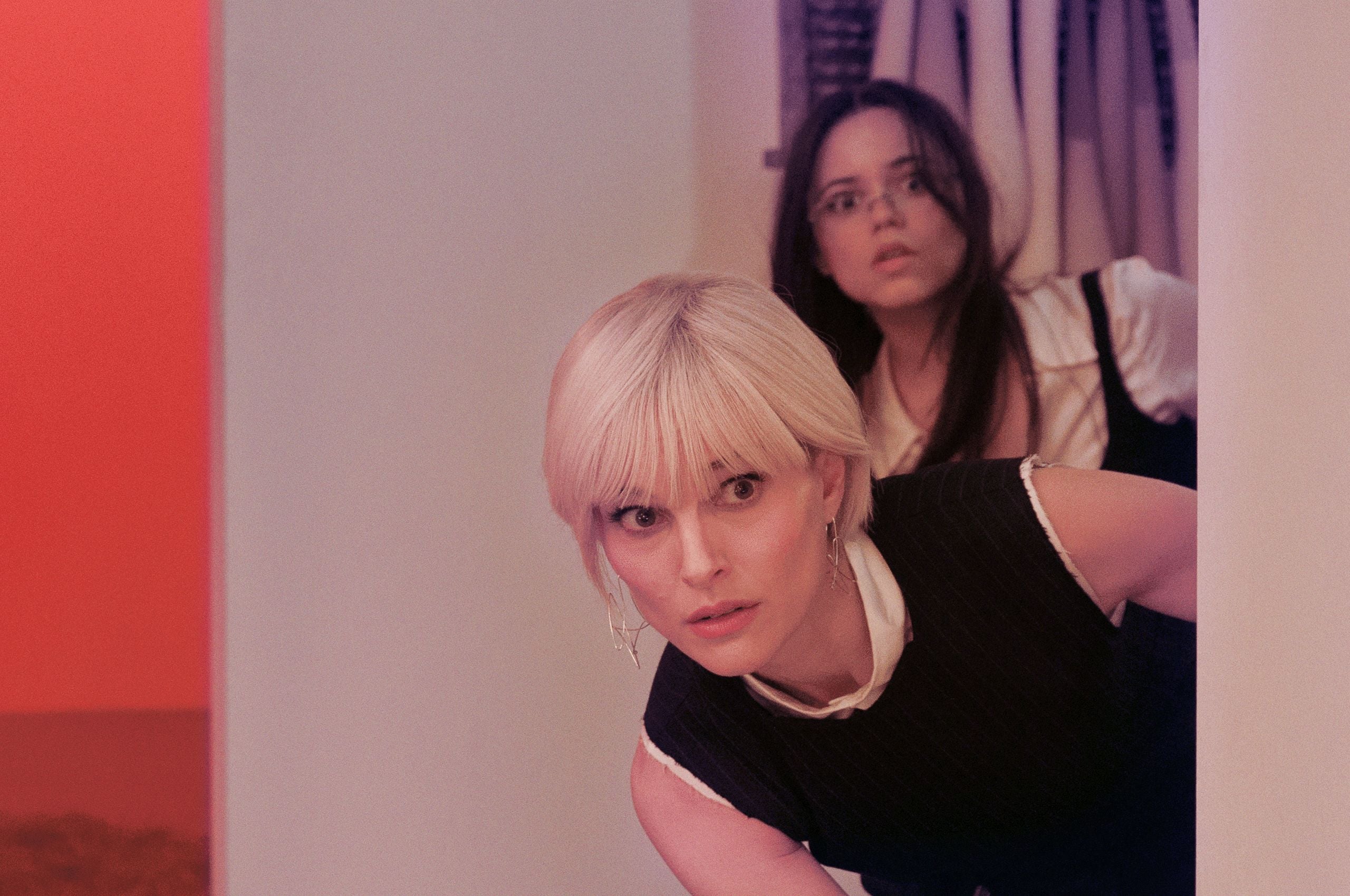
We see a different side of the art world in The Gallerist, Cathy Yan’s new satire about a Miami-based art dealer, Polina Polinski (Natalie Portman) on the first day of Art Basel. Desperate to make her name as a ‘serious’ gallerist, like those setting up shop for the art fair in the vast convention centre nearby, Polina is preparing for the opening of an exhibition at her gallery of work by up-and-coming local artist Stella Burgess (Da’Vine Joy Randolph). When an art influencer visiting the exhibition is literally skewered by a large sculpture, Polina and Stella team up with nepo-baby gallery assistant Kiki (Jenna Ortega) and her mega-art advisor (and tax-evader) aunt, Marianne Gorman (Catherine Zeta-Jones), to pass the dead body off as part of the artwork. Such a gesture literalises the trope that the art market can absorb anything, including death itself, so long as it accrues value. Spectacle and drama ensue, including an all-out bidding war between Polina’s rich ex-husband and Marianne’s client, a capricious European man-child.
Art insiders will undoubtedly bristle at the films’ inaccuracies and implausible set pieces (such as a spontaneous auction at a commercial gallery opening). Yet these caricatures are instructive, shedding light on how the art world fashions itself in the press and public imagination. Time and time again, it renders itself as a commodity system, epitomised by highly publicised auction results; as a site of deliberate absurdity, or at least inscrutability. This is in part thanks to headline-grabbing ‘conceptual’ stunts like Comedian, Maurizio Cattelan’s duct-taped banana (first sold at the 2019 Art Basel Miami Beach $120,000, it went for $6.2 million at a Sotheby’s auction in New York in 2024) and Banksy’s self-destructing painting (the artist slyly installed a shredder within the frame of the canvas, which destroyed the work as the hammer came down on its sale at auction for £1m at Sotheby’s in 2018) . To many observers, the art world can often be read as a corrupt network of high-stakes negotiations juggling power and desire. Perhaps, then, the sardonic reputation the art world is receiving at the cinema is the one it deserves.
In both films, art is a brutal business. Artists and gallerists stop at nothing to sell out exhibitions, immediately capitulating morally when faced with mild financial pressure. Driven by their desire to retain their position within a web of money and notoriety, the spineless female central characters resort to cheap tricks to increase their art’s market value. It’s a ruthless game of who’s ahead versus who’s behind: in one name-dropping sequence in The Gallerist, Kiki puts the pressure on Polina by reminding her boss that ‘last year Gagosian had a billion dollars in sales, and David Zwirner has five new Yayoi Kusamas. The art world functions here as a means of following the thread of unbridled capitalism to its endpoint, where even the dead can be commodified under the banner of ‘art’.

Much of the humour in these satires reaches for low-hanging fruit—the idea that contemporary art can be anything and is therefore nothing, with pretension overcompensating for this lack. (A bit rich coming from indie film.) In I Want Your Sex, while we’re told that Erika’s earlier practice engaged with themes of sexuality and intimacy more brazenly, her recent works are gimmicky: Elliot spends his days chewing pieces of bubblegum to stick on to paper in the shape of a vagina (in a twisted echo of American artist Hannah Wilke, who used chewed gum throughout the 1970s to sculpt vaginal forms in live performances and self-portraits that confronted the objectification of the female body), complaining that he expected to find the job more ‘intellectually stimulating’. Meanwhile, the artist spends most of her time pontificating about contemporary art and eroticism, thoughtlessly contradicting herself or repeating others’ meaningless statements about exploring the ‘psychological dimension of humanity’. When she superciliously declares that ‘contemporary art is a scam’, she briefly gets to the heart of what everyone’s thinking—only to retract it, revealing the accusation to be as hollow as its target.
In The Gallerist, the joke takes shape through incessant references to the art world’s insularity, a farce sustained by opaque hierarchies and rules. The original artwork that kills the unsuspecting influencer, a blown-up livestock castrator titled Daddy’s Shears, is rebranded after the grotesque accident as The Emasculator and advertised as a commentary on modern masculinity. Once it is sold, a freeport (designated areas within countries that offer a free-trade environment with a minimum level of regulation, and which are often used by collectors to avoid capital gains taxes and public knowledge of their transactions) is intended to function as Polina’s magical off-site solution—a place where inconvenient objects can simply disappear without explanation.
It is easy to see why, in these films, the art world functions as a representational device to convey the discontents of contemporary society. As a distillation of techno-capitalism, it provides a lens through which broader contemporary anxieties can be easily (although not always accurately) mapped on to the politics of art-making and art-selling. We inhabit a world in which billionaires play by their own rules, Gen Z is undergoing a ‘sex recession’, and influence and spectacle are currency. The art world has become rich material for filmmakers in our time not as a subject but as a canvas, one on which the tensions of social, sexual and economic life come into relief. —[O]
Main image: Olivia Wilde and Cooper Hoffmann as Elliot and Erika Tracey in Gregg Araki's I Want Your Sex (2026) (Still). Courtesy Black Bear Pictures.


No comments:
Post a Comment