Tuesday, July 20, 2021

unspoken reasons employees don’t want remote work to end


The unspoken reasons employees don’t want remote work to end

Sure, they have more time and productivity is up. But there are also deeply personal reasons employees don’t want to go back to work as it was.

You have 3 free articles left this month. Support our journalism by subscribing to Fast Company Premium or Login here.
  • 3:00 AM

The 

Sure, they have more time and productivity is up. But there are also deeply personal reasons employees don’t want to go back to work as it was.

The unspoken reasons employees don’t want remote work to end
[Source photo: Solovyova/iStock]

It’s no secret that employee-employer tensions about heading back to the workplace are growing. As more employers push to get employees back in-house, the workers themselves are taking a harder stand. An April 2021 survey by FlexJobs found that 60% of women and 52% of men would quit if they weren’t allowed to continue working remotely at least part of the time. Sixty-nine percent of men and 80% of women said that remote work options are among their top considerations when looking for a new job.

The “official” reasons that they don’t want to head back to the workplace are well-documented. They’re more productive. It’s easier to blend work and life when your commute is a walk down the hallway. But, for some, the reasons are more personal and difficult to share. Who will walk the dog they adopted during the pandemic? They gained weight and need to buy new work clothes. The thought of being trapped in a cubicle all day makes them want to cry.

We spoke with several people who shared their very personal reasons why they don’t want to return to work. (Because of the sensitive nature of some of the comments, Fast Company has allowed some of the individuals to use a pseudonym to protect their identities.)

‘I NEED TO NAP DURING THE DAY’

Since 2013, when a backpacking incident caused a spine injury that required two surgeries, Lynn (not her real name) has been dealing with chronic pain and sleep issues. As a result, she’s often tired during the day and realized she wasn’t at her best, especially after lunch, when fatigue would often set in.

“When I’m in meetings, and people throw questions to me, I can’t really answer instantly [or I] say the wrong things,” she says. She didn’t feel comfortable talking to her boss or colleagues about the issues she was facing and was dealing with anxiety, depression, and hair loss in recent years as a result of her sleep issues. But, during the pandemic, she’s been able to adjust her schedule so she can take a nap during her lunch hour and rest periodically when she needs to do so. (Research tells us that naps are good for our brains.)

Since she’s been working from home, her productivity has soared—and her supervisor has noticed and begun complimenting her on her work. She feels sharper and healthier. Her biggest concern right now, she says, is that she will have to give up the balance she has finally found.

‘I’D GIVE UP MY RAISE FOR REMOTE WORK’

Melvin Gonzalez, a certified public accountant (CPA) for Inc and Go, an online business formation website, is facing a dilemma. “I love my career, love my job, and have amazing benefits which include a lifelong pension—something very rare in today’s labor force,” he says. “However, as with everything in life, there is a price to pay: my commute,” he says. Gonzalez travels two hours each way, which adds up to more than 20 hours per week just getting to and from work.

Gonzalez said he never really considered how much time he was spending on commuting until he worked from home during the pandemic, He used the extra time—the equivalent of a part-time job—to go to the gym, spend time with his wife and children, and still get his work done.

Now that he’s facing heading back to the office, he’s not ready to give up that time. He and his colleagues have shared their concerns with their employer, but he doesn’t think remote work will continue to be an option. He says he’s even willing to give up a raise to keep his flexibility. “This has certainly become my main concern about going back to the office,” he says. “I believe my mood for work will not be the same.”

‘I’M IN RECOVERY’

Until the pandemic hit, Frank (not his real name) worked at a high-end restaurant in Philadelphia. What his co-workers didn’t know at the time was that he was struggling with alcoholism. The environment, where he had ready access to alcohol and co-workers who loved to go out for drinks after work, made it difficult for him to quit.

But, while many saw their substance abuse issues increase during the pandemic’s isolation, James was able to get his addiction under control, he says. Now that the restaurant is resuming full service again and inviting him to return to his old job, he has concerns about whether that will put his recovery in jeopardy. “Most people don’t recover because they’re not willing to change their lifestyle,” he says. If he refuses to return to his old job, money will be tight, but he’s pretty sure he can make a go of it. “I also don’t want to admit to all of my co-workers that I’m a recovering alcoholic,” he says.

‘I DON’T WANT TO GIVE UP MY SIDE HUSTLE’

“My reluctance is really the opportunity cost of commuting,” says Shondra (not her real name), a public relations professional in New York City. Before she was laid off in April 2020, she would wake at 6 a.m. to have enough time to get ready, walk her dog, commute, and start work by 10 a.m. After she was laid off, she started picking up freelance work, which turned out to be lucrative—and which she could easily do from home.

Shondra has a new employer, but the plan about whether or not employees will be required to be back at the office full-time is “very unclear,” she says. For now, she has plenty of time to complete her responsibilities for her employer and work on her freelance projects. That won’t be the case if she goes back to her long commute. Plus, the thought of being on mass transit with so many other people gives her pause from a safety perspective, she says.

She’s waiting to see what happens but is reluctant to give up the freelance work that got her through her layoff. “It’s given me the opportunity to build a nice nest egg, in case—God forbid—something like that happens again,” she says. “I don’t want to lose this opportunity by having to return to the office full-time.”


ABOUT THE AUTHOR

Gwen Moran is a writer, editor, and creator of Bloom Anywhere, a website for people who want to move up or move on. She writes about business, leadership, money, and assorted other topics for leading publications and websites

 More

Monday, July 19, 2021

Olivia Rodrigo’s Pink Power Suit


The Story Behind Olivia Rodrigo’s Pink Power Suit

We spoke to the pop star’s stylists about the vintage Chanel she wore to meet the Bidens at the White House.

Olivia Rodrigo arriving at the White House, where she urged young people to get vaccinated against Covid-19.
Credit...Evan Vucci/Associated Press

The comparisons began as soon as the click of cameras met the clack of Olivia Rodrigo’s white platform heels outside the White House on Wednesday.

Wearing a 1995 pink Chanel skirt suit on her pro-vaccination mission, was Ms. Rodrigo channeling the law-school Barbie aesthetic of Elle Woods in “Legally Blonde”? Was she referencing the plaid sets of Cher Horowitz in “Clueless”? Was her choice inspired by the famously fashionable first lady Jackie Kennedy Onassis? (A somewhat disturbing proposal, given the occasion most associated with that particular pink Chanel suit.)

“All those references were in the back of our heads,” said Chenelle Delgadillo, who works as Ms. Rodrigo’s stylist along with her sister Chloe. But the stylists were wary of being too obvious with any one reference — and of making a statement that would detract from the White House’s vaccine campaign.

“Politics are always touchy,” Ms. Delgadillo said. “We didn’t want her to be in red or blue. I didn’t want the internet to read into the outfit more than it needed to be, which a lot of times happens.”

For her public appearances, Ms. Rodrigo, the 18-year-old pop star behind the hit single “Drivers License” (and now the No. 1 album in U.S.), almost exclusively wears fashion from or inspired by the 1990s and 2000s. It’s part of what makes her the perfect middle-parted avatar for her generation.

Thrifting has become a defining shopping habit of Generation Z, whose members make up more than 40 percent of the $28 billion global secondhand fashion market, according to an annual report from ThredUp, an online consignment company. On the resale platform Depop, 90 percent of active users are younger than 26. For the environmentally minded Gen Zer, resale has come to represent a sustainable and ethical alternative to fast fashion.

Ms. Rodrigo, who buys and sells her clothes on Depop, “doesn’t care about the brand necessarily,” Ms. Delgadillo said. “She never asks: ‘Who is this?’ She asks: ‘Is this vintage or is this secondhand?’”

Before her visit to the White House, Ms. Rodrigo spent her post-album release appearances wearing ’90s pink leather pants by Versace and printed jeans by Jean Paul Gaultier. Earlier this summer, she paired a Vivienne Westwood plaid miniskirt with another Gen Z staple, the extreme, lingerie-inspired crop top.

Each of those vintage pieces came from the Los Angeles store Aralda Vintage, a favorite resource for celebrity stylists, including Ms. Rodrigo’s stylists. It’s where Ms. Rodrigo found her White House outfit, too — a pink tweed set with plaid stripes (slivers of red, yellow, turquoise and black) which crisscrossed at her waist to create a corset effect.

She also wore white patent platform heels by Giuseppe Zanotti that were nearly six inches tall (previously seen on the likes of Dua Lipa and Ariana Grande); black socks were added to make the outfit look less sexy and more youthful and unexpected. The heels were later swapped for black Chanel loafers inside the White House — a comfort-based decision, her stylists said.

If the logo-engraved buttons and tweed wool of her suit — a bit warm for D.C.’s 90-degree heat — did not make the outfit’s provenance clear enough, Ms. Rodrigo also wore a thin silver belt with dangling charms spelling out Chanel.

Image
The model Beverly Peele in Chanel’s spring 1995 show.
Credit...Ron Galella, Ltd./Ron Galella Collection, via Getty Images

When Karl Lagerfeld put the suit in his Spring 1995 runway show, he made a similar version in purple and pale blue. The New York Times, nearly 27 years ago, described the suits in this collection as “seductive,” designed as if to say that “for women, sex is power, and flaunting femininity, not repressing it, is what makes women triumphant over men.”

When Ms. Rodrigo’s stylists reached out to Aralda Vintage in search of Chanel suits specifically, it felt like “kismet,” said Brynn Jones, the store’s owner. She has several in her inventory, but she thought immediately of the pink and purple suits she had acquired from spring 1995.

“I find myself flooded with nostalgia with this specific collection — 1995 was the year that the movie ‘Clueless’ came out, and you can see so much of that era in this collection,” Ms. Jones said. “I was 10 years old when I watched ‘Clueless’ for the first time, and as cheesy as it sounds, that movie was so impressionable. I think I never looked at clothing the same again. Every time I’m able to find a special ’90s Chanel piece, it’s a small victory for both the tween in me and the 35-year-old me.”

Ms. Jones’s inventory skews eclectic and youthful, she said, and she described Ms. Rodrigo as a “dream client” beyond just her personal style — as someone with “awareness about what is going on with the environment and how destructive fast fashion is.”

“Olivia has worked with a few stylists, and across the board, they all say that she only ever wants vintage,” Ms. Jones said. “This newer generation, it’s all they want.”


Don’t Keep on Cruisin

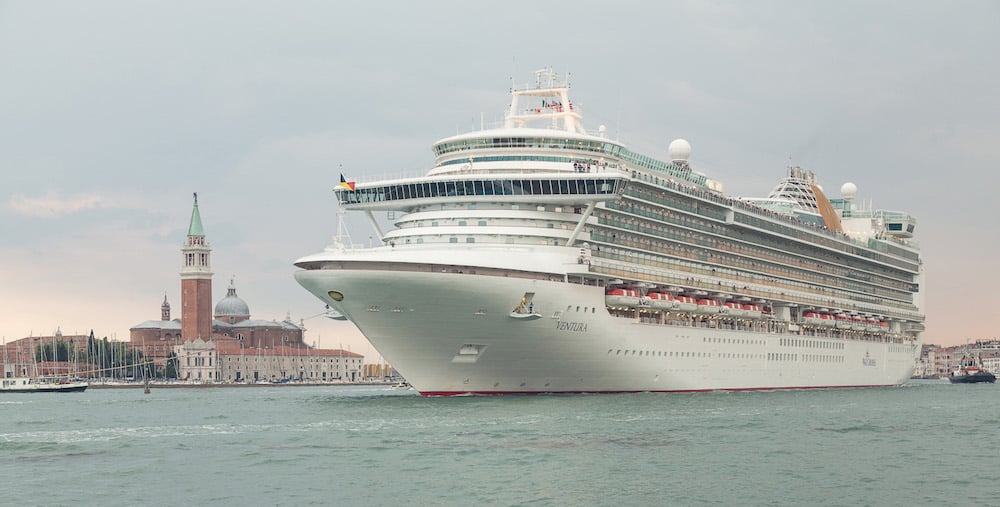
 Don’t Keep on Cruisin’ – The Italian government has officially banned cruise ships from the Venice lagoon.


    The Italian Government Has Officially Banished Hulking Cruise Ships From the Venice Lagoon (For Real This Time)

    The historic city's picturesque waterways have been declared a national monument.

    The passage of a cruise ship in the St. Mark’s Basin in Venice, Italy. (2014). Photo by: Delfino Sisto Legnani/World Monuments Fund Image courtesy Fondazione Venezia 2000
    The passage of a cruise ship in the St. Mark’s Basin in Venice, Italy. (2014). Photo by: Delfino Sisto Legnani/World Monuments Fund Image courtesy Fondazione Venezia 2000

    In an historic move, the Italian government has granted protected heritage status to the Venice lagoon and banished towering cruise ships from entering its waterways.

    The landmark decision came on Tuesday, July 13, ahead of a meeting of the United Nations cultural heritage body UNESCO, which had threatened to place the lagoon on its list of World Heritage in Danger.

    Venice first pledged to ban the hulking ships back in 2012, and a series of resolutions put in place since then have failed to materialize. Now, for the first time, authorities have instituted a firm date by which cruise liners will be blocked from the waterways: August 1.

    The decision comes as a victory for local residents and environmental campaigners, who have been fighting to ban cruise ships from the lagoon for years, warning of the need to protect its fragile ecosystem from mass tourism. On the other side, public authorities were reluctant to jeopardize the economic boon brought to the city by the cruise industry.

    The most recent promise to ban the mega-ships came from Italian Prime Minister Mario Draghi back in April—but it was predicated on the condition that the government build an alternative port for tourists to disembark, which could take years to complete.

    The ban was expedited on the eve of a meeting of UNESCO’s World Heritage Committee, which was due to discuss the conservation of the historic city and lagoon. In a statement, Italy’s Culture Minister Dario Franceschi explained that he wanted “to avoid the real risk” that the city would be classed as an endangered world heritage site.

    The new decree removes the building of a new port as a condition of the ban and designates the urban waterways of the San Marco basin and canal, as well as the Giudecca canal, as a national monument.

    After August 1, no ships heavier than 25,000 tons, longer than 180 meters (about 590 feet), taller than 35 meters (about 115 feet), or which use more than 0.1 percent sulfur content in their fuel will be allowed to enter the lagoon. 

    While the decree primarily targets large cruise ships, some mega-collectors swanning in for the Venice Biennale on superyachts could also be affected.

    In a few short weeks, cruise ships will be diverted to the nearby industrial port of Marghera, where the regional authority will be responsible for building at least four temporary docks, according to a statement from the Italian Culture Ministry. The prime minister has also promised to compensate sailing companies and other businesses reliant on cruise traffic that will be adversely affected by the ban. 


    Follow Artnet News on Facebook:


    Want to stay ahead of the art world? Subscribe to our newsletter to get the breaking news, eye-opening interviews, and incisive critical takes that drive the conversation forward.
    artnet news

    It looks like you're using an ad blocker, which may make our news articles disappear from your browser.

    artnet News relies on advertising revenue, so please disable your ad blocker or whitelist our site.

    To do so, simply click the Ad Block icon, usually located on the upper-right corner of your browser. Follow the prompts from there.

    SHARE